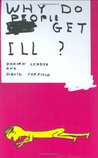
BOOK REVIEW: Why Do People Get Ill? by Darian Leader and David Corfield

Why Do People Get Ill?Why Do People Get Ill? by David Corfield

My rating: 4 of 5 stars

Amazon page

This book’s title might suggest that it’s about the germ theory of disease or genetic anomalies, but it’s actually about why some people exposed to germs or carcinogens don’t get ill, while other people become ill at the drop of the hat—even when they have no exposure to the immediate cause of illness. (e.g. A Japanese study found that hypersensitive subjects had skin reactions when exposed to a harmless leaf when they were told that it was from a lacquer tree [i.e. that it was mildly toxic.]) It’s well established that stress plays a role in one’s level of health. Of course, it’s not merely the presence of stress, but the nature of it and how it’s dealt with that matter. Our bodies are supremely skilled at conquering invaders and repairing damage as long as our parasympathetic nervous system is engaged sufficiently for our body to do the work of fighting infection and healing. Leader and Corfield’s core argument is that it’s how we worry rather than what we worry about (or even whether we worry) that influences proclivity to become ill. More specifically, the authors propose that the inability to communicate feelings can play a significant role in one’s propensity for illness.

The authors review many interesting studies from medical literature. For example, rhinovirus may be a necessary condition for a cold, but it’s not a sufficient condition. In other words, many exposed individuals never become symptomatic. The same has been shown for tuberculosis, malaria, and a host of other ailments. (It may be true for all ailments.) Another fascinating study found that sporadic bombing in London’s suburbs correlated with higher ulcer rates than the constant bombardment in the city. This suggested that the predictability of a stressor was important vis-a-vis its health effects—apparently more important than the presence or severity of the stressor. Also, there are the many studies about the correlation between certain times / events and disease onset (the most well-known of these is that the most frequent time of death from heart attack is between 8 and 9 in the morning on a Monday.)

Leader and Corfield make a compelling argument in support of their thesis that’s rooted in an extensive review of the scientific literature on the quirky complexities of illness. I’m not certain that I’m completely convinced that what they believe is most important is what is in reality most important. (To be fair, it’s not a matter of deficiency of approach so much as the complexity of disease onset and the difficulty of establishing a hierarchy of importance.) However, the beautiful part of the scientific approach is that even if one doesn’t buy the authors’ arguments hook-line-and-sinker, the book is still a valuable read because it presents a great deal of research–as well as some interesting food for thought on the present state of the medical establishment. I suspect the authors didn’t win many friends with medical doctors, given the strong critique they present. Leader and Corfield point out, what most of us have long suspected, that the money-makers in healthcare are expensive pharmaceuticals and surgery, and that this has created a dangerous incentive. Of course, the authors’ point is that this has undermined the value that psychological approaches might have, but the same could be said to be true for postural realignment therapies or other neglected approaches to treatment. The last chapter is a searing critique of the state of the medical profession that suggests that doctors are disproportionately ill-conditioned to listen to patients and to get to the root causes of their ailments.

The book’s organization is reasonable, but could have been improved. There’s a great chapter on the immune system, but it’s chapter 11 of 15 chapters. It would have been useful to move that text closer to the front of the book so that readers would have access to this primer as they considered why the solution might be found internally rather than in the medicines and surgeries that they are conditioned to believe are in virtually all cases necessary.

Of course, I understand that the authors’ thrust is on the psychological rather than the biological/physiological front, and this undoubtedly played into the organizational decisions. It may be true that the book isn’t about how a body can knock out ailments, but why it occasionally fails to; however, understanding how we defeat illness is an important part of the backstory.

There are important chapters on heart conditions and cancer. These are important not only because those diseases are major killers, but because these are the nasty diseases that many will be skeptical of the relevance of mind-body factors. In other words, many will accept that our attitude and approach to stress may be relevant in whether one breaks out in hives, catches the flu, or gets an ulcer—but may not except that a force as powerful as cancer can be swayed by one’s mindset and behaviors.

I’d recommend this book for anyone interested in how good health can be fostered.

View all my reviews

READING REPORT: February 20, 2015

This week’s Reading Report will be short. I didn’t complete any books this week.


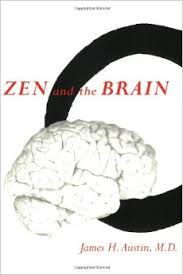
Most of my reading was divided between two books that I’ve mentioned in earlier reports. The first is Zen and the Brain by James H. Austin. This is probably the most expensive book that I’ve purchased since the ridiculously overpriced textbooks of college. While I’ve been known to pan decent books for being overpriced (e.g. most recently Zen Mind, Strong Body by Al Kavadlo), I will say that I’ve found this book to be worth it. There are vast numbers of books on the fascinating findings of neuroscience research. Also, there is a vast canon on Zen, meditation, and the quieting and mastering of the mind. However, there are only a small (though growing) number of books that deal with the intersection of these two subjects, and none covers the subject in as much depth as Austin’s work–as far as I’ve seen. The chapters I’ve been reading of late deal with emotions, visceral drives, and memories–all relevant issues for one who is seeking personal development in a scientifically-minded manner. The next chapter will deal with GABA. I’m looking forward to this because I know there is scientific evidence that yoga can reduce depression through its effect on GABA levels, and I look forward to having a better understanding of how this works.

Zen&Brain


The second book that’s consumed a lot of my time over the past week is The Pyjama Game. I’m about 2/3rd of the way through this book and will finish it in the upcoming week. It is in part a micro-history of judō and in part an account of what it’s like to be a practitioner of the martial art of judō. While the micro-history chapters are chronological, they’re interspersed with chapters that are more of a personal accounting of the author’s experience (and the experience of individuals with which he interacted with first-hand–i.e. other amateurs.)  The era that was covered in my reading of the past week was an interesting one. It chronicled judō’s shift from a time in which Japan completely dominated the sport to one in which Russians, Europeans, and Americans started to make headway and—in some ways–unique contributions to the art. This includes judō‘s rise to Olympic status, and how the sport has progressed since that time.

pyjamagame


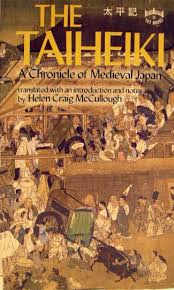
There were another couple of books that I read substantial parts of as research for the novel I’m writing. The first of these is The Taiheikiwhich is–as was the style in medieval Japan–a mix of part history and part literature. It tells the story of Emperor Go-Daigo’s retention of power, largely through the efforts of valiant loyalist warriors–most notably the famous Kusunoki Masashige.

Taiheiki


The second research work is entitled Fighting Techniques of the Oriental World: AD 1200 – 1860As my novel takes place partly in 14th century Japan, China, and Southeast Asia, this reference comes in handy for learning about the activities of warriors across several nations.

FightingTechniquesOrientalWorld


I purchased three books this week. In a way, I was successfully (and happily) suckered. For those who haven’t realized, Amazon is very clever. If you look at a book once or twice, the price will often rise a little when you go back. This drives a few suckers to buy it at a higher price before it rises to some imagined peak price. I’ve noticed this on enough occasions to believe that it’s not just coincidence. Furthermore, as one trained as an economist, I know this is a sound pricing strategy. What I’d not yet experienced is that if one keeps periodically checking on the books–but not buying–the prices will creep back down to a new low, probably only a tiny bit under the first price you saw. I bought three books that I’ve been looking for both on Kindle and at my local bookstore, but which have stayed above my reservation price.


The first, and most expensive, was Buddha’s Brain, which is along similar lines to the aforementioned Zen and the Brain. The book is by a neuroscientist who specializes in neuroplasticity, and who examines how one can go about “rewiring” one’s brain to be happier and more well-adjusted.

BuddhaBrain


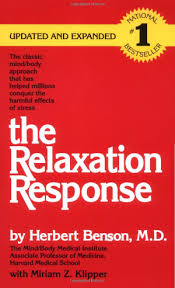
The second book is called The Relaxation Response. It was the cheapest book of the three and is much older than the book Buddha’s Brain. In it Dr. Benson (Harvard MD) describes the relaxation response as the body’s counterpoint to “fight or flight” mode. In this state of relaxation, the body–among other things–goes to work on repairing what ails it. There’s a lot of evidence that a human body can repair most of what can ail it if it gets enough rest–i.e. sufficient break from stress.

Relaxation Response


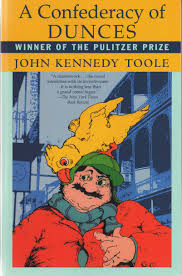
My final purchase was A Confederacy of Dunces. This book is considered to be one of the best comedic novels in American literature. It’s also a book that all depressed writers (which is to say all writers struggling to get things published) should read for the cautionary tale of the novel’s tragic back story. The author, John Kennedy Toole, committed suicide (at least in part) because he couldn’t get it published. His mother then took up the torch, shopping it around. It took her seven years, but she finally got it published after convincing the novelist Walker Percy to look at it, and having achieved his recommendation. In 1981 it won the Pulitzer Prize for fiction.

confederacy of dunces

BOOK REVIEW: Your Brain on Yoga by Sat Bir Khalsa

Your Brain on YogaYour Brain on Yoga by Sat Bir Khalsa

My rating: 4 of 5 stars

Amazon page

This Harvard Medical School Guide presents the findings of many scientific studies on the benefits of yoga, and it does so in a manner suitable for the layman. The book is written by Dr. Sat Bir Khalsa, a long time practitioner of Kundalini Yoga and a neuroscience researcher at Harvard, and is co-authored by a science writer trained in journalism.

I became aware of Khalsa’s work when reading William Broad’s The Science of Yoga, a book that is complimentary of Dr. Khalsa and his studies—a favor which Khalsa doesn’t return as he rejects Broad’s work as being overly sensationalist. The book does talk about Khalsa’s research, such as a study with young musicians at Tanglewood that examined how the practice of yoga increased their equanimity. That said, this isn’t merely a summation of Dr. Khalsa’s work. It’s what in academia would be called a literature review, but “literature review” implies a far more dismal reading experience than one gets from this book. It does present anecdotes in a way that is useful for a layman’s book, but would not be well-respected in an academic setting. This work isn’t designed for medical colleagues but rather to be of benefit to run-of-the-mill yoga students and teachers.

This is a very short book at only about 50 pages. The book consists of five chapters after an introduction which sets the stage and gives some relevant background on Dr. Khalsa. Chapter one delves into the effect of stress on the body and mind, and how yoga (and meditation more generally) has been shown to help counter the effects of bad stress (not all stress is inherently bad, as is addressed in the chapter.) Chapter two examines the effect of yoga on the body and in countering a number of common ailments. The third chapter considers how yoga might actually help one to be smarter and more creative. Chapter four presents the results of studies of how yoga can counter depression and improve one’s mood. Chapter five is in a different vein, and might well have been included as an appendix. The last chapter gives an overview of the various types of yoga to assist readers new to yoga on what style might best meet their needs and disposition. This is a nice feature for those new to yoga, but also for veteran practitioners who’ve practiced one style and might not be aware of the wide range of styles out there. (A few of the styles mentioned are popular in India, but I don’t think are as well-known in the West.)

For such a thin book, this work covers a wide range of topics including–but not limited to–the effects of yoga on sleep, the immune system, neural plasticity, memory, math skills, and mood. A nice feature of the book is a series of brief exercises that one can practice to help reduce stress or achieve a desired goal. These practices are generally located at the end of chapters. Finally, while this book isn’t written primarily for doctors and other scientists, it’s endnoted so those interested in tracking down the studies the book references can readily do so.

I’m a big fan of applying a scientific approach to the study of ancient methods such as yoga. I would, therefore, recommend this book for yoga teachers and students who are interested how precisely these practices can assist them. It’s extremely short and easily digested. It’s in no way overbearing with medical jargon and is readily understood by anyone with a basic education in biological science.

View all my reviews

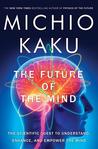
BOOK REVIEW: The Future of the Mind by Michio Kaku

The Future of the Mind: The Scientific Quest to Understand, Enhance, and Empower the MindThe Future of the Mind: The Scientific Quest to Understand, Enhance, and Empower the Mind

by Michio Kaku

My rating: 4 of 5 stars Amazon page

The Future of the Mind continues a line of inquiry that Michio Kaku has been following with his earlier books Physics of the Impossible and Physics of the Future. The central question remains: what sci-fi imaginings might come to fruition, which of them are impossible given the laws of physics in the known universe, and what breakthroughs or discoveries would be necessary to achieve the achievable. Technology is the inevitable gateway to these advanced breakthroughs. Humanity has eliminated gross evolutionary pressures through technology—this might not remain true, but we can certainly not expect X-men style mutations as a result of the foreseeable progression of humanity (which is more likely to be described by the horrible—though probably presagious 2006 movie Idiocracy than it is by the X-men movies.)

The theme of the book, as the title suggests, is the mind. As the most complex system that we know of, the human nervous system offers fertile ground for investigation. Among the sci-fi mainstays considered by Dr. Kaku are telepathy, telekinesis, false memories (think Total Recall), intelligence enhancement, mind control, artificial intelligence, and the nature of alien minds. Along the way he considers the challenges of reverse engineering the brain and whether consciousness could take a non-material form (e.g. embedded in a beam of light.)

As always, Kaku’s book is easy to follow, even for the scientific neophyte. Few others write on the topic with such clarity. While part of Kaku’s book deals with the same concepts covered by Roger Penrose in his book Shadows of the Mind, the Kaku book scores much higher in readability. Of course, the flipside is that Kaku’s book offers less explanatory power. So if one isn’t looking for pop science simplification, The Future of the Mind is probably not for you. However, if you want the jist of the science and have neither the background nor the energy to digest the mathematical and biological nuance, you’ll find this book readable.

Incidentally, Kaku is more optimistic about the ability to computationally replicate consciousness than Penrose, which the latter argues is impossible. Professor Kaku’s optimism runs through all of his books. He takes the stance that if one can imagine it–and figure out a technological or theoretical loophole around the known barriers –one can achieve it. Therefore, some of his discussion of what could come to pass depends upon theories about, for example, black-holes being true. It should be noted that Kaku is quite clear about the differences of opinion that exist about these theories and the role that differences between theory and reality could play in making science fiction into scientific reality.

I enjoyed this book. I’ve been reading a lot about neuroscience lately—entirely on the pop science level- and found this book to be beneficial to my understanding of the subject. It begins by discussing what is known about the brain and consciousness—it turns out that a lot remains unknown, but the technology of recent years has vastly improved our understanding of the brain, and it continues to do so by the day. The book also delves into the depths of what could come to be. There is definitely pragmatic understanding to be gained as well as outlandish, but fun, science fiction ruminations.

For sci-fi fans and writers, it’s definitely worth reading. I had many new conceptions of the future as I read the book. (I might suggest reading Physics of the Impossible first, which gives an overview many “impossible” technologies and explains how few are just flat impossible regardless of technological development and scientific discovery. My review of that book is here.) Many of the ideas covered may seem a bit eccentric, such as what first contact with an alien race would look like. (Kaku is of the notion that the transmission of an immaterial consciousness(es), possibly in conjunction with self-replicating machines would be the likely shape of such an alien presence.)

I recommend this book for almost anyone. We are really only beginning to venture out of the dark ages understanding the mind, and this book provides an interesting map what might be possible.

As I mentioned it, sadly, this may be the more likely future of the human mind:

View all my reviews