Haiku no Gyokko-ryū Jōryaku no Maki

throw open the gate
mindless herds will charge headlong
into the stockyard


prolong each journey
show the Emperor the sights
drop his palanquin


the guitarist’s hand
bounds chord to chord on the dot
no beat is missed


the slug ricochets
yet always finds its mark
burrowing deeply


waves washing ashore
within a rocky inlet
turn about strongly


gulls flap into flight
slowly lifting skyward in
an unrushed climb


sparks pop from the fire
with impeccable timing
uncapturable


topple the gatepost
with a splintering impact
but start with a sting


the pinky finger
of a raging wild-eyed brute
snaps like a pea-pod


once the snake constricts
all is hopelessly lost
sting first and sting deep


bears don’t crush stout trees
stout trees sometimes crush a bear
falling in tree’s time


the bull’s hoof clomps down
a statement made decisive
not to be wrangled

The Budō Fishbowl

I posted this on my martial arts blog, Jissen Budōka, but decided to re-post here.

fishbowlI’ve read and heard many quotes about the degree to which martial arts CAN’T be taught. At the extreme, there’s Miyamoto Musashi, who claimed to never have had a teacher of swordsmanship.

I recently found myself asking, “What if only 10% of budō is teachable?”

If that were the case, someone who was close to having all of the pieces that could be taught would think themselves a master–even if they were largely ignorant of the other 90%.

Such an individual would be like a fish in a fishbowl, thinking that there was nothing but emptiness above the waterline.

He would be like primitive man, thinking the stars were but pinpricks painted on a dome.

Or, in all likelihood, like the modern man who thinks that if we can just reconcile a couple sciencey bits–maybe experimentally validate string theory– that our picture of the universe would be complete.

BOOK REVIEW: The Book of Five Rings by Miyamoto Musashi

A Book of Five Rings: The Classic Guide to StrategyA Book of Five Rings: The Classic Guide to Strategy by Miyamoto Musashi

My rating: 5 of 5 stars

Miyamoto Musashi is probably the most famous swordsman in Japan’s history. Oddly enough,he’s not known for his experience in battle(he lived at the tail end of the Warring States period and was only in a couple of battles), but for his time spent in musha shugyo (warrior’s errantry), during which he engaged in over 60 duels. It is The Book of Five Rings that largely accounts for his continued fame. That being said, Musashi was quite the renaissance man, a painter and sculptor of note. He also left behind a school of swordsmanship, Niten Ichi-ryū.

The Book of Five Rings is divided into five parts: earth scroll, water scroll, fire scroll, wind scroll, and void scroll.

The earth scroll provides an overview of martial science and an introduction to Musashi’s school, which is noted for its simultaneous use of both the large and short sword. A section is devoted the rhythm of martial arts, a crucial topic. It also includes what might be considered Musashi’s 9-point budō kun (a list of warrior precepts.)It’s worth mentioning a couple of these.
#7 Become aware of what is not obvious.
#9 Do not do anything useless.

The Water scroll describes Musashi’s approach to swordsmanship. It covers a range of elements of a martial art including footwork, the focus of one’s eyes, physical posture, mental posture, techniques,kiai (spirit shout), and approaches to cutting and thrusting.

The Fire scroll deals with the strategic or interactive aspects of the battle. Among my favorite quotes from this scroll is, “If your own power of insight is strong, the state of affairs of everything will be clear to you.”

The Wind scroll teaches us about other martial arts. Musashi discusses martial arts that use an unusually long sword, an atypically short sword, that focus on powerful strikes, and those that focus on many rapid strikes. He contrasts other martial arts with his own on subjects such as their focus with the eyes and their footwork.

The void scroll deals with, well, emptiness.

Musashi had great insight into strategy from his career of dueling. His book is worth being read and reread.

View all my reviews

Book Review: Takagi Oriemon, Budo Hero of Shiroishi

9781447769033Takagi Oriemon: Budō Hero of Shiroishi by Mamiya Hyoemon

My rating: 4 of 5 stars

This is an English translation of a book that was written long ago. The translation is by the Jinenkan Honbu Dojo — specifically Manaka Unsui (the head [Kancho] of the Jinenkan) and his students Robert Gray, Maurizio Mandarino, and Eric Shahan. The original is entitled Budo Shiroishi no Ei and was written in Japanese.

The book is the story of the seven-year warrior pilgrimage (musha shugyo) of a warrior named Takagi Oriemon who lived from 1625 to 1711. Takagi founded a martial arts school that, as was typical, branched out over the centuries. As I understand it, there are two or three descendant schools still in existence today.

Takagi was legendary for his strength. The book offers many accounts of descriptions of both his physical strength (from moving boulders to help farmers to chopping down a house to create a fire break) and his strength of mind (e.g. staying where others were afraid to because of hauntings.) However, mostly it portrays Takagi as a supremely humble and virtuous man. He misses no opportunity to assist those in need of help, and always humbly declines reward. He does not use his great power for wanton destruction, but does punish the wicked when no other choice remains.

Unlike Musashi’s Book of Five Rings or Yagyu’s The Life-Giving Sword, which are mostly about strategy, this book is mostly examples of virtuous living with a few strategic concepts thrown in.

I can offer a test for whether a reader might enjoy this book or not.

You’ll love this book if you:
– are fascinated by biographies of great martial artists.
– enjoy learning about life in Japan during the Tokugawa period.
– enjoy morality tales and the example set by great men and women.
– like to be inspired by people who really had their stuff together.
– don’t mind the occasional ghost story.

You won’t like this book if you:
– are an editor or English teacher and things like errant apostrophes make your head explode.
– are turned off by the flouting of conventional writing style (multi-speaker paragraphs of dialogue abound in this book.)
– find that ghost stories or supernatural elements completely ruin an otherwise down-to-earth read.
– find typos grate on your nerves.
– are really grossed out by gory manga-style line drawings (they are not all like that, but some are.)

I had to deduct at least a star for the many grammatical and formatting deficiencies of the book, but I still think everyone would gain from reading it and seeing the life example set by Takagi Oriemon: Budo Hero of Shiroishi.

View all my reviews

The Maai of Jokes

From my martial arts blog Jissen Budōka.

間合い

A duck walks into the dōjō for his first session. He’s awkward and seems to be getting everything wrong.

The Sensei calls out, “Duck!”

The duck snaps to attention and says, “Yes, Sensei” — boot to the head.

Maai often gets boiled down to “distancing.” Understanding distancing is simple, understanding maai is challenging. First, maai understood in three dimensions is maai misunderstood. The fourth dimension, time, is critical. Second, maai is always interactive. Rules of thumb will only get one so far because the peculiarities of the opponent matters. Third, the interval between recognition and response that occurs in the mind is as important as the physical distance.

It behooves the martial artist to see the maai  existing in exchanges outside the dōjō. Thinking of maai solely in terms of kenjutsu, for example, can encourage one to focus on the physical distance. The distance gap is what we can see, and that is what is most easily analyzed. However, another area in which maai is critical is joke telling, and in jokes one has to optimize for intangibles –timing and audience response to the joke.  Not that this should be an intellectual exercise (that slows everything down); I presume it’s intuitive for people with the skill. 

A joke has a two-part anatomy: 1.) a set up that is straight, plausible, and –perhaps even– factual; 2.) a punch line that must turn expectations on their head with punch. The interval between parts 1 and 2 separates masterful joke tellers from horrible ones. If one runs the punchline into the setup, one risks the joke falling flat. If the recipient doesn’t recognize the transition they may start thinking about what was said (ugh –analysis is the nemesis of humor.) However, if one pauses too long, one risks the recipient anticipating the ending. Some jokes are easier to tell than others. The one that opened this post is easily anticipated. Recognition of the dual-use of “duck” happens quickly.

For a more user-friendly joke consider the one that a scholarly survey suggested was the world’s funniest joke:

A woman gets onto a bus with an infant. The driver vomits in his mouth a little and says, “Lord, that is the ugliest baby I’ve ever seen.”

The woman is appalled and speechless. She scowls, pays the fare, and proceeds to the rear of the bus.

Sitting down, she says to the woman next to her, “I’m outraged; I can’t believe how insulting the bus driver was.”

The woman says, “Well go give him a piece of your mind. Don’t worry. I’ll hold your monkey.”

The elaborate set up makes it difficult to anticipate the ending, and the twist between kindness and cruelty is readily apparent. (“Monkey” is very visual.) The punchline is really a punchword, the very last word.

Other jokes have more balance between set up and punchline, and that increases anticipation risk.

I was in the bookstore the other day and I asked the clerk for the self-help section.

She said that if she told me it would defeat the purpose.

Here one starts getting clues much earlier.

Other joke concepts are so well-known they invite anticipation.

Blonds all want to be like Vanna White, they yearn to know the… alphabet.

As for rushing the punch line, consider the joke:

I’m thoroughly familiar with 25 letters of the alphabet. I don’t know “Y.”

While in writing the joke is clear, this is the type of joke that can easily be missed and fall flat. It’s not just because it’s not exactly hilarious, but because the recipient may have to reconstruct the joke or, worse yet, have it explained to them –both of which are death.

The other thing that one must recognize is that there are always specific exceptions that work. “Interrupting cow” is the perfect example of a rushed punchword that works.

2013 Martial Arts Movies

Chinese classic literature will make a major appearance in martial arts cinema this year, with movies entitled The Monkey King and Journey to the West. Both movies will likely featuring the staff-wielding monkey who made mischief in heaven and on earth. You may be familiar with the tale from Jet Li’s portrayal of the Monkey King in the 2008 film The Forbidden Kingdom. Readers can get the jist of the tale by reading the book.

Japanese classic literature will also be addressed, sort of. In the tradition of The Last Samurai, Keanu Reeves will star in movie that has no business having an American lead. It will be some sort of take off on the famous tale, 47 Ronin.

There will also be another iteration of the life story of Ip Man. Ip Man was a Wing Chun grandmaster who, as one can tell from the pile of films about his life, lived a fascinating life. While his fame is eclipsed by that of his most famous student, Bruce Lee, Man was a police officer who had to flee China to Hong Kong because of his support for the Kuomintang.

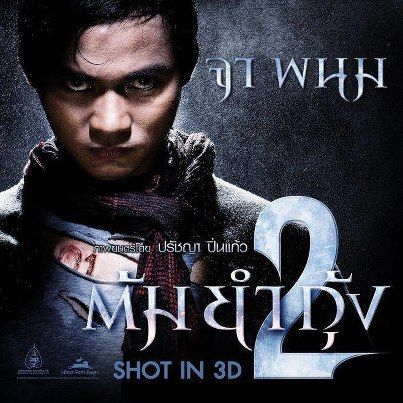
The sequel to the Tony Jaa film Tom Yum Goong (Ummm, Tom Yum) is due out this year. It will be entitled The Protector 2 in the west. The Thai star is continuing to give Chinese Kung fu cinema a run for its money.

The Grandmaster

Journey to the West

The Monkey King

Tom Yum Goong 2 (aka The Protector 2)
TYG2

47 Ronin