BOOK REVIEW: Hotel Iris by Yoko Ogawa

Hotel IrisHotel Iris by Yōko Ogawa
My rating: 4 of 5 stars

Amazon page

Hotel Iris follows a Japanese girl’s dangerous liaisons with a mysterious older man. Unlike 50 Shades of Grey, with which Ogawa’s novel shares the theme of a young woman’s introduction into a sadomasochistic relationship, the female lead, Mari, is attracted to a man who isn’t handsome, rich, or successful. Mari’s motivations are more intriguing and complex. This makes her relatable to a smaller demographic, but potentially more interesting to a much larger one.

As I fear I’ve made this book sound like hard-core erotica (i.e. word porn,) I should point out that it’s really character-driven literary fiction. There are only a couple of scenes that involve sexual activity—granted those are intense and graphic. However, what readers who stay with this short book are seeking to understand is what about this young woman’s life creates such an attraction for an old man who—in conjunction with the prostitute he hired—gets kicked out of the hotel at which Mari works. Mari’s motivation is far from obvious, and thus the reader is left trying to assemble a puzzle.

The biggest piece of this puzzle may be that Mari’s beloved father passed away years before, leaving her in both the care and employ of her over-protective and cold mother. The Hotel Iris is a small seaside hotel of a middling nature in an area that thrives or dives at the whim of tourists. Mari’s parents had owned the hotel, but now it’s just her mom. Mari, her mother, and one housekeeper share the workload. Mari’s mother believes the customer is always right, but she also has questionable morals in dealing with customers (i.e. if she can get away with cheating them, she will.)

In addition to trying to figure out what drives Mari, the reader also wants to learn whether the girl will make it through alright. The man she is having a dalliance with, who we know as “the translator” because he translates from Russian to Japanese and vice versa, is painted as an unsavory character. But the reader doesn’t know whether he’s a mostly harmless pervert or a killer with a cabin on a remote and scantly-populated island. He has dark appetites, but how tight his grasp on reality is remains uncertain.

I found this book to be highly readable. It’s short, well-written, and keeps the reader questioning. The Japanese penchant for grotesquerie is an unabashed feature of the book. I’d recommend it… just not for your church’s book club.

View all my reviews

BOOK REVIEW: The Sky Unwashed by Irene Zabytko

The Sky UnwashedThe Sky Unwashed by Irene Zabytko

My rating: 4 of 5 stars

Amazon page

The Sky Unwashed is a character-driven novel, telling the story of an elderly pensioner residing a few miles from the ill-fated Chernobyl nuclear plant. The protagonist’s name is Marusia, and she lives with her beaten-down son Yurko, his cheating wife Zosia, and the dysfunctional couple’s children (her grandchildren.)

The first part of the novel is a bit of a slog, though the character portraits of the adult family members may be enough to keep one intrigued if one enjoys being pulled into a dysfunctional Ukrainian village household. (The first part is a bit like “Jerry Springer—Ukraine Edition.”) Zosia’s unfaithfulness provides the main source of tension, but that tension is a quiet one between Marusia and Zosia. Yurko knows about his wife’s infidelity, but doesn’t seem to care–or doesn’t seem to be able to muster the energy to make the appearance of caring. Marusia, on the other hand, is the doting mother who feels that her doofus son could do better, but she bites her lip as she doesn’t feel it’s her place.

It’s the Chernobyl meltdown that kicks the novel into interesting territory. One is shown how tragedy can bring out the best and worst in people. Both Yurko and Zosia have jobs at the plant, but it’s Yurko who’s working when the incident occurs, and it’s he who gets a dose of radiation that will prove lingeringly fatal. Interestingly, the reader isn’t taken into the plant often. We don’t see Yurko fighting the fires, but rather we see the family in the village Starylis. We experience the family first noticing Yurko’s failure to return and then becoming increasingly concerned. We see the family noticing the subtle signs of something gone awry—like air that tastes of pennies.

Starylis’s occupants—including Marusia’s family–are eventually evacuated to Kiev. It’s here that we see how events press the once hostile family together before ultimately tearing them apart. The Zosia we found unpalatable in the first part is now seen in more sympathetic terms. We see her at her best and her worst, and we see that in sum she is a survivor. Her behavior, good and bad, is committed saving the remainder of her family—which is her children.

The truly visceral part of the novel is reached when Marusia opts to move back to Starylis, despite the fact that it’s abandoned. At first, the elderly woman is completely alone. It’s the eerie loneliness of an abandoned place that one once knew as a thriving community. Even the livestock Marusia left behind is long gone. Her daily ritual includes ringing the church bells to let any other stragglers know they aren’t alone. Eventually, she befriends a cat gone feral, and shortly thereafter others begin to trickle back to the village—virtually all of them women.

In retrospect it seems the author might not have been comfortable writing male characters. The only male character of note is Yurko, and he’s by far the most flat of the major characters—that’s probably on purpose and it feels true enough. The only other male character we get to know in any detail is quickly killed off. Given all the male-dominated works of literature, this isn’t necessarily a complaint or a problem—just an observation.

I’d recommend this book for the patient. If you need a hard and fast hook to keep you engaged, you’ll have trouble with this book. However, once one gets into the parts set in Kiev and the abandoned Starylis, you’ll find the book intensely engaging.

View all my reviews

BOOK REVIEW: A Tale for the Time Being by Ruth Ozeki

A Tale for the Time BeingA Tale for the Time Being by Ruth Ozeki

My rating: 5 of 5 stars

Amazon page

A struggling novelist named Ruth finds a watertight package containing a Hello Kitty lunchbox washed ashore on an island off the coast of British Columbia. Ruth’s initial assumption is that it’s debris from the March 11, 2011 tsunami that scoured a large swath of coastal eastern Japan out to sea. However, her husband, Oliver, who has more expertise in these matters, tells her that it’s unlikely that the box could cross the Pacific so quickly and that it would be jettisoned out of the currents that consolidate plastic rubbish into large debris fields like the Great Pacific Garbage Patch. When the lunch box’s contents turn out to include a teenage girl’s journal and a number of letters, it seems as though the mystery might be solvable.

The journal is written by a Japanese girl in turmoil named Nao. Nao grew up in American, her father working for a Silicon Valley computer firm until he lost his job. A major factor in Nao’s depression is that she has to return to her ethnic homeland of Japan as a stranger. Her formative years were spent in America, and she is out-of-place in Japan and—as a result—she falls victim to vicious bullying. Furthermore, her father is unable to find a job in Japan and becomes suicidal. The household has to tighten its proverbial belt because Nao’s father, Haruki #2, isn’t working and Nao’s mother has limited earning potential. (FYI: the “#2” refers to the fact that Nao’s father had an uncle for whom he was named who’d been a scholar forced to serve in a kami kaze squad during the war.)

Nao also becomes suicidal, but she is firm in her conviction that she will not fail like her father has done on two occasions. There’s one thing that she must do first and that’s to pen the story of her great-grandmother Jiko. Jiko is a centenarian Buddhist nun and the family matriarch on Nao’s father’s side of the family. Nao stays a summer with Jiko, and the old nun in all her wisdom becomes an anchor in the girl’s tumultuous life. With a level of narcissism appropriate to a teenager, Nao ends up telling us a story that’s more autobiographical than an account of Old Jiko.

A Tale for the Time Being interweaves two storylines. One line is Nao’s journal entries and letters from the lunchbox. The other line is Ruth’s journey as she reads the journal and becomes obsessed with discovering more about Nao and her family members. Eventually, Ruth’s investigation turns up information about Haruki #1 and Haruki #2 that Nao apparently didn’t know, and that both Ruth and the reader hope the girl will learn. Nao comes to idolize Haruki #1 in part because he was committed to his fate as a kami kaze. It’s not that she believed in the kami kaze objective (she identifies more as American than Japanese), but she sees Haruki #1’s commitment in contrast to her father’s behavior. Nao’s myth about her great-uncle turns him into a counterpoint to the father that she loves but thinks a pathetic loser. In a way, this novel is a cautionary tale about drawing conclusions about the virtues and vices of others without knowing their whole story.

Ozeki does a great job of creating characters multi-dimensional enough for us to become intrigued by. Just as Ozeki has her same-named secondary protagonist, Ruth, sitting on the edge of the seat wanting to find out what happened to Nao and her family, we—too–are pulled into that mystery. The challenging approach of weaving Ruth’s story into the journal’s contents works well.

Ozeki hints that there may be something supernatural about the world in which her characters inhabit. There’s a member of a species of crow that shouldn’t be on the American side of the Pacific who shows up at about the same time as the lunch box. Also, we can’t tell whether some of Nao’s stories are the wishful delusions of a tormented girl or whether they reflect some kind of subtle magic. It’s a similar approach to that of other literary fiction authors such as Haruki Murakami.

I’d recommend this novel. It’s gripping and readable.

View all my reviews

BOOK REVIEW: After Dark by Haruki Murakami

After DarkAfter Dark by Haruki Murakami

My rating: 5 of 5 stars

Amazon page

[Note to readers unfamiliar with Tokyo: There are a couple of facts about the city that one must understand for this book to make sense. First, while Tokyo is a city that’s always moving, the trains don’t run between roughly midnight and five am (your results may vary by station.) Second, because many people live far out in the suburbs and the cost of living is high, taxis aren’t an option for much of the population. These two facts add up to a slew of business for those industries that cater to the population caught out “after dark” (i.e. after the trains stop running–not after sundown) including: all-night diners, love hotels, c-stores, bars, pachinko parlors, bowling alleys, and manga bookstores.]

This novel takes place in Tokyo during the wee hours of a single night. Murakami satisfies a form of voyeuristic impulse by giving us a peek into the lives of a few of the people out and about while the masses are home slumbering, or—at least–whiling away insomnia-ridden hours in the privacy of their own homes.

The protagonist is a young college student named Mari. As she sits in a 24-hour Denny’s reading, Mari immediately triggers curiosity. She isn’t typical of the disheveled, boozy, or garish crowd out “after dark.” In a post-witching hour world of drunken salaryman, micro-miniskirted hostesses, tattooed yakuza gangsters, and nightlife-savvy travelers, the bookish young woman stands out. We soon learn that Mari didn’t miss the last train on accident, but rather is staying out all night on purpose to be out of the house. This further raises the level of intrigue.

In the Denny’s, Mari is approached by a gregarious young man named Takahashi who is grabbing a quick snack before going back to his nighttime hobby of jamming in a jazz band. Takahashi introduces himself as someone who already knows Mari from a party. He’s a couple years older than the young woman, and was a classmate of Mari’s sister, Eri. The party at which he met Mari was mostly attended by kids the age of Eri and himself, and Mari was just along for the ride with her more popular sister.

Eri is another major character in the book, although her mysterious presence is mostly in a sleeping state. Eri, unlike the plain Mari, is drop dead gorgeous, and has been doing modeling jobs since she was a child. Takahashi is but one of the young men infatuated with Eri—though we get the feeling that Takahashi realizes that Eri isn’t in his league. He’s a pragmatist—if begrudgingly so. The rest of the book hinges on this chance encounter between Mari and Takahashi.

Suspicions that the grim hours of circadian disruption are the domain of crime and vice are confirmed when a bulky former female wrestler turned love hotel manager, named Kaoru, rushes into the Denny’s seeking Mari. Kaoru is an acquaintance of Takahashi (who has since left the diner to play jazz) and she is seeking Mari because Takahashi told her that Mari spoke fluent Chinese. A Chinese prostitute was beaten up at the love hotel, the Alphaville, and Kaoru needs to talk to the foreign woman to get to the bottom of the matter. Kaoru’s investigation is in part driven by the fact that the Chinese hooker’s John dashed on the hotel bill, but the former wrestler also has a soft spot for the beaten girl and wants to do the right thing by her—though Kaoru knows the police can’t be involved because the Chinese working girl will, at a minimum, be deported by the authorities, or, worse, be punished by the Chinese mafia who pimp her.

As with a few of Murakami’s other books, this book might be labeled “slipstream.” Slipstream is a genre that blends mainstream literary fiction with supernatural elements / speculative fiction. However, the scenes that aren’t realist generally involve the sleeping Eri in her room by herself. So, it may be that Murakami is just conveying the hazy and illusory world of sleep and life at the edge of sleep. I’ll leave it to the reader to make their own interpretations of this. There are also coincidences that could strain credulity, but this may just be an attempt to convey that the world of Tokyo “after dark” is a small pond.

I’d highly recommend this novel. Murakami gives us likable characters and one can see why said characters are draw to each other despite their very different existences. Then he puts them into situations that demand resolution. It’s a short, readable, and interesting novel.

View all my reviews

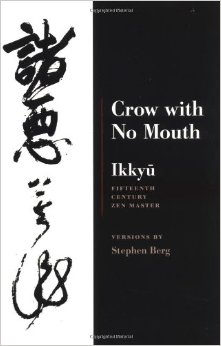
BOOK REVIEW: Crow with No Mouth: Ikkyu Translated by Stephen Berg

Crow With No Mouth : Ikkyu : Fifteenth Century Zen MasterCrow With No Mouth : Ikkyu : Fifteenth Century Zen Master by Ikkyu

My rating: 5 of 5 stars

Amazon page

Ikkyū Sōjun was the Howard Stern of Zen masters. Born in 1394, he lived through most of the 15th century. Ikkyū served as a temple’s abbot for less than two weeks before he quit in disgust, vowing to move into a red-light district—apparently he wanted to live among people he found more honest and less hypocritical. The Zen master despised the corruption and snobbery of monastic politics.

Crow with no Mouth is a collection of Ikkyū’s verse, which is largely in the Zen tradition–featuring natural subjects and simple wisdom in a sparse style. Of course, as per my comments in the preceding paragraph, there are a few poems on topics such as cunnilingus and debauchery—so it’s not what one would call a child-friendly collection (unless one enjoys explaining the sexual exploits of a lecherous monk to one’s child.) The more explicit poems may seem like a diversion from the Zen path, but perhaps not. Maybe Ikkyū offered them as a way to train the mind, to observe one’s reaction to shocking commentary as a means of changing one’s way of thinking.

A few of my favorite lines of a more traditional nature include:

-“you can’t make cherry blossoms by tearing off petals to plant; only spring does that”

-“sometimes all I am is dark emptiness; I can’t hide in the sleeves of my own robes”

-“it’s logical: if you’re not going anywhere any road is the right one”

-“the edges of the sword are life and death; no one knows which is which”

-“even in its scabbard my sword sees you”

-“a flower held up twirled between human fingers; a smile barely visible”

-“in war there’s no time to teach or learn Zen; carry a strong stick; bash your attackers”

Here are a few of those jarring lines that I mentioned above:

-“that stone Buddha deserves all the bird shit it gets”

-“all koans just lead you on but not the delicious pussy of the young girls I go down on”

-“ten fussy days running this temple all red tape; look me up if you want o in the bar whorehouse fish market”

-“my dying teacher could not wipe himself; unlike you disciples who use bamboo; I cleaned his lovely ass with my bare hands”

-“don’t hesitate get laid that’s wisdom; sitting around chanting, what crap”

-“who teaches truth? good/bad the wrong way; Crazy Cloud knows the taste of his own shit” [Crazy Cloud was Ikkyū’s name for himself.]

When he left the monastery, Ikkyū shredded the certificate that served as his monastic credential. Some of his students found it, and pieced it back together. That led to the following verse:

-“one of you saved my satori paper I know it piece by piece; you pasted it back together; now watch me burn it once and for all”

Ikkyū’s verse asks us to reevaluate what it means to be sacred or profane. The orthodox view would be that Ikkyū fell from the sacred life of a monk. However, Ikkyū tells us that one can degrade what is important by raising the wrong things to sacred status. Conversely, some of what we believe to be profane is just rooted in habitual and ill-reasoned ways of thinking.

I’d recommend this work for those who love the spare form of Japanese poetry, and who don’t mind a hard jolt to their psyche occasionally.

View all my reviews

READING REPORT: February 27, 2015

I finished three books this week.

Antifragility

The first of these is Antifragile, the latest offering by Nassim Nicholas Taleb, whom you may know from Black Swan and Fooled by Randomness fame. While it’s his latest book, it came out a couple of years ago and I started it over a year ago.  The premise is that some entities become stronger when exposed to stressors and disorder,  and there are ways to nurture this tendency to be antifragile. While the ideas and many of the examples are fascinating, I put it down for a long time because Taleb is prone to rambling diatribes. After about the 1oooth time reading about how much he loathes the 98% of professors (we get it already), you may be ready to set it down as well.  [To be fair, Taleb probably gets a hundred death threats a year from enraged social science scholars whose life’s work will appear ridiculous to anyone who understands the gist of Taleb’s arguments in this and his preceding two books.] Taleb is a first-rate thinker who has delivered some very important messages about the misapplication of statistics, I’m not sure why he feels compelled go all Howard Stern about it–though it does probably sell a few extra copies and I suspect he is genuinely that way.


pyjamagameMark Law’s The Pyjama Game is in part a micro-history of the martial art and sport of judō, and in part is an accounting of his own experiences in taking up judō at the ripe age of 50. For me the history and evolution of judō is where the book is at its most interesting. However, if you don’t have any martial arts experience–or even if you don’t have any grappling-centric training experience–you may find Law’s discussion of testing and randori (free form training, the grappling equivalent to sparring) intriguing, or invaluable if you’re considering taking up judō, jujutsu, or sambo.
 

mantraSherlockHolmesThere is apparently a cottage industry of writers putting out their own Sherlock Holmes novels, and–in particular–writing about Holmes’s gap years. For those unfamiliar with the literary history of Sir Arthur Conan Doyle, at one point he got sick of writing these crime fiction novels and killed off Sherlock Holmes. However, there was such a clambering for the master detective that Doyle resuscitated Holmes. These gap years in which Holmes was believed dead have proven fertile soil for writers who wish to write their own spin on where Holmes went and what he did when he was traveling incognito. I saw a press post for a new one the other day in which Holmes goes to Japan. The Mandala of Sherlock Holmes, however, speculates that Holmes traveled to Bombay, and from there to Tibet and eventually to Shangri La. It’s an intriguing premise and offers some good travelogue type description of setting–however as a story it’s not as artfully executed as the Arthur Conan Doyle books.


I bought four books this week, two of which–in part–because they’ll help me complete the Book Riot 2015 Read Harder Challenge, which I will talk about below.
 

Dinosaurs_wo_Bones

Admittedly, I bought this book, Dinosaurs Without Bones,  not because the subject jumped out at me (though I’m sure it will prove thrilling) but rather because I knew the author about a billion years ago (I know; I should take geological time more seriously when mentioning a book of this subject.) At any rate, we trained at the same martial arts school in Atlanta, Georgia. That disclaimer being made, the topic looks fascinating and I’m eager to learn more about paleontological detective work.


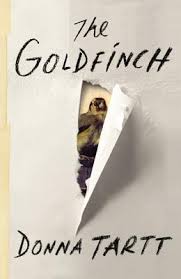
GoldfinchThe Goldfinch won the 2014 Pulitzer Prize for Literature, and so it meets an unchecked requirement for the Book Riot Challenge (recent award winner of one of the major literary prizes.) Honestly, if it weren’t for my desire to complete the challenge, I might have read Tartt’s The Secret History first. The latter books seems a little more up my alley, but I”m eager to see what this critically acclaimed novel has to offer. If it’s engaging, I’ll go back and pick up her first novel.


AMillionShadesofGray

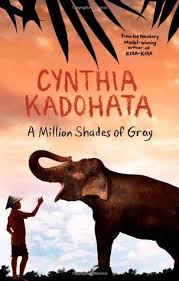
No A Million Shades of Gray isn’t a mommy porn book 20,000 times more intense than E.L. James’ book. On the contrary, it’s an intriguing YA book about a teenage elephant handler who escapes into the jungle with his elephant to escape war-torn Vietnam. This book will hit on an unchecked category on the Book Riot Challenge (i.e. YA book)


Life of Pi

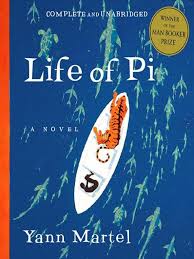
Life of Pi is a book that I intended to read long before the movie came out, but still haven’t gotten around to it. It was cheap on Kindle, and so I picked it up. I’ve seen the movie, so it’ll be interesting to compare, given how visual the movie was.


I’m almost halfway through the Book Riot 2015 Read Harder Challenge. The 19 books I’ve completed thus far this year include books in 11 of the 24 categories, including:


3.) Short story collection or anthology: a.) 999: New Stories of Horror and Suspense, and b.) I Have No Mouth And I Must Scream


6.) By someone of another gender: a.) Tears in Rain, and b.) Principles of Tibetan Medicine


7.) Takes place in Asia: a.) Quarantine in the Grand Hotel, and b.) The Mandala of Sherlock Holmes


10.) A micro-history: Yoga Body: The Origins of Modern Postural Practice


12.) A science fiction novel: a.) Tears in Rain, b.) The Martian


17.) A collection of poetry: Leaves of Grass


18.) A book that was recommended: Key Muscles of Hatha Yoga


19.) A book originally published in another language: a.) Tears in Rain (Spanish), b.) Quarantine in the Grand Hotel (Hungarian)


20.) A graphic novel or comic book collection: The League of Extraordinary Gentlemen (Vol. 1)


23.) A book published in 2014: The Martian


24.) A self-improvement / self-help book: Zen Mind, Strong Body


BOOK REVIEW: The League of Extraordinary Gentlemen (Vol. 1) by Alan Moore

The League of Extraordinary Gentlemen, Vol. 1The League of Extraordinary Gentlemen, Vol. 1 by Alan Moore

My rating: 4 of 5 stars

Amazon page

For those unfamiliar with this series or the movie featuring Sean Connery, this graphic novel assembles a team of heroes from 19th century science fiction and adventure novels. Specifically, the team includes: Mina Harker (of Bram Stroker’s Dracula), Allan Quatermain (of H. Rider Haggard’s King Solomon’s Mine series), Captain Nemo (of 20,000 Leagues Under the Sea and other Jules Verne novels), Dr. Jekyll/Mr. Hyde (of the Robert Louis Stevenson novel featuring their names), and Hawley Griffin (of the H.G. Wells novel, The Invisible Man.) The team’s principle nemesis is Professor James Moriarty of Arthur Conan Doyle’s Sherlock Holmes series.

Interestingly, this book follows the same general plot progression as the movie, but is much different in tone, settings, and character details. The plot progression of which I refer is that the team is assembled (with no small amount of mutual animosity) and they bond into a team as they face a grandiose threat of steampunk industrialization run amok. That plot progression aside, you’ll find an entirely different story otherwise. First, those who favor gender equality will appreciated that Mina Harker is in a leadership role in this volume, the role played by Quatermain in the movie. (That being said, this isn’t a group of individuals who take readily to being led.) Second, those who like darker, grittier tales will find this book more appealing than the movies. Allan Quatermain is found by Harker wasted in an opium den. Griffin is captured after having moved into a girl’s school to use his invisibility to lecherous advantage and the head mistress of said school is decidedly dominatrix like. I generally liked the grittier tone better, though it was hard to reconcile Griffin’s abhorrent behavior with heroism—anti-heroes are a challenge, particularly one who can disappear at will. Third, the team in the book is smaller and more manageable, with the movie having taken on two more characters (Dorian Gray and Tom Sawyer.) Finally, the book doesn’t get around so much. The movie features at least four major settings—not counting the high seas, but the book takes place mostly in Victorian London.

You don’t have to have read all the classic works from which the characters derive to get the story, but it does make it a little more fun. (Yes, I realize that I’m using “classic” for books–some of which–were considered the pulp fiction of their day. However, if your book is still in print after 100 years, I’d say you deserve the status and respect.) Those who’ve read the books will get some subtleties that aren’t critical to the story but are kind of nifty. That being said, don’t expect the characters to match their originals perfectly. The novels covered are wide-ranging, some rely on supernatural elements and others are more realistic, some are futuristic while others reflect the times more accurately. One can’t bring all these individuals into one world and have them be exactly as they were in their original domains.

There are some extra features at the end including a short story featuring a time traveling Allan Quatermain and some art from the series.

I’d recommend this book for those who read comics and graphic novels—especially if they’ve read the stories of at least a few of the 19th century characters. (If you haven’t read any of the novels, you should probably go back and hit some classics before you read anything else. Just my opinion.) It’s an intriguing concept, and it’s done well.

The movie trailer is here.

View all my reviews

READING REPORT: February 6, 2015

I polished off three books this week. That’s not as impressive as it might seem; they were all slim volumes. I’ll do reviews on these books in the near future, but a few words about each will suffice here.

The first was Zen Mind, Strong Body; a book about which I had mixed feelings. It’s by a calisthenics expert named Al Kavadlo, who is a personal trainer, author, and YouTube phenom. On the positive side, Kavadlo is a sharp guy with many useful insights into bodyweight exercise and fitness in general. Additionally, Kavadlo eschews the snake-oil salesmanship that is rampant in the fitness world.

On the other hand, the book is basically a rehash of blog posts, and the “new / first time seen pictures” aren’t useful for learning the exercises because they’re mostly just the author standing in random places with his shirt off. Furthermore, there’s no such consolidating theme to the book as is suggested by the title. I think it just has that title (a take-off on DT Suzuki’s classic work on Zen) because “The Best of Al Kavadlo’s Blog Posts” doesn’t scream “buy me.” I thought a little extra value-added could have been provided for the people who paid for the book, but you will learn from it.

The second book was Quarantine in the Grand Hotel. This novel brings satire and humor into a locked-door mystery. It was written by a Hungarian author in the 1930’s, but remains a readable and enjoyable book.

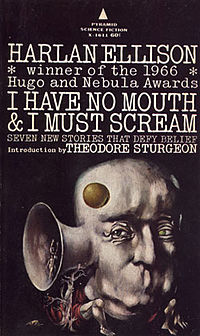
IHaveNoMouthThe third book was the short story collection by Harlan Ellison that I mentioned I would begin this week. I Have No Mouth and I Must Scream consists of seven stories that are nominally in the genre of science fiction, but could also be classified as tales of the strange. This book was first published in 1967. Ellison writes stories in a readable style, though one that can sometimes be called “trippy.” If I were going to award a “book of the week” for the book that I found most engaging, it would be this one.

I only got a couple of chapters each into the Mo Yan novel Life and Death Are Wearing Me Out and the epic poem The Aeneid. The former is readable has a fascinating premise, but the latter–not unexpectedly– is a little more of a chore to read (but is a classic and seems worth the difficulties.)

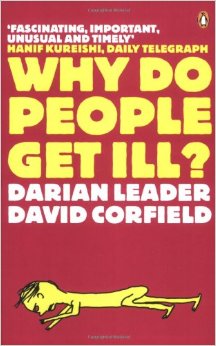
Having finished off some nonfiction in the preceding week, I made room to resume reading a book that I started a couple of months ago entitled Why Do People Get Ill? A two-man team consisting of a psychoanalyst and a neuroscientist joined together to write this book. It examines the role that stress and the mind play in illness. Yes, things like germs (i.e. bacteria and viruses) cause illness. However, that’s not the whole story, and a couple of key questions remain. First, how come some people can be repeatedly exposed to causative factors and their bodies knock out disease leaving them asymptomatic. Second, how come others readily come down with ailments–sometimes even when they haven’t been exposed to causative factors. To put matters in scholarly terms, germs may be a necessary condition for disease, but they are rarely a sufficient condition.

WhyDoPeopleGetIll_Leader&Corfield


I didn’t do much yoga or martial arts specific reading this week. However, today I finally began The Pyjama Game, which is a book about Judō that I mentioned in one of my previous Reading Reports.

I purchased four books this week, all on Kindle and mostly on sale.  Those books, which I’m sure to be discussing and reviewing on later dates are:

TheThreeStigmata

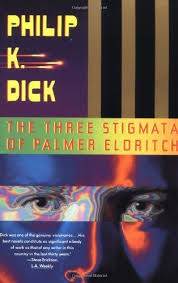
The Three Stigmata of Palmer Eldritch: Because I’m a huge PKD fan, and this is said to be one of his best books–of his books that I haven’t yet read. This was in the Kindle Monthly Deals.

FirstHubby

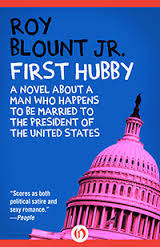
First Hubby: This will be my first Roy Blount Jr. book, but I did enjoy him on that NPR game show (i.e. Wait Wait… Don’t Tell Me!) This was also a Kindle Monthly Deal as I recall.

Ikkyu_Berg

Ikkyu: Crow with No Mouth: This is the story of a Zen master who lived in Kyoto in the 15th century. He sounds like a fascinating man, and was also a skilled poet. This one wasn’t on sale, but neither was it expensive at the usual price.

TheElementsThe Elements: This book is a Kindle Daily Deal as I’m writing this. I love me some science. I did have to look through the sample pages before buying. Even though it was inexpensive, I was concerned that it might not have much usefulness on my black&white, base-model Kindle because the graphics are an important part of the book. However, it looked like there was enough text explanation to be worth the $2.00–even if the graphics don’t show up well.

And that was my week in books.

READING REPORT: January 23, 2015

If I were a kid today, I’d be diagnosed with ADD in a heartbeat. I rarely read one book straight through. However, I read a lot, and that means I switching from one book to the next–reading a chapter at a time. I do try to read no more than one book of a given type/genre at a time–often unsuccessfully, as you’ll see. With this in mind, I thought I’d experiment with a weekly post on what I’ve been reading that week.

Book-Review-The-Martian

Fiction: The novel that I’m currently reading is Andy Weir’s The Martian. This book is gripping. It’s considered to be one of the best–if not the best–science fiction works of 2014, although it was self-published in 2011. This is a great example of a book that couldn’t get published despite being spectacular, and which will now make a bazillion dollars. It also explains how a 2014 novel is set to have a big budget movie adaptation come out in late 2015. This book is like the movie Gravity set on Mars, except that it’s smarter.  It taps into that visceral fear of what it would be like to die alone in space–not in a flash but with time to know you are going to die. An unlikely, but plausible sounding, set of circumstances result in astronaut Mark Watney being left for dead on the surface of Mars. But, of course, he’s not dead. Watney has to be creative to figure out how to live for four years in hopes that the next manned Mars mission will go forward as planned. It’s a roller coaster ride between him thinking he will surely die and him coming up with clever solutions. If you are into science, it’s particularly intriguing. I’m about 20% of the way through.


Foreign Fiction: I’ve also continued to read a Hungarian novel called Quarantine in the Grand Hotel by Jenő Rejtő. This is a silly (in a good way) locked-door murder mystery. I picked it up in Hungary over the holidays, and will probably finish it in the next week or so. (I’m about 2/3rds of the way through, and it’s only a 160 page book.) It’s short, highly readable, and humorous.

I also read a chapter from The Mandala of Sherlock Holmes by Jamyang Norbu. A number of authors have picked up the mantle of Sherlock Holmes from Sir Arthur Conan Doyle.  (Not to mention TV shows and movies.) This book is published in India by a Tibetan author who imagines Sherlock Holmes traveled to India and Tibet after he was believed to have been killed (along with Professor Moriarty) in Switzerland. (Going over the falls as depicted in the second Sherlock Holmes movie featuring Robert Downey Jr.) There are three parts to the book: India, Tibet, and Beyond. I’m in the last couple chapters of the first part, most of which takes place in Bombay.


Short Stories: I’m about 85% of the way through 999: New Stories of Horror and Suspense. This is a collection of short fiction of horror / dark suspense. It features authors such as Joyce Carol Oates, Stephen King, Neil Gaiman, Eric Van Lustbader, and David Morrell.  All of the  works are short stories except for a novella/short novel by William Peter Batty. The novella is the last piece, and I’ve just started part II of it.

999_Horror&Suspense


Martial Arts: I just finished Dr. Anthony Catanese’s The Medical Care of the Judokabut I posted a review yesterday so I won’t get into that book. My next martial arts book will be The Pyjama Game by Mark Law, but I haven’t yet begun it.


Yoga: I’ve been reading two books related to yoga this week. I just finished Chapter 2 of Coulter’s Anatomy of Hatha Yoga. This chapter dealt with the anatomy and physiology of breathing. This book is an excellent resource for yoga teachers, but it’s pretty dense–which may explain why I’m only on Chapter 3. Not only does the chapter give general information on respiration, it also provides information specific to various yogic breathing methods such as abdominal, yogic, thoracic, paradoxical, and diaphragmatic.

The second yoga book I’m reading is Singleton’s Yoga Body, which is a history of yoga postural practice (asana practice). This book presents a controversial thesis, which is that postural practice (asana) wasn’t really a part of mainstream yoga until quite recently, and that it’s as much a product of what happened in the Western world in the early 20th century as it is a result of Indian yogic traditions–if not more. Having finished the first three chapters (about 30% through), I’m not sure whether I buy his argument or not. He has some documentary evidence on his side, but I know there is also a proclivity to equate the current era in which everybody documents laundry day with the past in which many people were much more secretive. It’s also often not true that the most vocal are not the mainstream. He may be correct, but he has yet to wow me. (Part of his argument is people like Max Muller and HP Blavatsky found hatha yoga [the style which most emphasizes posture] to be the domain of conmen and beggars.)


AnatomyHathaYoga_CoulterYogaBody_Singleton


Miscellaneous Nonfiction: I’ve got about 70 more pages to finish in a book called How Pleasure Works by Paul Bloom. As the title implies, this book is about the science of why people get pleasure from various things from food to sex to freaky sex to art to music, etc. The primary thesis is that there are hidden essences that are the source of pleasure. The chapter I just finished talked about an interesting study in which violinist extraordinaire Joshua Bell went into a subway station and played his $3.5million violin, and barely netted $30–even though there were people passing him who’d paid $200 to hear him in his tuxedo at a concert hall later that evening. The chapter also talked about art forgeries, and how some art is valuable when it’s associated with a famous painter and worthless when it’s a forgery by a presumably equally skilled forger (I say equally skilled because these individuals have been able to pass their work off to experts as a painting by a famous artist. In some cases, they weren’t forgeries but rather originals in the style of the famous artist and submitted as an unknown work found in a basement somewhere.)

HowPleasureWorks


I also finished the letter “B” in the book The Painted Word  by Phil Cousineau. This book is organized like a dictionary, except that it only contains certain English language words that the author finds particularly intriguing, and it gives background on usage and how the meanings have migrated. If you love language, you’ll find this book much less painfully boring than I have made it sound.

Painted Word


That completes the books I’ve been reading over the past week. I did purchase two books this week, but they’re far down the queue to be read. One is the graphic novel The League of Extraordinary Gentleman by Alan Moore, and the other is Right Ho, Jeeves by P.G. Wodehouse.

2015 Book Riot Read Harder Challenge

From Goobe's Books, one of my favorite local bookstores in Bangalore

From Goobe’s Books, one of my favorite local bookstores in Bangalore

Recently, a FaceBook friend posted a link for the 2015 Book Riot Read Harder Challenge. This is a scavenger hunt for readers. There are 24 categories for which one should read at least one book each. For many categories there are also links to posts that will provide some recommendations.


While I’m not particularly good at planning out my reading, I thought it would be fun to give it a try.


What follows are my choices in each category.

1.) Author was under 25 years old:  The Icarus Girl  by Helen Oyeyemi

or possibly Everything is Illuminated by Jonathan Safran Foer

2.) The author was over 65 years old: All That Is by James Salter

3.) A short story collection or anthology: 999: New Stories of Horror and Suspense ed. Al Sarrantonia

4.) Indie press published book: I Have Blinded Myself Writing This by Jess Stoner (and, incidentally, SF/LD [Short Flight / Long Drive] Press)

or, alternatively: Go the Fuck to Sleep by Adam Mansbach (published by Akashic Books)

5.) By or about someone who identifies as LGBTQ: Confessions of a Mask by Yukio Mishima

6.) A book by someone of the opposite gender: House of Bathory by Linda Lafferty, or The Tale of the Genji by Murasaki Shikibu

7.) Book takes place in Asia: My Boyhood Days by Rabindranath Tagore

or, possibly, Kite Runner by Khaled Hosseini, or  Underground by Haruki Murakami. I’ll likely read several books in this category.

8.) Author is from Africa: Things Fall Apart by Chinua Achebe

9.) Book by or about someone from an aboriginal culture: Lightfinder by Aaron Paquette

10.) A microhistory: Banana: The Fate of the Fruit that Changed the World by Dan Koeppel

or The Emperor of Maladies by Siddartha Mukherjee, or The Pirate Coast by Richard Zacks,

but–most likely– Yoga Body: The Origins of Modern Posture Practice by Mark Singleton (Which I just realized qualified and I already have queued up to read soon.)

11.) A YA novel: Hunger Games by Suzanne Collins

12.) A Sci-fi novel: The Sirens of Titan by Kurt Vonnegut, or Wild Seed by Octavia Butler, or Tears in Rain by Rosa Montero, or Under the Empyrian Sky by Chuck Wendig. I’ll likely read several books in this category.

13.) A romance novel: Fifty Shades of Grey by E.L. James

14.) A recent winner of the National Book Award, the Man Booker Prize, or a Pulitzer: Behind the Beautiful Forevers by Katherine Boo (2012 National Book Award) or The Goldfinch by Donna Tartt (2014 Pulitzer)

15.) A retelling of a classic tale: The Story of Edgar Sawtelle by David Wroblewski (of Hamlet), or Going Bovine by Libba Bray (of Don Quixote.)

16.) An audiobook: (Truth be told, I probably won’t listen to any books this year. I used to get audiobooks all the time when I had a commute, but it’s not so convenient anymore. However, to play the game to its fullest): All the Light We Cannot See by Anthony Doerr

17.) A collection of poetry: Leaves of Grass by Walt Whitman

18.) A book someone has recommended for you: It may be cheating because I already have it down, but so far the only book I’ve had recommended for me recently (that I haven’t yet read) is Behind the Beautiful Forevers by Katherine Boo

If you want to keep me from being a dirty cheat, feel free to make me a recommendation.

19.) A book originally published in another language: Les Miserables by Victor Hugo, or Thirukkural by Thiruvalluvar

20.) A graphic novel or comic collection: Hyperbole and a Half by Allie Brosh, or Serenity: Leaves on Wind by Zach Whedon

21.) A guilty pleasure read: Never Go Back by Lee Child, or Valley of the Dolls by Jacqueline Susann, or Tropic of Cancer by Henry Miller

22.) A book published before 1850: The Aeneid by Virgil (19 B.C.), or Don Quixote by Miguel Cervantes (1605)

23.) A book published in 2014: Station Eleven  by Emily St. John Mandel, or The Martian by Andy Weir

24.) A self-improvement / self-help book: A Conversation with Fear by Mermer Blakeslee, or Golden Cloud, Silver Lining by Ashok Chopra


Well, there’s my list. Now I’ve got to go get cracking on doing the reading.