BOOK REVIEWS: The Things They Carried by Tim O’Brien

The Things They CarriedThe Things They Carried by Tim O’Brien
My rating: 5 of 5 stars

Amazon page

It’s called a novel, but it reads like a collection of war stories and essays about being an American soldier in the Vietnam War. That’s not a criticism. In fact, it’s part of the brilliance of this book. If it were thoroughly plotted, it might not feel so authentic. As war is disjointed, so is O’Brien’s book. Some of the chapters are tiny and some are lengthy. Some read more like essays than fiction, and others are clearly fictitious.

When I say that “some are clearly fictitious,” there’s always a doubt that it might just be a true story–because war is just that absurd. An example that springs to mind is one of the most engaging pieces in the work. It’s called “Sweetheart of Song Tra Bong,” and it’s about a wholesome, young girlfriend to one of the soldiers who [improbably] comes to live in the camp. The girl acclimates to the war, and soon she is going out on patrol–not with the ordinary infantry soldiers, but during the night with the Green Berets. Perhaps the moral is that some people are made for war, and it’s never who you’d suspect. As I describe it, the premise may sound ridiculous, but the way O’Brien presents it as a story told by a Rat Kiley–a fellow infantryman known to exaggerate—it feels as though there is something true, no matter how fictitious the story might be. Before one reads “Sweetheart of Song Tra Bong” one has been primed by a chapter entitled “How to Tell a True War Story,” which tells one that truth and falsehood aren’t so clear in the bizarre world of war.

There are a couple of chapters outside the period during which O’Brien (the character, who may or may not be the same as the author) is actively in an infantry unit. One early chapter describes his near attempt at draft dodging, and another talks of his time stationed at the rear after being injured. Both of these chapters offer an interesting twist in the scheme of the book overall. We find O’Brien to be a fairly typical infantry soldier, and it seems hard to reconcile this with his floating in a canoe and narrowly deciding not to make a swim for the Canadian shoreline. However, what is odder still is realizing how distraught he is to be pulled out of his unit, particularly when he realizes that he has become an outsider and the [then rookie] medic who botched his treatment is now in the in-group. This is one of the many unusual aspects of combatant psychology that comes into play in the book, along with O’Brien’s description of how devastating it was to kill.

There are 21 chapters to the book. As I said, they run a gamut, but at all times keep one reading. It’s the shortest of the Vietnam novels I’ve read—I think. When I think of works like “Matterhorn” and “The 13th Valley,” there seems to be something hard to convey concisely about the Vietnam War, but O’Brien nails it with his unconventional novel. O’Brien also uses repetition masterfully. This can be seen in the title chapter “The Things They Carried,” which describes the many things carried by an infantry soldier—both the physical items they carried on patrol and the psychological and emotional things they carried after the war. It’s a risky approach that pays off well.

I’d recommend this book for anyone—at least anyone who can stomach war stories.

View all my reviews

BOOK REVIEW: Burmese Days by George Orwell

Burmese DaysBurmese Days by George Orwell
My rating: 5 of 5 stars

Amazon page

Orwell’s novel is about the ugly face of empire. It takes place in a Burma that was administered by the British as part of their Indian colony—but it’s in the waning days of the Empire, much to the chagrin of the entitled and chauvinistic European characters of the book. Most of the characters are shockingly racist and life abroad hasn’t broadened their thinking in any discernible way. The notable exception is the lead character, John Flory, whose best friend is Dr. Veraswami (an Indian medical doctor and government official) and who is unique among the British for being able to see the native ways as anything other than primitive and preposterous.

However, the hero is deeply flawed. Flory is a coward, and in the early pages of the novel is unwilling to support the nomination of his good friend Dr. Veraswami for membership to the expat’s club because many of its more vociferous members will be damned before they admit a brown person. Flory is also a bit morally loose for the taste of his early post-Victorian comrades. He has a birthmark that he’s constantly trying to conceal, and whose presence we are led to believe is crucial to his lack of confidence. While the main intrigue is provided by a plot by an unsavory Burmese official named U Po Kyin to undermine Dr. Veraswami and bolster his own stock among the whites, it’s Flory’s story that we are following. The reader hopes that Flory will develop the confidence needed to rise to the occasion—he being the only likable person in the cast (except perhaps Dr. Veraswami, depending upon how put off one is by the Indian doctor’s borderline Uncle Tom-ish obsequiousness.) Flory’s relationship with a young woman plays an important role in his story and sometimes it seems she may spur him to heights while at other times she looks to be his downfall. Flory’s conundrum is that the more virtuously he behaves, the more a target is painted on his back.

While the book is set almost a century ago, I found that it has something to say today. While the times have changed and the Empire is long dead, there are times that the long shadow of this period can still be seen in the current era.

I’d recommend this book for readers of historical fiction and particularly those interested in the past and present of areas under colonial rule. Orwell builds interesting (if often despicable) characters and the book has a well-developed and interesting narrative arc.

View all my reviews

BOOK REVIEW: Life from Elsewhere from Pushkin Press

Life from Elsewhere: Journeys Through World LiteratureLife from Elsewhere: Journeys Through World Literature by Amit Chaudhuri

My rating: 3 of 5 stars

Amazon page

“Life from Elsewhere” is a collection of essays written by writers from around the world on culture, multiculturalism, and the struggles of life (and writing) in a culture-infused world. The book consists of an introduction and ten essays by authors from India, Congo, Argentina / Spain, China, Israel, Syria, Palestine, Iran, Poland, Russia, and Turkey. It’s being put out to celebrate the 10 year anniversary of a program that seeks to translate more global literature into English (English PEN’s Writers in Translation.)

This was a hard work to rate, and so you may want to take the number of stars with a grain of salt. If you’re part of the niche audience of contemporary world literature devotees, you may love this book from beginning to end. For a more general reader—such as myself–there are golden nuggets scattered among a field of shiny gravel. I found the essays by Asmaa al-Ghul (i.e. “When Ideas Fall in Line”) and Andrey Kurkov (i.e. “Sea of Voices”) to be fascinating, even for the general reader. The former tells the story of a journalist who reaped a firestorm by posting a Facebook picture sans veil, but it offers insight into life under blockade in Gaza. The latter offers a Russian author’s experience of traveling in the Middle East, and the incidences of clash of cultures it offers was thought-provoking.

The countries represented by authors in this book are well chosen. Authors were chosen from locales that would have once been underrepresented in such a work. However, one might question the fact that half of the essays are from countries of the Middle East. While this may seem odd, one must admit that a writer or artist in most of the Middle East faces challenges that a writer from Osaka, Sao Paulo, or Prague would not. This isn’t only addressed in the al-Ghul essay mentioned above, but also in pieces such as those by Mahmoud Dowlatabadi (i.e. “Literature: Forbidden, Defied,”) and Elif Shafak (i.e. “A Rallying Cry for Cosmopolitan Europe.”)

I’d recommend this book for ardent devotees of contemporary global literature. Other readers will gain insight into what it’s like to be an artist in a world defined by culture–and particularly fascinating insight into cultures which are threatened by modern literature—and should make up their mind about how fascinating they find said topic. (Otherwise, one may find the book a bit dry.)

View all my reviews

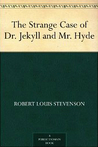
BOOK REVIEW: The Strange Case of Doctor Jekyll and Mister Hyde by Robert Louis Stevenson

The Strange Case of Dr. Jekyll and Mr. HydeThe Strange Case of Dr. Jekyll and Mr. Hyde by Robert Louis Stevenson
My rating: 4 of 5 stars

Amazon page

This novella has become more than just another Victorian sci-fi story. The central idea is a kernel that has been revisited in so many popular characters, perhaps most notably Marvel’s “Incredible Hulk.” The titular characters often feature in books, movies, and stories that use the Victorian literary world as their stomping grounds (e.g. “The League of Extraordinary Gentlemen” and “Van Helsing.”)

It’s hard to imagine that anyone doesn’t know the gist of this story. [Spoiler, if you’ve lived under a rock your entire life.] Dr. Jekyll succeeds in splitting off his dark side, and soon comes to regret it. Whereas Mr. Hyde is usually portrayed as gargantuan on film, in the book he’s dwarfish—representing only a part of the whole. It’s telling that it’s impossible to get to reading this book without knowing the twist from a million references to it in pop culture—e.g. the Looney Tunes cartoons.

Still it’s worth reading the original. It starts with a lawyer telling one of his friends a ghastly tale in which a vile, little man—Mr. Hyde–runs into a girl, and then stomps over her body as he makes his exit. The lawyer becomes concerned when he learns that his good friend and client, Doctor Jekyll, is leaving all his worldly possessions to the dastardly Hyde for reasons the lawyer cannot fathom. The book may not be action packed by today’s standards, but it does have good pacing and revelation of information. The descriptions of grotesquery are also gripping. The story is also told in a manner that is very different from how it would likely be told today, and that also makes for interesting reading. Furthermore, it’s short–less than 100 pages over 10 chapters.

I’d recommend this book for anyone who is interested in the classics of science fiction and speculative fiction.

View all my reviews

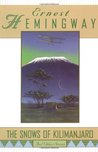
BOOK REVIEW: The Snows of Kilimanjaro and Other Stories by Ernest Hemingway

The Snows of Kilimanjaro and Other StoriesThe Snows of Kilimanjaro and Other Stories by Ernest Hemingway
My rating: 5 of 5 stars

Amazon page

This book collects ten pieces of short fiction penned by Hemingway. Each of them is a stand-alone short story; though there’s indication that they all take place in the same universe. Notably, the character Nick Adams recurs in four of the stories (“Fathers and Sons,” “In Another Country,” “The Killers,” and “A Way You’ll Never Be.”)

The first and last stories present intriguing similarities that make them interesting bookends to the collection. The first, and eponymous, story—“The Snows of Kilimanjaro”—follows the last hours of a man who is dying of gangrene from an infected wound he sustained on Mount Kilimanjaro. The dialogue pits a wife in denial against the man who seems resigned to the inevitability of his death. The last story, “The Short Happy Life of Francis Macomber” is also set in Africa and features a man and wife whose adventure goes awry. In this case the story begins with the man having been emasculated when he bolted in the face of a charging lion, and all in front of his harpy-esque wife. Francis Macomber manages to redeem himself only in the last seconds of his life.

Besides the aforementioned book-ending stories, among the most substantial and well-developed stories in the book include: “The Gambler, the Nun, and the Radio,” “The Killers,” and “Fifty Grand.” The first of these is about a gambler put in the hospital by a disgruntled competitor and the happenings in the hospital while he is on the ward. “The Killers” is about two hitmen who venture into a small town diner looking for a boxer who apparently owes someone money or decided not to take a dive. “Fifty Grand” is about an aging boxer who bets against himself (and will probably soon be in the same boat as the boxer in “The Killers.”)

There are a couple of stories that feel fragmentary, including: “A Clean, Well-Lighted Place” and “A Day’s Wait.”

This collection features the usual elements of Hemingway fiction, e.g. punchy and spare prose, artfully constructed dialogue, tales of manliness and inadequacy. It’s a short readable book of only about 150 pages.

The stories included are:

1.) The Snows of Kilimanjaro
2.) A Clean, Well-lighted Place
3.) A Day’s Weight
4.) The Gambler, the Nun, and the Radio
5.) Fathers and Sons
6.) In Another Country
7.) The Killers
8.) A Way You’ll Never Be
9.) Fifty Grand
10.) The Short Happy Life of Francis Macomber

I’d recommend this for readers of short fiction who haven’t gotten around to it yet.

View all my reviews

BOOK REVIEW: The Goldfinch by Donna Tartt

The GoldfinchThe Goldfinch by Donna Tartt
My rating: 5 of 5 stars

Amazon page

Theo Decker is thirteen years old when, during a visit to an art museum, a bomb explodes–killing his mother and defining the course of his life into adulthood. There are the obvious impacts on the life of a child separated from a loving and responsible parent. Furthermore, Decker feels guilty because he and his art-loving mother only stopped in the museum on the way to a meeting with the Principal. Theo’s dad had flown the coup before the book’s start, and is an alcoholic gambler in addition to being a deadbeat dad. The lack of a reliable family member who can (and wants to) take Theo puts tremendous stress on the boy, encouraging him to fall into the same patterns as the father he despises.

Theo spends the remainder of his adolescence in a mix of homes: a caring and wealthy (but in many ways dysfunctional) household where he feels his outsider status, his father’s neglectful Las Vegas home where he makes a solitary friend—Boris–of similar circumstance, and, finally, the home of a wise craftsman to whom Theo is connected only indirectly by the events of that fateful day. No matter whether he is in a good home with a responsible and respectable guardian or in his father’s white trash estate, there’s always a cloud of uncertainty over the boy’s life.

There’s also an unexpected way in which Decker’s life is defined by the bombing. Waking up amid the debris and dust, he tries to help an old man in the last minutes of life, only to witness the man’s death. Shaken, fearful, and unable to find his mother, Theo stumbles his way out through the back of evacuated museum having absconded with a small but famous painting, Carel Fabritius’s “The Goldfinch.” He knows he should return the painting, but the fact that it was one of his mother’s favorites and that he doesn’t want to rock the boat and get sent to an institution leads him to keep it. Furthermore, as much as he loathes the idea of being like his father, he shares his old man’s tendency to get himself into pickles because of a desire to be liked that is so extreme that it keeps him from taking responsibility for his actions and encourages him to self-medicate to deal with the stress of always having dark clouds overhead. The journey of the book, which takes us from the bombing to Decker’s life as a 20-something adult, is all about whether his own innate goodness in combination with the positive role models (living and deceased) around him will allow him to shake off the demons his father never could.

Tartt wrote this book masterfully. The fact that it won the 2014 Pulitzer Prize is more praise than I can heap on it. The book actually opens with an adult Theo Decker in an Amsterdam hotel room, afraid to go outside for reasons the reader isn’t yet let in on. Later we discover that this is chronologically near the story’s resolution, and it serves as a brilliant hook. For the entire book, that hook is set and the question of why resounds in the back of one’s mind.

It’s a rare 800+ page book that doesn’t drag, but this one pulls one through beautifully. This is in large part owing to the character development of all the major characters, and there are quite a few important characters in a book of this scope. While some are cads (e.g. Theo’s dad and his girlfriend “Xandra”) and some are virtuous to a fault (e.g. Hobie, Theo’s guardian from age 15 onward), one sees enough depth to experience the humanity of them all: the good in the bad and the bad in the good. Other than the lead—and possibly inclusive of him—the most fascinating character is his best friend, Boris, who features prominently in Theo’s Las Vegas years as well as during the novel’s climax and resolution.

The other factor that keeps the tension on is the dysfunctionality of many of these characters. There’s always drama to be had. In fact, when things are looking up in the novel is when the reader gets the biggest sense of foreboding, a feeling that the bottom will inevitably fall out. We know the bottom will drop out because Decker has set himself up for it to—and not entirely unwittingly. We just don’t know how until the book’s end.

I’d highly recommend this book for all readers of fiction. Don’t let the large page count and suggestion of stuffiness (art, antiques, and high society New York all featuring prominently in the book) dissuade one. It’s readable and engaging, and it offers the same authenticity then describing Boris and Theo smoking pot and eating sugar on bread for dinner as it does when it’s talking about the sale of a fake 18th century armoire.

View all my reviews

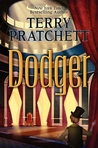
BOOK REVIEW: Dodger by Terry Pratchett

DodgerDodger by Terry Pratchett
My rating: 5 of 5 stars

Amazon page

This book’s protagonist is based loosely on the Artful Dodger character from Charles Dickens’ novel “Oliver Twist.” Pratchett’s Dodger is a brave scamp with a gift for plunging into the middle of precarious situations. One such situation occurs when he rescues a young woman who’s being battered one night on a London side street. The girl, known only as Simplicity, we later find out was attempting to escape an arranged marriage to an awful chap who’s a member of a foreign royal family. Her husband has no intention of letting her go peaceably, and has power, resources, and goons at his disposal. The story is an attempt to resolve this issue in a way that is satisfactory to the girl, for whom Dodger grows fond.

Dodger is a tosher, which is one who scavenges in London’s sewer system in search of wedding rings that were washed down drains or coins that rolled into storm drains. The fact that he’s mostly collecting lost items may make him more palatable / likable than the pick-pocketing Dodger of Dickens’ work. That said, this version of Dodger isn’t above absconding with valuables that seem to be “lying around”–even if they happen to be “lying” on the owner’s desk in the owner’s house. However, it’s clear from the outset that Dodger has a working moral compass. His liberties with earthly possessions don’t interfere with his understanding of what is right and wrong when it comes to treating others as you would like to be treated. This makes for a character who seems more mischievous than felonious.

Like many modern works that are based on Victorian era fiction, this book not only borrows fictitious characters but also individuals from the real world. Pratchett weaves Charles Dickens, Benjamin Disraeli, Henry Mayhew, and Angela Burdett-Coutts into his novel. (If the latter two names don’t ring bells, the former among them was an advocate for the poor and the latter was the wealthiest woman in England at the time, a woman who opened schools for impoverished children.) Except for Dickens [and to some extent Burdett-Coutts], these characters don’t play major roles, but more help to make the reader feel they reside in the world of the novel. [However, the book is dedicated to Mayhew.] There are also other fictional characters, most notably Sweeney Todd—the butcherous barber of penny dreadful fame.

This novel displays generous helpings of Pratchett’s humor and skill in setting the reader into a world that would otherwise feel foreign. One needn’t have read “Oliver Twist” [or any other works] to make sense of the book. It stands alone. [It may be easier if you haven’t read “Oliver Twist,” because you won’t have an ingrown sense of the character.]

I’d highly recommend this book for readers who like light-hearted historical fiction. It’s funny and engaging.

View all my reviews

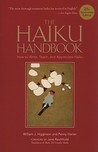
BOOK REVIEW: The Haiku Handbook by William J. Higginson

The Haiku Handbook: How to Write, Teach, and Appreciate HaikuThe Haiku Handbook: How to Write, Teach, and Appreciate Haiku by William J. Higginson
My rating: 5 of 5 stars

Amazon page

Many people think that a haiku is any poem of three lines consisting of 5, 7, and 5 syllables, respectively. Those who’ve gotten beyond a high school literature class introduction to the form may also know that these poems are usually observations of the nature world, and, specifically, the seasons. If the preceding sentences sum up haiku for you, but you’re interested in learning more, Higginson’s book will revolutionize your understanding of the art.

As it happens, the most fundamental notions about what makes up a haiku are actually more contentious than one might believe. Take the 17-syllable format. Japanese syllables are—on average—much shorter than English syllables. (e.g. Consider that “squirreled” is one syllable, whereas a long Japanese syllable would be “shi.”) For this reason, many have argued that to have the same sparse sound quality of Japanese haiku, English language haiku should follow a format that is less than 17 syllables. Also, while many people know that haiku are poems about nature, they might not make the connection to the purely descriptive (non-analytical / non-judgmental) approach or the art form. There’s a definite connection between haiku and the Zen mode of thought. The fact that the poems are sensate descriptions doesn’t mean they shouldn’t evoke emotion; on the contrary, they should be evocative on a primal level.

Be the preceding paragraph as it may, Higginson sketches out the evolution of haiku from the traditional greats (e.g. Bashō, Buson, Issa, and Shiki) to modern haiku poets both from Japan and from the rest of the world. The many examples provided offer the reader insight into how various poets have bent and broken the rules of haiku to achieve their own ends. There are, of course, some who wish to keep the form as true to the tradition as possible. Such individuals would like those who want to get unconventional to avoid using the term haiku (or terms for related traditional forms, e.g. “tanka.”) Others, want the freedom to take the art in new and unconventional directions.

The book consists of 16 chapters divided into four parts. The first part charts the evolution of haiku from the early masters to the modern age. The second part gets into the nitty-gritty of composing haiku, and it’s where one will learn about the various thoughts on the form and content of these poems. (Those wanting to learn the craft of writing haiku are directed specifically to chapters 8 and 9, which address the key elements nicely.) The third part is about teaching haiku, and specifically how to introduce it to children in a way that is much more effective than the usual teaching method (i.e. “Hey, kids, a haiku is a poem with 17 syllables arranged in three lines of 5 – 7 – 5 syllables.”) The fourth and final part puts haiku into a context of lesser known, but related, forms of Japanese poetry such at renga, tanka, and senryu. In other words, it reflects on the forms that predated or sprung from haiku. The book also has front and post matter that readers may find useful, including explanations of Japanese pronunciation (the Japanese poems usually feature the Romanized spelling out of the Japanese words as well as an English translation), a list of season words, a glossary, and bibliographic references.

I’d recommend this book for readers and / or writers of haiku who want to learn more about the craft and its progression as an art form. There’s scarcely a page in the book that doesn’t offer example haiku to help make the author’s points more clearly. One needn’t worry that this will be dull exposition that can only help to kill one’s love of haiku. I found the book to be readable and the examples to be well-chosen.

View all my reviews

BOOK REVIEW: Things Fall Apart by Chinua Achebe

Things Fall Apart (The African Trilogy, #1)Things Fall Apart by Chinua Achebe
My rating: 4 of 5 stars

Amazon page

Things Fall Apart is about a man who conducts his life ever trying to distance himself from his father. In the process, he sows the seeds of his own destruction. Residing in the small (fictional) Nigerian village of Umuofia in the late 19th century, Okonkwo strives to be hyper-masculine in everything he does. As a young man he becomes a village wrestling champion and, when it comes time to start farming, he’s driven to be the best farmer possible in order to pay off his debts and to be as wealthy as possible. He feels that his father, who was constantly in debt and negligent in his familial duties, was weak and effeminate. On the one hand, Okonkwo’s drive is respect worthy, but, on the other, his need to appear strong in the extreme comes off as a bit pitiful.

There are a couple of crucial events in Okonkwo’s life in which his need to appear manly results in great inner distress. The first occurs when it’s determined that a young man who’s been staying with Okonkwo’s family must be killed. (The young man was sent to Umuofia as a settlement for a wrong between the young man’s father and an Umuofia resident.) Okonkwo has been a father to the young man. Even when a village elder tells Okonkwo to have no part in the killing owing to being like a father to the boy, Okonkwo feels he must participate lest he be seen as effeminate. Of course, Okonkwo is wracked with guilt because he murdered a boy who’d been like a son to him. Later, an accidental discharge of Okonkwo’s firearm kills an innocent young man. The worst part of this for Okonkwo is that an accidental killing is seen as a “woman’s offense.” As punishment, Okonkwo and his family are sent in exile on another village for seven years. Okonkwo isn’t so much torn up by killing another innocent as by the fact that the way it happened makes him look girly in the eyes of others—or so he believes.

Besides the character portrait of Okonkwo, the book is also a commentary on the nature of colonialism and proselytizing missionaries. The first part of the book is set in a pre-colonial state, but in the latter half the rapidly developing tensions between the missionaries and the local villagers is featured. When Okonkwo and his family return to Umuofia after seven years, he finds that white men have built a church and are actively seeking to turn the villagers away from the indigenous beliefs. Of course, for Okonkwo this is just too much, and he can’t believe others are putting up with this. (Adding to his torment is the fact that his son is one of the converts—possibly because that son himself wants to distance himself from the father who murdered his best friend [the boy from the other village.]) Okonkwo is ultimately unable to tolerate that the world has become something so different from what he believes is right, and to continue living means to steer away from the path that he has locked his life into.

This short and thought-provoking book is a great window into pre-colonial Africa and the clash of worldviews that colonization brought. It’s also a cautionary tale about not having sympathy for the failings of one’s father—not to mention the weakness inherent in our own humanity.

View all my reviews

BOOK REVIEW: Anno Dracula by Kim Newman

Anno DraculaAnno Dracula by Kim Newman
My rating: 5 of 5 stars

Amazon page

Anno Dracula is set in a world subsequent to the events of Bram Stoker’s Dracula. In the world of Anno Dracula, Dracula kills Van Helsing (not the other way round) and becomes more powerful than ever. In fact, the Count has married himself into line to become king. Vampires flourish in the open and their numbers are swelling. But a few of them are being gruesomely murdered. In Newman’s work, the vicious Whitechapel murders attributed to Jack the Ripper target young, “turned” working women of Whitechapel. The killings attract attention and become politically charged. The book’s plot revolves around the investigation by an unlikely duo, Charles Beauregard (human) and Geneviève Dieudonné (Vampire elder), into the murders.

Newman creates a fascinating world that blends not only his own characters (e.g. Beauregard and Dieudonné), but also characters from other popular works set in the 19th century as well as from our own history. Some of these borrowed characters are important to the story, others are mere cameos, and still others are references to the departed or imprisoned. Among the book’s fictional pantheon are those from works by Robert Louis Stevenson, Oscar Wilde, H.G. Wells, Sir Arthur Conan Doyle, and—of course—Bram Stoker. Bram Stoker lends the critical character of Dr. John Seward to the book, although there are references to most of that book’s major characters. (You’ll miss some connections if you haven’t read Dracula, but you’ll still be able to follow the story.) The next biggest contributor of characters is Sir Arthur Conan Doyle. Mycroft Holmes, Inspector Lestrade, and Professor Moriarty are all present in the flesh, though the latter plays a small role, and others—including the great detective, himself—are referenced throughout.

Many of the real world characters are literary greats (poets, playwrights, and novelists) including George Bernard Shaw, Lewis Carroll, Alfred Tennyson, and Oscar Wilde. However, also included are political figures, royalty, and—of course—the victims of Jack the Ripper. This mixing of the literary and historical worlds lures book-lovers further down the rabbit hole.

If this book seems like a murder mystery, it’s not. One of the interesting elements of Newman’s approach is that he reveals the killer from the outset. While we know who the killer is from the book’s opening, we don’t know whether or how he will be brought to justice—or what precisely justice means in this case. The book is more about the web of intrigue that surrounds the murders than it is about the murders. Ultimately, the book takes in a much bigger picture than a few murders in the seedy side of London.

Anno Dracula is intriguing and readable. If one has read Dracula, the various Sherlock Holmes stories, The Strange Case of Dr. Jekyll and Mr. Hyde, The Island of Dr. Moreau, and other contemporary literature, it’s all the more enjoyable for the way it artfully places these all in the same universe. I’d highly recommend this book for readers of the classic popular fiction.

View all my reviews