
5 Works of Fiction That Teach Life Lessons

Every novel or short story has lessons to teach. After all, stories are nothing more than problems resolved. Sometimes fiction teaches one how to do it right, and in other instances how to do it wrong–but there’s always a lesson.

But some works of fiction teach more than others (and more effectively.) It’s a great challenge to merge entertaining and thought-provoking story lines into one piece. Below are five books that I found both illuminating and engrossing.

[The hyperlinks in the titles go to my book review.]


1.) Ishmael by Daniel Quinn: Ishmael asks one to reevaluate what one thinks one knows about the world based on a lifetime of viewing it through the lenses of culture and anthropocentrism.

ishmael_quinn


2.) The Journeys of Socrates by Dan Millman: The “Socrates” in question is Millman’s [probably fictional and / or composite] teacher from the “Peaceful Warrior” books–not the Greek philosopher. This book shows us how a person whose life has been scarred by tragedy can attain peace of mind.

journeyofsocrates


3.) The Little Prince by  Antoine de Saint-Exupéry: The Little Prince teaches one to reevaluate what one thinks is important, and encourages one to see the world through a more child-like lens.

littleprince

4.) Breakfast with Buddha by Roland Merullo: How can the average Joe reshape the way he [or she] views life so as to live a happier one?
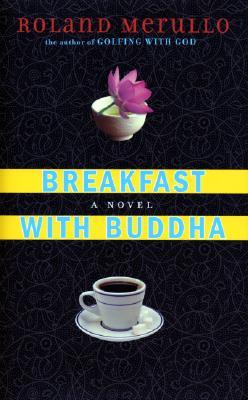
 

breakfastwithbuddha


5.) Veronika Decides to Die by  Paulo Coelho: A young woman who attempts suicide is told by her doctor that she damaged her heart and has only five days to live.

veronika


Happy reading.


BOOK REVIEW: Just So Stories by Rudyard Kipling

Just So StoriesJust So Stories by Rudyard Kipling
My rating: 4 of 5 stars

Amazon page


“Just So Stories” is a collection of 12 children’s stories. The theme that runs through the dozen stories is that they are mostly tall-tale answers for questions that children might have. All but two of them focus on animals and nature, and the two divergent stories deal with the origin of written language. Since it’s such a small collection and the titles tend to synopsize the stories, I’ll include the table of contents below, which may give one greater insight into the nature of the stories.

1.) How the Whale Got his Throat
2.) How the Camel Got his Hump
3.) How the Rhinoceros Got his Skin
4.) How the Leopard Got his Spots
5.) The Elephant’s Child
6.) The Sing-Song of Old Man Kangaroo
7.) The Beginning of the Armadillos
8.) How the First Letter Was Made
9.) How the Alphabet Was Made
10.) The Crab that Played with the Sea
11.) The Cat that Walked by Himself
12.) The Butterfly that Stamped

The edition that I have (i.e. 2006 Scholastic Junior Classics Edition) has a number of black-and-white graphics (block print and line drawn style)—one or two per story. Given the genre, I imagine most editions have some kind of pictures, but your edition’s graphics may vary. A number of the stories include short poetry—usually at the end. The poetry is part of the original Kipling product and so are likely included in all unabridged editions.

I’d recommend this book for those looking for short stories that are relatable to young children.

View all my reviews

BOOK REVIEW: The Dharma Bums by Jack Kerouac

The Dharma BumsThe Dharma Bums by Jack Kerouac
My rating: 5 of 5 stars

Amazon page


What one needs to know to get a feel for this book is neither a summation of events nor the description of some crisis that sets up those events; instead, one simply needs to know who dharma bums were. This may or may not be self-evident, despite the fact that it’s essentially what the two words crammed together suggests. Dharma Bums were members of the Beat Generation (i.e. Beatniks, the 1950’s predecessor counter-culture to the hippies) who followed (or were enamored by) Buddhism, and who eschewed a materialistic lifestyle—which is to say they worked only when they needed to in order to put bread on the table or when they found it [autotelicly] satisfying to do so.

The book is literary fiction and places more emphasis on character than plot, and–furthermore—the events of the book read as though loosely autobiographical. Therefore, the happenings of the book are as scattershot as real lives tend to be.

The book begins with Ray Smith (the fictional counterpart to the real Kerouac) hopping a freight car in the manner of Jack London’s “The Road” (not to be confused with Cormac McCarthy’s “The Road,” nor Kerouac’s own “On the Road”)

The book then spends time with a series of characters who map to real life members of the Beat Generation. The most important of these individuals (besides Smith / Kerouac) as far as the book is concerned is Japhy Ryder who represents the Zen poet Gary Snyder. Ryder is a mentor to Ray Smith. First, Ryder’s knowledge and practice of Buddhism is much more advanced than Smith’s—though they occasionally disagree because Ryder is a Zen Buddhist and Smith has an affinity for a more mainstream sect, Smith learns much about Buddhism and Eastern philosophy from Ryder. Second, Ryder is a mentor in sharing various life lessons with Smith, including introducing him to mountaineering. A short expedition up a mountain is among the most memorable parts of the book.

I’ll mention one other of the characters, Alvah Goldbook, who stands for Allen Ginsberg. Ginsberg may be the most famous of these individuals (other than Kerouac, himself) today, owing largely to his poem “Howl.” Ginsberg is more agnostic where Buddhism is concerned. He enjoys ideas from it but doesn’t jump in feet-first in the manner of Smith—let alone Ryder. There are a number of well-known beatniks who feature more or less prominently (e.g. Neal Cassady and Philip Whalen.)

The book’s end features Smith working alone as a fire lookout on another mountain—Kerouac readers later learned that this was the aptly named Desolation Peak. Japhy’s hand can be seen in this as well, as he recommended the job to Smith.

This is a book for the thinking-person. There is really only one dramatic event that stands out in my mind as the source of tension one normally seeks in a novel. The joy of the book comes from joining the characters in bouts of philosophizing, in the creative use of language, and in reflecting upon an approach to life that exists outside the conventional.

I’d recommend this book. Personally, I enjoyed it more, and found it more thought-provoking, than “On the Road,” which I suspect is the work for which Kerouac is more known and which is also a good read.

View all my reviews

BOOK REVIEW: Alice’s Adventures in Wonderland and Through the Looking-Glass by Lewis Carroll

Alice's Adventures in Wonderland & Through the Looking-GlassAlice’s Adventures in Wonderland & Through the Looking-Glass by Lewis Carroll
My rating: 5 of 5 stars

Amazon page


These are two separate children’s books, but the edition I read is one of several in which they are bundled together. Besides the fact that each is only a little over 100 pages, they are conveniently bundled because they share the same lead character, Alice, and take place in similar (arguably the same) alternate realities: Wonderland and the Looking-Glass World. These are worlds in which strange events are common place and there’s little compulsion to behave logically– worlds in which imagination rules and reality only provides a subconscious shaping of events.

In the former book, Alice enters the alternate world by tumbling down the rabbit hole and in the later she does so by stepping through a mirror (i.e. a looking-glass.) Each of these books follows Alice from her entry into the alternate reality, through a series of adventures, and then back to the real world.

Not much of a review is necessary because even though—given you are reading a review—you probably haven’t read the books yet, you will be familiar with many of the characters and references from widespread appearance in pop culture. I already mentioned the tumble down the rabbit hole, as does Morpheus (Laurence Fishburne) in “The Matrix.” That movie also references chasing the white rabbit, as does a famous song by Grace Slick. You’ve also probably seen or heard references to the grin of the Cheshire Cat and the frenetic behavior of the Mad Hatter. “Through the Looking-Glass” features several well-known characters from English nursery rhymes (e.g. Tweedledee & Tweedledum as well as Humpty Dumpty.)

It’s also not so important to get into plot because the stories are purposefully chaotic and exist in a world of loose logic. The strings of causality are not so strong, but it’s on purpose. It’s supposed to be a strange and surreal world, and it achieves great success in this regard. Events don’t have to make sense; they just have to be imaginable. This doesn’t mean that there is no flow or transitions between the adventures in these books. There is. It’s more easily recognized in “Through the Looking-Glass” in which a game of chess provides an underlying structure for the unfolding of events.

I’d recommend everybody read these books. While I referred to them as “children’s books,” I also agree with Neil Gaiman’s point that that is a nonsense term. So one shouldn’t think one missed the boat and there is no going back.

View all my reviews

BOOK REVIEW: Life and Death Are Wearing Me Out by Mo Yan

Life and Death are Wearing Me OutLife and Death are Wearing Me Out by Mo Yan
My rating: 5 of 5 stars

Amazon page


This strange title turns out to be a perfect summation of the book. The narrator / protagonist was a wealthy land owner named Ximen Nao who was executed when the Communists gained power in China. In heaven, Lord Yama (the judge in Chinese folklore’s version of the afterlife) sentences Ximen Nao to be sent back to Earth as a donkey, and—in subsequent lives—as an ox, a pig, a dog, and, finally and briefly, as a monkey. He’s always sent back to the family of one of his former underlings, Lan Lian, and the story follows that family over the course of several decades through the Cultural Revolution and China’s grand reforms.

The early parts (the lives of donkey, ox, and part of pig) are centered on Lan Lian’s decision to remain an independent farmer. Mao Zedong promised all farmers the right to remain independent contractors if they wished, but there was great pressure—first from the community and later from his own family—to become part of the commune. This ends up dividing the family, and ultimately Lan Lian ends up on his own. The latter part of the book (i.e. dog and monkey lives) deals with Lan Lian’s children (and eventually their children), and—particularly–with Lan Jiefang who shares a birthmark and a stubborn streak with his father. Lan Jiefang’s stubbornness is revealed as a desire to divorce his wife and to marry a younger woman. His equally stubborn wife refuses the divorce, and Jiefang and his young lover become ostracized. At the tail end of the book we see how Lan Jiefang’s son is afflicted by the same dogged determination to pursue a costly path—as a respected member of the police force he falls for a former classmate who has become a pariah.

The book mixes humor with tragedy. The animal incarnations of Ximen Nao each have its own personality, but retain some of the landlord’s character and memories. The animal stories are both part of and comedic counterpoint to the tales of woe experienced by Lan Lian’s family. Mo Yan has cameo appearances throughout the book, though in the dog’s life section he plays a more substantial role. References to Mo Yan’s character invariably come with self-deprecating humor. The author creates characters that the reader is interested in. What I call stubbornness is really a tenacious willingness to suffer for the principle of pursing one’s own happiness. In the case of Lan Jiefang and his wife, the reader is likely to be torn by the gray situation. The wife seems the more sympathetic character, but, still, one can’t help but appreciating the tenacity of Lan Jiefang and his willingness to suffer so greatly on the principle that “the heart wants what the heart wants.”

In addition to a good story with vibrant characters, this book offers a birds-eye view of China in the latter half of the 20th century. What is happening in the lives of the characters isn’t divorced from what is going on in the world, but is shaped by it. One notices this most vividly across the three generations over which the book’s story unfolds—with the middle generation (Lan Jiefang’s) serving as hinge point. When Lan Jiefang’s half-brother goes from being a Communist Party apparatchik to the wealthy CEO of a large firm, it’s a reflection of the societal undercurrents.

I enjoyed this book, and would recommend it for readers of fiction—and particularly translated literary fiction.

View all my reviews

BOOK REVIEW: Narrow Road to the Interior: And Other Writings by Matsuo Bashō

Narrow Road to the Interior: And Other WritingsNarrow Road to the Interior: And Other Writings by Bashō Matsuo
My rating: 5 of 5 stars

Amazon page


Bashō was a traveler, and much of his poetry came from what he witnessed and experienced on the road. This volume contains four travelogues (each containing interspersed haiku); the most famous of these being the title piece, but also including: “Travelogue of Weather-Beaten Bones,” “The Knapsack Notebook,” and “Sarashima Travelogue.” In addition to the travel writings, there is a section of select Bashō poems. The word “travelogue” may create a misapprehension. These weren’t diaries of the minutiae of his travels. They offer a poet’s eye view of highlights and insights, and—of course—interspersed poems. [There is a term for this genre of prose mixed with poetry, haibun.]

Matsuo Bashō was born in Iga-Ueno (famously a center of ninja warriors during the Warring States Period), and traveled extensively within Japan. He lived from 1644 to 1694, during the time between the end of the Warring States Period and the Meiji Restoration that brought Japan into modernity. It was a period of relative peace ruled by a military dictatorship, lying in the long shadow of war. Zen touches are prevalent throughout Bashō’s writings, but so are references to Chinese philosophy and history, Shinto, not to mention the Japanese poets who preceded him.

In addition to the aforementioned content, the book includes some nice ancillary features. First, there is a Translator’s Introduction that helps provide necessary context about Bashō’s life and times, as well as offering insight into what was valued in Japanese poetry of this time–including influences of systems like Zen, Taoism, and Confucianism. There is an Afterword describing the last years of Bashō’s life, as well as end-notes and a bibliography. Notes are useful for this type of book because most readers face both cultural and historical barriers to understanding (myself included.) As for graphics, there is a map to help readers grasp the extent of the poet’s travels. There is also a chronology to help keep the events of Bashō’s life—most notably the timeline of his travels—straight.

I’m not sure how the translator’s (Sam Hamill) version compares to an ideal, but I enjoyed it. For example, Bashō refers to an innkeeper called Hotoke Gozaemon, which Hamill translates as “Joe Buddha.” I suspect that is an example of veering away from literal translation to communicate an essence in a way that is readily grasped by the English-language reader. Some of the haiku translations seem clunky, but it’s extremely hard to put haiku into English, so I can’t say it could be avoided. English syllables and words can be chunky and our grammar doesn’t lend itself to being sparse. I will say that a nice feature of the “Selected Haiku” section is that it includes the Romanized Japanese poem under the translation. This isn’t done throughout the haibun “travelogues,” but it’s done in that last section. The main benefit of this is allowing the reader to hear the sound of the poem, but it can also allow one to compare different translations of the same poem.

There are several translations of these same writings available (often gathered together into a single volume like this because it makes for an acceptable length book–rather than the pamphlets that the individual haibun would be.) This is the only version that I’ve read to date, and so I can’t compare it to others. However, I was quite pleased with this version and found it to be both readable and evocative.

I’d recommend this book for haiku lovers, travelers, and those who want to see what awesome travel writing can look like.

View all my reviews

BOOK REVIEW: On Love and Barley by Matsuo Bashō

On Love and Barley: Haiku of BashoOn Love and Barley: Haiku of Basho by Bashō Matsuo
My rating: 5 of 5 stars

Amazon page


This is a short collection of English translations of the haiku poetry of Matsuo Bashō. Bashō is one of the seminal figures in Japanese literature, and was a fascinating person. Living in 17th century Japan, his hometown was Iga-Ueno (a city whose other claim to fame was being one of two centers of medieval black-ops warriors known as ninja,) but he was also an ardent traveler and Zen Buddhist. One will note that many of his poems are about traveling.

The name of the collection is drawn from one of the poems (labeled “152” in this collection) that reads: “girl cat, so thin on love and barley”

Translating poetry is one of the hardest language tasks imaginable—and translating haiku to English is the hardest of the hard. This is because Japanese is grammatically sparse and the number of beats per syllable is limited, while English… not so much. Therefore, if one literally translates, not only would one likely get circa-2000 Babel Fish gibberish, the Zen simplicity vanishes. One has to appreciate any haiku to English translation that gets some of the feel of haiku right while still conveying meaning. This collection does a nice job in many cases, and maybe does it as well as can be expected.

The original poems [i.e. the Japanese] aren’t included. This may not seem like an issue to a reader who doesn’t know Japanese, but it can be nice to read the original poem phonetically (Japanese is a very phonetic language—unlike English.) The sound of a poem can be as evocative as its meaning. Some haiku translations offer three versions of the poem (i.e. the Japanese characters [useful only for Japanese readers], a Romanized spelling of the Japanese poem, and the translated poem), but—except for some of the poems referenced in the introduction—this one only gives the translation.

There is a substantial introduction that both gives one insight into Bashō as a person and poet, and puts his haiku into a broader context. There are also some end-notes for many of the poems to make sense of words and phrases that may not make sense to a contemporary English reader. There are some drawings that aren’t necessary, but they don’t hurt either, making a nice way to break up the collection. The book consists of about 50 pages of poems (with 5 haiku / page, or 250+ poems), and is less than 100 pages in total.

I would recommend this collection for poetry lovers. While poetry translations can be perilous, they can also offer new insight–even if one has read multiple translations of the same poem in the past.

View all my reviews

BOOK REVIEW: Fanny Hill by John Cleland

Fanny Hill, or Memoirs of a Woman of PleasureFanny Hill, or Memoirs of a Woman of Pleasure by John Cleland
My rating: 3 of 5 stars

Amazon page


Many people know this as the first English-language pornographic novel. It remains one of the most widely banned books in English (thus, my need to read it), though by today’s standards its 1740’s style isn’t exactly explicit in language—avoiding vulgar terms in favor of neutral terms used in double entendre. It is graphic, however, and sex is central throughout. (Fun Fact: As with many of the works of the Marquis de Sade, this book was written while the author was in prison–though in Cleland’s case it was debtor’s prison.) It’s the story of a young woman of “loose morals”—both professionally and as an amateur, if you will. The story is told through letters to another woman in which Frances Hill explains how she ended up leading the life she did.

As with de Sade’s “Justine,” the inciting incident is that Hill becomes an orphan—though in this case her parents succumb to small-pox. Also, like Justine, Hill starts out naïve, and is taken advantage of by unsavory characters. This shouldn’t suggest that the character and story are completely the same. [Note: this book was written several decades before de Sade’s.] Hill is neither as relentlessly virtuous nor as relentlessly victimized as is Justine. At various points, she has agency in her decisions, while agency is at best an illusion for Justine. Hill even develops a love interest in the book in the form of a young lawyer named Charles who is soon separated from her (providing an engine for the continuation of the story.) Furthermore, she ultimately finds herself in the hands of a man who does her a fair turn, rather than twisting her misfortune to his desires (as all the men and many of the women do in Justine’s life.)

As one might expect of a novel written in the middle of the 18th century, the prose is purple. Also, as mentioned, it’s not for those with delicate sensibilities as sex is a fixture throughout. It’s interesting to read what the state of erotic literature was in the 18th century. If you’re curious about what that first porn novel was like, I’d recommend this book—as long as you are neither a prude nor incapable of deciphering the purple prose of that era.

View all my reviews

BOOK REVIEW: Justine by Marquis de Sade

Justine (Harper Perennial Forbidden Classics)Justine by Marquis de Sade
My rating: 3 of 5 stars

Amazon page


This is the story of a virtuous, and pretty, young woman who repeatedly falls prey to lecherous libertines. Over the course of the story, she is victimized by aristocrats, monks, and outlaws. The lead goes by the name Therese, though her given name was Justine. She is one of two sisters orphaned after their father ran afoul of a man by having an affair with said man’s wife. The story is set in France immediately before the Revolution, as it was written while de Sade was imprisoned in the Bastille in 1787.

As Therese is telling her tale of woe on the eve of her trial for murder and arson, one might question whether she is an unreliable narrator. In other words, was she as morally upright and steadfastly pious as she portrays, and were her sufferings truly through no fault of her own [beyond naïveté.] That level of complexity is beyond de Sade’s simple formulation. The lesson of his amorality tale is that Therese ends up in such a mess precisely because (by being so virtuous and pious) she fails to comply with what de Sade saw as the law of nature. His version of the law of nature is defined by the strong lording over the weak, and the ideal of “do unto others, before they can do unto you.”

What is the evidence for de Sade’s twisted amoral moral to the story? First, he includes a sister, Juliette, who follows the path of least resistance (accepting a life of vice) and ends up much better off. Second, all of the “villains” (though de Sade didn’t see them that way, I’m certain) are prone to Bond Villainesque exposition on this philosophy as justification for the vile acts they are perpetrating. This ham-handed approach can make for an annoying read. [However, if one is interested in the minutiae of the philosophy of libertinage, one may find some of the arguments interesting. While de Sade’s philosophy is rank and vile, it may have just been a wild pendulum swing from what was going on in the mainstream world at the time.]

While I certainly wouldn’t recommend the book as a treatise on ethics, morality, or philosophy, it’s an interesting story. I’ve only read one other book by this author (i.e. “120 Days of Sodom”) and can say that “Justine” is vastly better than that one.

I’d recommend it for those intrigued by the occasional amorality tale. It can’t be said to lack tension. Needless to say, it’s graphic in places, and not for readers of delicate sensibilities.

View all my reviews

BOOK REVIEW: The Best of Poetry: Thoughts that Breathe and Words That Burn ed. by Rudolph Amsel & Teresa Keyne

The Best of Poetry: Thoughts that Breathe and Words that Burn (In Two Hundred Poems)The Best of Poetry: Thoughts that Breathe and Words that Burn by Rudolph Amsel
My rating: 4 of 5 stars

Amazon page

This is a collection that gathers 14 poems for each of 14 different themes. If you’re a math whiz, you know that means it’s a collection of 196 poems, but they round it out with four bonus poems to make a clean 200. If you’re a poetry reader, many of these poems will be familiar. They’re classic works from master poets from the 18th, 19th, and early 20th centuries (a few earlier.) Still, they are worth revisiting, the collection is inexpensive, and the organization, itself, is thought-provoking.

The fourteen themes that create the organizational schema for the book are: 1.) rapture: words that burn, 2.) a door opens; a door closes, 3.) love, 4.) humor & curiosities, 5.) memory, 6.) nature, 7.) tales & songs, 8.) solitude, 9.) contemplation, 10.) mystery & enigma, 11.) parting & sorrow, 12.) animals, 13.) inspiration, and 14.) cities. Then there are a couple bonus poems each attached to both the introduction and the epilogue.

As mentioned, the poets are mostly household names of English-language poetry, including: Emily Dickenson, Walt Whitman, Alfred, Lord Tennyson, William Blake, Percy Bysshe Shelley, John Keats, W.B. Yeats, Edna St. Vincent Millay, Thomas Hardy, Ralph Waldo Emerson, Carl Sandburg, T.S. Eliot, Wallace Stevens, Shakespeare, Lord Byron, Ben Johnson, Lewis Carroll, Oliver Wendell Holmes, William Wordsworth, A. E. Housman, Edgar Allen Poe, Samuel Taylor Coleridge, and Robert Frost. There are some names that are less than household names, but none that are obscure to poetry aficionados.

Again, many of the poems are well-known. Some of them are fragments of long poems, but most are stand-alone works. Examples of some of the standards include: “Chicago” by Sandburg, “If” by Kipling, “The Road Not Taken” by Frost, “Let My Country Awake” by Tagore, “The Tiger” by Blake, “The Raven” by Poe, “Kubla Khan” by Coleridge, “The Daffodils” by Wordsworth, “The Jabberwocky” by Carroll, “She Walks in Beauty” by Byron, and “There Is No Frigate Like a Book” by Dickinson.


I should point out that this is the first volume in a multi-volume set. There is also a second volume out, but I don’t know what the plans are beyond that.
I enjoyed this collection. I’d read most of these poems before, but the vast majority deserve re-reading and re-reading again. I’d recommend it for poetry lovers.

View all my reviews