BOOK: “Ma” ed. by Ken Rodgers & John Einarsen

Ma: The Japanese Secret to Contemplation and Calm: An Invitation to AwarenessMa: The Japanese Secret to Contemplation and Calm: An Invitation to Awareness by Ken Rodgers
My rating: 5 of 5 stars

Publisher Site – Tuttle

Release date: October 27, 2025

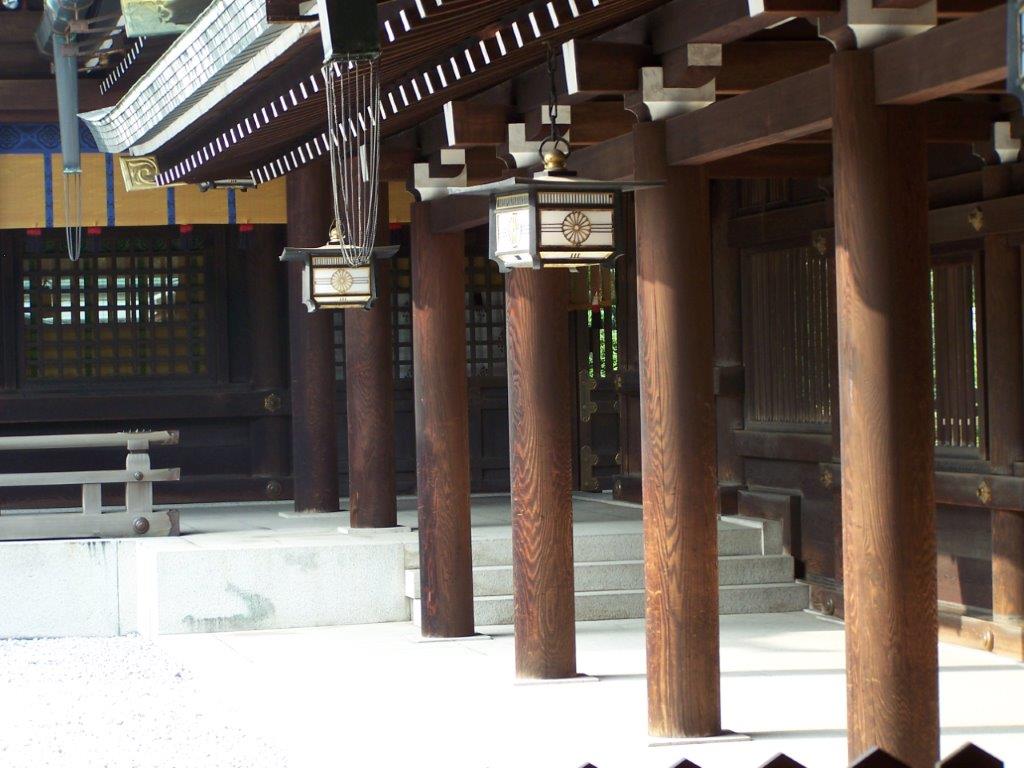
My introduction to the concept of ma came as a young martial arts student, where it was thought of as distancing, but not distancing in a static sense — rather in a way that incorporated timing as well [so, more of an interval in space-time.] I would later hear the term applied to domains such as joke telling in which perfection of pause could be as critical to a laugh as the words that comprised the joke. This book expanded my understanding to numerous realms I’d never much considered before such as architecture, photography, and gardening. (Incidentally, this book does contain a chapter addressing the martial arts aspect of ma, though not the comedic ramifications of the concept.)

I haven’t seen any other books that focus entirely on this concept. Ma is often mentioned in books on Japanese philosophy and aesthetics but rarely with such depth and singular attention. If there are other books that drill down into the concept in this way, I doubt they are as readable as this one (that is, I suspect such a book would be intensely philosophic and scholarly.) So, this book seems to have a solid niche.

There were a couple chapters that took my thinking on the subject to entirely new places. One was on ma in the domain of virtual reality. This raised interesting metaphysical considerations. Another was about the Heart Sutra and how the translations used have led to longstanding misunderstandings of that work.

If you are interested in art and or philosophy, I’d highly recommend this book.

View all my reviews

Five Wise Lines from In Praise of Shadows by Jun’ichirō Tanizaki

Have you never felt a sort of fear in the face of the ageless, a fear that in that room you might lose all consciousness of the passage of time, that untold years might pass and upon emerging you should find you had grown old and gray?

But our thoughts do not travel to what we cannot see. The unseen for us does not exist.

This was the genius of our ancestors, that by cutting off the light from this empty space they imparted to the world of shadows that formed there a quality of mystery and depth superior to that of any wall painting or ornament.

I wonder if my readers know the color of that ‘darkness seen by candlelight.’ It was different in quality from darkness on the road at night. It was a repletion, a pregnancy of tiny particles like fire ashes, each particle luminous as a rainbow.

Whenever I see the alcove of a tastefully built Japanese room, I marvel at our comprehension of the secrets of shadows, our sensitive use of light and shadow.

BOOKS: In Praise of Shadows by Jun’ichirō Tanizaki

In Praise of ShadowsIn Praise of Shadows by Jun’ichirō Tanizaki
My rating: 5 of 5 stars

Amazon.in Page

Tanizaki’s essay on Japanese aesthetics doesn’t just show the reader the simple, rustic, and weathered traits of Japanese beauty, it fully submerges them in an otherworldly place ruled by different principles of seeing. So enamored with this pre-modern Japanese aesthetic was Tanizaki that we are convinced he would give up all present-day conveniences to see the world this way (but, alas, he recognizes the impossibility of maintaining a household or business in today’s world that way.)

While the book is principally a tour of this Japanese shadow world, moving from architecture to toilets to lacquerware to Noh plays to skin tones to hotels (with other stops along the way,) it is also a critique of modernity, and particularly a modernity shaped by the West by virtue of Western countries building a lead in a number of key technologies. The most crucial of these technologies, and the one Tanizaki most decries, is electric lighting, which does away with the artistic beauty that derives from the interplay of varied toned shadows (and occasionally a little bit of light.) [I should say, he’s not bashing the Western technology or ways, but rather how poorly they work with maintaining Japanese aesthetic ways.]

I’d highly recommend this book for all readers. If you’re interested in aesthetics, art, architecture, culture, or “things Japanese,” then all the more so, but I can’t remember the last time description pulled me into a book as hard as this one. The essay can be a bit rambling and shifts from euphoria to rant and back, rapidly, but that is part of its magic.

View all my reviews