BOOK REVIEW: The Story of the Human Body by Daniel Lieberman

The Story of the Human Body: Evolution, Health, and DiseaseThe Story of the Human Body: Evolution, Health, and Disease by Daniel E. Lieberman
My rating: 4 of 5 stars

Amazon page

The story that this book tells is of a human body adapted and optimized for hunting and gathering that has been thrust by agricultural and industrial revolutions into conditions for which it is ill-suited. The central idea is that of the “mismatch disease.” The mismatch in question is a mismatch between the lives humans were evolved to lead and the ones that we have developed through cultural and technological progress. The human body is governed by what Nassim Nicholas Taleb calls “anti-fragility” or what biologists call “phenotypic plasticity.” Both terms say that our bodies get stronger when exposed to physical stressors and weaker in the absence of such stressors. We’ve now used culture and technology to reduce exposure to such stressors, while—at the same time—food is more available than ever and is in calorically dense / nutritionally sparse forms. This mismatch accounts for many problems. Of course, technology has also allowed us to reduce our exposure to dirt and germs, and this, after being once a boon, has begun to swing us into dangerous territory.

The 13 chapters (including the introduction) are divided into three parts in a logical manner to address the book’s objective. After an introduction that lays groundwork for understanding human evolution in a broad sense, the first part describes human evolution up to the point where culture became dominant force for our species. It clarifies how we became bipedal, how our diets developed, how we got smart, and the ways in which the aforementioned characteristics are interconnected. The second part shifts from Darwinian evolution to cultural evolution, and—in particular—elucidates the effects that the agricultural and industrial revolutions had on the human body. These cultural forces act much faster than evolution. While some argue that humans aren’t really subject to evolutionary forces anymore, owing to cultural and technological advances, Lieberman points out that Darwinian evolution does still effect humanity, but its effect is muted by comparison to fast-acting cultural developments. The final part looks at humanity in the present and projects out into the future. It considers what effect an over-abundance of energy and a declining need for physical activity have had on our species, and what can be done about it.

This book is thought-provoking, well-organized, and uses narrative evidence and humor to enhance readability. (A discussion of the absurdity of products in the Skymall catalog—e.g. luxury items for pet—is a case in point.) It certainly gives on a good education about human evolution. Furthermore, while there are many books out there that deal with mismatch as a cause of diseases like obesity and diabetes, Lieberman also addresses under-explored issues like postural problems from chairs, the influence of shoes on running gait, and the development of nearsightedness because of our close-focusing ways.

I’d say the book’s greatest flaw comes in its discussions of solutions at the end. The author puts all his eggs in the basket of wholesale solutions aimed to make society as a whole improve, while he could do more to share the details of what individuals can do to solve their own problems. Lieberman considers why natural selection won’t solve problems of mismatch and dysevolution. Then he considers how research and development and educational campaigns can only provide partial solutions. His ultimate solution is suggesting regulatory paternalism—e.g. what economists call Pigovian taxes–taxes designed to change behavior by making bad behavior (in this case sedentary lifestyles and over-eating / malnutrition) more expensive. Perhaps such solutions (which will remain political untenable for the foreseeable future in the US, at least) may be necessary, but one shouldn’t conclude that readers with better information and ways of approaching the problem can’t make a difference. I say this based upon the fact that a substantial (if minority) portion of the population is already doing the right thing—eating right, exercising, and not succumbing to modernity’s creature comforts. I, furthermore, say it as a one trained as an economist who has seen easier attempts at paternalism fail over and over again.

I’d recommend this book. I think it gives the reader insight into the problems caused by being evolved to be one thing while being groomed by culture to be another.

View all my reviews

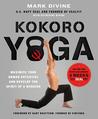
BOOK REVIEW: Kokoro Yoga by Mark Divine

Kokoro Yoga: Maximize Your Human Potential and Develop the Spirit of a Warrior--the SEALfit WayKokoro Yoga: Maximize Your Human Potential and Develop the Spirit of a Warrior–the SEALfit Way by Mark Divine
My rating: 4 of 5 stars

Amazon page

Like many yoga practitioners, I’m never sure whether to be dismayed, amused, or pleased by the explosion of new styles of yoga. It’s nothing new. Yoga has been branching out since its early days. But today’s flavors tend toward the frivolous, usually involve shoving yoga together with something else generally likable, and said two things are in some cases largely inconsistent. There’s marijuana yoga, dog yoga, karaoke yoga, and tantrum yoga. I wouldn’t be surprised if there was a Häagen-Dazs Yoga. Hell, if I was a bit less lazy and more unscrupulous I’d have made a mint from my patented SELFIE YOGA (™ -pending), which involves modifying impressive looking poses so that an individual can take their own pics for FaceBook. (You’re welcome; to whomever the driven sleeze-bag is that turns that idea into a thing.)

I, therefore, tend to approach books like Mark Divine’s “Kokoro Yoga” with a measure of skepticism. That said, I found that this book offered a respectable vision of yoga that might even succeed in bringing a new demographic into the fold. Divine is a former Navy SEAL who developed a fitness empire called SEALFIT, a system that combines fitness ideas from the famous Special Operations unit with ideas from civilian sports and exercise science, such as high intensity interval training (HIIT.)

Incidentally, “kokoro” is the Japanese word for heart / mind (heart and mind were inexorably entwined for Japanese in the era in which the term came into being.) Divine mentions that “Warrior Yoga” would have been his first choice, but that was already taken. The author appeals to warriors with this approach to yoga. He does this in several ways. Firstly, and encouragingly, he doesn’t neglect the mind, but rather puts it front and center by emphasizing the need for mental strength and clarity. My biggest problem with the plethora of new yogas is that they usually forget that it’s ultimately about calming the mind, and instead of providing an environment conducive to looking inward, they embrace or create all sorts of distractions (loud pop music, mirrors everywhere, nudity, animals, ice cream, circus clowns, etc.) Divine doesn’t just make a new fitness fad, he argues for the need for all of the eight limbs of yoga—not neglecting yama and niyama—and emphasizes how yoga served as a calming and clarifying tool for him and not just as a means to be more bendy.

Second, he adds components to balance out the dimensions of fitness. If you are a yogi / yogini, and you want a yoga body; yoga is all you need. However, if you are a martial artist, cop, or soldier, you also need strength, speed (then, by definition, power), and cardiovascular endurance, as well as those aspects yoga offers (e.g. breath control, flexibility, core strength, posture, and mental clarity.) Again, I’m often dismayed by attempts to round out yoga with functional strength building and cardiovascular endurance. I understand the desire to combine them into one workout. Besides the fact that some people need a more balanced approach to fitness, not everybody has time to do multiple workouts multiple times a day. Still, one can’t just ram these components together willy-nilly because if one needs to be in a space to observe one’s breath while being still and one is coming out of having done 100 burpees, it’s probably not going to work so well. I haven’t yet done any of the sequences from the book, but it looks like this shouldn’t a problem, at least not for individuals who are moderately fit. I’m less confident about the value of mixing in elements of chi gong and “cardio kickboxing,” which is suggested by the system. It’s certainly not that I’m opposed to either chi gong or functional martial arts training, but there’s a lot of important detail in those activities and this format risks some horrible half-assery. (Yes, sometimes you get chocolate in peanut butter and get a Reese’s cup, but more often you get sausage in the pudding. Two things being great, by no means ensures they will be great together.)

Finally, Divine puts his approach in the language of soldiers, using concepts like “strategy” and “tactics” and eschewing Sanskrit terminology. The book begins with an anecdote about going into a combat zone as a Reserve officer, which describes his use of yoga to help him get his mind in the right place. He also talks extensively about his practice of martial arts.

There are eight chapters and three appendices to the book. They proceed from the aforementioned story through a look at the general approach, looking at the eight limbs of yoga, before getting into the details. The penultimate chapter sums up research on some of the benefits of yoga, and the last chapter offers advice about how to set up one’s sadhana (personal practice) with the Kokoro Yoga approach in mind. The appendices offer information about functional conditioning exercises, combat conditioning, and module building.

Overall, I think this is a useful book that provides some interesting thoughts on yoga. You may or may not find that it’s the approach for you, but it’s worth checking out. The photos are well-done—though some readers may wish there were more related to the functional conditioning exercises (but he’s got other books for that, it seems.)

I’d recommend this book for those interested in how a yoga practice might be integrated with other aspects of fitness without losing track of the core yogic objectives.

View all my reviews

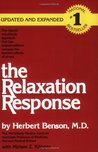
BOOK REVIEW: The Relaxation Response by Herbert Benson

The Relaxation ResponseThe Relaxation Response by Herbert Benson
My rating: 4 of 5 stars

Amazon page


I read the 25th anniversary edition of this seminal work on stress reduction, which was released in 2009. Obviously, that makes this an oldie, but it’s clearly a goodie as well. The new addition has a substantial introduction, providing updated information.

The body’s “fight or flight” response to stressful conditions has long been recognized and it’s virtually a household term. However, despite the equally alliterative name and the fact that Dr. Benson’s original book came out well over 30 years ago, the relaxation response remains a lesser known phenomena. Decades ago, Herbert Benson, a Harvard physician, recognized that patients’ coping ability influenced their health outcomes–specifically with respect to hypertension (a.k.a. high blood pressure.) This led him to investigate how a state of reduced stress could be achieved, and whether this could have a positive impact on health outcomes.

Benson and his co-investigators found that Transcendental Meditation (TM) could trigger the relaxation response, and from that they further uncovered specific aspects of TM that were generalizable in achieving this state (i.e. an object of concentration and a passive / non-judgmental attitude.) From this it followed that activities such as yoga, chi gong, walking, and some types of exercise could achieve the same physiological state as meditation. There was scholarly pressure to establish that the relaxation response was more than a placebo effect. In proving that the relaxation response didn’t hinge on a patient’s beliefs and that it had a predictable effect (and hence it was inconsistent with the placebo effect) Benson also realized that maybe doctors shouldn’t be so dismissive of the placebo effect—people were getting better, after all, and there was some mechanism by which that wellness was achieved that would be worth understanding.

In the first chapter, Benson describes an epidemic of hypertension, the fight or flight response, and its opposite number: the relaxation response. The next chapter delves into the specifics of hypertension and related topics like cholesterol consumption. Chapter 3 makes a connection between stress and the proclivity to develop hypertension. The following chapter lays out various approaches to achieving a more relaxed physiological state, including: biofeedback, yoga, zen, progressive relaxation, and hypnosis. Chapter 5 is about altered states of consciousness, and, specifically, the meditative state. Various age-old methods of achieving a meditative mind are examined. That’s followed by a chapter which lays out the results of relaxation response training in reducing hypertension and drug use. Chapter 7 is an explanation of how to achieve the desired state that generalizes beyond the specific approach of TM. The last chapter is a brief summary.

I found this book to be both interesting and informative. It’s useful both as a practical guide to practice and an explanation of related information.

I’d recommend “The Relaxation Response” for anyone who is interested in learned to de-stress. It’s a classic, and the new edition offers substantial updates.

View all my reviews

BOOK REVIEW: Discovering the Power of Self-Hypnosis by Stanley Fisher

Discovering the Power of Self Hypnosis: The Simple, Natural Mind-Body Approach to Change and HealingDiscovering the Power of Self Hypnosis: The Simple, Natural Mind-Body Approach to Change and Healing by Stanley Fisher
My rating: 4 of 5 stars

Amazon page


For many, hypnosis is the domain of stage artists who make people cluck like chickens. As with the feats of stage magicians, few give much consideration to wherein the trick lies, but they assume there’s a trick. In scholarly circles, hypnotic practices have been on a roller-coaster ride. Hypnosis was once mainstream psychology but then fell into disrepute but now there’s a resurgence of interest as neuroscience answers questions about what is happening in the brain during a trance state. Doctor Fisher’s book is an attempt to demystify the subject, and to explain how a personal practice can be used to achieve a wide range of benefits.

Fisher’s book culminates in a description of how to build one’s own self-hypnosis exercise to work toward change in one’s own life. However, there’s a lot of track that needs to be laid in anticipation of that final chapter (Ch. 9.) The first chapter counters seven of the most common myths about hypnosis. Given the aforementioned misapprehensions about hypnosis, this seems like a wise place to start to get readers on board. Chapter 2 starts where Fisher’s personal involvement with self-hypnosis began, with the use of it to prepare patients for surgery and surgical recovery. Here we get our first look at the technique of self-hypnosis as well as a discussion of cases of self-hypnosis used for surgical patients. Cases are central to Fisher’s approach, and are used throughout the book to inform the reader about how self-hypnotic methods worked for particular individuals in the pursuit of various goals. Chapter 3 explains what the trance state is and how it’s achieved.

Chapter 4 explains the process by which we make choices with an eye toward helping to disrupt destructive impulse behavior. In the next chapter the reader learns about how the state of mind can contribute to physical illnesses, and how changing the state of mind can help improve one’s health. Chapter 6 is about reevaluating ingrained beliefs that don’t serve us well. This includes the notion that one can’t change one’s behavior because it’s just how one feels, as well as the belief that one can simply quash one’s emotions through force of will. Chapter 7 examines cases involving a number of common problems resulting from stress and the pressures of everyday life.

The penultimate chapter offers comparison and contrast with a range of alternative methods that are used to achieve the same goals—some more advisable than others. The alternatives include: therapy, meditation, biofeedback, exercise, somatic desensitization, and drug use.

As indicated, the final chapter offers an outline for building one’s personal self-hypnosis practice to achieve one’s own goal. There are three sections to this chapter. The first is a simplified set of exercises to evaluate one’s capacity to enter a trance—including both a survey and physical methods (e.g. degree of eye roll.) Susceptibility to hypnosis varies widely. The subjects one sees at a stage show tend to be those rare specimens who are highly suggestible. Often, part of the act is separating them from the crowd. There are also those who can’t be hypnotized under any circumstance. Most of us are in the meaty middle, having some, limited capacity to be hypnotized. The second section offers advice about how one might go about setting up the suggestive part of one’s exercise, i.e. the core of the exercise carried out once one has induced a trance. The final section lays out three different methods of inducing a trance. The first of these is the eye roll-based method one is introduced to in Chapter 2, and the others are variants that may work better for some.

I found this book to be informative and useful. It gives the reader both the necessary background to understand how one’s subconscious mind can influence one’s life and how positive ideas are introduced through it, as well as a practical guide to setting up one’s own personal practice.

I’d recommend this book for anyone who wants to learn about self-hypnosis.

View all my reviews

BOOK REVIEW: Nutrition: A Very Short Introduction by David A. Bender

Nutrition: A Very Short IntroductionNutrition: A Very Short Introduction by David Bender
My rating: 4 of 5 stars

Amazon page

Do you want to know what percentage of your diet should be carbohydrates because your personal trainer is telling you it’s zero? Do you know whether you need vitamin B12 supplements? How much energy does your huge human brain use? What the hell is Kwashiorkor? If these types of questions are of interest to you, you might be interested in this book.

There’s nothing particularly fancy or exciting about this book, but it’s still a useful book for a couple of reasons. First, it sticks to the science on the subject, and diet and nutrition is one of the most myth and disinformation riddled subjects around because there are so many people trying to shill their fad diets and because there are so many who desperately want to believe that they can cut pounds and still eat a case of Twinkies every week through some scientific loophole [psst, you can’t.] Here and there throughout this book, there are quick deconstructions of these myths and lies. (i.e. I should point out that some of this dietary “wisdom” will result in weight loss—but it won’t necessarily result in a net health gain. e.g. If you cut out carbs, you’ll lose weight—but your brain will also be starved of the glucose that it needs to conduct its business and will have to engage in slow and costly processes to get it from elsewhere.) Second, the book is short and to the point. If you don’t have a lot of time to devote to reading up on nutrition, this may be the book for you.

The book consists of eight chapters:

Chapter 1: Why eat? (deals with appetite and satiety, and not just the less-than-profound question of why a human body needs energy.)

Chapter 2: Energy Nutrition (gives the basics of food as an energy source—as opposed to food as building blocks.)

Chapter 3: Protein Nutrition (teaches one about food as building blocks.)

Chapter 4: Over-nutrition and Problems of Overweight and Obesity (addresses the causes of being overweight as well as explaining how to counteract those causes. One nice feature of this chapter is it gives a quick and dirty summation of the various types of diets, tells which are supported by science, and explains which have undesirable unintended consequences.)

Chapter 5: Diet and Health (explains many of the ways nutrition influences health. Contrary to popular belief, weight isn’t the only way [or, necessarily, the most critical way] in which dietary problems can adversely affect health. In other words, it’s possible to be stocky or curvy and in good overall health, or, alternatively, one can be svelte and running up on death’s door. This chapter also describes first-world ailments that are sometimes called diseases of affluence.)

Chapter 6: Under-nutrition (Marasmus, cachexia, and kwashiorkor. Don’t know what those words mean? Think they are towns in a sword and sorcery fantasy novel? You’ll know after finishing this chapter.)

Chapter 7: Vitamins and Minerals (Most of the dietary suggestions in the book up to this point are put in terms of macro-nutrients [i.e. carbohydrates, fats, and proteins], but this chapter focuses on micro-nutrients. There’s a reason micro-nutrients are addressed so late in the book, and that’s that most people who are getting sufficient macro-nutrients from actual food [as opposed to the “stuff” sold at McDonald’s or in convenience stores] get all they need of micro-nutrients. But there can be issues with micro-nutrients such as iron, calcium, vitamin D, and Vitamin B12 depending upon one’s unique life situation. In other words, unless your doctor tells you that you need a supplement, you probably don’t.)

Chapter 8: Functional Foods, Super Foods, and Supplements (Probiotics, prebiotics, synbiotics, super foods, and supplements. One area that gets short shrift in this book is the importance of one’s gut bacteria—which has become a huge part of the discussion of late. There is a little mention of it in this chapter, but not much.)

There are few graphics in the book, but there are many tables. I didn’t feel anything was missing in terms of graphics. None of these “Very Short Introduction” guides offers much by way of bibliography, and the “Further Reading” section tends to favor textbooks over popular works. This book is no exception in either regard.

I’d recommend this book for anybody who wants a quick low-down on the science of nutrition. As mentioned, the one area I thought it might have delved into in greater depth was the role of gut microbes. However, overall, I think it was well-organized and provided interesting food for thought (pun recognized, but not intended.)

View all my reviews

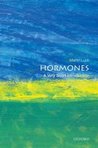
BOOK REVIEW: Hormones: A Very Short Introduction by Martin Luck

Hormones: A Very Short IntroductionHormones: A Very Short Introduction by Martin Luck
My rating: 4 of 5 stars

Amazon page

Let’s face it; the word “hormone” is usually reserved for questions of why a male is so horny (e.g. “His hormones were raging.”) or why a female is so moody (e.g. “She’s hormonal.”) Yet, the endocrine system is about much more than horniness and moodiness. It’s the body’s lesser known communication system, transmitting signals more slowly than the nervous system, but over a broader area and with longer-lasting results. Yes, it’s instrumental in sex, but it’s also involved in regulation of almost everything else the body does. Though we associate hormones with sex, when it comes to mass appeal it’s clearly not the sexiest of systems.

Dr. Luck’s book allows one to rectify one’s ignorance of hormones without a major investment of time or money. This is one volume in a series put out by Oxford University Press that’s designed to convey the fundamentals of a subject in about 100 pages or so (in this case it’s more like 130pgs.) I’ve done several reviews of books in this series, and will likely do more. These “Very Short Introductions” are a good way to get the gist of a topic quickly and painlessly, and they are reasonably priced on Amazon Kindle and in hard-copy at my local discount bookseller. (FYI: Your results may vary. i.e. Hard-copies at some bookstores may be pricey for what these books are—i.e. subject summaries that are optimized for concision and not for entertaining reading.)

The book has nine chapters. The first is a history of the science related to hormones and the endocrine system. (It took a while to figure out that there even was a system because of the nature of hormonal action.) The second chapter hits the basics, such as what hormones are and how they work. Chapter three tells us about the role hormones play in reproduction. The next chapter is about how hormones regulate the body’s levels of water and salt (and the effects on blood pressure.) Next, there is a discussion of the calcium cycle and how calcium is banked in bone and borrowed for the purposes of other cells. There’s a chapter that educates one about diabetes and how hormones (notably insulin) regulate blood sugar. Chapter seven is devoted to the thyroid. Chapter eight describes the role of hormones in circadian rhythms and the cycles of the body. The final chapter is about where science is going with its knowledge of hormones and the advances that are being pursued.

There are few graphics in this book. Most of them are chemical diagrams in dialogue boxes that many readers will skip because of their ominous appearance. The lack of graphics isn’t a problem. Luck does use a narrative approach on occasion (such as his telling of the story of the giant William Rice of Sutton Bonington.) This enhances the book’s readability, and is noteworthy because it’s a rarity among books in this series, which—again—are written to shotgun information and not to be entertaining reads.

I’d recommend this book for those who want to learn (or brush up on) the basics of the endocrine system. It does what it’s supposed to do, and does it quickly.

View all my reviews

An Unusual International Yoga Day Post: or, Dream Yoga and Fear Management

"The Sleep of Reason Produces Monsters" by Francisco Goya

“The Sleep of Reason Produces Monsters” by Francisco Goya

I awoke exuberant that I’d achieved lucidity in my dream and that I’d apparently slain a nasty character (picture Hans Gruber on a bad day)–a task that had seemed impossible before my eureka of “I’m lucid!” Only my exuberance was short-lived when I realized that Hans was also me. Do you have the courage to talk it out with your dream world nemesis instead of reacting from fear?

I was thinking that I should do a post on yoga for International Yoga Day (June 21st), but what to write about? My answer came in the wee hours of the morning when I had a minor breakthrough in lucid dreaming–also known as, dream yoga. I know this seems like a stretch because, despite “yoga” being right there in the name, this practice is much more firmly associated with Tibetan Buddhism than Hatha Yoga. But my last couple yoga posts (which were a while back on my experience with RYT300 teacher’s training and teaching a Yoga Kid’s Camp) were fairly conventional, so I’m due one that’s out there. Furthermore, I promise to try to make clear the relevance of dream yoga to my hatha yoga practice. (If you read the aforementioned posts, you’ll see that the theme of freeing oneself by managing one’s fears and anxieties is a recurring theme across all these posts. And that is the crux of the relevance of lucid dreaming to unifying mind, body, and breath [i.e. yoga.])


What is lucid dreaming? It’s becoming aware that one is in a dream as one is dreaming. One can then exert influence over the course of the dream. Maybe half of you have had this experience at some point in your lives, and so what I’m saying will not seem far-fetched. For those who don’t actively practice lucid dreaming, it’s much more common among the young, so maybe you had such dreams as an adolescent but don’t have them anymore.

For the other half, the whole idea may seem like poppy-cock. I could easily have been such a doubter. Without following a practice, I almost never remember dreams–let alone dreaming lucidly. At best, I get disappearing fragments of dreams that are ephemeral and hazy. I’m one of those people who might claim that he virtually never dreams, except that I read the science, which suggests that each of us dreams every night that we sleep long enough to cycle through REM (rapid eye movement) mode (and commonly 4 or 5 times a night.) We just don’t recollect these dreams. [However, I have had lucid dreams on rare occasions, and so my skepticism on the subject was curbed.]


Why do I practice dream yoga? While it wasn’t part of my formal hatha yoga training, dream yoga isn’t as far removed as one might think. I have been trained in yoga nidra (yoga sleep), which is an exercise that takes place in a hypnagogic state (on the edge between waking and falling asleep.) Commonly, yoga nidra is used as a deep relaxation exercise, but it can also help one to access the subconscious (as is reflected in repeating a sankalpa [a resolution] in the yoga nidra state.) Lucid dreaming is another approach to assessing the subconscious in order to see what’s going on in there and to try to make changes as necessary. Curiosity about the subconscious mind and its–largely unseen–influence on my daily life is what drew me to dream yoga. It’s just another aspect of knowing oneself and trying to expand one’s capacities of mind and body.


How does one practice dream yoga? Hardcore practitioners set alarms to wake themselves up when they think they’ll be in REM sleep. This, as I understand it, helps them reconnect with the dream when they drift back and greatly speeds the process. As I sleep with a wife who would clobber me with a brick if I set alarms for random times in the middle of the night, I’m not among those hardcore. My practice consists of three main aspects. First, I make resolutions to remember my dreams and to dream lucidly as I’m drifting off to sleep. Second, when I’m not making said resolutions, I try to just observe the subconsciously generated imagery that pops up as a witness–rather than letting my conscious mind go into its preferred mode of planning for an uncertain future. [One can tell the difference because the subconscious images don’t make a lick of sense, and–for me–are devoid of any verbal/language element–i.e. it’s all imagery.]  Finally, I keep a journal in which I record any dreams or fragments that I can recall–sometimes with drawings to supplement the text (though my artisticness is lacking, to say the least.) The first and last of these are among the most common recommendations one will hear from experts.

I should point out that there are a number of books on the subject by individuals much more qualified than I. Said books give detailed guidance into how one can begin one’s own practice. One that I recently finished reading and would recommend is Charlie Morley’s “Lucid Dreaming: A Beginner’s Guide to Becoming Conscious in Your Dreams.”  At some point, I’ll post a review of that book. Also, there is “Dreaming: A Very Short Introduction” by J. Allan Hobson, which I have reviewed.


As I wrote up the entry in my dream journal, I made a resolution to stop attacking the “bad guys” in my dreams and to try to understand them. Note: I don’t recommend this approach for dealing with real world axe-wielding maniacs, but I highly recommend giving it a try in one’s dreams.


Sweet dreams.

BOOK REVIEW: Night School by Richard Wiseman

Night School: Wake up to the power of sleepNight School: Wake up to the power of sleep by Richard Wiseman
My rating: 4 of 5 stars

Amazon page

This book is a two-in-one. It’s a pop sci book covering the science of sleep. However, it’s arranged as a self-help guide to teach one how to get the most from one’s sleep life. It covers a wide range of sleep related issues from how to minimize jet lag to how to master lucid dreaming. It also describes the sometimes dire effects of not getting enough quality sleep. Along the way one also learns about interesting anecdotes and research that may not change your quality of sleep, but could prove interesting or useful nonetheless—such as the research that shows a strong correlation between the position in which one usually sleeps and one’s personality.

The meat of the book is divided up into eight sections (called “Lessons” in accord with the theme of “Night School.”) The first few lessons begin with general background on sleep and sleep deprivation, and cover how much sleep one needs and how one can achieve the best possible sleep life. Then the book delves into more specialized topics such as night terrors, sleepwalking, “power napping,” and the question of whether one can really learn in one’s sleep. The last couple chapters deal with dreaming (normal and lucid.)

Along with the eight lessons, there are also eight assignments. Most of these assignments are surveys that help the reader understand what will work for them best specifically—as not all sleep advice is one-size-fits-all. However, there are other assignments like a mid-course recap exam, a call to attempt interpreting one’s own dreams (as opposed to relying on the generic dream interpretation guides which the science suggests are bunk,) and a suggestion to start a dream diary—with instructions for how to go about it.

Another nice feature of the book are its boxed discussions of relevant research on such topics as segmented sleep (instead of sleeping through the night), narcolepsy, snoring, children’s sleep issues, etc. There’s also a Conclusion that reviews key information from the book in the form of a refutation of the common myths that abound on the subject of sleep, as well as a “manifesto” that repeats key elements of advice on good sleep. It’s a scholarly work, and so it include source citations.

I learned a lot from this book. Granted a lot of the advice is commonsense (e.g. sleep in a dark, cool, and quiet place), but there are plenty of not so obvious tidbits as well (e.g. red light is okay, but blue light will keep one from sleeping.) There are also a lot of fascinating stories in the book to keep one interested.

I’d recommend the book for anyone who wants to learn to improve their sleep lives.

View all my reviews

What RYT300 Taught Me About Fear

IMG_2752

I recently completed the RYT300 course at Amrutha Bindu Yoga to obtain my RYT500 yoga teacher certification. (i.e. The 200 hour course–which I completed a couple years ago–plus the 300 hour course are the primary requirements for the 500 hour certification.) The essay below is about one of the key lessons I learned in this phase of training.


I walked through the streets of Bengaluru barefoot and with not so much as a 5 rupee coin in my pocket. [If your response to that is “big whoop,” you probably live somewhere like Singapore, Helsinki, Kobe, or Calgary where the streets are immaculate and the rats aren’t so bold. If you’re familiar with what goes on in and near the streets in India, you may be wondering what the hell is wrong with me.]  It was an unconventional teaching tactic to be sure, but it ranks among the most valuable lessons of the training—surpassing no small revelations about postural alignment, pranayama methods, bandha technique, physiology, and yogic philosophy. It was even up there with the experience of advanced shatkarma (cleansing practices) that were completely new to me.


What’s the lesson?  If you’re going to teach yoga–particularly at the intermediate / advanced level that RYT500 is intended to prepare you for–you need to work on not being ruled by fear. That isn’t to say one must be fearless. We imagine fearlessness to equate to courageousness, but courage is action under fear. Neuroscience tells us what a fearless person is like. We know from individuals who’ve had the parts of their brains damaged that are responsible for the emotion—they are paralyzed by indecision. Our emotions provide a basis for choosing–at least as a tie-breaker when no clearly superior path exists. We need our fear, just like our other emotions, but if you can’t move forward because of it you may have a hard time keeping learning.


Not being ruled by fear isn’t just—or primarily—about being able to keep practicing advanced techniques until you can get a grasp on them.  Yes, mastering a handstand requires a fair amount of falling down (hopefully, in a controlled fashion), and that’s a lot of potential for anxiety, but there’s more at stake.  What precisely? One might start, as many do, with what Patanjali has to say on the subject, and one can start from square one. “Chitta Vrtta Nirodhah.” (Quieting the fluctuations of the mind.) Many of the fluctuations of the mind result from anxieties and our obsession with solving them. Our brains are wired to try to anticipate worst case scenarios so we can develop ready-made solutions for them. This can result in excessive pessimism, extended stress, and all the problems that go along with that stress.

IMG_2642

There’s a popular saying that goes, “money is the root of all evil.” But, I think it’s wrong. Fear is at the heart of all evil—not to mention a fair amount of run-of-the-mill pettiness.


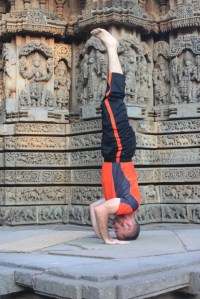
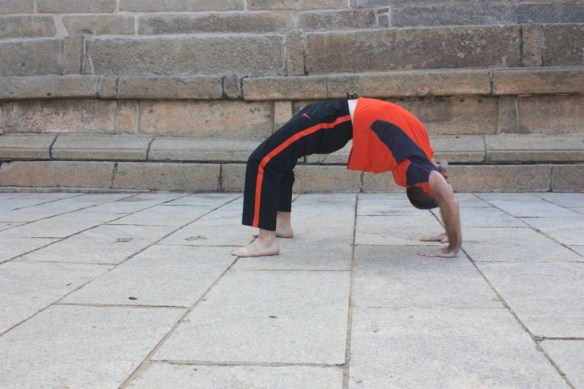
So what is the path to anxiety management? Start small, and dispassionately observe your discomfort. Don’t try to squelch the emotion, just watch it while trying to avoid putting good or bad labels on it. Of course, sources of anxiety are personal. As far as prescriptive yoga practices, that depends upon one’s personal anxieties. For some inversions might do the trick, for others extreme back bends, for some external breath retention, for others it may be balancing. Then, of course, there are the advanced shatkarma practices I mentioned earlier–such as vaman dhauti (cleansing by vomiting) or poorna shankhaprakshalana (i.e. clearing out one’s digestive tract via massive ingestion of salt water.)


I recently finished teaching a Kid’s Camp (a post about that to come.) At the beginning of the camp, I was telling someone that the kids were fearless, but what I came to discover was that kids just allow their enthusiasm to swamp their anxieties. I had seven-year-olds doing pinchamayurasana (forearm stand) and vrschikasana (scorpion) within the first few days. That would be a hard sell for adults. [I don’t think I’ve ever taught those postures to adults.]  It’s not just that kids are bendy, they’re also ready to get up after they fall down. (And since they’re not stressed about the possibility of falling they don’t tense up and get badly injured.) Someone posted a great meme on Facebook recently. It said, “A child who falls down 50 times learning to walk, doesn’t go, ‘I don’t think this is for me.’”

BOOK REVIEW: Emperor of All Maladies by Siddhartha Mukherjee

The Emperor of All Maladies: A Biography of CancerThe Emperor of All Maladies: A Biography of Cancer by Siddhartha Mukherjee
My rating: 5 of 5 stars

Amazon page

Dr. Mukherjee describes his Pulitzer Prize winning book as a biography of cancer. If so, it’s like the biography of a master thief or a gangster. One reads it not because one finds the character in any way endearing, but one can’t help but admire the resourcefulness and indomitable spirit of the culprit. Humanity has been at war with cancer for decades, but it remains alive and well–losing ground in specific domains but gaining overall.

The book covers a period from when our technology was too crude to see at the tiny levels necessary to recognize the commonality between various forms of cancer to the present-day attempts to find treatments that can target cancer cells without attacking good cells—a challenging prospect. The implication of that last sentence is that the cure might be as damning as the disease, and this has often proven to be the case. It’s often a race to see whether the cancer can be killed before the treatment kills the patient. This has been the case with radiation, radical surgeries, and various forms of chemotherapy that are toxic to good cells as well as bad. While the book ends on a hopeful note about more targeted treatment, cancer has not gone gently into that good night.

While the book covers a broad period, the bulk of its pages are devoted to the latter half of the 20th century. That’s when the war on cancer got serious and the science became advanced enough to move beyond crude approaches like radical mastectomies. Our understanding of chemistry, pharmacology, and biology reached a point at which cures were no longer pie-in-the-sky notions. But it wasn’t just the medical science that was more advanced, statistical methodology also reached a point at which it could answer questions that had previously been elusive. Such questions include whether smoking caused cancer—a fact that seems self-evident today, but which wasn’t as straightforward as one might think. There is also the issue of whether various treatments were actually extending the lifespans of those afflicted, which was also not as simple as one might think.

While the above discussion of science and statistics might make this book seem dreadfully boring, this isn’t the case. Mukherjee didn’t get the 2011 Pulitzer Prize for Nonfiction by being dull. The author knows the value of a story, and uses stories successfully throughout the book. There are the stories of individual patient cases, but also the story of the mass movement to raise dollars, awareness, and Congressional support to fight cancer. These true stories sometimes show the roller coaster ride that we associate with fiction—such as the apparent cure of a form of childhood leukemia that seemed promising until the kids once in remission started coming back with symptoms (the leukemia crossed the brain-blood barrier and found fertile ground on the other side of a biological wall that was meant to keep such ne’er-do-wells out.)

As one might expect of a book that covers so much ground, it’s not thin. The book’s 600 pages are arranged in 43 chapters divided into six parts. I’m sure there’s a lot more one could learn about cancer, but Mukherjee covers a lot of ground in an interesting package.

I won’t say I enjoyed the book (it’s unavoidably depressing, if hopeful) but I did find it both interesting and readable. While it might not be the sunniest and most joyous of reads, it’s one that many people should read. I’d recommend it for anyone. I would say “anyone who has been touched by cancer,” but I think that’s the same thing at this point.

View all my reviews