A Few Senryu [Day 13 NaPoMo: Senryu]

[Senryu is a Japanese style of poetry that’s identical to haiku in form, but different in content. While haiku rely on images (usually natural and often seasonal) and the juxtaposition of such images — devoid of analysis, commentary, or judgement — Senryu poetry explores human nature. In other words, while humans appear rarely in traditional haiku (and, when they do, it’s as a part of nature;) Senryu are always about humans and they do present commentary — often intended to be humorous.]


two dodge bird poop
the missed credits himself,
the struck curses birds


when floors must be swept,
some needn’t be told, some must,
and some told they can’t


extroverts
having virtual parties,
while I read


Blake said,
“The cut worm forgives the plow.”
What of the plowman?


boredom exempt:
creatures who use their teeth, feet,
or their brains


the hungry snake
doesn’t begrudge the winning
chameleon

Rainy Day Tanka [Day 10 of NaPoMo: Tanka]

[A tanka is a Japanese form closely related to the shorter form, haiku. In fact, a haiku can be thought of as the upper phrase of a potential tanka. Traditionally, the tanka (a.k.a. waka) is a 31-syllable poem. In modern notation, the additional 14 syllables are  put into two seven-syllable lines below the three haiku lines, i.e. 5 – 7 – 5. (That said, there are many — myself included — who feel that the 5 – 7 – 5 – 7 – 7 approach applied to English language poetry loses the sparse, Zen feel of Japanese poetry because English syllables can be — and frequently are of — much longer duration. Personally, I’m more partial to the 2 – 3 – 2 stressed beats approach.) Historically, a haiku presents an image devoid of analysis or commentary. In Tanka, there is a pivot and the lower phrase often presents a response to the image.]


dry season
afternoon downpours
come daily
like one bird nesting
in another’s nest


soggy forest
oppressed smoke hangs low
unseen, but smelt
bone dry wood exists
but only within flame


drippy garden
a bright orange flower
hangs its head high
you warm my mind,
if not my bones


Solitude Haiku [On the Third Day of NaPoMo]

let us now pray
for short people with no one
to reach the top shelf


moon-gazer
sitting on a rooftop
hugging knees


silent morning
awakened by the sounds
that aren’t


closing eyes
seeking faces forgotten,
sadly failing


what void
holds the millions
unseen


[Since it’s National Poetry Month (NaPoMo,) I’m trying to do a different form each day. So far: limericks, a sonnet, and haiku. If you know of any obscure forms, I’d be glad to hear of them, because I don’t think I know 30 flavors of poetry, presently — relatively short form, of course, I don’t have the time or skill to do an epic narrative in a day. (Though micro-narrative will certainly be a thing.)]

Flowering Haiku

hectic sidewalk
frangipani blossoms
stepped over


calling bees
scent, color, and glory
unrivaled


the hillside
when rhododendrons bloom
shangri la


for two weeks
the valley flowers,
its spell cast


purple circle
rings the base of a tree
regal shadow

Falling Water Haiku

thunder yon
Zambezi rafting
greenhorns beware


cataract
water wind-misted
plume-zone green


terraced hill
rice paddy cascades
depth perfection


dry season
murmur to trickle to
fall-less falls


level rising
the overspill rolls
pulling drops

Desert Haiku

offset prints
bisected by tail drag
lizard sign


gnarled driftwood,
snake skin, rusty barbed wire
in red sand


cold morning,
the rising fire ball,
a silent knell


red sandstone
warmed by the rising sun
gorge aglow


yon mirage
mirror-clear blue,
chase the lie

Haiku of Trees

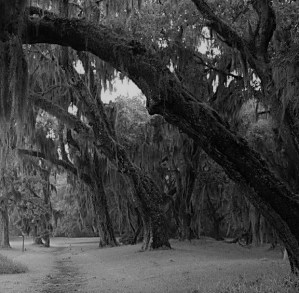
mossy trees
in a foggy forest
eery squared


split oak tree
hollowed by water
chimnified


a lone tree
sits atop a green hill,
solemnly


distant trees
resemble a painting
not a true grove

Ash [Haiku]

Source: NASA


wind-whipped ash
swirling in an eddy
light as snow


ash flutters
from a darkened sky,
piling, drifting


the path made
by footprints tracked through ash
tells a story


volcano,
spewing ash cloud skyward
mushroom top

Agriculture & Nature Haiku

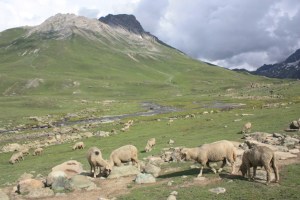
grazing sheep,
loitering head down;
what awes them?


rice terraces,
disguising man’s order
in nature’s green


ripe wheat,
bobbing in a breeze —
sea-like moves


on a range
that stretches beyond sight
but not mind


tea plantation,
a snake slithers through
amid the pickers

Mysterious Sight Haiku

shaman staring
out into the distance
a world away


hawk on the roof
twists its head, pointing
one eye groundward


cow head fixed
as a raucous world screams —
blind or unmoved?


what’s it like
to have one’s blind spot
to the front?


the sad moment
when baby’s smile is found
to be fart fueled