BOOKS: “Batman: Killing Time” by Tom King

Batman: Killing TimeBatman: Killing Time by Tom King
My rating: 5 of 5 stars

Amazon.in Page

Killing Time is a MacGuffin driven Batman story, though less Batman-centric than most of his eponymous titles. For any readers who might be unfamiliar with the term “MacGuffin,” it’s an object that motivates the characters to heroic and villainous extremes of behavior for reasons about which the reader is largely (or completely) left in the dark. Over the course of the story, the reader is teased information about the MacGuffin, but never with enough certainty or detail that it ever feels like it’s not a MacGuffin. On the other hand, it does feel as though there is self-awareness of the MacGuffin-esque nature of the story, and there are some strengths that I think more than offset what might otherwise be considered the laziest of storytelling.

What are these strengths of which I write? First of all, there is a disjointed, non-linear story presentation that facilitates revelations and maintenance of tension, but it is done artfully enough that one isn’t likely to lose the thread. Second, there are some intriguing characters (and some fascinating character development) in the story. Much of the story revolves around an uneasy alliance between Catwoman and the Riddler, and that is explored in detail. There is also a character known only as “the Help” who is both brought to life in a compelling way, but who also generates tension because he’s every bit a match for Batman in a slug-fest. Thirdly, while the book of epic proportions in some sense, with street criminal melees and the like, it’s quite street-level throughout, not veering into magic or god-tier superpowers. Finally, it is a complete and satisfying story arc. [My biggest pet peeve with comic volumes is that they often don’t feel concluded.]

I enjoyed reading this comic book. It’s fast-paced and isn’t afraid to give supporting characters some space to steal the show. If you’re a Batman fan, it’s definitely worth reading.

View all my reviews

BOOKS: “DCeased” by Tom Taylor

DCeasedDCeased by Tom Taylor
My rating: 5 of 5 stars

Amazon.in Page

It’s the zombie apocalypse in a world brimming with superheroes. Sort of. As is mentioned a couple of times throughout the story, it’s not really zombies as we know them, and there are a few crucial distinctions. But, basically, zombie apocalypse. What matters is that it is a threat that grows to inexorable proportions because it infects efficiently and spreads rapidly, and no one is immune. The threat is increasingly everyone and everywhere. The source is a viral bit of “programming” called the Anti-Life Equation.

This is about as dark as superhero comics get. The heroes that we are used to saving the day experience only victories of a short-lived and pyrrhic nature, while experiencing defeat after defeat. There are no ex machina saviors, at least not that amount to more than a blip in the scheme of things.

I found this story, depressing as it may be, to be intensely suspenseful. Full Disclosure: I also liked the Avengers “Infinity War” movie much more than “Endgame.” It’s not that I necessarily like seeing villains win, but that a story feels more compelling when there is strong and successful opposition and when costs accrue. And credible opposition and true stakes are often missing from superhero comic book stories.

I’d recommend this book for superhero comic book readers.

View all my reviews

BOOKS: “Saga of the Swamp Thing: Book One” by Alan Moore

Saga of the Swamp Thing, Book OneSaga of the Swamp Thing, Book One by Alan Moore
My rating: 5 of 5 stars

Amazon.in Page

This volume presents two separate and complete story arcs. The first features the Floronic Man (Jason Woodrue) as the main villain, and it deals heavily in the origins of Swamp Thing and the creature’s struggles to come to grips with who it is and why it experiences the world as it does. The second story makes a shift to a more supernatural threat and shows a Swamp Thing who is more comfortable in its… roots? twigs? foliage? — whatever Swamp Thing has in lieu of skin.

Alan Moore does his usual superb job of creating a clever and satisfying set of tales. Swamp Thing was groundbreaking in its cross-genre mélange of horror, supernatural, eco-fiction, and sci-fi. There is also a certain smartness about the comic. One is led to consider questions of consciousness and humanity’s role in nature through these stories. And solutions are rarely achieved by punching the villain into a stupor. This won’t be for everyone. In some ways, the comic elevates the wise old mentor to the role of hero.

I enjoyed reading this book and would highly recommend it for readers of comic books and graphic novels.

View all my reviews

BOOKS: “Miyamoto Musashi’s Book of Five Rings: The Manga Edition” art by Koji Kondo; trans. by Makiko Itoh

Miyamoto Musashi's Book of Five Rings: The Manga Edition: Japan's Legendary Book on Samurai Military StrategyMiyamoto Musashi’s Book of Five Rings: The Manga Edition: Japan’s Legendary Book on Samurai Military Strategy by Miyamoto Musashi
My rating: 5 of 5 stars

Amazon.in Page

Release Date: April 30, 2024

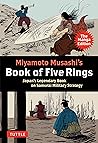
As readers may suspect, this isn’t simply a graphically illustrated edition of The Book of Five Rings. That book, being written as an instructional manual, doesn’t lend itself to a literal manga adaptation. Rather, this work is a graphic novelization that puts Musashi’s strategic masterwork into a narrative context. While it does share many strategic and philosophical ideas from The Book of Five Rings, it’s more a telling of the story of how the manual came to be and how it was transmitted out into the world. It tells this story primarily by exploring how Musashi came to have three apprentices, and how he went about teaching them the lessons encapsulated in the manual. It also delves into Musashi’s most famous duel, the Ganryū-jima battle against Sasaki Kojirō, an event that formed a turning point in Musashi’s life.

I found this manga to be engrossing and highly readable. It is well worth reading, even if one has read one or more translations of The Book of Five Rings. The translation of ideas seemed clear and consistent with my understanding of Musashi’s worldview. I’d highly recommend this manga for readers interested in the history of martial arts, biographies of intriguing individuals, as well as strategic and philosophical ideas.

View all my reviews

BOOKS: Batman Arkham: Penguin by Bill Finger, et. al.

Batman Arkham: PenguinBatman Arkham: Penguin by Bill Finger
My rating: 5 of 5 stars

Amazon.in Page

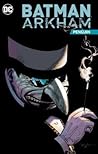
Drawing from 70 years of stories, this collection of issues involving the Penguin as Batman’s villain du jour really shows the shifting landscape of comic books over the decades. In the early issues, written with a young audience in mind, the Penguin is a skillful thief, but also kind of goofy, camp, and with not really much menace. By the last issue included, we see the hard edge of psychopathy and the gross deformity of this classic villain.

I was pleasantly surprised with this collection. Often these cobbled together comic collections lack coherent storytelling and feel as cheap and lazy as a sitcom clip show, but this volume shows several satisfying story arcs, and — while there is no overarching arc — it makes for a satisfying read.

I enjoyed reading this collection and seeing, through it, the evolution of comic books.

View all my reviews

BOOKS: The Batman Who Laughs by Scott Snyder

The Batman Who LaughsThe Batman Who Laughs by Scott Snyder
My rating: 5 of 5 stars

Amazon.in Page

This volume plays on the spookiness of buffoonery that has made the Joker not only one the most well-known and effective villains of Batman’s rogues’ gallery but in all of comic books. However, while the Joker does play a role in this book, he’s not the villain. Instead, the book employs the popular comic book scenario of having the villain be a version of the hero, a version without moral compunctions or constraints. In this case, the central villain is a demented and mutated version of Batman with Jokeresque qualities, assisted by a Batman who is a bit more malevolent and vengeful, one who goes by the moniker Grim Knight.

How are there multiple versions of Batman? The multiverse, of course. That makes this a sci-fi heavy Batman story. If you like your Batman of the Matt Reeves / Robert Pattinson variety — i.e. in a plausible world, with fully human enemies, and with no freaky supernatural happenings, then this one may not be for you. That said, I don’t think the sci-fi elements detracted from the story, and they did allow for some compelling story elements. Snyder, wisely, avoids a problem that can readily plague sci-fi intense Batman stories, which is reference to (or cameos of) the god-tier DC heroes. (An occurrence that always begs the question, why wouldn’t Superman use his god-like powers to fix this debacle before heading to lunch.)

I enjoyed this story. I especially enjoyed that it wrapped up the narrative arc in a tidy package. It is often the case that comic book volumes end with a speedbump on the way to the next volume. This story felt like the central issue was resolved, while still leaving potential for future stories. I should point out that, with flashbacks and multiple Batmen, it does require one’s full attention while reading, lest one get lost between backstory and the present.

I’d highly recommend this volume for comic book readers.

View all my reviews

BOOK REVIEW: The Amazing Camel Toe by Claire Duplan

The Amazing Camel ToeThe Amazing Camel Toe by Claire Duplan
My rating: 3 of 5 stars

Amazon.in Page

Release Date: May 16, 2023

This graphic novel tells the tale of a misandrous artist who draws a comic book superhero who is meant to be a hero to harassed and harrowed females everywhere. From reading the blurb, one knows this is going to be a book with a message and a bit of edge. However, one hopes from the apparent whimsicality of title and cover that there will be enough humor to balance the anger and vitriol and make it an entertaining read. There is not.

I use the term misandrous not based on the dastardly characters her comic’s heroine kicks around, but rather based on the protagonist’s interactions with her “boyfriend.” This is the one man in the book who isn’t presented as a complete jerk, and, perhaps, the only man on the planet the protagonist doesn’t want to straight up murder (all the time.) Still, this “nice guy” can do nothing right except to always apologize and except full responsibility for every argument. The couple has a falling out at one point, and I suspect the author saw their reuniting as some sort of rom com “awe” moment, but the reader knows it’s a doomed relationship because the protagonist has a seething contempt for the boyfriend character and the fact that he went away once before means he’s probably got an iota of self-esteem in there somewhere that will not go gently.

If you enjoy the emotional pacing of being stuck in an elevator with a tantrum-prone two-year-old, this book may be for you. Otherwise, it’s kind of a one-dimensional character who’s angry all the time, and not that fun to read.


View all my reviews

BOOK REVIEW: The Abolition of Man: Deluxe Edition Carson Grubaugh, et. al.

The Abolition of Man: The Deluxe EditionThe Abolition of Man: The Deluxe Edition by Carson Grubaugh
My rating: 4 of 5 stars

Amazon.in Page

Release Date [for Deluxe Ed.]: July 25, 2023

This is marketed as the first comic book illustrated by an AI. That makes it a very different beast from the usual graphic novel or comic book, and it means the purpose for reading it is entirely different. If I were to rate this for someone who wanted to read an entertaining story (the usual purpose of a graphic novel,) I would rate it “horrible,” “worst-ever,” “unreadable,” – zero stars. However, if you bothered to read the book blurb, you probably aren’t still considering this book for the purposes of entertaining story.

What other reasons might one have for reading this book? I can think of two: one major and one minor. The major purpose is to see what an AI does with illustrations, how it “thinks” (for lack of a better word,) and how it fails. For this purpose, I’d say the book was fascinating to peruse. As a complete neophyte to both AI and graphic arts, I was struck by the “glimpse-comprehensible / close look-grotesque” nature of the illustrations. That is, if one just took a quick look, there tended to be something that felt like it made sense in the panel, but then when you looked closer it was a cabinet of curiosities freak show.

The minor reason for reading this is because one has an interest in the philosophy of mankind in the modern world, a topic that informs the first and last issues (or the philosophy of information, which informs the appendiceal essays.) In this regard the book made some thought-provoking points.

The base text the AI was fed to come up with illustrations varied across the five issues. The first was the eponymous C.S. Lewis book — i.e. “The Abolition of Man.” While this didn’t present the Lewis text word-for-word, it was certainly the most readable portion of the book. The second and third comics drew on text from a comic written by Grubaugh. I assume the AI processed this text somehow because the text presented was often incomprehensible, was full of typos (or what seemed like them,) but had a couple amusing lines by virtue of what I can only assume was unintended sexual innuendo. The fourth issue is almost textless, but what few text bubbles exist were supposedly composed by AI (they don’t have much information value.) [FYI- this penultimate issue is the stuff of nightmares. In places, it looks like a guide to fatal birth defects.] The final issue is a philosophy essay on the role of human dignity in privacy expectations. It’s an interesting enough read, but the graphics are like a PowerPoint by someone who took, but failed, a course on PowerPoint graphic design.

If you’re curious about how close AI is to drawing graphic novels and have an interest in philosophy of humanity and / or information, you’ll find this book to be a worthwhile read. If you’re expecting an interesting story, you’ll be sadly disappointed. If you’re a budding Andy Warhol, looking for a way to make the next artistic breakthrough requiring little effort or creativity on your own part, you might see the next big thing.


View all my reviews

BOOK REVIEW: Public Domain, Vol. 1 by Chip Zdarsky

Public Domain Vol. 1Public Domain Vol. 1 by Chip Zdarsky
My rating: 4 of 5 stars

Amazon.in Page

This isn’t a superhero comic, but a meta-superhero comic. The central premise is similar to that of the popular novel “The Amazing Adventures of Kavalier & Clay,” by Michael Chabon, which is to say it’s about how comic book artists historically made work-a-day salaries while others (actors, executives, producers, etc.) became astoundingly rich off the creations of those artists. In this case, it’s the father of two middle-aged sons, one of whom has a gambling problem.

It’s a fine story, and the character development is well done. Of the two sons, there’s one that’s incredibly likable and the other makes you want to punch him in his stupid face, and – as a twist – the likable one is the man-child and the straightlaced one is the jerk.

If you’re interested in a story about comic book justice, you should check it out.


View all my reviews

BOOK REVIEW: The Sandman, Vol. 1: Preludes and Nocturnes by Neil Gaiman

The Sandman Vol. 1: Preludes & NocturnesThe Sandman Vol. 1: Preludes & Nocturnes by Neil Gaiman
My rating: 5 of 5 stars

Amazon.in Page

In this, the first, eight-issue volume of Sandman, we’re introduced to Morpheus / Dream – the king of dreams & nightmares and one of the seven Endless – when he’s captured by an amateur occultist who was trying to kidnap Death [the (not-so Grim) Reaper and also Dream’s sister.] The story told in “Preludes and Nocturnes” is one of Dream’s captivity, escape, and the subsequent missions to reacquire three magic artifacts that were stolen from him when he was captured (i.e. his bag of sand, helmet, and ruby-like jewel.) That last sentence makes it sound like a far-out fantasy, but it’s really a relatable and human set of stories.

This imaginative and compelling opening volume is at its best with “24 Hours” (as well as “Passengers,” the issue that precedes “24 Hours” and sets up its story.) In “24 Hours,” escaped villain, John Dee, torments the occupants of a smalltown diner by manipulating their reality (a capability he achieved when he came into possession of Dream’s “ruby.”) It’s a story that’s both horrifying and thought-provoking as Dee forces the diners to shed the masks of polite society and get to know the uncensored versions of each other.

Another favorite is the concluding issue, “The Sound of Her Wings,” which is really more of an epilogue, given the story has been brought to a successful and satisfying conclusion with the penultimate issue. “The Sound of Her Wings” introduces us to Death (the kinder, more charismatic, and more articulate Gaiman-version of the Grim Reaper) and shows us interaction between Dream and Death as Dream learns a crucial lesson from his sister.

“Sandman” is an excellent series, and the volume where it all began is no exception. I’d highly recommend it for readers in general.


View all my reviews