Here’s an overview of the upcoming year’s superhero movies.
I, FRANKENSTEIN; January 24th
Frankenstein’s monster may not the usual superhero, but it’s based on a graphic novel and the demon-battling premise seems heroic enough.
ROBOCOP; February 12th
This is also one you might not think of this as a superhero movie, I include it because there was a Marvel comic based on the movie and if Iron Man is a superhero…
CAPTAIN AMERICA: THE WINTER SOLDIER; April 4th
The second Captain America installment and the third of the five Marvel Phase II films. After taking on some high level conspiracies, Captain America finds himself battling his old sidekick’s villainous alter ego, i.e. The Winter Soldier.
AMAZING SPIDERMAN 2; May 2nd
The sequel finds Spiderman facing Electro and–to a lesser degree–Rhino.
X-MEN: DAYS OF FUTURE PAST; May 23rd
As the confusing title implies, this is a time travel story in which events in the past must be changed to avert a grim future. Wolverine is sent back to affect this change.
TRANSFORMERS 4: AGE OF EXTINCTION; June 27th
OK, this is more a toy movie than a superhero movie, but cars that turn into robots seem super in my book. That’s not to say there isn’t a better than average chance the movie will stink.
GUARDIANS OF THE GALAXY; August 1st
It’s still early. There’s no trailer out as of this posting.
TEENAGE MUTANT NINJA TURTLES; August 8th
No trailer or images out, and little is known except this is about as ridiculous a premise for a movie as is imaginable.
BIG HERO 6; November 7th
This is an animated Marvel project. A robotics prodigy and his creation team up with amateur crime-fighters to put an end to a nefarious plot.
Six stories make up this brief collection. All six are intriguing, well-written, and shine a light onto the dark side of mankind. The works of Akutagawa collected herein are all morality tales, but aren’t written in a moralistic tone. In fact, it’s not clear that the author wishes to convey lessons on virtue and vice as he’s intrigued with the instant at which an ordinary person turns bad. That instant, and the inflamed passions that often inspire it, is a prevailing theme throughout most of this small anthology. Akutagawa beats AMC by the better part of a century in showing us how bad breaks.
The first story is entitled In a Grove. This is a murder mystery in which we are given conflicting accounts of a man’s murder through the process of the investigation of the act. The final account that we are offered is that of the victim himself–as presented by a psychic medium. [Only two of these stories contain supernatural elements–this one and the last. Most of the collection involves realist premises. One must remember that Akutagawa was writing in the early part of the 20th century, and scientific rationality hadn’t yet gotten as strong a hold as it does today.] In this case, the use of a psychic is really just a plot device to give the reader insight into a truth which couldn’t otherwise be revealed. Having heard the perspectives of the murder and the dead man’s wife, one is left with questions owing to the self-serving nature of those statements. Of course, the final section reveals a twist–that I won’t spoil.
The second story is the title story, Rashōmon. The title is the name of a gate in Kyōto, the largest gate of Kyōto, in fact. However, Kyōto has fallen on hard times, and our protagonist is a newly masterless samurai who has sought the gate’s shelter from the rain. There, he contemplates whether he should take up a life of crime, which seems to be his only means of survival in the current economy given his skill set. The gate has become a repository for the corpses that are amassing as victims of the hard times accumulate. Within the gate, he finds an old hag who loots bodies for a living. His interaction with the old woman helps him to decide his own destiny.
The third story is called Yam Gruel. While “yam gruel” (or anything with the word gruel in it) might not sound appealing given today’s usage, a fact one must know is that during the time of the story it was a highly-prized and rare dish. The story follows a milquetoast administrator who leads a rather pathetic life in which he has but one ambition, to eat his fill of yam gruel. As a member of the samurai class, he’s invited to an Imperial banquet each year. However, because of his low status and the high-value of yam gruel, he never gets more than a taste. One year he openly bemoans the fact that he never gets his fill. A powerful samurai overhears this complaint, and it puts a seed of mischief in his mind. While this tale isn’t about breaking bad, it is about inflamed passions.
The fourth story sticks out as different from the others. While the bulk of the stories center on that moment at which a more-or-less good person goes bad, The Martyr tells us about a protagonist that never goes bad, despite having every right to. This might seem like a sea change in theme, but in reality it’s just another way of shining a light on the dark seed that resides in people. Only this time it does it by way of contrast. All of the other characters are deeply flawed, and we see that most vividly when contrasted against the one who always behaves virtuously. In this case, that virtuous character is Lorenzo, a novice monk who is accused of a severe breach of good conduct. Lorenzo becomes an outcast and a vagrant due to these allegations. Yet, despite all this, he acts heroically–even to assist those who’ve betrayed him.
In the fifth story we revisit the theme of breaking bad. In Kesa and Morito we are presented with two regret-filled accounts of the instant at which an adulterous couple decides to kill the husband of the woman involved in the affair. Each member of the cheating couple thinks that the other desperately wants the killing to go forward. In reality, both consider it a foolish decision driven by a brief moment of passion. This is another tale about letting one’s passions get out of control.
The final work is a retelling of the story of a monk named Hanazō who decides to prank his fellow monks because they chide him about his huge nose. Hanazō sets up a sign that says a dragon will appear from the local lake at a certain time and day to fly up into the heavens. The joke doesn’t turn out at all as the monk intended. I won’t go into the moral of the story to avoid giving too much away, but suffice it to say there is a moral.
I highly recommend this collection. As I’ve suggested, the collection isn’t just a disparate collection of tales, but has an integrating theme. Akutagawa was truly one of the masters of the short story. He wrote 150 stories before dying at the age of 35 in a suicidal drug overdose.
For those who like to see how literature is portrayed in, below one can watch the film version of Rashōmon.
Ender’s Game is the story of a boy, Ender Wiggin, whose intelligence and capacity for ruthlessness lead the military establishment to believe that he’s the last hope for mankind. The book is set in a future after the Earth has been invaded twice by an alien species called the buggers, and now the Earth is planning its own “preemptive” invasion to end the bugger threat once and for all.
The novel follows Ender’s life from his short home life as a “third”—a rare third child for which special permission must be granted—through his post-war life. (This entire timeline transpires before adulthood.) The bulk of the novel takes place in Battle School, where Ender receives his training in military tactics and strategy and spends much of his time in zero gravity war games. He rises up through the ranks quickly, as expected, but not without stirring some animus in the process. He learns strategy both through war games and through the mind-field of real world animosity by others who are jealous or feel insulted by his brilliance.
As Commander material, Ender is considered to be in the Goldilocks zone. His older brother, Peter, is too cruel; his sister, Valentine, is just too kind. (All three Wiggin children are geniuses.) Ender has the right mix to fight the buggers. His problem is that the world forces him to be ruthless and his compassionate side makes it hard to cope.
While Ender leaves home young and early in the novel, there is a subplot involving the older Wiggin children that is revealed over the course of the book—showing the reader more of the tormenting brother and the loving sister who shaped his worldview. Ender does interact with Valentine in person on a couple of occasions, but his only interaction with Peter is a brief mention of correspondence at the end of the book.
Ender is an intriguing character. He is always the outsider, by birth as a third and then through isolation in Battle School that is facilitated by the conflicted head of the Battle School, Col. Graff.
I won’t get into the ending except to say that there is a twist at the novel’s climax. I will say that the reveal of this twist felt a little anti-climactic to me. However, as the real story isn’t about fighting the buggers, but Ender’s internal struggle, this isn’t as dismaying as it might otherwise be.
One can tell that this is a series book because it climaxes and resolves relatively early, leaving a fair amount of space to set up the next book. This actually helps the twist offer some surprise because the reader sees that there are so many pages left for the novel to resolve itself.
Card does an interesting thing in making the central character stronger than everyone around him–at least until he’s introduced to his new guru, Mazer Rackham–the Commander who won the key battle of the second bugger invasion and who is alive by virtue of a relativistic trip. Ender’s superiority seems like a recipe for boredom, but it works because what we don’t know is whether Ender is stronger than everyone else pitted against him combined, and, moreover, we don’t know whether he is strong enough inside to withstand all the horridness to which he is subjected. A lot of the tension of the novel is really internal to Ender. Unlike Peter, who would revel in ruthlessness, Ender is tormented by all of the violence he must perpetrate.
I’d recommend this novel. It has its flaws, but it is quite readable and Ender’s character is intriguing from start to finish.
The movie version is coming out tomorrow. I haven’t seen it, but here is the trailer.
Martial arts cinema ranges from the horrible through the campy to the excellent. There is one ever-present risk facing this genre. That is, like porn, movie makers may conclude that viewers aren’t watching for character or plot so they might as well just focus on the action. When they do that and then they blow the action– well, that’s when it’s painful to watch. By numbers, most of this genre probably falls into that category. However, sometimes they get it right.
Of course, it’s not always clear what should be categorized as a martial arts film, given many cross-genre romps. The Matrix is science fiction, but it’s also a kung fu flick. The Bourne trilogy films are spy thrillers, but their characteristic gritty hand-to-hand combat sequences are integral to the films. I’ve tried to focus on films that one would unambiguously categorize as martial arts cinema (though anything by Kurosawa is likely to be considered mainstream cinema.)
I also, admittedly, display several of my own biases. I prefer films that avoid over-the-top superhuman choreography. I don’t want to say that I prefer realism. None of it is realistic, but there’s a vast difference between Jackie Chan’s choreography and that of The Curse of the Golden Flower. Still, I do include Crouching Tiger Hidden Dragon and Kung Fu Hustle, which both rely heavily on wires and superhuman feats. I also like period pieces as opposed to modern-day films. Of course, characters with charisma also get my attention, but I don’t think I’m unique in that regard.
5.) Enter the Dragon
Enter the Dragon is Bruce Lee’s last film, and features Lee as a Shaolin practitioner cum secret agent. The film reminds me of the Ian Fleming novel You Only Live Twice in that it’s about a person being tasked to infiltrate an evil mastermind’s sprawling lair not because it makes logical or reality-based sense, but rather because the proposed infiltrator is just that damn good.
4.) Crouching Tiger Hidden Dragon
This is undoubtedly the most critically acclaimed of the films on the list. It was nominated for a Best Picture Oscar in 2000, and while it did not win in that category, it did take four Oscars that year. It’s in a class of film that includes Curse of the Golden Flower and Hero that are known for stunning cinematography and historical settings. (Unfortunately, these films are also marked by an insanely excessive use of wire-work for my taste.) This film includes a romantic component as well as the fight to possess a sword called Green Destiny. As is mandatory for Kung fu films, there’s a martial arts master whose death must be avenged.
3.) The Legend of Drunken Master (aka Drunken Master II)
Jackie Chan plays a bumbling young man who is, ironically, a master of Kung fu when completely inebriated. The plot revolves around a mix up between an agent who is trying to steal a valuable artifact and Chan’s character who is trying to smuggle ginseng to avoid paying duty on it. Incredibly, the artifact and ginseng are packaged identically, and the thief ends up with the ginseng and Chan’s character with the artifact. It’s Chan at his best, with all the comedy and creative choreography that one would expect.
2.) Hidden Fortress
I’m not including this just to prevent a Chinese sweep. (On that note: I’ve heard the Thai Ong Bak films are quite good, but I haven’t gotten around do seeing any of them.) Anyway, there are some excellent Japanese period films that involve many combat sequences that are not over-the-top. Of course, Akira Kurosawa dominates in this realm. There are other Kurosawa films, such as Seven Samurai, Yojimbo, or Ran that could equally well be included. Hidden Fortress is probably best known to American movie buffs as a major influence on George Lucas in the making of the first Star Wars film. Hidden Fortress is a about a General (played by portrayer-of-samurai-extraordinaire Toshiro Mifune) who must escort a princess and her family fortune cross-country to safety. Of course, as in every hero’s journey, there are many challenges to be confronted.
1.) Kung Fu Hustle
This comedy is set in the gang-ridden slums of 1930’s Shanghai. A tenement complex is assailed by the gangs. However, the residents offer some surprising resistance in the form of unexpected apartment-dwelling kung fu masters. Unlike Jackie Chan’s down-to-earth comedies, this one is almost cartoon-esque. It features a cast of anti-heroes that keeps the film interesting, and the protagonist has a strong narrative arc.
I only watched part of the Oscars last night. At some point I realized it wasn’t worth continuing. I see about three movies in the theater per year, and rarely are any of them Oscar material. At 10:00 pm all I had to show for watching was the chorus of the ditty “We Saw Your Boobs” echoing through my brain. (Damn you, Seth MacFarlane, for that catchy, clever, melodic jingle that still runs like a gerbil in the rodent-wheel of my mind.)
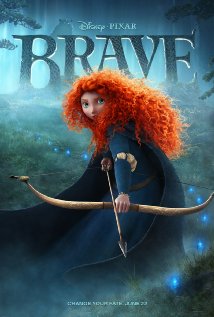
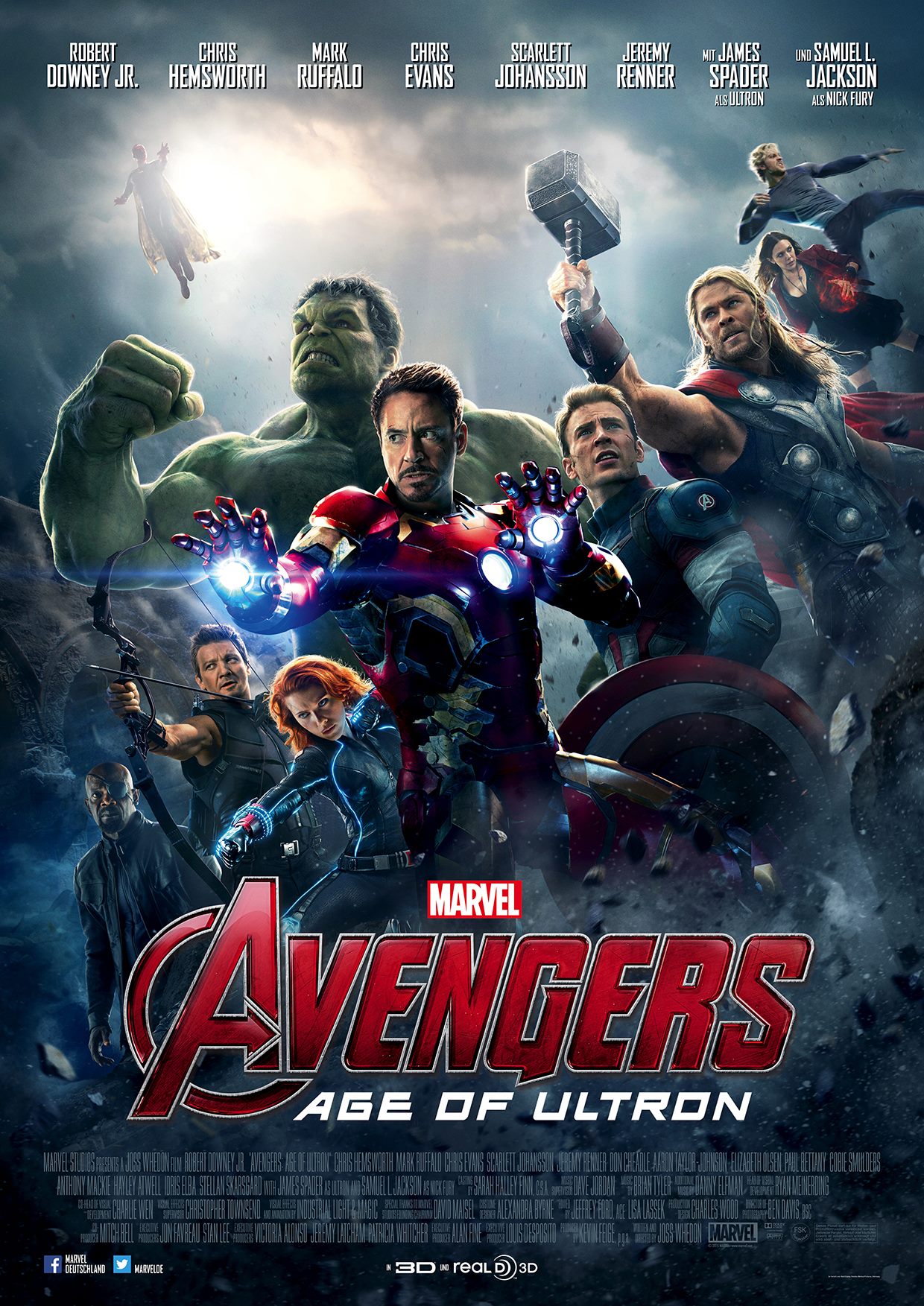
The three movies I saw in the theaters last year were: The Avengers, Dark Knight Rises, and This is 40. The first two will no doubt convince you that I am a 12-year-old boy trapped in a middle-aged man’s body, and the last will convince you that I have poor judgement. (This is 40 had its humorous moments, but there was far too much screaming for my taste, although we did see Leslie Mann’s boobs– damn you, again, Seth MacFarlane.) I saw another half-dozen 2012 films on long Korean Air flights, but these were equally lowbrow titles (Men in Black 3, Prometheus, and Brave– the latter at least won an Oscar during the hour and a half I was watching, I think it was for Best Animated Makeup Artistry.)
I’m not altogether lowbrow. I will see most of the big winners eventually, when they finally make it to basic cable. For example, I watched The Hurt Locker on Saturday, just one day before the Oscars. So I am only three or four or five years out of synch. The Hurt Locker is a particularly fine example of going the other way because I understand its distinction is being the lowest grossing Best Picture winner ever.
This year’s Best Picture Argo is definitely a film that I will see in the next five years–barring Zombies, the apocalypse, or a Zombie Pandemic Apocalypse. So there’s a 60% chance that I’ll see it. The Iranian hostage crisis is one of the first historical events that I remember seeing on the news first-hand. Had I been in the country when Argo came out–I might have seen it in the theaters, but probably not.
Part of me thinks that I should grow up and start watching the “right” movies. However, part of me says, “wait, there’s this one day a year when everybody is talking about these movies, and the other 364 days they are talking about Dark Knight Rises and The Avengers“So in some sense, I already am watching the “right” movies.
I hold contrary views to the character Bill, played by the late David Carradine, in the Kill Bill movies. Bill said that Superman was his absolute favorite superhero. The Man of Steel is among my least favorite superheroes. From a writer’s point of view, it’s hard to write an edge-of-the-seat Superman tale because readers have to feel the protagonist is in peril at every turn. That’s a tough sell if your hero is all-powerful and invulnerable. Superman writers learned this quickly, and they responded by creating a rock that could weaken or kill their character by its mere presence. In books and movies, the bad guy should be stronger and smarter than the hero. Lex Luthor is a devious fiend, but he’s no match for Superman in any domain but wickedness.
There’s a lot of talk about this year’s Superman movie, entitled Man of Steel, being darker and grittier with the implication that it’ll be more interesting than past Superman movies. The involvement of Christopher Nolan, who is most famous for the outstanding Dark Knight movie trilogy, makes many optimistic. It may be that they can tap into some of the Dark Knight narrative power. However, it’s easier to have gripping Batman tale. Batman is only human, with no superpowers, and he is inherently a loner (or in some cases a dynamic duo.) Batman may be smart, but he’s not the smartest. He may be strong, but he’s not the strongest. This makes it relatively easy to write him into perilous situations in which he is outmatched.
I have high hopes for Man of Steel, but I’m skeptical.
Chinese classic literature will make a major appearance in martial arts cinema this year, with movies entitled The Monkey King and Journey to the West. Both movies will likely featuring the staff-wielding monkey who made mischief in heaven and on earth. You may be familiar with the tale from Jet Li’s portrayal of the Monkey King in the 2008 film The Forbidden Kingdom. Readers can get the jist of the tale by reading the book.
Japanese classic literature will also be addressed, sort of. In the tradition of The Last Samurai, Keanu Reeves will star in movie that has no business having an American lead. It will be some sort of take off on the famous tale, 47 Ronin.
There will also be another iteration of the life story of Ip Man. Ip Man was a Wing Chun grandmaster who, as one can tell from the pile of films about his life, lived a fascinating life. While his fame is eclipsed by that of his most famous student, Bruce Lee, Man was a police officer who had to flee China to Hong Kong because of his support for the Kuomintang.
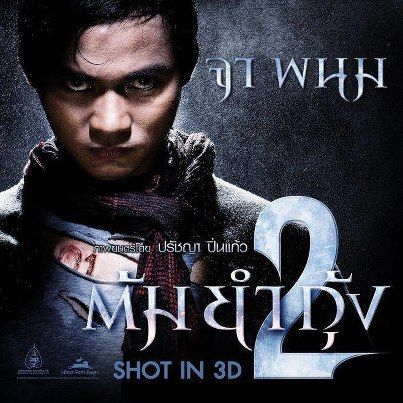
The sequel to the Tony Jaa film Tom Yum Goong (Ummm, Tom Yum) is due out this year. It will be entitled The Protector 2 in the west. The Thai star is continuing to give Chinese Kung fu cinema a run for its money.