BOOK REVIEW: One Flew Over the Cuckoo’s Nest by Ken Kesey

One Flew Over the Cuckoo's NestOne Flew Over the Cuckoo’s Nest by Ken Kesey
My rating: 5 of 5 stars

Amazon page

Get Speechify to make any book an audiobook 

When a sane man, Randle McMurphy, enters an insane asylum to get out of prison, he turns life in the ward upside-down. The book’s fictional narrator is the patient who sleeps next to McMurphy. He’s an American Indian of giant stature, named Chief Bromden, who’s become convinced that he’s shrunk. Besides childhood problems stemming from his father’s emasculation—i.e. having to take his white mother’s name (hence, Bromden) instead of the more usual family name of the father—Chief is haunted by war. Our narrator has the hospital staff convinced that he’s a deaf-mute (and probably mentally deficient, as well) and thus has a unique view of the ward, the staff speaking freely before him.

McMurphy is everything the other patients are not. He’s gregarious, confident, and risk-loving. He’s also a con-man extraordinaire—hence, his ability to trick the authorities into shifting him out of hard labor and into the mental hospital. But he’s not completely lacking in morality, and displays a kind of hard-nosed compassion. While the patients are occasionally distressed by McMurphy’s behavior, they find his willingness to stand up for them (at least when it’s in his best interest, though later a sense of justice or camaraderie guides him) worth the price of his wheeling and dealing.

McMurphy’s real opposition is Nurse Ratched, a former Army nurse who runs a tight ward. Nurse Ratched is used to controlling the patients through a combination of soft power (maternally convincing them that she acts in their best interest), bullying, and fear of the treatments she can get the doctors to rubber stamp (namely electro-shock and—in extreme cases—lobotomy.) However, she’s met her match with McMurphy. He can play patients and doctors as well as she. He, too, is capable of being cool and cunning at the same time. He’s able to provide a counterbalance to the authoritarian democracy in which she asks the patients for votes after telling them what to think. The reader doesn’t know how, but knows this conflict between McMurphy and Ratched must come to a head to be resolved once and for all, and it is (but I’ll leave the how to the reader.) At times McMurphy seems to be ahead, and at other times Ratched has the lead.

The book was influenced by Kesey’s discussions with patients at Menlo Park Veterans’ Hospital, where he worked as a night aide. Interestingly, Kesey volunteered for a study of hallucinogens during the same period (funded by the CIA as part of MKUltra), and, thus, for some of the conversations he was baked on LSD. At any rate, the experience had profound impact on him, and he became convinced that not all the patients were insane. Many, he believed, just didn’t fit well in society or families, and were pushed into institutions. The themes of the book are that differentiating sanity from insanity isn’t always easy and that mental healthcare professionals had too much power–and often wielded it unwisely.

The story is well crafted with an intense ending. The characters are developed, and this isn’t easy for the mentally insane—though Kesey’s experience with LSD may have helped on that end. Though we only really experience the insanity of Chief, because the perspective is his and he’s one of the few patients that legitimately seems to have trouble differentiating reality from illusion (at least through much of the book.) But we don’t really know how much of Chief’s problem is from his medication, and how much is the illness. There’s a beautiful descriptive scene in which Chief comes off his meds and is looking out the window watching a dog and the world go by. It’s vivid.

I’d highly recommend this book. It’s an evocative story with insights into mental health, some of which—sadly—are as valid today as they were then.

View all my reviews

BOOK REVIEW: Challenger Deep by Neal Shusterman

Challenger DeepChallenger Deep by Neal Shusterman
My rating: 5 of 5 stars

Amazon page


“Challenger Deep” is the story of a smart and artistically talented young man, Caden Bosch, who is afflicted with Schizophrenia. There are essentially two story lines being told in parallel. One is the real world, and in the chapters in this line we see Caden’s descent as it takes place. From references to past events, we gain insight into how Caden was before the disease. In the early part of the book, these chapters are set at school and at home, and then later at the mental hospital at which he’s admitted as a patient.

In the other story, Caden is on a sailing ship headed to the Challenger Deep—the deepest portion of the Marianas Trench at almost 7 miles down, and—symbolically—Caden’s rock-bottom . Shipboard life is Caden’s hallucinated experience of the mental hospital. Over time the reader begins to match up characters from the real world with those from the delusion—both patients and staff members. This is a mutinous vessel, and the tension reflects the pull between Caden’s desire to be well and the appeal of the world of delusion.

Over time the author shows key events in both lines and the reader can connect them up to interpret how delusional Caden experiences the world. The story isn’t strictly told in a chronological order, though the broad sweep of it is. The bits of disjoint create no confusion while helping to convey the nature of a fractured mind. This works, in part, because the book is told over 161 short chapters, and, because the chapters are so short, a diversion doesn’t take one far and it’s easy to show the match up of events. The book artfully conveys the bizarreness of a dreamlike world of delusion while remaining clear and readable. Any confusion in the early chapters becomes rectified as the author reveals how the delusional world and the real world zip together.

This book was imaginative, enjoyable to read, as well as allowing the reader insight into the nature of mental illness. Atypical of a work of fiction, there is a resources section that provides contact information for organizations that support mental health.

I’d highly recommend this book for fiction readers.

View all my reviews

BOOK REVIEW: A Clockwork Orange by Anthony Burgess

A Clockwork Orange A Clockwork Orange by Anthony Burgess
My rating: 5 of 5 stars

Amazon page


While it’s a title that probably has had many readers scratching their heads, “A Clockwork Orange” is the perfect title for Burgess’s book. Our brains—while highly capable—are a stringy, wet mess of complexity, and to treat them like a clockwork machine is to invite trouble as well as to muddle what it means to be human.

This book is set in a dystopian future and features Alex, the head of a small band of teenage ne’er-do-wells who roam the streets engaging in random acts of violence. After Alex has a falling out with his band, they abandon him to be captured by the police. Institutionalized, he finds that he’s no longer a lion among sheep, but is a teenager among hardened criminal men. He’s eager to get out and after a violent precipitating event; he’s enrolled in a program that will use drugs and operant conditioning (i.e. the so-called Ludovico technique) to “cure” him of violent tendencies. Once he’s cured, they release him as he’s no longer a threat to society.

The technique works perfectly, but with the side-effect that the classical music that he used to love now makes him violently ill—because said music was used for dramatic effect in his conditioning. The days after his release are no picnic as he has run-ins with past enemies and has no ability to stand up for himself–any violence makes him ill to a physically debilitating level. He finds himself being used by anti-government dissenters who make him a poster-child for the level of authoritarianism the government has stooped to. The government ultimately caves to public opposition, and reverses the procedure. At first Alex immediately goes back to his ultra-violent ways with a newly formed crew, but he finds himself changing.

There are a couple of warnings of note. First, Alex and his friends speak in a dialect called Nadsat that is a kind of pidgin of Russian and English. It’s not hard to follow. Context usually makes the meaning clear, and only a handful of twists on Russian words are used and they are used repeatedly to the point their meaning becomes second nature. However, it should be noted that a considerable amount of the book is not in straightforward English. For example, “horrorshow” actually means “good” and it comes from the Russian хорошо (phonetically: “horosho”) which means “good.”

Second, if you’re buying a secondhand copy, make sure it has 21 chapters. In the US, an edition was released with the last chapter stripped out. (Note: some people do like it better without the last chapter, but you should probably experience it as the author intended and make up your own mind about which is best.) Needless to say, the tone of the ending is completely changed depending upon whether the last chapter is included or not.

The organization is straightforward, and consists of three parts with seven chapters each. The beginning is before Alex goes to prison, the middle is while he’s incarcerated and his experience of the Ludovico Technique, and the last part is from Alex’s release onward.

This book is a classic for good reason. It’s both an intense story and a thought-provoking morality tale. I’d highly recommend it.

View all my reviews

BOOK REVIEW: Submission by Marthe Blau

SubmissionSubmission by Marthe Blau
My rating: 4 of 5 stars

Amazon page


This book describes the life-cycle of one woman’s submissive relationship with a dominant man. Her relationship with the man isn’t sexual in the conventional sense–though she participates in lots of sex and he commands her to engage in various sexual activities. It’s a relatively tame and more modern variant of the tale told in the famous “The Story of O” written by another Frenchwoman, Pauline Réage (a.k.a. Anne Desclos.)

While “Submission” is like any number of stories of submissive individuals being dominated by a dominant and / or sadistic partner, it does carve out a unique space. The female lead is a highly regarded lawyer who is married with a family. She isn’t on the weak side of some power dynamic (i.e. it’s not a secretary / boss or employee / employer kind of tale.) That’s not that different from “Story of O” in which the lead is a successful photographer, but it does add complexity to the lead’s motivation.

It also makes the story’s main question a little bit more intriguing. That question being, how long can the relationship go on with the demands on her becoming progressively more intense (re: degrading) while the intimacy of the relationship isn’t increasing as she’d like? This tension builds to a climax at a point where the man momentarily shifts from the cool dominant to an angry abusive.

It goes without saying that the book contains graphic sexual scenes and won’t be the cup of tea of puritans or those with delicate sensibilities. Included among acts described are bisexuality, public nudity, wearing of sex toys in public settings, and mostly mild sadism.

“Submission” is interesting both as a work of erotica and as a psychological sketch. There seem to be many books out there that tell similar stories, so it’s hard to place this one. I wouldn’t call it exceptional in any way, and I found “The Story of O” to be more intriguing and intense. That said, while I haven’t read the “50 Shades…” books, from what I heard about them, this one likely surpasses them in terms of writing and the building of characters of verisimilitude. [That said, the “50 Shades…” books have obviously been immensely popular for a reason, and that reason—near as I can tell—is they tap into a fantasy in which a man who is extraordinary in every way (genius-billionaire-playboy-philanthropist-with-six-pack-abs) falls for a woman who is mediocre in every way because she submits to his will. “Submission” won’t scratch that itch.]

The book is short, clocking in at a less than 220 pages. It does have a discernible plot, though it’s more character-centric. A little more depth with the lead character and her dominant could be interesting. As it is the reader is left to draw many conclusions about the characters’ motivations—which, admittedly, has its advantages.

If you know what you are getting into, I’d recommend this book.

View all my reviews

BOOK REVIEW: A Wrinkle in Time by Madeleine L’engle

A Wrinkle in Time (A Wrinkle in Time Quintet, #1)A Wrinkle in Time by Madeleine L’Engle
My rating: 5 of 5 stars

Amazon page


The Murry family feels mopey. There are a number of run-of-the-mill factors in the family malaise. Meg, the story lead, doesn’t fit in in school, and is frequently in disciplinary trouble. Her younger brother, Charles Wallace, is thought to be mentally deficient because he doesn’t talk to strangers, but he is—in fact—a genius. However, the big cloud hanging over this family’s head is that their father hasn’t been heard from for a year. He isn’t the type of father who goes out to the store for cigarettes and never comes back. Instead, Alexander Murry—Meg’s dad—is a loving father and husband who happens to be a renowned scientist who sometimes does work for the government. Even when he’s off doing top-secret work, however, he checks in with his wife and kids on a regular basis, but now there’s been no communication for months. The townspeople both pity the Murrys and think them to be living in denial because they maintain that Alexander Murry will soon come back.

While the book begins with a real world premise and feel, it soon becomes apparent that things aren’t what they seem–at least not around the Murry household. (Things not being as they appear recurs as a theme throughout this book.) Our first inkling of this unusualness comes when we realize that Charles Wallace isn’t only a genius and preternaturally mature, he also appears to be psychic. Events really turn strange when Meg’s mother, Katherine, goes out to investigate a noise and comes back into the house with an old lady who—surprise of surprises–Charles Wallace knows, a Mrs. Whatsit. And, as he seems to do with everyone, Charles Wallace begins talking to the old lady as if he were a sage old man.

The story follows the adventures of Meg, Charles Wallace, a boy named Calvin O’Keefe as they go with three mysterious visitors (one of whom is the aforementioned Mrs. Whatsit) in search of Alexander Murry. While O’Keefe is a popular kid and a jock, he doesn’t really feel he fits in. In that way, he’s a counterpoint to Meg. Meg doesn’t fit in and it gets her in trouble. O’Keefe pretends to fit in, but has angst about it. Furthermore, O’Keefe seems to have some sort of supernatural ability—perhaps not of the level of Charles Wallace, but enough to exacerbate his feeling of being an outcast among his own family and community. It’s Calvin’s feeling that he’s at home with the Murrys that accelerates his inclusion in the story.

The sci-fi elements of this book, as with many other great works of children’s science fiction, facilitate the teaching of simple moral /ethical lessons. Don’t rush to judgement about people—Aunt Beast is one of the most endearing characters of the book. Fitting in is not all it’s cracked up to be, and if everyone were the same, what a dreary existence life would be. And, ultimately, love conquers all.

I’d highly recommend this book for children and adults alike. The story is highly readable owing to narrative tension and mystery.

View all my reviews

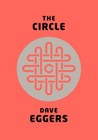
BOOK REVIEW: The Circle by Dave Eggers

The CircleThe Circle by Dave Eggers
My rating: 5 of 5 stars

Amazon page


In Eggers’ novel, the Circle is a technology giant that looks a lot like Google + FaceBook + PayPal + Twitter all wrapped together under one corporate roof. Mae Holland, the book’s lead, is a young woman hired into the firm owing to her close friendship with a college roommate turned high level executive at the Circle, Annie. Even though Mae is brought in to work what is called “customer experience” (i.e. customer service) doing seemingly tedious work, Mae is in hog heaven. She left a job doing tedious work in a depressing environment with minimal support, and so this job personalizing boilerplate responses in a fascinating place with the opportunity to move up is a dream. The Circle is a utopian workplace where engineers are given free rein to experiment, where great minds and performing artists come to hang out, and where one gets handsomely rewarded for playing on one’s social media at work. All one needs to thrive at the Circle is a sharp mind and a willingness to accept that one’s days of privacy and solitude are behind one.

The Circle is the dystopia that some would say we are on the cusp of and others think we’ve already plunged into. It’s not Orwell’s gray dystopia of brutal state force. Neither is it Huxley’s bright and shiny dystopia of drugs and free loving. It’s a dystopia in which people willingly give up all privacy and negate the need for a neo-KGB by posting every idiotic thing that they do directly to the worldwide web. However, as in Huxley’s “Brave New World,” we see that the most nefarious character isn’t necessarily the most dangerous. The Circle is headed by an executive trinity. There’s the tech genius who we know little about until the book’s end–except that his life runs contrary to what the Circle seeks in its employees in that he’s fiercely private to the point of being mysterious. There is Tom Stenton who is the face of greedy capitalism, a loathsome character in every way imaginable. However, the real danger comes from the likable–and seemingly reasonable–Eamon Bailey who’s an idealist who thinks that people can perfect if they have no shadows in which to make mischief.

Mae is introduced to us as a likable character. She’s a hardworking but human girl next door. When we are introduced to Mercer, her ex-boyfriend and the face anti-Circle-ism, we assume that she’s being reasonable in her dislike of him. Even though he sounds reasonable, she knows him. Mercer rails against this corporatized surveillance state, and initially one may not be able to tell whether he’s a Luddite or the voice of reason. As the story goes on, however, the reader is likely to like Mercer more and more and Mae less and less. But the question remains until the end whether Mae will do the right thing as she becomes aware of the full—disturbing–picture of the Circle.

I got engrossed in this book. It’s absorbing both because of good character development and an intriguing story. That’s probably why the novel was made into a film that came out earlier in the year. It’s one of those books with the readability of popular commercial fiction, but which provides some food for thought. Some of the twists you may figure out, but the book keeps one wondering until the reveals.

I’d recommend this book for fiction readers—particularly if you have any pictures on social media with a drink in your hand or bad judgement in progress.

View all my reviews

The movie trailer, if you’re interested:

BOOK REVIEW: Black Panther: A Nation Under Our Feet, Vol. 2 by Ta-Nehisi Coates

Black Panther: A Nation Under Our Feet, Book 2Black Panther: A Nation Under Our Feet, Book 2 by Ta-Nehisi Coates
My rating: 4 of 5 stars

Amazon page


This volume contains the middle portion of a three-part story arc written by Ta-Nehisi Coates. The books included are “Black Panther (2016)” #5-8 and “The Black Panther: Jungle Action” #6&7.

As the subtitle suggests, the fate of Wakanda is at stake and King T’Challa, a.k.a. the Black Panther, must find a way to keep his nation from falling. Public displeasure with T’Challa is being exploited by a man named Tetu who heads a revolutionary group called “The People.” Tetu is allied with a powerful psychic named Zenzi and—in contrast to the populist message his organization’s name suggests–the arms dealer Ezekiel Stane. However, while the might of Tetu and his allies represents a dire threat, the greatest challenge might be from a beloved scholar named Changamire, who holds both the moral high ground and the voice of reason. As Tetu sought to co-opt ex-Dora Milaje members Aneka and Ayo (now called the Midnight Angels) to gain legitimacy as well as their strength, he also seeks to get Changamire in his corner.

As the main plot of political intrigue unfolds, there is a subplot involving T’Challa’s sister Shuri who is trapped in the Djalia—Wakanda’s plane of collective memory. For a time T’Challa is forced by events to set aside his desire to get his sister back in order to battle Tetu both outright and by rekindling goodwill in the hearts and minds of his people. However, Shuri’s lessons in the Djalia, delivered by a griot in the form of her mother, are interspersed throughout the story, and by this segment’s end T’Challa finds it impossible to delay his search any longer.

Coates presents us with a human T’Challa, one who makes mistakes and whose mistakes exacerbate the threat to Wakanda. His most notable mistake is allowing himself to be talked into convening a council of “counter-revolutionary” experts who, in fact, consist of heads of the security apparatus for several corrupt regimes. His only saving grace is that Tetu has even more skeletons in his closet. T’Challa has to deal the best he can with situations in which there is no clear high ground, and that makes for a more intriguing story than one normally associates with superhero comic books. By the end of this Volume, it seems that Black Panther—along with his allies Manifold, Luke Cage, Misty Knight, and Storm—has turned things around by defeating Stane and uncovering the lair of “the People,” but then one realizes how fragile Wakanda remains.

The two bonus books “Jungle Action” #6&7 are from the early 1970’s and feature an earlier challenge to T’Challa’s throne from his archenemy Erik Killmonger. I can see why these two comics were included. Said books might be viewed as influences on this story, but there may have been better choices. At the end of the third volume (reviewed concurrently), there’s material from a 2013 run that offers great insight into why T’Challa is on the outs with his people. For those of us who pick up select stories (i.e. not all-reading fanboys), the insight offered in Volume 3’s supplementary material would be useful earlier in the reading process. (Preferably it would be in Volume 1.) The first volume includes a single book from “Fantastic Four.” It’s fun to read because it’s Black Panther’s introduction into the Marvel-verse and it shows us how formidable Black Panther is as well as letting us in on the secret that Wakanda is the most technologically advanced nation on the planet. However, I think knowing why the Wakandans are so disgruntled would help make Coates’s story more powerful.

As it’s a comic book, I should mention the artwork–even though I have no particular insight into graphic artistry—comic book or otherwise. All I can say is that I liked the art and found it effective and clear. I viewed the book in black-and-white, so I have nothing to say about color palette.

I enjoyed this arc and thought this section of it had a good balance of peril and victory for our hero. I’d recommend it broadly. I don’t think you have to be solely interested in comic books or the Black Panther character specifically to find this story intriguing.

View all my reviews

BOOK REVIEW: A Study in Scarlet by Sir Arthur Conan Doyle

A Study in Scarlet (Sherlock Holmes, #1)A Study in Scarlet by Arthur Conan Doyle
My rating: 5 of 5 stars

Amazon page

Get Speechify to make any book an audiobook 

This is the first book of the Sherlock Holmes canon, and is also the first Holmes novel (most of Arthur Conan Doyle’s Sherlock Holmes stories are short stories published in collections.) The book was first published in 1887.

There are actually two stories told in the novel. The first part of the novel describes a mysterious murder that happens in London and whose victim displays a gruesome death mask. Later a second murder is discovered. It’s not clear whether the two killings are connected but the two men were associates and so it’s a likely conclusion—though the victims’ manner of death is quite different. Because, it’s the first story, there’s also the meeting of Holmes and Dr. Watson–who becomes Holmes’s roommate and who soon becomes fascinated by the work of the world’s first consulting detective.

Part I is as one would expect of a Holmes’ story in setting and characters, the second part is out of the ordinary but none-the-less fascinating. Part II begins with a man and a little girl being rescued by a caravan of Mormons. The two are the sole survivors of a Donner Party-style ill-fated wagon train through the Rockies. The man and the girl go on to live with the Mormons, if uneasily. Eventually, the girl reaches age. While she falls for a non-Mormon hunter, the polygamous Mormon’s face a situation in which the demand for wives far outstrips supply. This sets up the intrigue of the story. That intrigue is eventually tied up by Holmes at the end of the second part.

It seems like it would be an odd way to tell such a story, in two disparate parts, but both parts of the story are well-told and gripping. Though, I found the adventure in Utah to be particularly edge-of-the-seat. There’s a reason Holmes was such a popular character. Arthur Conan Doyle wove fascinating tales.

I’d recommend this book for all fiction readers—unless you’re a Mormon with anger issues, then you might want to just pass.

View all my reviews

BOOK REVIEW: Steppenwolf by Hermann Hesse

SteppenwolfSteppenwolf by Hermann Hesse
My rating: 5 of 5 stars

Amazon page


Harry Haller lives out-of-step with virtually every aspect of modern society. He finds the prevailing music, art, and entertainment to be trivial and low-brow. He has pacifist tendencies amid strongly nationalist peers. This disjoint between his individual nature and society’s has made him depressed to the point of being suicidal—but he hasn’t been able to bring himself to commit the act, and has instead given himself a deadline.

Enter Hermione (note: her name seems to be rendered “Hermine” in some editions), a woman who is in many ways the exact opposite of Haller. She loves Jazz, enjoys dancing, and doesn’t like to be too serious or analytical about anything. She becomes his Yoda. She teaches him to dance, introduces him to a lover, and exposes him to the delights of frivolity. While the book opens in a way that makes one think it might be an indictment of modern society, what it really shows is how Haller’s unhappiness comes from insisting that society should be fitted to his worldview and proclivities. If he can find a way to get beyond that insistence, he can transcend his unhappiness.

One of the fascinating intrigues of the book is that Hermione early on promises that she will get Haller to do two things: fall in love with her and something else which I’ll leave to the reader but which seems even more unfathomable. This sets up an intense tension that one eagerly follows through the rest of the book. (It’s not so surprising that Haller will fall for Hermione. That seems to happen immediately. Still, you’ll remember that I pointed out that Hermione played cupid and set Haller up with her friend Maria, so it’s fascinating that she intends to make him fall in love with her.)

The organization of the book is a bit unconventional, but it works both in terms of being easy to follow and in providing a multi-dimensional story. (Though if one missed the first part on wouldn’t be at a terrible loss.) The first part is an “Editor’s Preface” as told by the nephew of Harry Haller’s landlady. He comes into possession of Haller’s manuscript and explains what it is that made him go to the trouble of publishing it, despite—as he tells us—he ordinarily would not. It explains how this man’s limited interaction with Haller intrigued him and made him want to tell the story. The second part is labeled “Harry Haller’s Notebooks (for mad people only),” and is from Haller’s perspective. This section shows us a depressed Haller walking the streets and railing against the futility of the world when his attention is captured by a sign for a theater that announces: “Admission not for everybody. For mad people only.” From that point we enter the story itself, which is entitled “On Steppenwolf: A Tract (for mad people only.)”

The novel gets bizarre / surreal at the end as Haller is going through his “Magic Theater” experience. One doesn’t know exactly what is real, what is hallucinogen-induced, and what flows from madness. However, this warped reality works well for a story of transcendence and transformation.

I’d recommend this book for readers generally. It’s short, readable, has intriguing characters, and is thought-provoking. If you like stories that make you think, you’ll enjoy this book.

View all my reviews

BOOK REVIEW: Satantango by László Krasznahorkai

SatantangoSatantango by László Krasznahorkai
My rating: 4 of 5 stars

Amazon page


This was the first novel by László Krasznahorkai, who’s considered perhaps the most important living Hungarian writer (a country with a literary tradition disproportionate to its small population.) “Satantango” was first published in 1985, and it’s been said to remain Krasznahorkai’s best known novel—though winning the 2015 Man Booker Prize may have pointed people toward his more recent works.

If there’s one thing one must know about the Hungarian mindset in order to feel where this novel will take one, it’s the national proclivity for gloominess. You may have heard of the song “Gloomy Sunday” by Rezső Seress, which is often called the “suicide song” because of the number of people who’ve quoted its lyrics in suicide notes, clutched its sheet music as they committed suicide in the Danube, or had it on the phonograph when their bodies were found. If “Gloomy Sunday” is the epitome of melancholy put to song, “Satantango” just might be its literary counterpart—the perfection of gloom in novel form. The book scores highly on emotional evocativeness.

The story is set in a small Hungarian village that is swamped in by perpetual rains. The village has been shrinking as many of the villagers have abandoned it, and the few remaining residents are often known to interact at the village’s only pub—you know how alcohol-fueled scenes can be cheerful or depressing, this is the latter. I won’t get into the details of the story, but suffice it to say that constant tension results from this situation in which everyone knows everyone else and all are more or less trapped together in the confines of the village. Some have wronged others. Some covet that which belongs to others. And everybody’s dirty laundry has been seen flapping in the wind by everyone else. For literary fiction, there’s an intriguing story told using this tense atmosphere.

So, it’s a good story that’s highly emotionally charged. What more could one want? Well, the warning I feel obliged to issue is that this novel’s readability is low. In other words, it’s challenging reading in almost every way that a novel can be challenging to read, except being bad—of course. There are changing points of view and a non-linear story line, but that’s not the worst of it. I read it in an e-format, and it has near zero white space. By that I mean there are no indented paragraphs and pages are just huge, solid blocks of text. I suspect the same is true of hard-copies, but I can’t recall picking one up. The author is stingy with information early in the story, and this leaves one little by way of mnemonic handholds to keep a grip on the story through to the heart of narrative arc. The book is presented and organized to be knocked out in a day or two of intense reading. The problem is, it’s not that type of novel–both because it would be an overdose of gloominess and because it would be mentally tiring to read this style of writing in that way.

I would recommend this book for readers of literary fiction unless: a.) you are prone to depression; or b.) you find it extremely frustrating when a writer / publisher make no efforts to make the reading experience a pleasure. This book is optimized for masochistic readers. If you love a difficult read, this is the book for you.

View all my reviews