BOOK REVIEW: The BFG by Roald Dahl

The BFGThe BFG by Roald Dahl
My rating: 5 of 5 stars

Amazon page

Get Speechify to make any book an audiobook 

This is an excellent, little story about a big, friendly Giant [hence, BFG.] The main characters are the BFG and an orphan named Sophie. The former abducts the later from her bed, which sounds terrible, but he’s conflicted about it. He snatches her because she saw him during his late-night work delivering good dreams to children, and he can’t have any witnesses lest the townspeople get pitch-forky with him. Sophie has no parents or siblings to miss her, and she doesn’t mind being away from the orphanage and making a Giant new friend, but she doesn’t wish to live out her life in Giant Country. While the BFG is a kind and delightful character, he’s the exception to the rule when it comes to Giants. Furthermore, because he lives off the snozzcumber [a repulsive vegetable] rather than dining on people, he’s a runt among his human-eating species. Therefore, he’s no match for his nine mischievous fellow residents of Giant Country. Sophie and the BFG work together to try to achieve an end that is pleasing for all parties concerned—well, except for the nine human-eating giants.

The story is clever, and the BFG character is well-developed and interesting. BFG is wise, but he has trouble with language owing to his lack of formal education and he often mixes it up in whimsical ways. He’s also conscientious about his work of catching dreams and delivering them into the bedrooms of sleeping children so they can have delightful dreams. He also takes bad dreams out of commission by catching them in a jar and keeping them on shelves in his cave. Sophie is smart and likable—if not as interesting than BFG.

The book is illustrated by Quentin Blake in the same style as the other Dahl books. The version I have has black-and-white line drawings, but there is color edition that may be more appealing to children.

This is a great story presented with humor, and I recommend it.

View all my reviews

BOOK REVIEW: Monkey: A Folk Novel of China by Wu Cheng’en

Monkey: A Folk Novel of ChinaMonkey: A Folk Novel of China by Wu Cheng’en
My rating: 4 of 5 stars

Amazon page


If you’re familiar with any Chinese folklore, it’s probably this story. But you probably know it as “Journey to the West.” It’s not only been released in numerous editions as a novel, it’s also been adapted for film, stage play, and I’m sure there must be a video game of it out there.

If you’re thinking, “Chinese folklore? Sounds boring.” Think again. This is a superhero story. Monkey, also known as the Monkey-King and “Great Sage Equal to Heaven,” is an immortal who has all manner of supernatural powers. He can fly. He can make copies of himself. He can transform himself—either disguising himself as another being or appearing as an inanimate object. He has an iron truncheon that can be the size of a sewing needle or a mile long and which is indestructible. Wielding said staff, he can defeat armies or deities.

In fact, the flaw in this story isn’t a lack of adventure or thrill. On the contrary, it’s one adventure after the next. If anything, the flaw is “Superman Syndrome.” That’s what I call it when the hero is so ridiculously overpowered that even when he’s fighting gods, dragons, or whole armies there’s still no doubt about the outcome.

Of course, the Monkey does eventually meet his match in the form of the Buddha. The Buddha defeats Monkey not in combat, but in a bet. That event shifts the direction of the story. In the early chapters, Monkey is goes about heaven and earth arrogantly wreaking havoc. He’s not altogether detestable. He does have his redeeming traits, but he’s insufferably arrogant and mischievous. After he’s imprisoned following his run-in with the Buddha, a monk is assigned to go to India to bring back scriptures (hence, a “journey to the west”) to China. Monkey is assigned to be the monk’s guardian and along with two others that they pick up along the way (Pigsy and Sandy) the monk is escorted on his journey. The party faces one challenge after the next, and the trip is long and arduous. Some of the challenges require brute force but in many cases they are battles of wits. So while Monkey may be overpowered, he does experience personal growth over the course of the story.

The story is told over 30 chapters, each set up with a cliffhanger. I enjoyed this translation by Arthur Waley. It is end-noted, which is useful given the historic and cultural nuances that may not be clear to readers.

It should be noted that this is unambiguously a Buddhist tale. There is a bias against Taoists and other non-Buddhist religions evident throughout the story. It’s not just the fact that the Buddha easily defeats Monkey when no other deity or group of deities can, there’s a steady stream of anti-Taoist sentiment. So, Taoists and Chinese Folk Religion practitioners be warned, I guess.

I would recommend this book for fiction readers, particularly if you have an interest in the superhero genre or Chinese literature.

View all my reviews

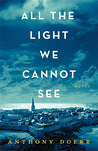
BOOK REVIEW: All the Light We Cannot See by Anthony Doerr

All the Light We Cannot SeeAll the Light We Cannot See by Anthony Doerr
My rating: 5 of 5 stars

Amazon page


This review will be short because, JUST READ IT.


“But, historical fiction isn’t my bag,” he said.


This isn’t that kind of historical fiction—i.e. the kind that binds one in a web of cultural minutiae and reads like a history book writ purple. This book will make you enrapt.


“But, I don’t like war stories. Too violent,” she said.


I bet you’ll like this one. Yes, it’s set during World War II, and war’s ugly face peeks around the corner from time to time, but one also sees how ordinary people do extraordinary things when exposed to the crucible of war. War doesn’t just bring out the worst; it also forces people to be better than they’ve ever had cause to be. The book is largely about a girl living under occupation and isn’t so much about life on the front lines.


How can I so boldly assert that one should read this particular book? (I normally lay out the facts first and only at the end make a recommendation.) Because this is one of the best crafted novels I’ve read. It’s extremely readable and engaging. The characters are superbly developed and one feels one knows them. Even the closest thing to a villain (if you don’t count war as the villain) is a complex and nuanced character who one wants to understand better.


I will tell you something substantive about the novel. It interweaves the stories of two teenage characters whose lives are fated to become entwined through the fortunes (and misfortunes) of war. The first is a blind girl who lives with her father in Paris. Father and daughter flee when the Nazis occupy France and end up living on the coast at Saint Malo with her great-uncle who is a shut-in owing to his experience in the last Great War. Of course, the move to the coast only delays the occupation and the point at which the war comes to them.


The other lead character is a German orphan boy with a gift for science who gets prematurely drawn into the war because of his great intellect and skill with radios. Not only are these characters both people who readers are drawn to, they both experience great growth over the course of the story. Imagine being blind in a war zone–or even just being a young nerd drafted into the war–and you can taste some of the emotional tension that resonates throughout this book. I won’t say that it’s all happy endings. It never is in war.


I’d highly recommend this book for all readers.

View all my reviews

BOOK REVIEW: Tropic of Cancer by Henry Miller

Tropic of CancerTropic of Cancer by Henry Miller
My rating: 3 of 5 stars

Amazon page


This, Henry Miller’s first novel, is about a young man living a bohemian life in Paris in the late 1920’s. It reads autobiographically. It’s often said that literary fiction downplays story in favor of character development. This isn’t necessarily true today, but it seems to be the case with this 1934 novel. There’s not much story—though a little one is packed in at the very end. The book does illuminate the lead character, but the reaction that character evokes is neither love nor hate but more of an “ewww” of disgust. Put another way, he’s like a Chuck Palahniuk anti-hero (e.g. think of Victor from “Choke”), but without out the quirky humor to make him amusing and interesting. This will make more sense in the next paragraph.

This book is often classified as erotica, but many readers might not find it to be erotic. Like a shock-jock, Miller chooses the most vulgar term to stun rather than using descriptive language to arouse. The lead (and other characters) spends a lot of time in bed with prostitutes, but at the same time he’s sleeping on the couch of some acquaintance or grumbling that he can’t afford a sandwich. Lest one think I’m hammering the book because of gratuitous sex, let me say that it’s not the sex that I find dismaying but a guy whose priorities are so askew of Maslow’s hierarchy as to make one wonder if he’s of the same species. There’s an uncanny valley with this character, only not with respect to facial appearance. All of that would be fine if the character experienced change over the course of the book, but the character neither grows nor is destroyed. I should also point out that I like Palahniuk’s anti-hero stories, but Miller takes himself too seriously to be fun, and I think that fun is the only way such a character makes for appealing reading.

So far I’ve made this book sound horrible, but I didn’t savage it with a sour rating. Ergo, there must be some redeeming value. There is. Miller’s use of language is intermittently gorgeous. He gets in these streams of consciousness in which poetry infuses into his prose. During these times, the story—such as it is—disappears even further into the hinterland, but the words can spark. Maybe Miller should’ve forgotten the hype that the novel is the ultimate literary art form and devoted his efforts to poetry.

I offer a qualified recommendation of the book. If you’re a reader of erotica and heard that this was a classic of that genre, then pursue it with caution. However, if you love words artfully twisted into little flashes of light, maybe you should check it out.

It goes without saying that there’s graphic content, but there are other reasons readers might be sensitive to this book. Not that I encourage avoiding a book because a character makes one feel ill-at-ease. (On the contrary, I frequently encourage it.) If a lead who comes off as simultaneously lusting after and despising women is a trigger for you, be forewarned this is such a character. (Note: He may also be anti-semitic, racist, and homophobic as well, but those elements aren’t explored in great detail. It could well be that the character doesn’t like humans in general. Maybe he was supposed to be a robot after all [hence the uncanny valley] and in that case I recant this review.)

View all my reviews

BOOK REVIEW: The Memoirs of Sherlock Holmes by Arthur Conan Doyle

The Memoirs of Sherlock Holmes (Sherlock Holmes, #4)The Memoirs of Sherlock Holmes by Arthur Conan Doyle
My rating: 5 of 5 stars

Amazon page


This is the second collection of short stories and the fourth book overall in the canon of Sherlock Holmes. It includes eleven adventures of the great detective as narrated by his partner, Dr. John Watson.

Below, I’ll describe the premise of each of the stories:


“Silver Blaze” A race horse goes missing and its trainer is found dead. The eponymous race horse is favored to win an upcoming race, so Holmes faces a race against time to see that the horse can compete.


“The Yellow Face” A man begins to suspect the wife that he’s never had cause to doubt before. Only he doesn’t know exactly what he suspects her of, but it seems to revolve around visits to a nearby cottage that has been recently occupied by an unknown and mysterious resident. Note: this is one of my favorite Sherlock Holmes stories both because it displays the humanity of the character in that his initial guess proves wrong, and in it shows how the author was ahead of his time in his worldview.


“The Stock-Broker’s Clerk” When an out-of-work clerk, recently hired by prestigious firm, is given an offer of much more money but finds himself doing only busy work, he gets suspicious and calls on Sherlock Holmes.


“The ‘Gloria Scott’” Holmes is visiting a college friend when the friend’s father is visited by a gruff ex-sailor. When the family patriarch uncharacteristically bends over backwards to make the sailor happy, it’s unclear why. When the old man dies upon reading a letter, the mystery becomes all the more intriguing.


“The Musgrave Ritual” A butler is fired for digging around in the family papers, despite the fact that the document he’s discovered with is nothing more than a series of cute questions constituting an old family ritual.


“The Reigate Puzzle” Burglaries in the countryside culminate in the murder of a coachman. The family that employed the coachman is neighbor to a close friend of Watson.


“The Crooked Man” A couple who’ve been married for thirty years without any known incidents of domestic unrest get in a raucous fight, and the man–a career military officer–ends up dead. The wife is the only suspect.


“The Resident Patient” A benefactor agrees to fully fund a new doctor’s practice provided that he is allowed to live on-site as a resident patient. The mystery begins when the resident patient begins to be inexplicably nervous.


“The Greek Interpreter” An interpreter is kidnapped and forced to translate a mysterious conversation between his kidnappers and a disheveled Greek man. Despite handsome compensation and threats of what will happen if he should tell anyone of the job, the interpreter feels obliged to get to the bottom of the imprisoned Greek man’s case by hiring Holmes.


“The Naval Treaty” A member of the Foreign Service has a crucial treaty stolen while he goes to check on the service of his tardy coffee. The loss of the treaty spells professional death for the young man unless Holmes can solve the case. The commissionaire and his wife are initially the sole suspects.


“The Final Problem” Perhaps the best known story of the collection, it was intended to be the end of Sherlock Holmes. The story involves an uncharacteristically shaken Holmes, his arch-nemesis, and a trip to Reichenbach Falls.


This collection includes some essential Sherlock Holmes stories, as well as some classic Holmsian cases and quotes. For 19th century literature, it’s highly readable. Definitely a must read for fans of Sherlock Holmes.

View all my reviews

BOOK REVIEW: Norse Mythology by Neil Gaiman

Norse MythologyNorse Mythology by Neil Gaiman
My rating: 5 of 5 stars

Amazon page


This is the telling of a select group of Norse myths with the signature humor and down-to-earth prose of Neil Gaiman. It’s a fascinating collection of stories and is well-ordered so that the reader is often familiar with references to past events from earlier stories.


After an introduction that explains how Gaiman first became interested in Norse mythology both through the comics and then actual mythologies, there are a couple of chapters that largely provide background before delving into the chosen Norse myths in great detail. One of these chapters gives extended “bios”—if you will—for three of the most prominent characters: Odin, Thor, and Loki. Then there are a couple of chapters that both convey the timeline and of the spatial dimensions of the nine realms of the world the Norse created.


There is a brief story of how Odin lost his eye in the pursuit of wisdom that’s entitled “Mimir’s Head and Odin’s Eye.”


It’s from this point on that the stories are substantial and complete. The first of these stories is entitled “The Treasures of the Gods” and it’s about of how Loki created a competition among dwarf master craftsman. Loki does this in order to keep Thor from beating him with Mjöllnir after the god of mischief stole the hair of Thor’s wife, Sif (one of the items to be judged by the gods was stipulated to be a set of hair that would reattach and be as beautiful as Sif’s original hair.) The competition was Loki’s way of using a clever ploy to make the fix without it costing him anything and while at least sticking it to the dwarfs a little. The story is also well positioned as some of the items that are gifted to the gods in the competition are seen repeatedly in later stories. Loki creating mischief is a recurring theme not only in Norse mythology, but in this collection of myths specifically as they make for some particularly humorous tales.


“The Master Builder” is about a builder who shows up right as the Asgardians need a wall built. He claims that he can build it improbably quickly in exchange for the sun, the mood, and the hand of Freya (the most beautiful Norse goddess) in marriage. While all the other gods consider the price too high—not the least of whom being Freya—Loki convinces them that it’s an impossible task and that they can get free foundations if they give the builder a set timeline (a fraction of what he stated) and set another limitation or two. When they are on the verge of losing, the gods—suspecting the builder isn’t what he appears—agree to cheat.


“The Children of Loki” concerns a second family that Loki that is kept secret from the Asgardians. The three are an odd bunch: a girl who is half beauty / half corpse, the creature that becomes the Midgard serpent, and Fenrir wolf. Most of the story deals with the wolf child and the fact that they will only release the creature if they know that they can later bind it, but its strength is such that it seems to be able to break any binding. This story also explains why the Norse god Tyr has only one hand.


“Freya’s Unusual Wedding” This story revisits the idea of someone trying to negotiate Freya’s hand in marriage. Freya proves unwilling to take one for the team in order to fix the problems of other gods—in this case Thor’s hammer, Mjöllnir, has gone missing and the thief says he will give it back as a wedding gift. This time it is Heimdall—rather than Loki—who hatches a clever plot that will save the day.


“The Mead of Poets” This story revolves around a god of wisdom named Kvasir who comes into being after a strange treaty agreement between the Aesir and the Vanirs. Kvasir is killed and his blood is used to brew mead that is said to give imbibers the ability to write great poetry. This time it is Odin who saves the day and retrieves the mead. It also offers a humorous explanation of from whence bad poetry comes.


“Thor’s Journey to the Land of the Giants” Thor travels with Loki, and—eventually—with a bondservant named Thialfi (how Thialfi comes to be with them is part of a prank that Loki pulls that is explained at the story’s beginning.) The three were each subjected to a competition to see whether they were worthy, and it appears they weren’t.


“The Apples of Immortality” This is another tale that begins with a traveling trio including Thor and Loki. When Loki gets himself into hot water, he agrees to hand over the Apples of Immortality, which go hand-in-hand with the goddess who oversees them, Idunn. Without Idunn’s apples the Asgardian gods age and die like humans. Loki first has to hatch a plot to surrender Idunn, and then he’s forced by the angry and aging gods to carry out a plan to get her back.


“The Story of Gerd and Frey” This is a love story in which the god Frey (brother to the aforementioned Freya) is smitten with a woman named Gerd. Frey promises his magical sword, capable of defeating any attack, to his manservant in order for him to ask for Gerd’s hand.


“Hymir and Thor’s Fishing Expedition” Thor needs to borrow the huge mead cauldron of a giant to make a massive banquet happen. Thor goes on a fishing trip to help grease the wheel with the giant, who is very attached to the cauldron. Thor shows both his legendary strength and dimwittedness, but ultimately wins a bet that will grant him ownership of the cauldron.


“The Death of Balder” Balder is one of the most beloved Norse gods, and he dies as the result of one of Loki’s vicious mischiefs. To call it a prank would seem to trivialize it, but that seems to be how Loki views these acts. When the overseer of the underworld (where the dead who didn’t die gloriously in battle go), Hel, agrees that she will release Balder if all the creatures of the world agree that he was beloved, Loki outdoes himself.


“The Last Days of Loki” Adding insults (literally) to the injury of having been responsible for the death of Balder, Loki heads off into exile, but is pursued by the Asgardian gods.


“Ragnarok: The Final Destiny of the Gods” Here we have a description of how the Asgardian end of days is to play out. The Norse gods aren’t immortal, but Ragnarok is the end of a cycle, but not the end of all existence.


As I mentioned, the first couple chapters offer more backstory than the extensive myths through the rest of the book. This works well as it gives the reader the necessary background in a readable and palatable fashion. Another nice feature is a glossary that includes all the named characters and major places mentioned throughout the book. The section of mini-bios at the front only covers Odin, Thor, and Loki, and so it’s beneficial to have a list of all the various other gods–a number of whom (e.g. Freya, Frigg, Heimdall, Tyr, etc.) play major roles in one or more of the stories.


I’d highly recommend this book. It’s extremely readable, humorous, and educational to boot.

View all my reviews

BOOK REVIEW: Blood Meridian by Cormac McCarthy

Blood Meridian, or the Evening Redness in the WestBlood Meridian, or the Evening Redness in the West by Cormac McCarthy
My rating: 5 of 5 stars

Amazon page


There are no likable characters in this book, at least not ones that survive to a chapter’s end. There are, however, many enthralling characters. The book is set in the borderlands in the mid-19th century and it follows the exploits of a violence-prone teenage kid, called “the kid,” who ends up among his ilk in a band of men who are nominally hunting down violent Indian tribes for bounty, but which soon devolves into what it really is–a gang of outlaws.


While the kid is considered the lead because the story follows him from its beginning to its end, the most intriguing character is arguably the judge (Judge Holden.) He’s not the gang’s leader, but neither is he led. He comes across as a co-leader to Glanton, and is so much the ultimate villain that he’d be cliché in the hands of a writer less masterful than McCarthy. What makes him such an ultimate villain? For starters, he’s physically imposing, but he’s also physically abnormal in a way that sits counter to that might—specifically, he has something like alopecia that makes him pink and hairless over his entire body. (He’s described as looking like a gigantic baby when nude.) He’s also an incredibly smart man over multiple dimensions of intelligence. He speaks so eloquently that one can almost become convinced that he’s noble, despite his vile and ruthless behavior. [His soliloquies remind me of those in the books of the Marquis de Sade, except much more compelling and focused on war as opposed to domination. But he puts non-virtuous behavior on a footing of being inevitable in the state of nature.] Still, he’s as rational as he is ruthless. When he’s acting on his best behavior you’d think him the stalwart professional that his nickname implies, but when he’s vicious he’s vicious without shame or guilt.


Having discussed only characters, and knowing that this is literary fiction, one might wonder if there’s a story. In fact, there is a story—sort of an anti-hero’s anti-journey, if you will. The Glanton gang starts out with victory and accolades and while they face challenges (e.g. running out of gunpowder) they are a strong force through most of the story. However, they aren’t always the hunters, but sometimes become the hunted. As the story reaches toward its climax, the tables begin to turn and one begins to wonder whether there can be a peaceful end for men of violence.


The prose is beautiful and evocative, and at the same the writing style is sparse. The descriptions paint the scenes for one in vivid detail. You’ll likely learn some new words, but it’s not so much that there’s a choice to be pretentious with vocabulary, but rather the fact that it’s historical fiction necessitates a specialty vocabulary.


I’d recommend this for readers of fiction, but keep in mind that it is brutally violent and offers a depressing commentary on man’s inhumanity to man.

View all my reviews

BOOK REVIEW: Ruby Slippers, Golden Tears ed. by Ellen Datlow and Terri Windling

Ruby Slippers, Golden TearsRuby Slippers, Golden Tears by Ellen Datlow
My rating: 4 of 5 stars

Amazon page


This anthology consists of 22 pieces of short fiction written by 21 authors and connected by the theme of “fairy tales.” These are variations on traditional folk and fairy tales written for adult audiences. Some are more recognizable than others either because they follow the original more or less or because they start with a more or less well-known tale. (Make a note, these aren’t for bedtime reading for the kids– unless you’re willing to shell out for therapy. Some are dark and some deal in adult sexual themes.)


“Ruby Slippers” by Susan Wade: A modern, journalistic hearing of the “Wizard of Oz.”


“The Beast” by Tanith Lee: What does a woman’s new husband do when he goes out, and where does he go? A variation on the theme of “Beauty and the Beast.”


“Masterpiece” by Garry Kilworth: This is a deal-with-the-devil story in which an artist must make a perverse decision between his masterpiece or something else dear.


“Summer Wind” by Nancy Kress: This is the first of three pieces that play off the Briar Rose / Sleeping Beauty concept. A prevailing theme is one of making a less passive sleeping princess.


“This Century of Sleep or, Briar Rose Beneath the Sea” by Farida S. T. Shapiro: This is one of the few poetic pieces in the anthology. It reconsiders the Briar Rose [Sleeping Beauty] fable.


“The Crossing” by Joyce Carol Oates: This is the last of the stories built around Sleeping Beauty. It’s a period piece set neither in ancient times nor the present day.


“Roach in Loafers” by Roberta Lannes: This is a humorous retelling of the tale in which the elves come each night and save the over-burdened cobbler.


“Naked Little Men” by Michael Cadnum: This time, instead of a cockroach, it’s naked little men that come to do the work.


“Brother Bear” by Lisa Goldsmith: Part Goldilocks and part tale of marriage in the animal kingdom.


“The Emperor Who Had Never Seen a Dragon” by John Brunner: An arrogant, despicable, and dense Chinese Emperor summons an artist who draws dragons, insisting the artist introduce him to a dragon. This story goes in the “be careful what you wish for” file. It’s among my favorites of this anthology.


“Billy Fearless” by Nancy Collins: Another outstanding story. Billy is fearless and he’s suffered for it because his father and others think he doesn’t have any sense. (He’s not the sharpest tool.) But one day he finds himself in a situation in which his fearlessness might work to his advantage.


“The Death of Koshchei The Deathless” by Gene Wolfe: This is based on a Russian folk tale of the same name, but shedding the superstitious / supernatural elements to give it a bit of realism.


“The Real Princess” by Susan Palwick: The story’s basis is “The Princess and the Pea.” The story is built around a sadistic king of an impoverished kingdom and the “Real Princess” who comes to live with him.


“The Huntsman’s Story” by Milbre Burch: The Huntsman from the Snow White fairy tale, but in a brusk style and with a key difference.


“After Push Comes to Shove” by Milbre Burch: A poem on the Hansel & Grettel theme.


“Hansel & Grettel” by Gahan Wilson: This short story re-imagines the two children not as impoverished waifs but rather as wealthy trust-fund kids who travel the world, ending up at a fancy resort that represents the siblings’ second brush with stumbling into some place that could be bad for them.


“Match Girl” by Anne Bishop: A little abused orphan girl finds her fire. This is a prime example of a story not for the kiddies; it’s got a bit of an S&M undertone.


“Waking the Prince” by Kathe Koja: This is a variation on “Sleeping Beauty” with an obvious change in gender roles and the modern outlook that comports with said change.


“The Fox Wife” by Ellen Steiber: Based on Japanese folklore in which foxes are clever and conniving souls. A samurai’s trophy wife becomes possessed by fox spirit. This was among my favorites. It’s also one of the longer pieces.


“The White Road” by Neil Gaiman: A poem based on the English fairy tale of “Mr. Fox.”


“The Traveler and the Tale” by Jane Yolen: This one is a bit different. It’s a sci-fi tale that suggests fairy tales are injected into society in order to have some effect on behavior.


“The Printer’s Daughter” by Delia Sherman: This is also one of my favorites. It’s a take on the Pinocchio story. What’s fun about this version is that the totem brought to life is made out of proofing sheets. Since the printer mostly prints booklets of bawdy tales and, on the other hand, religious tracts, the girl that comes to life can only speak in two ways: one that would make a sailor blush and the other is quoting scripture.


Short story anthologies usually don’t included much in the way of ancillary matter beyond an introduction (and sometimes an epilogue,) but this one has a several pages of recommended reading at the end for those who are interested in learning more about fairy tales and how they come to be translated into modern forms.


I’d recommend this book for those interested in fairy tales of a form suitable for adults.

View all my reviews

BOOK REVIEW: The Cat’s Pajamas by Ray Bradbury

The Cat's PajamasThe Cat’s Pajamas by Ray Bradbury
My rating: 5 of 5 stars

Amazon page


This is a collection of 20 short stories by Ray Bradbury written between 1946 and 2004. Bradbury was the master. Besides his imaginative gift for storytelling, he was a torch-bearer for language that was both beautifully crafted and highly readable. Bradbury often used words poetically but without detracting from story. I believe he did so through sparing and careful use. I also appreciate the way Bradbury smoothly moved between genres, and the fact that his stories could have a moral without being moralistic.

I’ll list the stories in this collection with just a few words about each.


1.) “Chrysalis”: An unlikely friendship develops. A story about race.


2.) “The Island”: The dangers of isolation. Tension skillfully ratcheted up.


3.) “Sometime Before the Dawn”: Why does the neighbor cry late at night?


4.) “Hail to the Chief”: What if Senators wagered America at an Indian casino?


5.) “We’ll Just a CT Natural”: This is one of my favorites, but it doesn’t have a complex story or involve clever sci-fi elements. It’s just a woman waiting for a visit from a man who she used to nanny, but who’s made it big as a writer. Two simple questions keep one glued to this story. Will he show up? If not, how will she handle it?


6.) “Olé, Orozco! Siqueiros, Sí!”: This is a commentary on what is art in the modern art scene.


7.) “The House”: A couple buys a fixer-upper, but there are mixed feelings between them.


8.) “The John Wilkes Booth / Warner Bros / MGM / NBC Funeral Train”: How time travel would spawn a history-entertainment complex.


9.) “A Careful Man Dies”: A hemophiliac author who’s writing a tell-all meets his match.


10.) “The Cat’s Pajamas”: A couple of lonely cat people vie for ownership of a stray that they happen upon simultaneously.


11.) “Triangle”: As in, “love triangle.” A take on the story of X loves Y, but Y is indifferent to X; while Z loves X, but X is indifferent to Z.


12.) “The Mafioso Cement-Mixing Machine”: It’s a metaphorical cement mixer, but it’s useful for—as a mobster might say—“takin’ out da trash.”


13.) “The Ghosts”: The children are enchanted with them, but their father wants to drive them off. The difference between how children and adults see the natural world, in a nutshell.


14.) “Where’s My Hat, What’s the Hurry”: A man goes through his little black book to find a woman more responsive to the “city of love” than his wife has been.


15.) “The Transformations”: This is another story about race and walking in the shoes of another.


16.) “Sixty-six”: This is a prime example of the genre-fluidity of Bradbury. It’s a murder mystery, but not just a murder mystery.


17.) “A Matter of Taste”: Human space explorers travel to a distant world and meet a species that is wise, benevolent, helpful, but they can’t get past the alien’s creepy appearance.


18.) “I Get the Blues When it Rains”: The fickle nature of nostalgia.


19.) “All My Enemies Are Dead”: A man tries to console a friend who believes it’s time to die upon seeing the obituary of the last of his enemies.


20.) “The Completist”: Having everything may include things one doesn’t want.


I’d highly recommend this collection for readers of short fiction. While some of the stories are over sixty years old, they’ve aged well.

View all my reviews

5 Novels in Translation That You Should Read

Reading translated novels is a good way to gain insight into the culture and history of a country in a way that is both entertaining and that exposes the deep nuances of national character. I’ve selected works that both highlight aspects of culture and / or history and that are pleasant reading–some are humorous and others are adventures, but none are drudgery.  (Includes two Nobel Prize winners and one guy who gets nominated every year only to have the prize handed to folk-rock musicians or the like.)

[The hyperlinks go to my review of said book in GoodReads.]


1.) The Good Soldier Švejk by Jaroslav Hašek (Czech): The lead character in this farcical comedy is a bumbling, but likable, idiot who is drawn into military service. The book highlights the fact that in times of war the greatest acts of idiocy are not perpetrated by greatest idiots.

goodsoldiersvejk_en


2.) After Dark  by Haruki Murakami (Japan): One can’t go wrong with Murakami. I almost picked Norwegian Wood, which is more a work of realist literary fiction, but this novel about what happens when the trains stop running in Tokyo may shed a little more light on Japan. (anti-pun not intended.)

afterdark_murakami


3.) Eclipse of the Crescent Moon by Géza Gárdonyi (Hungary): The story of how a small Hungarian castle village held out against a siege by the Ottoman juggernaut.

eclipseofthecrescentmoon_gardonyi


4.) Death in the Andes by Mario Vargas Llosa (Peru): When three men disappear from a small mining village in the Andes, the Army sends a Corporal and his deputy to investigate.

death-in-the-andes_llosa


5.) Life and Death are Wearing Me Out by Mo Yan (China): A wealthy land owner is executed during the Communist revolution and must live out several lives as various animals in the service of the family of his [former] beloved hired-hand. The books shows the generational change between when China first became Communist through the reform period that led to a more market-friendly approach.

lifedeath_moyan