BOOK REVIEW: A Monster Calls by Patrick Ness

A Monster CallsA Monster Calls by Patrick Ness
My rating: 5 of 5 stars

Amazon page


A twelve-year-old boy, Conor, is forced into early adulthood when his mother is laid low by a terminal illness. Conor’s father is remarried and lives across the ocean in America (the book is set in England.) When Conor’s mother has to be hospitalized, Conor must go to stay with his grandmother. This is undesirable both because Conor longs for a return to normality and because his grandmother— while a fundamentally caring woman—is much more uptight and prim than Conor’s mother.

Conor has been terrorized by a recurring nightmare of late, and when the Yew tree from outside his window comes to life, the Yew tree monster is, relatively speaking, a welcome relief from the much more dire scene that confronts Conor nightly in his nightmare. The Monster informs Conor that it will tell the boy three stories over multiple nights, and when it is done Conor will be required to return the favor by telling the Monster one true story in return. The book plays out with the monster telling Conor stories as well as encouraging the boy to act out to release the building tension that threatens to destroy him. All the while, the story builds toward a moment of reckoning. The idea of repressed rage building into a monster of its own is central to this work.

The book is generally classed as “low fantasy”—a genre in which a limited supernatural element barges into an otherwise real world story. However, it can arguably be read as more psychological in nature. When the Monster visits, Conor finds evidence of his presence— e.g. leaves and berries—but to my recollection no one ever sees such evidence besides Conor, and so the reader is free to view these clues as harbingers of a descent into madness.

The book, itself, has an interesting back story. Apparently, the idea came from Siobhan Dowd, a writer of children’s / YA literature, when she had cancer. Patrick Ness was brought in after Dowd died to take her characters and premise and turn them into a book. Ness completed the book, which was made into a film a couple of years back.

I’d highly recommend this book. It builds and maintains tension throughout the story and is highly readable.

View all my reviews

5 Gripping Works of Fiction I Read in 2017

NOTE: I previously did posts on books written in 2017 and nonfiction books I read this year.  These are fiction books I read this year that were written in previous years, and which are all awesome in some way. The hyperlinks in the titles are to my reviews on GoodReads.


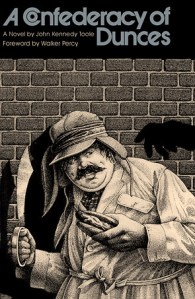
5.) A Confederacy of Dunces by John Kennedy Toole: A pretentious and lazy man-child is forced to get a job to help out the mother who treats him as though he’s twelve.  Hilarious.


4.) Challenger Deep by Neal Schusterman: A young man is institutionalized with mental illness and the reader is granted glimpses into both his real life and his delusions.  Evocative.


3.) The Guide by R.K. Narayan: An ex-convict is mistaken for a spiritual guru. Thought-provoking.


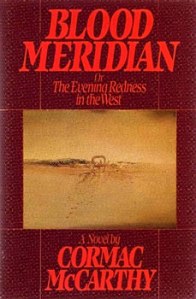
2.) Blood Meridian by Cormac McCarthy: Men of violence being violent the borderlands of Texas. Visceral.


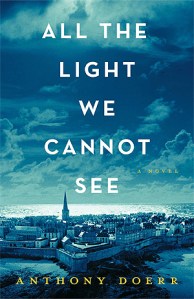
1.) All the Light We Cannot See by Anthony Doerr: The fates of a blind French girl and a bright German boy intertwined during the Second World War. Gripping.

BOOK REVIEW: Love’s Labour’s Lost William Shakespeare

Love's Labor's LostLove’s Labor’s Lost by William Shakespeare
My rating: 5 of 5 stars

Amazon page


King Ferdinand and three of his attending lords (Berowne, Longaville, and Dumaine) make a pact to devote three years to intense study and self-betterment. During this time they are to study arduously while depriving themselves of certain earthly pleasures. Specifically, they will fast one day a week; they will sleep but three hours a night; and— most controversially— they will give up women altogether. Just as military strategists speak of plans not surviving first contact with the enemy, this pact falls apart with the arrival of the Princess of France and her three attending ladies (Rosaline, Maria, and Katherine.) The men each develop a fancy for one of the women, and the pact unravels when the men, spying on each other, realize the others are intending to woo and pursue.

As it’s a comedy, there are a number of opportunities for confusion and comedic relief. Such comedic elements include mix ups in the delivery of love letters, and disguise schemes that go awry. For a comedy, the play ends on an interesting note. As is expected, there’s a reconciliation of who loves whom. However, there are no weddings to suture up the conclusion, but instead another agreement is entered into in which the men and women will see each other again in one year’s time. This leaves readers to consider the question of whether they think the men can be more diligent students when love backs this pursuit (but provides a distraction) than when it works against it.

This is one of Shakespeare’s earlier works, and it’s more original than some. Still, it deals in some common comedic themes about the disruptive force of love and the effects of failed duplicity.

This play is highly recommended.

View all my reviews

BOOK REVIEW: The Guide by R.K. Narayan

The GuideThe Guide by R.K. Narayan
My rating: 5 of 5 stars

Amazon page

Get Speechify to make any book an audiobook 

This novel’s lead, Raju, is sitting by a riverside shrine when he’s mistaken for a holy man. In actuality, Raju was just released from prison for forging the signature of a woman with whom he has a complicated relationship. The woman is married to another man but she has a love of dance, and her husband wants her to give up such frivolities. She falls for Raju, who is working for her husband as a travel guide /expediter, because he supports her in the pursuit of dance. [One can see the dual meaning of the title as Raju is a travel guide by trade and becomes a spiritual guide to the villagers of the fictional town of Malgudi.] After experiencing some hard times with the shops left him by his father, Raju finds success by being not only the lover of the dancer but also her Col. Tom Parker (i.e. her promoter /manager.)

The story isn’t told in chronological order, but is easily enough followed and is the more interesting for its nonlinear telling. For example, we learn the details of Raju’s troubles as a confession he makes to the individual who first mistook him for a guru.

The book explores several themes. One is the power of charisma and bumper-sticker wisdom in building a sage. When Raju’s first student hears his confession, the young man is unswayed, following Raju unwaveringly. On a brighter note, one also sees how people’s strong beliefs, ill-founded as they might seem to be, can produce a guru. Ultimately, Raju becomes the teacher that the entire village thought him to be all along.

There’s also the issue of passion versus familial bonds and tradition. While Raju’s mother personally likes the dancer woman, the fact that the girl is of a lower class and caste (not to mention married to another man), creates a tension. Raju must decide between his love of the dancer and that of his mother. We also get to see the hard edge of tradition in the Raju’s uncle who puts all the bias of class and caste in its most explicit form.

I enjoyed this novel. It’s a nice compact story and is very thought-provoking. The character of Raju is well-developed and interesting. The reader finds Raju likable even though at times he’s a bit loathsome in his behavior. There’s more than one comedy of error in the story’s formulation to offer some lightness to contrast the family drama.

I’d highly recommend this book for fiction readers. It was also interesting for me as an ex-pat in India as it offers some insight into the culture. It should be noted that it’s set in a bygone era. But even though it’s dated, one can see the long shadow of cultural proclivities in the story elements.

View all my reviews

BOOK REVIEW: The Claiming of Sleeping Beauty by A.N. Roquelaure (a.k.a. Anne Rice)

The Claiming of Sleeping Beauty The Claiming of Sleeping Beauty by A.N. Roquelaure
My rating: 3 of 5 stars

Amazon page


This is a bawdy take on the tale of Sleeping Beauty—and, in particular, the aftermath of her rescue and awakening. There are many such adult-targeted books based on children’s fairy tales, but the reader should be particularly aware of the nature of this story because it’s fairly hard-core. Since one may associate the fairy tale with lighthearted stories, many readers won’t be ready for the wide-ranging sexual and sadistic activity that goes on in this book. If you’re a hard-core sado-masochist, you may object that this isn’t so intense in subject matter. That’s probably true for you, but for the run-of-the-mill reader, it’s pretty wild stuff. In essence, Sleeping Beauty enters into a finite period of sexual slavery (technically more sexual indentured servitude) in repayment for her rescue.

Part of the reason that there may be misunderstandings of what this book is, is how it’s been marketed. There was a cover blurb on the version I read that says “If you liked 50 Shades, you’ll love the sleeping beauty trilogy.” This statement is clearly meant to capitalize on the success of those books. While I haven’t read any of the “Fifty Shades” books, I doubt that the claim is true. This book is somewhere between “Fifty Shades” and the works of the Marquis de Sade. While E.L. James’ books work on a one-on-one dynamic that forms an S&M tinged romance, Roquelaure / Rice’s book is about sexual servitude of individuals who are essentially stabled in a more harem-like situation. While they are both books that revolve around the psychology of dominance and submission, the dynamic of the two is quite different. From what I’ve heard about James’s works, Rice’s book is probably better written and it may even be a bit more psychologically sophisticated. However, if you’re expecting that “mommy porn” dynamic in which a man who is extraordinary in every way (billionaire / 6-pack having / philanthropist / speaks ten languages fluently / and has a doctorate in quantum rocket dynamics) takes a mediocre woman merely because she completely submits to him, you’ll probably be disappointed.

Because people’s ideas of what’s hard-core varies, I’ll touch on that. There is a huge amount of bondage and physical punishment. There’s no gore, no breaking of skin, nor any permanent damage /disfigurement. There’s no horror aspect to the book. As far as sexual acts are concerned, they are both heterosexual and homosexual in nature. There are a finite number of options, and I think they’re pretty much all touched on at some point. There’s no bestiality, scat, nor pedophilia—so if those are your limits, you’re safe.

This book was clearly outlined and written with the intention of being a trilogy or multi-part work. That is to say, the story arc is not particularly satisfying as a stand-alone book. This may, in part, also be because of the lack of importance of story to hardcore erotic works, but I suspect that the author / publisher had a thick tome and needed some place to chop it into standard length books to maximize revenue. I probably won’t read the other books, in part because this trend toward putting out books that don’t stand alone as stories cheeses me off a bit. As you might expect, the ending feels abrupt and seems more about leaving the reader dissatisfied (i.e. wanting to read the rest) rather than leaving them satisfied (having seen the character grow and change.)

Instead of making an explicit statement of recommendation, I’ll say that if you read the review and are intrigued, give it a read. If you read the review and are disgusted, avoid it. It’s as simple as that.

View all my reviews

BOOK REVIEW: A Confederacy of Dunces by John Kennedy Toole

A Confederacy of DuncesA Confederacy of Dunces by John Kennedy Toole
My rating: 5 of 5 stars

Amazon page


If you’ve heard of this book, but not read it, you’re probably aware of the troubled circumstance of its publication. Several years after having failed to be published, Toole committed suicide. The story of the book would have ended there, except Toole’s mother found the typescript and carted it around to people in the literary community. After much persistence and not taking no for an answer, she managed to get Walker Percy to read the manuscript, and the rest is posthumous Pulitzer Prize winning history.

It would be easy to dismiss the editors involved in rejecting this manuscript as grade-A lunkheads, or as the lead character (Ignatius J. Reilly) likes to verbally skewer his victims “Mongoloids.” However, one can see how said lunkheads would find this much-beloved novel risky. It’s a character-driven novel in which the lead character is obnoxious and unlovable in the extreme. Reilly is a pretentious and pedantic professorial type–verbally speaking– wrapped into the obese body of a man-child who is emotionally an ill-mannered five-year old with a bombastic vocabulary. Reilly has no impulse control, takes no responsibility, and is prone to tantrums, sympathy-seeking dramatic displays, and wanton lies. He’s the worst because he thinks he’s better than everyone despite the fact that in all ways except his acerbic tongue, he’s worse than everyone.

That said, the book—like its unsympathetic lead character—is hilarious through and through. What it lacks in a taught story arc and a theme / moral argument (the latter being why the editor at Simon and Schuster rejected the book after showing initial interest in it) it more than makes up in hilarity.

I should point out that when I say that this isn’t a plot-driven book, it doesn’t mean that it doesn’t have an interesting wrap-up at the end—which I will not discuss to avoid spoiling it. The plot revolves around events in the life of a lazy man-child forced to go to work. It’s not a journey of change, discovery, or adventure. While, in most cases, a character-driven story with an unmalleable lead would be a recipe for a book that flops, here it keeps one reading to the last page because it’s Ignatius’s failure to become a better man that ensures the book is funny to the end. Reilly is constantly making decisions that are both overly contemplated and yet ill-considered.

The book follows Ignatius Reilly through an event that results in a tremendous loss of money for Ignatius’s mother. This forces her to finally put her foot down and insist the man—who she still thinks of as her little boy—get a job. It should be noted that Ignatius’s mother’s eventual coming around to the monster her son has become is a major driving force in the story—though we can see a distinct lack of taking of responsibility that echoes that of Ignatius, himself. Ignatius gets a fine—if lowly, clerical–job at the slowly-dying Levy Pants Company, but gets fired after he encourages a worker protest that goes awry. He then gets a job as a hot-dog cart vendor—a job considered the lowest of the low by both his mother and New Orleans’ society-at-large. The latter is the job he has at the end when a final chain of events unfolds (not without tension and drama, I might add.)

On the theme issue, the Simon & Schuster editor was correct that the book isn’t really about anything except how to muddle through life as a lazy, cranky, emotionally-stunted, and overly-verbose doofus. (But he was oh-so wrong about that being a lethal deficit—according to the Pulitzer Prize committee as well as innumerable readers.)

I’d recommend this for any reader with a sense of humor. You won’t like Ignatius J. Reilly, but you’ll find his antics hilarious, and you’ll want to know what happens to him in the end even if he is irredeemable.

View all my reviews

BOOK REVIEW: Crazy for Alice by Alex Dunn

Crazy For AliceCrazy For Alice by Alex Dunn
My rating: 5 of 5 stars

Amazon page


Ben has a secret and keeping it sends him into a depressive spiral. He’d had almost everything going for him. With his high IQ, he was sailing through school on his way to a top-tier college. He was also an athlete of local renown on the swim team. The only source of consternation in his life was a deadbeat drunk of a father, and the fact that said father recently passed away. Ben was in the car accident with his father, and was the last one to see him alive. Fortunately, Ben has an older brother who’s a cop, Gavin, who looks out for him and tries to keep an overbearing mother at bay.

After an attempted suicide via wrist slashing, Ben is institutionalized. It’s during this time that he drops into a coma. While he’s not conscious of the real world, his consciousness takes up residence in a place he calls “Gray World.” Besides being monochrome, Gray World exhibits the characteristics of a dream. The laws of physics, cause & effect, and consistency of space and time are all freely violated. Ben soon meets a girl named Alice who is initially cautious about him. Over time, the two develop an increasingly close relationship. Then Ben comes out of his coma.

In the real world, Ben is obsessed with getting back to the Gray World to rescue Alice. It seems that all the residents of Gray World are individuals suffering severe depression. The problem is that Ben only has a first name and a probable city of residency. Of course, to his mother, brother, friends, and doctors, this obsession is a sign that Ben’s depression has migrated into a full-blown delusional psychosis. His mother, terrified of losing him, treats Ben as a prisoner. Gavin, while well-meaning, feels the need to prove that Alice was just a dream.

I enjoyed the story and also found it to be thought-provoking. The characters are well-developed enough to care about, and the reader can see how each of the key players is trapped in his or her behavior—behaviors that are sub-optimal. At one point, I thought that it strained credulity that Ben took so long to realize he needed to play along to get some space for his search. He kept being forthright about his intentions to find Alice, and this just made his mother more nervous and smothering–and made Gavin more insistent. But it occurred to me that Ben’s ego as a genius kept him in that state. He wasn’t used to being challenged in his understanding of the world, and reacted to it poorly. He had a need to be right that overrode his capacity to recognize what those around him wanted to hear. His mother was trapped by fear into an increasingly suffocating form of love. Gavin, the most emotionally stable of the trio, thinks he can force Ben to accept an understanding of reality through the brute force of reason—missing that being right might not be as important as being compassionate.

I’d recommend this book for fiction readers. It’s written for the YA (young adult) market, but is intriguing for adults as well.

View all my reviews

BOOK REVIEW: One Flew Over the Cuckoo’s Nest by Ken Kesey

One Flew Over the Cuckoo's NestOne Flew Over the Cuckoo’s Nest by Ken Kesey
My rating: 5 of 5 stars

Amazon page

Get Speechify to make any book an audiobook 

When a sane man, Randle McMurphy, enters an insane asylum to get out of prison, he turns life in the ward upside-down. The book’s fictional narrator is the patient who sleeps next to McMurphy. He’s an American Indian of giant stature, named Chief Bromden, who’s become convinced that he’s shrunk. Besides childhood problems stemming from his father’s emasculation—i.e. having to take his white mother’s name (hence, Bromden) instead of the more usual family name of the father—Chief is haunted by war. Our narrator has the hospital staff convinced that he’s a deaf-mute (and probably mentally deficient, as well) and thus has a unique view of the ward, the staff speaking freely before him.

McMurphy is everything the other patients are not. He’s gregarious, confident, and risk-loving. He’s also a con-man extraordinaire—hence, his ability to trick the authorities into shifting him out of hard labor and into the mental hospital. But he’s not completely lacking in morality, and displays a kind of hard-nosed compassion. While the patients are occasionally distressed by McMurphy’s behavior, they find his willingness to stand up for them (at least when it’s in his best interest, though later a sense of justice or camaraderie guides him) worth the price of his wheeling and dealing.

McMurphy’s real opposition is Nurse Ratched, a former Army nurse who runs a tight ward. Nurse Ratched is used to controlling the patients through a combination of soft power (maternally convincing them that she acts in their best interest), bullying, and fear of the treatments she can get the doctors to rubber stamp (namely electro-shock and—in extreme cases—lobotomy.) However, she’s met her match with McMurphy. He can play patients and doctors as well as she. He, too, is capable of being cool and cunning at the same time. He’s able to provide a counterbalance to the authoritarian democracy in which she asks the patients for votes after telling them what to think. The reader doesn’t know how, but knows this conflict between McMurphy and Ratched must come to a head to be resolved once and for all, and it is (but I’ll leave the how to the reader.) At times McMurphy seems to be ahead, and at other times Ratched has the lead.

The book was influenced by Kesey’s discussions with patients at Menlo Park Veterans’ Hospital, where he worked as a night aide. Interestingly, Kesey volunteered for a study of hallucinogens during the same period (funded by the CIA as part of MKUltra), and, thus, for some of the conversations he was baked on LSD. At any rate, the experience had profound impact on him, and he became convinced that not all the patients were insane. Many, he believed, just didn’t fit well in society or families, and were pushed into institutions. The themes of the book are that differentiating sanity from insanity isn’t always easy and that mental healthcare professionals had too much power–and often wielded it unwisely.

The story is well crafted with an intense ending. The characters are developed, and this isn’t easy for the mentally insane—though Kesey’s experience with LSD may have helped on that end. Though we only really experience the insanity of Chief, because the perspective is his and he’s one of the few patients that legitimately seems to have trouble differentiating reality from illusion (at least through much of the book.) But we don’t really know how much of Chief’s problem is from his medication, and how much is the illness. There’s a beautiful descriptive scene in which Chief comes off his meds and is looking out the window watching a dog and the world go by. It’s vivid.

I’d highly recommend this book. It’s an evocative story with insights into mental health, some of which—sadly—are as valid today as they were then.

View all my reviews

BOOK REVIEW: Challenger Deep by Neal Shusterman

Challenger DeepChallenger Deep by Neal Shusterman
My rating: 5 of 5 stars

Amazon page


“Challenger Deep” is the story of a smart and artistically talented young man, Caden Bosch, who is afflicted with Schizophrenia. There are essentially two story lines being told in parallel. One is the real world, and in the chapters in this line we see Caden’s descent as it takes place. From references to past events, we gain insight into how Caden was before the disease. In the early part of the book, these chapters are set at school and at home, and then later at the mental hospital at which he’s admitted as a patient.

In the other story, Caden is on a sailing ship headed to the Challenger Deep—the deepest portion of the Marianas Trench at almost 7 miles down, and—symbolically—Caden’s rock-bottom . Shipboard life is Caden’s hallucinated experience of the mental hospital. Over time the reader begins to match up characters from the real world with those from the delusion—both patients and staff members. This is a mutinous vessel, and the tension reflects the pull between Caden’s desire to be well and the appeal of the world of delusion.

Over time the author shows key events in both lines and the reader can connect them up to interpret how delusional Caden experiences the world. The story isn’t strictly told in a chronological order, though the broad sweep of it is. The bits of disjoint create no confusion while helping to convey the nature of a fractured mind. This works, in part, because the book is told over 161 short chapters, and, because the chapters are so short, a diversion doesn’t take one far and it’s easy to show the match up of events. The book artfully conveys the bizarreness of a dreamlike world of delusion while remaining clear and readable. Any confusion in the early chapters becomes rectified as the author reveals how the delusional world and the real world zip together.

This book was imaginative, enjoyable to read, as well as allowing the reader insight into the nature of mental illness. Atypical of a work of fiction, there is a resources section that provides contact information for organizations that support mental health.

I’d highly recommend this book for fiction readers.

View all my reviews

BOOK REVIEW: A Clockwork Orange by Anthony Burgess

A Clockwork Orange A Clockwork Orange by Anthony Burgess
My rating: 5 of 5 stars

Amazon page


While it’s a title that probably has had many readers scratching their heads, “A Clockwork Orange” is the perfect title for Burgess’s book. Our brains—while highly capable—are a stringy, wet mess of complexity, and to treat them like a clockwork machine is to invite trouble as well as to muddle what it means to be human.

This book is set in a dystopian future and features Alex, the head of a small band of teenage ne’er-do-wells who roam the streets engaging in random acts of violence. After Alex has a falling out with his band, they abandon him to be captured by the police. Institutionalized, he finds that he’s no longer a lion among sheep, but is a teenager among hardened criminal men. He’s eager to get out and after a violent precipitating event; he’s enrolled in a program that will use drugs and operant conditioning (i.e. the so-called Ludovico technique) to “cure” him of violent tendencies. Once he’s cured, they release him as he’s no longer a threat to society.

The technique works perfectly, but with the side-effect that the classical music that he used to love now makes him violently ill—because said music was used for dramatic effect in his conditioning. The days after his release are no picnic as he has run-ins with past enemies and has no ability to stand up for himself–any violence makes him ill to a physically debilitating level. He finds himself being used by anti-government dissenters who make him a poster-child for the level of authoritarianism the government has stooped to. The government ultimately caves to public opposition, and reverses the procedure. At first Alex immediately goes back to his ultra-violent ways with a newly formed crew, but he finds himself changing.

There are a couple of warnings of note. First, Alex and his friends speak in a dialect called Nadsat that is a kind of pidgin of Russian and English. It’s not hard to follow. Context usually makes the meaning clear, and only a handful of twists on Russian words are used and they are used repeatedly to the point their meaning becomes second nature. However, it should be noted that a considerable amount of the book is not in straightforward English. For example, “horrorshow” actually means “good” and it comes from the Russian хорошо (phonetically: “horosho”) which means “good.”

Second, if you’re buying a secondhand copy, make sure it has 21 chapters. In the US, an edition was released with the last chapter stripped out. (Note: some people do like it better without the last chapter, but you should probably experience it as the author intended and make up your own mind about which is best.) Needless to say, the tone of the ending is completely changed depending upon whether the last chapter is included or not.

The organization is straightforward, and consists of three parts with seven chapters each. The beginning is before Alex goes to prison, the middle is while he’s incarcerated and his experience of the Ludovico Technique, and the last part is from Alex’s release onward.

This book is a classic for good reason. It’s both an intense story and a thought-provoking morality tale. I’d highly recommend it.

View all my reviews