FIVE WISE LINES [June 2025]

…we should not be too confident in our belief of anything.

cicero; tusculan disputations

No matter what plans you make,
no matter what you acquire,
the thief will enter from the unguarded side.
Be occupied, then, with what you really value
and let the thief take something less.

Rumi; Mathnawi II

Very little is needed to make a happy life;
it is all within yourself, in your way of thinking.

Marcus aurelius; Meditations

I possess, but I am not possessed by her;
since the best thing is to possess pleasures
without being their slave,
not to be devoid of pleasures.

aristippus [according to Diogenes laertius in
lives of the eminent philosophers]

Do not fear the gods.
Do not fear death.
What is good is easy to attain.
What is painful is easy to endure
.

philodemus; Herculaneum papyrus
[Often referred to as the four cures of epicurus]

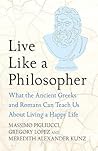
BOOKS: “Live Like a Philosopher” by Massimo Pigliucci, Gregory Lopez, and Meredith Alexander Kunz

Live Like A Philosopher: What the Ancient Greeks and Romans Can Teach Us About Living a Happy LifeLive Like A Philosopher: What the Ancient Greeks and Romans Can Teach Us About Living a Happy Life by Gregory Lopez
My rating: 4 of 5 stars

Publisher Site — Hachette / Headline Press

This book is for a person in the market for a philosophy of life, but who only knows that they want a system rooted in Ancient Greece. While the coauthors are all Stoics, the book explores twelve additional philosophies and gives each roughly equal consideration. In addition to the expected systems, such as Epicureanism, Stoicism, Platonism, and Skepticism, there are also several lesser known or defunct philosophies such as Cyrenaic hedonism, Cynicism, Pyrrhonism, and Megarianism.

The book is organized into four parts. The first examines schools that value pleasure (Cyrenaicism and Epicureanism,) the next investigates schools that focus on virtue and character (Aristotelian Peripatetics, Stoicism, Cynicism, and Political Platonism,) the penultimate focuses on systems encouraging doubt or caution in knowledge (Socratic philosophy, Academic Skepticism, Sophism, and Pyrrhonism,) and the last set are posed as questionable candidates for a life philosophy (i.e. those of the Pythagoreans, Megarians, and Neoplatonists.) The last three schools are questioned on various grounds, including: is enough known about what its practitioners believed, did they live their philosophy or just ruminate on it, and could the system be considered a full-fledged philosophy (as opposed to a stance on a specific issue or issues.)

The book is presented in self-help fashion, with each chapter ending in a set of exercises designed to help the reader build practical understanding of each school. The goal of these exercises (as comes together in an appendix) is to help the reader determine which philosophy is best suited to their disposition and inclinations.

I enjoyed this book. The authors use stories to convey ideas and the book’s readability is kept inviting to general readers. If you’re interested in better understanding Greek schools of philosophy, I’d recommend the book as quick and easy way to get a better grasp.

View all my reviews

FIVE WISE LINES [December 2024]

Today as in ancient times
it’s hard to write a simple poem.

Mei Yaochen in Poets’ Jade Splinters

To be undefeated lies with oneself;
to be victorious lies with the enemy.

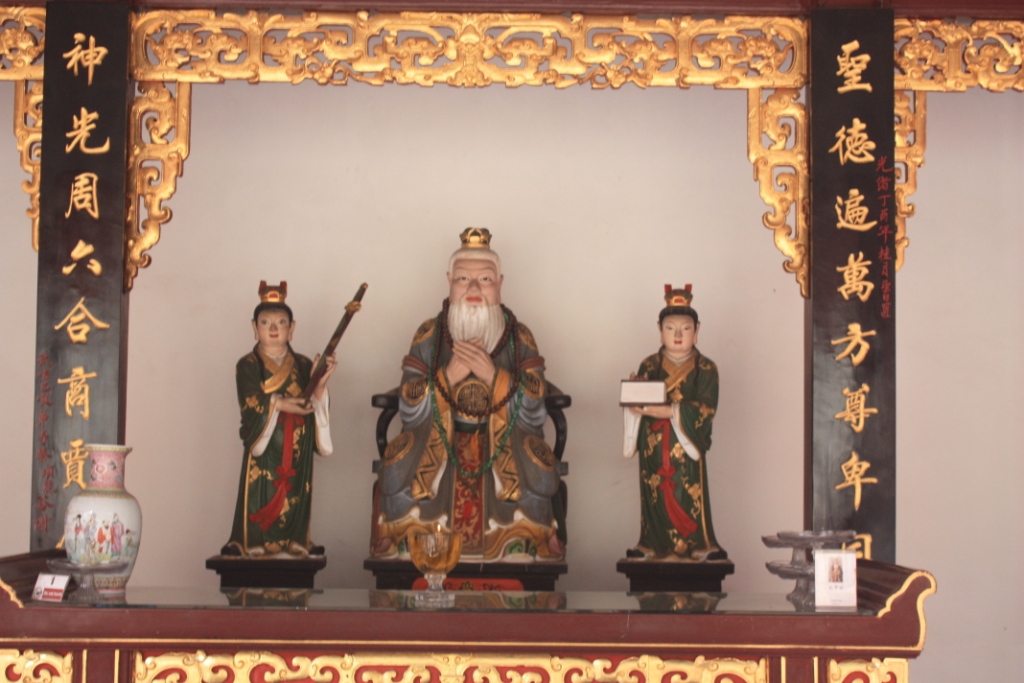
Sunzi in The ART of War (孙子兵法)

A buddha is an idle person.
He doesn’t run around after fortune and fame.
What good are such things in the end?

Bodhidharma; Bloodstream Sermon

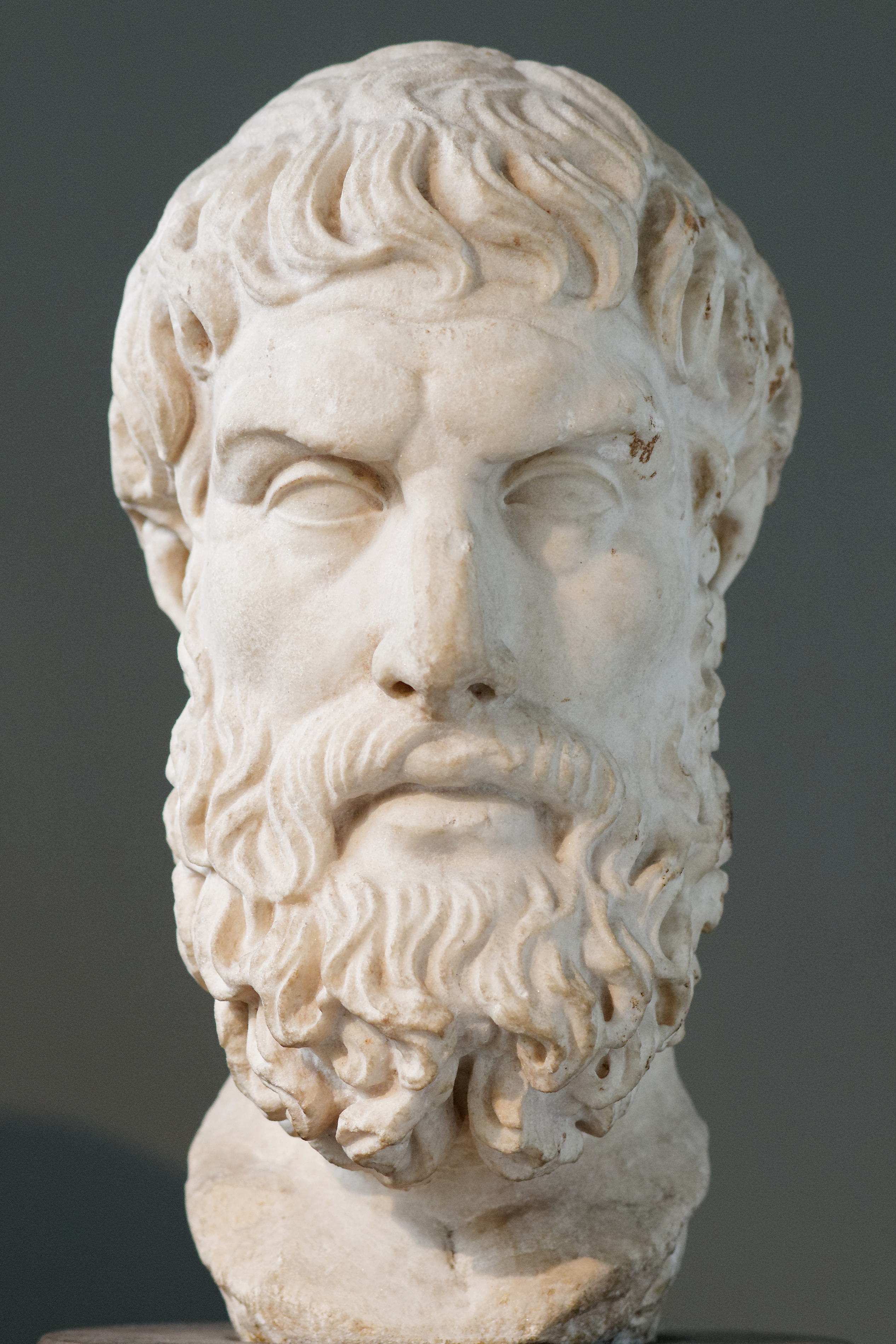
Not what we have, but what we enjoy, constitutes our abundance.

Epicurus

Take more time, cover less ground.

Thomas Merton

Five Wise Lines from Epicurus

Death is nothing to us, because a body that has been dispersed into elements experiences no sensations, and the absence of sensation is nothing to us.

principal doctrines – No. 2

Nothing is enough to someone for whom what is enough is too little.

Vatican Sayings – No. 68

Of all the means which are procured by wisdom to ensure happiness throughout the whole of life, by far the most important is the acquisition of friends.

Principal Doctrines – No. 27

Don’t spoil what you have by desiring what you don’t have; but remember that what you now have was once among the things only hoped for.

vatican sayings – No. 35

No pleasure is a bad thing in itself, but some pleasures are only obtainable at the cost of excessive troubles.

Principal doctrines – No. 8

And Five Honorable Mentions:

[T]here are an infinite number of worlds, some like this world, others unlike it.

Letter to Herodotus

Dreams have neither a divine nature nor a prophetic power, but they are the result of images that impact upon us.

vatican sayings – No. 24

It is pointless for a person to pray to the gods for that which he has the power to obtain by himself.

vatican sayings – No. 65

But one must not be so much in love with the explanation by a single way as wrongly to reject all others…

Letter to pythocles

Let no one be slow to seek wisdom when he is young nor weary in the search thereof when he is grown old. For no age is too early or too late for the health of the soul.

Letter to Menoeceus

SOURCE: Epicurus. 2021. The Fundamental Books of Epicurus: Principal Doctrines, Vatican Sayings, and Letters. Trans. by: Robert Drew Hicks & R. Medeiros. Independently published on Amazon. 45pp.

BOOKS: Travels with Epicurus by Daniel Klein

Travels with Epicurus: A Journey to a Greek Island in Search of a Fulfilled LifeTravels with Epicurus: A Journey to a Greek Island in Search of a Fulfilled Life by Daniel Klein
My rating: 5 of 5 stars

Amazon.in Page

With the wave of renewed interest in Philosophies of Life lately, it’s nice to see a book that puts Epicurus at the fore. In a number of ways, I believe Epicurus was the most advanced of Ancient Greek philosophers, and yet he doesn’t get much attention compared to Plato, Aristotle, and the Stoics. (In part this is because the vast majority of Epicurus’s writings were lost, and in part it’s because little-“e” epicureanism [i.e. being culinarily hedonistic] has become much more familiar to people than big-“E” Epicureanism [i.e. a materialist philosophy that values pleasure, but not in so hedonistic way as to lose sight of virtue and the countervailing costs of pursing pleasure.] While adjectival forms have done a number on Cynicism and Stoicism as well, the former is – for all intents and purposes – dead and the latter has become much more well-known to present-day people from a pile of podcasts, books, and vlogs.)

I should point out that Klein doesn’t solely focus on the philosophy of Epicurus, he also tells readers what other schools of philosophy teach us about how to age well (and to not turn into a curmudgeon) — most notably: Buddhism, Stoicism, and Existentialism. That said, it’s fair to call Epicureanism the backbone of this book.

One who reads the title might wonder whether this is a pop philosophy book on aging or a travelogue. It’s definitely both, but the philosophy part dominates. I would call it 70/30 pop philosophy to travelogue (maybe 65/35.) The book uses the individuals Klein interacts with on Hydra (and elsewhere in Greece) as examples of how people age well, and in the process shows the reader [textually] a beautiful part of the world. But the core of the book is about philosophy as it pertains to such topics as play, perception of time, idleness, and changing views of spirituality.

I will warn the reader that, while the book offers many great thoughts for a philosophy of aging well, I didn’t agree with everything in the book. Klein contrasts his philosophy for living well into old age and for adapting one’s life to changing roles to the people he calls the “forever young” crowd. I wouldn’t put myself in the “forever young” category as I don’t believe I’m grasping at youth and all its blessings and pains. However, I suspect Klein would put me in that group because I work out intensely, watch what I eat / manage my vices, and am trying to work things so that my heart explodes while I’m still physically and mentally capable — i.e. before I become decrepit or senile. My point is, I’m not sure Klein’s dichotomy is that useful or reflective of reality, and that being health-conscious should necessarily be contrasted with enjoying the pleasures of age. [Truth be told, I’d say the biggest driver for people being more health-conscious into old age is seeing earlier generations live longer, but with a decreased quality of life through that period of increased longevity — See: Being Mortal by Atul Gawande.]

Still, overall, the book is quite readable and offers much excellent food for thought, and I’d recommend it for anyone who is interested in moving into advanced age in a way that isn’t misery filled.

View all my reviews