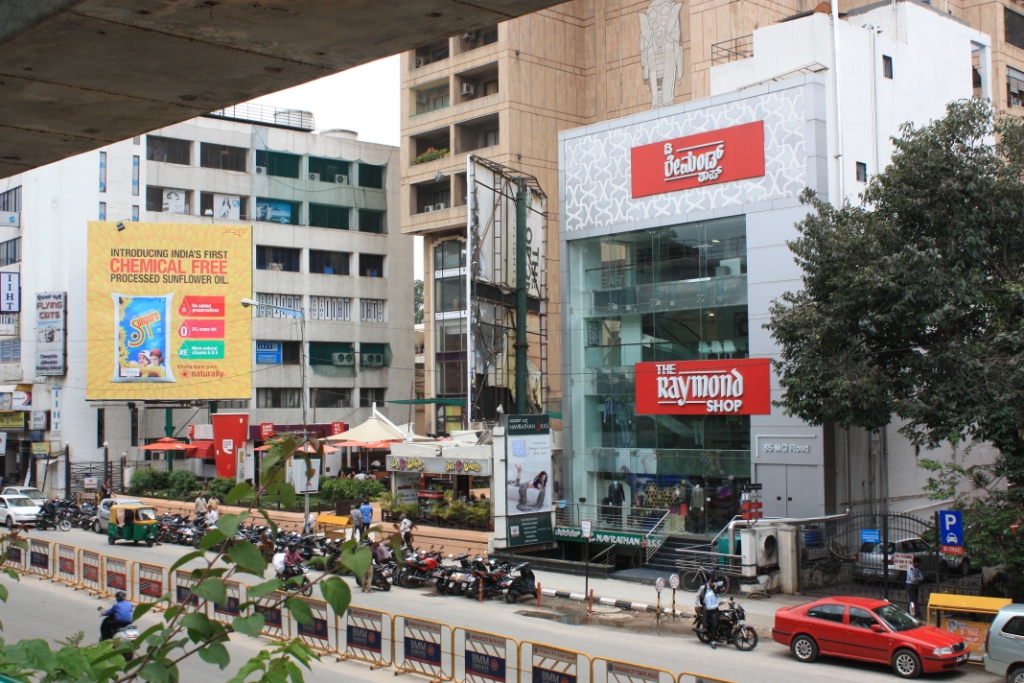
Taken in September of 2013 in Bangalore
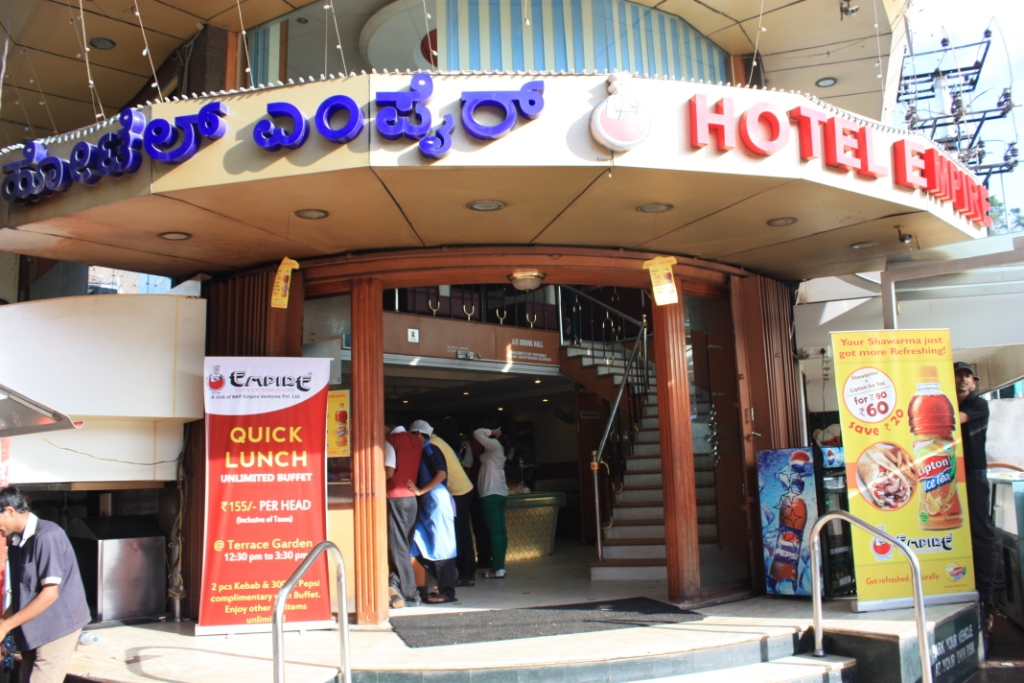
MG Road (short for Mahatma Gandhi Rd.) is the main drag in Bangalore. It’s lined with shops, malls, and office buildings.

Taken in September of 2013 in Bangalore
MG Road (short for Mahatma Gandhi Rd.) is the main drag in Bangalore. It’s lined with shops, malls, and office buildings.
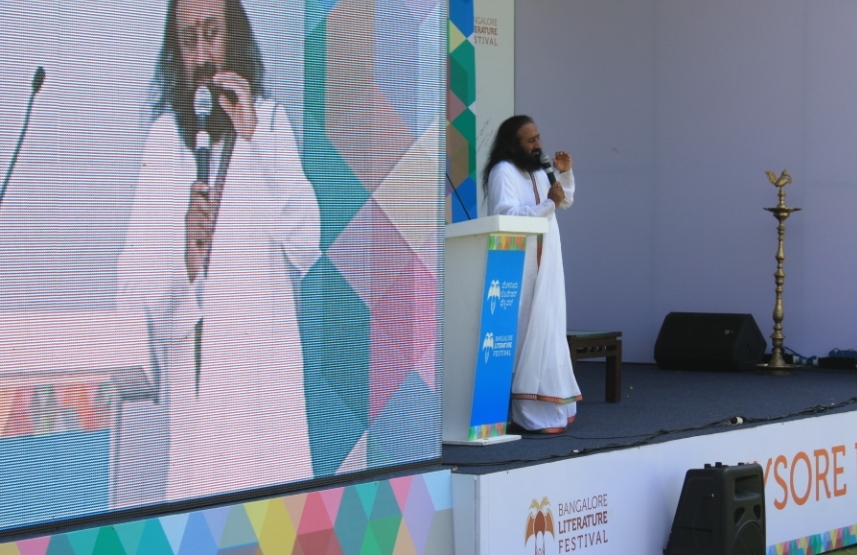
Taken September 27, 2013
I spent Friday September 27th at the Bangalore Literature Festival. This was the second year of the event, and the first day of this year’s festival. Pictured onstage here is Sri Sri Ravi Shankar, a world-famous guru and charitable foundation leader who is headquartered in Bangalore. He drew the biggest crowd that I saw, although the rest of the talks I went to were on a secondary stage called Lawn Bagh. (“Mysore Park” was the name of the main stage.)
I went to a panel entitled “Vision for India” that featured a politician, a retired General, and a well-known pundit. The panel solicited the three men’s opinions on the future of India. It was fascinating to the international affairs / economist trained part of me. There were some political and economic reforms all of them seemed to agree on, but, great for this type of panel, there was some controversy as well.
I also went to panels on crime fiction, geographic-centric poetry, and the coexistence of literary and commercial fiction in the publishing space.
I was impressed with the festival. The caliber of speakers and authors was high. They had to contend with something that no other literary festival that I’ve been to had to, and that is that there are many written languages in India–and at least one French and German writer each that I saw. While English was the lingua franca of the festival, I heard poetry in Tamil, French, and other languages as well.
The campus it was held on, Velankani Park, was sparkling clean held a lot of interesting plant life. This was my first trip out to Electronic City. It seemed odd that they held the festival so far from the city center, but I can see why in a way. As one of the speakers said during the “Visions” panel, it’s a first world oasis in a third world country. The little I saw, verified that. That said, if they wish to grow, they may need to put it closer to the city center. (Of course, as the metro comes on-line and people start using it, this may become a moot point.)
They did have trouble controlling the schedule. By the end of the day they were about 45 minutes behind. This is something that they’ll have to control if they wish the festival to grow beyond three stages. In terms of quality, this was very much like a scaled down version of my previous home city’s literary festival, the Decatur Book Festival. However, DBF has about 20 stages and a much bigger vendor space. This means the DBF has to have “stage Nazi’s” that will crack the whip. Even with a compact three-stage campus, they probably need to build defined break space into the schedule.
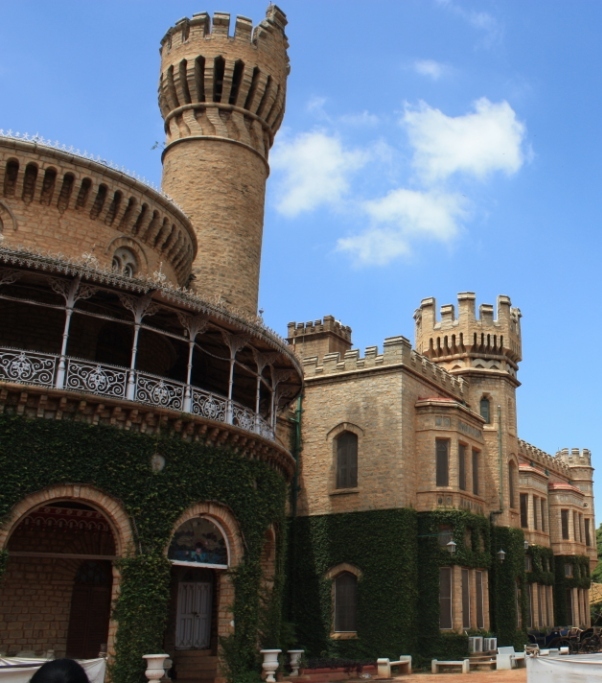
Taken in September of 2013
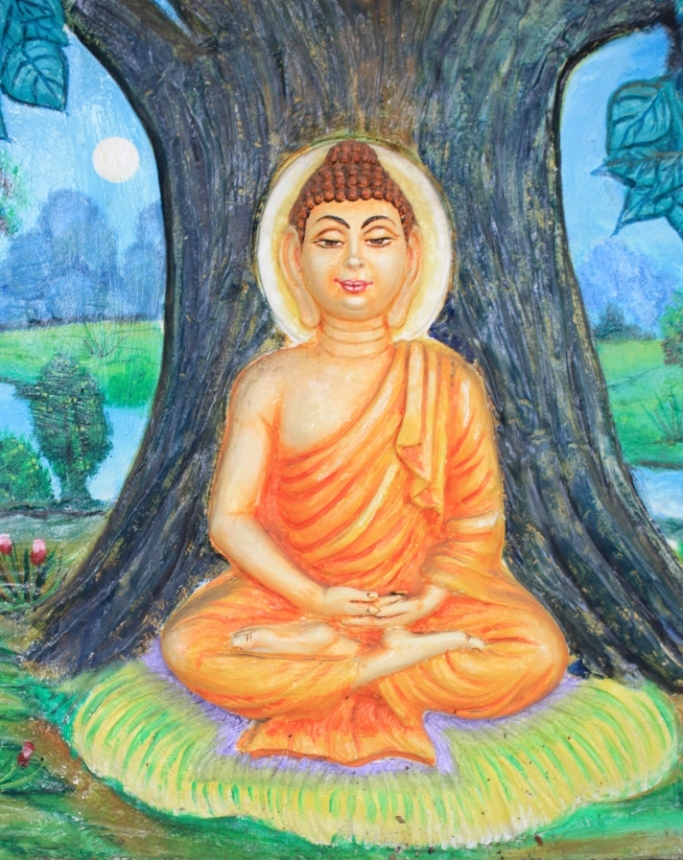
Taken September 24, 2013 at the Maha- Bodhi Society Temple in Bangalore
There are a whole series of these brightly colored bas-reliefs in recesses in the exterior wall at the Mahabodhi Loka Shanti Buddha Vihara, which is a temple run by the Maha-Bodhi Society. This society was founded by a Sri Lankan monk with the intention of bringing Buddhism back to India. While Buddhism was founded in India, there had been a long period of decline of individuals self-identifying as Buddhists.
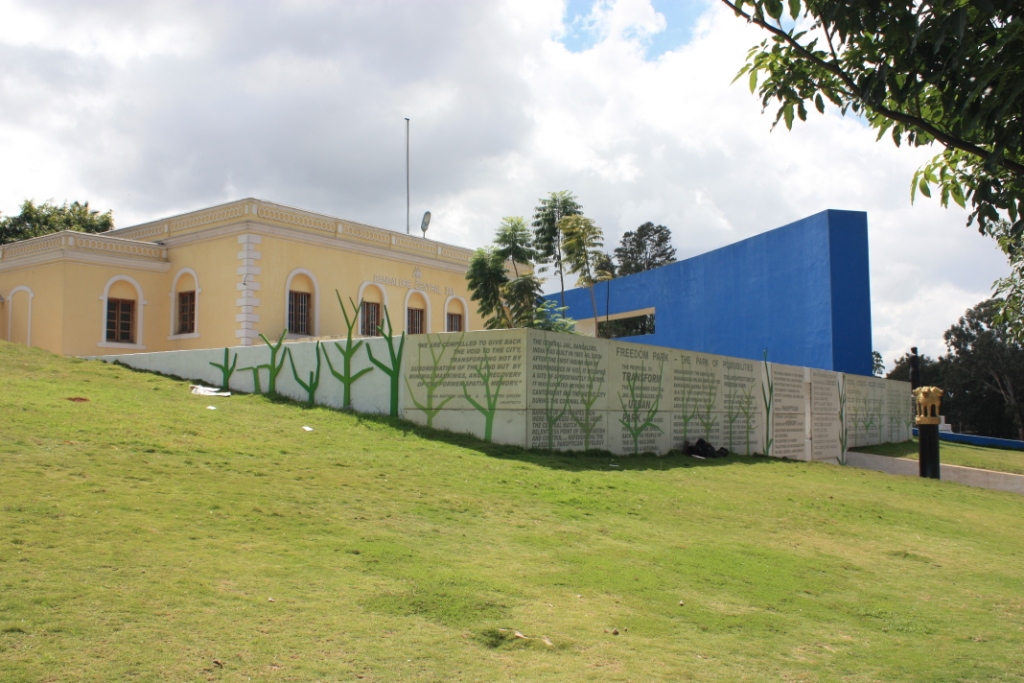
Taken September 24, 2013
While parks like Cubbon and Lal Bagh Gardens are more famous, Freedom Park may be the most pristine city block in all of Bangalore. The park sits on what was the grounds of the Bangalore Central Jail. Built in 1866 in the wake of the First Indian War of Independence, the Central Jail was constructed to hold rebels and revolutionaries opposing British rule. The first war didn’t succeed in achieving independence, that didn’t come until 1947. The first war did succeed in changing the ruling power from the British East India Company to the British Empire proper, a distinction without a difference in the eyes of Indians I suspect.

Taken on September 21, 2013 in Nandi Hills.
Tipu’s Lodge, also referred to as Tipu’s Summer Palace, is one of the first things one sees upon entering the old fortification of Nandi Hills. On this particular morning, the hilltop was submerged into clouds, making visibility limited and casting a haze over everything.
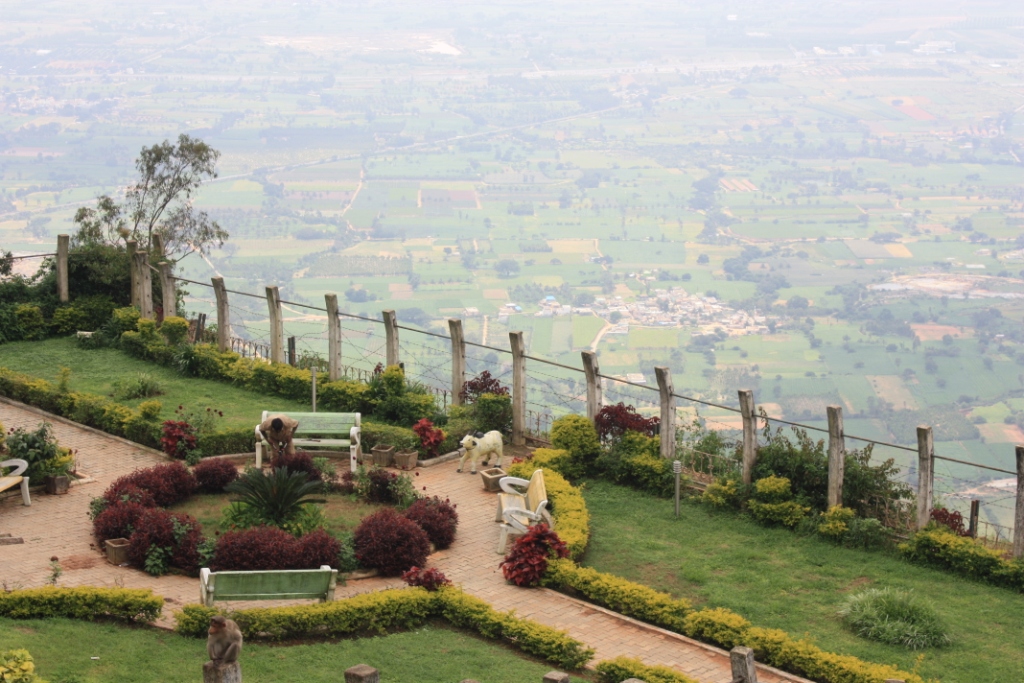
Taken September 21, 2013 in Nandi Hills, India.
This garden sits behind a little inn at the top of Nandi Hills. In the background is a town and farmland as seen from the hilltop.
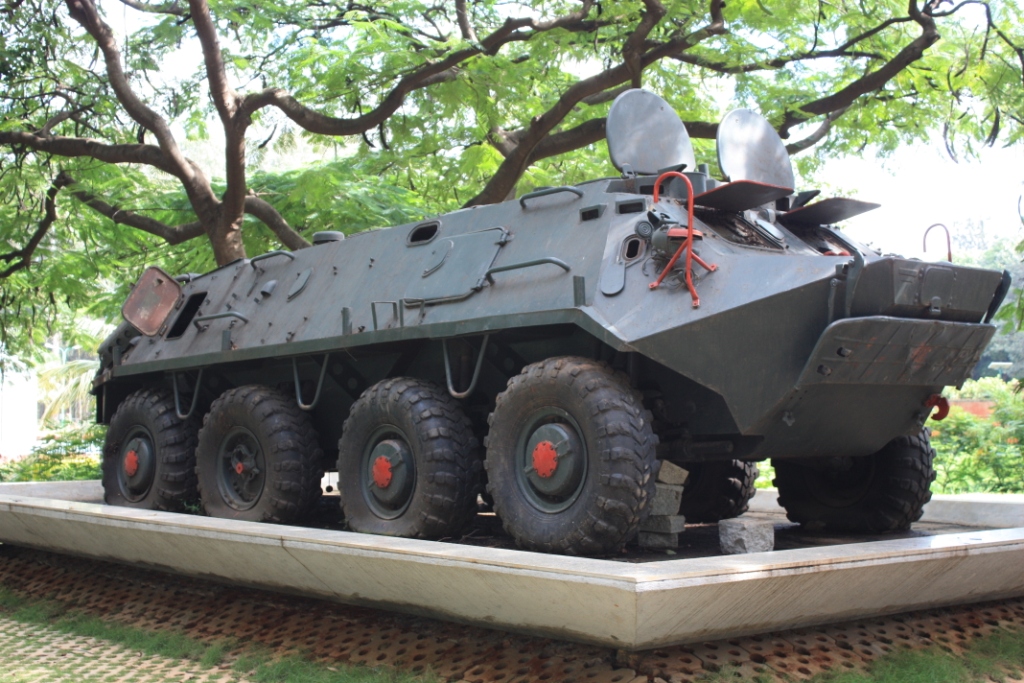
Taken September 15, 2013 at the National Military Memorial
This eight-wheeler is on display at Bangalore’s National Military Memorial park. It appears to be an amphibious armored personnel carrier (APC). However, they don’t yet have any signage up to explain what’s what. Looks kind of like a Soviet BTR-60.
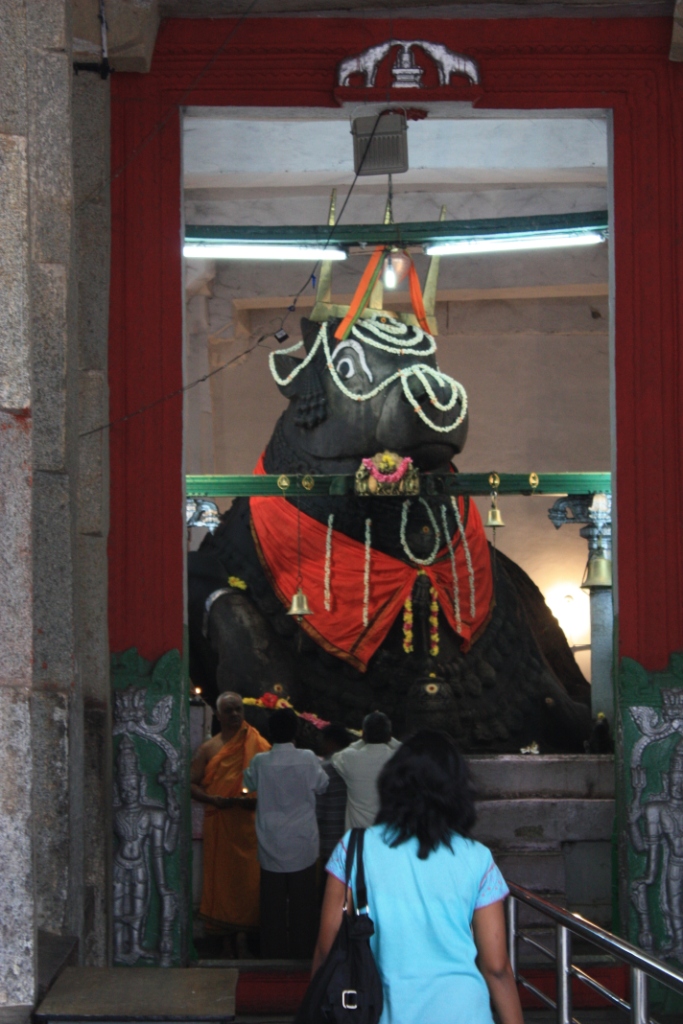
Take September 2013 in Bangalore.
This was my first experience inside a Hindu Temple, so I was completely out of my element. Fortunately, it was easy enough to follow the crowd through the procedure. (As opposed to the multi-deity temples where many disparate and complex practices may be being carried out at once.) First, one leaves one’s shoes outside, as one would at a Buddhist temple. One then walks down a corridor toward the bull. When one gets to the front of the bull, one turns to one’s left and circles the bull in a clockwise fashion, passing by a Hindu priest. There is a Hindu priest at both the head and the tail end of the idol. There’s an opportunity to make a monetary offering at both. When one gets back around to the front, the priest puts a tilaka mark on one’s forehead with bright red tikka powder. This is made in the same place one sees Hindu women wearing bindi ornamentation.
1.) Vegetarian restaurants: While I’m not of the vegetarian persuasion, my wife is. This can make finding a mutually acceptable restaurant a pain. However, it’s vastly easier to pick a restaurant in India. Except for the very rare American-style steak house, she can eat anywhere and the menu will be at least half vegetarian.
In Atlanta, I’d estimate that she could eat healthily and well in about one in five restaurants. American Southern cooking doesn’t offer one a side of green beans without a ham bone in it. I’d say we’ve cut our restaurant selection time to about a quarter of the time it took in the US.
2.) Cheap books: While English is secondary to Kannada as the spoken language here, it’s not second in the bookstores by any means. Bookstores are common and offer some new options. I’ve spent a lot of time in bookstores, so I usually don’t see a lot that’s new, but there are books printed by Indian publishers here that don’t usually appear on the shelves of Barnes & Noble.
And, unlike in Cambodia where books are cheap by means of photocopying, the books here aren’t cheap by virtue of stiffing the writer.

3.) Amazon: On a related note, I can still buy Kindle books just as easily as I did in the states. There are some websites that don’t work here, such as Hulu and Netflix, but Amazon operates just fine.
4.) Walk-centric life: Bangalore is not an easy city to walk in because the traffic is horrendous, there is no system for traffic lights, and sidewalks are about as dangerous as walking in the street. (If your eye isn’t constantly on the sidewalk, you might just plunge into a sewer.) However, being in the heart of the city, there’s nothing I need that I can’t get via a short walk.
5.) Servants: I haven’t mowed lawn, swept a walk, done laundry, or washed a dish since I left the US, and yet it’s always done. After a brief period of feeling awkward, it’s beginning to grow on me. The hardest part will be going home, once I’ve become accustomed to a certain level of service.
6.) Climate: There’s been a pleasant breeze coming through my window pretty much all day. I haven’t had to use the AC since we’ve been here. And it’s starting to not rain every night. Of course, this one is not so much about India as Bangalore specifically. On the whole, India’s climate is not so pretty.
7.) Loan words: I suspect it’s harder for the locals to talk about foreigners behind their backs here than most countries because there are so many English loan words. They’ll be a couple of locals talking in Kannada, and you’ll here: “Waa-wah-waa-wah-waa-wah-super convenient-waa-wah-waa.” So it’s like having a rudimentary grasp of a language, you can kind of get a feel for the general drift of what is being talked about-even if you don’t know any specifics. At least this makes bad-mouthing foreigners a mental exercise.


 Tiger Riding for Beginners