BOOK REVIEW: The Elephant Whisperer by Anthony Lawrence and Graham Spence

The Elephant WhispererThe Elephant Whisperer by Lawrence Anthony

My rating: 5 of 5 stars

Amazon page

This is the story of Thula Thula, a wildlife preserve in South Africa, and the herd of elephants that came to live there. It’s one of the most gripping nonfiction works that I’ve read in some time. Even if it was just the story of Anthony Lawrence’s interactions with a herd of wild elephants that he took on at first reluctantly and then became powerfully connected to, it would have made a worthwhile read. However, there is so much more to keep one flipping pages. There’s the internecine and tribal warfare among the Zulus that at one point results in a contract being taken out on Lawrence’s life. There are the tales–sometimes happy and sometimes tragic—of the other animals that share Thula Thula with the elephants, including: crocs, rhino, cape buffalo, snakes, and—of course—the humans and their pet dogs. And, sadly, there’s a constant war going on against poachers that occasionally results in a firefight.

That said, the stars of this book are undeniably the herd of wild elephants. The author is told these pachyderms are unruly and are to come into the possession of a big game hunter to be shot if he doesn’t take them. There are no elephants in the area of Thula Thula, and taking them on is a big risk. The neighbors are opposed because if the elephants get out they could cause untold damage—even if not maliciously. Furthermore, these elephants have had bad experiences with humans; the only adult bull had recently been killed—making them all the more hostile. These elephants have a history of escape, and when a herd of elephants wants to escape, it’s hard to keep them in. They are five or more tons of raw power. In fact, the herd does escape once early in the book, and a major drama unfolds as a result. There’s pressure on Lawrence to get rid of at least the matriarch and another female, Frankie, who is almost the same size as the matriarch and is even more aggressive. Eventually, he gets the herd to calm down through patience and an attempt to understand them.

However, even as the herd becomes calmer and actually friendly toward Lawrence, there are always new challenges popping up. They add an adolescent who comes in alone, its entire family having been killed off. This history makes the new addition skittish, angry toward humans, and dangerously aggressive. Furthermore, the adolescent bull transitions into adulthood and is increasingly pushed away from the herd, but without a male role model. By the book’s end, there is even a new generation being brought into the fold.

I won’t tell you this book is all rosy. There are a number of really sad sub-stories within the overall tale of the elephants of Thula Thula. I won’t get into details because these chapter or two long narrative arcs are among the most edge-of-the-seat reading in the book. That said, the overall story is one of triumph. A herd that was on the verge of being eliminated is not only saved, but eventually grows in size due to new births—though, sadly, not without some losses. It’s about successful coexistence and preservation of these species.

A lot of the book is about communication, both the stomach-grumbling elephantine intraspecies communication and the interspecies communication between the author and the elephants. It turns out that elephants can communicate with others across great distances, most notably by stomach rumbles that largely take place at a frequency outside human capacity.

There’s also humor. There are times when all one can do is to accept that elephants will be elephants and gardens will be trampled and swimming pools will become watering holes. There’s no maliciousness. It’s just that five and six ton animals leave their mark wherever they go. They are intelligent but unsubtle creatures.

I’d highly recommend this book to just about anyone. Even if you normally only read commercial fiction, I think that you’ll still find enough tension and intrigue throughout this book to keep you reading. If you’re an animal lover you’ll be engrossed from start to finish even without the poachers, death threats, and, tribal wars. If you’re one of those pathetic old men who think you need rhino horn powder to get it up or need a pair of carved tusks to show your wealth, you should be forced to read the book while an elephant holds its foot over your head.

View all my reviews

DAILY PHOTO: I Go Where I Want: or, The Bovine Pride Parade

Taken on October 4, 2014 in Mysore

Taken on October 4, 2014 in Mysore


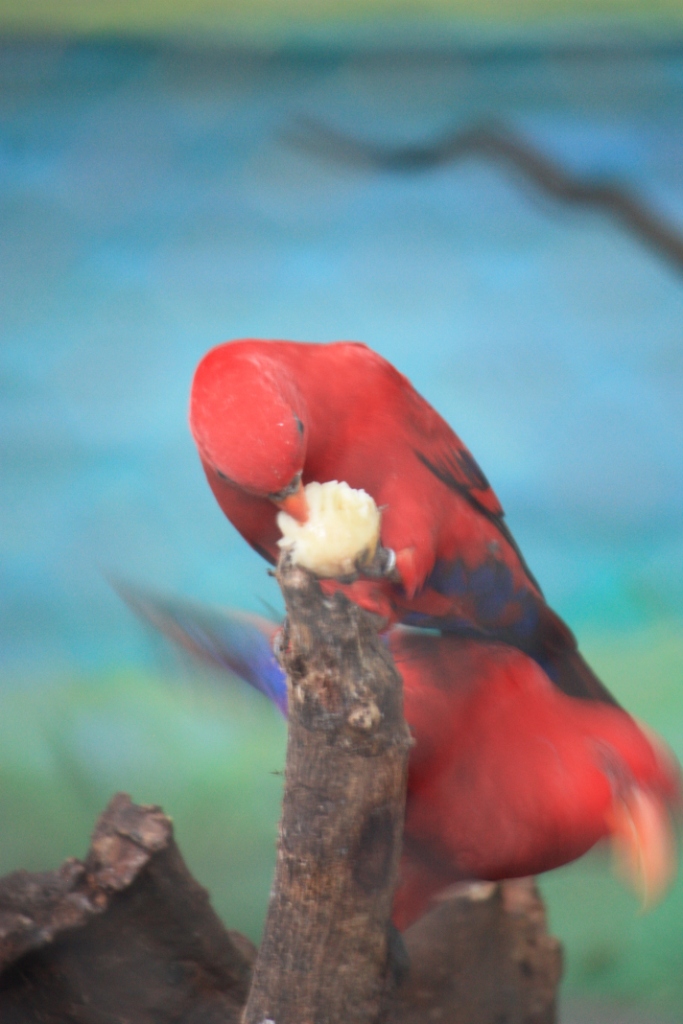
DAILY PHOTO: Red Birds

Taken on October 3, 2014 at the Mysore Zoo.

Taken on October 3, 2014 at the Mysore Zoo.

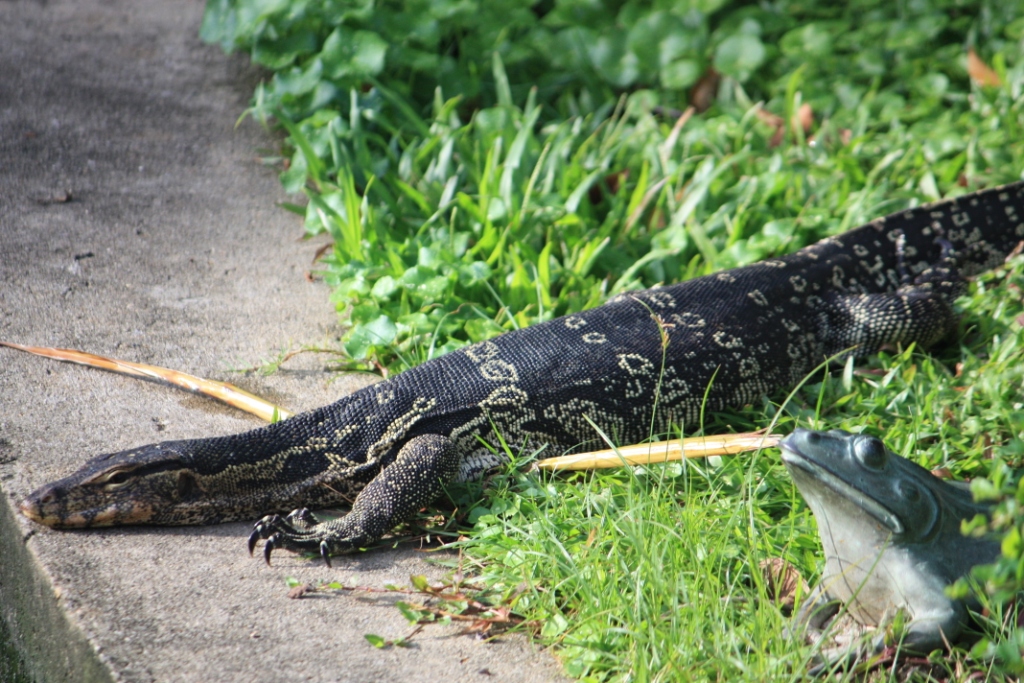
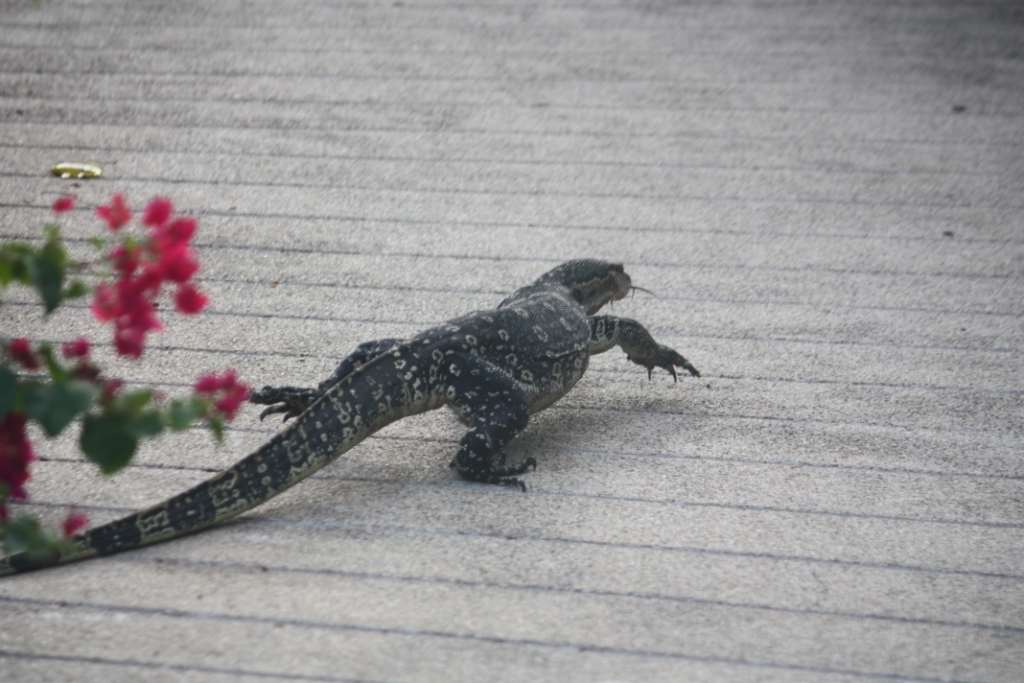
DAILY PHOTO: Saranrom Park Monitor

Taken in September of 2014 in Bangkok

Taken in September of 2014 in Bangkok

IMG_2125

Among the unexpected sights of Bangkok is this Monitor Lizard of about 4 foot long from the tips of its forked-tongue to the tip of its tail.  It was right in the center of Saranrom Park which is across the street from the Grand Palace and Wat Pho in Bangkok’s old town.

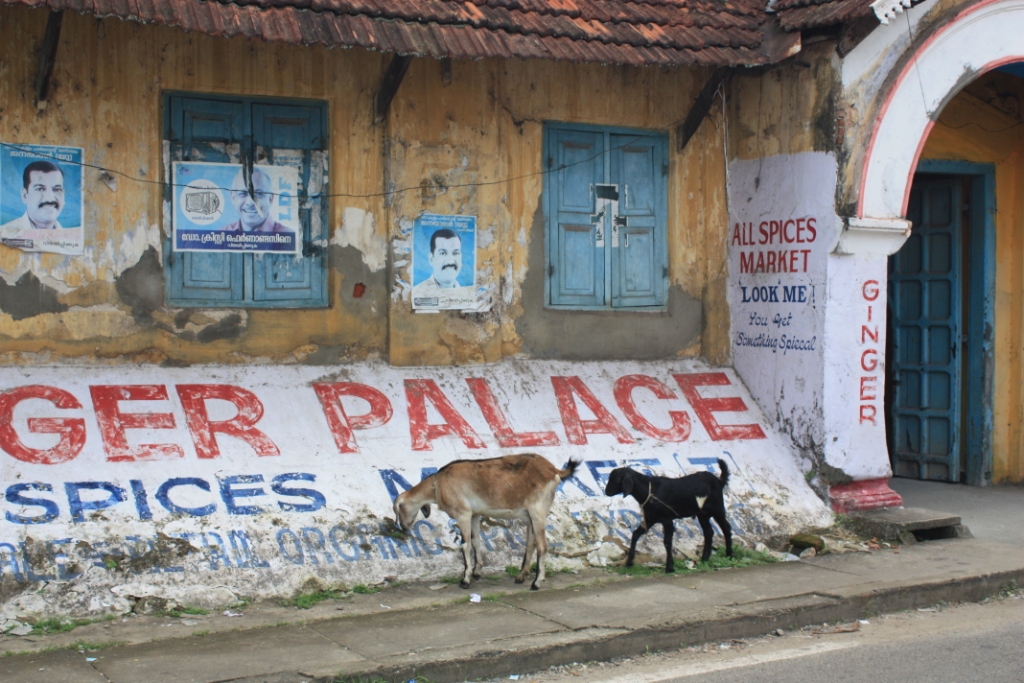
DAILY PHOTO: Kochi Street Goats

Taken July 7, 2014 in Kochi

Taken July 7, 2014 in Kochi

On your visit to Kochi (Cochin) you’ll note a different mix of fauna than elsewhere in India. Urban bovines are rare, but roving flocks of goats roam the streets. Also, cats are much more prominent than in doggie-dominant Bangalore. I suspect the latter has to do with the large amounts of seafood that comes ashore here.

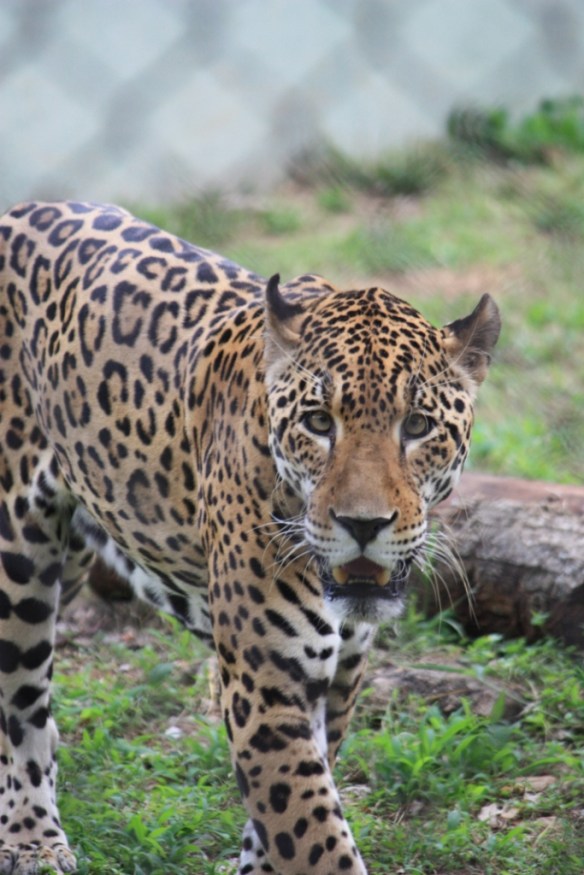
DAILY PHOTO: Leopard Look

Image

DAILY PHOTO: Leopard Look

Taken in November of 2013 at Mysore Zoo

DAILY PHOTO: That Moment When One Pigeon Catches On

Taken May 18, 2014 in Bangalore

Taken May 18, 2014 in Bangalore

DAILY PHOTO: Ross Perot Gargoyle Monkey

Taken March 23, 2014 at Nandi Hills

Taken March 23, 2014 at Nandi Hills

Many say that baby macaques are cute. Those people may not have seen a true infant, hairless and wrinkled, looking–ironically–like an old man.

This one hasn’t even grown to fully look like H. Ross Perot. You see, all young macaques look like H. Ross Perot, and some adult macaques look like Gary Busey.

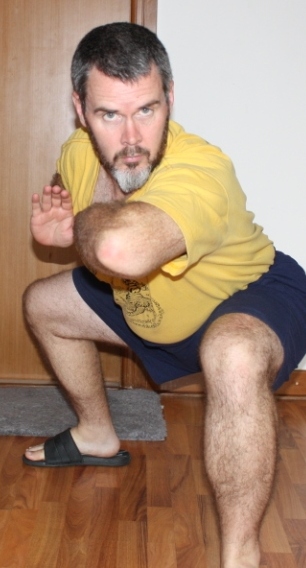
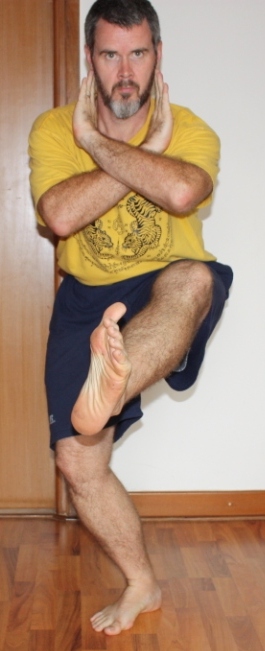
Animals Forms and Poses in Martial Arts

Snake

Snake

Part of the most basic of basics that I’m learning in Kalaripayattu class are 8 animal poses (Wild Boar, Elephant, Cat, Lion, Snake, Rooster, Peacock, and Horse.) While animal forms and postures are common enough in martial arts, this is an entirely new concept to me and one that I’m trying to wrap my head around.

Animal forms are most commonly associated with Chinese Kungfu. There are entire styles devoted to five animals (i.e. tiger, leopard, crane, snake, and dragon [yes, I realize dragons aren’t really animals.] Of course, from Kungfu Panda we know there are also Monkey style and Mantis style, but that’s only just the beginning.  There are many different animals that play a role in martial arts, some–like tigers–are not unexpected and others–like peacocks–are harder to imagine.

As I’ve mentioned before, old style Japanese martial arts–at least the one’s I’ve studied–invoke nature commonly, but in a more subtle form. In Japanese budō one does not imitate animal movement or positioning–except in a very limited and general sort of way.

I’m interested in why one should imitate the postures or movement of animals. After all, it’s hard to argue that a human being can move more efficiently or effectively imitating a [non-human] animal. We are uniquely bipedal mammals, and to imitate–for example–a legless reptile (for example) doesn’t seem to make a lot of sense.

One explanation I’ve heard is that these animals are natural fighters, and are, therefore, to be emulated. I don’t put a lot of stock in this explanation. Don’t get me wrong, I do believe that humans are less naturally capable of close-quarters fighting than pretty much any other animal. But it’s got nothing to do with the nature of our bodies and everything to do with the condition of our minds. Humans are emotional beasts and have trouble living in the moment. That’s why we aren’t natural fighters compared to a tiger–which doesn’t get paralyzed by fear, doesn’t get plagued by guilt, and never walks through dangerous territory with iPod earbuds in its ear, thinking about how it needs to update its Facebook page. Humans excel at making weapons that allow us to stay as far away from the enemy as possible–preferably on another continent. But close-quarters combat is an uphill struggle all the way.

Wild Boar

Wild Boar

There is an explanation that I find to be more sound, and that’s that these postures are meant to facilitate a certain mindset. Just as people condition themselves to associate certain hand mudra with certain states of mind (I know that’s not necessarily how they see it), one may use these postures to invoke a certain state of mind. This is somewhat related to what I was discussing in the preceding paragraph. Human’s are challenged to get into the right frame of mind for combat, and animal forms and postures might be one way to hasten that state. For humans there are two aspects of the problem. First, people are naturally scared of being injured or killed, and for many this becomes debilitating. Second, except some psychopaths, humans really don’t like to kill. This is true of other species by the way, we are genetically hardwired against killing our own kind. However, other animals can’t worry about it like us. (Here I mean worry in the sense that W.R. Inge described, “Worry is interest paid on trouble before it comes due.”)

Another explanation that I think has some merit is that some of these poses and forms are more about the exercise than combat effectiveness. In essence, they are like yoga; they build range of motion and strength in core muscles. One can certainly see this in the exceedingly low animal stances that require a great deal of flexibility.

The only other reason that’s popped to mind is that animal imitation is used to try to create a feeling (e.g. fear) in one’s opponent. This is closely related to the first point. One wants to create a perception of ferocity (or otherwise) in the eyes of the opponent as well as internally.

Rooster

Rooster

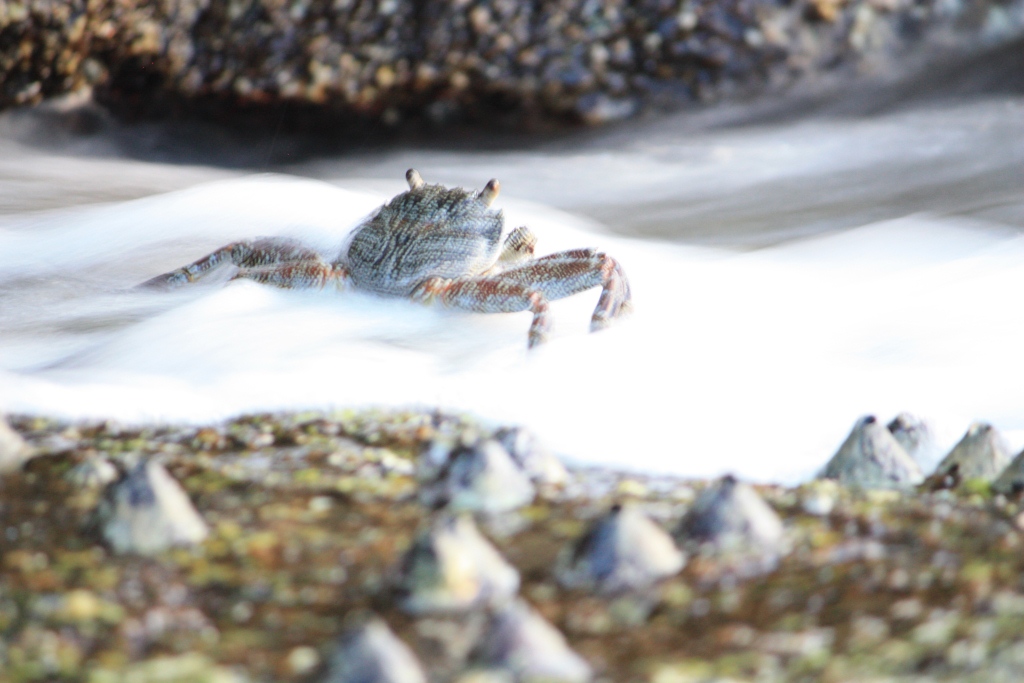
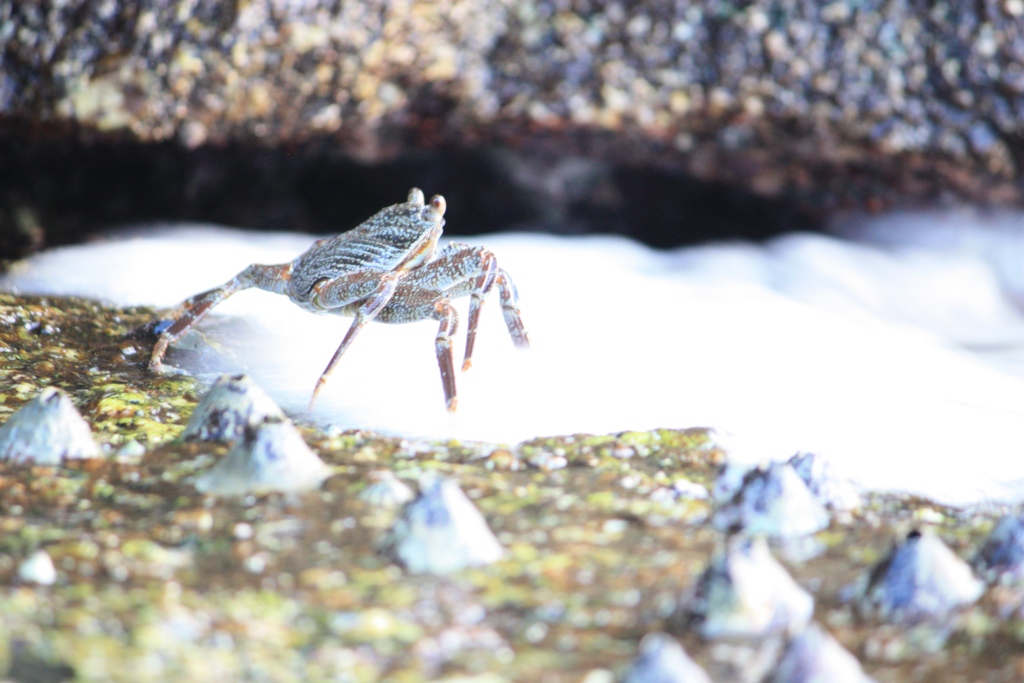
DAILY PHOTO: Fog Rolls in for a Crab

Taken on Christmas Day on Phuket, Thailand.

Taken on Christmas Day on Phuket, Thailand.

IMG_1694This photo turned out a bit otherworldly. It’s a crab on a barnacle-covered rock who is about to be swamped by a boulder-churned slab of white water.