BOOK REVIEW: The Master and Margarita by Mikhail Bulgakov

The Master and MargaritaThe Master and Margarita by Mikhail Bulgakov
My rating: 5 of 5 stars

Amazon page


The Devil comes to Moscow with his entourage of henchmen – a tram-riding cat, a fallen angel turned assassin, an ex-choirmaster, and a vampiress – and chaos and malevolence ensue. While most of the story unfolds in early 20th century Soviet Union, a few chapters focus on the story of the crucifixion as seen from the perspective of Pontius Pilate. We learn well into the book that Pontius Pilate is the subject of a novel written by the character who calls himself “the Master.” A love story between he and Margarita is central to the story, though mostly in the latter half of the book.

While Bulgakov’s book is whimsical and humorous in places, its theme is demons and supernatural beings acting in a rational, modern world that has abandoned belief in the supernatural. The Devil (who goes by the name Woland, a variation on a Germanic word for demon) and his troupe perform a black magic show that the audience assumes to be illusionism though it produces far more disturbing effects than a David Copperfield show. The story is a dark carnival tale (think Bradbury’s “Something Wicked This Way Comes” but not so much horror as a macabre comedy. One will also note that the relationship between God and the Devil is more on the order of Pratchett and Gaiman’s “Good Omens” than the Biblical rendition.)

While the book is pure fantasy in its story, it presents a thinly veiled commentary on Soviet life. Part of the reason why the mischief of Woland and his lackeys goes unthwarted is because it takes place in a world where the government “disappears” people on a regular basis and in which the quashing of religion means that even seeing doesn’t result in believing. Anyone witnessing a supernatural act is written off as drunk, insane or – at best – easily duped.

Although, as I think about this, it might not be so much a contrasting and ancient and modern life as it appears. After all, Pontius Pilate is at the fore of the historical part of the novel. Pilate, who viewed Jesus as a harmless lunatic, was troubled by the decision to execute him when the violent figure of Barabbas was selected instead for release based on a Passover norm. (Hence, Pilate’s famously “washing his hands” to the whole business of Jesus’s execution.) In this light, it may be more of a general commentary on humanity’s simultaneous need to believe in, and inability to believe in, the supernatural.

This novel is well-written, engaging, and thought-provoking, and I’d recommend it for all readers.


View all my reviews

BOOK REVIEW: Station Eleven by Emily St. John Mandel

Station ElevenStation Eleven by Emily St. John Mandel
My rating: 5 of 5 stars

Amazon page


This is a work of dystopian fiction set in post-pandemic America. It’s the Zombie apocalypse sans Zombies, but with something additional: arts and entertainment. The fact that, not only is there an arts and entertainment industry but that it’s central to the story, is critical to Mandel’s ability to set her story apart amid the sea of post-apocalyptic wasteland stories that have been gracing the shelves of bookstores in recent years. Other branches of dystopian fiction have entertainers (e.g. “Hunger Games”) – often in a morbid form of gladiatorial combat – but one of the ways that post-apocalyptic wasteland stories show how dismal and colorless life has become is to eliminate all mentions of art or entertainment – presuming that in survival mode people “put away childish things.” Mandel, on the other hand, places members of a traveling symphony that roams about performing music and Shakespearean plays among her core characters.

The title, Station Eleven, is the name of a sci-fi comic book. I won’t get into specifics as it’s involved in the resolution of the story in a way that I don’t want to spoil. However, I will say that emphasizing what seems like a minor element of the story (through most of the book, anyway) is interesting in that it’s another way in which the author shines a light on how art – highbrow or low – will inevitably shape human culture, behavior, and mythology.

Mandel also shows how, even in a world in which the majority of the species have been killed off, there will always be connections in the web of human interaction. Through out the book flashbacks to pre-apocalyptic happenings are offered, mostly around an actor who – if not patient zero – was one of the early casualties of the pandemic. The actor was married multiple times and sired one child that is known about, and these characters – as well as friends and acquaintances — are seen in pre- and / or post-apocalyptic settings. And this allows the reader to imagine a web of humanity surviving massive fatalities. Often in this sub-genre, at most a dyad (e.g. Cormac McCarthy’s “The Road”) survives, and that existence amid strangers is part of how the wasteland is shown.

This is a highly readable book, and well worth the read. Even if one is prone to think, “Ugh, another post-apocalyptic wasteland novel,” one will find something a bit different in its supposition that art is necessary and inevitable for humanity and that there aren’t enough degrees of separation to kill off all connections without killing off the species.

View all my reviews

POEM: Islands at Scale

misshapen lumps of dead coral rise from the sea-shore

miniatures of the karst monolithic islands of coastal southeast asia

a tiny archipelago facing constant nightmare tsunami

DAILY PHOTO: Cellular Jail, Port Blair

Taken in December of 2018 in Port Blair

DAILY PHOTO: Skaters

Taken in December of 2014 in Budapest

POEM: A Certain Madness

there’s a certain madness
running through this world
times of tiding gladness
lightning bolts are hurled

discombobulation
in the soul of state
riding tides of nation
as we’re dodging fate

singing songs of nowhere
drumming beats of now
stumbling down the upstairs
counting whys and hows

subcutaneous drum beat
sinking to the bone
sitting in the fire seat
deflecting all the stones

so many without sin
or so they seem to feel
tossing stones on whim
sharpening their steel

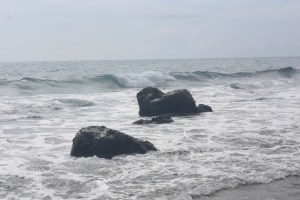
DAILY PHOTO: Rocky Shore

Taken in December of 2014 in Naiharn, Phuket

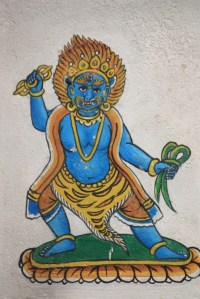
DAILY PHOTO: Durbar Square, Bhaktapur

Taken in May of 2018 in Bhaktapur, Nepal

Crazy Wisdom Sonnet

one can’t get to that sacred place direct
one must pass through a station called CRAZY
your mind and that wild line don’t intersect
and the path between is dim and hazy
you’ll find there is no you, you can detect
as you flicker in and out, mind-phasing
til on the far side emerges perfect
a mind that fires bright and remains blazing

beware he who values his sanity
above the wisdom of this space-less place
flashing sane is just a passing vanity
but madness brings a timeless kind of grace

It’s venturing through the dark that steals will,
but venturing through the dark steels the will

DAILY PHOTO: Amantani Jetty, Titicaca

Taken in 2011 on Amantani Island in Lake Titicaca