DAILY PHOTO: Jaswant Thada

Taken on November 29, 2015 at Jodhpur

Taken on November 29, 2015 at Jodhpur

IMG_2728


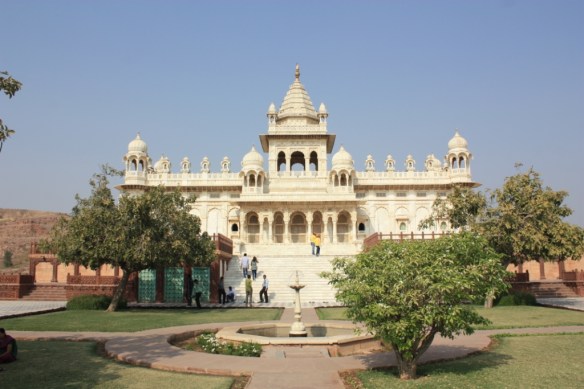
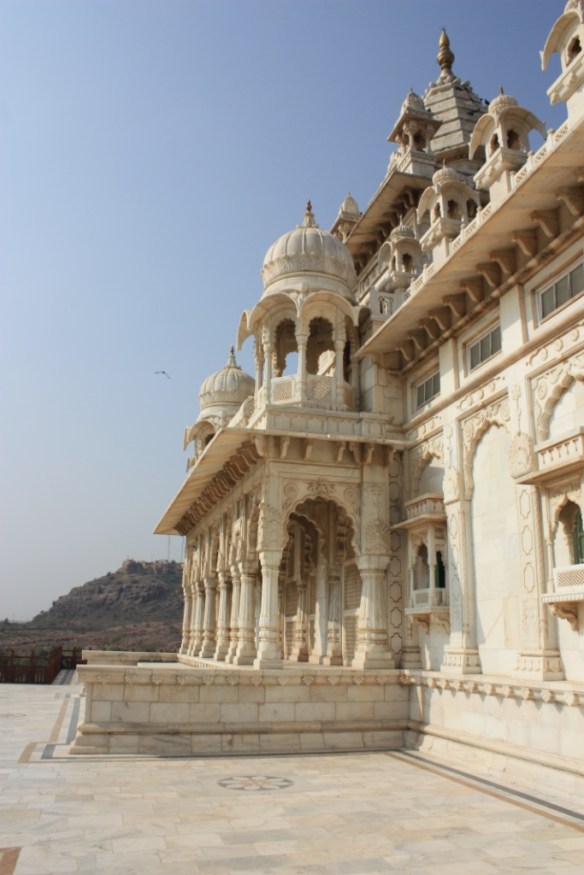
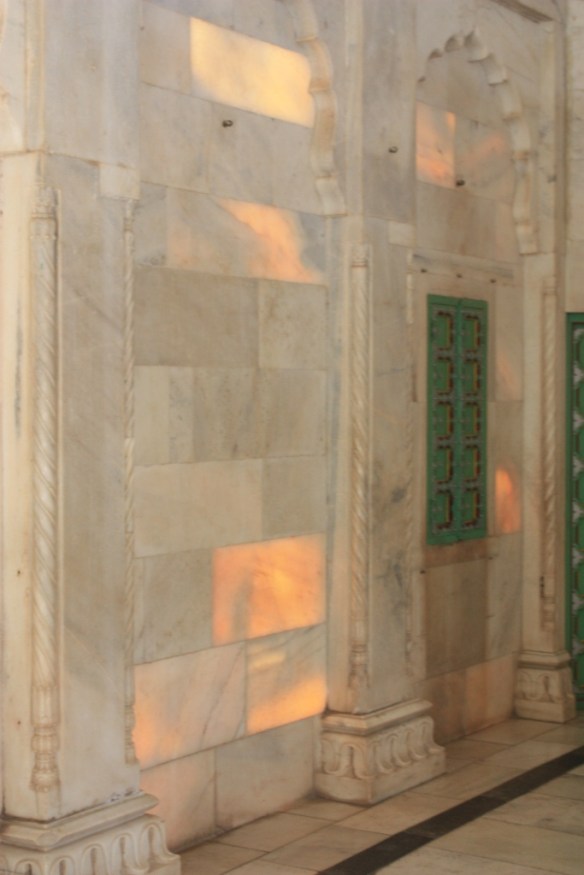
This beautiful white marble monument dates to 1899.  It can be seen from the Mehrangarh Fort, and has the same translucent marble that one sees at the Taj Mahal. It was built by the Maharaja Sadar Singh for his father the Maharaja Jaswant Singh II.

What light through yonder wall breaks

What light through yonder wall breaks

BOOK REVIEW: Ninja: A History by John Man

Ninja: 1,000 Years of the Shadow WarriorNinja: 1,000 Years of the Shadow Warrior by John Man
My rating: 3 of 5 stars

Amazon page

The author, John Man, isn’t the first historian to fall for the siren call of ninja history only to plummet into a catch-22, but he’s the one I’m reviewing right now. So, while his book isn’t exceptionally bad, it’s tremendously flawed in a manner common across ninja histories. What is said catch-22? On the one hand, ninja excite the imagination and a half-way decent book on them is sure to sell. On the other hand, there’s very little known about the ninja. If the myth of the ninja is an elephant, the ninja as we truly know him is a grasshopper. [So much so that the first Westerner to write such a history, Stephen Turnbull, has now spun 180, proposing that the ninja never existed but were purely a post-Warring States construct.] While it would seem that Turnbull goes too far given the existence of manuals and vague mentions, what we don’t know about are the nitty-gritty details of ninja missions and those are the stories that the reader desires but which time and the ninja’s legendary secrecy have put forever beyond our reach.

What is in the book? If not tales of ninja stealing into castles to abscond with information or to assassinate an enemy General, and the effect of those actions on the outcome of wars? First, there’s a lot of information that is already widely available in other English language books, such as the influence of Sun Tzu’s chapter on espionage on the birth of the ninja (probably spurious given the centuries in between) and description of the seven types of disguises. Second, there’s a lot of general Japanese history that is necessary to some degree as background, but at some point one realizes the author has ventured beyond background into padding. Finally, speaking of padding, about a third of the book by page count (cleverly disguised as only three chapters) occurs long after the end of the ninja. Don’t get me wrong; some of the World War II material is fascinating, but it’s as if one were reading a biography of Blackbeard and—all of a sudden—one finds oneself reading about a Somali hijacking of container ships in 2011. (Even while you are fascinated, you can’t help but feel that you’ve been the victim of bait-and-switch.) In short, the book has a lot of repetition and padding, and not much that’s both new and on topic. (One of the reasons that I didn’t give the book too low a rating is that if it’s the first book you are reading on the subject, it’s readable and interesting.)

There’s one more flaw that comes from the dearth of information. The author cites everyone and anyone who has said something interesting on the subject, but we don’t really know how reputable said sources are. Some may be sterling and others full-of-shit. It’s easy to say something fascinating about the ninja; it’s much more difficult to say something that’s true and fascinating.

So what does the book do right? It’s well written in terms of being readable and offering frequent mind candy. The author does challenge a few statements as he reports them. My last paragraph may have led one to believe that Man just shot-gunned information out there, but he actually takes a suitably skeptical view for addressing such a murky topic. The problem is that we don’t know how serious to take claims he refutes or those he appears to endorse because he’s not an expert in the field. He is an Asianist historian with a list of books that is all over the map. [I did see just one factual error in which he refers to the companion sword of a samurai as a tanto. A tanto is a dagger, the companion to the katana is the wakizashi. But I don’t know how big of a deal to make out of that sin as I can’t say that I noticed any others (not that I necessarily would as I’m no expert either.) On the other hand, a little fact checking…]

If you’ve never read a history of the ninja before, you’ll probably find this one interesting. If you’ve read the other books out there, it’s less clear that you will. However, I did find the discussion of Iga no Ran (the battle of Iga, a campaign meant to crush the ninja of Iga) to be intriguing. At any rate, as long as you realize the last one-third of the book is off-theme and are alright with that, you should find it palatable.

View all my reviews

DAILY PHOTO: Pécsi Városháza One Cold Winter’s Night

Taken in December of 2014 in Pécs

Taken in December of 2014 in Pécs

BOOK REVIEW: The Goldfinch by Donna Tartt

The GoldfinchThe Goldfinch by Donna Tartt
My rating: 5 of 5 stars

Amazon page

Theo Decker is thirteen years old when, during a visit to an art museum, a bomb explodes–killing his mother and defining the course of his life into adulthood. There are the obvious impacts on the life of a child separated from a loving and responsible parent. Furthermore, Decker feels guilty because he and his art-loving mother only stopped in the museum on the way to a meeting with the Principal. Theo’s dad had flown the coup before the book’s start, and is an alcoholic gambler in addition to being a deadbeat dad. The lack of a reliable family member who can (and wants to) take Theo puts tremendous stress on the boy, encouraging him to fall into the same patterns as the father he despises.

Theo spends the remainder of his adolescence in a mix of homes: a caring and wealthy (but in many ways dysfunctional) household where he feels his outsider status, his father’s neglectful Las Vegas home where he makes a solitary friend—Boris–of similar circumstance, and, finally, the home of a wise craftsman to whom Theo is connected only indirectly by the events of that fateful day. No matter whether he is in a good home with a responsible and respectable guardian or in his father’s white trash estate, there’s always a cloud of uncertainty over the boy’s life.

There’s also an unexpected way in which Decker’s life is defined by the bombing. Waking up amid the debris and dust, he tries to help an old man in the last minutes of life, only to witness the man’s death. Shaken, fearful, and unable to find his mother, Theo stumbles his way out through the back of evacuated museum having absconded with a small but famous painting, Carel Fabritius’s “The Goldfinch.” He knows he should return the painting, but the fact that it was one of his mother’s favorites and that he doesn’t want to rock the boat and get sent to an institution leads him to keep it. Furthermore, as much as he loathes the idea of being like his father, he shares his old man’s tendency to get himself into pickles because of a desire to be liked that is so extreme that it keeps him from taking responsibility for his actions and encourages him to self-medicate to deal with the stress of always having dark clouds overhead. The journey of the book, which takes us from the bombing to Decker’s life as a 20-something adult, is all about whether his own innate goodness in combination with the positive role models (living and deceased) around him will allow him to shake off the demons his father never could.

Tartt wrote this book masterfully. The fact that it won the 2014 Pulitzer Prize is more praise than I can heap on it. The book actually opens with an adult Theo Decker in an Amsterdam hotel room, afraid to go outside for reasons the reader isn’t yet let in on. Later we discover that this is chronologically near the story’s resolution, and it serves as a brilliant hook. For the entire book, that hook is set and the question of why resounds in the back of one’s mind.

It’s a rare 800+ page book that doesn’t drag, but this one pulls one through beautifully. This is in large part owing to the character development of all the major characters, and there are quite a few important characters in a book of this scope. While some are cads (e.g. Theo’s dad and his girlfriend “Xandra”) and some are virtuous to a fault (e.g. Hobie, Theo’s guardian from age 15 onward), one sees enough depth to experience the humanity of them all: the good in the bad and the bad in the good. Other than the lead—and possibly inclusive of him—the most fascinating character is his best friend, Boris, who features prominently in Theo’s Las Vegas years as well as during the novel’s climax and resolution.

The other factor that keeps the tension on is the dysfunctionality of many of these characters. There’s always drama to be had. In fact, when things are looking up in the novel is when the reader gets the biggest sense of foreboding, a feeling that the bottom will inevitably fall out. We know the bottom will drop out because Decker has set himself up for it to—and not entirely unwittingly. We just don’t know how until the book’s end.

I’d highly recommend this book for all readers of fiction. Don’t let the large page count and suggestion of stuffiness (art, antiques, and high society New York all featuring prominently in the book) dissuade one. It’s readable and engaging, and it offers the same authenticity then describing Boris and Theo smoking pot and eating sugar on bread for dinner as it does when it’s talking about the sale of a fake 18th century armoire.

View all my reviews

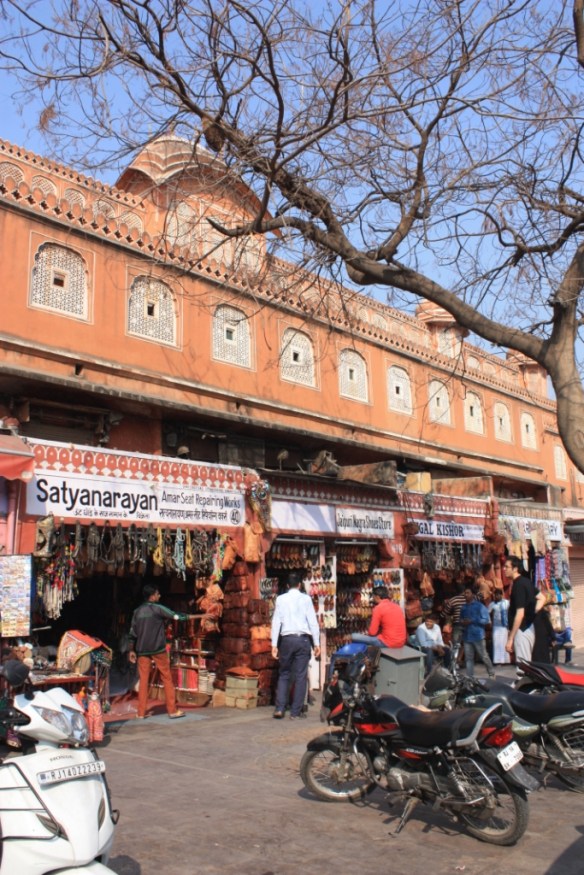
DAILY PHOTO: Old Town Jaipur Bazaar

Taken on November 30, 2015 in Jaipur

Taken on November 30, 2015 in Jaipur

IMG_3041 IMG_3088 IMG_3094

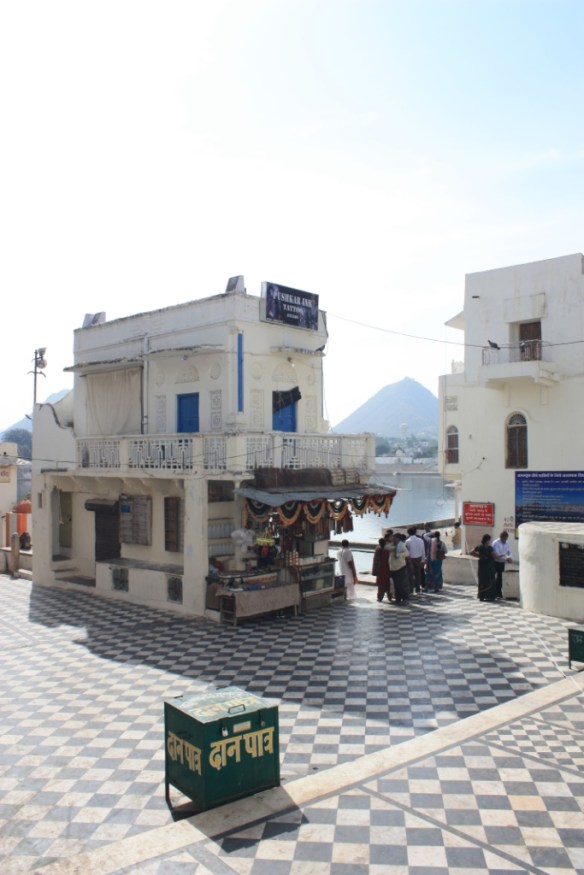
DAILY PHOTO: Chequered Path

Taken on November 28, 2015 in Pushkar

Taken on November 28, 2015 in Pushkar


Pushkar Lake is in the background, and this is on the walk down toward the ghats. This is a particularly tidy piece of the town owing to its proximity to the sacred lake and a temple thereof.

The pic is a little overexposed, but I like it nonetheless.

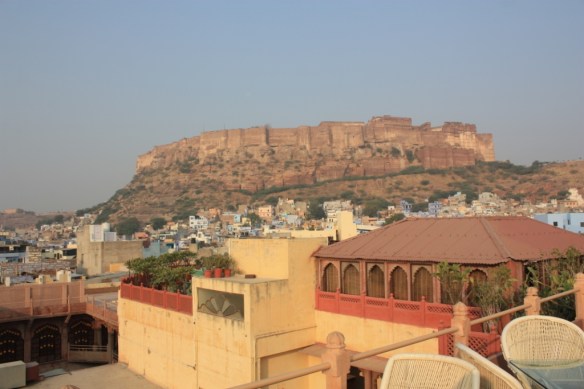
DAILY PHOTO: Mighty Mehrangarh in the Distance

Taken on November 29, 2015 from the rooftop of Pal Haveli in Jodhpur

Taken on November 29, 2015 from the rooftop of Pal Haveli in Jodhpur

DAILY PHOTO: Regal Camel

Taken in Pushkar on November 28, 2015

Taken in Pushkar on November 28, 2015


We just missed Pushkar’s Camel Fair this year, but the evidence of it–from Ferris Wheels to vendors of swords and halters–abounded.

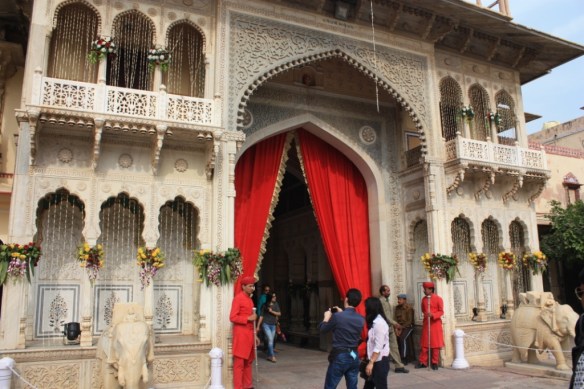
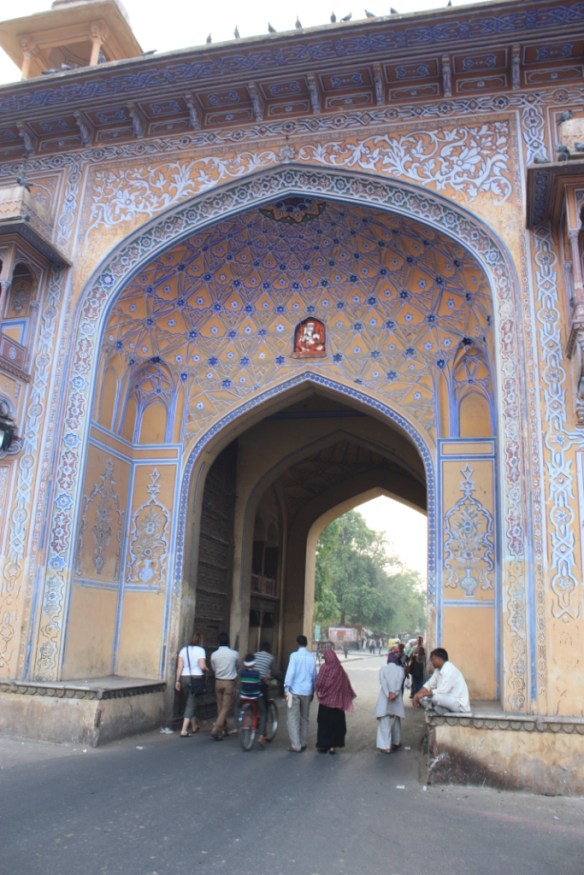
DAILY PHOTO: Gates of Jaipur

Taken in Jaipur on November 30, 2015

Taken in Jaipur on November 30, 2015


IMG_2074 IMG_2085 IMG_3139

BOOK REVIEW: The Karate Way by Dave Lowry

The Karate Way: Discovering the Spirit of PracticeThe Karate Way: Discovering the Spirit of Practice by Dave Lowry
My rating: 3 of 5 stars

Amazon page

This book collects 29 essays on karate—specifically, traditional Okinawan Karate–into a slim volume. I suspect the essays were initially either magazine columns or possibly blog posts because they all weigh in at a similar length, i.e. six pages. This isn’t to say they weren’t reworked or edited for inclusion into the book, it’s just conspicuous that the chapters to stick to such a tight word count restraint. It’s also evident in the lack of cohesive organizational structure—i.e. the essays don’t build on each other or reference each other, and it doesn’t read like a book that was built from an outline up. This isn’t meant as criticism (that’s coming later.) It’s a perfectly respectable approach to building a book, and the word constraints probably made the book more concise, and the lack of rigid organizational structure likely made it more creative.

Lowry covers a wide range of topics that a student of karate (or one considering becoming one) might find valuable. The questions addressed include: How does one keep motivated? Which is better a teacher who is technically a genius but morally a jackass or one that couldn’t fight his way out of a wet paper sack but is the pinnacle of virtue? Does one need to go to Japan to get high level training? How important is rank and a black belt? Does one need to hit things? What was training like in the old days? Some chapters deal more with technical aspects of common techniques (e.g. side kicks, stance, front thrust kick, etc.), but not in a highly technical or detailed manner (e.g. there are no graphics in the book.) Other essays deal with the philosophy of martial arts (e.g. “victory is in the scabbard”) and/or foreign concepts that may seem strange to a Westerner (“buji kore kaere meiba,” or “it’s a noteworthy horse that can return its rider to safety.”)

I found the book interesting, although it’s not my favorite Dave Lowry book for reasons I’ll get into below. The author does provide interesting insight into the history and development of karate over time. For example, I learned that historically Okinawan karate teachers weren’t so interactive with students as one expects today (this reminded me of what I’ve been told about old school yoga teachers who would quietly watch from a seated position at a distance.) I was also fascinated by the discussion of how “ikken hisatsu” (killing with a single blow) wasn’t a part of Okinawan karate in the early days, though it’s a ubiquitous (if ridiculous) feature of the tactics of many karate styles today. However, one is left feeling—as one sometimes does as a student of Japanese martial arts—a little like one is being told to shut up and accept that it’s just the way it is.

Any book that begins with an apology for sounding pretentious is likely going to be grating in places, and Lowry doesn’t disappoint in that regard. He does display some of the “self-congratulatory smugness” that he claims wasn’t his intent. It’s most notably seen in gratuitous assertions that he puts across as truisms but which seem more controversial. It feels as though he figures that you bought the book because you take him as the expert and will defer to whatever he says. A lot of said assertions involve accepting the traditional way because it’s such a grand avenue to personal growth and development—except that it doesn’t seem like it is. (It seems like a good way to build an army—e.g. blind obedience and faith-based martial arts [by this I mean eschewing competition and randori—free form training / sparring–in favor of form-based practice], but a poor route to personal growth. Note: maybe the preceding sentence is entirely wrong, but you won’t find out why in Lowry’s book because he takes the virtue of the traditional approach as axiomatic.)

Having leveled my criticism, I will say that Lowry is great at explaining himself and making analogies as necessary. He is incredibly knowledgeable. The book is readable and frequently interesting. I’d recommend it for martial artists—whether they practice karate or other styles/systems—but some readers are likely find it more appealing than others. I suspect the more in tune one is with the traditional Okinawan and Japanese approach to martial arts (i.e. in Lowry’s words if you practice “serious karate”) the more satisfying you’ll find this book (you, too, can radiate the glow of self-congratulatory smugness.) If you question the value of the traditional approach and wonder on what basis one should take it as superior, then you’ll probably find the book less satisfying—but still thought-provoking.

View all my reviews