Hae Kum Gang: Korean Food in Bangalore

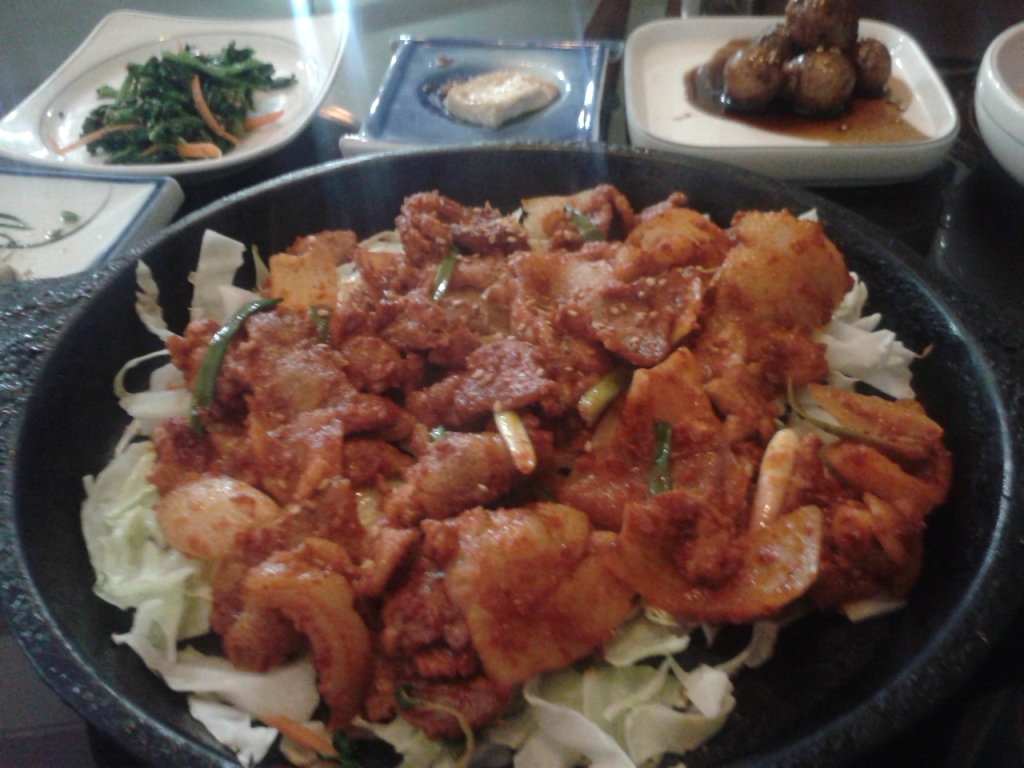
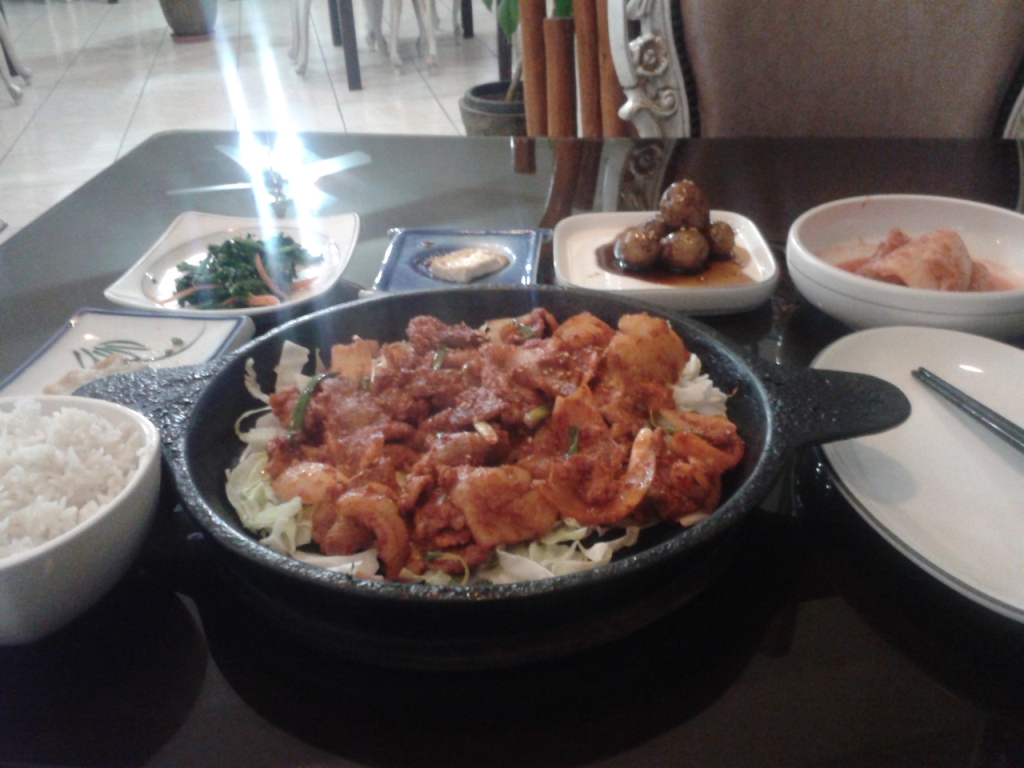
Jeyuk-Chulpan with assorted sides.

Jeyuk-Chulpan with assorted sides.

I’ve been eating a lot at restaurants since we moved to Bangalore, both because it’s (usually) cheap and for the experience of it. I’ve eaten at enough places to have developed some favorites, but I try to keep broadening my experience by eating at as many new places as  I can.

Today, I had a lunch experience that was new on two fronts. For one thing, it was a restaurant that’s new to me, but–for another–it was my first experience with Korean food as prepared in India. I’ve eaten at several Chinese restaurants in India, and, while the places I’ve tried were all pretty good, they were all distinctively Indo-Chinese. In other words, the dishes didn’t taste like they did in other places at which I’ve had Chinese food, e.g. China. On the other hand, the Bangalorean Thai restaurant, Lan Thai, seems pretty authentic to me, except perhaps the diminished use of fish sauce (which is incredibly popular in Thailand and almost non-existent in India.) I was, therefore, uncertain what to expect from Hae Kum Gang–other than that it had a pretty high rating on Zomato and so it likely had decent food.

I can’t say what Korean food tastes like in Korea, as I’ve not yet gotten outside of Inchon airport, but Atlanta had a pretty huge Koreatown and I ate at a variety of Korean restaurants there. (A Korean man once told me that Korean food in Korea tasted very different because of the taste of the vegetables–given the spice palette of Korean food, I wasn’t sure whether to dismiss this as nostalgia–e.g. tasting the difference between American cabbage and Korean cabbage through the kim chi chili seasoning and fermentation seems a bit of a challenge.)

At any rate, what I found at Hae Kum Gang was on par with what I’ve had in Duluth, Georgia.  This was a pleasant surprise because their menu states Korean, Chinese, and Japanese cuisine. While these cuisines have some overlap–particularly with Korea in the middle–they are each distinct. My concern was based on bad experience with “multi-cuisine” restaurants in India that try to do everything and end up doing everything in a mediocre fashion.  (Hampi was loaded with such places.) What I ordered was pretty typically Korean, I imagine if you had a Chinese or Japanese dish off the menu you might not find it authentic, but rather like a Korean interpretation of the dish. (Although, Duluth has some fine sushi places with Japanese names and advertising themselves as Japanese food, but clearly owned, run, and staffed by Koreans.)  

I ordered the Jeyuk-Chulpan, which was described as: “Stir-fried pork with vegetables, served in spicy chili sauce on a sizzler plate.” The description was spot on. The platter sizzled for about 15 minutes after it got to the table. The dish had a pleasant level of heat (spice) and was tasty.  This isn’t a dish for those watching their cholesterol. The pork was quite fatty, which, of course, made it sumptuous and delicious but higher in fat content than many might desire. For lunch it suited me. It’s not something that I would eat for dinner, both because I don’t sleep well if I have red meat immediately before bedtime and because one needs some active time to burn off some of those calories  before going to bed. 

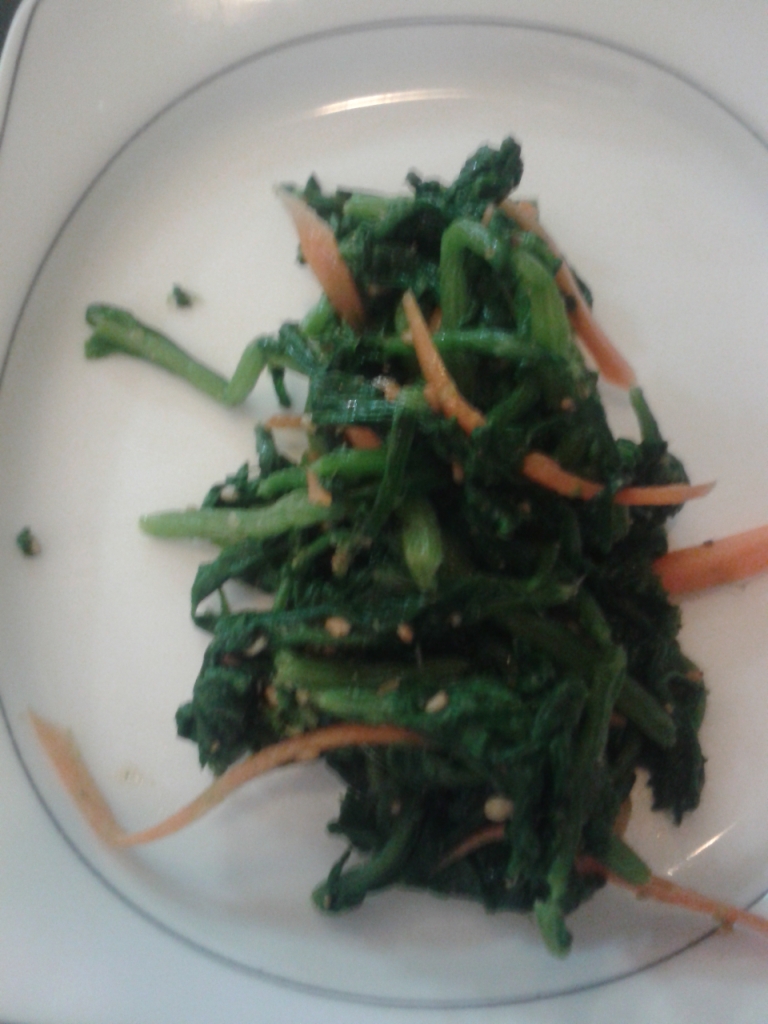
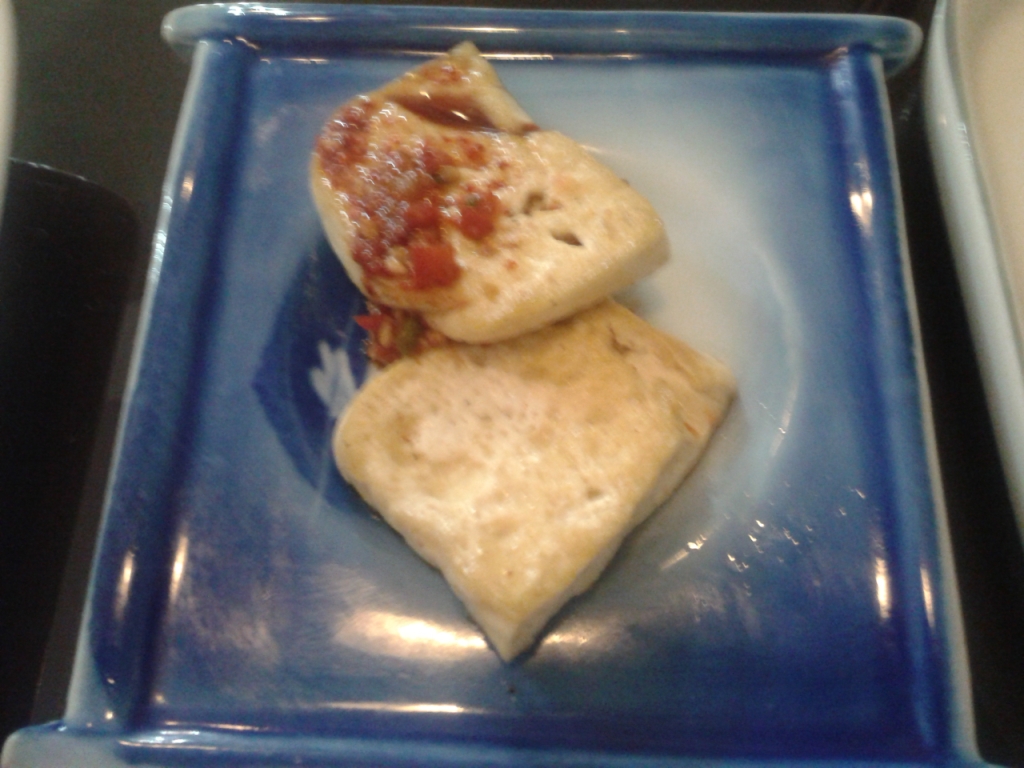
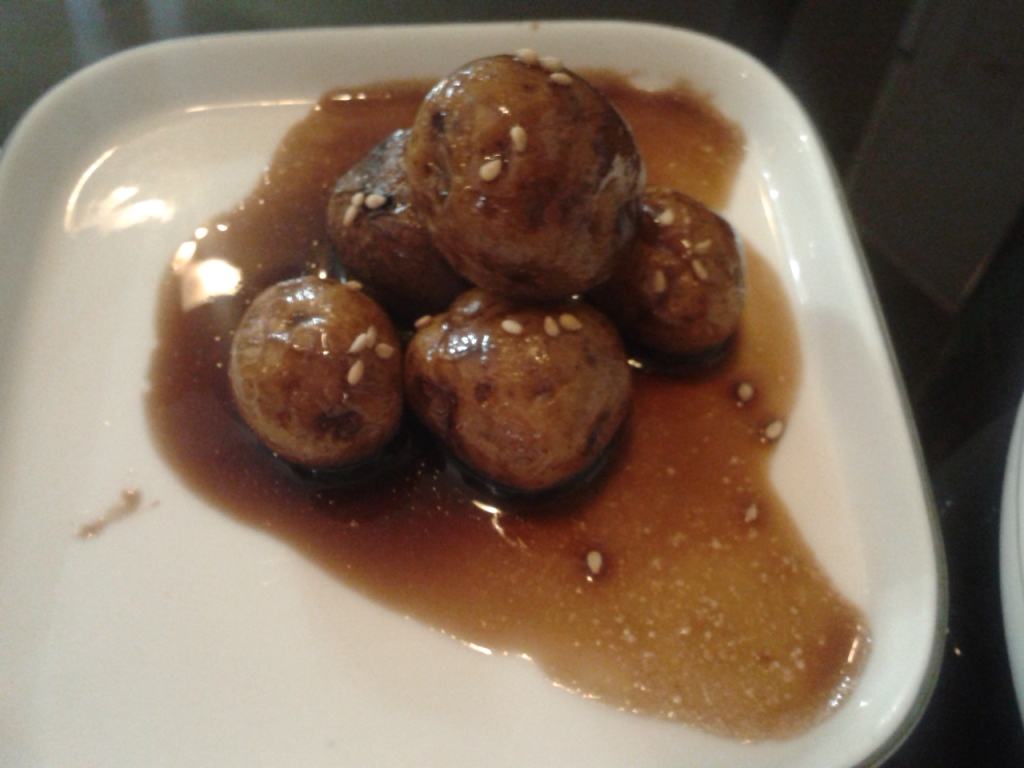
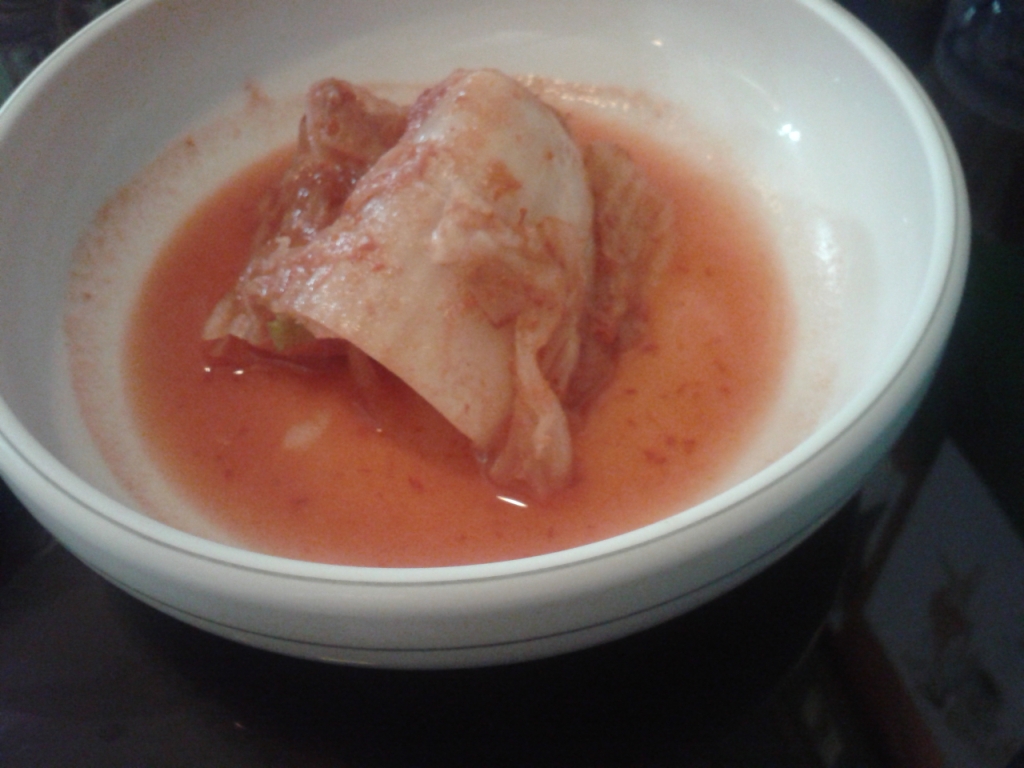
I was told a bowl of steamed rice came with this dish, but was pleasantly surprised to find seven other sides were brought out as well. Getting a load of side dishes along with your main is not uncommon with Korean food and I’ve had similar experiences elsewhere. The first small plate to arrive was Yukhoe,–a spicy Korean answer to steak tartare. I was a little reluctant about eating a raw beef dish in India, but I forged ahead and found it delectable. It was spicy, and warmed through–though not enough to cook the meat. While it was tasty and I’m none the worse for wear, I don’t know if I’d recommend you partake of this dish unless you know your constitution to be caste-iron and you like to live a little on the wild side. In the US, where there are all sorts of regulations and health inspections in restaurants, there is still invariably a warning to consume at your own risk. The same could be said of Japan, where 4 people died (35 hospitalized) in 2011 from eating a batch of the Japanese version of this dish that was tainted with E. Coli.  The standard for raw beef dishes is less than a day between slaughter and freezing and less than a day between thawing and use. I can’t say what this restaurant’s practice is. It tasted clean and fresh, but exercise care.

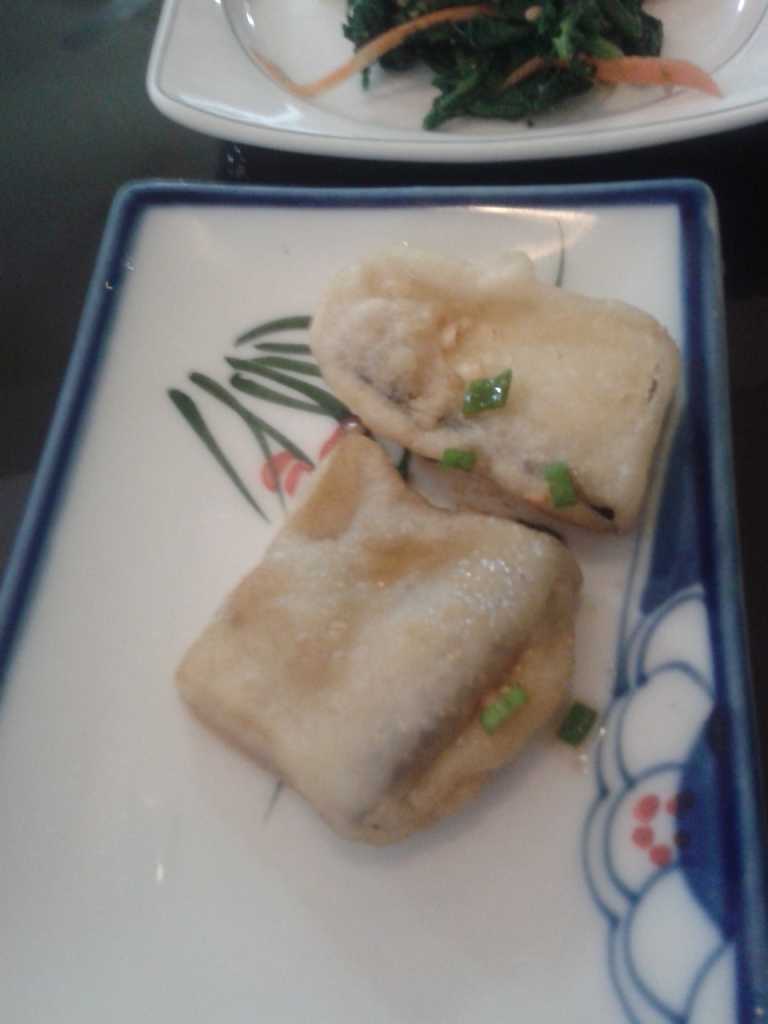
There was also a soup and a salad. The soup actually tasted more like something I’ve had on occasion in India than anything I’ve had in a Korean restaurant, except the vegetables were typically Korean. I believe the salad was a seaweed. There was also braised tofu, boiled baby potatoes in a teriyaki-esque sauce, and the Korean mainstay kim chi.  If you eat the Yukhoe, I’d recommend you eat your kim chi. Kim chi isn’t a personal favorite of mine, but its fermentation may offer you some assistance in digestion.

I’d recommend Hae Kum Gang.  My food was 480 Rs. (plus tax, tip, and a mineral water), which is pricey by Indian standards–but, as I always say, sushi and brain surgery are two things you don’t want a great deal on.

No, I don’t know if the name is supposed to register as “Hey, Come Gang!”
HaeKumGang2 HaeKumGang3 HaeKumGang4 HaeKumGang5 HaeKumGang6 HaeKumGang7

DAILY PHOTO: Reservoir Goat

Taken November 2, 2013 at Hampi.

Taken November 2, 2013 at Hampi.

This goat was strutting along in slow motion like he was in the opening scene of Reservoir Dogs.

Have no idea what I’m talking about? See below.

Indonesian Snake Massage

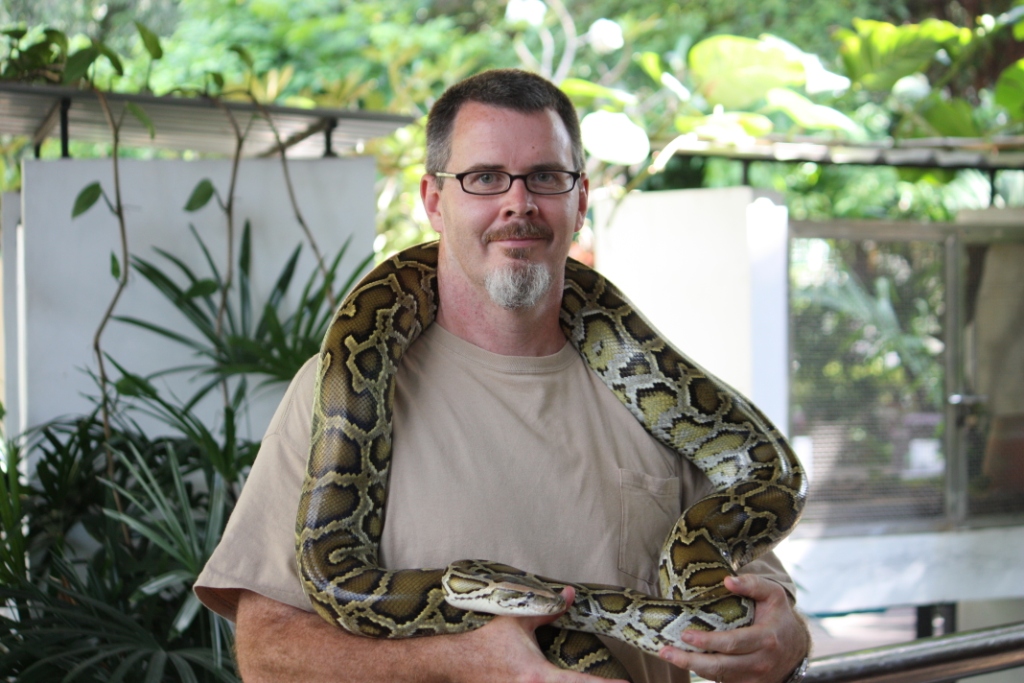
A Python, but no massage

A Python, but no massage

What could be more relaxing and luxuriating than laying on a massage table and having pythons heaped upon one to slither and writhe their way around one’s body? Many people might answer that question with replies like, “being set on fire”, “a prostate exam”, or “a pop math quiz.” Yet, some people dig this unusual form of therapy, and are willing to pay big bucks for it.

If you’ve traveled in the third world, you know that there are ever new and innovative attempts to bilk tourists out of cash. However, there has to be something to a weird idea for it to really take hold. Consider the ubiquitous Southeast Asian “fish massage.” I’ve tried it. It isn’t really a massage, but it does involve fish–namely little fish that eat away one’s dead skin cells to exfoliate and tickle at the same time. I don’t know if the fish massage does much good, but it feels weird, has some novelty to it, and is a good way to both get off one’s feet and experience ten minutes without someone trying to sell one something else odd and questionable.

Will the python massage (no, that is not a euphemism, innuendo, or a phrase from bad erotica) survive? I believe it will. Why? Because behind every insane idea there are drunk backpackers with Type-A personalities challenging one another to “go for it.”

DAILY PHOTO: Climbing Lizard

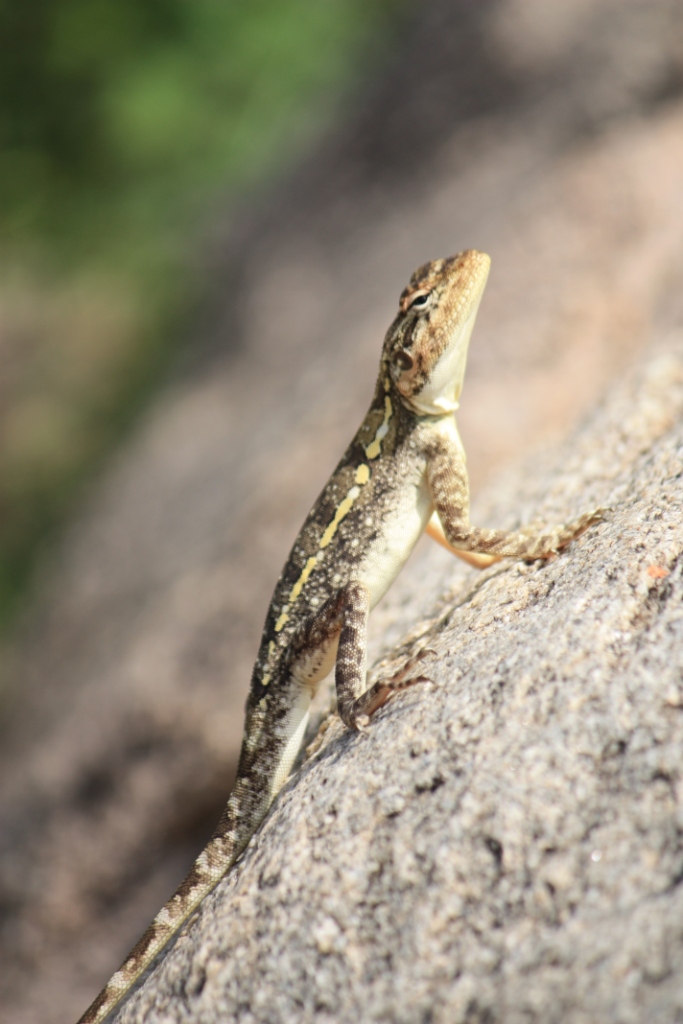
Taken November 2, 2013 at Hampi.

Taken November 2, 2013 at Hampi.

These little lizards were one of the most common animal lifeforms at Hampi.  They blend into the rock quite well despite the broken white or yellow line of dots on their backs, which itself blends into the splotched pattern of the creature.

I believe they are called Psammaphilus Dorsalis, Peninsular Rock Agamas, or South Indian Rock Agamas. [However, I know nothing about lizards and am open to correction by a herpetologist.]

DAILY PHOTO: Precarious Rock

Taken November 3, 2012

Taken November 3, 2012

Part of what makes Hampi so surreal is all of the precariously balanced boulders. This shot is oriented straight up and down, i.e. the camera is not tilted, and so one wonder’s “How is that rock not falling?”

DAILY PHOTO: Stone Chariot

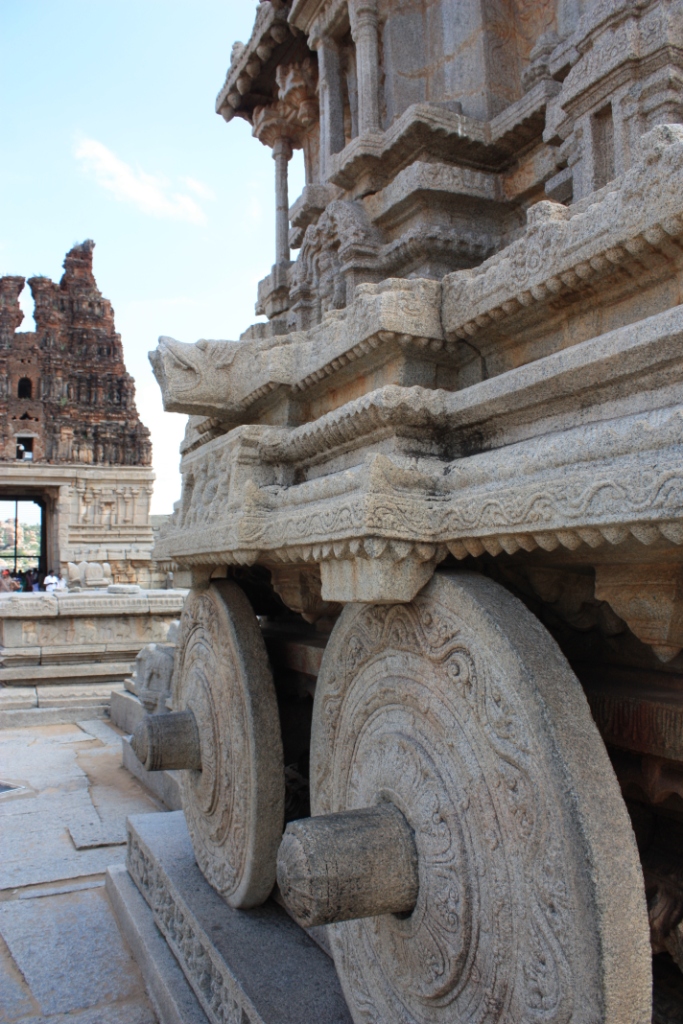
Taken November 2, 2013 at Hampi

Taken November 2, 2013 at Hampi

This stone chariot is one of the most iconic scenes of Hampi. The wheels on the chariot were once capable of moving, but no more. It remains an amazing sculpture. It’s in the Vittala temple complex, and is one of the first things that draws the eye when one enters through the gate that one can see in the background.

DAILY PHOTO: Towering 4-Handed Guardian

Taken November 2, 2013 at Hampi

Taken November 2, 2013 at Hampi.

These guardians of the inner sanctum can be seen here and there throughout Hampi.

I assume they were meant to be guardians and not just four-handed mutant freaks doing yoga stretches to loosen up their leg abductor muscles.

BOOK CHAT: Walking by H.D. Thoreau

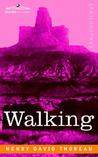
WalkingWalking by Henry David Thoreau

My rating: 5 of 5 stars

Amazon page

Thoreau paints a portrait of walking in such grandiose terms that one will cease to think of putting one foot in front of the other as one of life’s mundane tasks. He’s not talking about just any walking, however. He’s not talking about the mall walkers who briskly exercise in temples of consumerism. He’s not talking about those who walk through the park with top 40 hits blaring from their iPod ear buds.

Thoreau is talking about those individuals he calls saunterers. To saunter, as to stroll, is to walk in a leisurely and aimless fashion. Thoreau’s walking is that which:
-takes place in nature.
-leaves worldly worries behind.
-is not a trivial time commitment.
-is more an exercise of the mind and spirit than of the body.

To the mall walker, Thoreau would point out the error of a missed opportunity to get away from mankind’s chaos and enjoy nature. As he puts it, “The most alive is the wildest.” and “…all good things are wild and free.” He’s also clear in that walking for exercise misses the point by injecting hurriedness into a time that should be about slowing down.

On those with iPods, cellphones, or other contrivances that distract one from the environs, Thoreau is equally clear, “What business have I in the woods if I am thinking of something outside the woods?”

Thoreau’s essay broadens as it progresses. From a commentary on the virtues of sauntering, the essay turns to the glories of nature, the character of America, and the state of thought in his contemporary society. These may seem like unrelated concepts, but there is a string of logic that connects them.

The connection to nature and the virtue of wildness should be clear. It’s nature that is the optimal backdrop of sauntering. It’s in nature that one can be set free from the troubles of the world of man and obtain a glimpse of god. It’s in nature where creativity breeds with chaos turned down and native brilliance turned up.

Thoreau’s discussion of America is tied to the theme of walking in a couple of ways. The first is as a land made for walkers. For example, he points out that a man could pitch a tent almost anywhere in North America without great risk of becoming a meal. The same couldn’t be said of India or Africa or Siberia, where man isn’t the sole predatory creature. The second is America as a place with room to venture out into uncharted territory. Thoreau points out that we may look to the East for the lessons of our predecessors, but a person should look West for opportunities to grow in one’s own right. Of course, Thoreau’s America was different from today’s America.

The end of the essay broadens out even further. Thoreau comments upon mankind and the state of ideas and thought. He echoes Socrates when he talks about that age-old question of whether it’s better to be ignorant (to know one knows little) or deluded (to think one knows a lot, but be drowning in false knowledge.) A reader may suggest that this is a false dichotomy. Why can’t one know most everything and not have a one’s body of knowledge rife with false knowledge? I can’t say, but all of the evidence suggests that if such a state exists, it’s the domain of God or gods (if such entities exist.)

Thoreau also bemoans what he sees as the decline of thinking man. What does this have to do with walking? I think Thoreau answers in the following quote:
“So it would seem few and fewer thoughts visit each growing man from year to year, for the grove in our minds is laid waste—sold to feed unnecessary fires of ambition, or sent to mill—and there is scarcely a twig left for them to perch on.”

I think that everyone should read this thin book–really an essay and not a full-scale book. The problems Thoreau notes have only gotten worse in our modern age. Far too few take the time to walk, and to acquire the benefits of sauntering.

View all my reviews

DAILY PHOTO: Yellow Blossoms

Taken November 2, 2013 at Hampi.

Taken November 2, 2013 at Hampi.

The Hampi area is painted from a different palette than most of Karnataka. Instead of uniform green, the brownish-red of the boulders dominates, and, while green lines the spaces between the rock, the vivid yellow of these flowers decorate the base of many hills.  Of course, there remain islands of green, in the form of corn fields, banana plantations, and palm groves.

DAILY PHOTO: Sunset Over Hampi

Taken on November 1, 2013

Taken on November 1, 2013

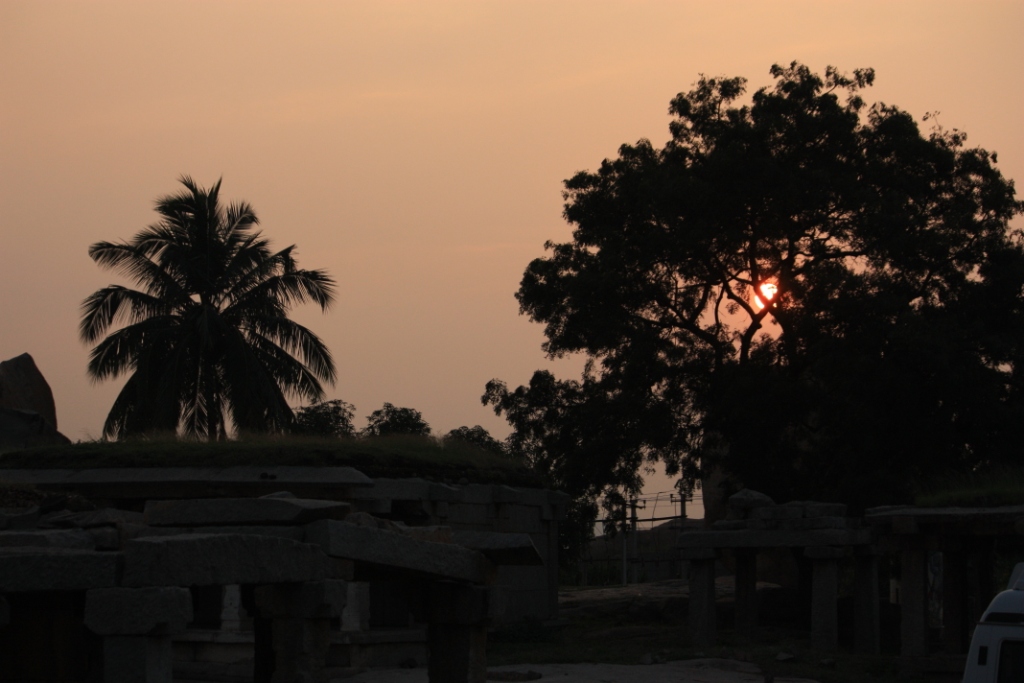
In the tropics the summer days seem so short and the winter days seem so long–at least if you grew up at 42°N (northern Indiana) and now you’re living at 13°N (Bangalore, India.) There’s no discernible adjustment in the length of days here. Maybe, if you’re a local. But it always gets dark around 6 at night and becomes light around 6am the next morning.