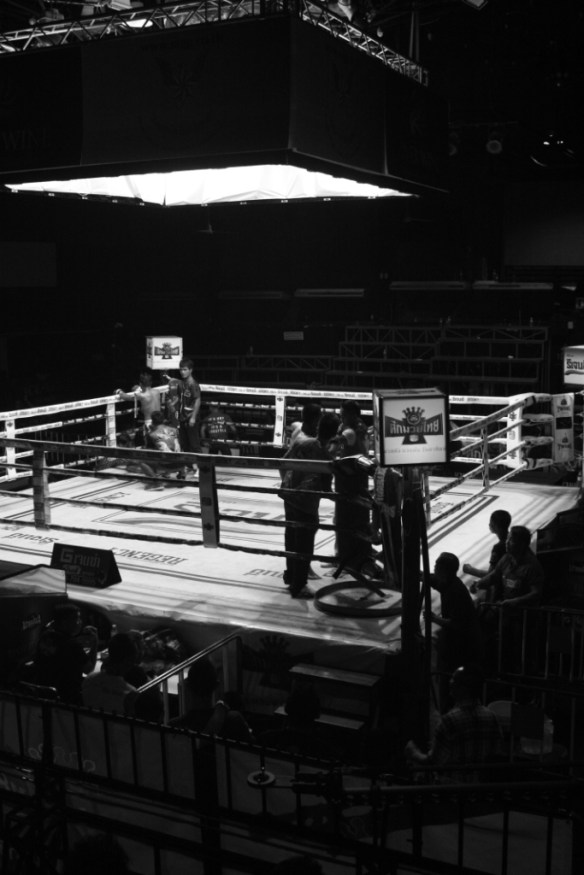
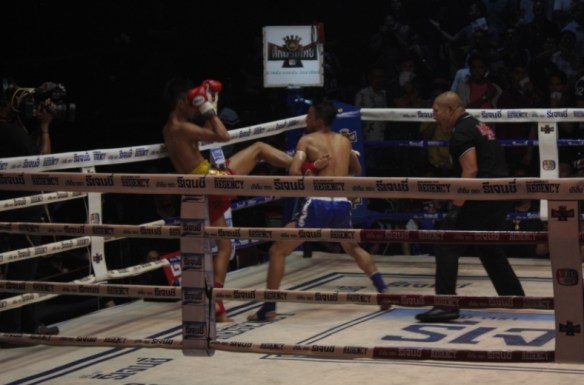
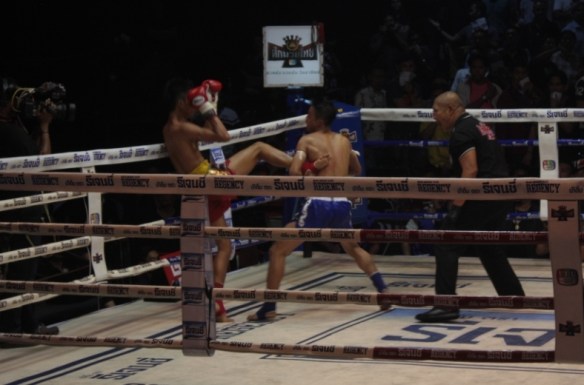
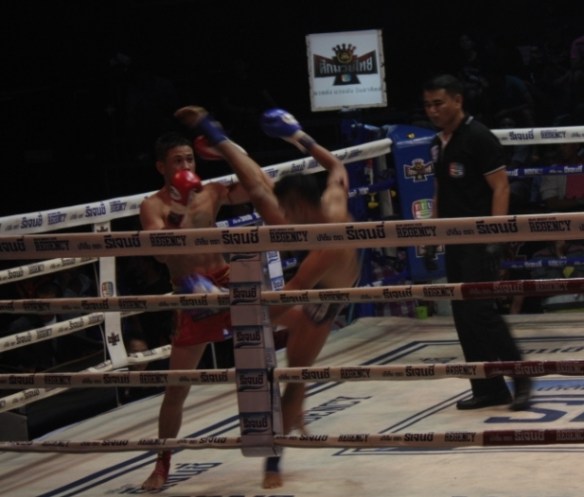
DAILY PHOTO: Fight Arena in Monochrome

Taken on February 26, 2017 in Rangsit, Thailand

5 Thoughts on the Conscious Mind in Martial Arts Training

In recent years I’ve spent a lot of time trying to quiet the conscious mind in order to let the subconscious do what it does best. There’s a lot of terminology that’s used to describe the mind state in which one’s actions are effortless and one can adjust swiftly to unforeseen challenges: e.g. “in the zone,” the Flow, Zen mindset, and (in the Kotler and Wheal book I just reviewed) ecstasis. However, regardless of the name, one key to this state is a reduced activity of the part of the mind that’s self-critical and overly cautious, and that requires not letting the conscious mind do what it’s prone to do.


However, taking a course on mauythai advanced fundamentals recently has reminded me of the important roles the conscious mind plays in learning. The challenge is to use the conscious mind effectively–without letting it running amok.


The conscious mind is largely driven by anxiety about uncertainty. This makes the conscious mind a planner and worst-case scenario generator extraordinaire. (In meditation, I’ve begun to not only note what thought popped into my head before I dismiss said distraction, but I also have a classification scheme of kinds of thoughts, and “planning thoughts” are probably the most common type of thought to hijack my mind.) This planning / forecasting  proclivity can be beneficial if one is doing a job that requires such planning, anticipation of possible hazards, and the need to adjust to complex difficulties. However, it can also make one neurotic, overly risk-averse, and pessimistic.


So, here are my five thoughts on the conscious mind in martial arts training.


5.) Feed the right wolf:  There’s a well-known story about a Native American man telling his grandchild that inside each person there are two wolves at war, one good and one evil.

The child asks, “Which one wins?”

The old man replies, “The one you feed.”


This is a variation on the theme–not so much about good and evil as about positive and negative outlook. In martial arts training there are often competing emotional states. On one hand, there is often anxiety about either being injured or even about the embarrassment of being bested. (Surprisingly, it seems like the magnitude of the latter is often greater than the former.) On the other hand, there is an intense thrill that comes with making progress. For those who don’t understand how martial artists can put themselves through what they do, this is the part for which you’re probably not understanding the intensity of the high. When it clicks and you’re getting it right more often than you previously did, the feeling is transcendent.


So, when one sees either of these two feelings arising, choose the latter. If one notices the anxiety, remind oneself the promise of that awesome feeling of having it fall together.


4.) Scanning for lapses in form: The process of learning a martial art–like any movement art–is repetition of the movements until they become ingrained in one’s procedural memory. Early in the process, this feels clunky as one has to scan for imperfections in form with one’s super-intelligent but slow and cumbersome conscious mind. However, increasingly, the body begins to incorporate these movement patterns and they start to become second nature. The trick is to keep this in the moment and not let one’s thoughts linger on what one just got wrong, or any perceived ramifications of getting it wrong.


3.) Try visualization: This once would have been thought hippie guff, but now it’s entered the mainstream. Of course, the advice from #5 must be kept in mind. When I think of the technique of visualization, I’m reminded of a story that Dan Millman told about a girl that he was coaching in gymnastics. He came to check on her only to find her repeatedly cringing and grimacing. He asked what was going on, and she said she kept falling off the balance beam whenever she visualized her routine. It sounds silly, but attitude is a powerful thing, and I lot of people sabotage themselves in ways not much different from this. It’s your mind, you have the power to do the move perfectly every time, if you take the proper mindset.


2.) Conscious mind as governor of action and agent of trust: The subconscious mind can be feral. As one spars, one has to match speeds with one’s opposition so that learning can take place. While sparring looks reminiscent of fighting, the goal of sparring is learning, whereas the goal of fighting is winning (or–as a minimum in actual combat–not being destroyed.)


This is another role for the conscious mind. It can keep reminders to the fore to keep one’s movement appropriate to the occasion. It can inject an awareness that there’s a relationship of trust rather than warring competitiveness between. That one needn’t respond at the same magnitude that one would under attack.


1.) Dropping the Conscious Mind Out of the Equation: While the conscious mind is critical in the learning process, eventually one must do something that feels uncomfortable, which is shifting subconscious operations to the fore and quieting the conscious mind. Overthinking can be death in tests, competitions, not to mention, I’m told, actual combative situations. At some point you’ve got to have some trust in what you’ve trained to do up to that point. It might fail you, but not necessarily as spectacularly as if you let your conscious run amok, getting caught in a death spiral of self-criticism and futile guesswork.


Since I’ve been watching quite a few muaythai fights recently at the Rangsit Boxing Stadium, I’ve begun to wonder just how useful corner advice is. I know that people think it’s beneficial because it’s done in droves. Not only is the fighter’s trainer trying tell them what to do, but also his parents, his siblings, his granny, and a hundred random people who may or may not have put money on him. It would be interesting to see a scientific study of how fighters performed who tuned everything out between rounds versus those who tried to take in all the advice. I tried to look up whether any such study had been done, but a cursor Google search came up empty.


What comes of all the corner talk?

What comes of all the corner talk?

DAILY PHOTO: Vigilant Referee

Taken February 19, 2017 at Rangsit International Boxing Stadium

Taken February 19, 2017 at Rangsit International Boxing Stadium


img_6476


img_6576

DAILY PHOTO: Rangsit Fight Night Takedowns

Taken on February 19, 2017 at Rangsit Boxing Stadium

Taken on February 19, 2017 at Rangsit Boxing Stadium


img_6515

img_6458

img_6344

img_6338

img_6560

5 Books to Improve Mind-Body Performance

It’s the time of year when people think about how to be better, fitter, and smarter; so I thought I’d drop a list of books that I found helpful and thought-provoking.


If you’re interested in learning more about any of these books, the hyperlinks take you to my review in GoodReads, and from GoodReads you can get to Amazon page.


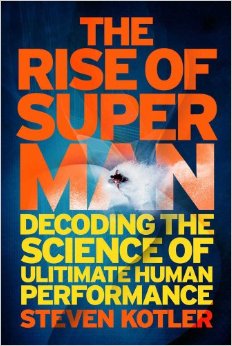
1.) THE RISE OF SUPERMAN by Steven Kotler: How do extreme athletes achieve Flow when one false move will kill them?

RiseOfSuperman


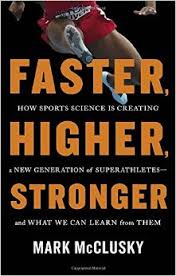
2.) FASTER, HIGHER, STRONGER by Mark McClusky: How do elite athletes squeeze the most out of the potential of the human body?

FasterHigherStronger


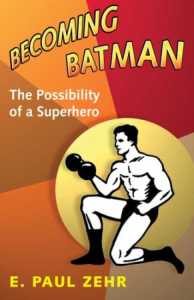
3.) BECOMING BATMAN by E. Paul Zehr: What would it take, physically and mentally, to become the Caped Crusader?

Becomingbatman


4.) FLOW by Mihaly Csikszentmihalyi: How does one achieve that state of relaxed and confident concentration in which we perform our best called Flow?

flow


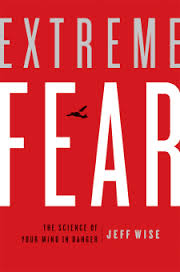
5.) Extreme Fear by Jeff Wise: How does one overcome anxiety and fear to perform one’s best?

ExtremeFear

BOOK REVIEW: Judō: Skills and Techniques by Tony Reay

JudoJudo by Reay
My rating: 3 of 5 stars

Amazon page

Tony Reay wrote this book when he was both a 6th degree black belt and Development Officer for the British Judō Association. So his qualifications are beyond a doubt. The book is an overview of the sport of judō that covers techniques, etiquette, rules, warm-up exercises, grading approaches, and other specialty topics. It covers the gamut of issues related to the sport of judō, but without going into much detail. It would be a suitable book for a youngster who is considering whether they might want to get involved. I emphasize that it’s about “sport judō” because there are those who consider judō to be an approach to self-defense and others who think of it as a whole-life philosophy. This isn’t the book for those who want to learn more about judō as anything other than a competitive sport.

The eight chapters of the book cover: history, the grading structure, recreational judo, fitness, techniques, competition, the judō instructor, and judō as an art. However, most of the chapters are cursory. The bulk of the book is devoted to showing 69 of the art’s most fundamental techniques, including: 40 throws, 12 holds, 10 chokes, and 7 arm-locks. For each of these techniques there is a line drawing and a brief description. In a few cases there are black and white photos taken of the technique being performed in competition. This overview of techniques is mostly of value for learning names and accounting for what techniques one has (or hasn’t) learned. There’s not enough detail–either graphically or textually–to help a practitioner improve a technique that they’ve learned. (The latter isn’t a point of criticism, but rather to let people know what they are and aren’t getting in the book.) Still, there are tips scattered throughout the book that might help a practitioner improve their techniques in a general sort of way.

There is a glossary of Japanese terms commonly used in judō.

I found this book to be a fine overview of the sport of judō, and would recommend it for that purpose. While I’ve found other books on the art much more useful for my purposes, I think this is a fine book for someone looking to get into the sport from ground zero. I should point out that the book is from the mid-80’s, and so there will probably be details on rules, scoring, and grading that have changed, but the bulk of it will remain of value.

View all my reviews

BOOK REVIEW: Choke by Sian Beilock

Choke: What the Secrets of the Brain Reveal About Getting It Right When You Have ToChoke: What the Secrets of the Brain Reveal About Getting It Right When You Have To by Sian Beilock
My rating: 4 of 5 stars

Amazon page

“Choke” in this book means to under-perform under high stakes. It doesn’t mean to be a poor performer, generally. This book is designed to help those who perform at a lower level when the pressure is on. It’s a condition that’s even been witnessed in Olympic caliber athletes–world champions who couldn’t get on the podium in the most important games of their careers. The book isn’t just about choking in sports; in fact, much of it is about bombing tests, and it also addresses under-performance in business environments.

“Choke” is organized into nine chapters. The first is called the “curse of expertise,” and it deals with just that—how experts are notoriously bad judges of how successful novices will be. This is because the causes of under-performance aren’t always straight forward. For example, some qualities that serve to make individuals strong contenders under low pressure conditions (e.g. a large working-memory) contribute to the cracking of the same individuals under high stakes. The second chapter explains how practice improves performance. Chapter three investigates why using our Prefrontal Cortex (i.e. our conscious mind) can do us in when the task calls for procedural memory that is unconscious to do its work.

Chapter four delves into the differences between the sexes in academic endeavors. Chapter five is about choking on tests in a scholastic environment, and it deals a lot with why minorities under-perform on standardized tests. Chapter Six presents some activities that have been shown to be successful in reducing choking including therapeutic writing, meditation, and changing one’s mode of thinking. There is a box at the end of the chapter that summarizes many of these cures.

Chapter seven discusses choking in sports. Choking in sports has some common ground with academic under-performance. However, it’s also different in that the object is often to quiet the conscious mind altogether. Some solutions for the yips in sports, such as mantras repeated in one’s mind to let the procedural memory take over, may not be as useful in an academic setting. Chapter 8 presents a range of techniques to prevent choking from practicing under more realistic conditions to getting on with it (i.e. not overthinking or slowing down) to distracting oneself to focusing on the goal (not the process.) The chapter also looks at the flip-side, why those who excel in physical performance often stink at coaching (i.e. they aren’t analytical about how it’s done.) This chapter also has a nice summary box of solutions. The final chapter looks at under-performance in a business setting, which again shares some things in common with choking in other domains, but also presents its own problems.

I found this book to be useful and thought-provoking. The advice is sound.

The discussion of bombing at tests and in the academic setting is largely applicable only to females or minorities as it focuses heavily on the issue of why these groups are disproportionately affected by academic under-performance. With respect to sports and business, the only condition necessary to benefit from the advice is a proclivity to choke or a desire to know how to help oneself or others avoid the fate. So depending upon what domain one is considering and one’s demographic, there may be other books that are either more or less relevant to one’s personal issue.

I’d recommend this book for those interested in the science of human performance.

View all my reviews

BOOK REVIEW: A Guide to Chinese Martial Arts by Li Tianji & Du Xilian

Guide To Chinese Martial ArtsGuide To Chinese Martial Arts by Li Tianji
My rating: 3 of 5 stars

Amazon page

This is a brief guide to the martial arts of China. The bulk of the book (about 150 pages of the book’s 178 pages) tells the reader about three major branches of Chinese martial arts: Chang Quan, Tai Chi Chuan, and Shaolin Kung fu at a general level. (The book devotes space to those arts in the same order–i.e. the largest number of pages discuss Chang Quan, then Tai Chi, and the smallest number to Shaolin. This may be surprising as your average non-Kungfu practitioner is least likely to have heard of Chang Quan—by name anyway. Chang Quan is a general term that encompasses several Northern Styles—some of which might be more familiar to general readers [of martial arts books.]) The book also has a brief chapter that describes the history of martial arts in China from ancient times through the modern era, and one that talks about the many schools of martial arts of China (in no great detail because there are so many of them) as well as the various strengths and purposes of these arts.

The bulk of the illustrations are line drawings used to show typical sequences for each of the three major branches of martial art mentioned above. However, there are some black and white photographs and copies of relevant art works and documents as well.

I found this book to be interesting and informative. There’s a bit too much space devoted to describing techniques for my taste. However, I realize that I may be in the minority in that regard. I don’t believe that martial arts can be taught via books or media, and, therefore, there’s a diminishing value to detailed descriptions of technique. In this sort of book one only needs to get a feel so as to be able to see how the martial arts compare and contrast with others.

I’d recommend this book for someone who wants to learn a bit about the nature of Chinese martial arts. It may not be of much value for an expert, but for a kungfu neophyte it provides some interesting information about the history, tactics, and training methods of Chinese martial arts. It’s originally published by Foreign Languages Press in Beijing, but I don’t suspect there is any more bias than there would be if it was published by anyone else (i.e. it’s the rare martial arts book that doesn’t present the martial art under discussion as the ultimate fighting art.)

View all my reviews

BOOK REVIEW: Võ Dân Tộ Martial Arts by Hữu Ngọc & Lady Borton

Vo Dan Toc / Martial Arts (Handbooks of Vietnam Culture)Vo Dan Toc / Martial Arts by Hữu Ngọc
My rating: 3 of 5 stars

Amazon page

This book is part of a series that is subtitled “Vietnamese Culture: Frequently Asked Questions,” and that tells one a little about both the content and the format of the book. It’s better described as pamphlet than a book. At about 75 pages, it’s in bilingual format (i.e. one page is in Vietnamese and the adjacent page is the English translation.) So it’s about 38 pages in English that answer 11 questions about Vietnamese martial arts.

The 11 questions addressed by the book are:
1.) How have martial arts developed throughout Vietnamese history?
2.) How were training and examinations for martial arts organized by the court?
3.) What are the schools of Vietnamese martial arts?
4.) What are the main sects of Vietnamese martial arts in France?
5.) How did Liễu Ðôi become a village with a great wrestling tradition?
6.) Who killed a ferocious tiger in 1770 in Sài Gòn’s Tân Kiểng Market?
7.) How did the famous school of Lady Trà-Tân Khánh martial arts begin and develop?
8.) How did President Hổ Chí Minh keep himself fit?
9.) Who played a key role in the success of Thúy Hiển, the world wushu champion?
10.) What do foreigners think of Vietnamese martial arts?
11.) How did the female master Hổ Hoa Huệ impress the Europeans?

The listed questions tell the reader what the book is about. It starts with some general history from centuries past, and then goes on to discuss specific events. I have no idea to what degree propaganda / myth has seeped into the text—maybe not at all or maybe a lot. I purchased the book in Hue, and am not sure if it’s available outside Vietnam. As one can see from the questions, this book won’t give one much insight into the details of Vietnamese martial arts tactics or philosophy. Instead, one gets a bit of history that some readers will find interesting and others will not. There are black and white photos (about 8) that show static instances of Vietnamese martial arts practice, and there is a glossary.

I picked this book up because I was curious about Vietnam’s martial art history—knowing that it must have had an impressive one. There isn’t much English-language information available about Vietnamese martial arts other than Vovinam. Vovinam is a martial art that allegedly developed in the modern era utilizing pieces of other martial arts and arranged to be ideal for the typical Vietnamese body type. However, what one sees of Vovinam on-line is just a poor-man’s version of that signature move of Black Widow from the MCU movies, so I don’t know whether there is any substance there or if it’s just for show.

Considering that it’s only about $0.67 USD in bookstores in Vietnam, I’d say it’s worth picking up this little book if you want to learn something about Vietnam’s martial history.  [If you buy pay alot for a copy on-line, you’ll probably be disappointed.]

View all my reviews

BOOK REVIEW: Boxing Fitness by Ian Oliver

Boxing Fitness: A Guide to Get Fighting Fit (Fitness Series)Boxing Fitness: A Guide to Get Fighting Fit by Ian Oliver
My rating: 4 of 5 stars

Amazon page

How does one skip rope, work the pads, or avoid nipple rash? If you think that boxing would be a fun way to get fit, this would probably be a useful book for you. Oliver shows a range of fitness practices—many specific to boxing, but others that are used in a number of sports and fitness activities—that will help one improve one’s fitness.

The reader will gain insight into bagwork, padwork, and boxing drills–from beginner to advanced. While the book’s emphasis isn’t on boxing technique, there’s a minimal discussion of the basics of footwork and punching designed to allow a reader to safely begin practice of bagwork and padwork. One also learns about roadwork, the basics of weightlifting as it’s useful for boxers, calisthenics, and other exercise routines that boxers use. It’s a small book and, therefore, doesn’t go into great detail on any particular subject. However, it does offer useful tips in a concise form.

There’s a chapter on equipment, but throughout the book the author gives advice on equipment as it’s relevant to the discussion at hand. The same is true of safety tips. There’s a chapter on injury and illness, but you’ll find insights into how to avoid injuries woven throughout.

I liked the approach of this book. While it shows one the age-old practices of fighters, it also describes more recent developments. In other words, it’s neither crusty and obsolete, nor does it try to re-invent every wheel in order to prove itself cutting edge. I also appreciated the author’s pragmatism—e.g. emphasizing the benefit of a strong core over that of six-pack building and suggesting dietary practices that are sound and simple rather than fads and fables.

Graphics include black and white photographs throughout a few diagrams. Most chapters have photographs, and they are generally sufficient to convey the necessary information without being overwhelming.

While this is a book of the basics, I found it to be a beneficial read and I appreciated the way it was arranged and the way information was conveyed. I’d recommend it for anyone interested in fitness for combative sports or who thinks boxing would be a good way for them to stay motivated to get fitter.

View all my reviews