5 Books to Introduce You to Your Subconscious

In a world free of frontiers, the subconscious mind is the final frontier.


Below are a few books that I found useful. The hyperlinks forward to my review on GoodReads or the book’s GoodReads page.


Also, I’ve included three honorable mention books that I haven’t yet reviewed, but which seem both relevant and intriguing.


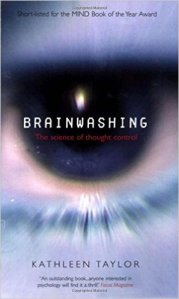
5.) Brainwashing by Kathleen Taylor: What makes some minds more malleable than others and how are minds bent to a given purpose? In learning the answers, one discovers that the bases of our beliefs are often more deep-seated than one might believe.

brainwashing_taylor


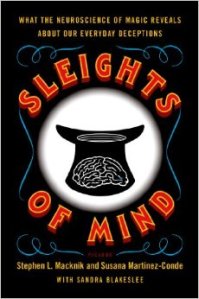
4.) Sleights of Mind by Macknik & Martinez-Conde: Magicians and mentalists are notoriously skilled at exploiting the chinks in the armor of  our minds.

sleights_of_mind


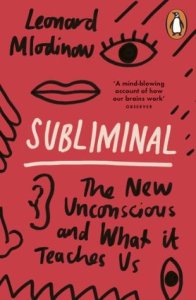
3.) Subliminal by Leonard Mlodinow: Physicist and pop science writer, Leonard Mlodinow, explores the many ways in which our behavior is more influenced from the back of the house than we feel to be the case.

subliminal


2.) The Tibetan Yogas of Dream and Sleep by Tenzin Wangyal Rinpoche: This is my nod to the fact that the Western scientific community isn’t the only entity that has something useful to say on this subject. Tibetan Buddhists have a long tradition (arguably predating Buddhism and into the Bon-era) of dream yoga (lucid dreaming) and our dreams offer the greatest portal to the subconscious.

tibetanyogas


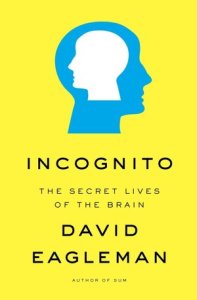
1.) Incognito by David Eagleman: Eagleman tells us that our conscious mind represents the tip of the mental iceberg, and he explores the many ways in which we are subject to the vagaries of what exists below the surface.

incognito_eagleman


Here are a few others.


The Man Who Wasn’t There by Anil Ananthaswamy: I just finished this book. In it, the author investigates whether there really is  such a thing as the self by studying a number of diseases and phenomena of the mind that look like negations of self. (e.g. Cotard’s Syndrome in which people insist they are dead, depersonalization disorder in which life seems a dream in a literal rather than poetic sense, out-of-body-experiences in which there is a hallucination that one is outside one’s body, etc.)


The Attention Merchants  by Tim Wu: I haven’t read this one yet, but it’s said to be good and is about how our programming is exploited to keep us clicking. If you’ve ever wondered why you can’t seem to just drop social media even when it seems like a phenomenal waste of time–why it exerts such a strong pull–this book delves into what proclivities of the mind have been seized upon.


Reality is Broken by Jane McGonigal: I’m about 1/3rd of the way through this one. It has some overlap with the Wu book. In it, McGonigal asks why games have so much appeal–even to the extent of becoming addictive. As with why we keep clicking, the answer has a lot more to do with the primitive parts of our mind than the high tech subject matter might suggest.

BOOK REVIEW: Brain Rules by John Medina

Brain Rules: 12 Principles for Surviving and Thriving at Work, Home, and SchoolBrain Rules: 12 Principles for Surviving and Thriving at Work, Home, and School by John Medina
My rating: 4 of 5 stars

Amazon page


As the title suggests, this is a book of guidance about how to get the most out of one’s mental life. Medina goes a mile wide, looking at twelve areas in which one can improve the performance of one’s brain, including: exercise, attention, memory, sleep, stress management, sensory integration, and visual acuity. It also has chapters that explain how evolution and gender affect the way in which one’s brain operates.

After an Introduction that sets up the premise of the book, there are twelve chapters. The first chapter explores the well-documented connection between exercise and mental performance, and offers insight into what type of exercise has been shown to be most helpful to the brain. The second chapter pertains to our brain’s evolutionary history. The conscious mind housed in the cortex is but the top floor of a multi-story enterprise, and understanding this has important ramifications for how one gets the most out of one’s brain. Chapter 3 explores the way brains are wired, which turns out to be flexibly and diversely. By flexibly, I mean that brains can be rewired by way of what is called neuroplasticity on the proviso that neurons that fire together wire together. By diversely, I mean that each individual’s brain is a bit different, and these differences can explain how someone gifted in one domain may be an idiot in other aspects of life. The next chapter deals with attention and explains why humans suck at multi-tasking (despite thinking they are the bomb) and why an extended ability to concentrate is essential to success.

The next two chapters both deal with memory, but with different types of memory—each having its own unique considerations. The first, chapter five, describes the peculiarities of short-term memory, that part of the memory that can hold a finite amount of data points at the forefront of our minds for a limited period. Chapter six deals with long-term memory, the part that holds vast stockpiles of information for extended periods (sometimes across a lifetime) but with lower fidelity and accuracy than we generally believe. While the rule offered for both forms of memory is simple—i.e. repetition is key—there is much to consider in the details. For starters, there are many other ways to divide up memory other than with respect to the short-term / long-term dichotomy (e.g. procedural v declarative) and differences in the way these types of memory work affect how they are both optimized.

The influence of sleep on mental performance is the subject of chapter seven. There is a vast pile of research on this subject, including a number of famous cases of extreme sleep deprivation—some of which are touched upon herein. It’s true that there is a great deal of variation in how people sleep (e.g. morning v non-morning people, and those who can power nap and those who can’t.) However, one thing remains unambiguous and that’s that we need sleep and must have full cycles of it in order to not suffer mental degradation. Chapter 8 is about how stress can kill mental performance. Of course, not all stress is the same. When one feels in control, short bursts of stress can be just the motivator one needs, but when feeling out of control stress can become crippling.

Chapters 9 and 10 are both about the senses. The first, nine, explains how one can obtain synergistic outcomes in a multi-sensory environment, and the second focuses on vision—arguably our most dominant sense. Our sensory experience is much more a product of the brain (and much less a pure representation of the outside world) than we tend to believe.

Chapter 11 reports on the gender differences that have been discovered with respect to brains. Before anyone lights a torch or sharpens a pitchfork, this isn’t the old “boys do math and girls do language” line. The differences are more nuanced, and it’s not clear in every case that the differences matter—or how. E.g. Men have bigger amygdala (involved in emotional response) and produce serotonin more quickly. While it’s not clear that these differences make a big difference, it’s know that men and women use their amygdala differently in times of stress, men activate the right amygdala and tend to remember more of the gist of events while women trip the left and remember more emotional details. The last chapter is about our human proclivity to explore, but it focuses heavily on infancy and childhood, during which the world is novel and the impulse to explore is at its height.

Each chapter ends with a summary box that both restates the rule and offers a few bullet points of key takeaway lessons, which may either be more specific guidance or summary of relevant research findings. There aren’t many functional graphics—by functional I mean as opposed to the ornamental drawings used throughout. I only remember one brain drawing. However, the reason for the dearth of graphics may be that there is a link to a 45 minute video that one can access, and the publisher probably thought that was a much more useful way to impart graphic information. It should also be noted that in the Kindle edition that I have, the references are also on-line.

I found this book to be useful. As I mentioned, it’s a broad overview. One can get books that dive more deeply into all of the topics addressed. But this is a nice mix of popular science and self-help. It’s readable, and the summaries and concise statement of rules help make the content stick more effectively.

I’d recommend this book for those who are seeking a book that covers a lot of ground, and which offers practical guidance as to how to put scientific discoveries on the brain into use in one’s own life.

View all my reviews

BOOK REVIEW: Siddhartha’s Brain by James Kingsland

Siddhartha's Brain: Unlocking the Ancient Science of EnlightenmentSiddhartha’s Brain: Unlocking the Ancient Science of Enlightenment by James Kingsland
My rating: 5 of 5 stars

Amazon page


Kingsland builds his niche by connecting the dots between the teachings of the Buddha and scientific discoveries about meditation and mindfulness. There are many books that tell the life story of Siddhartha Gautama from various perspectives (e.g. famously the books by Hermann Hesse and Karen Armstrong.) There are also a number of books reporting the science of meditation (e.g. Herbert Benson and Sat Bir Singh Khalsa.) However, it’s not so common for the subjects to be overlapped.

There’s a reason that this middle path hasn’t been more widely studied. While Buddhism is arguably the most science-friendly of the major world religions, there’s always a gulf between spiritual and scientific thinking. The writer has to figure out how to chart a course through rocky waters. Books appealing to spiritual seekers are likely to come across as insubstantial fluff to the scientifically minded reader, and books appealing to skeptics are likely to feel materialistic and cold (and, perhaps, naive) to the spiritualist. The Buddha’s teachings about the need for the practice to be experiential, rather than faith-based, offers a unique opportunity to tread this tightrope. Furthermore, the Dalai Lama’s willingness to facilitate a dialogue between science and Buddhism has been crucial as well. One can easily set aside controversial issues like reincarnation and karmic law as they aren’t essential to the value of mindfulness.

The book consists of twelve chapters. The chapters generally begin with a story or teaching from the life of Buddha, and then go on to investigate the relevant lesson in more detail with particular emphasis on any relevant scientific discoveries that support said teachings.

The story of Buddha begins in a wealthy, high-caste household with young Siddhartha Gautama being kept from seeing the effects of aging, illness, and death. When the young Siddartha, nonetheless, sees these things, it is a powerful introduction to the concepts of impermanence and suffering that will play a central role in his future teachings. Chapter 1 starts this introduction and also offers an overview of the book. Chapter two continues it. In Chapter three, Kingsland describes a little of the known history of meditation, though its origins are lost to time.

Chapter 4 is entitled “The Second Dart” and it discusses the Buddha’s teaching of the same name—the second dart being one’s mental reaction to an event (i.e. the initial dart.) Chapter 5 investigates the question of whether there is a self—and, if so, of what manner. A core idea within Buddhism is that the self is illusory.

Chapter 6 gets to the heart of the matter by explaining the mechanism of mindfulness meditation and what has come to be known as MBCT (Mindfulness Based Cognitive Therapy)—a secular approach to the use of mindfulness to improve well-being. The next chapter tells the story of how a group of fire worshippers came to follow the Buddha after he made clear that everything (their senses, thoughts, and emotions) were aflame with craving, hatred, and delusion, and that springboards into a discussion of how mindfulness is used to reduce craving and addiction.

Chapter 8 tells the story of an attempt to kill the Buddha via an angry, drunk elephant, and the Buddha’s thwarting of the plot by way of calm and compassion. As one might have guessed, the chapter is about moderating emotions, just as the Buddha controlled his fear before the elephant.

Chapter 9 takes a jaunt into evolutionary biology to question how the mismatch between what humans evolved to do and what we do in the modern world causes mental illnesses and how mindfulness can help mitigate the problem. Chapter 10 is about metacognition, or the ability to observe and reflect upon our own mental experience—i.e. thinking about thoughts. Chapter 11 is about cognition and decision-making, and the role that meditation can play in improving our performance in this domain. The last chapter discusses the Buddhist conception of death and enlightenment. It isn’t until this point that there’s a major divergence between the Buddhist and scientific viewpoints. There is a discussion of the Buddha’s teachings emphasizing that belief in ideas from on high is not so important as experience.

Six of the chapters (2, 4, 6, 8, 10, & 11) are concluded with guided meditations to offer the reader an introduction into the basics of mindfulness. These are simple practices that many readers will already be familiar with in some variant or another. (e.g. breath awareness, bodily awareness, and mindful eating.)

There are only a few graphics (e.g. maps and diagrams—mostly of the brain) but there is no need for additional graphics. The book has references annotated.

I found this book interesting and thought-provoking. It uses the stories of Buddha as well as some stories from the present day to make the reading more engaging and approachable. The discussion of scientific research is easy for a neuroscience neophyte to follow.

I’d recommend this book for anyone interested in learning more about the science behind Buddhist practices.

View all my reviews

BOOK REVIEW: Subliminal by Leonard Mlodinow

Subliminal: How Your Unconscious Mind Rules Your BehaviorSubliminal: How Your Unconscious Mind Rules Your Behavior by Leonard Mlodinow
My rating: 4 of 5 stars

Amazon page


If one tries to detect lies using conscious analysis, one stinks—wrong as often as right. However, if one distracts the conscious mind so as to produce what is often called a hunch, one performs much better. This is because not only is there is another mind below one’s conscious mind, but it’s better at many tasks than is our conscious mind. This will be hard news for many readers to take because they are reading and comprehending it with their conscious minds—a conscious mind that thinks it’s better than sliced bread when it comes to things that are awesome. Mlodinow’s book is about the many aspects of this mind that we generally don’t have access to (unless one is skilled in lucid dreaming or is conscientious in the hypnagogic state [on the edge of falling into sleep]—topics the author doesn’t get into.) It’s about why humans evolved to have subliminal mental operations, how they benefit us, and how they sometimes fail us.

Ideas about what the unconscious mind is have varied over the ages, though its existence has long been recognized. Ancient traditions often attributed the unconscious to the supernatural causes like a collective consciousness. Mlodinow begins his book with a chapter entitled “The New Unconscious,” presumably to distinguish it from Freud’s conception and to emphasize the wellspring of results that have come about during the last couple decades of brain research.

The second chapter deals with our sensory experience and the role that unconscious elements play in shaping it. People tend to overestimate the extent to which they experience a high-fidelity and high-resolution display of the world, and underestimate the degree to which the brain fudges to make it seem so. Facial recognition, which is one of the most fundamental of human skills, is a centerpiece of the discussion.

The third chapter discusses memory. Again, the underlying theme is how the brain can make mistakes as it tries to cobble together a story with a combination of information we have, blank spots, and guesses. One may be surprised to discover how poorly one is able to describe the details of things that one sees—if not every day—at least thousands of times in a lifetime.

The next chapter examines how our unconscious plays into our social life. The concept of a “theory of the mind” is at the center of this discussion—and it may not be what you think. Theory of the mind is the ability to figuratively see the world through the eyes of others, to understand justifications for what others have done, and to anticipate what they will do in the future. We also learn about oxytocin and vasopressin, the so-called “love hormones,” whose presence corresponds to our fond feelings for others.

Chapter five continues the discussion of the previous chapter along a specific line of discussion—that of reading people. We are wired to make sense of the facial expressions and non-verbal behavior of other people and this chapter explores that ability as well as its limits. Chapter six describes how we draw quick and unconscious conclusions about people on the basis of how they look, feel, and smell. By way of example, I’ll offer a case from another book I read recently (I don’t believe Mlodinow refers to this particular study, but I may be mistaken) in which a mock interview was set up. Right before their interview meetings, some of the individuals were asked to hold either a hot or cold coffee (or nothing.) It turned out that whether a subject had held a beverage (and what kind) had a profound influence on the interviewers’ feelings about that subject (i.e. the degree to which an interview subject was seen as a cold or warm person had as much to do with an unconscious evaluation of a handshake as it did the conscious interpretation of the individual’s personality.)

The next couple chapters (7 and 8) explain the crucial role of the unconscious mind in categorizing things and people, how that skill has been essential to our survival, and how this sometimes gets us in trouble (e.g. racism.) Chapter 9 delves into the role of emotions, and what the author calls “emotional illusions.” Sometimes we make a decision because we have an emotional experience associated with the decision scenario, but being in an emotional state that is unrelated to the decision still affects the decision.

The last chapter is about how our attachment to self can influence decisions. You’ve probably read about studies showing 90+ percent of the population think they are better than average at something. Also, you may remember from Psychology class a discussion of the self-serving bias (attributing positive outcomes to one’s awesomeness, while blaming external forces for negative outcomes.) This chapter deals in these types of phenomena.

The book has a few relevant black-and-white graphics as well as annotations / citations.

I found this book to be interesting, but not unlike many books that are presently available. I thought it could have ventured into more novel and interesting territory. There are actually a number of books that focus on how we are wired, and the glitches that result. Sometimes our evolutionary programming served us well under hunter-gatherer conditions, and sometimes it still serves us most of the time–but fails us on occasion. There are a number of books that discuss this–often using the same or similar examples as Mlodinow (e.g. consider Eagleman’s “Incognito.”) However, the ways in which the unconscious mind can be interacted with, such as lucid dreaming, are now being scientifically studied, and so there exists a capacity to move beyond the blooper reels of the mind—though that topic is certainly a popular subject, both of scholarly study and pop science books such as this one.

If you are looking for a book on how the unconscious mind both benefits and deceives us, this is a good choice. Mlodinow has a sense of humor and writes complex subjects in an easy to comprehend fashion. However, if you’ve read up on the subject, you might not find much new here.

View all my reviews

BOOK REVIEW: Inside Jokes by Matthew M. Hurley, et. al.

Inside Jokes: Using Humor to Reverse-Engineer the MindInside Jokes: Using Humor to Reverse-Engineer the Mind by Matthew M. Hurley
My rating: 4 of 5 stars

Amazon page


This book examines the science of why we find funny what we find funny. Most people probably feel about this as did E.B. White who said, “Analyzing humor is like dissecting a frog. Few people are interested and the frog dies of it.” Still, while analyzing humor may not be as fun as reveling in it, it’s fascinating to scientifically inquiring minds.

Humor is universal (not the humor of a specific joke, but the experience of somethings being humorous.) A skilled science fiction writer might conjure up an alien race that is credibly humorless. But it defies credulity that even the remotest of aboriginal Earthling wouldn’t giggle or guffaw at the sight of an off-course ball careening into an unsuspecting man’s crotch. Humor’s universality begs certain questions. First and foremost, one expects there to be some evolutionary advantage to a sense of humor. That evolutionary mechanism is precisely what Hurley, Dennett, and Adams attempt to demonstrate in this book. The authors suggest that the pleasure associated with humor is a reward for recognizing an incongruity, and they go into great deal to fill in the details needed to explain the panoply of things people find funny, while suggesting why alternate explanations are inferior.

While there’s a lot of frog-killing academic analytics and needlessly messy scholarly language, this book does offer a vast collection of examples of humor to support and clarify the authors’ points. So, unlike many books on evolutionary and cognitive science, this book does have a built-in light side. WARNING: there’s also a discussion of why some attempts at humor fail. This means one is also subjected to a number of puns, elementary school jokes, and comedic misfires that show the reader why sometimes humor implodes.

The book starts by building a common understanding of what humor is. It turns out that this isn’t simple because people find many different kinds of things funny–from caricatures to wordplay. (And, whatever the initial evolutionary purpose of humor, our species has run with that reward system to places that couldn’t have been readily anticipated.) Next, the authors discuss the many varieties of theories of humor that have been raised. This subject has been studied for some time, and thinkers have suggested that humor’s pleasure derives from a number of different causes from feeling superior to recognizing surprise–just to name a couple. After considering the competition, Hurley et. al. start laying out the basis of a cognitive / evolutionary explanation. In chapter five they describe 20 questions they think must be dealt with, and–in the last chapter (13)–they give their responses as a summation of the book’s main points. Along the way, the authors take on important related questions such as why humor sometimes fails, what others will see as the weakness of their argument, whether a robot could be humorous, and why we laugh. The last point opens another can of worms. Even if one concludes–as the authors have–that humor is a reward system for recognizing incongruities, the question of why there is an advantage to spontaneously announcing that recognition still arises.

There’re are a few graphics in the book, mostly these are cartoons and humorous photos that serve as examples. The book is published by MIT Press, so all the usual scholarly features of notes and citations apply.

I found this book to be thought-provoking, and the plentiful examples of jokes made it enjoyable to read as well. I’d recommend it for those interested in the science of the mind. It’s a bit dry in places for readers looking for light reading about humor.

View all my reviews

BOOK REVIEW: Sleeping, Dreaming, and Dying ed. by Francisco J. Varela

Sleeping, Dreaming, and Dying: An Exploration of ConsciousnessSleeping, Dreaming, and Dying: An Exploration of Consciousness by Dalai Lama XIV
My rating: 4 of 5 stars

Amazon page


This book is a product of the 4th Mind & Life Institute Conference that took place over five days in October of 1992 in Dharamsala, India. It reads as a narrated description / transcription of the event. The Mind & Life Institute was established as a dialogue between science and Tibetan Buddhism, and is actively supported by His Holiness the Dalai Lama—who is an important figure in the book, both asking questions of the presenters and offering clarification on Tibetan Buddhist thinking on various points. The exact subject of each conference is different, but the mind is a recurring theme. Which makes sense as Tibetan Buddhist practices of the mind are as advanced as any, and it would be of great benefit to understand them better from a scientific perspective.

As the title suggests, this conference (and the book) deal with three topics: sleeping, dreaming, and dying. This may seem like a case of “one of these things doesn’t belong,” but from the Buddhist perspective on consciousness it’s a sensible enough grouping. One can think of it this way, sleeping and dying are points at which consciousness goes bye-bye. [Although, lucid dreamers retain consciousness in REM sleep, and there are unsubstantiated claims of the ability to maintain consciousness in sleep by extremely advanced practitioners.]

There is some front matter (a forward by the Dalai Lama and an editor’s Introduction) and then eight chapters. The first chapter discusses both the Western and Tibetan perspectives on “the self,” what it is, and whether it is [real or illusory.] This topic seems unrelated to the book’s theme, but it’s a way to develop a common understanding for the rest of the discussion. If participants have different views on what a person is, mentally speaking, and what consciousness is, then it’s easy to talk past each other without even realizing it. The second chapter is an overview of what was known about sleep, principally from the perspective of neuroscience (it should be noted that neuroscience was a fairly fledgling term at that time.) The next three chapters (ch. 3, 4, and 5) are about dreaming. The third chapter is a bit unique. The general approach throughout the book is to give the understanding of science and then to compare and contrast that with Buddhist thinking. However, chapter three’s discussion is led by a proponent of psychoanalysis (i.e. the Freudian approach,) which isn’t so scientific, but is a Western philosophical approach. [Chapter one is also heavily philosophical.]

Chapters four and five delve into the subject of lucid dreaming, which is referred to as dream yoga in the Tibetan Buddhist tradition. For me this was the meat of the subject, and it was the reason that I bought the book. Tibetan practices on lucid dreaming are incomparable, and at this point science’s understanding was beginning to blossoming as well.

The last three chapters are on death, and each offers a different character. The first two emphasize Western views, but in different ways. Chapter six outlines the Christian position on death—a theological rather than scientific understanding. Chapter seven explains the medical community’s view of death. This sounds straight forward, but it’s a much more technical subject than one might imagine. What organ has to stop functioning and for how long before one is actually dead. Besides all the coma patient stories, one may be aware of cases historically in which people were discovered to have been buried alive accidentally due to bad calls by doctors. The last chapter is about near-death experiences. This is an area in which there is a great potential for differing views. While science doesn’t deny that people have all sorts of fascinating experiences such as seeing bright lights at the end of “tunnels” and out-of-body experiences, scientists tend to attribute such events to material causes. [Neuroscientists can now induce out-of-body experiences by zapping a specific part of the brain.]

There are graphics in the form of diagrams and tables in the chapters that are most technical (e.g. chapter two and chapter seven,) but they are used sparingly. There’s an appendix that describes the Mind & Life Institute, as well as a glossary that explains both Tibetan and scientific terms. There are also a few pages of end notes that will help one find related material.

The weakness of this book is clearly its age. The Buddhism probably hasn’t changed much, but the science has changed a lot. Since 1992 there has been a revolution in understanding of the brain due to advances in functional Magnetic Resonance Imaging (fMRI) and other technologies.

However, despite the book’s age, there’s a lot of thought-provoking discussion, which offers plenty of room for both scientists and Buddhists to gain a better understanding of the mind and consciousness. I’d recommend this book for anyone interested in dream yoga / lucid dreaming, or—for that matter—death.

View all my reviews

BOOK REVIEW: Hallucinations by Oliver Sacks

HallucinationsHallucinations by Oliver Sacks
My rating: 5 of 5 stars

Amazon page


Hallucinations are among the most captivating, yet misunderstood, phenomena of the mind. In the popular imagination, they are synonymous with losing one’s grip on reality and are considered evidence of a full-blown psychosis. However, there are a great variety of causes and forms of hallucination, many of which occur among the sane. What Sacks provides in this book is a survey of the forms of hallucination through exploration of cases and anecdotes. To emphasize the point that hallucinations aren’t just for the insane, Sacks doesn’t arrange the book around the idea sanity and insanity. Cases of mental illness are peppered throughout, but there are even more cases of people who fully realize that their hallucinated sensory experiences aren’t real. In fact, he starts with Charles Bonnet Syndrome, hallucinations among blind individuals who are often scared to discuss the phenomena for fear they will be labeled insane even though they know they aren’t really seeing anything. (The brain’s abhorrence of under-stimulation is a recurring theme in the book.)

As mentioned, the approach of the book is to discuss cases of hallucination, and not so much to delve into the research on causes and treatments. This anecdotal approach makes the book readable and offers a unique and intimate insight into hallucination, but it doesn’t drill down into the brain science as much as some might like. This will no doubt be a positive for many, and a negative for others. The author describes several of his own hallucinatory experiences related to drug use, drug withdrawal, and migraine headaches. As I understand it, that level of candor was par for the course for Sacks (though this is the first of his books that I’ve read.) At any rate, his personal experience offers a particularly vivid portrait, and moves the book beyond the sterile feel often found in scientific works.

The book consists of 15 chapters, organized by types / causes of hallucination. After an introduction and the aforementioned chapter on Charles Bonnet Syndrome, there’s a chapter on sensory deprivation hallucinations that’s aptly entitled “the prisoner’s cinema.” Chapters three and four are on olfactory and auditory hallucinations, respectively. The fifth chapter focuses on cases of hallucination experienced by those with Parkinson’s Disease. Chapter six is entitled “Altered States,” but it deals largely with drug-induced hallucinations (it should be pointed out other “altered states” of consciousness, notably sleep, are dealt with in other places), and it’s where Sacks’ personal story begins to be detailed. The next chapter deals with migraine headache related phenomena, and—as the author suffered from such headaches—his story is also imprinted on this chapter.

Chapter eight deals with epilepsy, and, like the Sam Kean book that I reviewed yesterday, is entitled “The Sacred Disease.” That name derives from the fact that those who develop temporal lobe epilepsy are sometimes known to become spontaneously hyper-spiritual in the process. In fact, many scientists now believe that Joan of Arc, Saint Paul (the Apostle), and [for my Indian readers] Ramakrishna were afflicted by this ailment. (Not based on their high degree of spirituality, but rather on accounts of sensory phenomena they were said to have experienced.)

Chapter nine examines cases related to hemianopia—a situation in which one occipital lobe is damaged resulting in a kind of “blindness” in half one’s visual field. While people think of blindness as being a problem with the eyes, it’s possible to have perfectly good eyes and optic nerves and be blind (on a conscious level) due to brain’s incapacity to process the input it is receiving. (Incidentally, in his book “Subliminal” Leonard Mlodinow describes engrossing cases of people who were blind due to brain damage, but–owing to a redundant subconscious systems–they could walk around without running into obstacles.)

Chapter ten describes cases associated with delirium, a common cause of hallucinations that can be the side-effect of any number of physical problems including fever, blood sugar imbalance, and liver failure.

The next two chapters are about sleep-related sensory imaginings. Chapter eleven details cases of hypnagogic and hypnopompic imagery, which are what we see as we are on the edge of falling asleep or awaking, respectively. Hypnagogic hallucinations may be as simple as shifting shapes, or more elaborate. If you’ve gotten this far in the book without any experience that corresponds to what Sack’s is describing, you’ll almost certainly have some experience with hypnagogic images. If not, you should stop consciously counting sheep (or whatever other daydreaming you do as you fall asleep) and just watch what your mind projects. You’ll know it when you see it because you won’t be able to control the imagery (though you can distract over it with conscious thought) and—as in dreams—it probably won’t make a lick of sense. Hypnopompic images are quite different, less widely experienced, and often more disconcerting. Chapter twelve presents cases dealing with narcolepsy (random spontaneous falling asleep) and sleep paralysis, a common experience on the trailing edge of sleep in which one can’t move and which often comes with imagined sensations of a more nefarious variety—hence the widespread lore of night hags and the like.

Chapter thirteen scrutinizes cases that are associated with traumatic events from one’s past. These can involve sightings of ghosts of departed loved ones or replays (flashbacks) of the traumatizing event. This chapter, in a discussion of dissociation, also foreshadows the phenomena of out-of-body (OOB) experience that’s dealt with in more detail in chapter 14. The theme of that penultimate chapter is seeing oneself. Beyond OOB, it deals with a variety of hallucinations of oneself, including those in which one’s body appears distorted (i.e. so-called “Alice in Wonderland” Syndrome.)

The last chapter discusses hallucinations in the tactile domain, and, specifically, the most widely investigated form of these phenomena—the phantom limb. Phantom limb syndrome is experienced by amputees, many of whom can still feel the lost limb. This has resulted in nightmarish scenarios in which an awaking patient complains of an itch on the sole of his or her foot only to be shown that they have no legs from the knee down.

There are no graphics in the book, but, because it’s based around cases, it doesn’t need them for clarification of complex ideas. There are footnotes, as well as a bibliography.

I found this book to be absorbing, and I learned a great deal from it. I’d recommend it for anyone who seeks greater insight into hallucinations or unusual mental phenomena more generally.

View all my reviews

BOOK REVIEW: The Tale of the Dueling Neurosurgeons by Sam Kean

The Tale of the Dueling Neurosurgeons: The History of the Human Brain as Revealed by True Stories of Trauma, Madness, and RecoveryThe Tale of the Dueling Neurosurgeons: The History of the Human Brain as Revealed by True Stories of Trauma, Madness, and Recovery by Sam Kean
My rating: 5 of 5 stars

Amazon page


Once upon a time, our knowledge of what the brain did, how it worked, and the degree to which its parts were specialized came from observing people who had brain injuries or a disease of the brain. Kean’s book examines the evolution of our understanding of the brain by way of investigations of historic cases. Looking at damaged brains is obvious not the ideal way to study the most complex system in the known universe—accidents and brain-eating diseases aren’t discriminating. Still, over time, a few conscientious [and sometimes warped] doctors and scientists pieced together important clues. From the rudimentary observation that people conked on the head often pass out temporarily, doctors began to learn about the degree to which brain parts were specialized and how changes in the brain effected beliefs, memories, and behavior.

Kean’s book is in part a history and in part a work of popular science, and the cases selected are often of interest both as history and as science. We learn about the damaged brains of kings, assassins, soldiers, adventurers, and those with more mundane jobs but no less fascinating brain trauma (e.g. Phineas Gage, one of the most well-known cases in the book, a construction foreman who had a steel tamping rod rocketed through his skull.)

It’s this historical approach that builds a niche for Kean. There have been a massive number of popular science books on the brain in recent years. (You’ll note that I’ve reviewed many of them.) While other books discuss many of the same intriguing neuroscientific phenomena (e.g. synesthesia [mixing of sense and / or mental data, e.g. people who see colors with musical notes or even with numbers], phantom limbs, epilepsy’s effect on beliefs, and the brain’s role in aberrant behavior) most of them are rooted in the mother-lode of discoveries that have come out of functional Magnetic Resonance Imaging (fMRI) and other modern technologies. Even the works of V.S. Ramachandran, which largely deal in discoveries rooted in low-tech but exceedingly clever science, are placed in the context of present-day science. (You should read Ramachandran’s book “The Tell Tale Brain” also.)

Kean’s book is complementary to the body of works on popular neuroscience. While some of those books mention the same (or similar) cases as Kean, they do so to illustrate the Dark Age origins of many of these questions. Kean delves into the intriguing details of such cases. On the other hand, while Kean is dealing in the historic, he brings in modern science on occasion to give the reader insight into what ideas have been confirmed and which overturned. That’s important as Kean is often telling the reader about the opposing theories of the day—as the title suggests.

The book contains an Introduction and twelve chapters that are arranged into five parts. The book’s organization is by brain structure and key (interesting) functions tied to those various parts. It’s logically arranged, starting with a question as crude as the skull’s role in brain injury and ending on a topic so challenging that there remains a great deal of mystery (and controversy among scientists) about it, i.e. consciousness. In between, we learn about neurotransmitters, neuroplasticity, and the brains role in sensory processing / presentation, bodily awareness / movement, emotion, belief, delusion, and memory—as well as the degree to which the two halves of our brain are independent and what severing the connection does.

The book is end-noted and has a works cited section, but it has a couple other noteworthy features. A fun feature of note is that each chapter begins with a rebus, a kind of word puzzle that relates to an anatomical part relevant to that chapter. There are also graphics in the form of both diagrams and black-and-white photos, and they are interspersed throughout the book with the relevant text (as opposed to in special sections.)

I’d recommend this book for individuals not only interested in neuroscience, but in the history of science generally. Even history buffs who don’t think much about science will likely learn a thing or two from Kean’s presentation of the cases—e.g. there is much discussion of Civil War wounds.

View all my reviews

BOOK REVIEW: Remember When by Scientific American

Remember When?Remember When? by Scientific American
My rating: 3 of 5 stars

Amazon page


This book is part of a series put out by Scientific American magazine that collects articles on a specific topic of interest, in this case memory.

I’ll get straight to the point:

Pros: The style is readable and concise, and the book is well-organized and full of fascinating tidbits [Note: when I say “well-organized,” it’s clearly a collection of past articles of various types, and so there are a mix of short pieces, long-ish pieces, and an interview or two. However, these inconsistent “chapters” are placed in sections in a logical fashion. Furthermore, I expected much more repetitiveness from this type of collection than there was.]

Cons: First, the Kindle version that I read had lots of typos, and they were systematic typos. [Fun fact, considering this is a book on memory. My memory was that this book had typos throughout, but when I looked back through to review it, I noticed it was only some chapters, but—influentially—including the last.] By “systematic typos” I mean the same characters were replaced throughout with the wrong character(s.) While this isn’t the kind of typo that leads to confusion, it’s the kind that makes one say, “Did you really not have anyone look this over after it was machine-converted, you lazy …?” Second, because it’s a collection of magazine articles, one might see a piece from recent years right next to one from the 1990’s. This wouldn’t necessarily be anything to concern one, and might even be a positive. However, once one has seen the aforementioned laziness, it makes one wonder whether half the information isn’t outdated.

The 30 pieces that make up this collection are divided among seven sections to provide a logical organization and progression of the material.

Section 1 explains what memory is and why it seems to work so well in some cases but so poorly in others.

The second section explores the neuroscience of memory and how the brain turns experiences into memories.

Section 3 offers insight into the connection between learning and memory. This describes some fascinating discoveries on the importance of white matter (not the cells that store the memories, but the ones that connect those that do) and the role of sleep.

Section 4 is where it really gets interesting. This section investigates amnesia, hypnosis, and déjà vu.

The fifth section considers a few of the many ways that memory can fail. Besides discussing how false memories are created and attempts to erase traumatic memories, the section also explores the connection between emotion and memory.

Section 6 answers why memory gets worse with age, with discussion of a few of the methods for reducing this tendency.

The last section describes some of the methods used to improve memory. Here, I will offer the same warning as I did for the last review I did on a book of this topic (i.e. “Memory: A Very Short Introduction”), which is to say that if this is your primary purpose for buying the book, you probably want to look for a more specialized book. (Where the AVSI book was a cursory summation of proven techniques, this one focuses on the science of the moment [e.g. experimental medicines and blueberries] and not well-established techniques.)

The graphics are those from the magazine, and, therefore, tend to be detailed and “slick.” This can be a disadvantage when reading on a base model Kindle, such as mine. Even with the graphics expanded, the font is tiny and hard to read. Also, the color graphics on a black-and-white device would likely be clearer as simple line diagrams rather than complex computer renderings. However, most of the articles have little to no graphics, and so it’s not a problem that comes up with great frequency.

I’ll compare this book with the Oxford University Press “A Very Short Introduction” on the same topic that I just reviewed because they are clear competitors. This book covers a broader range of topics, including some intriguing ones such as: hypnosis and memory, déjà vu, the role of fitness on memory, and more detailed information about the connection between sleep and memory. In other words, this book is full of the latest (at the time) research of a nature intended to attract popular science magazine readers. However, the AVSI book is more concisely arranged to get a neophyte up to speed on memory without offering extraneous information. I suspect the AVSI book will age better. The Scientific American book has a fair amount of current events reporting that may be overturned (if some of it hasn’t already been) by subsequent research. The AVSI book was much more easily readable on my Kindle.

I found this book to be interesting and informative—though not without significant flaws. Overall, I’d recommend it for those wanting to learn about the research of recent decades on memory.

View all my reviews

BOOK REVIEW: Memory: A Very Short Introduction by Jonathan K. Foster

Memory: A Very Short IntroductionMemory: A Very Short Introduction by Jonathan K. Foster
My rating: 4 of 5 stars

Amazon page


Everything we think, do, or say relies upon–or is influenced by–memory, and yet our memories offer a much lower fidelity and more highly corruptible recording than we tend to think. Even those events that lead to “flashbulb” memory (i.e. JFK’s assassination, 9-11 terror attacks, or the 3-11 tsunami in Japan) aren’t remembered particularly well. You may remember where you were and what you were doing in broad brushstrokes, but you probably wouldn’t test well on the actual details of the event. Old memories are constantly over-lain with a corresponding loss of accuracy. This brief introduction explains the basics of how memory works, and—as importantly—how it doesn’t.

The book is part of Oxford University Press’s “A Very Short Introduction” [AVSI] series, and it follows that approach. It’s under 150 pages, and written for someone looking for a “ground-up” explanation of the subject. It has minimal ancillary material, just a couple of pages of “Further Reading” after the book’s seven chapters. There are a few black-and-white graphics throughout the book, a combination of photos and diagrams.

Chapter 1 introduces the reader to what memory is and what it isn’t. One learns about the three-part process of memory (encoding, storage, and retrieval), an idea which will be important throughout the rest of the book because these stages mirror the structure of memory failures and the means to build a better memory.

Chapter 2 explores the landscape of memory, which is a great deal more complex than the short-term v long-term dichotomy that we all learned in school. There’s working memory, procedural memory, semantic memory, and episodic memory.

In chapter 3, the reader learns about how memories are retrieved or recalled and the immense power of context in the process.

Chapter 4 explains the many ways in which memory fails us from simple forgetting to false or corrupted memories. We learn how being knowledgeable improves our memory, but also how it can lead us into error.

The next chapter advances the same theme by looking at amnesia. While amnesia is one of Hollywood’s favorite plot devices, the subject is generally poorly understood because of the simplified and myth-filled nature of the entertainment form of the affliction. Here you’ll learn what one isn’t seeing in the soap operas.

Chapter 6 is entitled the “The Seven Ages of Man” and it looks at memory over the lifespan, with particular attention to the ends of the spectrum. On one end, why do most of us remember nothing from our first few years—and what we do remember is often quiet suspect (false memories from hearing stories about one’s infancy?) At the other end of the spectrum, we are all well aware of how memory degrades with age—particularly those of us buying and reading books on memory. However, one learns that it’s a great oversimplification. While our episodic (event) memory degrades, some elements of memory are quite robust to aging.

The last chapter discusses what does (and to a small degree, what doesn’t) work with respect to improving one’s memory. As it’s a short chapter in a short book, this should be taken as an outline of the subject. If this is one’s main purpose for seeking out a book on memory, one may want to keep looking.

At this point, I’ve read and reviewed many books in the AVSI series, and I found this one to be typical. It’s not among the most engaging of the titles in the series, but it gets the central concepts across in a way that is readable and soundly organized. Because there’s a lot of definitional and conceptual material to cover, there’s not a lot of room for the narrative approach, which isn’t to say that there aren’t brief descriptions of key cases here and there.

I’d recommend this book for someone wanting an overview of the subject of memory.

View all my reviews