What was her blondness like? I can't recall,
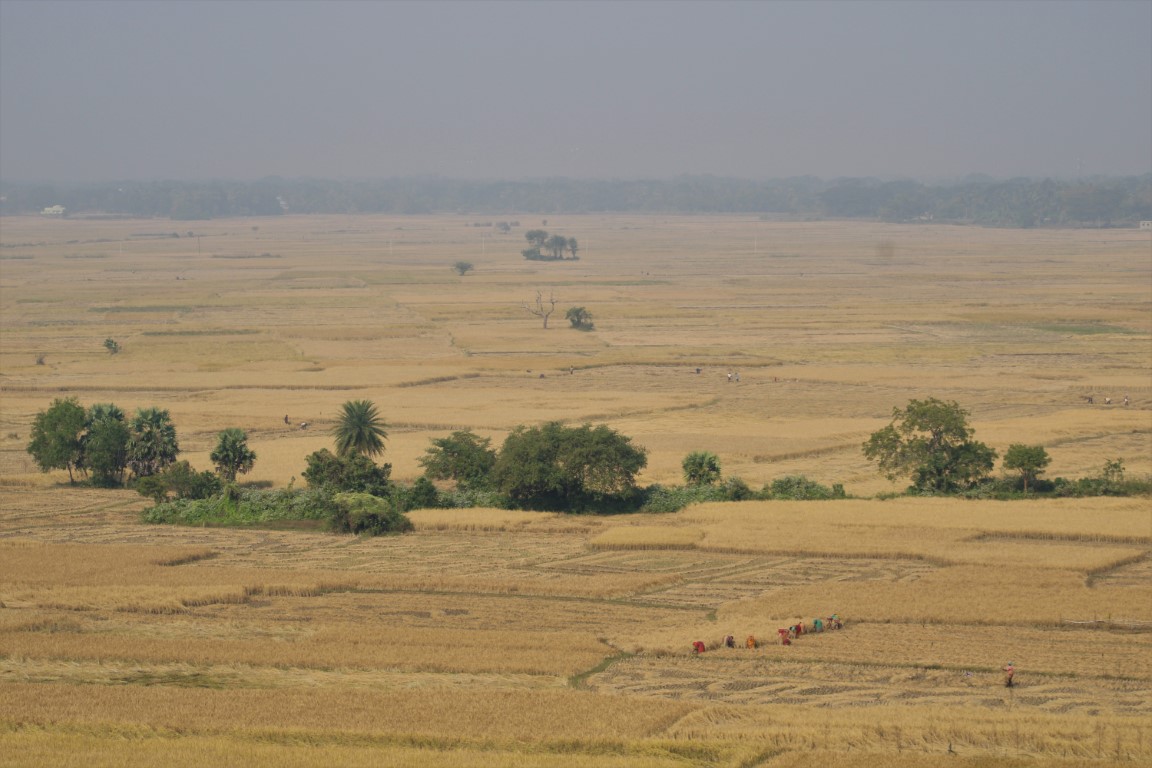
 But I do know the blondness of the fields,
 When the wheat fields' grain ripen in the Fall,
 And in this blondness her presence I feel.

What were her blue eyes like, I can't recall,
 But I do know the blueness of the sky,
 September morn, or later in the Fall,
 And then again I do feel her nearby.

What was her silky voice like? Can't remember,
 But in springtime, when fields begin to sigh,
 I feel that Anna's voice is calling, tender,
 From a past Spring that's as far as the sky.
Translation by Frank Veszely in: Hungarian Poetry: One Thousand Years. 2023. Manitoba, CA: Friesen Press.
I'll be the tree, if you'll be its flower;
 I'll be the flower, if you'll be the dew;
 I'll be the dew, if you'll be the sunshine
 That glistens as it unites we two.

If you, My Love, should become the Heavens,
  I'd be reborn as a star on high.
 Even if you turned into Hell, itself,
  I'd be damned, and I'd gladly fry.
The Original Poem in Hungarian:
Fa leszek, ha fának vagy virága.
Ha harmat vagy: én virág leszek.
Harmat leszek, ha te napsugár vagy...
Csak, hogy lényink egyesüljenek.

Ha, leányka, te vagy a mennyország:
Akkor én csillagá változom.
Ha, leányka, te vagy a pokol: (hogy
Egyesüljünk) én elkárhozom.
Have no mother, have no dad,
 have no country, have no God,
 no cradle, no winding sheet,
 no lover, no kisses sweet.

Haven't eaten for three days,
 my head spins, the body sways...
 Twenty years! My might, my gale,
 twenty years are now for sale.

If there is no customer,
 sell it to Devil in hell.
 With a clean heart, I will steal,
 If need be, I'll even kill.

They'll catch me and hang me up,
 with soft earth cover me up,
 and death-bringing grass will start
 from my beautiful, clean heart.
Translation by Frank Veszely in Hungarian Poetry: One Thousand Years (2023) Altona, Manitoba: Friesen Press, pp. 156-157.
NOTE: This poem got Attila expelled from university and preemptively scuttled any possibility of a career in academia. (Hence, my affinity for it. Any poetry that extracts such a cost is probably excellent poetry.)
Author Site
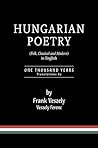
This anthology of Hungarian poetry translated into English presents some interesting and evocative examples of Hungarian poetry, ranging from anonymous folk poetry of early kingdoms to 20th century pieces by still-living poets. I can’t speak to how the translations compare to the originals, but I will say that they were a pleasure to read and employed metering and rhyme to maintain some of the feel of the originals. This book introduced me to many poets with whom I was only familiar from names on subway stations, city squares, and parks, having traveled extensively in Hungary (plus a few of whom I’m sure I’ve never heard. Note: poetry is huge in Hungary, but because the Hungarian language is not broadly spoken, it remains largely a secret to outsiders.)
That said, the anthology is not so broad ranging as one might expect from its subtitle. The nineteenth and twentieth century selections take up the bulk of the volume. It does make sense that there is a much larger (and more likely to have survived) selection from recent times. However, there also aren’t as many poets included as one might expect. Ostensibly, one reason for this is that Veszely doesn’t shy away from including lengthier pieces. Whereas an anthology like this would often favor short pieces and / or excerpts (and, thus, might include more voices,) this one contains many multi-page poems. That said, while most of the biggest names seem accounted for (e.g. Vorosmarty, Csokonai Vitez, Arany, Petofi, Jozsef Attila, etc.,) there are conspicuous absences of prominent and important poets (and, perhaps, of categories of poets as well.)
Short bios of each of the contributing poets make this an introduction to many interesting figures scarcely known to non-Hungarians, as well as it is a sampling of their poetry. Each of the four sections also has some background historical information. This history is useful because there is a lot of nationalistic / jingoistic poetry in this volume, particularly among the nineteenth century poets (as was the style of the day.)
I should point out that some will find this book excessively nationalistic. (A book titled for the state can be expected to have some superpatriotic pieces, but this goes a bit beyond that.) For my part, I was not troubled by the poetry content, knowing that nineteenth century Hungarian poetry was notoriously nationalistic. Also, once one gets into the twentieth century poetry it gains much more diversity of content, e.g. nature, art, etc. My own concern about nationalism was more about the Part Four introduction, which paints Hungary as an innocent little lamb, always being victimized. Taking history from this introduction, one might think that Hungary was forced into the Axis and struggled to get free of it from the onset. This view would be more defensible if the invasion of Nazi Germany to firm up the Hungarian alliance had occurred in, say, 1941, instead of the spring of 1944 (when everyone knew the Third Riech was on its death bed.) In point of fact, Hungary’s leadership seem to have had their own ambitions (not to mention their own rampant antisemitism) going into this alliance.
I enjoyed these translations immensely, and felt I learned about the poets and the times in which they lived. That said, while I did like that Veszely included some longer pieces in full, it might have been nice to see a bit more diversity in the selection as well.
Crazy. He stumbles, flops, gets up,     and trudges on again.
 He moves his ankles and his knees     like one wandering pain,
 then sallies forth, as if a wing     lifted him where he went,
 and when the ditch invites him in,     he dare not give consent,
 and if you were to ask why not?     perhaps his answer is
 a woman waits, a death more wise,      more beautiful than this.
Poor fool, the true believer:     for weeks, above the rooves,
 but for the scorching whirlwind,     nothing lives or moves:
 the housewall's lying on its back,      the prunetree's smashed and bare;
 even at home, when darkness comes on,     the night is furred with fear.
Ah, if I could believe it!     that not only do I bear
 what's worth the keeping in my heart,     but home is really there;
 if it might be! -- as once it was,      on a veranda old and cool,
 where the sweet bee of peace would buzz,     prune marmalade would chill,
 late summer's stillness sunbathe     in gardens half-asleep,
 fruit sway among the branches,     stark naked in the deep,
 Fanni waiting at the fence     blonde by its rusty red,
 and shadows would write slowly out     all the slow morning said --
 but still it might yet happen!     The moon's so round today!
Friend, don't walk on. Give me a shout     and I'll be on my way.
Bolond, ki földre rogyván     fölkél és ujra lépked,
s vándorló fájdalomként     mozdít bokát és térdet,
de mégis útnak indul,     mint akit szárny emel,
s hiába hívja árok,     maradni úgyse mer,
s ha kérdezed, miért nem?     még visszaszól talán,
hogy várja őt az asszony     s egy bölcsebb, szép halál.
Pedig bolond a jámbor,     mert ott az otthonok
fölött régóta már csak     a perzselt szél forog,
hanyattfeküdt a házfal,    eltört a szilvafa,
és félelemtől bolyhos     a honni éjszaka.
Ó, hogyha hinni tudnám:     nemcsak szivemben hordom
mindazt, mit érdemes még,     s van visszatérni otthon,
ha volna még! s mint egykor     a régi hűs verandán
a béke méhe zöngne,     míg hűl a szilvalekvár,
s nyárvégi csönd napozna     az álmos kerteken,
a lomb között gyümölcsök     ringnának meztelen,
és Fanni várna szőkén      a rőt sövény előtt,
s árnyékot írna lassan     a lassu délelőtt, --
de hisz lehet talán még!     a hold ma oly kerek!
Ne menj tovább, barátom,     kiálts rám! s fölkelek!
NOTE: Originally titled, ERŐLTETETT MENET, and dated September 15, 1944 (in Bor, Serbia,) this poem was found on Radnóti’s person after his execution by fascists in 1944. The translation used is that of Zsuzsanna Ozsváth and Frederick Turner: i.e. Radnóti, Miklós. 2014. Foamy Sky: The Major Poems of Miklós Radnóti. ed. & trans. Zsuzsanna Ozsváth and Frederick Turner. Budapest: Corvina Books, pp. 228-229.
Amazon.in Page
Release Date: December 13, 2022 [For the reviewed edition by Europa and translated by Kessler and Rogers]
Csáth was a Freudian who, in 1919 at the age of 31, murdered his wife before committing suicide. He was a brilliantly imaginative [if macabre-oriented] writer, and — as one might expect — this collection’s two dozen stories are dark, dreamy, and often detached from reality. The collection is full of hazy surreality and bleak obsessions, but it’s an intriguing and engaging read.
The book presents several recurring themes: mothers, murder, the murder of mothers, etc.; as well as repetition of surreal settings involving dreams, drugs, and demented minds. Therefore, I’ll only discuss a handful of my favorite stories in the hope they are a reasonable representation. In “Murder,” a man meets an acquaintance on the train and is told of the murder said acquaintance committed, told in a matter-of-fact tone. This prosaic approach to murder is a recurring element of Csáth’s stories as well, and it lends to both the surreal and eerie nature of the stories. “Little Emma” is about a “play hanging” committed by a group of kids. In “Young Lady,” a patient in an insane asylum tells his friend about his obsession with a young woman. “A Joseph in Egypt” is the story of a dream in which the dreamer engages in a tête-à-tête with a married woman. In “Toad” a man imagines he wakes up to find a monstrous toad in his bedroom, or so he believes. In “Matricide,” brothers attempting to rob their mother end up murdering her when she awakes during the crime. “Father, Son” is the story of a young man going to retrieve his father’s remains from the medical school that had come into possession of the body because his mother didn’t have the funds to afford a proper burial while the son was away overseas.
If you enjoy macabre and surreal stories, this collection is well worth reading. However, it will not be everyone’s cup of tea, owing to the dark tone and themes of the stories.
Amazon.in Page
This is a collection of nested poems and other short creative writings of varied formats. There are four sections in the book, each with parts and sub-parts. The titular work, “Fresh Out of the Sky,” consists of five parts, each having five parts in turn. It explores memories of an immigrant childhood and being “Citizens of nowhere.” [Szirtes was Hungarian born but his family moved to England in 1956, the year of the uprising that was brutally suppressed by the Soviets.]
The second section, “Inside the Yellow Room,” has an eerie surrealism to it that I found unexpectedly intense. The penultimate, “Going Viral,” touches on the present-day pandemic world while continuing to revisit memories in a hazy, ethereal sort of way. The last section, “Five Interludes” has the tightest interconnectedness of themes, touching upon breath, dreams, and the animal-human world at turns.
I enjoyed this collection, finding it evocative, phantasmagoric, and nostalgic.








 Tiger Riding for Beginners