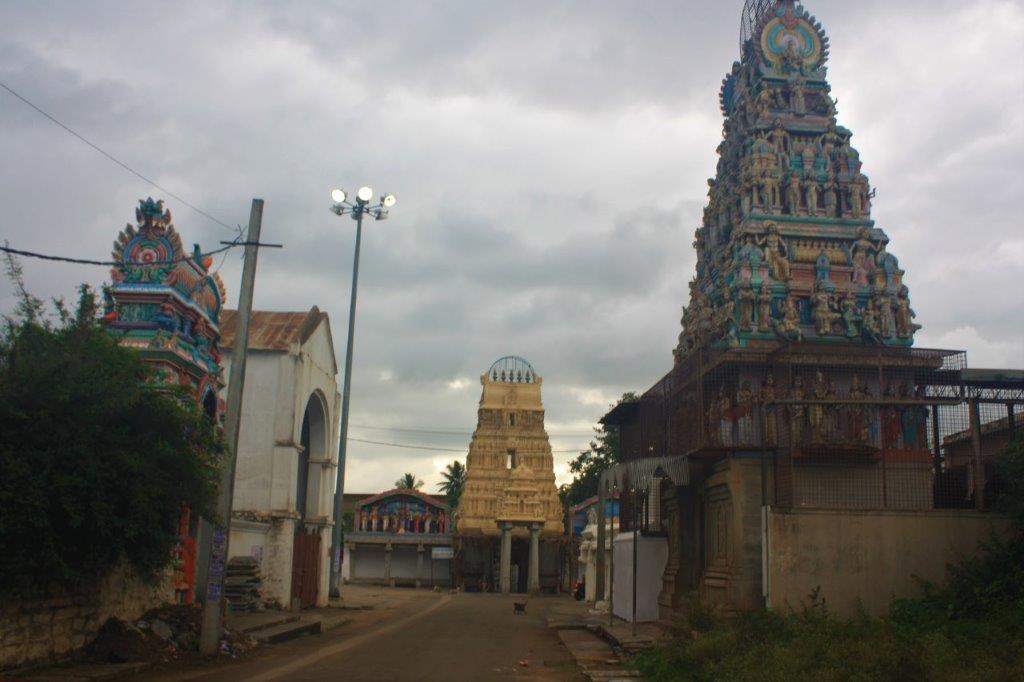
DAILY PHOTO: Three Hindu Temples in Devanahalli Fort
Reply

 Why I Am Not a Hindu: A Sudra Critique of Hindutva Philosophy, Culture and Political Economy by Kancha Ilaiah Shepherd
 The Avadhuta Gita – Song of the Ascetic by Dattātreya
 Jnana Sankalini Tantra by P. Prajnananda
My rating: 3 of 5 stars
Tantra is in a class with quantum physics as a topic that everybody likes to talk about but no one seems to understand. But the situation is worse because everybody can have an opinion about what Tantra is and who’s to say one is correct and another is not. Therefore, there are many conceptions of Tantra floating around out there. Unfortunately, I can’t say that this book will clear up the topic, though it does offer a great deal of information in a readable package.
In the West, Tantra is mostly about having longer and more satisfying orgasms during sex. In India, that is seen a great oversimplification, but there’s an entirely different muddling of the topic. If there were pro-Tantra and anti-Tantra parties, the topic could remain clear despite differing views on the validity of the approach. Everybody might agree about what Tantra is, but veer apart as they say why they like it or loath it. However, there’s another faction, and that’s the mainstream religious personalities who want to selectively utilize bits and pieces of Tantra that they find useful, while suggesting other parts of it are all just a misunderstanding. And, again unfortunately, that is where this book stands.
As my criticism may not make sense otherwise, I’ll try to explain something I was taught about Tantra. As it was described to me, Tantra (the yogic version, Buddhist Tantra may vary entirely) was—at least, in part–a practice of engaging in endeavors that might be considered distractions on the path to overcome them. Whereas, mainstream religion says, “x is bad, never do x,” Tantra says “x can be a distraction, and so I should engage in x in a mindful way so that it no longer controls me.” This is where the focus on sex comes in. It’s not that Tantrics were perverts; they just believed they could achieve some manner of transcendence through its practice.
My primary complaint is that this book selectively takes what it likes and strains credulity by suggesting the material it dislikes is all a misunderstanding of a selective code. So there is this idea of the five principles (panchatattvas or panchamakara) and they are five practices of Tantrics consisting of consumption of: alcohol, meat, fish, roasted/fried foods, as well as sexual activity. Now, most of these are objectionable to the modern Hindu, but the author says that these were all just code for a practice of breathing with one’s tongue pressed to a certain spot on the roof of one’s mouth. Why was kechari mudra so super-secret that one had to call it sex or fish-eating? (And why would one use a code consisting of activities one finds severely objectionable?) I don’t know, the reader is just left to believe that it makes sense.
Now, should I conclude that the entire work is in code? For example, when it says that finding a good teacher and following them is important, might they really be saying that I should “Find a river otter to take to Disneyland?” No. Because only the parts that the author and his sect finds contrary are encoded, everything else is to be taken literally.
Now, the offending section is only a small part of the book, and the topic of yogic Tantra. However, the degree to which it strains credulity makes it difficult to believe anything else the books says.
The book is in two parts. The first part is an introduction to jnana sankalini tantra (JST), and the second part is the 110 verses of the JST—said to be a dialogue between Shiva and Parvathi on Tantra—with analyses by the author.
I believe that this book contains a lot of interesting ideas, but, being a neophyte to the subject but with a degree of expertise in detecting faulty logic and religious dogma, I didn’t feel I could trust the book entirely.
If you are a mainstream Hindu who wants a palatable description of Tantra that doesn’t offend your sensibilities, this is probably a great book for you. If not, I don’t think you’ll have any better idea of Tantra is than when you started.
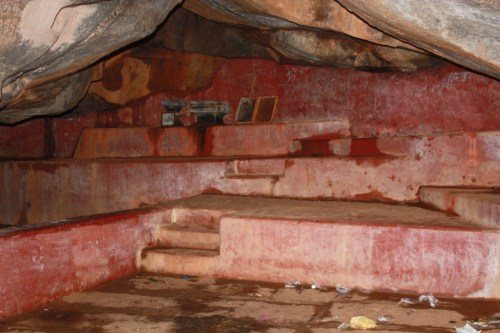
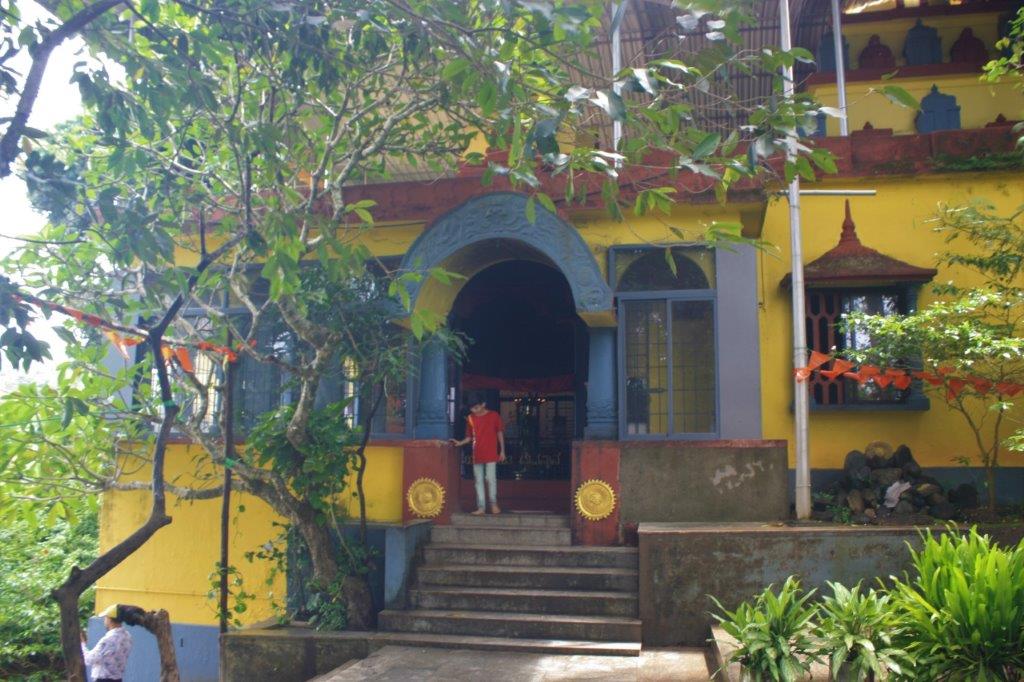
Taken in October of 2013 at Nandi Hills
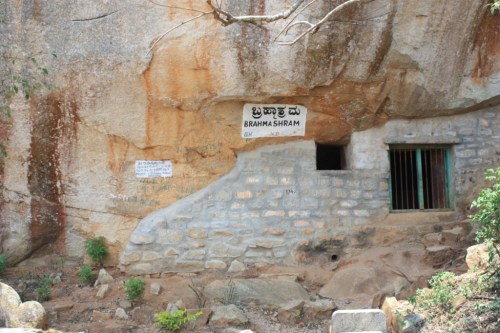
Brahmashram is an ascetic’s cave located on the hillside at Nandi Hills. It’s most famous occupant was the sage Ramakrishna Paramahansa (1836 – 1886), who was a teacher of Swami Vivekananda.
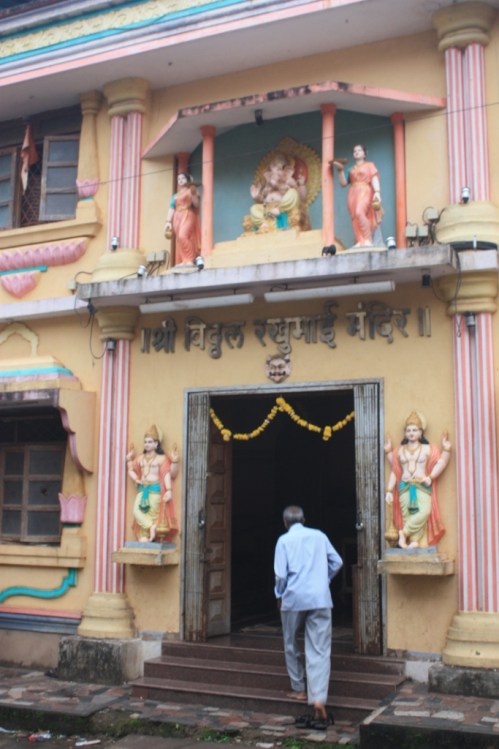
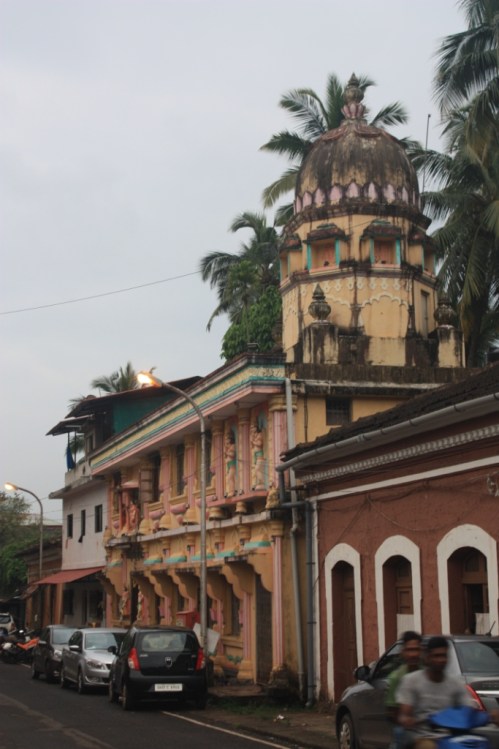
Taken in October of 2016 in Panjim (Panaji)
Hindu temples are ubiquitous throughout India, but in Goa they tend to be overshadowed by massive Christian churches and cathedrals. (Despite the fact that Christians only make up about a quarter of the Goan population while Hindus make up about 2/3rds.) This was one of the more prominent Hindu temples we saw. It’s located in Old Quarter.
 Hindu Myths by Anna L. Dallapiccola
My rating: 3 of 5 stars
Having moved to India, we picked up this book to try to wrap our heads around the vast Hindu pantheon and the myriad myths involving them. There are a huge number of tomes on the subject of Hindu mythology, but far fewer concise commentaries that look useful. We were always on the lookout for a book that would offer a sort of “Hindu Mythology for Dummies” –the quick down-low, if you will.
I can’t say that this book clarified the topic. However, I’m not sure any book could. Hindu mythology is a subject of enormous scope, while being defiant against reducibility. I was about to compare it to the challenge of writing a concise book for neophytes on quantum mechanics, but then I realized that such a book could probably be done much more effectively. For as strange as the world behaves at a subatomic scale, there’s a means to order the story and to simplify it in a way that leaves intact the gist. Along with dry descriptions of ordinary sounding events, one reads stories like that of the deity that popped out of another’s belly-button on giant lotus flower. That’s when the myths become hard to imagine–if one hasn’t been hitting the psilocybin.
That said, I did learn some interesting elements of myth from reading Dallapiccola’s book, and I think it has as effective an organizational scheme as one can hope for. After an Introduction that exposes the reader to Vedas, Puranas, and the Hindu trilogy (Vishnu, Shiva, and Brahma), there are three chapters that revolve around creation, preservation, and destruction. [For those unfamiliar, those three deities map to those processes—Brahma the creator, Vishnu the preserver, and Shiva the destroyer.]
After those three, there are another three chapters. Chapter four deals with myths about delusion, and in addition to describing Vishnu’s role in delusion (maya) it tells a couple of tales (the story of Madhu and Kaitabha, and the story of King Harishchandra.) Chapter 4 discusses the topic of grace and describes the birth of the Ganga, tells the tale of Arjuna and the Hunter, the story of Vishnu and Prahlada, and then offers a bit of insight into Shaiva saints, temple myths, and animal devotion. The last chapter is a brief overview of Hindu Mythology in modern times—especially its inclusion in popular culture.
There is a map (i.e. an India map showing major cities and crucial historical sites) and many pictures throughout the book. The pictures include photos of sculptures as well as reproductions of paintings that are of the deities and key mythical events. As far as ancillary features go, there is a half-page “Further Reading” section and the book is indexed.
This book is only 80 pages, and offers a quick overview. Whether it hits the most crucial material, I can’t rightly say. As I mentioned, there are some interesting tidbits in the book. I’d recommend it for someone looking for a quick overview. However, one should note that there are books that are more oriented toward story and less toward a scholarly level of precision in language that may be more useful for one—depending upon one’s needs.
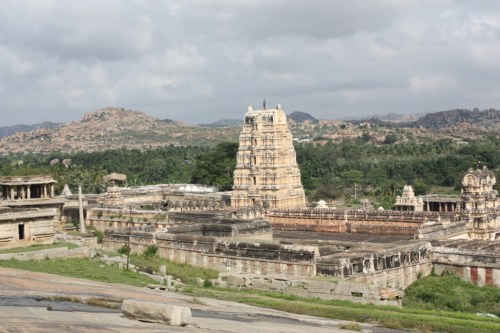
Taken in November of 2013 at Hampi




 Tiger Riding for Beginners