BOOK REVIEW: Make Room! Make Room! by Harry Harrison

Make Room! Make Room!Make Room! Make Room! by Harry Harrison

My rating: 4 of 5 stars

Amazon page

Knowing that this book was the basis of the movie Soylent Green, I expected a very different book. While I haven’t seen the movie Soylent Green, I–like everybody not living under a rock–knew that the movie’s big twist was that “Soylent green is people!” Meaning, society has unwittingly been led into cannibalism.

I wouldn’t so much categorize Make Room! Make Room! as dystopian science fiction as I would a detective story that happens to take place in a Malthusian dystopia. (For those unfamiliar with the work of Thomas Malthus, he predicted a massive crash resulting from the fact that human population in his day [18-19th century] was growing much faster than food production and resource discovery. Some dismiss Malthus as a doom-and-gloomer who was unable to foresee that great technological breakthroughs would make it possible for humanity to support its growing numbers. Others, like Harry Harrison, have maintained that it’s merely a matter of time before humanity outstrips its resources and Malthus’s prediction is vindicated.)

While the story is about a detective investigating the death of a wealthy businessman/criminal and said officer’s love affair with the deceased man’s girl, Malthus’s idea sets the tone of this novel. Written in 1966, Make Room! Make Room! describes the world of 1999 as one in which food and drinking water are in scarce supply. Harrison predicted the population would then be 7 billion. He was off a bit. The population in 1999 was closer to 6 billion. While we have presently reached 7+billion, we aren’t surviving off SOYbeans and LENTils (SOY-LENT, get it) for protein.

It’s probably good that the story is about crime and romance, because when it becomes too focused on the Malthusian dystopia—rather than letting it play in the background and give the story a visceral edge—the book can be a bit preachy. This is best exemplified by the brief diatribes of Sol, the protagonist’s roommate and the character that occasionally drags us out of this fictional story and into a lecture on the dangers of unchecked population growth. Such brief lectures might have been well worthwhile if the author (and Malthus) had been correct, but they read a bit alarmist in the wake of both men’s overreaction (or incorrect timelines?) Readers with strong feelings on the subject of birth control may find that issue positively or negatively impacts one’s perception of the book depending upon one’s stance on the issue, but most will find it to be just an another issue that dates the work.

If this had just been about the 1999 Malthusian dystopia, it might be so dated as to be unreadable today. However, the story is more timeless than that—if with an inescapable retro feel.

View all my reviews

BOOK REVIEW: Gone Girl by Gillian Flynn

Gone GirlGone Girl by Gillian Flynn

My rating: 5 of 5 stars

Amazon page

This book is about the perils of adopting a false face when dating. At first Nick and Amy seem like the perfect couple, but that’s because Amy is donning the guise of “Cool Girl” and Nick is playing the part of the romantic. When the facades crack apart, so does their marriage. Then Amy goes missing under mysterious circumstances.

This isn’t the type of book that would normally call to me, but I read it because I kept seeing references to it and had to see what the hullaballoo was about. I must say, however, the book did not disappoint. I found Gone Girl hard to put down. Flynn does an outstanding job of carefully revealing information—and sometimes planting false flags—so that one is kept thinking throughout the book. To the characters in the book—besides Nick–it increasingly looks like Nick killed his wife, but to the reader it’s more of a roller coaster ride. At first we can’t believe he’s responsible, then we discover he’s not who he appears, then we learn who Amy really is, and so on.

The organization is alternating chapters from the point of view of the two leads, Amy and Nick. This is why we can’t believe Nick is a murderer at first, because we are seeing his point of view, but then we realize that it’s a limited point of view, and Nick isn’t particularly forthcoming about his peccadilloes and vices. In fact, Nick’s penchant for lying is a major factor in his deepening crisis. Nick’s problem is that he can’t stand to not be liked, particularly by women. Amy’s problem stems from having parents who wrote a book series called Amazing Amy that portrays a character that is a thinly veiled version of her—except perfect in every way. This leads to a condition in which Amy needs to appear perfect, even if she realizes that perfection is illusory.

If the reader has a point of dissatisfaction with this book, I believe it will be with the ending. I, myself, have mixed feelings on the subject. On one hand, the ending seems unbelievable and maybe a little flat. On the other hand, it’s an unexpected ending, and I think any ending that wasn’t completely unexpected would come across as a letdown after all the twists, turns, and reveals of the book.

I’d recommend this book for anyone who likes a good story. As I said, it’s highly engaging and readable.

FYI – there is a movie version coming out on October 3, 2014.

Here’s the trailer:

View all my reviews

2014 Science Fiction Movies

Here’s the 2014 slate of sci-fi films. I didn’t include superhero films (because I did a post on them yesterday) nor did I include those that might be best classified in other speculative fiction genres (e.g. horror, supernatural, or fantasy.)

WELCOME TO YESTERDAY; February 21st

If you don’t think teenagers are safe to drive cars, imagine the chaos they’d create in a time machine.

DIVERGENT; March 21st

This is based on one of the popular dystopian Young Adult (YA) novels of late. I’m not saying that it’s just like the Hunger Games trilogy or Maze Runner–both of which also have movies coming out in 2014–but it’s clearly the subgenre du jour. In this YA dystopia, people are divided into five classes by testing, but some are divergent–defying classification.

UNDER THE SKIN; April 4th (US, previously released elsewhere)

An alien seductress lures hitchhikers into her van with nefarious purpose (and maybe lollipops.) Moral: if Scarlett Johansson tries to pick you up in a serial killeresque van, think twice; and then get in because it’s Scarlett-freakin’ Johansson.

EARTH TO ECHO; April 25th

Kids discover an alien. It sounds a lot like ET.

THE SCRIBBLER; May 1st
Katie-cassidy-picture-1219918070
Supposedly based upon the graphic novel of the same name, which would make this about a girl with multiple personality disorder who partakes in an experimental treatment called the “Siamese Burn.”

GODZILLA; May 16th

The latest attempt to revive Godzilla–using CGI to make him bigger and uglier than previously imaginable.

EDGE OF TOMORROW; June 6th

Like Groundhog Day but with guns and explosions.

THE PURGE 2; June 20th

Sequel to the movie about a dystopian future in which all laws are set aside for a short period once a year.

DAWN OF THE PLANET OF THE APES; July 11th

This one takes place after the escape shown in the last PotA movie (w/ James Franco) and a pandemic and war that followed, but before humanity is completely enslaved by the damn, dirty apes.

JUPITER ASCENDING; July 25th

A nobody Earthling, played by Mila Kunis, turns out to be the most important woman in the Universe. Naturally, lots of people want her dead.

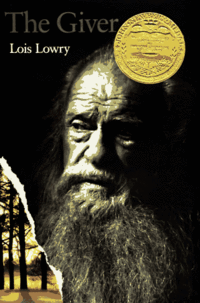
THE GIVER; August 15th
200px-The_Giver_Cover
Based on the popular YA novel. One person’s utopia is another person’s hell.

RESIDENT EVIL 6; September 12th
Resident_Evil_6_box_artwork
Wow! They’ve made six of these? Way to milk it. Just kidding. I’m sure it will be novel and interesting.

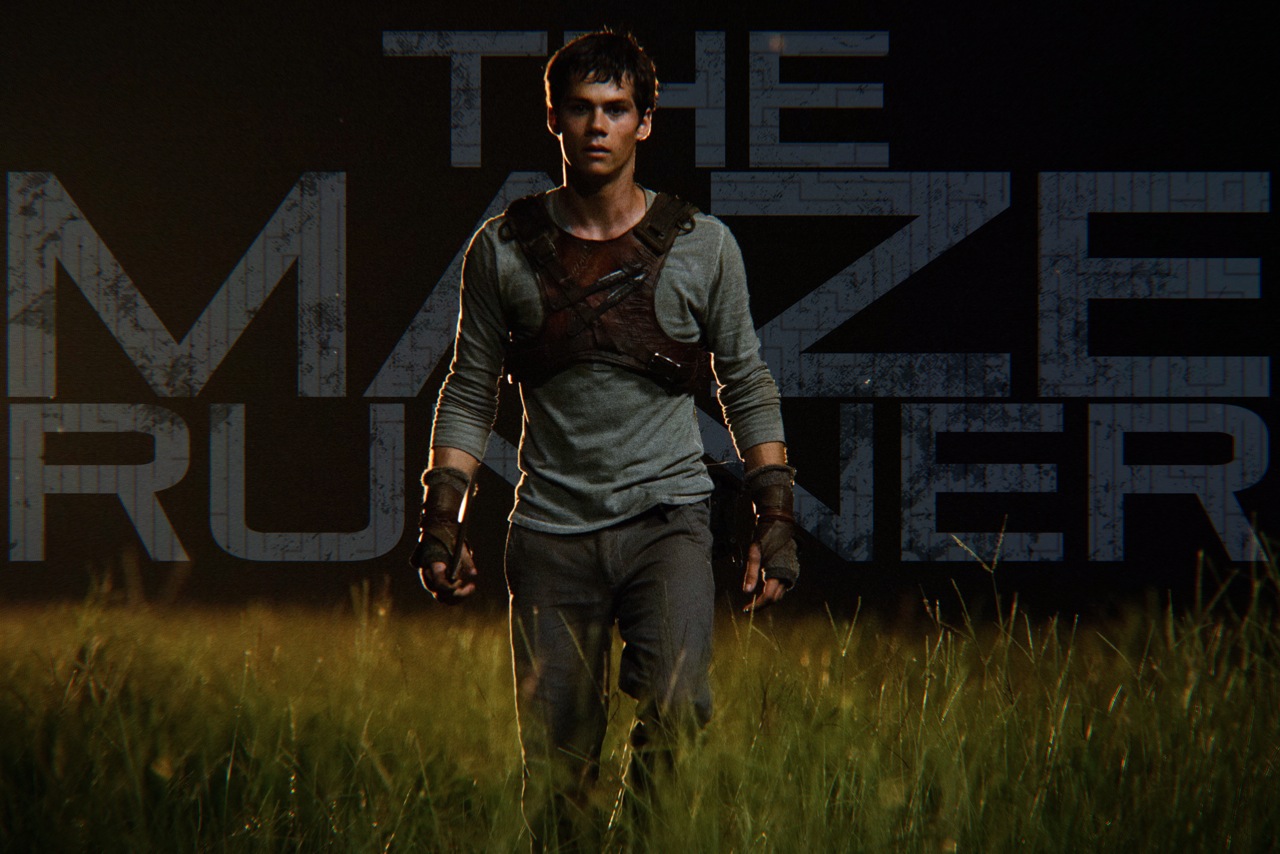
MAZE RUNNER; September 19th
mazerunner
Another YA dystopian adventure. Lord of the Flies meets Hunger Games?

INTERSTELLAR; November 7th

A huge Christopher Nolan film about interstellar travel.

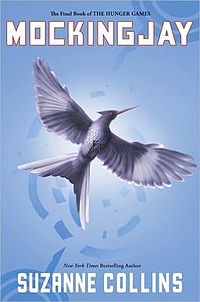
MOCKINGJAY, Pt. I; November 21st
Mockingjay
The first part of the third book in this trilogy, because why make three movies based on three, thin YA novels when you can make four movies based on three, thin YA novels.

HOME; November 26th
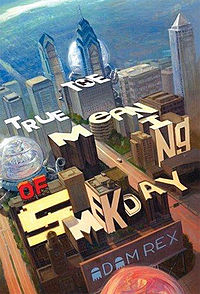
200px-The_True_Meaning_of_Smekday_cover
This film is supposedly based on the above book. It’s about an 11 year old who must survive on her own after her mother is abducted by aliens.

Other potential sci-fi releases of unknown date and quality:


THE ZERO THEOREM; no US release date set; the UK release is supposed to be in March

It’s about a man trying to solve a theorem, but with all sorts of craziness in the mix.


MAX STEEL; based on a line of toys (promising.)
SPACE STATION 76; that 70’s sci-fi movie.
GLIMMER; more teen time travel [shudders]

2014 Superhero Movies

Here’s an overview of the upcoming year’s superhero movies.


I, FRANKENSTEIN; January 24th

Frankenstein’s monster may not the usual superhero, but it’s based on a graphic novel and the demon-battling premise seems heroic enough.


ROBOCOP; February 12th

This is also one you might not think of this as a superhero movie, I include it because there was a Marvel comic based on the movie and if Iron Man is a superhero…


CAPTAIN AMERICA: THE WINTER SOLDIER; April 4th

The second Captain America installment and the third of the five Marvel Phase II films. After taking on some high level conspiracies, Captain America finds himself battling his old sidekick’s villainous alter ego, i.e. The Winter Soldier.


AMAZING SPIDERMAN 2; May 2nd

The sequel finds Spiderman facing Electro and–to a lesser degree–Rhino.


X-MEN: DAYS OF FUTURE PAST; May 23rd

As the confusing title implies, this is a time travel story in which events in the past must be changed to avert a grim future. Wolverine is sent back to affect this change.


TRANSFORMERS 4: AGE OF EXTINCTION; June 27th
220px-Transformers4_Teaser_Poster
OK, this is more a toy movie than a superhero movie, but cars that turn into robots seem super in my book. That’s not to say there isn’t a better than average chance the movie will stink.


GUARDIANS OF THE GALAXY; August 1st
220px-Guardians_of_the_Galaxy_logo
It’s still early. There’s no trailer out as of this posting.


TEENAGE MUTANT NINJA TURTLES; August 8th
No trailer or images out, and little is known except this is about as ridiculous a premise for a movie as is imaginable.


BIG HERO 6; November 7th
Big_Hero_6_logo
This is an animated Marvel project. A robotics prodigy and his creation team up with amateur crime-fighters to put an end to a nefarious plot.

2014 Martial Arts Movies

[My 2015 Martial Arts Movies post can be visited here.]

Here are some of the known or suspected martial arts movies for the new year.


RAZE; January 10, 2014

A film to appeal to guys who make the RAARRW noise when they see two girls get in a fight, but to the extreme.

I, FRANKENSTEIN; January 24, 2014

OK, this is better labeled sci-fi as it’s based on the premise that Shelley’s monster lived into the future. However, I heard that Aaron Eckhart spent six months learning Kali for the film, so I’ll throw it in the pot. (Also, all martial arts films are cross-genre anyway.)

ENEMIES CLOSER; January 24, 2014 (US release)

A Jean-Claude Van Damme film in which two enemies must come together to avoid being killed by a common enemy.

SPECIAL ID; The Chinese release was in 2013, but there may be a US release in March 2014

This is a 2013 Donnie Yen action film that was not released in the US, but may be soon.

JOURNEY TO THE WEST; March 7, 2014

For those who liked Kungfu Hustle (and who didn’t) this one should appeal. It’s a period piece, but with the same kind of humor and visual affects as Kungfu Hustle.

THE RAID 2; March 28, 2014

This is a sequel to the 2011 Indonesian film produced by Gareth Evans.

ICEMAN; April 3, 2014

The latest Donnie Yen film. It’s about an ancient Chinese warrior who is unfrozen and kicks ass in the modern age.

TEENAGE MUTANT NINJA TURTLES; August 8, 2014

Another attempt to capitalize on the inexplicable popularity of this cartoon. But I’ll give it a chance.

THE MONKEY KING; September 14, 2014

A new play on the popular Chinese folk tale.

The Most Intense Blockbuster You’ll Never See

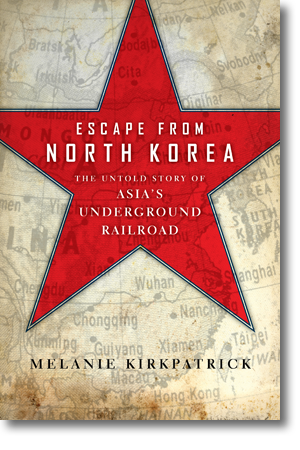
REV_Kirkpatrick-designAmong the Kindle Daily Deals yesterday was a book entitled Escape from North Korea: The Untold Story of Asia’s Underground Railroad by Melanie Kirkpatrick. It was well-timed to a news story about a Korean War Veteran, Merrill Newman, whose video statement as a prisoner of the DPRK was released the same day. Anyway, I bought the book and I’m hooked. The stories it contains are a mix of chilling and thrilling.

As I began reading, I wondered why no one had made a major Hollywood blockbuster based on an escape from North Korea. It’s a journey fraught with peril. There’s so much to go wrong from being shot in the back crossing the Tumen River to being repatriated to being double-crossed by smugglers to falling into the hands of traffickers or other predators. Adding to the challenge is the fact that most North Koreans are severely undernourished, and each is on his or her own for the first part of the trip–getting across the border. Furthermore, it’s not uncommon for North Koreans to stick out physically because they’re unusually small and, as pointed out by one of Kirkpatrick’s sources, prone to bad hair and split ends.

I know these are words that writers despise but the screenplay practically writes itself.

Then I remembered, oh yeah, this will never be a movie because China’s government would be one of the villains, and Hollywood isn’t in the business of making films that PO the Chinese any more. Why is China the villain? Well, it’s not the main villain. That distinction, of course, goes to the Kim dynasty, presently personified by Kim Jong Un–who has been the biggest bastard yet when it comes to escapees. China’s policy is one of repatriation. It would be kinder for China to just execute the North Koreans themselves. One of the stories early in the book is about an entire family that was to be sent back who–having eaten their first decent meal in a long time–decided to die full and committed suicide while in Chinese custody. Lest one think that this is a Communist thing, Kirkpatrick points to Vietnam as one of the countries that quietly helps North Korean escapees get to safety. Like the democracies that do so, Vietnam keeps this on the down-low to avoid cheesing off the Chinese, but at least they do it.

Why would such a movie be good? Because everybody needs to know what’s going on, and movies are the surest injection point into the public consciousness. There have been books and documentaries about this for years, but I don’t think most people realize how bad it is.

I should point out that there have been films on the subject. The Crossing, made in South Korea, is probably the most well-known feature film on the subject. It’s about a father who crosses the border to get medication for a wife, but ends up stuck on the other side of the border during which time his wife dies and his boy becomes–for all intents and purposes–an orphan. This film is apparently based on a true story.

And there have been a number of documentaries on the subject. The Defector: Escape from North Korea is one of the best.

This is the book trailer for the Kirkpatrick book.

BOOK REVIEW: Rashōmon and Other Stories by Ryūnosuke Akutagawa

Rashomon and Other Stories (Tuttle Classics)Rashomon and Other Stories by Ryūnosuke Akutagawa

My rating: 5 of 5 stars

Amazon page

Six stories make up this brief collection. All six are intriguing, well-written, and shine a light onto the dark side of mankind. The works of Akutagawa collected herein are all morality tales, but aren’t written in a moralistic tone. In fact, it’s not clear that the author wishes to convey lessons on virtue and vice as he’s intrigued with the instant at which an ordinary person turns bad. That instant, and the inflamed passions that often inspire it, is a prevailing theme throughout most of this small anthology. Akutagawa beats AMC by the better part of a century in showing us how bad breaks.

The first story is entitled In a Grove. This is a murder mystery in which we are given conflicting accounts of a man’s murder through the process of the investigation of the act. The final account that we are offered is that of the victim himself–as presented by a psychic medium. [Only two of these stories contain supernatural elements–this one and the last. Most of the collection involves realist premises. One must remember that Akutagawa was writing in the early part of the 20th century, and scientific rationality hadn’t yet gotten as strong a hold as it does today.] In this case, the use of a psychic is really just a plot device to give the reader insight into a truth which couldn’t otherwise be revealed. Having heard the perspectives of the murder and the dead man’s wife, one is left with questions owing to the self-serving nature of those statements. Of course, the final section reveals a twist–that I won’t spoil.

The second story is the title story, Rashōmon. The title is the name of a gate in Kyōto, the largest gate of Kyōto, in fact. However, Kyōto has fallen on hard times, and our protagonist is a newly masterless samurai who has sought the gate’s shelter from the rain. There, he contemplates whether he should take up a life of crime, which seems to be his only means of survival in the current economy given his skill set. The gate has become a repository for the corpses that are amassing as victims of the hard times accumulate. Within the gate, he finds an old hag who loots bodies for a living. His interaction with the old woman helps him to decide his own destiny.

The third story is called Yam Gruel. While “yam gruel” (or anything with the word gruel in it) might not sound appealing given today’s usage, a fact one must know is that during the time of the story it was a highly-prized and rare dish. The story follows a milquetoast administrator who leads a rather pathetic life in which he has but one ambition, to eat his fill of yam gruel. As a member of the samurai class, he’s invited to an Imperial banquet each year. However, because of his low status and the high-value of yam gruel, he never gets more than a taste. One year he openly bemoans the fact that he never gets his fill. A powerful samurai overhears this complaint, and it puts a seed of mischief in his mind. While this tale isn’t about breaking bad, it is about inflamed passions.

The fourth story sticks out as different from the others. While the bulk of the stories center on that moment at which a more-or-less good person goes bad, The Martyr tells us about a protagonist that never goes bad, despite having every right to. This might seem like a sea change in theme, but in reality it’s just another way of shining a light on the dark seed that resides in people. Only this time it does it by way of contrast. All of the other characters are deeply flawed, and we see that most vividly when contrasted against the one who always behaves virtuously. In this case, that virtuous character is Lorenzo, a novice monk who is accused of a severe breach of good conduct. Lorenzo becomes an outcast and a vagrant due to these allegations. Yet, despite all this, he acts heroically–even to assist those who’ve betrayed him.

In the fifth story we revisit the theme of breaking bad. In Kesa and Morito we are presented with two regret-filled accounts of the instant at which an adulterous couple decides to kill the husband of the woman involved in the affair. Each member of the cheating couple thinks that the other desperately wants the killing to go forward. In reality, both consider it a foolish decision driven by a brief moment of passion. This is another tale about letting one’s passions get out of control.

The final work is a retelling of the story of a monk named Hanazō who decides to prank his fellow monks because they chide him about his huge nose. Hanazō sets up a sign that says a dragon will appear from the local lake at a certain time and day to fly up into the heavens. The joke doesn’t turn out at all as the monk intended. I won’t go into the moral of the story to avoid giving too much away, but suffice it to say there is a moral.

I highly recommend this collection. As I’ve suggested, the collection isn’t just a disparate collection of tales, but has an integrating theme. Akutagawa was truly one of the masters of the short story. He wrote 150 stories before dying at the age of 35 in a suicidal drug overdose.

For those who like to see how literature is portrayed in, below one can watch the film version of Rashōmon.

View all my reviews

DAILY PHOTO: Reservoir Goat

Taken November 2, 2013 at Hampi.

Taken November 2, 2013 at Hampi.

This goat was strutting along in slow motion like he was in the opening scene of Reservoir Dogs.

Have no idea what I’m talking about? See below.

BOOK REVIEW: Ender’s Game by Orson Scott Card

Ender's Game (Ender's Saga, #1)Ender’s Game by Orson Scott Card

My rating: 4 of 5 stars

Amazon page

Ender’s Game is the story of a boy, Ender Wiggin, whose intelligence and capacity for ruthlessness lead the military establishment to believe that he’s the last hope for mankind. The book is set in a future after the Earth has been invaded twice by an alien species called the buggers, and now the Earth is planning its own “preemptive” invasion to end the bugger threat once and for all.

The novel follows Ender’s life from his short home life as a “third”—a rare third child for which special permission must be granted—through his post-war life. (This entire timeline transpires before adulthood.) The bulk of the novel takes place in Battle School, where Ender receives his training in military tactics and strategy and spends much of his time in zero gravity war games. He rises up through the ranks quickly, as expected, but not without stirring some animus in the process. He learns strategy both through war games and through the mind-field of real world animosity by others who are jealous or feel insulted by his brilliance.

As Commander material, Ender is considered to be in the Goldilocks zone. His older brother, Peter, is too cruel; his sister, Valentine, is just too kind. (All three Wiggin children are geniuses.) Ender has the right mix to fight the buggers. His problem is that the world forces him to be ruthless and his compassionate side makes it hard to cope.
While Ender leaves home young and early in the novel, there is a subplot involving the older Wiggin children that is revealed over the course of the book—showing the reader more of the tormenting brother and the loving sister who shaped his worldview. Ender does interact with Valentine in person on a couple of occasions, but his only interaction with Peter is a brief mention of correspondence at the end of the book.

Ender is an intriguing character. He is always the outsider, by birth as a third and then through isolation in Battle School that is facilitated by the conflicted head of the Battle School, Col. Graff.

I won’t get into the ending except to say that there is a twist at the novel’s climax. I will say that the reveal of this twist felt a little anti-climactic to me. However, as the real story isn’t about fighting the buggers, but Ender’s internal struggle, this isn’t as dismaying as it might otherwise be.

One can tell that this is a series book because it climaxes and resolves relatively early, leaving a fair amount of space to set up the next book. This actually helps the twist offer some surprise because the reader sees that there are so many pages left for the novel to resolve itself.

Card does an interesting thing in making the central character stronger than everyone around him–at least until he’s introduced to his new guru, Mazer Rackham–the Commander who won the key battle of the second bugger invasion and who is alive by virtue of a relativistic trip. Ender’s superiority seems like a recipe for boredom, but it works because what we don’t know is whether Ender is stronger than everyone else pitted against him combined, and, moreover, we don’t know whether he is strong enough inside to withstand all the horridness to which he is subjected. A lot of the tension of the novel is really internal to Ender. Unlike Peter, who would revel in ruthlessness, Ender is tormented by all of the violence he must perpetrate.

I’d recommend this novel. It has its flaws, but it is quite readable and Ender’s character is intriguing from start to finish.

The movie version is coming out tomorrow. I haven’t seen it, but here is the trailer.

View all my reviews

BOOK REVIEW: Man of Steel by Greg Cox

Man of Steel: The Official Movie NovelizationMan of Steel: The Official Movie Novelization by Greg Cox

My rating: 3 of 5 stars

Amazon page

This is the first novelization of a movie I’ve reviewed. In fact, I haven’t even seen the movie yet. However, from the trailers I can see a little of how the book describes the events of the movie. In the afterword the author, Greg Cox, indicated that he hadn’t yet seen the completed movie. (Not surprisingly, considering the desire to get the book out in time.) He presumably worked mostly from the screenplay, and perhaps some unedited scenes from the movie. At any rate, unlike a movie adaptation of a novel, one expects a novelization to be spot on with the movie’s story.

As I’ve said in other posts, it’s hard to do Superman really well. Stories are all about tension, and it’s hard to build tension if your hero is indestructible and has god-like powers. [The sequel is supposedly Batman v. Superman, and one has to wonder how this can be done well. Batman is formidable, but the Joker sometimes gets the best of him, and the Joker is no Superman.] At any rate, I think this rendition does a better job than most, and vastly better than the epicly-awful 2006 Superman Returns.

The story begins on a dying planet Krypton as a coup led by General Zod takes place. Both Jor-El (Superman’s father) and Zod believe the planet is dying, and that urgent steps need to be taken to save the Kryptonian race. However, they differ vastly on how to go about saving the race. Zod believes in saving certain blood lines, and Jor-El believes in a much more balanced and progressive approach.

When we are introduced to Clark Kent/Kal-El/Superman, he is a young man who is living a secret life. He engages in episodes of heroic derring-do, but has not yet donned the costume and is forced to move nomadically from one dead-end job to the next as his powers are revealed. There are also many flashbacks to cue us in to his troubles and dilemmas as a child.

Shortly after Kent realizes who he is and gets some Kryptonian backstory, Zod and his band of zealots shows up–newly escaped from the phantom zone. The climax and resolution of the movie involve Superman’s battles with Zod and the General’s fierce underlings–with a love interest subplot between Lois Lane and Superman.

What this story does right is to introduce a strong foe for Superman to battle. Not only does Zod have a numerical advantage, he is a life-long warrior and is thus more experienced. Zod’s second-in-command, Faora Hu-ul, is a worthy adversary in her own right. This is not Superman versus a green, glowing rock.

The challenge of this type of story (as with movies like The Avengers) is that, having set up an “immovable object meets irresistible force” scenario, it’s extremely hard to resolve the tension in a manner that is both logically and emotionally satisfying. While I have criticized movies for this, if the visuals are impressive enough it seems to work with viewers. It works because it creates enough emotional satisfaction for one to suspend concern about whether the resolution makes any sense based upon what is known from earlier in the story. It’s harder to reliably do this in writing. Therefore, you may find the ending a bit flat after an intriguing build up.

I doubt it’s worth reading the novelization and seeing the movie, except if one is interested in how one’s internal view of it matches with the movie (in which case one should avoid the trailers and read the novelization first.)

View all my reviews

For those who do want to view the trailer.