BOOK REVIEW: Cimarronin by Neal Stephenson, et. al.

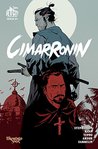
Cimarronin: A Samurai in New Spain #1Cimarronin: A Samurai in New Spain #1 by Neal Stephenson
My rating: 4 of 5 stars

Amazon page

Cimarronin opens in Manila in 1632 with a masterless samurai (i.e. a ronin, hence the latter part of the name) about to commit ritual suicide. The ronin, Kitazume, is interrupted by a Catholic priest who Kitazume knows and who—it’s hinted—has the kind of nefarious past that one has trouble reconciling with the priesthood. The priest offers Kitazume a mission.

The opening hooks one. It raises several questions that the reader will want answered: Why is a Japanese samurai hanging out in the Philippines in 1632? Students of Asian history will recognize that Japan’s long warring period is a couple of decades past and there are a lot of warriors out of work. But is that all? Is the priest really a priest, and, if so, how does a blackguard end up a holy man? And most crucially, will Kitazume take the mission, and—if so—will he succeed (and will he be glad he did?) The reader always knows that the priest has something up his sleeve, but it’s only gradually revealed what that is.

We soon discover that Kitazume has some skill as a detective. This enhances our curiosity about the character. The higher echelons of law enforcement in feudal Japan were staffed by samurai, but it still adds another interesting dimension to the character.

The three book collection continues with the discovery that the priest is facilitating the transport of a Manchu princess to Mexico. (Philippines to Mexico, hence the “New Spain” subtitle reference.) The priest’s plot unfolds in the middle book, and we get a better picture of his scheme.

The second book ends with a fight with the Cimarrones—a bellicose, indigenous tribe (and the reason for the first part of the title,) and in the third and final book the Manchu Princess’s own scheme is revealed. The differing goals of the various major characters set up the potential for an excellent story. Kitazume has the simplest goal: to have a mission that makes life worthwhile and to conduct his life with some semblance of the virtue for which the samurai were known. The priest and princess weave a more complex web of scheming.

The story is peppered with flashback sequences that give us some of Kitazume’s backstory, and a substantial part of the third book is such backstory. The graphic artist uses a subdued scheme to make it readily apparent which panels are flashback and which are in the timeline of the story arc.

As this is the first three books of a larger collection, the ending is lacking (which is to say it’s not so much an ending as the set up for the story to unfold.) The story is much stronger in its beginning than its ending. The third book ends trying to entice one to read the concluding volumes more than it tries to wrap anything up. This situation also results in the fact that we don’t get a good picture of why Kitazume is the lead character in the story. I suspect that’s why there is so much backstory, to try to build sympathy and curiosity for the character while making him weak enough that his success is not apparent. At any rate, Kitazume doesn’t come off as the strongest or most competent character in the book by a long shot. Hopefully, this is so that he can pull out an underdog save in the end, but that’s just speculation.

I found this collection to set up an interesting story, but it doesn’t stand alone. It does have plenty of action and intrigue. If the historical fiction premise intrigues you, you may want to get the complete collection.

View all my reviews

BOOK REVIEW: The Monstrous edited by Ellen Datlow

The MonstrousThe Monstrous by Ellen Datlow
My rating: 4 of 5 stars

Release Date: October 27, 2015

Amazon page

This is a story anthology offering tales of monsters—just not your everyday monsters. In her Introduction, Editor Ellen Datlow said her solicitation for stories asked for “unusual monster stories.” She wanted neither “human monsters” (i.e. no pedophiles or serial killers) nor was she interested in your classic Transylvanian Count Dracula. With this book’s 20 stories, the authors succeed in meeting Datlow’s request—in several cases spectacularly. Some of the stories are chilling, others are creepy, and two are even humorous, but all feature monsters that are out of the ordinary, or—at least—the monsters are in extraordinary situations.

Without further ado, I’ll offer a brief synopsis of, and comments on, the stories in this anthology:

1.) A Natural History of Autumn by Jeffery Ford: Set in Japan, a salaryman takes a girl-next-door escort to a remote onsen (thermal springs bathhouse and inn.) Neither of the main characters is what they seem, and, therein, lies the story’s appeal.

2.) Ashputtle by Peter Straub: A beloved kindergarten teacher describes her life and experience of the disappearance of a bright student. This story comes closest to violating the “no human monsters” proviso, but it creates a character so intriguing that you don’t necessarily care.

3.) Giants of the Earth by Dale Bailey: Miners stumble onto something unexpected deep within the Earth. This wasn’t one of the more engaging or memorable works, though it does have an intriguing premise.

4.) The Beginning of the Year without Summer by Caitlín R. Kiernan: A professor and a young, female townie chat by lakeside, and also a discovered book is returned. This is one of two southern gothic pieces, and is more engaging for the conversation between the intelligent professor and a more “common” young woman than for monstrous or supernatural elements.

5.) A Wish from a Bone by Gemma Files: An archeological team in a war zone stumble into more than they signed up for. Like a terrestrial Aliens movie with Sumerian evil spirits in lieu of aliens.

6.) The Last Clean, Bright Summer by Livia Llewellyn: A teenaged girl in a dystopian future travels with her parents to the sea for a rite of passage of an unexpected and haunting variety. This is one of the most visceral entries, and the author captures the teenage voice to great effect. This is in my top five stories from the anthology.

7.) The Totals by Adam-Troy Castro: A get-together between monsters to discuss quarterly figures and give out performance awards. This is one of the humor-oriented pieces—though not to the extent of the Monsters animated movies. The two humor pieces (the other being How I Met the Ghoul) offer two different angles on monster humor. This piece is set in a monstrous world, but juxtaposed against that eeriness is the work-a-day feature of a staff meeting. (The other story is set in our world—or at least a very mundane world reminiscent of ours—and draws its humor from the introduction of the monster into the midst in a very banal environment.)

8.) The Chill Clutch of the Unseen by Kim Newman: The last monster killer waits for the last monster to steam into town. This is one of the entries with a wild west feel to it. A common approach in this collection is to create unusual monster stories by putting monsters that may or may not be usual (in this case they aren’t) into settings and across from characters that one wouldn’t expect to see them.

9.) Down Among the Dead Men by Jack Dann and Gardner Dozois: A man discovers that his best friend in a Nazi concentration camp is a vampire. Referring to the previous entry (i.e. the Kim Newman story), this is an example of a typical monster (a vampire) given new life by placing it in a context that one would least expect to find it—a concentration camp. This was also one of my top five from this collection.

10.) Catching Flies by Carole Johnstone: A girl and her baby brother are removed from a household (by a DFACS-like entity) after their mother dies from mysterious causes. I mentioned a story done in the voice of a teenager. This is one of a few entries written in the voice of a child—which is very apropos for an anthology about monsters.

11.) Our Turn Too Will One Day Come by Brian Hodge: A man is called in the middle of the night, and asked to come and bring a shovel—which is, needless to say, never a good situation. The monsters, while fascinatingly described and unique, are almost superfluous to this story. The monsters appear only at the end, and it would be a highly readable story without them—though it would be in the wrong collection sans the monsters.

12.) Grindstone by Stephen Graham Jones: A man who’s been shot up is fleeing from something across desolate territory. This is the other entry with a very Western feel to it. This is also one of the shortest entries of the batch.

13.) Doll Hands by Adam L. G. Nevill: Set in a dystopian future, a laborer in a luxury building takes matters into his own (doll-like) hands when he can no longer accept the atrocities the super-wealthy patrons of the building are perpetrating. One of the great features of this story is that it creates visual imagery that one isn’t sure whether to take literally or just descriptively. For example, the lead baddie is an old, rich woman who’s described in avian terms. It’s clear that something has gone terribly wrong in this world, though there is strategic ambiguity as to what. This is in my top five.

14.) How I Met the Ghoul by Sofia Samatar: A reporter conducts an interview with a ghoul in an airport lounge. This is the other story that is more comedy than horror. The comedy is born of putting the monstrous creature in a mundane setting during a workaday interview. It’s not even the kind of hard-hitting story that a well-known journalist would take on, but more like a cub reporter doing a human interest featurette.

15.) Jenny Come to Play by Terry Dowling: A former Siamese twin, separated from her twin as a teenager, admits herself into a psychiatric hospital where her psychiatrist tries to separate fact from fiction and the twisted imaginings of insanity from reality. These Siamese twins shared no common organs, just muscle, and were ideal candidates for separation as infants. However, their father kept them conjoined (and much worse) so that they could be the main attraction in his cabinet of curiosities. Not only is this story in my top five, I’d have to call it my favorite of the bunch. It reminds me a little of the work of the novelist team Preston and Child at their best. It has the same combination of creepiness and dark foreboding, while keeping one in the dark as to what imaginable events have actually transpired.

16.) Miss Ill-kept Runt by Glen Hirshberg: A family drives through the night to go to stay with family as if fleeing an ill-defined threat. This is another of the stories done in a child’s voice and perspective, and it captures that voice well.

17.) Chasing Sunset by A.C. Wise: A young man flees across country in an attempt to escape a demonic father who is after his body. This story offers the most impressive use of language. It’s one of the most enjoyable pieces to read, and, while it didn’t quite make my top five, it definitely gets honorable mention.

18.) The Monster Makers by Steve Rasnic Tem: A grandfather teaches his grandkids the family magic of being able to make others turn into monsters. In a way this seems like a thinly-veiled allegory for how grandparents turn children into “monsters,” but it’s entertaining nonetheless.

19.) Piano Man by Christopher Fowler: A travel writer doing a story on New Orleans gets caught up in a local voodoo turf war. This is another Southern Gothic piece with post-Katrina New Orleans as the setting—with all its tragic, macabre undertones.

20.) Corpsemouth by John Langan: An American visits his ancestral home and old world family in Scotland and discovers that the “gibberish” last message of his dying father actually had a rather spectacular meaning. This story rounds out my top five. I found it to be engaging, highly readable, and with an intriguing premise.

This anthology is thrilling and readable, and I’d recommend it to anyone who wants to read about unusual monsters.

View all my reviews

BOOK REVIEW: The Sky Unwashed by Irene Zabytko

The Sky UnwashedThe Sky Unwashed by Irene Zabytko

My rating: 4 of 5 stars

Amazon page

The Sky Unwashed is a character-driven novel, telling the story of an elderly pensioner residing a few miles from the ill-fated Chernobyl nuclear plant. The protagonist’s name is Marusia, and she lives with her beaten-down son Yurko, his cheating wife Zosia, and the dysfunctional couple’s children (her grandchildren.)

The first part of the novel is a bit of a slog, though the character portraits of the adult family members may be enough to keep one intrigued if one enjoys being pulled into a dysfunctional Ukrainian village household. (The first part is a bit like “Jerry Springer—Ukraine Edition.”) Zosia’s unfaithfulness provides the main source of tension, but that tension is a quiet one between Marusia and Zosia. Yurko knows about his wife’s infidelity, but doesn’t seem to care–or doesn’t seem to be able to muster the energy to make the appearance of caring. Marusia, on the other hand, is the doting mother who feels that her doofus son could do better, but she bites her lip as she doesn’t feel it’s her place.

It’s the Chernobyl meltdown that kicks the novel into interesting territory. One is shown how tragedy can bring out the best and worst in people. Both Yurko and Zosia have jobs at the plant, but it’s Yurko who’s working when the incident occurs, and it’s he who gets a dose of radiation that will prove lingeringly fatal. Interestingly, the reader isn’t taken into the plant often. We don’t see Yurko fighting the fires, but rather we see the family in the village Starylis. We experience the family first noticing Yurko’s failure to return and then becoming increasingly concerned. We see the family noticing the subtle signs of something gone awry—like air that tastes of pennies.

Starylis’s occupants—including Marusia’s family–are eventually evacuated to Kiev. It’s here that we see how events press the once hostile family together before ultimately tearing them apart. The Zosia we found unpalatable in the first part is now seen in more sympathetic terms. We see her at her best and her worst, and we see that in sum she is a survivor. Her behavior, good and bad, is committed saving the remainder of her family—which is her children.

The truly visceral part of the novel is reached when Marusia opts to move back to Starylis, despite the fact that it’s abandoned. At first, the elderly woman is completely alone. It’s the eerie loneliness of an abandoned place that one once knew as a thriving community. Even the livestock Marusia left behind is long gone. Her daily ritual includes ringing the church bells to let any other stragglers know they aren’t alone. Eventually, she befriends a cat gone feral, and shortly thereafter others begin to trickle back to the village—virtually all of them women.

In retrospect it seems the author might not have been comfortable writing male characters. The only male character of note is Yurko, and he’s by far the most flat of the major characters—that’s probably on purpose and it feels true enough. The only other male character we get to know in any detail is quickly killed off. Given all the male-dominated works of literature, this isn’t necessarily a complaint or a problem—just an observation.

I’d recommend this book for the patient. If you need a hard and fast hook to keep you engaged, you’ll have trouble with this book. However, once one gets into the parts set in Kiev and the abandoned Starylis, you’ll find the book intensely engaging.

View all my reviews

BOOK REVIEW: A Tale for the Time Being by Ruth Ozeki

A Tale for the Time BeingA Tale for the Time Being by Ruth Ozeki

My rating: 5 of 5 stars

Amazon page

A struggling novelist named Ruth finds a watertight package containing a Hello Kitty lunchbox washed ashore on an island off the coast of British Columbia. Ruth’s initial assumption is that it’s debris from the March 11, 2011 tsunami that scoured a large swath of coastal eastern Japan out to sea. However, her husband, Oliver, who has more expertise in these matters, tells her that it’s unlikely that the box could cross the Pacific so quickly and that it would be jettisoned out of the currents that consolidate plastic rubbish into large debris fields like the Great Pacific Garbage Patch. When the lunch box’s contents turn out to include a teenage girl’s journal and a number of letters, it seems as though the mystery might be solvable.

The journal is written by a Japanese girl in turmoil named Nao. Nao grew up in American, her father working for a Silicon Valley computer firm until he lost his job. A major factor in Nao’s depression is that she has to return to her ethnic homeland of Japan as a stranger. Her formative years were spent in America, and she is out-of-place in Japan and—as a result—she falls victim to vicious bullying. Furthermore, her father is unable to find a job in Japan and becomes suicidal. The household has to tighten its proverbial belt because Nao’s father, Haruki #2, isn’t working and Nao’s mother has limited earning potential. (FYI: the “#2” refers to the fact that Nao’s father had an uncle for whom he was named who’d been a scholar forced to serve in a kami kaze squad during the war.)

Nao also becomes suicidal, but she is firm in her conviction that she will not fail like her father has done on two occasions. There’s one thing that she must do first and that’s to pen the story of her great-grandmother Jiko. Jiko is a centenarian Buddhist nun and the family matriarch on Nao’s father’s side of the family. Nao stays a summer with Jiko, and the old nun in all her wisdom becomes an anchor in the girl’s tumultuous life. With a level of narcissism appropriate to a teenager, Nao ends up telling us a story that’s more autobiographical than an account of Old Jiko.

A Tale for the Time Being interweaves two storylines. One line is Nao’s journal entries and letters from the lunchbox. The other line is Ruth’s journey as she reads the journal and becomes obsessed with discovering more about Nao and her family members. Eventually, Ruth’s investigation turns up information about Haruki #1 and Haruki #2 that Nao apparently didn’t know, and that both Ruth and the reader hope the girl will learn. Nao comes to idolize Haruki #1 in part because he was committed to his fate as a kami kaze. It’s not that she believed in the kami kaze objective (she identifies more as American than Japanese), but she sees Haruki #1’s commitment in contrast to her father’s behavior. Nao’s myth about her great-uncle turns him into a counterpoint to the father that she loves but thinks a pathetic loser. In a way, this novel is a cautionary tale about drawing conclusions about the virtues and vices of others without knowing their whole story.

Ozeki does a great job of creating characters multi-dimensional enough for us to become intrigued by. Just as Ozeki has her same-named secondary protagonist, Ruth, sitting on the edge of the seat wanting to find out what happened to Nao and her family, we—too–are pulled into that mystery. The challenging approach of weaving Ruth’s story into the journal’s contents works well.

Ozeki hints that there may be something supernatural about the world in which her characters inhabit. There’s a member of a species of crow that shouldn’t be on the American side of the Pacific who shows up at about the same time as the lunch box. Also, we can’t tell whether some of Nao’s stories are the wishful delusions of a tormented girl or whether they reflect some kind of subtle magic. It’s a similar approach to that of other literary fiction authors such as Haruki Murakami.

I’d recommend this novel. It’s gripping and readable.

View all my reviews

BOOK REVIEW: After Dark by Haruki Murakami

After DarkAfter Dark by Haruki Murakami

My rating: 5 of 5 stars

Amazon page

[Note to readers unfamiliar with Tokyo: There are a couple of facts about the city that one must understand for this book to make sense. First, while Tokyo is a city that’s always moving, the trains don’t run between roughly midnight and five am (your results may vary by station.) Second, because many people live far out in the suburbs and the cost of living is high, taxis aren’t an option for much of the population. These two facts add up to a slew of business for those industries that cater to the population caught out “after dark” (i.e. after the trains stop running–not after sundown) including: all-night diners, love hotels, c-stores, bars, pachinko parlors, bowling alleys, and manga bookstores.]

This novel takes place in Tokyo during the wee hours of a single night. Murakami satisfies a form of voyeuristic impulse by giving us a peek into the lives of a few of the people out and about while the masses are home slumbering, or—at least–whiling away insomnia-ridden hours in the privacy of their own homes.

The protagonist is a young college student named Mari. As she sits in a 24-hour Denny’s reading, Mari immediately triggers curiosity. She isn’t typical of the disheveled, boozy, or garish crowd out “after dark.” In a post-witching hour world of drunken salaryman, micro-miniskirted hostesses, tattooed yakuza gangsters, and nightlife-savvy travelers, the bookish young woman stands out. We soon learn that Mari didn’t miss the last train on accident, but rather is staying out all night on purpose to be out of the house. This further raises the level of intrigue.

In the Denny’s, Mari is approached by a gregarious young man named Takahashi who is grabbing a quick snack before going back to his nighttime hobby of jamming in a jazz band. Takahashi introduces himself as someone who already knows Mari from a party. He’s a couple years older than the young woman, and was a classmate of Mari’s sister, Eri. The party at which he met Mari was mostly attended by kids the age of Eri and himself, and Mari was just along for the ride with her more popular sister.

Eri is another major character in the book, although her mysterious presence is mostly in a sleeping state. Eri, unlike the plain Mari, is drop dead gorgeous, and has been doing modeling jobs since she was a child. Takahashi is but one of the young men infatuated with Eri—though we get the feeling that Takahashi realizes that Eri isn’t in his league. He’s a pragmatist—if begrudgingly so. The rest of the book hinges on this chance encounter between Mari and Takahashi.

Suspicions that the grim hours of circadian disruption are the domain of crime and vice are confirmed when a bulky former female wrestler turned love hotel manager, named Kaoru, rushes into the Denny’s seeking Mari. Kaoru is an acquaintance of Takahashi (who has since left the diner to play jazz) and she is seeking Mari because Takahashi told her that Mari spoke fluent Chinese. A Chinese prostitute was beaten up at the love hotel, the Alphaville, and Kaoru needs to talk to the foreign woman to get to the bottom of the matter. Kaoru’s investigation is in part driven by the fact that the Chinese hooker’s John dashed on the hotel bill, but the former wrestler also has a soft spot for the beaten girl and wants to do the right thing by her—though Kaoru knows the police can’t be involved because the Chinese working girl will, at a minimum, be deported by the authorities, or, worse, be punished by the Chinese mafia who pimp her.

As with a few of Murakami’s other books, this book might be labeled “slipstream.” Slipstream is a genre that blends mainstream literary fiction with supernatural elements / speculative fiction. However, the scenes that aren’t realist generally involve the sleeping Eri in her room by herself. So, it may be that Murakami is just conveying the hazy and illusory world of sleep and life at the edge of sleep. I’ll leave it to the reader to make their own interpretations of this. There are also coincidences that could strain credulity, but this may just be an attempt to convey that the world of Tokyo “after dark” is a small pond.

I’d highly recommend this novel. Murakami gives us likable characters and one can see why said characters are draw to each other despite their very different existences. Then he puts them into situations that demand resolution. It’s a short, readable, and interesting novel.

View all my reviews

READING REPORT: May 1, 2015

Becomingbatman

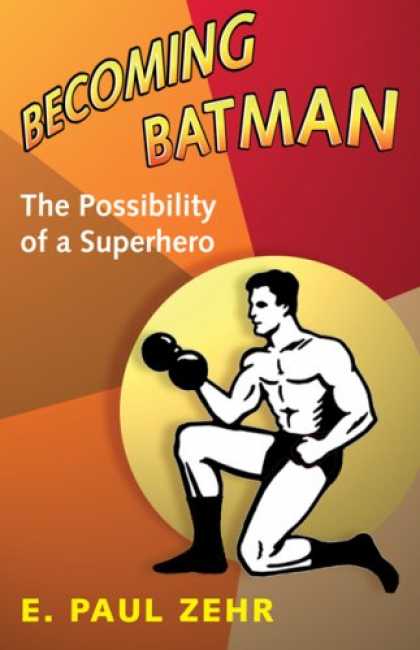
Most of my reading time this week was divided between two books, one of which was also a new purchase. The newly purchased book that I spent a lot of time with is E. Paul Zehr’s Becoming Batman. This book isn’t at all what one might expect from the title or the cover. If one were to notice that it’s put out by Johns Hopkins University Press, one might realize that it’s not a fanboy fantasy work. What it is is a book about the science of exercise and conditioning for athletes that uses “Batman” as a pedagogic tool to make more digestible scientific information like how our muscles grow or how we make our movement more efficient through practice. It’s a fascinating book if you are interested in science and martial arts (or movement arts more generally.)


Wired for StoryThe other book I’ve been tearing through is Wired for Story, which I wrote about last week. It’s a book that explains how human brains are wired to be intrigued by story, and how writers can put this information to good use.


Meeting the Dog Girls

The one book that I finished this week is Gay Terry’s Meeting the Dog Girls. This is a collection of short stories (some of which might be classified as flash fiction) that could be called tales of the weird or supernatural fiction. Most of the stories have a quirky sense of humor.


ZebrasUlcers_Sapolsky

I bought two other books this week, both of which have been on my reading list for a while. The first is Why Zebras Don’t Get Ulcers, by Robert Sapolsky.  As the title suggests, this book is about why humans are unique within the animal kingdom with respect to stress-induced illnesses. Stress reduction and mitigation have been an important question of inquiry for me as of late.


afterdark_murakami

The other book is Haruki Murakami’s After Dark. This will be the third or fourth book by Murakami I’ve read, and I enjoy his style. Ironically, this was the first book by Murakami that I noticed in the bookstore, but I never got around to reading it.

BOOK REVIEW: Gotham Writers’ Workshop: Writing Fiction by Various

Writing Fiction: The Practical Guide from New York's Acclaimed Creative Writing SchoolWriting Fiction: The Practical Guide from New York’s Acclaimed Creative Writing School by Alexander Steele

My rating: 4 of 5 stars

Amazon page

This workbook-style guide to writing fiction is put out by the well-known New York City creative writing school. With 11 chapters, it delivers lessons on all the elements of fiction including: character development, plotting, establishing point of view, honing description, building realistic dialogue, varying pacing, establishing voice, determining a work’s theme, and carrying out revisions. It also has a chapter that goes into the business of writing (as opposed to the craft of writing which is the bailiwick of the first ten chapters.)

There are a couple of features of this book that set it apart from the vast canon of writers’ guides. First, this isn’t a single author work, which means the reader has access to a much broader pool of experience than one would in a single author text. It also means that an author can be assigned a topic according to his or her strengths as a writer.

Second, across the chapters, they use Raymond Carver’s Cathedral as an example work, and they provide that story in an appendix for those who haven’t read it. It’s not that the authors exclusively use this short story for examples. But it’s useful to have a common story and to include it because there are so many great stories and novels available that no matter how well-read one’s readership, there will be works that some haven’t read. (e.g. Much as I should’ve, I haven’t yet read nor seen the movie Gone with the Wind–a common exemplary work because it’s a beloved book, a movie, and because pop culture references [e.g. The Simpsons] have made the gist of it available to even those slackers who’ve neither read the book nor seen the movie.) There’s a reason why writers’ book authors often use movies to describe story elements, because there are many fewer movies than books and vastly fewer good movies—thus a higher likelihood of a common experience. Yes, there are a few works common across most school curricula, but there’s no better way to ensure that a book doesn’t get read thoroughly than to assign it as required reading.

A third useful feature of this book–but not one that is in any way unique to it–is that it offers writing exercises throughout to help build one’s skills through practice. This is where the value of such a book truly lies. The advice such books offer are almost always the same—sometimes hackneyed but almost always valuable. (A lot of tired advice is tired because it bears repeating owing to the constant infusion of new writers who repeat the same errors.) A final useful element of the book—but also one that features in many similar guides—is a checklist in the appendices that allows one to rapidly consider the book’s key questions as they apply to one’s own writing project.

I’d recommend this book as one of the most useful writers’ guides that I’ve read.

View all my reviews

READING REPORT: March 13, 2015

Welcome to a special–not really–Friday the 13th edition Reading Report. Were I one to plan ahead, I might have read something horrifying for this week, but I’m afraid there’s nothing to inspire dread… well, I don’t really know what your dread threshold is, but unless you have phobias about good posture or classic literature, I think you’re safe.


I bought The New Rules of Posture this week, and spent a lot of my reading time with my nose in it. It’s one of those books that has one periodically getting up to try some movement or postural experiment, but I’m about 2/3rds of the way through nonetheless. It’s written by a dancer turned Rolfer, and offers good insights on the subjects of posture and breathing for those of us who are interested in evaluating and improving such things. The line drawings, many anatomical in nature, are helpful and the readability is high for a such a book. I suspect I’ll finish it in the upcoming week and will have a review up within a couple weeks.

NewRuleofPosture


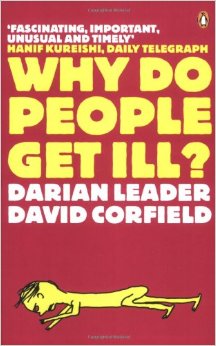
I finished only one book this week, Why Do People Get Ill? I’ve mentioned this book in earlier reports, and will soon be doing a review, so I won’t spend much time on it now. It’s essentially about the roles that stress and the inability to articulate one’s feelings about illness play in catching a disease as well as its progression.

WhyDoPeopleGetIll_Leader&Corfield


As one can see, I’ve been on a body-mind nexus reading kick lately. I’m trying to educate myself about anatomy, physiology, and related biological sciences as a means to improve  the operation of body and mind. In addition to the featured titles above, some of the other books I’ve been reading during the past week include: Zen and the Brain (there was a fascinating chapter on indigenous opioids–i.e. morphine-like substances produced within the body–among this week’s chapters), The Trigger Point Therapy Workbook, and The Sensual Body.

Zen&Brain

TriggerPtTherapy

TheSensualBody


Moving beyond the body / mind books, I did do some reading that wasn’t research related. I’m about 40% through The Painted Word, having read the entries for the letters D, E, and (part of) F. My favorite word from the week was “dromomania” which means an intense passion for travel or wandering. As in, “I, Bernie Gourley, have a bad case of dromomania.”

Painted Word


The short story collection that I’m currently reading (I try not to neglect this medium) is Meeting the Dog Girls. I read about half-a-dozen stories this week (most of them are short, and a few of them–it could be argued–don’t really constitute stories), and I’m about 20% of the way through. Absurdism is a prevailing theme, though in some stories more than others. So far, I’m enjoying this collection. It’s mostly light and easily digestible reading, but has some intense moments.

Meeting the Dog Girls


With respect to novels, I slipped away from Mo Yan’s Life and Death are Wearing Me Out, and resumed reading Victor Hugo’s Les Misérables–a book which I started a while back. I’ve got to admit that reading 19th century literature can be a struggle, and–at the risk of offending–Hugo could’ve used a modern-day editor. (I realize that an alternative interpretation is that modern-day people–myself included–could use an attention span.) I’m only about 10% in, but I got through a powerful moment during which the gendarmes bring Jean Valjean before the Bishop. If you’ve read it (or seen one of the movie or theatrical adaptations) you’ll know what I’m talking about.

LesMiserables


The only other book I spent any significant time was The Taiheiki, and if–like me–you think reading a translation of 19th century French literature can be a challenge, try reading a translation of 14th century Japanese literature. As I’ve mentioned, this book is research for the novel I’m working on. The challenge is the vast cast of characters. It’s a blend of history and fiction, and if you don’t know who was allied with whom during the war between Emperor Go-Daigo and the Hojo, it’s hard to figure out who you should be rooting for–unless it’s talking about the legendary warrior Kusunoki Masashige or one of the few other really well-known samurai.  (Kusunoki was the lord of a small and inconsequential province and his name would likely have been lost to history–despite being a brilliant General–had he not become Japan’s national paragon for the virtue of loyalty.)

Taiheiki

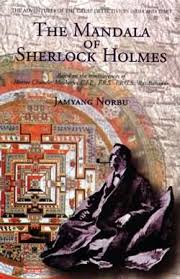
BOOK REVIEW: The Mandala of Sherlock Holmes by Jamyang Norbu

The Mandala of Sherlock Holmes: The Adventures of the Great Detective in India and TibetThe Mandala of Sherlock Holmes: The Adventures of the Great Detective in India and Tibet by Jamyang Norbu

My rating: 2 of 5 stars

Amazon page

I gave this book the lowest rating that I’ve ever given a book I reviewed. However, there’s a selection bias at work. I don’t finish (and rarely start, for that matter) books that are so horrible that they’d get a lesser rating. Ergo, any book that I finish and review has some redeeming qualities. I’ll leave it to the reader to determine whether these redeeming qualities will outweigh the deficiencies of story in this book.

The Mandala of Sherlock Holmes takes our beloved detective out of London and onto a trip from Bombay to Shangri La by way of Shimla (India) and Lhasa (Tibet.) It’s one of several pieces of Great Hiatus fan fiction out there. (I recently saw an addition that took Holmes to Japan.) Fans of Sherlock Holmes will be aware that Sir Arthur Conan Doyle became tired of the character at one point and killed him off (along with Professor Moriarty) at Reichenbach Falls. Holmes was “revived” several years later due to popular demand (and—perhaps—Doyle’s need for funds), leaving fans / authors to speculate what the detective did during his time in hiding (i.e. the so-called Great Hiatus.) This particular work tells us that Holmes spent his time in the Himalayas. It’s as good a setting as any, given that fascination with the esoteric Himalayan world was building in the West during this time. In an interesting feature, Norbu’s book brings in a fictional character from Rudyard Kipling’s Kim, Hurree Mookherjee, to serve as Holmes’s sidekick. (FYI: Kim was published during the Great Hiatus years.) The story involves shadowy plots against both Holmes and a young 13th Dalai Lama (this was the predecessor of the current Dalai Lama) that are incidental to obtaining a powerful mandala.

I’ll begin with the strengths of the work before I tear into what I found objectionable about the book. The author, Jamyang Norbu, clearly did his research, and there are some fascinating tidbits and insights into that era of South Asia history. As a Tibetan, Norbu, paints an intriguing travelogue of the territory that Holmes and Hurree traverse. Also on a positive note, I’d rate the readability of this work to be high. It doesn’t follow the 19th century so closely that it falls into the purple prose and general verbosity of that century’s literature, and I think that’s a good thing. The author manages to create a bit of the feel of 19th century literature without falling off the abyss.

The book’s negative qualities are disproportionately loaded toward the back of the book. (Part of what keeps one reading and engaged is that it seems like the book could turn out well.) Let me begin with one minor character defect of the book which is that not all of the chapters advance the story; a few are descriptive like travelogues. However, most of said chapters are so short that it’s not that problematic.

I should note that one star that might’ve been obtained for originality must be forfeited because there’s no shortage of books following the same general premise.

But the story’s major flaw is that devolves into supernatural speculative fiction done poorly. Let me say, I’m not against the supernatural genre in theory. However, as with stories about Superman, these tales are exceedingly easy to do poorly and extremely difficult to do well. In the real world, tension is easily created because the reader knows many of the limits that characters face, and a good writer forces his characters up against some of those limits. However, when characters seem to be limited by the laws of physics, but then just start pulling magic rabbits out of their hats, the tension drains. We assume our protagonist will prevail and the antagonist will be thwarted. The odds stacked against our hero(es) don’t matter if one expects they’ll pull out a—proverbial or otherwise–magic wand and claim a cheap victory. If one wants to do the supernatural well, one needs to not only make the antagonist stronger (which Mr. Norbu does), but one has to know what everybody’s limits are. Otherwise, it’s just a cheap spectacle. [I should point out that Hurree does engage in a non-magical action that is critically timed during a key moment of the story, and some readers may feel that this absolves the novel of its ham-handed introduction of the supernatural.]

There’s another problem with the degree to which the book hinges on the supernatural, and that is specific to the domain of Holmes. The supernatural is usually something to be debunked in the Holmesian domain. Sir Arthur Conan Doyle’s Holmes is a product of the dawning of the age of rationality, and he is a man of science. [Want to know more? See this Tor article entitled “No Ghost Need Apply.”]Doyle’s Holmes may accept the possibility of the supernatural and apparently supernatural elements may make appearances, but Holmes is always looking for an explanation rooted in logic and favoring the possible. While Norbu goes to great lengths to capture the flavor of Holmes in many aspects, he abandons the character altogether in favor a world that looks neither like our own nor the one Arthur Conan Doyle created.

The disappointment of this book is that it looks like it’s on a trajectory to hit its mark, but then sails wildly off target.

If you like supernatural fiction and you don’t mind that magic suddenly pops up to shape the climax of the book out of the blue, by all means pick this book up. Otherwise, I can’t say that I’d recommend it for Holmes’ fans.

View all my reviews

READING REPORT: February 27, 2015

I finished three books this week.

Antifragility

The first of these is Antifragile, the latest offering by Nassim Nicholas Taleb, whom you may know from Black Swan and Fooled by Randomness fame. While it’s his latest book, it came out a couple of years ago and I started it over a year ago.  The premise is that some entities become stronger when exposed to stressors and disorder,  and there are ways to nurture this tendency to be antifragile. While the ideas and many of the examples are fascinating, I put it down for a long time because Taleb is prone to rambling diatribes. After about the 1oooth time reading about how much he loathes the 98% of professors (we get it already), you may be ready to set it down as well.  [To be fair, Taleb probably gets a hundred death threats a year from enraged social science scholars whose life’s work will appear ridiculous to anyone who understands the gist of Taleb’s arguments in this and his preceding two books.] Taleb is a first-rate thinker who has delivered some very important messages about the misapplication of statistics, I’m not sure why he feels compelled go all Howard Stern about it–though it does probably sell a few extra copies and I suspect he is genuinely that way.


pyjamagameMark Law’s The Pyjama Game is in part a micro-history of the martial art and sport of judō, and in part is an accounting of his own experiences in taking up judō at the ripe age of 50. For me the history and evolution of judō is where the book is at its most interesting. However, if you don’t have any martial arts experience–or even if you don’t have any grappling-centric training experience–you may find Law’s discussion of testing and randori (free form training, the grappling equivalent to sparring) intriguing, or invaluable if you’re considering taking up judō, jujutsu, or sambo.


mantraSherlockHolmesThere is apparently a cottage industry of writers putting out their own Sherlock Holmes novels, and–in particular–writing about Holmes’s gap years. For those unfamiliar with the literary history of Sir Arthur Conan Doyle, at one point he got sick of writing these crime fiction novels and killed off Sherlock Holmes. However, there was such a clambering for the master detective that Doyle resuscitated Holmes. These gap years in which Holmes was believed dead have proven fertile soil for writers who wish to write their own spin on where Holmes went and what he did when he was traveling incognito. I saw a press post for a new one the other day in which Holmes goes to Japan. The Mandala of Sherlock Holmes, however, speculates that Holmes traveled to Bombay, and from there to Tibet and eventually to Shangri La. It’s an intriguing premise and offers some good travelogue type description of setting–however as a story it’s not as artfully executed as the Arthur Conan Doyle books.


I bought four books this week, two of which–in part–because they’ll help me complete the Book Riot 2015 Read Harder Challenge, which I will talk about below.


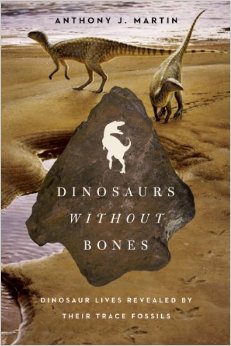
Dinosaurs_wo_Bones

Admittedly, I bought this book, Dinosaurs Without Bones,  not because the subject jumped out at me (though I’m sure it will prove thrilling) but rather because I knew the author about a billion years ago (I know; I should take geological time more seriously when mentioning a book of this subject.) At any rate, we trained at the same martial arts school in Atlanta, Georgia. That disclaimer being made, the topic looks fascinating and I’m eager to learn more about paleontological detective work.


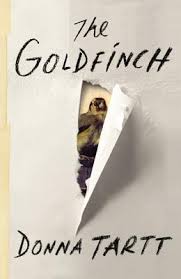
GoldfinchThe Goldfinch won the 2014 Pulitzer Prize for Literature, and so it meets an unchecked requirement for the Book Riot Challenge (recent award winner of one of the major literary prizes.) Honestly, if it weren’t for my desire to complete the challenge, I might have read Tartt’s The Secret History first. The latter books seems a little more up my alley, but I”m eager to see what this critically acclaimed novel has to offer. If it’s engaging, I’ll go back and pick up her first novel.


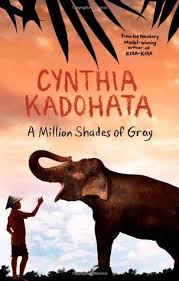
AMillionShadesofGray

No A Million Shades of Gray isn’t a mommy porn book 20,000 times more intense than E.L. James’ book. On the contrary, it’s an intriguing YA book about a teenage elephant handler who escapes into the jungle with his elephant to escape war-torn Vietnam. This book will hit on an unchecked category on the Book Riot Challenge (i.e. YA book)


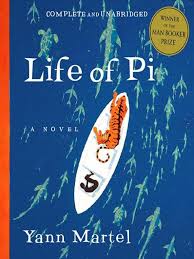
Life of Pi

Life of Pi is a book that I intended to read long before the movie came out, but still haven’t gotten around to it. It was cheap on Kindle, and so I picked it up. I’ve seen the movie, so it’ll be interesting to compare, given how visual the movie was.


I’m almost halfway through the Book Riot 2015 Read Harder Challenge. The 19 books I’ve completed thus far this year include books in 11 of the 24 categories, including:


3.) Short story collection or anthology: a.) 999: New Stories of Horror and Suspense, and b.) I Have No Mouth And I Must Scream


6.) By someone of another gender: a.) Tears in Rain, and b.) Principles of Tibetan Medicine


7.) Takes place in Asia: a.) Quarantine in the Grand Hotel, and b.) The Mandala of Sherlock Holmes


10.) A micro-history: Yoga Body: The Origins of Modern Postural Practice


12.) A science fiction novel: a.) Tears in Rain, b.) The Martian


17.) A collection of poetry: Leaves of Grass


18.) A book that was recommended: Key Muscles of Hatha Yoga


19.) A book originally published in another language: a.) Tears in Rain (Spanish), b.) Quarantine in the Grand Hotel (Hungarian)


20.) A graphic novel or comic book collection: The League of Extraordinary Gentlemen (Vol. 1)


23.) A book published in 2014: The Martian


24.) A self-improvement / self-help book: Zen Mind, Strong Body