BOOK REVIEW: The Circle by Dave Eggers

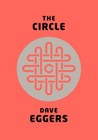
The CircleThe Circle by Dave Eggers
My rating: 5 of 5 stars

Amazon page


In Eggers’ novel, the Circle is a technology giant that looks a lot like Google + FaceBook + PayPal + Twitter all wrapped together under one corporate roof. Mae Holland, the book’s lead, is a young woman hired into the firm owing to her close friendship with a college roommate turned high level executive at the Circle, Annie. Even though Mae is brought in to work what is called “customer experience” (i.e. customer service) doing seemingly tedious work, Mae is in hog heaven. She left a job doing tedious work in a depressing environment with minimal support, and so this job personalizing boilerplate responses in a fascinating place with the opportunity to move up is a dream. The Circle is a utopian workplace where engineers are given free rein to experiment, where great minds and performing artists come to hang out, and where one gets handsomely rewarded for playing on one’s social media at work. All one needs to thrive at the Circle is a sharp mind and a willingness to accept that one’s days of privacy and solitude are behind one.

The Circle is the dystopia that some would say we are on the cusp of and others think we’ve already plunged into. It’s not Orwell’s gray dystopia of brutal state force. Neither is it Huxley’s bright and shiny dystopia of drugs and free loving. It’s a dystopia in which people willingly give up all privacy and negate the need for a neo-KGB by posting every idiotic thing that they do directly to the worldwide web. However, as in Huxley’s “Brave New World,” we see that the most nefarious character isn’t necessarily the most dangerous. The Circle is headed by an executive trinity. There’s the tech genius who we know little about until the book’s end–except that his life runs contrary to what the Circle seeks in its employees in that he’s fiercely private to the point of being mysterious. There is Tom Stenton who is the face of greedy capitalism, a loathsome character in every way imaginable. However, the real danger comes from the likable–and seemingly reasonable–Eamon Bailey who’s an idealist who thinks that people can perfect if they have no shadows in which to make mischief.

Mae is introduced to us as a likable character. She’s a hardworking but human girl next door. When we are introduced to Mercer, her ex-boyfriend and the face anti-Circle-ism, we assume that she’s being reasonable in her dislike of him. Even though he sounds reasonable, she knows him. Mercer rails against this corporatized surveillance state, and initially one may not be able to tell whether he’s a Luddite or the voice of reason. As the story goes on, however, the reader is likely to like Mercer more and more and Mae less and less. But the question remains until the end whether Mae will do the right thing as she becomes aware of the full—disturbing–picture of the Circle.

I got engrossed in this book. It’s absorbing both because of good character development and an intriguing story. That’s probably why the novel was made into a film that came out earlier in the year. It’s one of those books with the readability of popular commercial fiction, but which provides some food for thought. Some of the twists you may figure out, but the book keeps one wondering until the reveals.

I’d recommend this book for fiction readers—particularly if you have any pictures on social media with a drink in your hand or bad judgement in progress.

View all my reviews

The movie trailer, if you’re interested:

BOOK REVIEW: Black Panther: A Nation Under Our Feet, Vol. 3 by Ta-Nehisi Coates

Black Panther: A Nation Under Our Feet Vol. 3 (Black Panther 2016-)Black Panther: A Nation Under Our Feet Vol. 3 by Ta-Nehisi Coates
My rating: 5 of 5 stars

Amazon page


This is the concluding segment of a story written by Ta-Nehisi Coates in which King T’Challa (a.k.a. the Black Panther) must fight to keep his nation, Wakanda, from descending into chaos and revolution. It features “Black Panther (2016)” #9-12, as well as some supplementary material from “New Avengers (2013)” #18, 21, and 24.

As with the other volumes in this story, there is a major and a minor plot, and at the beginning of this Volume the latter resolves itself in order to fold into the main story. The major plot involves an attempted revolution fomented by a man named Tetu who heads a revolutionary organization called “the People” that has engaged in terrorist and other nefarious activities. While progress was made against Tetu and his allies in Volume 2, he still presents a threat to the throne and to Wakanda. However, Tetu isn’t the only threat to the nation. Wakanda’s problems are bigger and more systemic than that. While Tetu is a terrorist, there are dissenting factions with far more legitimacy, including the Midnight Angels (former bodyguards to the King, i.e. ex-Dora Milaje) and the much-loved philosophy professor, Changamire.

The secondary plot involves T’Challa’s search for his sister Shuri who has been trapped in the Djalia, the Wakandan plane of memory. At the end of the second volume, T’Challa resumes the search using a technology that channels and amplifies the powers of his friend “Manifold.” As it happens, bringing Shuri back occurs effortlessly, but it seems returning her to this world isn’t so critical to the story as the effect her experience had on her. She returns with an encyclopedic knowledge of the history of Wakanda as well as numerous inexplicable supernatural abilities. The past queen plays an important role in the balance of the story both by advising T’Challa, fighting, and lending her influence with the Midnight Angels (ex-Dora Milaje.)

The fight for Wakanda plays itself out as both a battle of action against forces controlled by Tetu and Zenzi as well as a battle for the minds of the people (not to be confused with the organization “the People.”) I found it to be a smart story.

The supplementary material from “New Avengers (2013)” was illuminating. My only problem with it is that it occurs after the story is complete. If one just reads this Ta-Nehisi Coates arc, one might want to go to the end of Volume 3, and read this material first or pick up the whole “New Avengers (2013)” story. By doing so, one will have a much better understanding of why there is so much conflict in Wakanda, and why T’Challa is so unpopular. It’s hinted at here and there, but I didn’t understand the motivation fully until this material showed the events rather than offering random back story tidbits.

I would recommend this story for anyone. I don’t think one needs to be a regular comic book reader or have a particular interest in the Black Panther character to find it interesting and enjoyable.

View all my reviews

BOOK REVIEW: Black Panther: A Nation Under Our Feet, Vol. 2 by Ta-Nehisi Coates

Black Panther: A Nation Under Our Feet, Book 2Black Panther: A Nation Under Our Feet, Book 2 by Ta-Nehisi Coates
My rating: 4 of 5 stars

Amazon page


This volume contains the middle portion of a three-part story arc written by Ta-Nehisi Coates. The books included are “Black Panther (2016)” #5-8 and “The Black Panther: Jungle Action” #6&7.

As the subtitle suggests, the fate of Wakanda is at stake and King T’Challa, a.k.a. the Black Panther, must find a way to keep his nation from falling. Public displeasure with T’Challa is being exploited by a man named Tetu who heads a revolutionary group called “The People.” Tetu is allied with a powerful psychic named Zenzi and—in contrast to the populist message his organization’s name suggests–the arms dealer Ezekiel Stane. However, while the might of Tetu and his allies represents a dire threat, the greatest challenge might be from a beloved scholar named Changamire, who holds both the moral high ground and the voice of reason. As Tetu sought to co-opt ex-Dora Milaje members Aneka and Ayo (now called the Midnight Angels) to gain legitimacy as well as their strength, he also seeks to get Changamire in his corner.

As the main plot of political intrigue unfolds, there is a subplot involving T’Challa’s sister Shuri who is trapped in the Djalia—Wakanda’s plane of collective memory. For a time T’Challa is forced by events to set aside his desire to get his sister back in order to battle Tetu both outright and by rekindling goodwill in the hearts and minds of his people. However, Shuri’s lessons in the Djalia, delivered by a griot in the form of her mother, are interspersed throughout the story, and by this segment’s end T’Challa finds it impossible to delay his search any longer.

Coates presents us with a human T’Challa, one who makes mistakes and whose mistakes exacerbate the threat to Wakanda. His most notable mistake is allowing himself to be talked into convening a council of “counter-revolutionary” experts who, in fact, consist of heads of the security apparatus for several corrupt regimes. His only saving grace is that Tetu has even more skeletons in his closet. T’Challa has to deal the best he can with situations in which there is no clear high ground, and that makes for a more intriguing story than one normally associates with superhero comic books. By the end of this Volume, it seems that Black Panther—along with his allies Manifold, Luke Cage, Misty Knight, and Storm—has turned things around by defeating Stane and uncovering the lair of “the People,” but then one realizes how fragile Wakanda remains.

The two bonus books “Jungle Action” #6&7 are from the early 1970’s and feature an earlier challenge to T’Challa’s throne from his archenemy Erik Killmonger. I can see why these two comics were included. Said books might be viewed as influences on this story, but there may have been better choices. At the end of the third volume (reviewed concurrently), there’s material from a 2013 run that offers great insight into why T’Challa is on the outs with his people. For those of us who pick up select stories (i.e. not all-reading fanboys), the insight offered in Volume 3’s supplementary material would be useful earlier in the reading process. (Preferably it would be in Volume 1.) The first volume includes a single book from “Fantastic Four.” It’s fun to read because it’s Black Panther’s introduction into the Marvel-verse and it shows us how formidable Black Panther is as well as letting us in on the secret that Wakanda is the most technologically advanced nation on the planet. However, I think knowing why the Wakandans are so disgruntled would help make Coates’s story more powerful.

As it’s a comic book, I should mention the artwork–even though I have no particular insight into graphic artistry—comic book or otherwise. All I can say is that I liked the art and found it effective and clear. I viewed the book in black-and-white, so I have nothing to say about color palette.

I enjoyed this arc and thought this section of it had a good balance of peril and victory for our hero. I’d recommend it broadly. I don’t think you have to be solely interested in comic books or the Black Panther character specifically to find this story intriguing.

View all my reviews

BOOK REVIEW: A Study in Scarlet by Sir Arthur Conan Doyle

A Study in Scarlet (Sherlock Holmes, #1)A Study in Scarlet by Arthur Conan Doyle
My rating: 5 of 5 stars

Amazon page

Get Speechify to make any book an audiobook 

This is the first book of the Sherlock Holmes canon, and is also the first Holmes novel (most of Arthur Conan Doyle’s Sherlock Holmes stories are short stories published in collections.) The book was first published in 1887.

There are actually two stories told in the novel. The first part of the novel describes a mysterious murder that happens in London and whose victim displays a gruesome death mask. Later a second murder is discovered. It’s not clear whether the two killings are connected but the two men were associates and so it’s a likely conclusion—though the victims’ manner of death is quite different. Because, it’s the first story, there’s also the meeting of Holmes and Dr. Watson–who becomes Holmes’s roommate and who soon becomes fascinated by the work of the world’s first consulting detective.

Part I is as one would expect of a Holmes’ story in setting and characters, the second part is out of the ordinary but none-the-less fascinating. Part II begins with a man and a little girl being rescued by a caravan of Mormons. The two are the sole survivors of a Donner Party-style ill-fated wagon train through the Rockies. The man and the girl go on to live with the Mormons, if uneasily. Eventually, the girl reaches age. While she falls for a non-Mormon hunter, the polygamous Mormon’s face a situation in which the demand for wives far outstrips supply. This sets up the intrigue of the story. That intrigue is eventually tied up by Holmes at the end of the second part.

It seems like it would be an odd way to tell such a story, in two disparate parts, but both parts of the story are well-told and gripping. Though, I found the adventure in Utah to be particularly edge-of-the-seat. There’s a reason Holmes was such a popular character. Arthur Conan Doyle wove fascinating tales.

I’d recommend this book for all fiction readers—unless you’re a Mormon with anger issues, then you might want to just pass.

View all my reviews

BOOK REVIEW: Steppenwolf by Hermann Hesse

SteppenwolfSteppenwolf by Hermann Hesse
My rating: 5 of 5 stars

Amazon page


Harry Haller lives out-of-step with virtually every aspect of modern society. He finds the prevailing music, art, and entertainment to be trivial and low-brow. He has pacifist tendencies amid strongly nationalist peers. This disjoint between his individual nature and society’s has made him depressed to the point of being suicidal—but he hasn’t been able to bring himself to commit the act, and has instead given himself a deadline.

Enter Hermione (note: her name seems to be rendered “Hermine” in some editions), a woman who is in many ways the exact opposite of Haller. She loves Jazz, enjoys dancing, and doesn’t like to be too serious or analytical about anything. She becomes his Yoda. She teaches him to dance, introduces him to a lover, and exposes him to the delights of frivolity. While the book opens in a way that makes one think it might be an indictment of modern society, what it really shows is how Haller’s unhappiness comes from insisting that society should be fitted to his worldview and proclivities. If he can find a way to get beyond that insistence, he can transcend his unhappiness.

One of the fascinating intrigues of the book is that Hermione early on promises that she will get Haller to do two things: fall in love with her and something else which I’ll leave to the reader but which seems even more unfathomable. This sets up an intense tension that one eagerly follows through the rest of the book. (It’s not so surprising that Haller will fall for Hermione. That seems to happen immediately. Still, you’ll remember that I pointed out that Hermione played cupid and set Haller up with her friend Maria, so it’s fascinating that she intends to make him fall in love with her.)

The organization of the book is a bit unconventional, but it works both in terms of being easy to follow and in providing a multi-dimensional story. (Though if one missed the first part on wouldn’t be at a terrible loss.) The first part is an “Editor’s Preface” as told by the nephew of Harry Haller’s landlady. He comes into possession of Haller’s manuscript and explains what it is that made him go to the trouble of publishing it, despite—as he tells us—he ordinarily would not. It explains how this man’s limited interaction with Haller intrigued him and made him want to tell the story. The second part is labeled “Harry Haller’s Notebooks (for mad people only),” and is from Haller’s perspective. This section shows us a depressed Haller walking the streets and railing against the futility of the world when his attention is captured by a sign for a theater that announces: “Admission not for everybody. For mad people only.” From that point we enter the story itself, which is entitled “On Steppenwolf: A Tract (for mad people only.)”

The novel gets bizarre / surreal at the end as Haller is going through his “Magic Theater” experience. One doesn’t know exactly what is real, what is hallucinogen-induced, and what flows from madness. However, this warped reality works well for a story of transcendence and transformation.

I’d recommend this book for readers generally. It’s short, readable, has intriguing characters, and is thought-provoking. If you like stories that make you think, you’ll enjoy this book.

View all my reviews

BOOK REVIEW: Satantango by László Krasznahorkai

SatantangoSatantango by László Krasznahorkai
My rating: 4 of 5 stars

Amazon page


This was the first novel by László Krasznahorkai, who’s considered perhaps the most important living Hungarian writer (a country with a literary tradition disproportionate to its small population.) “Satantango” was first published in 1985, and it’s been said to remain Krasznahorkai’s best known novel—though winning the 2015 Man Booker Prize may have pointed people toward his more recent works.

If there’s one thing one must know about the Hungarian mindset in order to feel where this novel will take one, it’s the national proclivity for gloominess. You may have heard of the song “Gloomy Sunday” by Rezső Seress, which is often called the “suicide song” because of the number of people who’ve quoted its lyrics in suicide notes, clutched its sheet music as they committed suicide in the Danube, or had it on the phonograph when their bodies were found. If “Gloomy Sunday” is the epitome of melancholy put to song, “Satantango” just might be its literary counterpart—the perfection of gloom in novel form. The book scores highly on emotional evocativeness.

The story is set in a small Hungarian village that is swamped in by perpetual rains. The village has been shrinking as many of the villagers have abandoned it, and the few remaining residents are often known to interact at the village’s only pub—you know how alcohol-fueled scenes can be cheerful or depressing, this is the latter. I won’t get into the details of the story, but suffice it to say that constant tension results from this situation in which everyone knows everyone else and all are more or less trapped together in the confines of the village. Some have wronged others. Some covet that which belongs to others. And everybody’s dirty laundry has been seen flapping in the wind by everyone else. For literary fiction, there’s an intriguing story told using this tense atmosphere.

So, it’s a good story that’s highly emotionally charged. What more could one want? Well, the warning I feel obliged to issue is that this novel’s readability is low. In other words, it’s challenging reading in almost every way that a novel can be challenging to read, except being bad—of course. There are changing points of view and a non-linear story line, but that’s not the worst of it. I read it in an e-format, and it has near zero white space. By that I mean there are no indented paragraphs and pages are just huge, solid blocks of text. I suspect the same is true of hard-copies, but I can’t recall picking one up. The author is stingy with information early in the story, and this leaves one little by way of mnemonic handholds to keep a grip on the story through to the heart of narrative arc. The book is presented and organized to be knocked out in a day or two of intense reading. The problem is, it’s not that type of novel–both because it would be an overdose of gloominess and because it would be mentally tiring to read this style of writing in that way.

I would recommend this book for readers of literary fiction unless: a.) you are prone to depression; or b.) you find it extremely frustrating when a writer / publisher make no efforts to make the reading experience a pleasure. This book is optimized for masochistic readers. If you love a difficult read, this is the book for you.

View all my reviews

BOOK REVIEW: The BFG by Roald Dahl

The BFGThe BFG by Roald Dahl
My rating: 5 of 5 stars

Amazon page

Get Speechify to make any book an audiobook 

This is an excellent, little story about a big, friendly Giant [hence, BFG.] The main characters are the BFG and an orphan named Sophie. The former abducts the later from her bed, which sounds terrible, but he’s conflicted about it. He snatches her because she saw him during his late-night work delivering good dreams to children, and he can’t have any witnesses lest the townspeople get pitch-forky with him. Sophie has no parents or siblings to miss her, and she doesn’t mind being away from the orphanage and making a Giant new friend, but she doesn’t wish to live out her life in Giant Country. While the BFG is a kind and delightful character, he’s the exception to the rule when it comes to Giants. Furthermore, because he lives off the snozzcumber [a repulsive vegetable] rather than dining on people, he’s a runt among his human-eating species. Therefore, he’s no match for his nine mischievous fellow residents of Giant Country. Sophie and the BFG work together to try to achieve an end that is pleasing for all parties concerned—well, except for the nine human-eating giants.

The story is clever, and the BFG character is well-developed and interesting. BFG is wise, but he has trouble with language owing to his lack of formal education and he often mixes it up in whimsical ways. He’s also conscientious about his work of catching dreams and delivering them into the bedrooms of sleeping children so they can have delightful dreams. He also takes bad dreams out of commission by catching them in a jar and keeping them on shelves in his cave. Sophie is smart and likable—if not as interesting than BFG.

The book is illustrated by Quentin Blake in the same style as the other Dahl books. The version I have has black-and-white line drawings, but there is color edition that may be more appealing to children.

This is a great story presented with humor, and I recommend it.

View all my reviews

BOOK REVIEW: Monkey: A Folk Novel of China by Wu Cheng’en

Monkey: A Folk Novel of ChinaMonkey: A Folk Novel of China by Wu Cheng’en
My rating: 4 of 5 stars

Amazon page


If you’re familiar with any Chinese folklore, it’s probably this story. But you probably know it as “Journey to the West.” It’s not only been released in numerous editions as a novel, it’s also been adapted for film, stage play, and I’m sure there must be a video game of it out there.

If you’re thinking, “Chinese folklore? Sounds boring.” Think again. This is a superhero story. Monkey, also known as the Monkey-King and “Great Sage Equal to Heaven,” is an immortal who has all manner of supernatural powers. He can fly. He can make copies of himself. He can transform himself—either disguising himself as another being or appearing as an inanimate object. He has an iron truncheon that can be the size of a sewing needle or a mile long and which is indestructible. Wielding said staff, he can defeat armies or deities.

In fact, the flaw in this story isn’t a lack of adventure or thrill. On the contrary, it’s one adventure after the next. If anything, the flaw is “Superman Syndrome.” That’s what I call it when the hero is so ridiculously overpowered that even when he’s fighting gods, dragons, or whole armies there’s still no doubt about the outcome.

Of course, the Monkey does eventually meet his match in the form of the Buddha. The Buddha defeats Monkey not in combat, but in a bet. That event shifts the direction of the story. In the early chapters, Monkey is goes about heaven and earth arrogantly wreaking havoc. He’s not altogether detestable. He does have his redeeming traits, but he’s insufferably arrogant and mischievous. After he’s imprisoned following his run-in with the Buddha, a monk is assigned to go to India to bring back scriptures (hence, a “journey to the west”) to China. Monkey is assigned to be the monk’s guardian and along with two others that they pick up along the way (Pigsy and Sandy) the monk is escorted on his journey. The party faces one challenge after the next, and the trip is long and arduous. Some of the challenges require brute force but in many cases they are battles of wits. So while Monkey may be overpowered, he does experience personal growth over the course of the story.

The story is told over 30 chapters, each set up with a cliffhanger. I enjoyed this translation by Arthur Waley. It is end-noted, which is useful given the historic and cultural nuances that may not be clear to readers.

It should be noted that this is unambiguously a Buddhist tale. There is a bias against Taoists and other non-Buddhist religions evident throughout the story. It’s not just the fact that the Buddha easily defeats Monkey when no other deity or group of deities can, there’s a steady stream of anti-Taoist sentiment. So, Taoists and Chinese Folk Religion practitioners be warned, I guess.

I would recommend this book for fiction readers, particularly if you have an interest in the superhero genre or Chinese literature.

View all my reviews

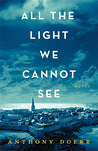
BOOK REVIEW: All the Light We Cannot See by Anthony Doerr

All the Light We Cannot SeeAll the Light We Cannot See by Anthony Doerr
My rating: 5 of 5 stars

Amazon page


This review will be short because, JUST READ IT.


“But, historical fiction isn’t my bag,” he said.


This isn’t that kind of historical fiction—i.e. the kind that binds one in a web of cultural minutiae and reads like a history book writ purple. This book will make you enrapt.


“But, I don’t like war stories. Too violent,” she said.


I bet you’ll like this one. Yes, it’s set during World War II, and war’s ugly face peeks around the corner from time to time, but one also sees how ordinary people do extraordinary things when exposed to the crucible of war. War doesn’t just bring out the worst; it also forces people to be better than they’ve ever had cause to be. The book is largely about a girl living under occupation and isn’t so much about life on the front lines.


How can I so boldly assert that one should read this particular book? (I normally lay out the facts first and only at the end make a recommendation.) Because this is one of the best crafted novels I’ve read. It’s extremely readable and engaging. The characters are superbly developed and one feels one knows them. Even the closest thing to a villain (if you don’t count war as the villain) is a complex and nuanced character who one wants to understand better.


I will tell you something substantive about the novel. It interweaves the stories of two teenage characters whose lives are fated to become entwined through the fortunes (and misfortunes) of war. The first is a blind girl who lives with her father in Paris. Father and daughter flee when the Nazis occupy France and end up living on the coast at Saint Malo with her great-uncle who is a shut-in owing to his experience in the last Great War. Of course, the move to the coast only delays the occupation and the point at which the war comes to them.


The other lead character is a German orphan boy with a gift for science who gets prematurely drawn into the war because of his great intellect and skill with radios. Not only are these characters both people who readers are drawn to, they both experience great growth over the course of the story. Imagine being blind in a war zone–or even just being a young nerd drafted into the war–and you can taste some of the emotional tension that resonates throughout this book. I won’t say that it’s all happy endings. It never is in war.


I’d highly recommend this book for all readers.

View all my reviews

BOOK REVIEW: Tropic of Cancer by Henry Miller

Tropic of CancerTropic of Cancer by Henry Miller
My rating: 3 of 5 stars

Amazon page


This, Henry Miller’s first novel, is about a young man living a bohemian life in Paris in the late 1920’s. It reads autobiographically. It’s often said that literary fiction downplays story in favor of character development. This isn’t necessarily true today, but it seems to be the case with this 1934 novel. There’s not much story—though a little one is packed in at the very end. The book does illuminate the lead character, but the reaction that character evokes is neither love nor hate but more of an “ewww” of disgust. Put another way, he’s like a Chuck Palahniuk anti-hero (e.g. think of Victor from “Choke”), but without out the quirky humor to make him amusing and interesting. This will make more sense in the next paragraph.

This book is often classified as erotica, but many readers might not find it to be erotic. Like a shock-jock, Miller chooses the most vulgar term to stun rather than using descriptive language to arouse. The lead (and other characters) spends a lot of time in bed with prostitutes, but at the same time he’s sleeping on the couch of some acquaintance or grumbling that he can’t afford a sandwich. Lest one think I’m hammering the book because of gratuitous sex, let me say that it’s not the sex that I find dismaying but a guy whose priorities are so askew of Maslow’s hierarchy as to make one wonder if he’s of the same species. There’s an uncanny valley with this character, only not with respect to facial appearance. All of that would be fine if the character experienced change over the course of the book, but the character neither grows nor is destroyed. I should also point out that I like Palahniuk’s anti-hero stories, but Miller takes himself too seriously to be fun, and I think that fun is the only way such a character makes for appealing reading.

So far I’ve made this book sound horrible, but I didn’t savage it with a sour rating. Ergo, there must be some redeeming value. There is. Miller’s use of language is intermittently gorgeous. He gets in these streams of consciousness in which poetry infuses into his prose. During these times, the story—such as it is—disappears even further into the hinterland, but the words can spark. Maybe Miller should’ve forgotten the hype that the novel is the ultimate literary art form and devoted his efforts to poetry.

I offer a qualified recommendation of the book. If you’re a reader of erotica and heard that this was a classic of that genre, then pursue it with caution. However, if you love words artfully twisted into little flashes of light, maybe you should check it out.

It goes without saying that there’s graphic content, but there are other reasons readers might be sensitive to this book. Not that I encourage avoiding a book because a character makes one feel ill-at-ease. (On the contrary, I frequently encourage it.) If a lead who comes off as simultaneously lusting after and despising women is a trigger for you, be forewarned this is such a character. (Note: He may also be anti-semitic, racist, and homophobic as well, but those elements aren’t explored in great detail. It could well be that the character doesn’t like humans in general. Maybe he was supposed to be a robot after all [hence the uncanny valley] and in that case I recant this review.)

View all my reviews