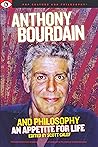
BOOKS: “Anthony Bourdain and Philosophy” ed. by Scott Calef

Anthony Bourdain and PhilosophyAnthony Bourdain and Philosophy by Calef Scott
My rating: 5 of 5 stars

Amazon.in Page

Release Date: December 26, 2023

These pop philosophy books that examine philosophical ideas through the lens of a particular pop culture personality or entity have become, well, popular. It’s not hard to see why; it’s an easy way to take your medicine, your medicine being to learn philosophical concepts. And, let’s face it, scholarly philosophical books are often nigh unreadable, being laden with jargon and having a tendency to get so lost in the minutiae of razor fine points that they display no relevance to the human experience. I am not immune to the appeal of such books, though when I see a book like “Miranda Sings and Philosophy” I figure I can take a hard pass. But this one caught my eye because Anthony Bourdain did live a life shaped by his own particular philosophy, and an intriguing one at that.

Like most of these books, this is a collection of essays written by different authors. As such, the quality and relevance of the included chapters does vary somewhat.

The book is divided into four parts. The first part looks at the subject of the work for which Bourdain was best known — i.e. at the intersection of food and travel. In these four chapters, authors explore the aesthetics of food and questions like: Do “expert” views on food matter? What is disgusting? And what role does culture play in the culinary experience?

The second part is entitled, “life,” and these five chapters look at Bourdain, the man. That is, they shift away from his work, and look at Bourdain as a martial arts student, a storyteller, and -generally – as a person. These chapters also offer insight into his epistemological perspective — i.e. how he viewed (and engaged in) the pursuit of truth, as well as touching upon his philosophical views more broadly.

The third part takes another turn to examine Bourdain’s addiction and his death by suicide. The chapters present broader philosophical frameworks on suicide and freedom, as a means to put Bourdain’s experience in perspective.

The final part is really kind of a grab-bag of subjects that don’t fit neatly into the other sections. Probably not coincidentally, this is where most of the book’s rough spots are located. It sometimes seems that Bourdain’s philosophy is not so much the subject anymore, and some authors convey their ideas more clearly and effectively than others. This is not, by any means, to say that any of the chapters are completely stinkers, nor to say that all of the chapters are defective. Chapter 13 [which, BTW, I think could have found a spot in Part II] does an interesting job in clarifying Bourdain’s approach to ethics, no easy task as it can seem like an odd mix of spiteful nihilistic impulses and compassionate humility (and it certainly evolved over time.) But even Chapters 14 and 15, which are not only the least flattering discussions of Bourdain but also the most didactic, have something to offer. The first lays out the scandal involving Bourdain’s girlfriend who was a MeToo leader but who also paid off a young actor who accused her of statutory rape, a pay-off made by Bourdain and which seems to be a factor in his suicide. Chapter 15 offers examples of what the author believed Bourdain did right and wrong in discussing the historical context of the places he visited that had been colonized. Ch. 16 was a discussion of the ethics of engaging in luxuriant fine dining in a world with starving people. I thought this chapter would stay the course set by the previous two, but it did shift back into academic objectivity by producing a more complete discussion of competing viewpoints. The penultimate chapter goes more niche than the others, but is a fascinating look at the ethics of AI generated voicework for the “Roadrunner” documentary — i.e. using AI to make it sound like Bourdain said things that he wrote in emails or books but never said [at least not into a recording device.] The last chapter involves climate change and episodes Bourdain did in Madagascar and Bhutan. This was both one of the longer chapters and definitely the most muddled. It remains unclear to me exactly what the author was trying to say, exactly. It’s perfectly readable, and yet unclear.

All in all, I enjoyed this book (as much as one can “enjoy” a book that is about a deceased beloved figure,) and thought it offered some excellent food for thought.

View all my reviews

PROMPT: Food Specialty

Daily writing prompt
What food would you say is your specialty?

I’d say Thai curry. I used to make a mean Pad Thai, but it’s been a long time since I’ve cooked that.

PROMPT: Favorite Foods

What are your favorite types of foods?

Vegetables & fruits, also nuts.

PROMPT: Comfort Foods

What’s your go-to comfort food?

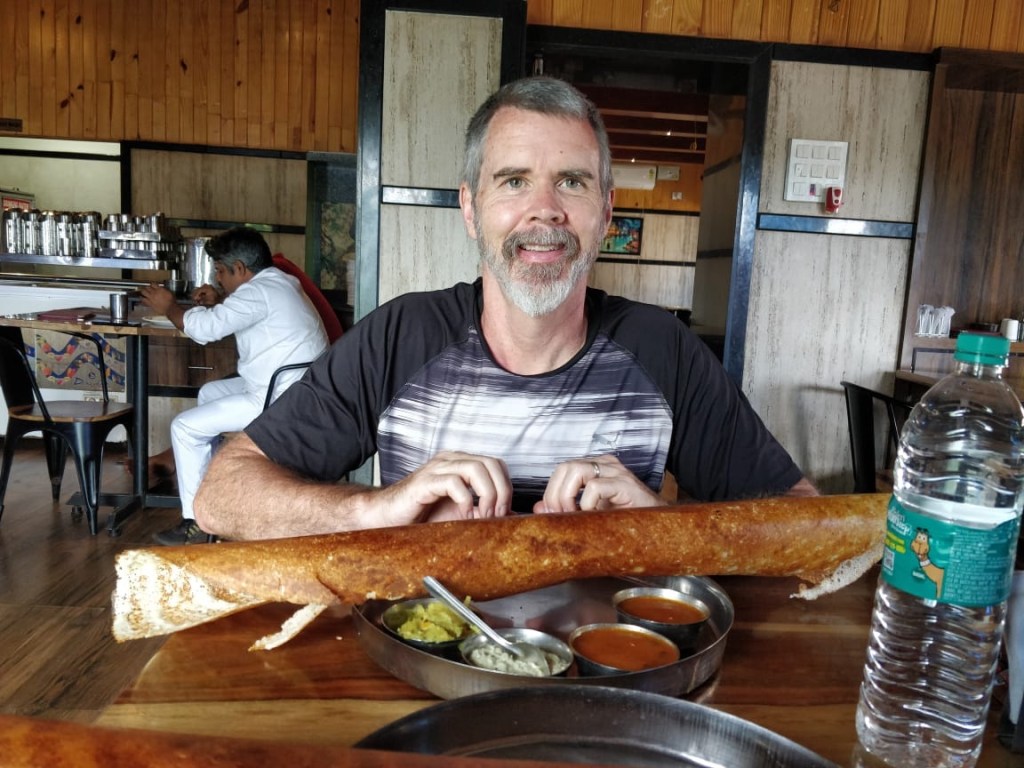
Completely depends on where I am at the moment. Here, in South India, it’s a paper masala dosa.

But [for example] in Budapest it’s túrós csusza, in Bangkok it’s pad thai, in Bombay it’s vada pav, and in Vajrayana Buddhist areas it’s momo.

BOOK REVIEW: Made in Chicago by Monica Eng & David Hammond

Made in Chicago: Stories Behind 30 Great Hometown BitesMade in Chicago: Stories Behind 30 Great Hometown Bites by Monica Eng
My rating: 5 of 5 stars

Amazon.in Page

Release Date: March 21, 2023

Chicago is a food city. Once famous for its stockyards and still a major transit point for the products of America’s breadbasket, the city is home to a diverse people, a gathering of migrants and immigrants who brought a wide variety of foods from their homelands and put the necessary twists on them to make them salable to Chicagoans while using available ingredients. This book features entries on thirty foods and beverages that are products of Chicago ingenuity, be they dishes that were wholly invented in the Windy City or one’s that have a distinctive Chicago-style variant. Foodies know exactly what is meant by Chicago-style hot dogs, pizza, or tamales.

If all you know about Chicago cuisine is that ketchup on a hot dog is considered a sin, you’ll learn about some colorfully named Chicago inventions such as: “the Jim Shoe,” “the Big Baby,” and “the Mother-in-Law,” as well as many others that are more prosaically named, if equally calorically dense. One also sees the mark of Chicago’s immigrant story in the Akutagawa, Flaming Saganaki, Gam Pong Chicken Wings, the Maxwell Street Polish, and Chicago Corn Roll Tamales.

Each chapter discusses the nature of the respective dish, its influences, the [often contentious] origin of each item, where one can obtain said dish, and (for most) includes a recipe for making one’s own home variant. So, it’s mostly food history, but with a bit of cookbook, as well. There are pictures throughout, of the foods and in some cases of the location that invented or popularized each dish.

Be forewarned, while Chicago is a city that loves food, it’s not a place that’s wild about nutrition or moderate serving sizes. In fact, I feel certain that many people attempting to consume every item in this book in, say, one month’s time would drop dead of a coronary shortly thereafter (if not during.) Most of these dishes are foods done fast and served with an allowance of fat, sugar, and / or meat suitable for a family (for several days.)

If you’re a traveler (or a Chicagoan) and want to know more about quintessential windy city foods and where you can sample them, you must read this book.


View all my reviews

BOOK REVIEW: Real Food Fermentation, Revised and Expanded by Alex Lewin

Real Food Fermentation, Revised and Expanded: Preserving Whole Fresh Food with Live Cultures in Your Home KitchenReal Food Fermentation, Revised and Expanded: Preserving Whole Fresh Food with Live Cultures in Your Home Kitchen by Alex Lewin
My rating: 5 of 5 stars

Amazon.in Page

Out: December 21, 2021

This is an expanded edition of a book that explores the process of fermenting a wide range of foods and beverages, including – new to this edition – sourdough bread. It’s a great book for a neophyte such as myself as it covers all the basics without getting too arcane (though it does include natto and some other regional foods that may not be widely familiar.) The book provides step-by-step instructions for making sauerkrauts (and variations such as Kimchi,) yoghurt & kefir, fermented fruit condiments, beverages (alcoholic and non-,) bases / starters (e.g. vinegar,) and sourdough products (including, but not limited to, bread.) It describes some of the challenges one may run up against as well as showing what equipment one will need. It also proposes some of the ways a curious person might experiment with variations.

Color photos are used to clarify the production processes as well as to show appetizing finished products that will whet one’s appetite.

If one is looking to get into a narrow domain of fermentation, e.g. making beer or other alcoholic beverages, one may want to look elsewhere for a more specialized and in-depth guide (of which there are many.) However, this book may introduce one to ideas for brewing adventures one wouldn’t have otherwise considered.

This book is an awesome choice for someone looking to get into or to expand their food fermentation activities. It’s well-organized, beautifully presented, and – as I mentioned – not overwhelming. With the mounting evidence of the benefits of fermented foods, this is a great guide to learn more about how one can best begin producing such foods at home.


View all my reviews

Learning Indian Cooking in Bangalore

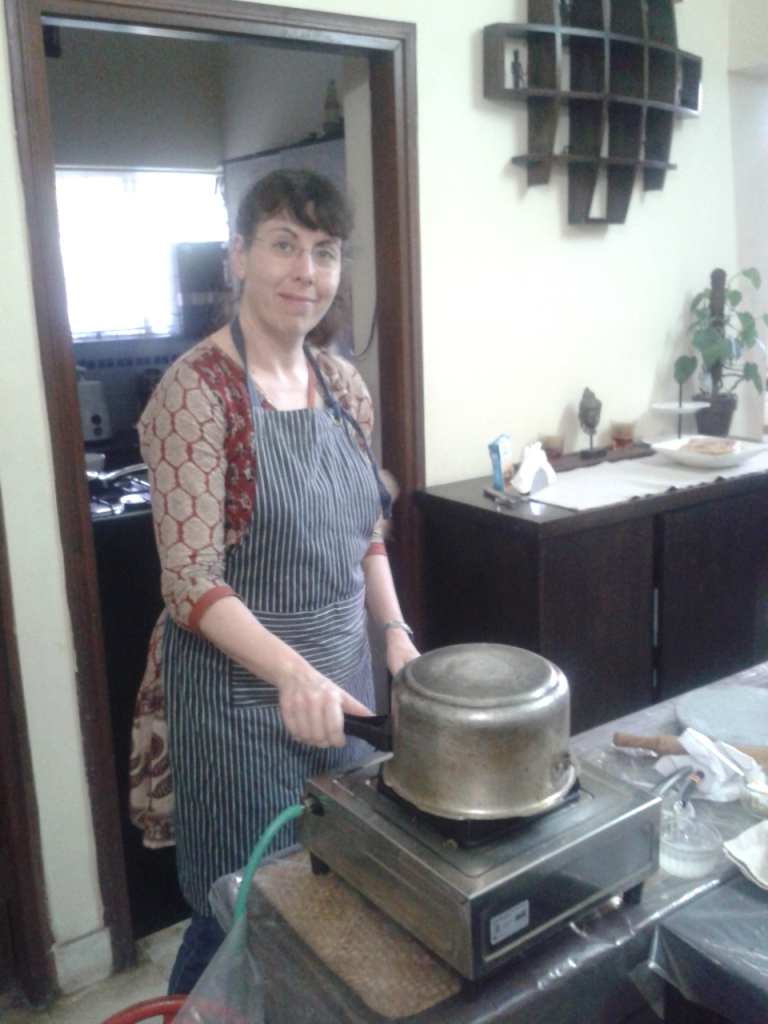
I'm stirring the pot.

I’m stirring the pot.

The thing about Indian food–with its penchant for pureed gravies–is that I find it delectable, but often have no idea what I’m eating or how it got to me looking, tasting, and smelling like it does.


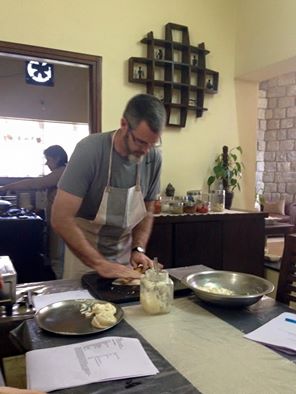
That is until recently. A couple of weeks ago I attended a cooking class at Manju’s Cooking School in RT Nagar in an attempt to rectify (or at least reduce) my ignorance. Manju’s offers a wide variety of classes (Indian and non-Indian, veg and non-Veg, cooking and baking, etc.)


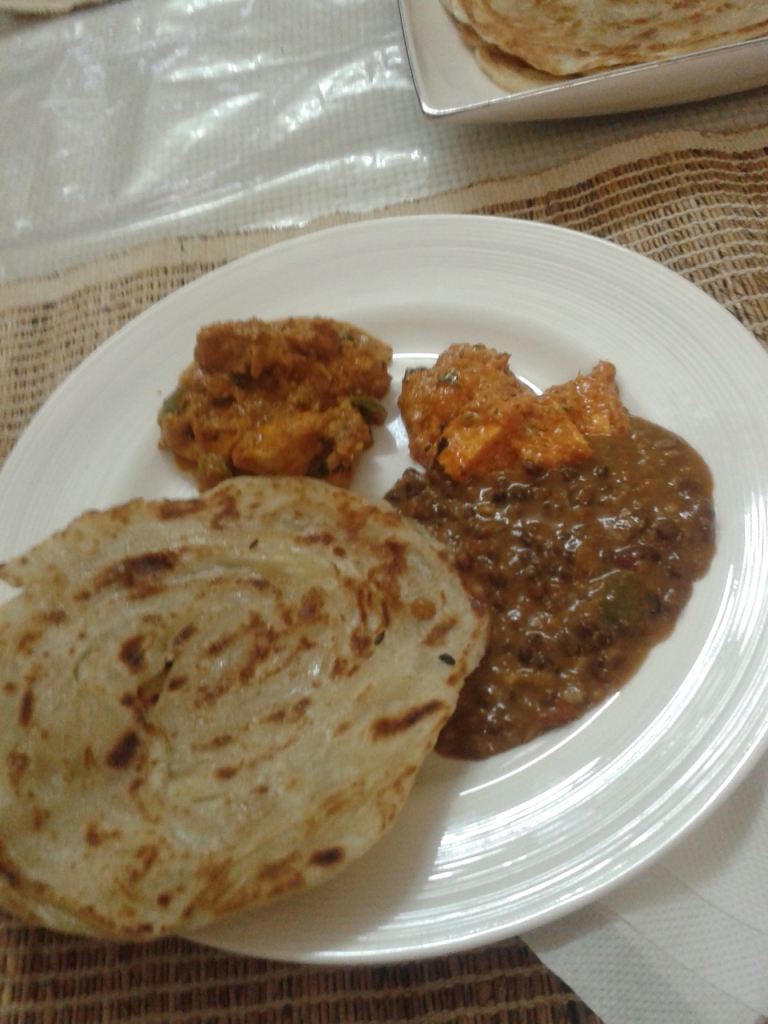
I attended with a group of friends, and we constituted a class unto ourselves. We, therefore, got a quick and dirty introduction to a number of common / typical Indian foods (veg and non-veg, and both North and South Indian.) The menu we prepared consisted of two breads (kulcha and Malabar parota), dal makhani, paneer butter masala, and kadai chicken.


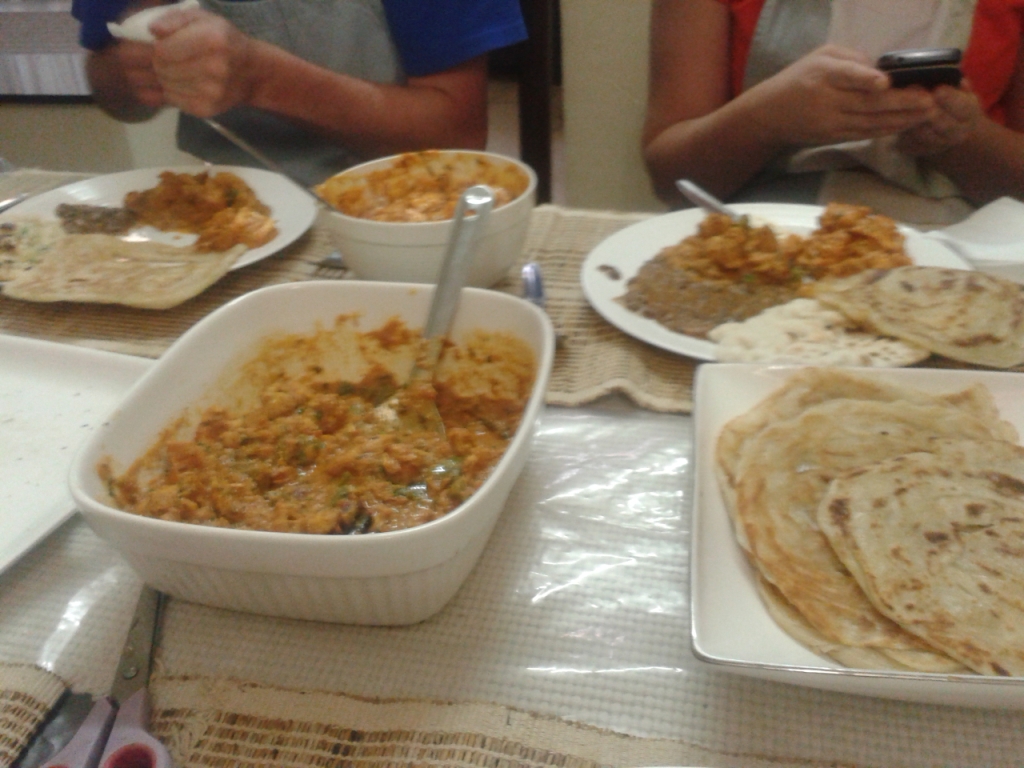
The class took 2.5 or 3 hours, and ended in a banquet of the foods we hand prepared.

20150201_170142 20150201_170013


Some of the fun facts that I learned include:

-“Kadai” in the name of dish just means that it’s wok-cooked.

20150201_154859

-A Kulcha is essentially a naan of a different thickness.

-Dal makhani requires a lot of prep, even if you have access to a pressure cooker.

-There’s a lot of finely chopped onion in these gravies that often goes unnoticed.

-One can cook with the pot upside-down. This is how we cooked Kulcha. In a restaurant it would be cooked in a Tandoor oven, but at home you can cook it stuck to the bottom of a deep pot.

20150201_163717

-Lastly, the key to a the flaky goodness of a Malabar parota is lots of fat… who’d have thought?

20150201_162915

Me&Parota