Category Archives: China
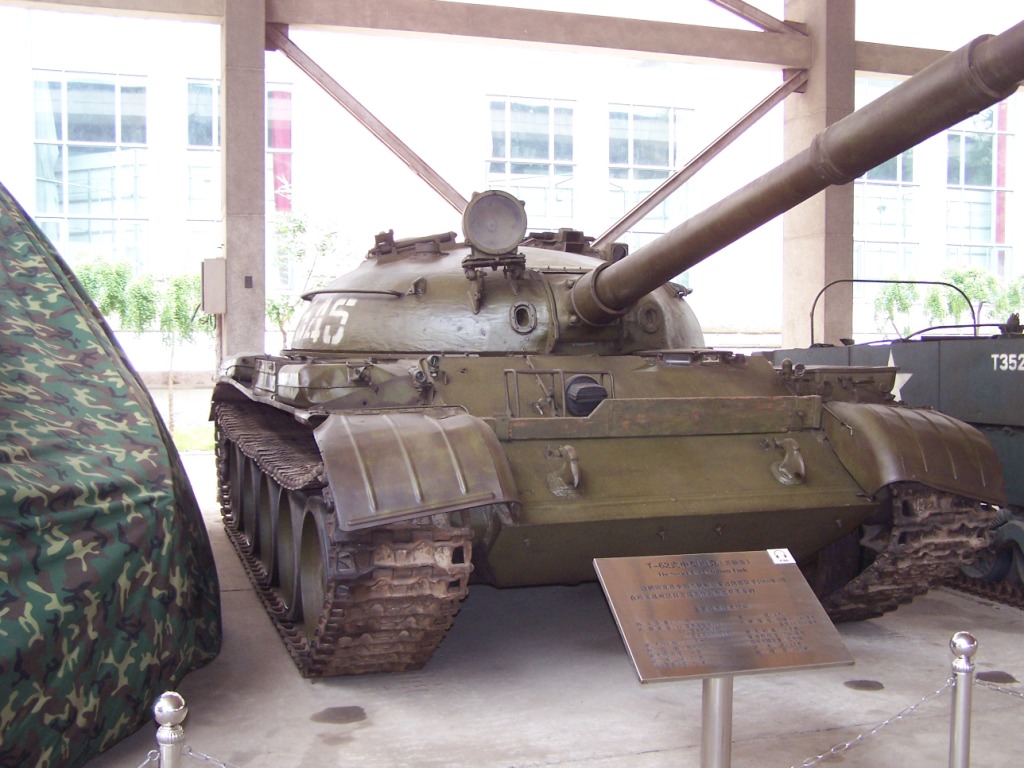
DAILY PHOTO: Soviet T-62 in Beijing
BOOK REVIEW: Ip-Man Portrait of a Kung Fu Master by Ip Ching, et. al.
IP Man: Portrait of a Kung Fu Master by Ip Ching
My rating: 3 of 5 stars
Ip Man led an interesting life. The master of Wing Chun Kung Fu lived through tumultuous times that included the Boxer Rebellion, the Sino-Japanese War, and China’s Communist revolution. After the Japanese occupation he served for a time as a police chief. Coming from a wealthy family, he experienced a riches to rags fall when the Communists took over. He had to move from his home in Foshan to Hong Kong. His use of kung fu was not restricted to the training hall, but, rather, included a few real world altercations. A couple of films have been made(loosely) about his life.
All that being said, this book doesn’t do a great job of capturing the life of this intriguing man. To be fair, the book isn’t really a biography proper–though the title might lead one to believe it was. However, it’s not entirely clear what the book is. Its fifteen chapters are each built around a principle and use vignettes from Ip Man’s life to illustrate how the Grandmaster lived virtuously. This makes the book seem more like treatise on martial arts philosophy and/or strategy. However, some chapters do a better job of making clear what the actual principle is and how the events of Ip Man’s life exemplify them than do others. In some parts it does a great job but in others it’s only lackluster.
There are some fascinating stories about the man’s life in the book, but they are generally told in a lifeless manner. In part this may be done on purpose as we are told that Ip Man eschewed embellishment and favored humility, but it makes the reading experience less than gripping. It’s also probably that some of the details were lost when Ip Man died in 1972. This lack of detail leaves one at times wondering. Throughout most of the book we get a picture of Ip Man as a virtuous warrior. However, there is one vignette in which we read about the Grandmaster picking a fight with a man by taunting him with humiliating insults about the man’s appearance. Ip Man does this to teach his student a lesson in courage. His lesson notwithstanding, this behavior paints Ip Man as anything but virtuous–rather than a humble martial arts master he becomes a pathetic bully. The author, Ip Man’s son Ip Ching, suggests that this might have been a setup for the student’s benefit, but with the prior assent of the bullied man. At any rate, there was no fight because the bullied man backed down–whether because it was staged or out of genuine fear remains unknown.
For some readers the most surprising omission will involve a lack of any mention of the man who was far and away Ip Man’s most famous student, namely Bruce Lee. There may be a number of reasons for this omission, including a desire to prevent the teacher’s story from being overshadowed by his student’s fame. However, most readers would probably like some inkling of how the ill-fated superstar came to train with Ip Man and what he learned from him. In fact, the only reference to the entertainment aspect of kung fu is a picture caption that shows Shek Kin, the villain “Mr. Han” from Enter the Dragon, at Ip Man’s funeral.
I would recommend this book only for those that have a particular interest in martial arts. It does offer tidbits of interesting events from Ip Man’s life as well as a few great life lessons. It benefits from being a concise book, and thus is not a major time investment to read. However, I don’t know that–short as it is–it would hold the interest of the general reader. Hopefully, someone will take on a more extensive English-language biography of this fascinating man’s life while there are some key people still alive to be interviewed about his life story.
DAILY PHOTO: A Walk in the Park
Beijing has workout equipment all over the place–mostly in parks, but sometimes just by the side of the road. One sees the same sorts of things in Bangkok, and even Phnom Penh has exercise equipment on the river front strip of park.
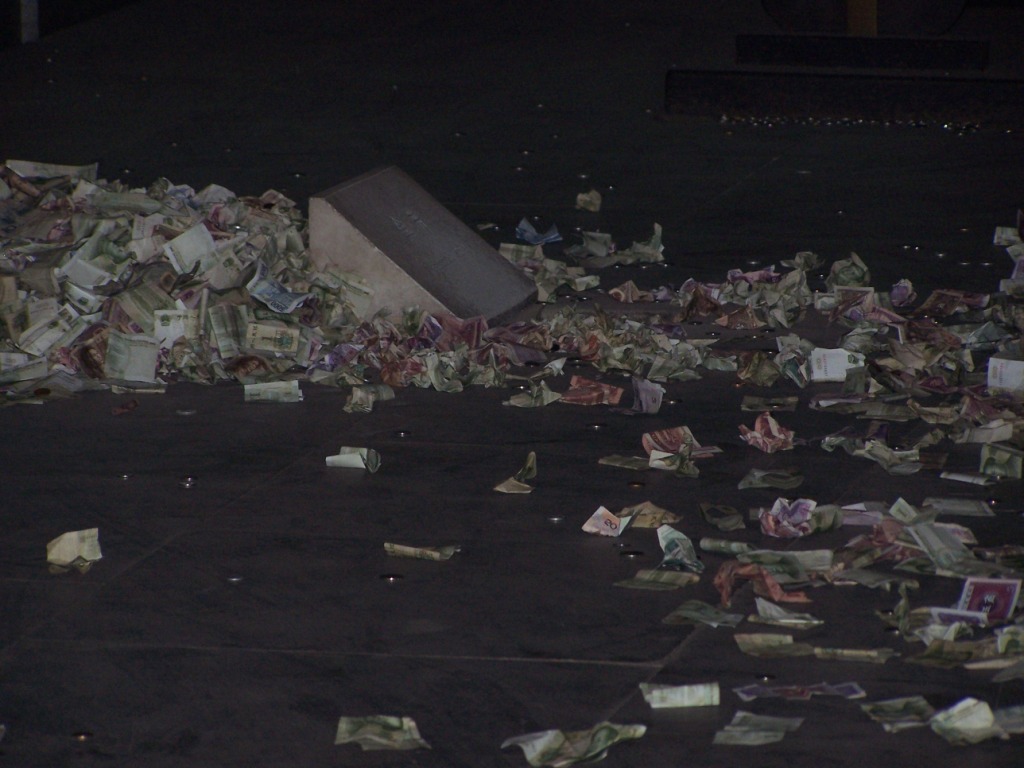
DAILY PHOTO: Cash Offerings in the Ming Tombs
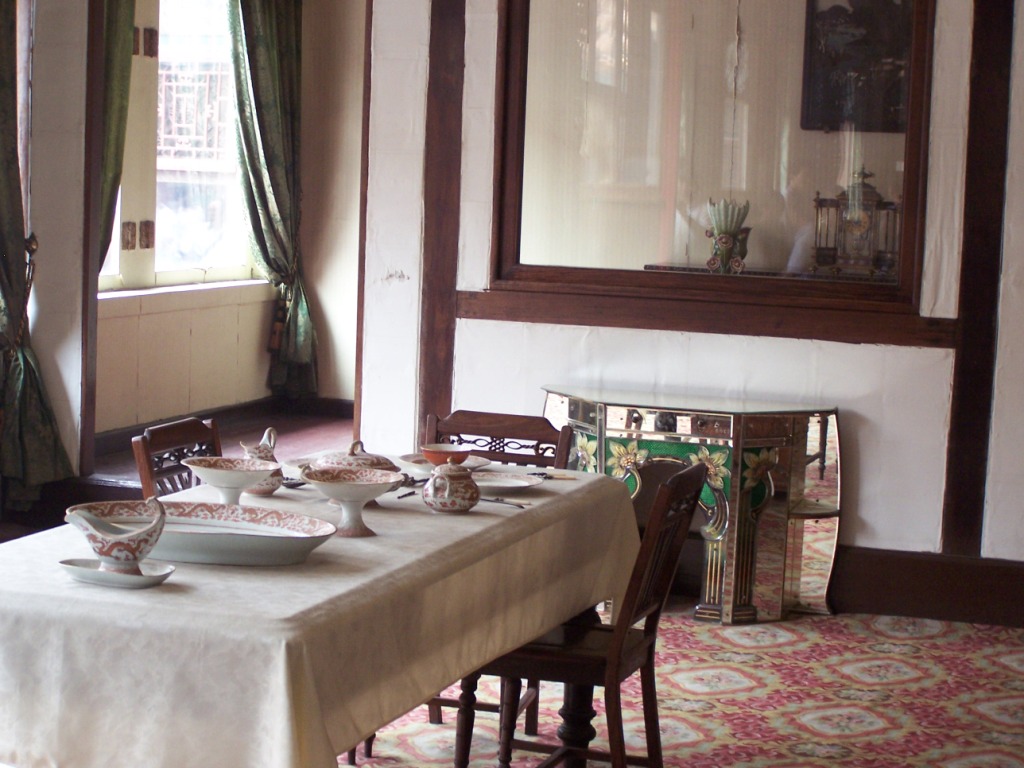
DAILY PHOTO: Dining in the Forbidden City
DAILY PHOTO: Wind-up Bird
DAILY PHOTO: In the Forbidden City
DAILY PHOTO: Buddhist Shops Outside the Lama Temple
In Beijing: Military Museum a Must See
[Yes, it has come to this–the last bastion of a weary scoundrel. I am rerunning “greatest hits” posts from my first blog. But, if you haven’t seen it, it’s new to you.]
It is easy enough to forget that one is in an authoritarian Communist country when visiting Beijing. They have gone to great lengths to avoid that which Communists around the world have most excelled–constructing buildings that display both a complete lack of creativity and not the slightest hint of visual appeal. On the contrary, the Chinese are putting up some very cutting-edge architecture such as the trouser-leg building, the bird’s nest stadium, and they have even been known to bolt visually interesting facades onto buildings constructed in an era during which they were practicing a more traditional form of Communism. Also, there are few places in the world where market economics thrive more apparently. When I first visited Hungary in the early 1990’s, I was surprised to go into shops and be totally ignored by the sales staff – in some cases while vigorously trying to get their attention. They were simply lagging behind in getting a hang of capitalism. In China, on the other hand, no one would complain that one is being ignored by the sales staff. On the contrary, one is more likely to feel smothered by them. One sales girl of about 1/5th my size actually tried to physically restrain me from leaving by grabbing my wrist.
Oh, there are the hints of the nature of the regime. When one is in Tiananmen Square, there are lists of rules played squakingly over loudspeakers in the manner reminiscent of a concentration camp. However, this is the rare exception. In many cases the Chinese have gone to great lengths to put rules in a positive form. You won’t see “Don’t Walk on the Grass”, but rather signs that say things like “Please Protect the Greenery.” I was told second-hand that someone saw a van pull up and whisk away a local wearing a Tibetan Independence T-shirt while I was visiting, but I cannot corroborate that was true. In general, what I saw was reflective of a market economy in a country that mixed prosperity and poverty in a way not unlike other developing nations that are transitioning upward.

I suggest a visit to the Military Museum for two reasons. First, it houses a sizable and impressive collection of weapons, sculptures, and displays, and it covers a lot of history (mostly 20thcentury, but not exclusively so.) It also seems to be a secret of sorts. It is not a secret in terms of being hard to find. It is located right above a Line 1 subway station that bears its name. That is, where most stations have a name showing in both Chinese characters and the romanized alphabet spelling of the Chinese word, this stop is labeled “Military Museum” in English. However, we had two Beijing guidebooks from large and well-known travel book publishers, and neither had coverage of the museum. This seemed odd because military history is not exactly a rare interest among tourists, and, once inside, it became apparent that this was an extensive museum. My wife and I were two of five non-Chinese tourists that we saw at the Museum, and there were probably a couple hundred visitors throughout the museum at the time.
I think the reason for the lack of visitation by non-Chinese is related to the second reason I recommend a visit here. That is, it gives one a reminder that one is in a Communist country and insight into the nature of what a Communist regime is, and what it does. It is not for those who take umbrage in the face of propaganda, and it is not nearly as friendly as other tourist destinations. There are many statements, such as reference to the Korean War as something like the “Proud War to Overthrow US Aggression in Korea”, that would probably be offensive to many. However, if you are one who can find amusement in an Orwellian framing of events, this museum is for you. Sign-after-sign gives the impression that Mao’s forces were able to crush the Kuomintang, who were armed with the latest and best American arms, while relying on pitchforks, spears, and halberds – because , of course, they always employed superior strategy and had the support of all of the people.
To be fair it doesn’t take an authoritarian regime to put out propaganda, all manner of nationalist forces do this. (In some ways, China reminds me more of a heavily nationalist country than a Communist one. I am told that China has a lesser proportion of its economy owned by the government than some Western democracies, and so the definition of a communist country as one in which the government controls the means of production may not be entirely reflective of China.) While I visited Tokyo on this same trip, I did not get a chance to go to Yasukuni Shrine, which has a museum apparently as full of propaganda as this Chinese Military Museum. Obviously, the two museums mentioned have polar opposite perspectives. The Yasukuni Museum portraying Japan as the victim, rather than perpetrator, of aggression during the Second World War.
However, I am still curious why this is not a destination for the tourists? It is not the case, by any means, that the propaganda is all over the top. In fact, it is, in some cases, subtle. It is also not the case that the museum is altogether hostile to the US and other Western countries. (It should be mentioned that there are some well-deserved anti-Western statements such as those relating to the Opium War.)
There are a few distinct displays of positive relations. For example, among the small arms exhibitions there are cases that pay respect to American gunsmiths such as Samuel Colt.
If imitation is the sincerest form of flattery, then there are quite a number of examples of such flattery in the museum. As I was walking around on the first floor, which holds tanks, missiles, artillery pieces, and other sizable weapons, I came upon what I thought for a moment was an American Humvee. I briefly wondered where they would have gotten one. They have a large number of US World War II era weapons that were either left during that war or shipped to the Kuomintang during the Chinese Civil War, and even a few Viet Nam-era US weapons that presumably made their way from the Communist Vietnamese. However, I was soon disabused of the notion that it was an American Humvee by the placard that said that it was, in fact, a Chinese made “Mengshi” FAV. I have since read that a company in China is actually licensed to make them, and buys a number of the parts from US firms. They also had the spitting image of a Claymore Mine. I have no idea if it was legally licensed or not (but I suspect not.)
There is also a Hall of Friendship that houses a wide range of gifts given to the Defense Minister and other Ministry personnel over the years from various countries. The largest block of these seem to be from Warsaw Pact era countries during the Cold War. However, there are a wide range of countries represented including the US.
Last but not least, in the gift shop you could actually buy “US Ranger” T-shirts and other American military logoed goods (not authentically logoed, mind you, but rather the type of over-the-top imagery that is sold in “Soldier of Fortune” magazine), but the fact that it is sold in a Museum run by the People’s Liberation Army (PLA) is interesting to say the least. As an aside, we came across the PLA surplus store while we were there, and they also sold such US military related wears.
I highly recommend a trip to Beijing. You may need an oxygen supply occasionally, but the food is good, the people friendly, the goods inexpensive, and the history amazing. For anyone interested in history, and particularly military history, the museum has a lot to offer as well– just suspend your disbelief at the audacity of the propaganda at the door.
Those interested in the museum can see more on my other blog .