DAILY PHOTO: The Shore of Pangong Tso

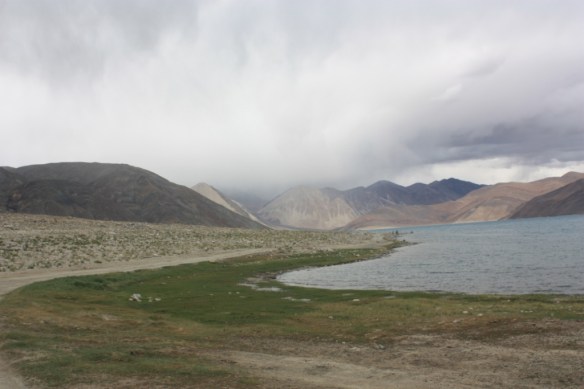
Taken in August of 2016 at Pangong Tso in Ladakh

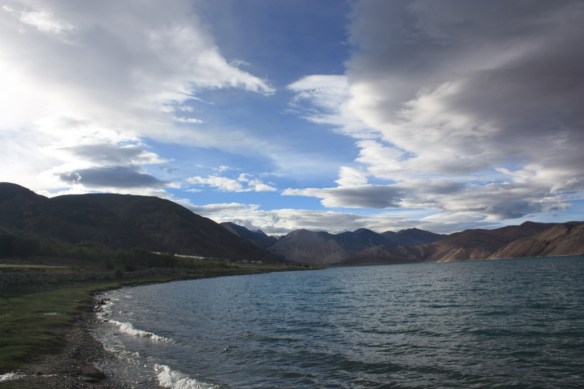
Taken in August of 2016 at Pangong Tso in Ladakh

img_2688 img_2610


With each change in cloud and sky, Pangong Tso looks like a different lake.


Pangong Tso is a long, narrow lake that crosses the border between India and China. By length, the majority of the lake falls in China, but these photos were all taken on the Indian side of the border.


It’s actually substantially higher than Lake Titicaca in Peru, which claims the title of highest navigable lake in the world. Pangong Tso is 4,350 m (14,280 ft) while Titicaca is 3810 m (12,500 ft.)


Don’t ask me what constitutes “navigable.” My wife and I tried to figure that out when we visited Titicaca several years ago. We didn’t see anything bigger than the boat we were on–nothing that would be called a ship. Of course, we saw not so much as an inner tube on Pangong Tso, and the fact that it’s so narrow in places may mean that a boat would have to have an exceedingly shallow draft to make it down the lake’s length. That is if one could travel the lake’s length without trigger happy Chinese or Indian military forces freaking out and blowing your boat out of the water.

BOOK REVIEW: A Guide to Chinese Martial Arts by Li Tianji & Du Xilian

Guide To Chinese Martial ArtsGuide To Chinese Martial Arts by Li Tianji
My rating: 3 of 5 stars

Amazon page

This is a brief guide to the martial arts of China. The bulk of the book (about 150 pages of the book’s 178 pages) tells the reader about three major branches of Chinese martial arts: Chang Quan, Tai Chi Chuan, and Shaolin Kung fu at a general level. (The book devotes space to those arts in the same order–i.e. the largest number of pages discuss Chang Quan, then Tai Chi, and the smallest number to Shaolin. This may be surprising as your average non-Kungfu practitioner is least likely to have heard of Chang Quan—by name anyway. Chang Quan is a general term that encompasses several Northern Styles—some of which might be more familiar to general readers [of martial arts books.]) The book also has a brief chapter that describes the history of martial arts in China from ancient times through the modern era, and one that talks about the many schools of martial arts of China (in no great detail because there are so many of them) as well as the various strengths and purposes of these arts.

The bulk of the illustrations are line drawings used to show typical sequences for each of the three major branches of martial art mentioned above. However, there are some black and white photographs and copies of relevant art works and documents as well.

I found this book to be interesting and informative. There’s a bit too much space devoted to describing techniques for my taste. However, I realize that I may be in the minority in that regard. I don’t believe that martial arts can be taught via books or media, and, therefore, there’s a diminishing value to detailed descriptions of technique. In this sort of book one only needs to get a feel so as to be able to see how the martial arts compare and contrast with others.

I’d recommend this book for someone who wants to learn a bit about the nature of Chinese martial arts. It may not be of much value for an expert, but for a kungfu neophyte it provides some interesting information about the history, tactics, and training methods of Chinese martial arts. It’s originally published by Foreign Languages Press in Beijing, but I don’t suspect there is any more bias than there would be if it was published by anyone else (i.e. it’s the rare martial arts book that doesn’t present the martial art under discussion as the ultimate fighting art.)

View all my reviews

DAILY PHOTO: Houhai Pagoda

Taken in the Summer of 2008 in Beijing.

Taken in the Summer of 2008 in Beijing.

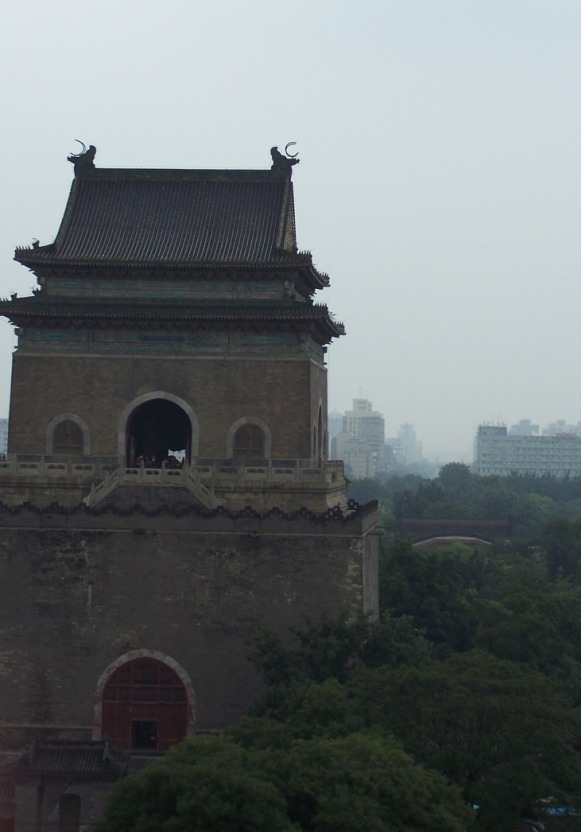
DAILY PHOTO: Drum Tower

Taken in July of 2008 in Beijing

Taken in July of 2008 in Beijing

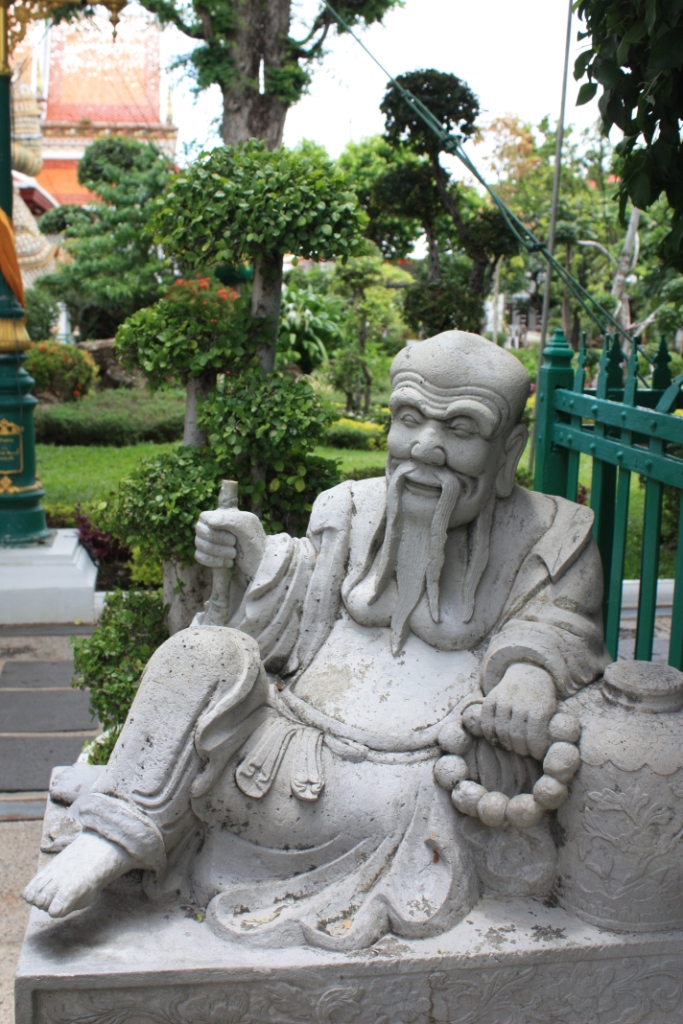
DAILY PHOTO: Chinese Sage at Wat Arun

Taken in September of 2014 at Wat Arun in Bangkok.

Taken in September of 2014 at Wat Arun in Bangkok.

While built in the Thai-Khmeri style, Wat Arun displays a great deal of Chinese influence. It was built at a time with trade with China was thriving.

BOOK REVIEW: Pirate of the Far East by Stephen Turnbull

Pirate of the Far East: 811-1639Pirate of the Far East: 811-1639 by Stephen Turnbull

My rating: 3 of 5 stars

Amazon page

Unfortunately, the first thing one notices about this book is what seems like a typo in the title. Instead of “Pirates of the Far East,” it’s Pirate of the Far East, which suggests piracy wasn’t so much of a problem in the region because there was only the one pirate—and that the author isn’t a fan of either definite or indefinite articles. I’m sure this was done intentionally, but it does read oddly and sounds tinny.

This slim book is a typical edition of the Osprey military history series. All of these books are less than 100 pages, illustrated, and focus on a specific class of warfighter over a defined period. In this case, the book presents a class of pirates called wako for the period from 811 to 1639. Wako literally refers to Japanese pirates, but–in fact–these marauders of the high seas were often mixed nationality crews. The book also provides information about counter-piracy activities and those groups of warriors, such as Shaolin monks, who fought against piracy back in those days.

This book covers a range of topics including: the life of a pirate, pirate ships, strategy, tactics, and weapons—as well as the history of these groups. The book has five actual chapters, but there are short units providing important information that would usually be appendices, e.g. a chronology, a discussion of museum exhibits, and an annotated bibliography.

The illustrations are mostly drawings, but include maps and photographs as well. Some of the art is drawn in the present-day by the illustrator Richard Hook, but some are historic pieces from art collections. The photographs also include some present-day photos of locations that were once bases of piracy, as well as photos of museum exhibits (e.g. topographic and other models.) The graphics are helpful in showing how pirates dressed/armored and were armed. The maps and drawings are particularly helpful.

I’d recommend this book, but I do think it’s overpriced at full price. At a mere 64 pages—a pamphlet more than a book–paying $10 or more seems a bit pricey despite the useful graphics and the fact that the author is among the most renowned authorities on Japanese warriors and medieval military tactics. All that said, there are relatively few books on the topic, and it’s not easy to get this information from other sources.

View all my reviews

BOOK REVIEW: The Sayings of Confucius by Confucius

The Sayings of ConfuciusThe Sayings of Confucius by Bc- Bc Confucius

My rating: 4 of 5 stars

Amazon page

There’s no one more firmly associated with Eastern wisdom—particularly in the form of aphorisms that fit nicely onto a fortune cookie—than Confucius. This is a book of such aphorisms.

I must admit, I’m not a wholehearted devotee of the Chinese philosopher, and am more likely to side with the Taoist sages who mocked Confucian ideas at every turn. In short, I’m not a big fan of the Confucian idea of societal hierarchies based on some elements of society accepting being infantilized in exchange for the protection and goodwill of others. It’s not just that I’m a youngest child that causes me to ask, what if the younger brother is smarter?

Once one gets beyond what is probably Confucius’s best known teaching—the five relationships—one sees a great deal of solid wisdom that even a Taoist would be hard pressed to refute.

Many of Confucius’s sayings aren’t novel or unique. Like Socrates, Confucius advocates knowing what one doesn’t know—which implies accepting that there are things one doesn’t know and not acting like one knows it all. (A common enough vice in modern times as in ancient.) Like the Indian sages, Confucius emphasized that one shouldn’t chase fame or act out of a desire for the fruits of one’s actions. Like the Stoics, Confucius said, “A gentleman knows neither sorrow nor fear.”

One of the most quoted sayings in this work is, “A gentleman should be slow to speak and quick to do.” This contains two bits of wisdom rolled into one: a.) Think before you say something stupid. b.) and, Get off your ass and do it, already. Of course, Confucius also produced an early (if not the earliest) formulation of what is usually called “The Golden Rule.) Confucius say, “What I do not wish done to me, I likewise wish not to do to others.”

I think everyone should read this short book of even shorter sayings.

View all my reviews

DAILY PHOTO: Back Lake Pagoda

Taken in July of 2008 in Beijing.

Taken in July of 2008 in Beijing.

DAILY PHOTO: Walking Amid the Big Guns

Taken in the summer of 2008 in Beijing at the Military Museum.

Taken in the summer of 2008 in Beijing at the Military Museum.

DAILY PHOTO: The Red Wall

Taken in the summer of 2008 in the Beijing Military Museum

Taken in the summer of 2008 in the Beijing Military Museum