BOOK REVIEW: Bring Me the Rhinoceros by John Tarrant

Bring Me the Rhinoceros: And Other Zen Koans That Will Save Your LifeBring Me the Rhinoceros: And Other Zen Koans That Will Save Your Life by John Tarrant
My rating: 5 of 5 stars

Amazon page


This book is an examination of fifteen classic Zen koans selected by John Tarrant, founder of the Pacific Zen Institute (PZI.) Koans are statements or stories that are designed to help students of Zen Buddhism escape their usual ways of thinking because the absurdity of koans cannot be meaningfully answered with the usual approach based in logic and reason. Even if the concept isn’t familiar, readers are sure to have heard the famous koan: “What is the sound of one hand clapping?” [Though one may have missed the value as a tool of the mind, and dismissed the koan as a sage’s attempt to be abstruse and esoteric.]

Each chapter addresses one koan in great detail. First, the koan is presented in a simple fashion. It should be pointed out that some of these koans are a single line and others are as long as several paragraphs. Next, there is a sort of introduction to the concept or point being addressed in the koan. Tarrant knows the value of story, and this frequently involves a narrative approach. Next, there is a section describing the koan in more detail than in which it was first introduced. Here the author elaborates and provides background. The final section of each chapter is about “working with the koan” and offers a bit of insight into how to start considering the lesson of each koan.

I enjoyed this book. It’s a good selection of koans that cover a wide range of styles and approaches. As I mentioned the author uses stories and anecdotes – both historical and contemporary – to help get his point across. The titular use of a particularly absurd koan “punchline,” gives one a taste of the author’s willingness to engage in the whimsical.

I’d highly recommend this book for those who are seeking to better understand koans, either as students of Zen or as individuals interested in the workings of the mind more generally.

View all my reviews

DAILY PHOTO: Kathesimbhu Stupa & Environs

Taken in April of 2018 in Kathmandu


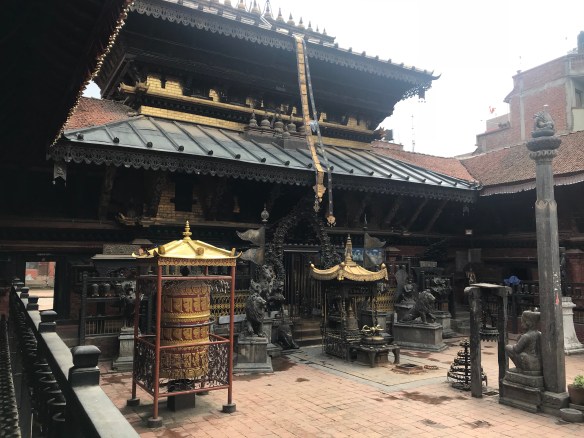
DAILY PHOTO: Rudravarna Mahavihar

Taken on May 4, 2018 in Patan, Nepal.

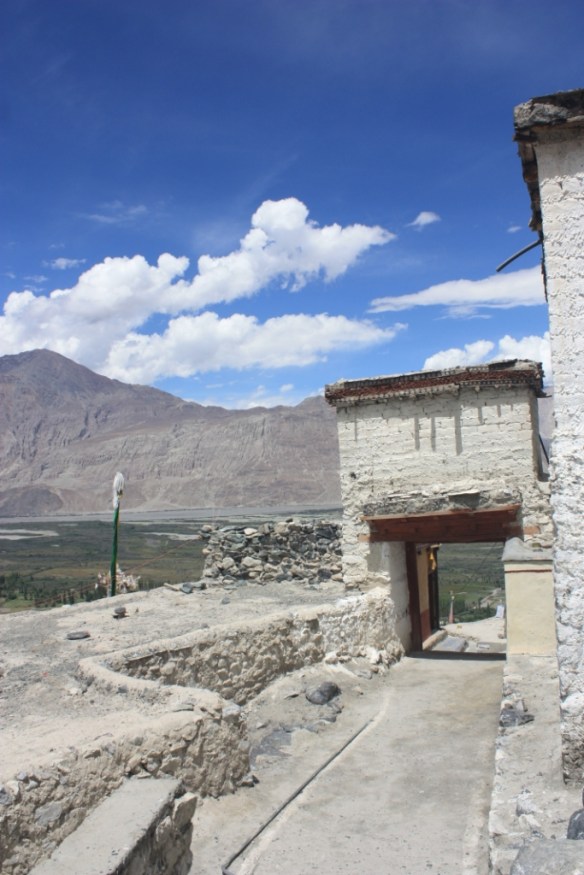
DAILY PHOTO: Looking out from Diskit Gompa

Taken in August of 2016 at Diskit Monastery in Nubra Valley


DAILY PHOTO: Wat Yai Chaya Mongkol, Ayutthaya

Taken in the Summer of 2014 at Wat Yai Chaya Mongkol near Ayutthaya


DAILY PHOTO: Tall Gates Near Hoi An

Taken in Hoi An in December of 2015

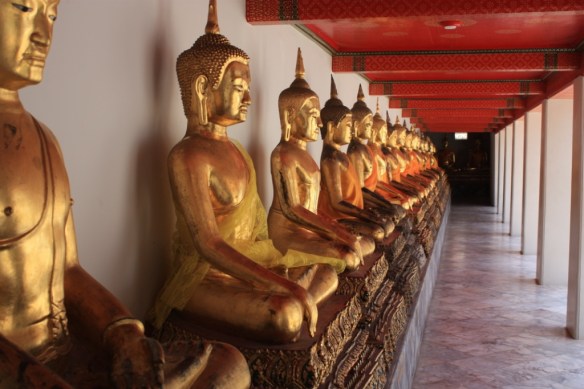
DAILY PHOTO: Buddha Row

Taken at Wat Pho in the summer of 2014

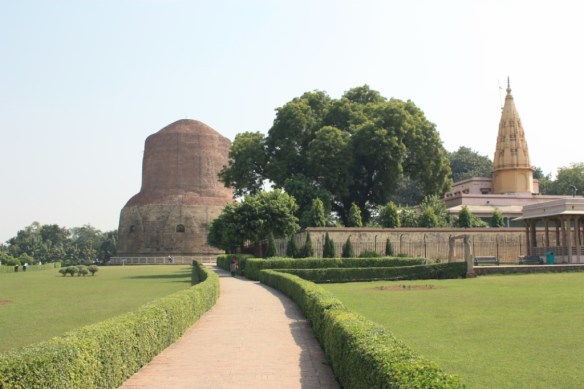
DAILY PHOTO: Sarnath: Site of the Buddha’s First Sermon

Taken in October of 2015 at Sarnath

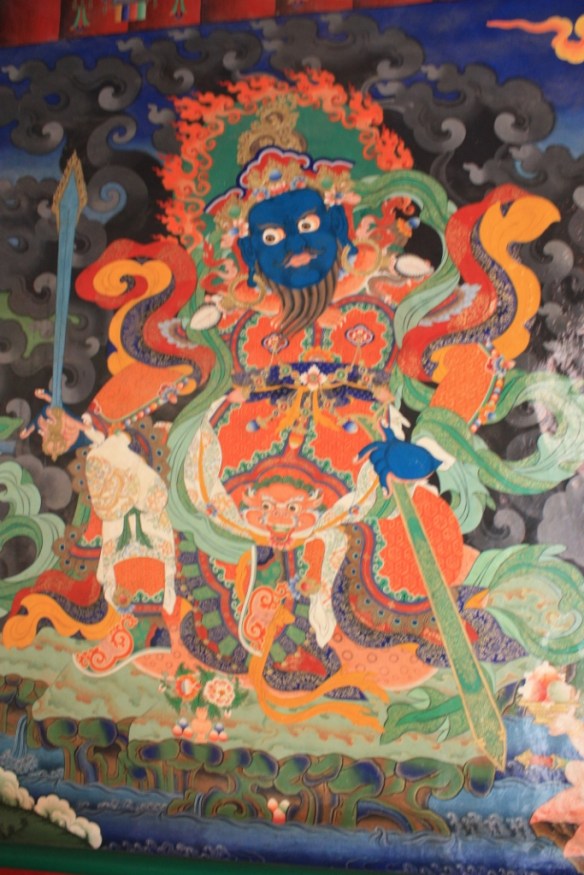
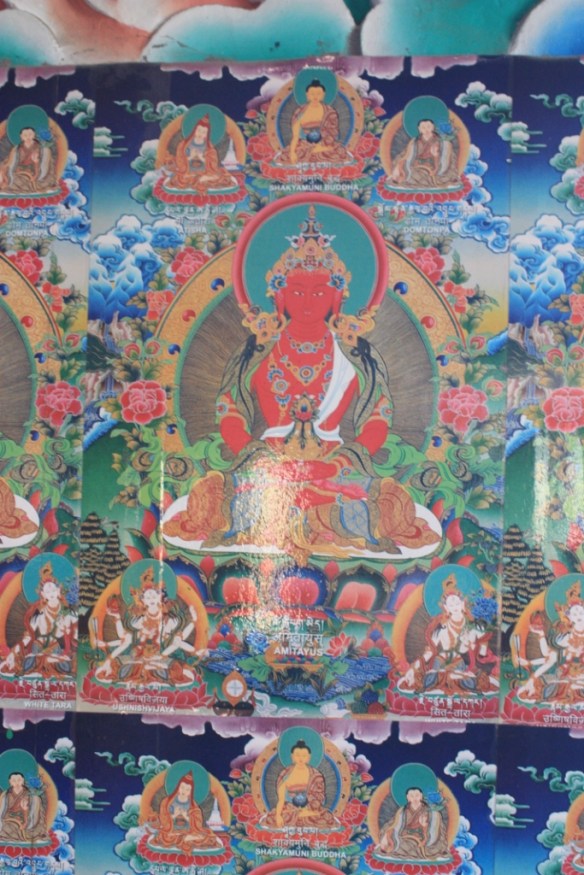
DAILY PHOTO: Thangka Paintings Around India

Taken at Lamayuru Temple in Ladakh in August of 2016


Taken at Diskit Monastery in Nubra Valley in August of 2016


Taken at Namdroling Monastery at Bylakuppe in March of 2014


Taken at McLeod Ganj in June of 2015

BOOK REVIEW: Cave of Tigers by John Daido Loori

Cave of Tigers: The Living Zen Practice of Dharma Combat (Dharma Communications)Cave of Tigers: The Living Zen Practice of Dharma Combat by John Daido Loori
My rating: 4 of 5 stars

Amazon page


This book is a collection of transcripts of what are called dharma encounters, dokusan, or dharma combat. It’s a practice in Zen Buddhism involving a verbal interaction between student and teacher. Each of the twenty chapters takes a teaching of some past master of Zen (mostly Master Dogen), and explores it through these student-teacher interactions. The chapters begin with an introduction to the teaching at hand, conclude with a wrap up paragraph, and in between are an assortment of transcripts.

There’s a clear pro and con. Because information is presented in an unconventional format, there’s potential to gain insights that one might not otherwise. The students are trying to interact with the teacher in an unorthodox and outside-the-box manner. That’s part of the training. So as they relate the teachings to events in their own life or their own unique way of viewing the world, one gains access to those off angles of insight.

On the other hand, reading the transcripts can be repetitive as the teacher is trying to make sure that all students have some common understanding. It’s also not clear whether there was much selectivity in picking the encounters that were presented. Some readers might enjoy that it’s like being there at the monastery, but others might find reading the book a little bit like watching sausage making. While there are clever and insightful students, there are also individuals who seem to just be trying to get there turn over with, who appear to have no interest in the topic at hand, or who think some random action like a war-whoop will be evaluated as a deep and meaningful insight on the subject by the teacher (spoiler alert: it almost never is.) One should also not assume factual correctness in the student’s commentaries (e.g. at one point one of the students incorrectly identifies Vishnu as “the destroyer,” but [in Hindu mythology] Vishnu is the preserver / maintainer and it’s Shiva who is the destroyer. This error is of little consequence to the point being made, but the reader should be aware that the priority was to be faithful in conveying the transcripts rather than to accurately convey information.)

The organization seems sound enough. The book begins with rudimentary topics such as zazen (sitting meditation) and progresses into more philosophical and esoteric topics. As mentioned, there are twenty chapters, each built around a specific teaching and with the same organization. The only ancillary material besides the front matter (a Forward and an “Invitation to Dharma Encounter”) is a glossary (which is a worthy addition given the wide-ranging terminology in English, Japanese, Chinese, and Sanskrit, as well as the many names of individuals and documents that may be unfamiliar to the uninitiated.)

I enjoyed this book. As I say, it has its positives and negatives, but—on the whole—it was insightful and interesting. I’d recommend it for anyone interested in Zen, particularly anyone who intends to spend time at a monastery or meditation center.

View all my reviews