BOOK REVIEW: You Suck by Christopher Moore

You Suck (A Love Story, #2)You Suck by Christopher Moore

My rating: 4 of 5 stars

I haven’t read Twilight or any of the many YA vampire books that have glutted the market in recent years, but You Suck perfectly captures what real teenage vampires would be like. Tommy Flood is not a confident, suave, sexy vampire. He’s an awkward, if likable, dumb-ass. Christopher Moore’s characters are hilarious and, sadly, true to life.

Moore tickles the funny-bone as he tells a love story of a young couple up against an elder vampire, a group of other young idiots, and the cops. The fact that the couple isn’t pitted against each other– despite the fact that the female, Jody, turned Flood into a vampire– is testament to the strength of the relationship. If anything can sour a relationship, it’s one half of the couple turning the other into a vampire (or a Zombie for that matter.)

While the tension is not intense, the humor is ubiquitous. More importantly, one gets food for thought on such mundane vampire questions as:
– how does one recruit a good minion? (Abby Normal holds her own as a font of humor.)
– do cats make suitable substitutes for a blood meal?
– what happens when you bronze a vampire?

I enjoyed this book, and suspect you will too.

View all my reviews

BOOK REVIEW: The Restaurant at the End of the Universe by Douglas Adams

The Restaurant at the End of the Universe (Hitchhiker's Guide, #2)The Restaurant at the End of the Universe by Douglas Adams

My rating: 5 of 5 stars

The adventures of Arthur Dent and company continue as Zaphod Beeblebrox chases after whatever it was that he made himself forget, and the group seeks the question to match the answer to life, the universe, and everything. Neither of these issues is resolved with great satisfaction (leaving plenty to be covered in the remaining three books of this five book trilogy.) However, we do learn why Earthlings are so prone to war and bureaucracy.

Time travel is a key plot device in this book. If hilarity will get you over any hurdle, you’ll love The Restaurant at the End of the Universe. But if you’re the kind who geeks out on the minutiae like the grandfather paradox, this book may drive you crazy. They travel forward through time from a period shortly after the end of Earth until the end of the universe. Then they go back to a period 2 million years before the end of Earth.

Spatially they travel from a Vogon-threatened Heart of Gold (ship) in deep space to the Ursa Minor headquarters of the publishers of Hitchhiker’s Guide to the Galaxy to a planet in the Frogstar system that is home to the Total Perspective Vortex (or so Zaphod thinks) to the Restaurant at the End of the Universe (which, coincidentally, is on the same Frogstar planet) to a planet where a ship full of management specialists and telephone sanitizers (and Arthur Dent and Ford Prefect) crash lands. All the while they run into new puzzles and adventures.

While the book is named for the Restaurant at the End of the Universe, that locale is not especially significant to the story. They visit the restaurant in the middle of the book. The restaurant does provide more than its fair share of gags. For example, the group’s interaction with a cow that is bred to encourage diners to eat it is classic Douglas Adams.

This is definitely a character-driven novel. There’s not much of a plot to speak of, but it is hilarious.

View all my reviews

BOOK REVIEW: Brave New World by Aldous Huxley

Brave New WorldBrave New World by Aldous Huxley

My rating: 5 of 5 stars

In Huxley’s utopianish dystopia, an individual’s fate is determined through a combination of genetic engineering, operant conditioning, and hypnopedia (sleep-teaching.) It’s a different dystopian vision than that of Orwell or Atwood; individuals are drugged and encouraged in unlimited promiscuity in order to pacify them and keep them believing that they are happy (without allowing exposure to alternatives by which they might contrast their lives.) Gone are the arts and religion as we know it, and science exists only as a shadow of its former self.

The book follows the story of a “Savage”, named John, brought from an Indian reservation on which this “Brave new world” is unknown. He cannot understand the “civilized” world, and to its occupants he is an interesting anomaly to be gawked at at cocktail parties.

The book ends on an upbeat note as the reader learns of a third world, a world beyond the Brave New World or the brutally impoverished aboriginal lands.

Everyone should read this book to learn that one can be killed with “kindness” as well as with sternness.

View all my reviews

BOOK REVIEW: The Comedy of Errors by Shakespeare

The Comedy of ErrorsThe Comedy of Errors by William Shakespeare
My rating: 5 of 5 stars

The premise is simple: mistaken identity. Twin boys separated at birth, neither knowing the other is alive, wander about Ephesus inadvertently wreaking confusion by their mere appearances. To add to the confusion (and hilarity), each of these men has a man-servant that is an identical twin of the other man’s servant. Servant and master confuse each other’s doppelgangers. There is a wife thought to be crazy by the man she only thinks is her husband. There is a merchant who is trying to collect from the wrong man.

It’s not the play’s leads, but rather Dromio of Syracuse (one of the identical servants) who I find to be the most clever and compelling character. Some of his witty lines are:

– “Was there ever any man thus beaten out of season?”
– “…she is spherical, like a globe; I could find out countries in her.”
– “…he must have a long spoon that must eat with the devil.”

If one can accept the strained credulity of the play’s premise, it’s an enjoyable and light-hearted read.

It may not offer the most clever of Shakespeare’s wordsmithing, but Shakespeare at his worst is pretty damn good.

View all my reviews

BOOK REVIEW: Blue Zones by Dan Buettner

The Blue Zones: Lessons for Living Longer From the People Who've Lived the LongestThe Blue Zones: Lessons for Living Longer From the People Who’ve Lived the Longest by Dan Buettner

My rating: 4 of 5 stars

Blue Zones are places with disproportionately large numbers of 100+ year old folks. Buettner’s book contains case studies on four of these blue zones: Sardinia, Okinawa, Loma Linda (California), and Hojancha (Costa Rica), and provides interesting insights on living from the places that produce lots of centenarians.

Even those who aren’t particularly interested in longevity will find a great deal of valuable information in the book. Not unexpectedly, nutrition is at the fore in this book. However, there are other factors such as family and social life, sleep, and being active that correlate strongly with longevity.

A few things I picked up:
– As in Okinawa, one should say hara hachi bu before each meal as a reminder to stop when one is 80% full– rather than 100% or 180% full.
– Most nuts make a good snack even if they’re roasted in an oil that isn’t particularly healthy (the density means limited saturation.)
– Despite our species’ history, which presumably involved gorging on meat when it was available,vegetarians (and near-vegetarians) live longer.
– When you eat is as important as what you eat.

View all my reviews

BOOK REVIEW: Something Wicked This Way Comes by Bradbury

Something Wicked This Way ComesSomething Wicked This Way Comes by Ray Bradbury

My rating: 4 of 5 stars

Bradbury creeps us out by showing us a carnival through the eyes of two young boys. The month is October, and the carnival arrives in the dead of night. Everything about this story is meant to make one ill at ease, but at first we don’t know they boys minds are just playing tricks on them. The author gradually reveals the carnival is pure evil.

The boys, best friends, end up in over their heads, and being pursued by the carnies. Believing his son’s fanciful tales of time-bending carousels and a hall of mirrors that distorts more than light, a father plays a key role in the battle to restore normality to their town.

The strength of this book is Bradbury’s use of language. The book exudes creepiness, and in doing so captures just the right tone.

The weakness is its ending (which I will not get into to avoid spoilers.) It falls a little flat, particularly given the great build up.

View all my reviews

SHORT STORY REVIEW: Tenth of December by George Saunders

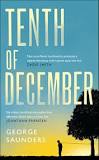
10thDecI’ve been reading the Best American Short Stories of 2012Within this anthology is a story called Tenth of December by George Saunders; it’s also the title and concluding story of Saunders’s most recent collection.

This story interweaves two arcs, one of a boy and the other an old man. It’s this contrast between a man just starting life and another nearing its end that’s the focal point for the story. The lives of these two are brought together during a tragic winter event that leaves the reader uncertain as to whether either, both, or neither of the two will survive.

Saunders’s style is sparse, not in the manner of Hemingway but in a way that happily and freely abandons the sentence as the essential basic unit of writing –as opposed to occasionally letting phrases shine. The author also forgoes the traditional approach to noting dialogue. However, like Cormac McCarthy, Saunders makes himself clearly understood nevertheless.

Saunders displays a great sense of humor in this work. This is particularly noted as we are shown the boy at play during the piece’s introduction. I cracked up when it’s mentioned in boy’s internal monologue that he invented a martial art called Toi Foi, A.k.a. “Deadly forearms.”

The author masterfully captures the varied voice of boy and old man. The contrast between the playful youth and the reflective elder is a powerful commentary on the cycle of life.

BOOK REVIEW: Job by Robert Heinlein

Job: A Comedy of JusticeJob: A Comedy of Justice by Robert A. Heinlein

My rating: 4 of 5 stars

In “Job: A Comedy of Justice” the protagonist, Alexander Hergensheimer, finds himself randomly drifting from one alternative universe to another. After his initial shift, he’s joined by a lover, Margrethe, who knows him from her world as Alec Graham. The couple stay together through many other ill-timed world shifts, and are only separated when Hergensheimer finds himself in heaven. Facing the question of what he’d do to be reunified with the woman he loves, the novel really gets interesting.

As you may have expected, the name of the book is the Biblical name “Job” (i.e. rhymes with lobe) and not “job” as in an occupation.

Each time the couple shifts, they are poor anew. While geography remains unchanged, history and money are different from one world to the next. Hergenshiemer washes dishes to make a living because he can’t engage in his trade, preacher, in these worlds. He can’t do anything else without valid identification.

Just as Dante inadvertently convinces us that the first circle of hell is preferable to heaven (who wouldn’t rather be in the company of Socrates and Virgil than that of Jerry Falwell and Jimmy Swaggart,) Heinlein creates an afterlife that is a good deal more complex but also more just than the Biblical version.

I recommend this humorous and thought-provoking book.

View all my reviews

BOOK REVIEW: On Killing by David Grossman

On Killing: The Psychological Cost of Learning to Kill in War and SocietyOn Killing: The Psychological Cost of Learning to Kill in War and Society by Dave Grossman

My rating: 5 of 5 stars

Grossman’s work reports on a line of research started by Army historian and author of “Men Against Fire” S.L.A. Marshall. Grossman not only brings us up-to-date on this thesis, he shows us its ramifications for modern society-at-large.

A two-part thesis was advanced by Marshall and continued by Grossman and others.

First, humans, like other species, are reluctant to kill within their species. (Marshall noted that in World War II about 75% of soldiers would not fire on the enemy when they had the opportunity. There is evidence this was true for earlier wars as well.

Second, the percentage of soldiers firing on the enemy could be increased by training that conditions them to shooting targets that look more human. i.e. Instead of shooting bulls-eyes, they should at least shoot a shape that looks like the silhouette of a man’s head and shoulders.

It turns out that the ability to condition combatants proved correct. There was a progressive increase in genuine engagement of the enemy by soldiers in subsequent wars (i.e. the Korean and Vietnam Wars.)

Grossman goes on to say that this type of conditioning is not limited to soldiers and police officers. He suggests that video games in which gamers shoot at humans and humanoid creatures will desensitize players to trigger pulling. Many scoff at this idea because they think that he is saying that such games make killers. What he is suggesting is a bit more subtle than that. He is saying that a person who is pre-dispossessed to go on a killing spree will be less reluctant if they have undergone the conditioning of this type of gaming. In essence, an high barrier to going on a killing spree will be lowered.

Grossman covers many other issues related to killing, such as the importance of distance. One intriguing fact is that an infantryman that kills a single enemy soldier in war is more likely to have problems such as Post-Traumatic Stress Disorder (PTSD) than a bombardier who drops bombs that may likely resulted in hundreds or thousands of deaths.

The book also talks about the role of authority, famously addressed by the Milgram experiments. Stanley Milgram found that most people would turn a knob that they believed was delivering a severe shock to a complete stranger, if they were told to do so by someone who seemed to be an authority figure.

I highly recommend this book for those interested in the subjects of:
– PTSD
– the role of violent video games in mass killings
– the psychological effects of killing

View all my reviews

BOOK REVIEW: Matterhorn by Karl Marlantes

Matterhorn: A Novel of the Vietnam WarMatterhorn: A Novel of the Vietnam War by Karl Marlantes

My rating: 5 of 5 stars

Marlantes gives one insight into what it was like to be a soldier, in particular a young officer, during the Vietnam War. For those confused by the name, “Matterhorn” is the name of a fictional encampment in central Vietnam in the book.

In Matterhorn, war is as it has famously been defined, “long periods of intense boredom punctuated by brief instants of sheer terror.” The author builds his characters such that the periods of intense boredom are informative. We see how the tension of the war boils over into fresh hell that interrupts the boredom.

Racial issues play a major part in the drama of the book. The main character, Waino Mellas, is white and of the variety who are almost apologetic in the presence of blacks. However, within the unit there are both black-power movement types as well as good ole boys, making for one powder kegs that erupts during the course of the book.

Race is not the only fault line we see in Matterhorn. There is also a tension between “lifers” and draftees. However, the bigger tension is between the front line troops and those who direct them from afar. The most intense section of the book involves a raid on a hill for which the men are undernourished and under-supplied.

The author was a Marine in Vietnam, and this experience no doubt contributed to the book’s authenticity.

I highly recommend this book as a powerful examination of the role that valor and vice play in war.

View all my reviews