BOOK REVIEW: Life from Elsewhere from Pushkin Press

Life from Elsewhere: Journeys Through World LiteratureLife from Elsewhere: Journeys Through World Literature by Amit Chaudhuri

My rating: 3 of 5 stars

Amazon page

“Life from Elsewhere” is a collection of essays written by writers from around the world on culture, multiculturalism, and the struggles of life (and writing) in a culture-infused world. The book consists of an introduction and ten essays by authors from India, Congo, Argentina / Spain, China, Israel, Syria, Palestine, Iran, Poland, Russia, and Turkey. It’s being put out to celebrate the 10 year anniversary of a program that seeks to translate more global literature into English (English PEN’s Writers in Translation.)

This was a hard work to rate, and so you may want to take the number of stars with a grain of salt. If you’re part of the niche audience of contemporary world literature devotees, you may love this book from beginning to end. For a more general reader—such as myself–there are golden nuggets scattered among a field of shiny gravel. I found the essays by Asmaa al-Ghul (i.e. “When Ideas Fall in Line”) and Andrey Kurkov (i.e. “Sea of Voices”) to be fascinating, even for the general reader. The former tells the story of a journalist who reaped a firestorm by posting a Facebook picture sans veil, but it offers insight into life under blockade in Gaza. The latter offers a Russian author’s experience of traveling in the Middle East, and the incidences of clash of cultures it offers was thought-provoking.

The countries represented by authors in this book are well chosen. Authors were chosen from locales that would have once been underrepresented in such a work. However, one might question the fact that half of the essays are from countries of the Middle East. While this may seem odd, one must admit that a writer or artist in most of the Middle East faces challenges that a writer from Osaka, Sao Paulo, or Prague would not. This isn’t only addressed in the al-Ghul essay mentioned above, but also in pieces such as those by Mahmoud Dowlatabadi (i.e. “Literature: Forbidden, Defied,”) and Elif Shafak (i.e. “A Rallying Cry for Cosmopolitan Europe.”)

I’d recommend this book for ardent devotees of contemporary global literature. Other readers will gain insight into what it’s like to be an artist in a world defined by culture–and particularly fascinating insight into cultures which are threatened by modern literature—and should make up their mind about how fascinating they find said topic. (Otherwise, one may find the book a bit dry.)

View all my reviews

BOOK REVIEW: The Tell-Tale Brain by V.S. Ramachandran

The Tell-Tale BrainThe Tell-Tale Brain by V.S. Ramachandran
My rating: 5 of 5 stars

Amazon page

A brain injury patient simultaneously becomes demented and develops a previously unwitnessed artistic talent. Another patient’s brain lights up identically when seeing another person being poked as it does when he, himself, is prodded. An amputee brushed on a specific area of the cheek has a sensation in a specific area of the lost limb—i.e. phantom limb sensations can be mapped to points on the face. A stroke victim develops “metaphor blindness,” and suddenly “the 800 pound gorilla” becomes an actual gorilla. A test subject’s right angular gyrus has an electrical charge delivered to it through an electrode and the person has an instantaneous out-of-body experience. There are temporal lobe epilepsy patients who literally feel one with other people—or, in some cases, the natural world in general. These are just a few of the fascinating cases that Dr. Ramachandran presents in “The Tell-Tale Brain.” Many of these phenomena would have once been attributed to purely psychological or spiritual causes, but now their biological origins in the brain are being revealed.

Dr. Ramachandran is a neuroscientist whose claim to fame is making a noteworthy contribution to our understanding of the brain using mostly low-tech and non-invasive experiments with subjects who have brain abnormalities or injuries. Before there was EEG (electroencephalogram) and fMRI (functional Magnetic Resonance Imaging) machines, much of what scientists learned about the brain came from determining what capabilities were lost (or, occasionally, gained) by patients who had specific brain damage. In this way, we gained a great deal of insight into what areas of the brain are responsible for what tasks and we’ve learned that many aspects of the mind that were largely thought to be beyond biology are—in fact–not. It’s fascinating to see what bizarre effects can result from brain damage or abnormalities, from people who think they are dead to others who want to have a limb amputated because it doesn’t feel like it belongs to them to yet others who think their loved ones are imposters.

The central question addressed by this book is best summarized by a quote from the book’s introduction: “Are we merely chimps with a software upgrade?” Ramachandran proposes that any answer to this question that can be scientifically investigated must reside in the brain. Most of our organs and our general structure are not that different from those of our primate brethren. But our brains are infinitely more capable than those of other species. In responding to the question, Ramachandran considers the brain’s role in topics like language, aesthetics, and belief that are the sole domain of Homo sapiens. One of the most interesting discussions is how our brains fill in the blanks and a give meaning to what we see, such that we sometimes find signs in random data streams. The final chapter deals with introspection and how we come to define ourselves by what we think and what we feel and here Ramachandran gets into some of the most fascinating conditions mentioned in the book, such as Cotard Syndrome in which subjects firmly believe that they don’t exist.

There are a few topics that he delves into in particularly deep detail. One of these topics is that of mirror neurons. These neurons are integral to our relationships with others and are essential to our ability to learn. They fire in mimicry of movement (e.g. facial expressions) we see others perform. The author also uses his work with phantom limbs and synesthesia to illuminate the workings of the brain. Phantom limbs occur when an amputee can still feel sensations in the amputated limb. While phantom limbs were at one time believed to be residue of the soul or the like, studies have offered insights into its origins in the brain. Synesthesia is when the brain is mis-wired such that there is a blending of the senses. As an example, a person might see a different color associated with each musical note or with each number. Synesthesia was once considered a delusion and people were institutionalized for this cross-wiring of the brain. Autism is also addressed in a chapter, and-in particular—the theory that this affliction may be linked to the mirror neurons.

I found this book to be fascinating and insightful. While it delves into our tremendously complex brains, it does so in a readable and comprehensible manner. The fact that Ramachandran’s focus is largely on low-tech and relatively simple experiments means that one can readily understand them in a manner that one might not with studies based on fMRIs or EEGs.

I’d recommend this book for anyone interested in the magnificent human brain.

View all my reviews

BOOK REVIEW: Kalaripayat by Patrick Denaud

Kalaripayat: The Martial Arts Tradition of IndiaKalaripayat: The Martial Arts Tradition of India by Patrick Denaud
My rating: 4 of 5 stars

Amazon page

There’s a dearth of books on Indian martial arts, in general, and Kalaripayattu, specifically. The few books that do exist, such as Ranjan Mullaratt’s “Kalari Margam” (a fine book which I’ve previously reviewed), focus heavily on the techniques of the martial art. Denaud builds a niche by writing perhaps the only English-language book yet that turns its focus on other aspects of the art, including the art’s history, philosophy, customs, psychology, and its influence on–and interaction with–other systems both in India and abroad (e.g. yoga, Kathakali, Ayurvedic massage, and Tai Chi.)

After three forwards by luminaries and an introduction, the book consists of seven chapters. The chapters cover the history and mythology of the art, Kalaripayattu as a martial art (weapons and techniques in general terms), the psychological aspects of the art, the art’s relationship with Ayurvedic practices—particularly massage, its relationship to other elements of Keralan culture, the results of interviews with modern-day masters, and the influence of India and Kalaripayattu on foreign martial arts.

When I picked this book up, I was somewhat expecting that it would contain little in the way of intriguing and relevant information, and that it would be stuffed with generally known background information. I’ve come across far too many books on topics for which there’s little information, and have become well-acquainted with the many methods by which authors pad out a pamphlet’s worth of information into a book. However, I was pleasantly surprised by how much information on Kalaripayattu this book contained, and how relevant the background seemed. While there’s a fair amount of background, the book doesn’t feel padded. Granted, I can’t be certain how much of this information is accurate. I know common myths are repeated that are now believed to be false (e.g. Bodhidharma spreading Kalaripayattu to Shaolin), but I saw nothing that seemed like pure fabrication (though I’d be unlikely to recognize such a thing.) Denaud does cite his sources (not in bibliographic format, just by attribution of authors and texts) on most occasions and it certainly wrings authoritatively.

I’d recommend this book for individuals interested in martial arts, and the history of martial arts. It’s a rare glimpse into various aspects of Kalaripayattu. Also, some people who are interested in south Indian culture more than martial arts may also find it worthwhile.

View all my reviews

BOOK REVIEW: Boxing Fitness by Ian Oliver

Boxing Fitness: A Guide to Get Fighting Fit (Fitness Series)Boxing Fitness: A Guide to Get Fighting Fit by Ian Oliver
My rating: 4 of 5 stars

Amazon page

How does one skip rope, work the pads, or avoid nipple rash? If you think that boxing would be a fun way to get fit, this would probably be a useful book for you. Oliver shows a range of fitness practices—many specific to boxing, but others that are used in a number of sports and fitness activities—that will help one improve one’s fitness.

The reader will gain insight into bagwork, padwork, and boxing drills–from beginner to advanced. While the book’s emphasis isn’t on boxing technique, there’s a minimal discussion of the basics of footwork and punching designed to allow a reader to safely begin practice of bagwork and padwork. One also learns about roadwork, the basics of weightlifting as it’s useful for boxers, calisthenics, and other exercise routines that boxers use. It’s a small book and, therefore, doesn’t go into great detail on any particular subject. However, it does offer useful tips in a concise form.

There’s a chapter on equipment, but throughout the book the author gives advice on equipment as it’s relevant to the discussion at hand. The same is true of safety tips. There’s a chapter on injury and illness, but you’ll find insights into how to avoid injuries woven throughout.

I liked the approach of this book. While it shows one the age-old practices of fighters, it also describes more recent developments. In other words, it’s neither crusty and obsolete, nor does it try to re-invent every wheel in order to prove itself cutting edge. I also appreciated the author’s pragmatism—e.g. emphasizing the benefit of a strong core over that of six-pack building and suggesting dietary practices that are sound and simple rather than fads and fables.

Graphics include black and white photographs throughout a few diagrams. Most chapters have photographs, and they are generally sufficient to convey the necessary information without being overwhelming.

While this is a book of the basics, I found it to be a beneficial read and I appreciated the way it was arranged and the way information was conveyed. I’d recommend it for anyone interested in fitness for combative sports or who thinks boxing would be a good way for them to stay motivated to get fitter.

View all my reviews

BOOK REVIEW: The Harvard Medical School Guide to Tai Chi by Peter M. Wayne & Mark Fuerst

The Harvard Medical School Guide to Tai Chi: 12 Weeks to a Healthy Body, Strong Heart, and Sharp MindThe Harvard Medical School Guide to Tai Chi: 12 Weeks to a Healthy Body, Strong Heart, and Sharp Mind by Peter Wayne
My rating: 5 of 5 stars

Amazon page

This book provides an overview (and a laymen-friendly literature review) of the scientific findings about tai chi, and it helps a beginner get started in his / her own practice. (Tai chi, short for tai chi chuan, is a Chinese martial art that is called an internal–or soft–style.)

The authors achieve an impressive tightrope act. And they manage to do it in a way that reads sincerely, while at the same time providing useful information for all readers. Often books on the science of Eastern health-enhancing activities (e.g. tai chi, chi gong, or yoga)–even if they are positive on the results of such activities—take digs at people’s beliefs about ideas like chi, prana, meridians, or chakra as the authors attempt to distance themselves from such beliefs. On the other hand, books that cater to the spiritually inclined—even when they are couched in scientific terms—may resort to third-hand anecdotes about the supernatural powers of some ancient master or report methodological train wrecks that support their views alongside sound studies, as long as the latter don’t present any evidence contrary to their belief system. In short, such books often talk in scientific lingo while showing a complete lack of understanding of the scientific method. In this book, Wayne manages to navigate these rocky shores because he’s both a scientist and a longtime tai chi practitioner who genuinely accepts that there may be more at work in the practice than science fully understands. Thus, he knows the importance of testable hypotheses and when a study needs to be validated by more a robust follow-up study, but he also reports on the traditional beliefs and isn’t adverse to writing about studies evaluating the benefits of spirituality (note: showing that being spiritual has benefits doesn’t mean that the benefits result from anything spiritual or supernatural.)

The book has 14 chapters divided into three parts. The first part introduces the reader to tai chi, describes the dimensions along which tai chi has been shown to offer benefits (the authors call these “the 8 active ingredients of Tai Chi,” relating them to pharmacological medicines), and explains how tai chi can be simplified for beginners (even the short form sequences take a while to be memorized—let alone building any grasp of the intricacies of said forms.) The second part consists of six chapters that report the findings of studies on the health effects of tai chi, as well as discussing the possible mechanisms of those benefits. The topics discussed in this section include: increased balance, bone density, pain mitigation, cardiovascular health, mental performance, psychological well-being, and sleep quality. The book’s last part suggests ways in which the reader can build a tai chi practice. The five chapters in this section deal with the interactive practices of tai chi (tai chi isn’t just the solo forms that you’ve seen elderly people do in the park), integrating tai chi with other health and fitness practices, the potential for practicing tai chi at work, the role of tai chi in creative practices, and tai chi as a practice of lifelong learning (this last chapter gives beginners tips about how to start a practice.) There is also an afterword about how tai chi might play a part in building improved health and well-being in the present era.

I found the book to be well-organized to achieve its objective. It’s packed with food for thought. Neophytes will find a lot of benefit in this book, but I suspect even advanced practitioners can glean insights—particularly if said advanced practitioner hasn’t been reading up on the scientific findings. Humor, quotes, and stories are used to lighten the tone and illustrate key points. There are some photos and other graphics where needed (mostly in chapter 3), but they are relatively sparse for a book on a practice like tai chi. (That’s not a complaint. I think there are far too many attempts to teach movement arts through books—an impossible task—and not enough effort put into conveying the kind of ancillary information that is transmissible in book form.)

I’d recommend this book for anyone who’s interested in knowing more about the health benefits of tai chi, and moving beyond the platitudes often heard but seldom evaluated.

View all my reviews

BOOK REVIEW: City P.D. Smith

City: A Guidebook for the Urban AgeCity: A Guidebook for the Urban Age by P.D. Smith
My rating: 5 of 5 stars

Amazon page

Desmond Morris wrote about the rise of super-tribes—groupings of people in which it was no longer possible for every member to know every other. Morris controversially proposed that super-tribes facilitated the growth of many behaviors that are considered weird, perverse, or aberrant. The fact that the seedy underbelly of society resides right under the greatest concentration of noses is one of the reasons we find cities fascinating. But it’s not the only reason. (Smith touches on but doesn’t dwell on the seamy side of the city, including sidebars on gangs and red-light districts.) The tremendous challenges of governance, distribution, transportation, and security that arise when people are packed together are huge.

Smith gives a fascinating overview of the past, present, and possible future of the city. We learn about a time when the most advanced cities in the world weren’t New York, London, or Tokyo, but instead were Sumer, Tenochtitlan, or Angkor. (A nice feature of this book is how much ground it covers geographically. Smith brings in examples from ancient Alexandria to modern-day Mumbai in addition to those from cities–such as New York, Tokyo, and Paris–that might first pop to mind when one thinks of a city.) The reader is shown a city as an organism that has to get food and workers to its heart while expelling a massive accumulation of wastes. Cities require homeostasis as much as does the human body.

The book has eight chapters that discuss topics such as the rise of the city and how it was tied to human endeavors more generally (e.g. on the agricultural front), the development of neighborhoods, the challenge of transportation in an ever-growing community, how cities manage to be exemplary of both wealth and poverty at the same time, how the masses are entertained given the free time that arose from specialization and regulation of the labor market, and what the future of cities might bring. It’s topically, rather than chronologically arranged (though the discussion of the rise of the city is early in the book), and the organization works though it’s not necessarily what would spring to mind if one were outlining such a book.

I found this book fascinating. It’s full of interesting information and uses graphics and sidebars to good effect. If it can be called a micro-history (the subject of the urban world being so encompassing), it’s among the most interesting micro-histories that I’ve read. Whether it’s churches, Chinatowns, or coffee houses, this book lends insight into the nooks and crannies of the modern metropolis. The sections on subway systems and skyscrapers are among the most fascinating sub-chapters. (It just occurred to me that the last sentence could be taken in some sort of freaky, sexual way. That wasn’t my intention. I just find the engineering challenges of such infrastructure to be intriguing.) From gladiatorial combat to the birth of libraries, there’s something in this book to pique a reader’s interest.

I’d highly recommend this book for readers of non-fiction, and in particularly those who enjoy micro-histories.

View all my reviews

BOOK REVIEW: Maphead by Ken Jennings

Maphead: Charting the Wide, Weird World of Geography WonksMaphead: Charting the Wide, Weird World of Geography Wonks by Ken Jennings
My rating: 4 of 5 stars

Amazon page

In a sad commentary TV’s popularity, you may only know Ken Jennings from his record winning streak on Jeopardy, and the books he’s written since then may have escaped your attention. But Jennings isn’t just a fast-handed font of trivia, he writes nonfiction that is approachable, intriguing, and displays a good sense of humor.

Maphead is about maps and the people who love them, and–in some cases–who build their lives around various forms of graphic depiction of our world. In 12 chapters, Jennings not only reflects upon the many forms of map and geography fetish, he also presents insight on the opposite–the often dismaying and sometimes hilarious geographic illiteracy of college students and beauty queens. Besides learning about the million dollar outlays of rare map collectors and the intense rivalry of geocache hunters, Geography Bee contestants, and Traveler’s Century Club members (only those who’ve been to 100+ countries need apply), you’ll hear about a college professor who was fired for letting fly the fact that a majority of his incoming students hadn’t the vaguest idea of the whereabouts of metropoles like London or Chicago.

This book may seem like it’s only for those geeky to an obsessive level, but it’s one intriguing work of geo-geekery. It’s certainly for the intellectually inclined, but Jennings doesn’t bludgeon the reader with his intellect. True, you’ll be introduced to terms like hypsometric maps and cartacacoethes, but never in a manner that suggests a normal person would know such arcane terms. As might be expected from a trivia master, Jennings heavily seasons his book with fascinating tidbits and factoids—particularly in the chapter of the National Geographic “geography bee.” You’ll learn how the borders work between countries that drive on opposite sides of the road (I’ve experienced this myself from Cambodia to Thailand, and that may be the only place in the world where it occurs.) You’ll learn what’s in a name, and why one like “Whorehouse Meadows” was doomed from the start. You’ll learn about why maps that are wrong are often the most prized.

But it’s not all trivia. Jennings takes on serious questions as well. For example, he reflects on the degree to which kids being prohibited from venturing out into the world because of an overblown concern about pedophilic maniacs has contributed to a geographically uninterested and incapable student body. The reader is exposed to a history in which mapmakers were adventurers—the stuff of legends. In doing so, Jennings attempts to reignite a passion for geography that is lacking in a post-frontier world. We’ve become jaded by our planetary proliferation. But the book’s excitement isn’t all in the past. One learns about vintage map thieves and the sometimes wild and wooly world of modern travel (e.g. where one should get passport stamps on a separate sheet of paper to avoid border rectal exams.)

Maybe it’s the maphead in me, but I’d recommend this book for anyone who reads nonfiction. And if you’re not sure whether you’re a maphead or not, there’s a handy quiz in the back of the book.

View all my reviews

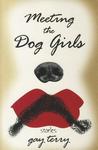
BOOK REVIEW: Meeting the Dog Girls by Gay Terry

Meeting the Dog Girls: StoriesMeeting the Dog Girls: Stories by Gay Terry
My rating: 3 of 5 stars

Amazon page

This collection consists of 30 pieces of short fiction that might be put in the bucket of speculative fiction. (“Speculative fiction” being defined as existing in a world unlike our own–i.e. sci-fi, horror, strange tales, and fantasy.) The stories are cross-genre, but “tales of the weird” is a common theme. Many of the pieces are too long for flash but on the short side of short story, though there are also a number that are of typical short story length.

It’s a mixed bag not only in terms of genre, but also in terms of the appeal. There were a few stories that I enjoyed, others that I didn’t care for, and—worst of all–a number that were utterly forgettable. Besides the strangeness, there’s another quality that might be called “quirky humor” that sparkles here and there throughout the collection.

Among the pieces that I found most interesting and readable were: “Spirit Gobs,” “Barbara Hutton Toujours,” “On Orly’s Border,” “Icon,” and “Meeting the Dog Girls.”

There’s a mini Tai Chi theme running across a couple of pieces, so I dig that.

If you enjoy tales of the strange and you can pick this book up at a good price, you just might like it.

View all my reviews

BOOK REVIEW: What is Life? by Addy Pross

What Is Life?: How Chemistry Becomes BiologyWhat Is Life?: How Chemistry Becomes Biology by Addy Pross
My rating: 4 of 5 stars

Amazon page

Dr. Pross’s book shares a title (but not a subtitle) with the seminal work by the renowned physicist Erwin Schrödinger from 1944. While Schrödinger addresses a wide range of topics on how life might be explained in terms of physics and chemistry, Pross’s focus is narrower. Pross asks—and proposes an answer for—the straightforward (but thorny) question of how abiogenesis could occur. Abiogenesis is life from the non-living. Darwin did an excellent job of explaining how we could get from single-celled organisms to the great complexity we see in our own bodies, but Darwin didn’t touch the question of how that very first ancestor became animated.

The subtitle of this work, “How Chemistry Becomes Biology,” gives one insight into how Pross proceeds. There’ve been many ideas about how life came to be on planet Earth over the years. For a time, the idea of panspermia—life arriving from an extraterrestrial source—was popular. Of course, the most popular belief has been that there was a force of life (i.e. an “élan vital”) breathed into non-living matter by a, presumably, supernatural force / entity. While the awe-inspiring nature of life made this idea appealing / believable, it took a hit from the Urey-Miller experiments. Said experiment exposed the four materials believed to have been the most common in our pre-biologic atmosphere (hydrogen, ammonia, methane, and water vapor) to lightning, and the result included a range of organic materials—including amino acids–the building blocks of… well, us, among the other life forms of the planet. Of course, Urey-Miller didn’t make abiogenesis a foregone conclusion, but the production of ever more complex self-replicating molecules under laboratory conditions has made it easier to digest the notion that life developed without any intelligent or supernatural push.

While Pross’s ideas are at the stage of hypothesis, he develops a compelling explanation that revolves around the idea of dynamic kinetic stability. “Dynamic Kinetic Stability” is a mouthful, and so it’s necessary to break it down. The best place to start is with the “stability” part. This is because the biggest problem for an abiogenetical theory of life is the Second Law of Thermodynamics. The Second Law tells us that entropy increases. There are many ways of restating this, such as that chemical reactions move to states that are of lower free energy. However, the most intuitive way is to say that a beer mugs break but do not spontaneously pop into existence. So if everything is getting simpler by deteriorating, breaking, and decomposing, how does one get / maintain a stable state of complexity? First and foremost, the answer involves adding a lot of energy and resources, but there’s more to it than that–as the author explains. “Dynamic” can also be explained in complex terms, but it’s most easily thought of as being like a river in that the river’s existence is stable, but it’s always a different river—ever changing water molecules arranged differently. (Critically, our bodies are the same way. Except for neurons, our cells are constantly being replaced.) The term “kinetic” speaks to how said replacement takes place; replication must be fast and decay slow.

The appeal of the ideas put forth by Pross is that they’re conceptually consistent with Darwinian Evolution. That is, an entirely new set of principles isn’t necessary to make sense of the origins of life. Pross argues that the self-replicating molecules that can most effectively put resources to use succeed in doing so, and—in the process–they drive others into extinction.

I found this book interesting and readable. The author uses good analogies to make his points (which often deal in complex matter) as clearly as possible. I can’t disagree with the other reviewers who’ve pointed out that the book is a bit repetitive and drags out a relatively simple statement of the argument. It’s not so egregious that I could say that it’s necessarily the result of a desire to pad the book out to a length necessary to sell in hard-copy form. (But it might have been.) The understanding of this topic is in its infancy, but that doesn’t mean this book isn’t a valuable contribution to popular understanding of abiogenesis.

I’d recommend this book for anyone interested in reflecting on from whence we came in a fashion that is open-minded to explanations that eschew the supernatural.

View all my reviews

BOOK REVIEW: Fight Like a Physicist by Jason Thalken

Fight Like a Physicist: The Incredible Science Behind Martial ArtsFight Like a Physicist: The Incredible Science Behind Martial Arts by Jason Thalken
My rating: 4 of 5 stars

Amazon page

When I saw this book’s title, I imagined a bloodied and battered Poindexter in a bow-tie–a professorial type dying in a puddle of his own bodily fluids as he calculated the Bayesian probability of winning given that initial beating. After all, physics is a highly cerebral activity, and being cerebral in a fight is a certain path to a beat down. However, Thalken makes a good point with his explanation of the title (and the book’s theme.) He’s suggesting that one use tactics and techniques that are supported by evidence and rooted in a sound understanding of the science of combat—as opposed to mindlessly doing whatever your sensei tells you or–worse yet–just muddling through on a combination of instinct and ignorance. In short, be skeptical, but inquiring. It turns out that there is a time for a fighter to be cerebral, but it’s when they are making decisions about how to train.

The book is divided into two parts. The first part explains how classical mechanics can help one to be a better fighter. There are four chapters in this section that deal with center of mass and its crucial role in a fight, the differences between high momentum and high energy strikes and how each is achieved, differences in circular versus linear paths and where the advantage in each lies, and what simple machines (i.e. levers and wedges) can do for a fighter. This section is what one would expect from such a book. Unlike the second section, which deals largely with sport fighters, the advice on offer in the first section is as applicable to those involved in self-defense or other real world combative situations as it is to fighters in the ring.

The second section examines the issue of concussions and brain damage in some detail, including consideration of the degree to which gloves and headgear do—or don’t—make one safer. The reader gains great insight into the mechanics and neuroscience of a knockout. While the majority of the section offers advice for those engaged in combative sports, the last two chapters take a bit of a turn. The first of these two deals with the myths perpetuated by Hollywood—which, let’s face it, is the source of most people’s information on what combat is. Debunking the notion that a person who gets shot is always and everywhere instantly incapacitated is a central theme this chapter. The last chapter deals with the issue of pseudoscience in the martial arts, and the insanity of believing one can defeat an opponent with chi (also qi, or—in Japanese Romanization–ki) or mind power alone. These last two chapters seem like a turn from the main theme of the book, but they do stay under the umbrella of the martial arts through a scientific lens.

While this is a book about science, it’s readable even for an educated non-scientist. All the math is put in boxes that the reader can opt to skip, or to follow, depending upon his or her comfort level with equations. There is no complex jargon, nor any incomprehensible concepts. The physics is largely high school level Newtonian mechanics.

Diehard believers in the supernatural or pseudo-scientific conceptions of the universe should be warned that this isn’t the book for you unless you like your sacred cows flame-broiled. You won’t learn about chi (qi) in this book except to be reminded that it’s a make-believe concept.

I’d recommend this book for those who are interested in how science can be applied to the martial arts or human movement more generally. It’s short, readable, and offers some interesting food for thought.

View all my reviews