
Taken in March of 2015 at Savandurga
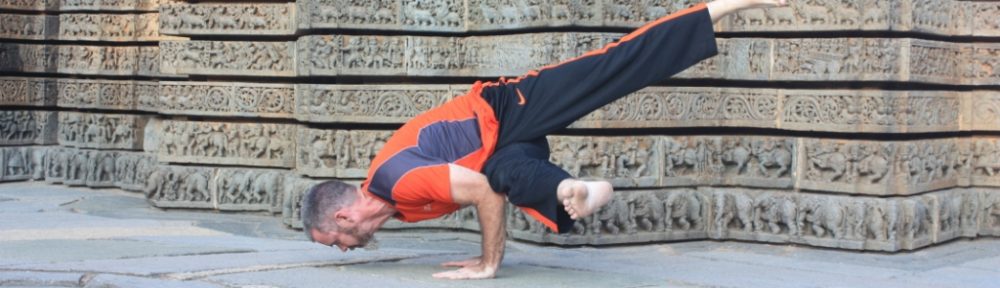

Taken in March of 2015 at Savandurga
 The Tale of the Dueling Neurosurgeons: The History of the Human Brain as Revealed by True Stories of Trauma, Madness, and Recovery by Sam Kean
My rating: 5 of 5 stars
Once upon a time, our knowledge of what the brain did, how it worked, and the degree to which its parts were specialized came from observing people who had brain injuries or a disease of the brain. Kean’s book examines the evolution of our understanding of the brain by way of investigations of historic cases. Looking at damaged brains is obvious not the ideal way to study the most complex system in the known universe—accidents and brain-eating diseases aren’t discriminating. Still, over time, a few conscientious [and sometimes warped] doctors and scientists pieced together important clues. From the rudimentary observation that people conked on the head often pass out temporarily, doctors began to learn about the degree to which brain parts were specialized and how changes in the brain effected beliefs, memories, and behavior.
Kean’s book is in part a history and in part a work of popular science, and the cases selected are often of interest both as history and as science. We learn about the damaged brains of kings, assassins, soldiers, adventurers, and those with more mundane jobs but no less fascinating brain trauma (e.g. Phineas Gage, one of the most well-known cases in the book, a construction foreman who had a steel tamping rod rocketed through his skull.)
It’s this historical approach that builds a niche for Kean. There have been a massive number of popular science books on the brain in recent years. (You’ll note that I’ve reviewed many of them.) While other books discuss many of the same intriguing neuroscientific phenomena (e.g. synesthesia [mixing of sense and / or mental data, e.g. people who see colors with musical notes or even with numbers], phantom limbs, epilepsy’s effect on beliefs, and the brain’s role in aberrant behavior) most of them are rooted in the mother-lode of discoveries that have come out of functional Magnetic Resonance Imaging (fMRI) and other modern technologies. Even the works of V.S. Ramachandran, which largely deal in discoveries rooted in low-tech but exceedingly clever science, are placed in the context of present-day science. (You should read Ramachandran’s book “The Tell Tale Brain” also.)
Kean’s book is complementary to the body of works on popular neuroscience. While some of those books mention the same (or similar) cases as Kean, they do so to illustrate the Dark Age origins of many of these questions. Kean delves into the intriguing details of such cases. On the other hand, while Kean is dealing in the historic, he brings in modern science on occasion to give the reader insight into what ideas have been confirmed and which overturned. That’s important as Kean is often telling the reader about the opposing theories of the day—as the title suggests.
The book contains an Introduction and twelve chapters that are arranged into five parts. The book’s organization is by brain structure and key (interesting) functions tied to those various parts. It’s logically arranged, starting with a question as crude as the skull’s role in brain injury and ending on a topic so challenging that there remains a great deal of mystery (and controversy among scientists) about it, i.e. consciousness. In between, we learn about neurotransmitters, neuroplasticity, and the brains role in sensory processing / presentation, bodily awareness / movement, emotion, belief, delusion, and memory—as well as the degree to which the two halves of our brain are independent and what severing the connection does.
The book is end-noted and has a works cited section, but it has a couple other noteworthy features. A fun feature of note is that each chapter begins with a rebus, a kind of word puzzle that relates to an anatomical part relevant to that chapter. There are also graphics in the form of both diagrams and black-and-white photos, and they are interspersed throughout the book with the relevant text (as opposed to in special sections.)
I’d recommend this book for individuals not only interested in neuroscience, but in the history of science generally. Even history buffs who don’t think much about science will likely learn a thing or two from Kean’s presentation of the cases—e.g. there is much discussion of Civil War wounds.

pain advances its speary phalanx
i watch–a dispassionate witness
like some Buddha once told me to
it’s sour march is not so daunting
and yet it makes for cruel, cruel masters
kicking at a puppy for peeing on the rug
when everyone knows a puppy is a lovable bundle of carpet-peeing madness
its service to help one see the beauty entwined in all happenings despised
elsewise, how might one learn the futility of despising?

Taken in the Summer of 2011 near Helsinki

Taken in July of 2012 in Budapest

Half a loaf haiku
You may capture four seasons
While I have but two
In rainy season
Midnight downpours catch no cat
Out in the open
Butterfly dogfight
Jinking, dipping, and spiraling
Sketching a helix
Circling far above
Big winged hawks banking downward
Snapping up dinner

Taken on October 9, 2016 in Panjim
One never knows what one will find in the twisting back alleys of an ancient town.

Source: Wikipedia
[after hours, the circus of the mind]
twisted puppets of an unworldly kind
marionettes have danced into a heap
but for one dancer who takes her leap
beyond the stage, off the ledge
freed of strings by midnight’s edge
bounding over a haunting chasm
the beating heart locked in a spasm
from backstage toy soldiers pour
but ballerina ‘s caught, slipped to floor
while her pursuers smash into shards
sliding wide as a fallen house of cards
and thus ends the dancer’s defection
exiting stage right without detection
viewed by empty seats, row-on-row
and who caught her, and where’d she go?
those are facts we’ll never know

Is there a they?
Or is they us?
On the same old day,
riding a different bus?
Tilting heads at the same places.
Different route, same blank faces.
Electrified through the same lines.
Picking fruit amid the same mines.
Is there a them
amid your dreams
deep in the REM
the field of screams?
No. There you are each shadow monster.
The bright and the dark, indivisibly you.
You may wish to be not the mobster,
but you can’t ever cleave yourself in two.
Maybe “they” are an illusion.
A genetic glitch now passe.
A wanton act of collusion
to create an invisible they.


