Unknown's avatar

About B Gourley

Bernie Gourley is a writer living in Bangalore, India. His poetry collection, Poems of the Introverted Yogi is now available on Amazon. He teaches yoga, with a specialization in pranayama, and holds a RYT500 certification. For most of his adult life, he practiced martial arts, including: Kobudo, Muay Thai, Kalaripayattu, and Taiji. He is a world traveler, having visited more than 40 countries around the globe.

POEM: Seed

There is a tinge of sadness in anything that floats.

In the float is buried the seed of sinking.

There is a tinge of sadness in everyone who sleeps.

The seed of wakefulness lay dormant in a dream.

People think themselves fearless of Poe’s pit–sans the pendulum,

but underestimate the suffocating power of the void.

The pendulum is swift; the pit, relentless

Fear of the dark is fear of what is not.


DAILY PHOTO: Strange Tree on a Hilltop

Taken on April 27, 2017 near Longwa in Nagaland


I’m not sure / can’t remember whether this was on the Indian or Myanmar side of the border.

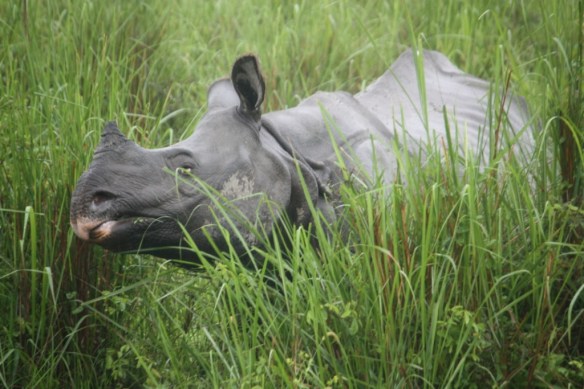
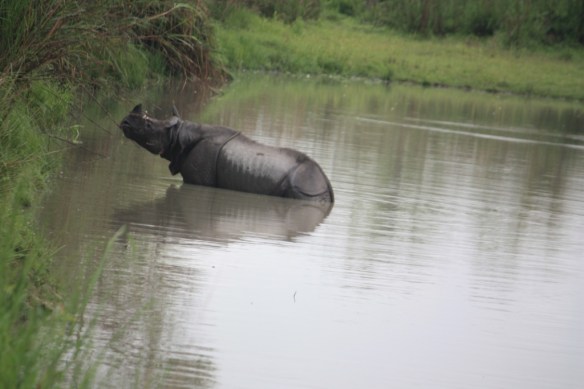
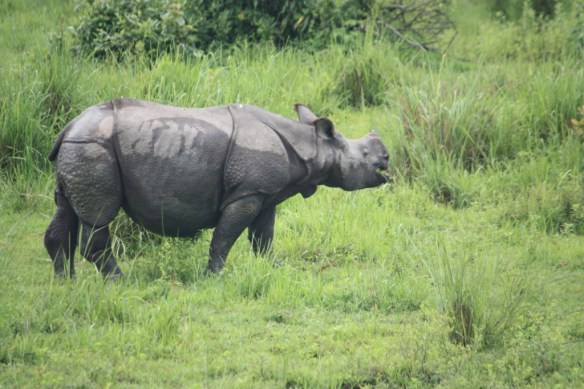
DAILY PHOTO: Rhinoceros Unicornis: Or, The Great Indian One-horned Rhino

Taken on April 23, 2017 at Kaziranga NP in Assam


DAILY PHOTO: Root Bridges of Meghalaya

Living Root Bridge (both has plants growing in it and roots still growing); Taken in Riwai on April 19, 2017


One of the longer root bridges; Taken near Nongthymmai on April 18, 2017


Double Decker Root Bridge; Taken on April 18, 2017 near Nongthymmai

DAILY PHOTO: Loktak Lake

Taken on May 4, 2017 at Loktak Lake in Manipur


DAILY PHOTO: Konyak Warriors of Hungpoi

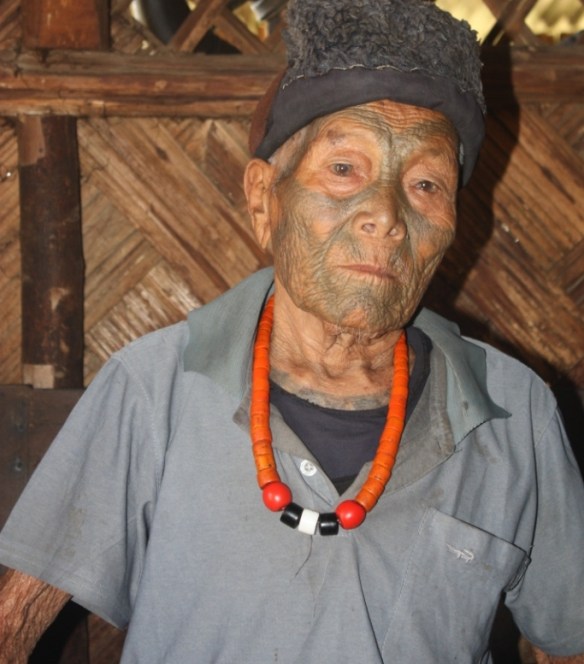
The Chief; Taken on April 27, 2017 at the Hungpoi Village in Nagaland, India


Nagaland is a fascinating place. Back in the days before colonialism and proselytizing missionaries, the tribes practiced headhunting. The Chief’s wife would tattoo the face of any warrior who returned from battle with the head of a fallen enemy. Hence, you see the blue tint to these men’s faces. Hungpoi, which is a short drive from Mon, has one of the highest concentrations of those who lived during this time, but they are a disappearing breed.


I was fascinated to discover how many features of their tribal experience echoed what one reads about in Chinua Achebe’s “Things Fall Apart.” That book is considered to be one of the quintessential novels of the African experience, but it seems that these Asian tribes shared many features. Their hyper-masculine societies morphed as Christian missionaries came in, backed by the might of colonial powers, and converted the population. Internecine killing–accidental or purposeful–was punished by a seven-year period of exile. Shaming was used as punishment much more than is possible in our–to use Desmond Morris’s term– super-tribes.


Some of these elder warriors wear necklaces showing the number of heads that they collected in warfare. This is in contrast with other elements of ornamentation which, according to one of these men, were more about attracting a mate.


BOOK REVIEW: The Way of the Iceman by Wim Hof and Koen De Jong

The Way of The Iceman: How The Wim Hof Method Creates Radiant Longterm Health--Using The Science and Secrets of Breath Control, Cold-Training and CommitmentThe Way of The Iceman: How The Wim Hof Method Creates Radiant Longterm Health–Using The Science and Secrets of Breath Control, Cold-Training and Commitment by Wim Hof
My rating: 5 of 5 stars

Amazon page


Wim Hof is often presented as a freak of nature. If you’re flipping through the science channels, you might see a segment that shows him subjecting himself to extremely cold temperatures with no ill effects. This book is an attempt by Hof, and co-author Koen De Jong, to counter the proposition that he’s some sort of mutant (or—worse–that his demonstrations are cons) by offering a method by which anyone can achieve the same feats. It should be noted that long before Hof and YouTube came on the scene, there were people [notably Taoist and Tibetan Buddhist monks] performing similar acts.

Hof’s method (called the “Wim Hof Method” or WHM herein and in this book) consists of three components: cold training, breath exercises, and commitment building. The book explores this three-legged stool from both the scientific and practical dimensions. There’s one chapter on each of these elements that describes what it does to the body and how it contributes to well-being, and later chapters both describe what scientific studies have found so far and outline the approach by which the reader can explore the WHM on their own.

There’s a lot of front matter in this book (two forwards, a prologue, and an introduction), but the book more-or-less consists of seven chapters. The first of these is a mini-bio of Hof. It describes a fascinating event in Hof’s youth in which he was exposed to cold, as well as his travels to India in an attempt to find a yoga teacher. [As is the case with most people who come to India seeking to find that quintessential guru—i.e. a half-naked, weather-beaten, and forehead paint-streaked classical guru—he found that he had to wade through a sea of charlatans and shysters while never finding the true masters who are likely hidden away in caves in the Himalayas. Note: this is not to say that one can’t find excellent yoga instruction in India but it’ll likely be by someone fully clothed and not someone smoking pot on a ghat in Varanasi.] This resulted in Hof taking an experimental approach in which he studied the effects of various activities on himself (and such experimentation is what he advocates for others as well.) It should be noted that Hof didn’t invent this method from scratch—e.g. the breath component is based on Tibetan Tummo meditation.

As mentioned, Chapters 2 through 4 explore the three components of the WHM, i.e. cold training, breath exercise, and commitment building, respectively. These chapters describe the science of how these three elements generally (as opposed to a later chapter that describes studies in more depth) act upon the body. The commitment section describes a number of arduous feats such as climbing Kilimanjaro in a T-shirt and shorts, but also describes the role of diet (with particular emphasis on the fast-5 diet which is similar to, but not precisely, what Hof came to practice organically.)

Chapter 5 dives more deeply into the science than does the preceding chapters, and focuses on the studies in which Hof has participated in his attempt to facilitate a better understanding of his method.

The penultimate chapter suggests what the WHM might do for people in various classes, including: healthy people, athletes, and people suffering from various physical and mental ailments. With respect to the latter, there is discussion of exemplary cases as well as the possible means by which the training might act.

The final chapter is a brief outline of how the WHM can be put into practice by readers. There is also a sample log by which practitioners can chart their experience.

There are a range of graphics including line diagrams and photographs. Most of the photographs are inspirational shots of Hof in action, but there are diagrams and other graphics used to convey scientific ideas. There’s a recommended reading page as well as a works cited page. Both lists are small and confined to a few key sources of information, with the latter being the more scholarly works. There is also a glossary that may prove handy for some readers.

This book is illuminating and many stand to benefit from it. I found the approach of the authors to be sound; it’s basically “see for yourself.” This book could easily have been a sales brochure, and in some ways it is, but the fact that it emphasizes the science and the suggestion that the reader try the practice lends credibility. I’d highly recommend this book for anyone who wants to expand and explore the limits of their capability.

View all my reviews

BOOK REVIEW: The Science of Breath by Swami Rama et. al.

Science of BreathScience of Breath by Swami Rama
My rating: 4 of 5 stars

Amazon page


This is an oldie, but a goody. The first edition came out in 1979, but as its intent is to provide an overview of the anatomy and physiology of breath for yoga practitioners, the fact that it doesn’t access the bleeding edge of respiratory science isn’t all that detrimental.

This short book consists of four chapters. Two chapters are by the famous yogi Swami Rama, and the other two are written by medical doctors. The first chapter is an introduction to breath from the yogic perspective. It both explains why it’s so important to understand and work with breath and introduces the mythic physiology (prana, nadi, chakra, etc.) that has historically been used to explain pranayama (breath exercises.)

The second chapter is written by Dr. Alan Hymes and it explains the mechanics of respiration. While Chapter 2 focuses on the anatomy of breathing, it begins with an explanation of cellular respiration to introduce the role of breath in powering muscles. There is a fine explanation of the operation of the diaphragm and the intercostal muscles in breathing.

Chapter 3 is written by Dr. Rudolph Ballentine, and it delves into the role of the nose and nasal cavities in respiration. Breathing through the nose is emphasized in both yoga and many other systems of breath training (e.g. the Buteyko and Wim Hof methods.) This is because the nasal cavities perform many useful functions such as moisturizing and warming air, capturing pollutants, and extract heating and moisture from exhaled breath. Besides exploring nasal anatomy and physiology, Dr. Ballentine describes jala neti shatkarma (nasal cleansing with salt water) and nadi shoudhana (alternate nostril breathing.)

The final chapter, written by Swami Rama, mostly describes various techniques of pranayama (breathing exercises) and related practices bandhas and mudras (locks and seals in which bodily parts are contracted or constricted.) However, the chapter begins with a mix of physiology and mythic physiology. That is, it explains some topics not addressed earlier–such as the interaction between the nervous and the cardiovascular systems as well as chakra.

My standing complaint about books that weave together science and pseudo-science is mitigated a bit herein. My problem with putting these ideas together is that it can be difficult for the reader to determine what concepts reflect reality and which offer models to help one visualize energy. However, except for the last chapter, this book does a good job of keeping these ideas separate. The chapters by the medical doctors present the science with minimal intrusion of unscientific concepts. Swami Rama does present science and mythology together, but not so much scrambled together in a confusing mish-mash.

Chapters 2 through 4 use a number of graphics to help present the material. In the middle chapters these largely consist of line drawings to convey the relevant anatomical features or physical actions. The last chapter adds photographs to demonstrate relevant postures. There is a page of recommended readings, but it’s more of an advertisement for other books put out by the Himalayan Institute than the recommendation of books on the science of breath.

I found this book to be educational. It packs a lot of useful information into a concise package and is readable to a layman. I’d recommend it for yoga practitioners and others who are engaged in breath work.

View all my reviews

POEM: A Khasi Myth: or, Rodent, Lightening, and Sword

In a sacred forest

a Rodent roamed

who owned a sword

it freely loaned.

This was no hacking

machete blade,

but made of metal

of unmatched grade.

One day Lightening

made a request:

To borrow the blade

believed the best.

Lightening zigged,

sliced, and zagged.

Claiming ownership

 in its boastful brags.

The rightful owner

requested its return.

But the rodent’s

plea met only spurn.

So the critter devised

a clever, sensible plan

in order to bridge

the requisite span.

It needed to climb

from Earth to the sky

because it had no

wings with which to fly.

But it wasn’t just wings

which Rodent lacked.

It had only one item

 to be skyward stacked.

So it piled its poop

as high as it could,

from the base of a tree

past the top of the woods.

Stacking and piling, the

poop nearly touched cloud.

When a thunder crack

struck ear-splitting loud.

Lightening saw rodent

would reclaim the sword

that Lightening had come

to so ardently adore.

Down fell the Rodent

to a pile of fried dung

that had once been its

steps and its ladder rungs.

 You may think that

Lightening got its way.

But the Rodent piles

its poop to this very day.

Someday when Lightening

is momentarily distracted,

Rodent’s sword will be

surreptitiously extracted.

DAILY PHOTO: A Tree Seen Two Ways

Taken on April 23, 2017 at Kaziranga National Park in Assam