 Rounding a mountain forest trail
from lee to the wet side,
I walk amid mossy branches
draped thick enough to hide
an ogre, troll, or a dark elf —
let ‘lone the old oak’s eyes.
So many hidden paths diverge,
and me without a guide.

Rounding a mountain forest trail
from lee to the wet side,
I walk amid mossy branches
draped thick enough to hide
an ogre, troll, or a dark elf —
let ‘lone the old oak’s eyes.
So many hidden paths diverge,
and me without a guide.
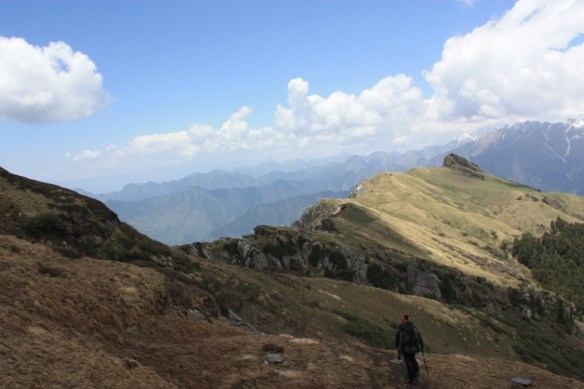
Taken in June of 2015 in the Great Himalayan National Park


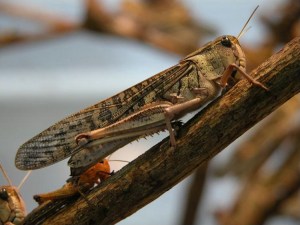
Photo Source: Jonathan Hornung (via Wikipedia)
Locusts, you were supposed to come
after the hail-fire storm.
The winged-buses got ambitious
in their desire to swarm.
Of course, pestilence of livestock
queue-jumped the frogs and gnats,
but that’s just ’cause a few people
think livestock includes bats.
Maybe it’s too late for this chain
of disasters to work.
Perhaps, we should call them all off…
[cue “Three Days in the Dark”]
I lie falling asleep —
purple Rorschach blobs
forming,
transforming,
& unforming
on the black field of my inner eyelids.
The veneer of reality felt thinner,
but my efforts to poke a finger through
shoved me back into the warm, soft reality of my bed.
[I’d so wanted to “Here’s Johnny!” my way into
an alternate dimension.]
And, once more, I’m a prisoner to reflexes
that snatch away subtle worlds.
 30 Days of Night, Vol. 1 by Steve Niles
My rating: 5 of 5 stars
This story takes the run-of-the-mill vampire tale into more chilling territory by setting it in Barrow (a town on the northern end of Alaska that sits within the Arctic Circle) in the dead of winter when weeks pass without sunlight. The vampires, thus, figure they have a month to feed without having to hide from the light, or risk being staked to death in their sleep.
On the day of Barrow’s final sunset of the year, the Vampires send in a scout to destroy all communications – starting by stealing and burning all of the residents’ cell phones. As I thought about this after reading, it was one of several points that strained credulity, but I have to say the visceral setup these people being trapped in darkness while being hunted kept me from being too skeptical at first reading. (I don’t know what cell service is like in Barrow but it seems like eliminating a tower would be more probable means of success than steeling a huge number of individual phones. To be fair, the scout does knock out the central communication hub as well, and maybe the reader psychology of being without personal communication (a cell phone) in the world we’ve grown accustomed to makes this course more intense – if absurd.)
The vampires, literally, chew through most of the population in short order. We do get some sense of the futile resistance put up by locals – particularly the protagonist and sheriff. [I would assume in a town like Barrow everyone over six-months-old possesses at least one firearm, and that likelihood is not disregarded, which makes the inconsequential resistance more chilling.] While the pacing feels slightly fast, it does get the scenario down to a manageable few to be hiding out together in a single building. (There is another major vein of strained credulity with regards to the people hiding out while maintaining core temperature, but – again – it was engrossing enough that I wasn’t much distracted at the time.)
I give the resolution high marks for being clever and gripping, but I will say that it felt to me like it unfolded too quickly and was too easy. I suspect that that may have to do with this being a serialized story. While I will say that the story is successfully wrapped up as a stand-alone arc (no mean feat as this is often a fail in serialized graphic novels or comic books,) the one eye toward setting up the continuing story arc may have contributed to this ending’s rushed feel. (Or maybe it was too much story for the allotted pages.)
I found this to be an intense and riveting read. If you like vampire horror, you’ll probably enjoy it.
 A Book of Nonsense by Edward Lear
My rating: 4 of 5 stars
This is a collection of over one-hundred limericks by Edward Lear published in 1846. Limericks are a popular five-line poetic form with an A – A – B – B – A rhyme scheme, and in which the B-lines are shorter than the A-lines. Two types of material leap to mind when one thinks of limericks: humor and bawdiness. I mention this because neither of these subjects feature prominently in Lear’s limericks. While a number of the poems could be described as amusing, I can’t say I found any of them laugh-out-loud funny. I suspect that the number that are found amusing would be larger for a reader from the early 19th century due to insider knowledge that escapes the present-day reader (i.e. the activities and the perception of people from various locales have changed considerably over the years.)
As the book’s title suggests, what is on display in these limericks is nonsense. While that reads like an insult, Lear is considered to be one of the founders of the genre of literary nonsense. It’s not nonsense in the sense of Lewis Carroll’s “Jabberwocky” in which fictitious words are blended with real words to create a synthesis that is grammatically logical but relies on the reader’s imagination to create any meaning. Rather, the events and reactions on display in the poems range from absurd to impossible, but the meaning can be interpreted. As with the poems of a later nonsense poet of renown, Ogden Nash, some of the whimsy of these poems derives from contortionistic acts of mispronunciation needed to square the rhyme (though I may be overstating this as I don’t know how much Lear’s British accent from almost 200 years ago would differ from the way I read with my 2020 American accent.)
Needless, to say this is a really quick read. Most editions are between 30 and 60 pages long, with all the white-space one would expect of a book of five-line poems. If you are interested in Limericks or poetic forms in general, it’s worthwhile to see how Lear writes them. It’s a big help in developing an ear for the flow of the limerick. I found the book to be a pleasant read, though some of the limericks are cleverer than others. Some left me thinking that Lear could have done much more with the poems. Often the last line is a minor variation of the first line, and, thus, neither serves as a punchline nor as a source of new information. That sometimes felt like a missed opportunity. Still, it’s a nice collection of nonsense limericks.
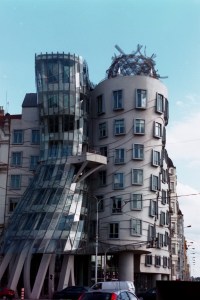 Throw open the doors of Simulation.
I saw the gearbox of that old, faux world,
or was it neuronal stimulation
programmed to grind as the spiral arm whirled?
It pains me t’ say what remains of the day
is a false front of backlogged memory
bits from days past — woven mind macramé.
Deja vu — but feels real, sensorily.
Send fire to the float tank to make ’em dance.
Puppets by wire who think themselves masters.
Better to feel the slump of one’s idle stance
than the perfect posture of bad actors.
Calling all those who know life is scripted:
“Viva la revolution!” to the gifted.


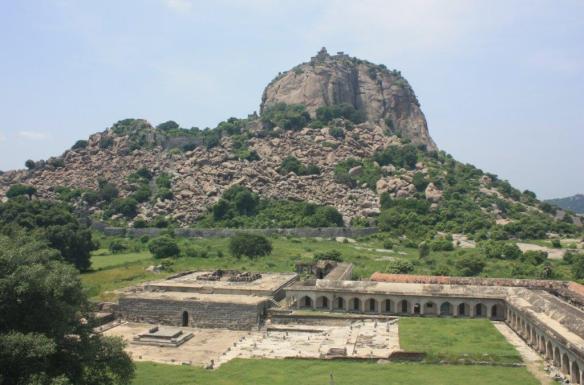





 Tiger Riding for Beginners