
Taken near Aurangabad Caves on November 18, 2014



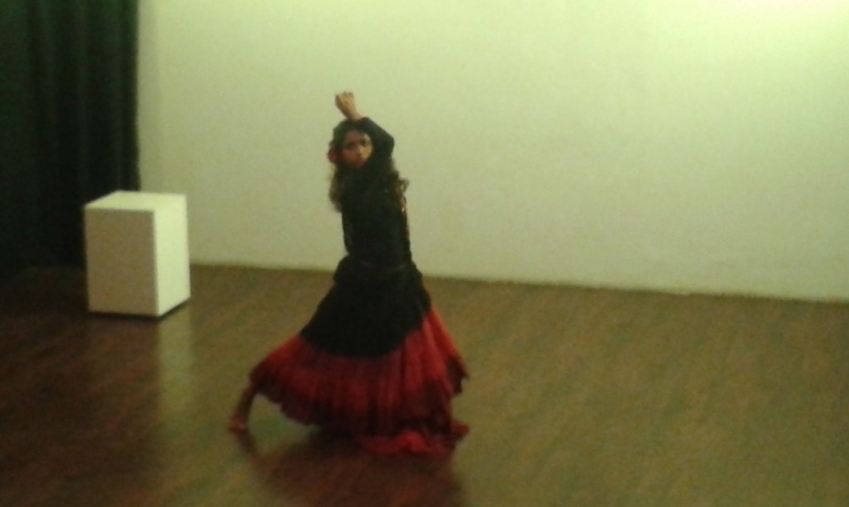
Taken on November 23, 2014 at Somaiya College in Mumbai
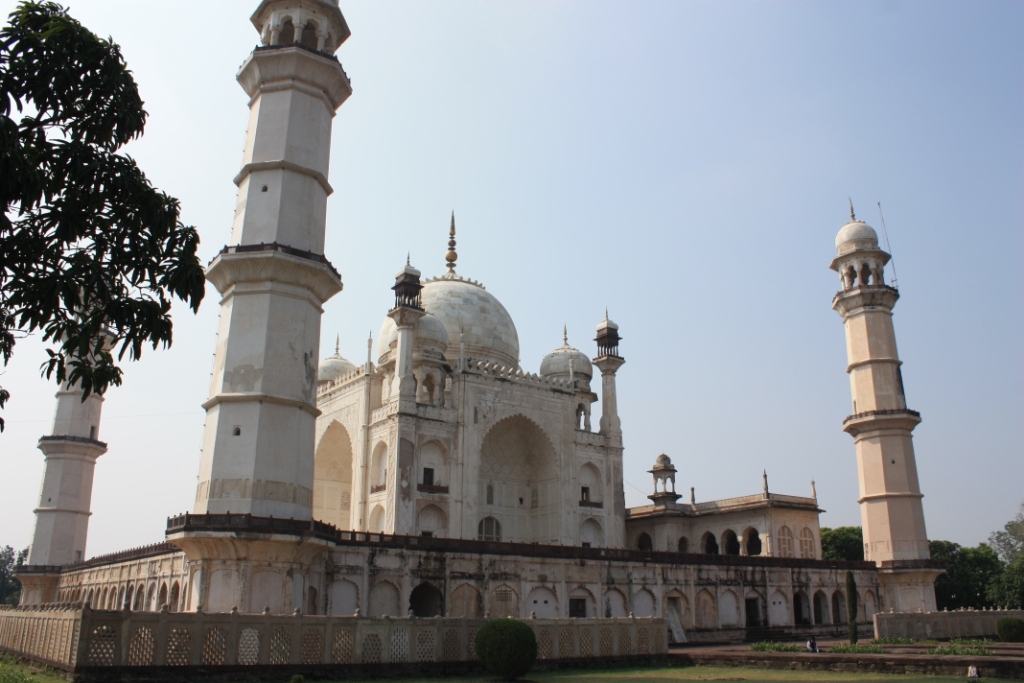
Taken on November 18, 2014 in Aurangabad
From a distance, Aurangabad’s Bibi Ka Maqbara bears a striking resemblance to the Taj Mahal. Besides the superficial similarities, it was also build in memoriam to the wife of an important Muslim leader. However, according to my guide, the Bibi Ka Maqbara is only about 60% the height of the Taj Mahal (I suspect its width is an even smaller proportion, as it looks “skinny” in comparison to my memory of the Taj Mahal.) Also, while the Taj is done entirely in white marble, only the dome and pedestal of the Bibi Ka Maqbara are white marble. The rest is plaster. Whereas the Taj has a great many floral scenes that are formed by inlaid semi-precious stones, at the Bibi Ka Maqbara similar scenes are painted onto the plaster in colorful paint. Aurangabad’s mini-Taj opened a mere 13 years after the Taj Mahal.
There are a couple of ways in which the Bibi Ka Maqbara surpasses the Taj. Most notably, the view from the back is much better. Aurangabad’s site has a garden at the back that rivals the front garden in size, and there are beautiful mountains in the background. (The rear of the Taj overlooks the Yamuna river bed and beyond that is not much impressive.) Second, no craftsmen were intentionally injured in the making of this monument. (There is a tale–treated as suspect by many historians–that the Taj craftsman were crippled in various ways after the completion of work so that they would never again produce something as lovely.)

Taken in Aurangabad on November 18, 2014
I’m back from a week-long trip to Maharashtra, where I visited Aurangabad, Ajanta, Ellora, Daulatabad, and Mumbai. That’s why I’ve been delinquent in posting. However, I’ll resume by posting pics and commentary from this trip.
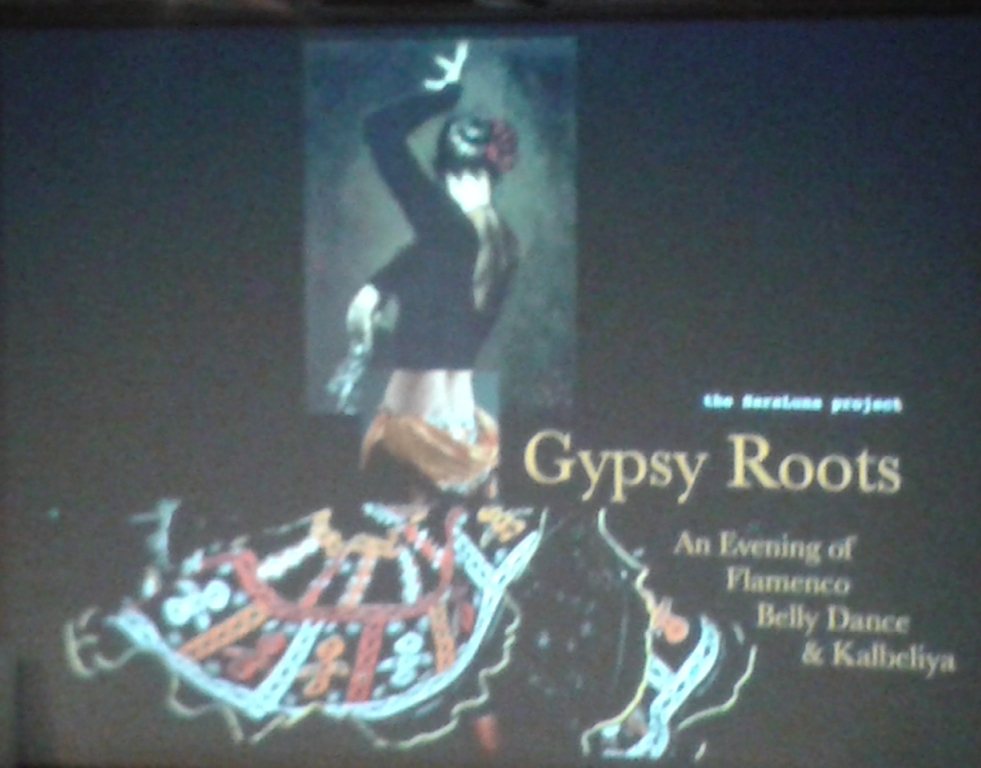
FYI: LSNED = Learn Something New EveryDay
My wife, some friends, and I went to a dance performance at the KalaRasa Art House in Jayanagar last night. The dance was performed by a duo (made trio for the evening) called The SaraLuna Project, who demonstrated three dance forms with Gypsy roots: Kalbeliya Dance of Rajasthan, Egypt’s Belly Dance, and the Spanish Flamenco. I had no idea that these dance forms were connected (hence the Learn-Something-New-EveryDay [LSNED] segment,) and that they are but three styles along the long trail of Gypsy migration–though I have seen other Gypsy dance forms in Hungary.
This promises to be the first installment of a series that will cover other dance forms in this long and rich cultural heritage. The dance was sensational and it was a learning experience (complete with slides and graphics) as well as an entertaining evening. So if you’re in Bangalore and enjoy dance you should follow The SaraLuna Project.

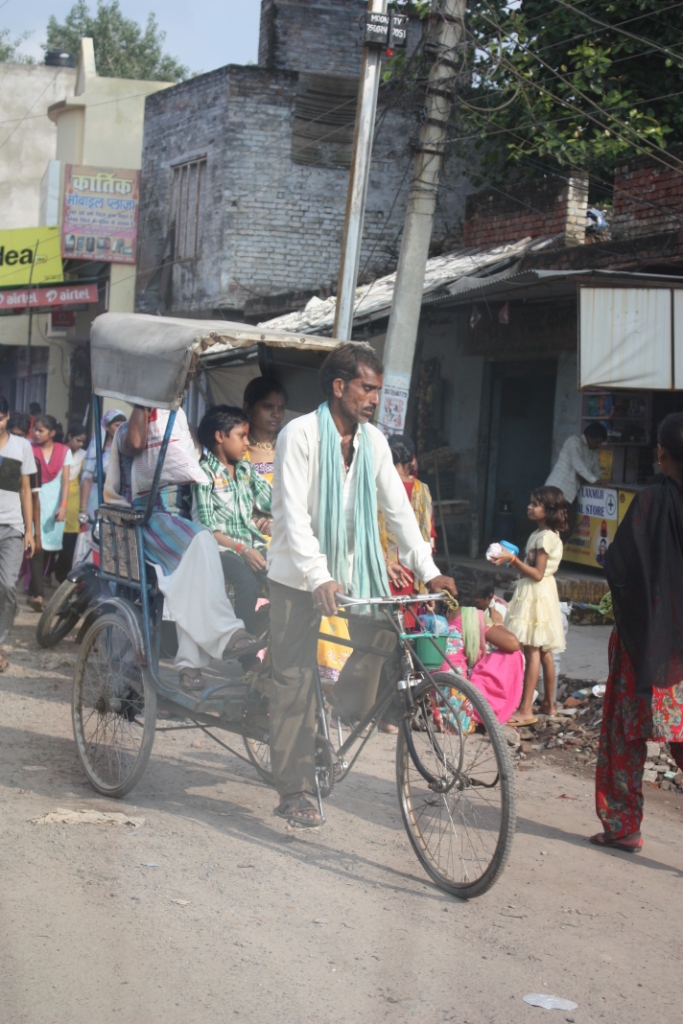
Taken in October of 2013 in Agra
You don’t really see bicycle rickshaws in Bengaluru, but up north they’re common enough. This was taken in Agra, the town most famous for being home of the Taj Mahal. In some places these are called pedicabs. That best distinguishes them from autorickshaws (in India often called “auto” and in many other places called by the presumably onomatopoeic Thai designation of tuk-tuk) as well as from the original pulled rickshaw (where the puller walks or runs to propel the vehicle.) I don’t believe that I’ve ever seen a pulled rickshaw being used as a real means of transportation anywhere I’ve been in the world (though maybe in Cambodia.) You do see them as tourist photo ops in the same way one sees Hansom cabs and horse-drawn coaches in many US and Canadian cities.
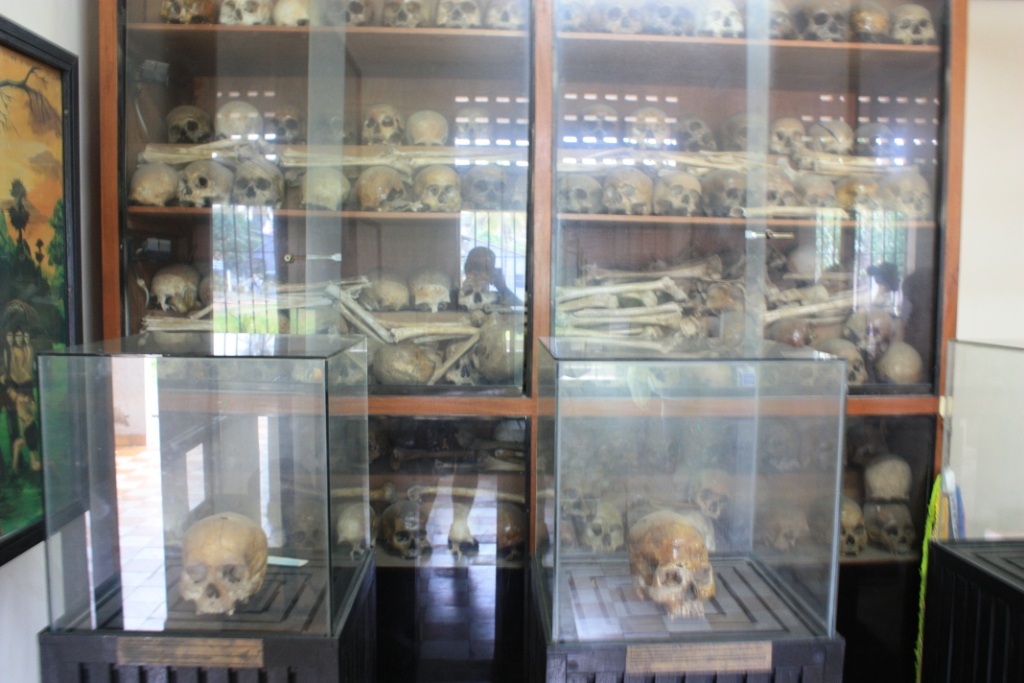
Taken in October 2012 in Phnom Penh.
These display cases of skeletal remains are at the Tuol Sleng Genocide Museum in Phnom Penh. Just one of the many horrific legacies of the Khmer Rouge.

This fake rat is kind of big, but if you asked me how it differed from real Indian rats, I’d have to say the bling. Real Bengaluru rats aren’t ostentatious, and rarely wear jewelry.
Occasionally, I will see a rat–usually the carcass thereof–that makes me exclaim… Duh-uh-AAAaaammmmm! They often look like beavers, sans the distinctive paddle-tail, but with a whip-like, hairless rat tail in its place.
These sightings have raised some intriguing questions:
The first question is for any biologists or geneticists who–quite improbably–might read this post. Is it possible for the offspring of an English Bulldog and a Norwegian Rat to survive? If so, I’m pretty sure that I’ve seen one. If I find out where it lives, will they name it after me? Can I pay them not to?
The second question is for statisticians–particularly bio-statisticians. Let’s say that 95 percent of rats successfully live their lives underground, in walls, and out of sight. Let’s further say that I’ve seen a rat that was 1.5 feet long and 0.75 feet wide. Is it possible to calculate how large the biggest statistically likely rat would be. I’m thinking, lurking somewhere in the sewers, there is a three-foot long and foot-and-a-half wide ratzilla–probably chomping on a cigar and belching occasionally.
The third question is for an ecologist. I know that cats and other predators will attack–often successfully–prey that are larger than they are. However, given the freakish disparity in sizes that we are seeing, will the existing ecological order be overturned, and to what effect? Bangalorean cats are about the same size as American cats, but Bangalorean rats are about the size of American pigs–not the cute little pot-bellied variety but rather the kind that take a blue ribbon at a 4H County Fair. I know humans were once primarily prey, and only quite recently became dominant predators. This worries me because I know that humanity’s prey-like predilection to be scared of everything, combined with its unprecedented predatory weapon set, has fucked up the world but good. I can only image what a rat would do with a hydrogen bomb.
The fourth question for a rat neurologist. Are rats really that much smarter than turtles? I know the Teenage Mutant Ninja Turtles follow their Rat Sensei unquestioningly. I googled it. Rats live about 1 year and turtles can live to be about 40. So Splinter must have learned much faster in addition to being much smarter.
OK, the last one was not a serious question (but it’s a serious plot-hole for TMNT), but I do have one last question for the general public.
Which do you find more disturbing: a.) when you see a single mammoth rat? or b.) when you see an elaborate Vietcong-style series of tunnel openings and you know there is a billion rat army wriggling all over each other just centimeters below your feet?
Please don’t think I’m anti-rat. I know that, while we fear the plague-infested rats, it was really the fleas that gave us the Black Plague. I also know there are places like Karni Mata Temple in Rajasthan where rats are treated deferentially. There are an estimate 20,000 rats living on the temple grounds.

Source: Wikipedia entry on Karni Mata Temple in Rajasthan.
I guess this raises one more question for a rat nutritionist. How come these rats, which are fed and cared for, don’t get huge like the one’s lurking in the back alleys of Bengaluru.
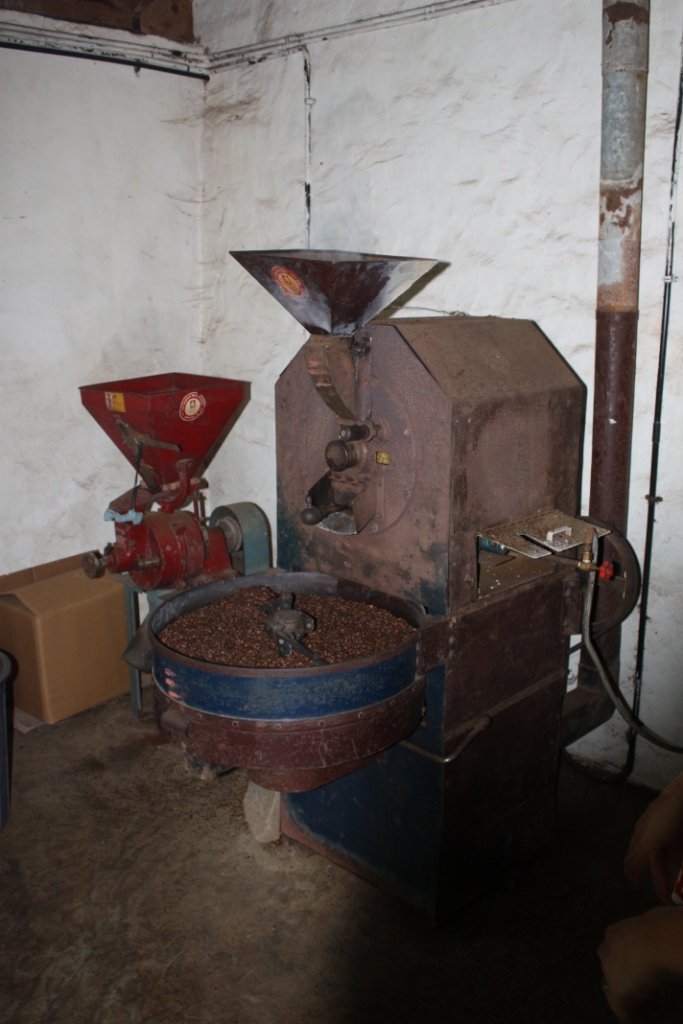
Taken in March of 2014 in Madikeri.
It may not look like much, but this is the Best Smelling Room… Ever! These machines are located at the Golden Mist Coffee Plantation near Madikeri. Here they roast and grind coffee.

Taken in Fall of 2013 at Bannerghatta.






 Tiger Riding for Beginners