DAILY PHOTO: Temple in the Sun

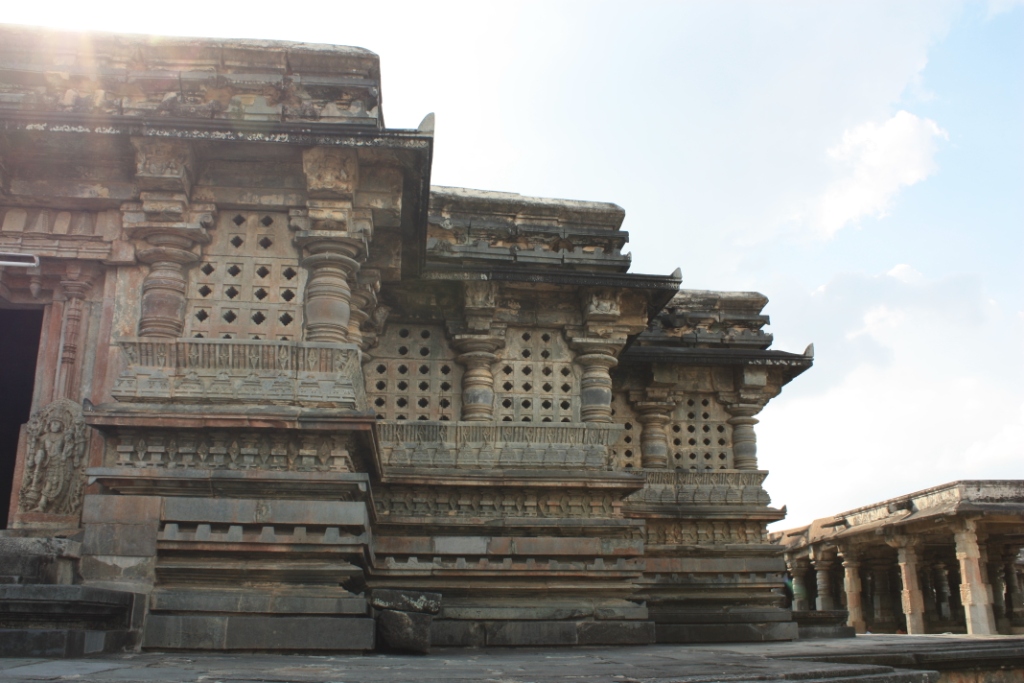
Taken in November of 2013 in Belur

Taken in November of 2013 in Belur

IMG_1429

The temples at Belur and Halebidu are among India’s most impressive–but least known–historical sites. Both cities were a capitals during the days of the Hoysala Empire, but are well off the major tourist path. If you’re spending some time in South India, these temples should be on your itinerary.

Uncle’s Shop, And Other Mysteries of The Indian Auto-Rickshaw

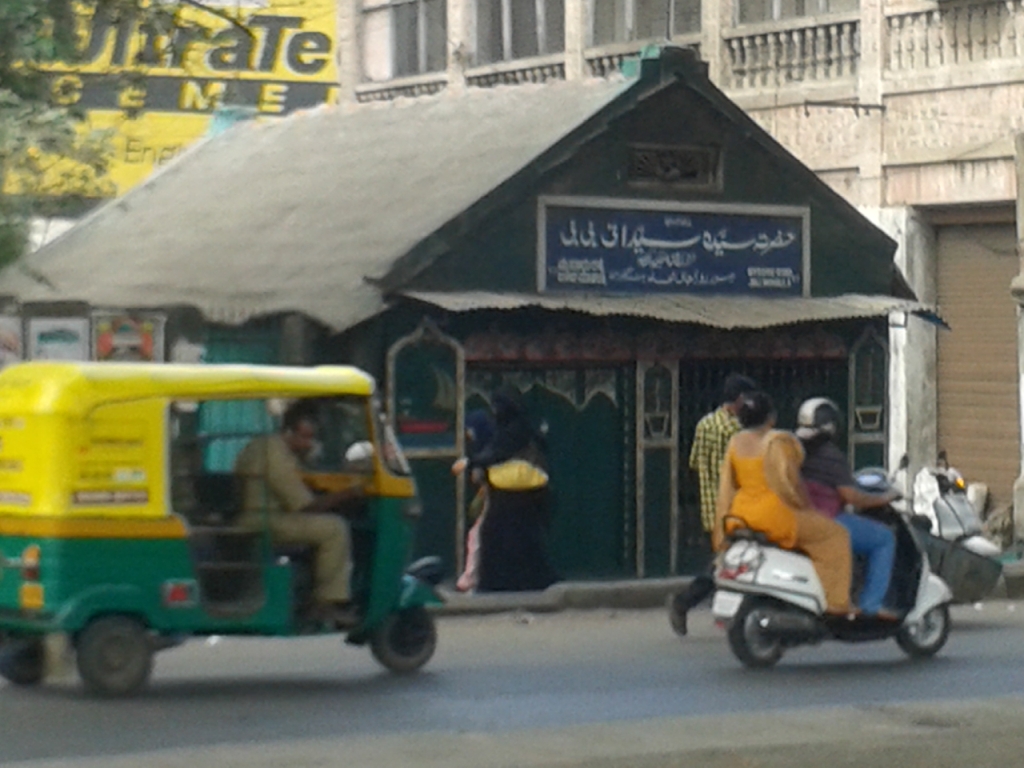
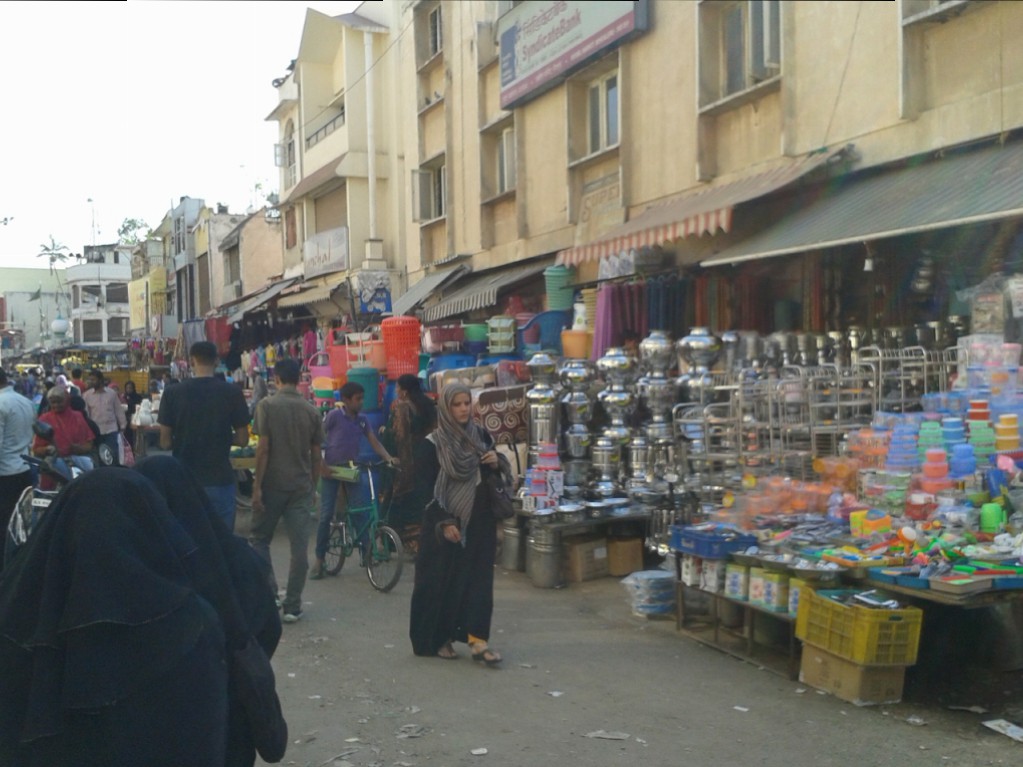
20140219_152150Where is Uncle’s shop? It’s where you are going if you got into an auto-rickshaw with a driver who has volunteered to drive you around for less than the metered rate. It may not be where you want to go, where you think you’re going, or where you’d like to go. But in the driver’s eyes, by taking him up on a reduced fare, you’ve entered into an implicit contract to be taken to a random store and nagged into buying something expensive enough that the shop can happily recoup the driver’s finders fee.

FYI- Bangalore auto-rickshaw fare is currently 25 rupee (Rs) for the first 1.9km, and 13Rs  for every kilometer thereafter. If the driver offers to take you around for 10 or 20Rs, you know they have plans. (Although there is a small chance that they are counting on you to be ignorant of the fact that the place they are offering to take you is 50 feet away.) Usually, a driver will offer to take you to a place for 4 to 8 times the metered rate (sometimes more if he has no idea where said place is–a not uncommon condition in Bangalore.) In other words, the driver will normally try to rip you off in the old-fashioned way (which eats at your pocket-book, but not at your time.)

If you find the new-fangled rip-off scheme to be a deplorable con, just remember to save some of your wrath for FaceBook, Google, and the other websites you commonly use. They almost all work on the same model. You get charged little or nothing to use said sites in exchange for agreeing to be shamelessly pitched stuff you don’t want or need.

What does Uncle’s shop sell? I hope you like a good mystery, because there’s no telling whether Uncle’s shop sells anything in which you have the slightest interest. If you are a single male, Uncle’s shop probably sells saris and pashminas. If you have a tiny apartment, Uncle’s shop probably specializes in 14 foot tall bronze statues of Ganesha. It could sell woven goods, knick-knacks, bric-a-brac, widgets, tsotchkes, or relics of a religion you know nothing about so you can engage in some low-grade impiety. (FYI- You may not realize this but for the devoted, it can be a bit offensive for a bunch of non-believers to be wearing “OM” symbols or having Buddha statues who aren’t Hindu/Yogic or Buddhist, respectively. Sort of the way many hardcore Christians feel about how Christmas was shanghai’d by a jolly old elf or Easter was overtaken by a giant bunny.) In some cases, Uncle’s shop will sell all of the aforementioned items and more.

Surely I will get an outstanding deal at Uncle’s shop, right? I mean, Uncle is not going to rip off his nephew’s customer, right? Wrong. First of all, there is an infinitesimally small chance that the driver is biologically related to the store owner in any way, shape, or form. It’s probably more likely that they’ve never formally met.

Second, let’s do some Uncle’s shop mathematics. We will call the wholesale cost of the product “C” and the bloated profit that the store owner would like “W” (for “wishful thinking profit”)  and the lowest profit “Uncle” is willing to accept “R” (for “reservation price profit.”) If you just walked into the shop off the street and bought said item you’d pay some amount ≤(C+W) and ≥(C+R).

However, now the driver expects a reward. [Granted, it may be nominal in the scheme of things.] We’ll call the fixed-rate payment to the driver “S” (for “sucker wrangling charge.”)  [You may wonder why I’m assuming this is a fixed-rate payment. Fair enough, if the driver is savvy, it will be percentage. However, my finding has been that between 60% and 80% of autorickshaw drivers in Bangalore don’t understand the concept of a map. I’m not saying they don’t know how to use a map. I’m saying that they don’t get that it’s a representation of the streets surrounding them. My point being, auto-rickshaw drivers are–as a group–not savvy. Granted, certain among them are really savvy. However, my point holds as long as we can except that S>0, for all S–whether fixed or a percentage.)

Long story short, now you will pay between (C+W+S) and (C+R+S), where S>0.  Long story shorter, going to Uncle’s shop with an auto driver will not save you money (unless you’re looking for something specific, and it will save you the value of time to have a guide to show you where to get what you’re after. Good luck with said guide being an auto driver, the driver doesn’t care what you want, he wants you to buy whatever Uncle’s shop is selling. You can buy what you want on your own time.) It’s true that you may find it worth it to pay the nominal extra amount for many reasons, i.e. convenience, a likable driver, etc. Just be informed.

How come it’s called Uncle’s shop, when nobody involved is the Uncle of anybody else involved? Indians use “auntie” and “uncle” as honorifics for older individuals who are in positions / stature commanding respect–it needn’t be a relative by blood. For auto drivers, this includes random shop owners who’ll pay them 50 rupee for dragging hapless tourists into the store.


DAILY PHOTO: Nude Sculpture [Nude Bowling Trophy Topper?]

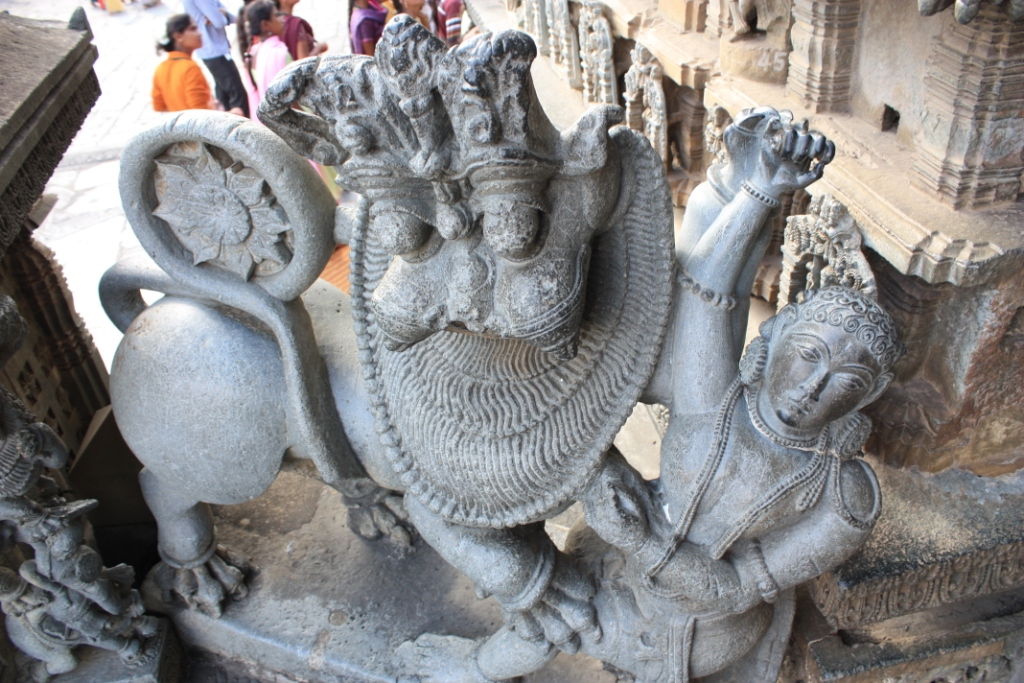
Taken in December of 2014 in Vác

Taken in December of 2014 in Vác, Hungary

I took this photo near the Danube in Vác. I’m not sure what the thing that looks like bowling pin is supposed to be (hence the Nude Bowling Trophy Topper comment.) Maybe it’s supposed to be a vase. At any rate, it’s a nifty work of art.

DAILY PHOTO: Budapest Parliament in Black & White

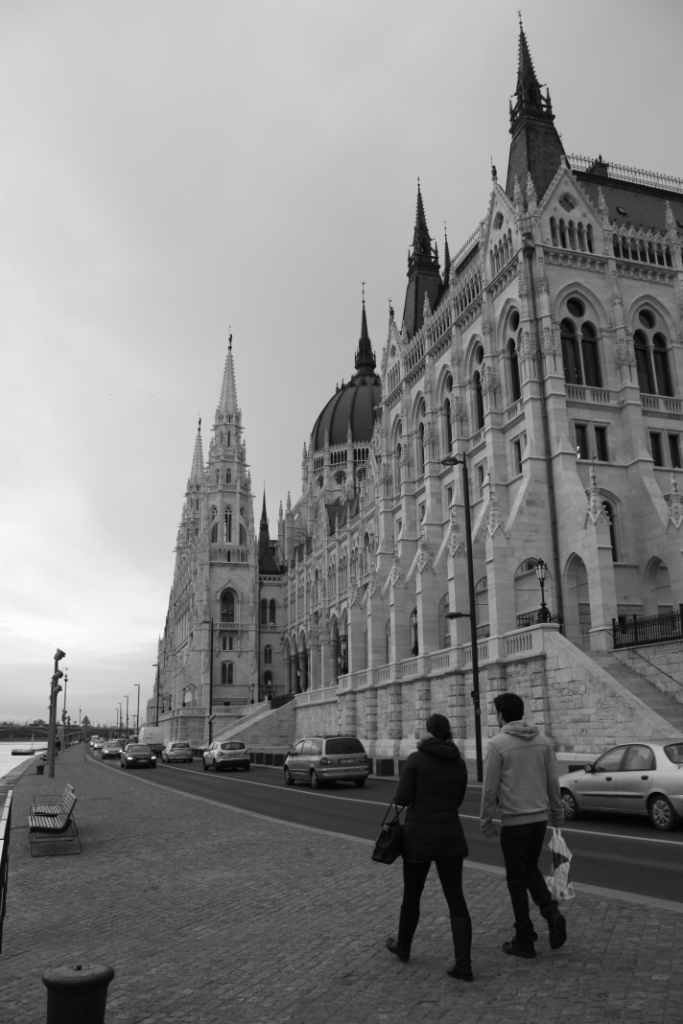
Taken in December of 2014 in Budapest.

Taken in December of 2014 in Budapest.

The Non-shopping Firang

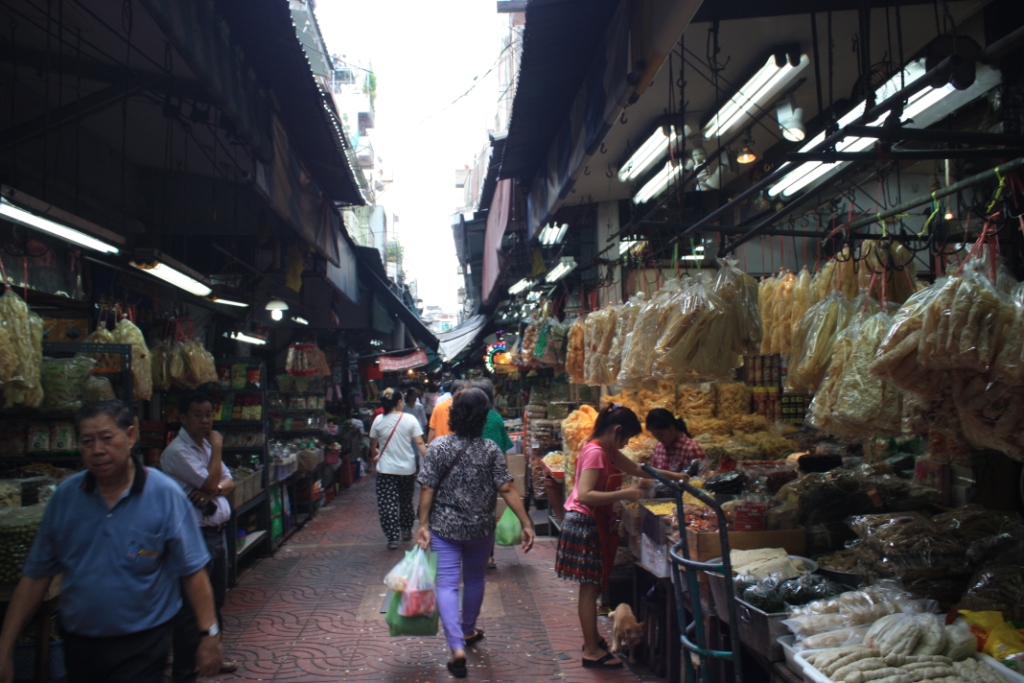
20140316_160803With the notable exception of books, I hate shopping. There are few endeavors more painfully tedious to me than wandering through stores looking for clothes, tsotchkes, knick-knacks, bric-a-brac, widgets, or doo-dads. I do go shopping, in part because I like to eat, and in part because societal conventions require that I wear clothing (you’re welcome.)


Were I not married, I’d be a complete fashion nightmare because I have only three questions when shopping for clothes. 1.) Does it look like it fits? 2.) Does it look comfortable? 3.) Is the price reasonable? (i.e. given that I’m a cheapskate for which stylishness and/or trendiness mean diddlysquat.) If the price of two shirts of the same size is identical, I will buy the one that’s closest to the cash register–or which will otherwise get me out of the store the quickest.


You’ll note, I didn’t include the question: “Does it match?” Correct. I’m not even sure I know what that means. If it’s a shirt, it matches pants because you wear them together, right? A shirt would not match another shirt, unless one could wear one over the other? If you can’t wear the two items at the same time, they definitely don’t match, but that doesn’t come up often. (I know all the bits that need covering, ergo, I can succeed at picking a group of garments that covers all the essential anatomical area.)


I also didn’t include “Does it look good?” It had to look good to someone–they made the damn thing. Who am I to say my taste is better than theirs? I think we’ve already established that I know not thing-one about being fashionable. Now, if it has feathers or a cape, I wouldn’t buy it on the grounds of lack of functionality (have you ever gotten your cape caught in an elevator or escalator?), but I don’t judge on taste. There but for the grace of my wife, go I… looking like non-sparkly Elton John.


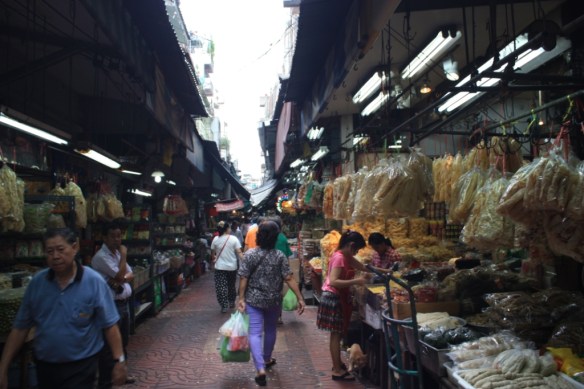
So where am I going with this, you may ask? What’s intriguing is that, despite the fact that I hate shopping, I get asked if I want to be taken to a market, mall, or commercial district about four times per day (fyi, that’s roughly the number of times I go shopping per annum.)


Imagine a white person walking down the sidewalk wearing a t-shirt and sweatpants, said person has a full duffle-bag on their shoulder that is long enough to accommodate a standard size yoga mat when rolled up. Where is this person going?

A.) He /she is going to the yoga studio.

B.) He /she is going to a gym.

C.) He / she is going to a martial arts studio.

D.) There isn’t enough information to determine between A,B, or C.

E.) He /she desperately wants to go shopping.


If you answered “D” you’re a keen and astute observer. If you answered A, B, or C, you have drawn a reasonable conclusion, but did so too quickly and without sufficient information for that degree of specificity.  If you answered “E,” you drive an autorickshaw (tuk-tuk) for a living.


For a while, I thought that this was just blatant ignorance, as all forms of racism are. Could these drivers truly not fathom–despite all evidence to the contrary–that I (i.e. whitey) spent my time doing things other than shopping? Did they really think that my days were divided between counting infinite piles of cash and spending it on crap for which I had no real need?


Then I realized that it was tenacious hope that drove these inquiries, and not biases. I came to this conclusion as I was watching a few of the recent Superbowl ads. If I don’t get enraged at Madison Avenue, I can’t really get mad at the aforementioned driver. Advertisers and that driver are both just trying to persuade me that something that I don’t need and have no interest in is somehow pursuit-worthy.


The driver knows that I’m going to yoga or kalari or a funeral (or wherever the evidence might suggest I’m headed at the moment), but they’re just holding out the thin hope that I can be diverted from that funeral to go buy some gee-gaw from which they can obtain a commission. In a way, they’re like the guys (or girls, to be non-discriminatory) who hit on a person who is way out of their league. It takes a lot of confidence to suffer repeated crushing rejection with such low probability of success. There’s a guy in the building where I get both my haircuts and Tibetan thukpa, who invites me into his carpet shop every single time I enter the building–despite the fact that the first 100 times I’ve shown zero interest. As long as said persistent wooer doesn’t resort to stalking, it’s kind of endearing. (Of course, it’s a thin line into stalker territory, and then it becomes instantly intolerable.)


There’s another reason I’ve discovered I shouldn’t hold this persistence against the drivers. That’s that they’re stereotyping isn’t without basis. Most of my expat compatriots do love themselves some shopping. I’m very curious about the root of this behavior. I suspect that it’s the vestigial evolutionary programming of hunter/gatherer behavior carried over into people who don’t like to get their toes muddy, to have to touch anything “icky,” or–in general–to be outdoors.


However, I’m a little out of my league, because I only have this compulsion to shop for books. I’m sure that’s residual hunter / gather behavior, but there’s a goal that can be understood. Through book shopping, I’m searching for a kind of nourishment–not the kind that ends hunger pangs, but the kind that’s an assault on my stupidity. I still don’t have a theory for how this applies to Hello Kitty stickers, Chia Pets, a second (or 403rd) pair of sneakers, or any of the other inane crap the people really–but unbelievably–purchase.
IMG_2160

DAILY PHOTO: Blue Danube

Taken in December of 2014 in Szentendre.

Taken in December of 2014 in Szentendre.

DAILY PHOTO: Cathedral of St. Peter & St. Paul in Pécs

Taken in December of 2014 in Pécs

Taken in December of 2014 in Pécs

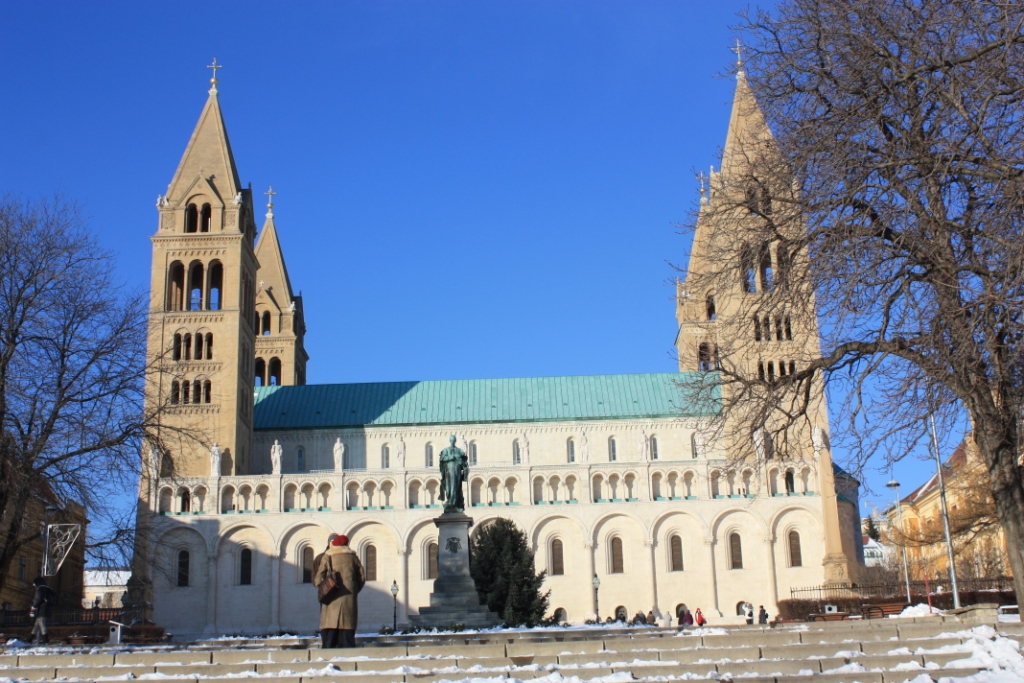
This giant four-spired Cathedral is home of the Pécsi Roman Catholic Dioceses.  Pécs has held a diocese headquarters since the early 11th century. The town that is now Pécs predates Roman times.

DAILY PHOTO: ’56 Memorial in the Városliget

Taken in Budapest in December of 2014

Taken in Budapest in December of 2014

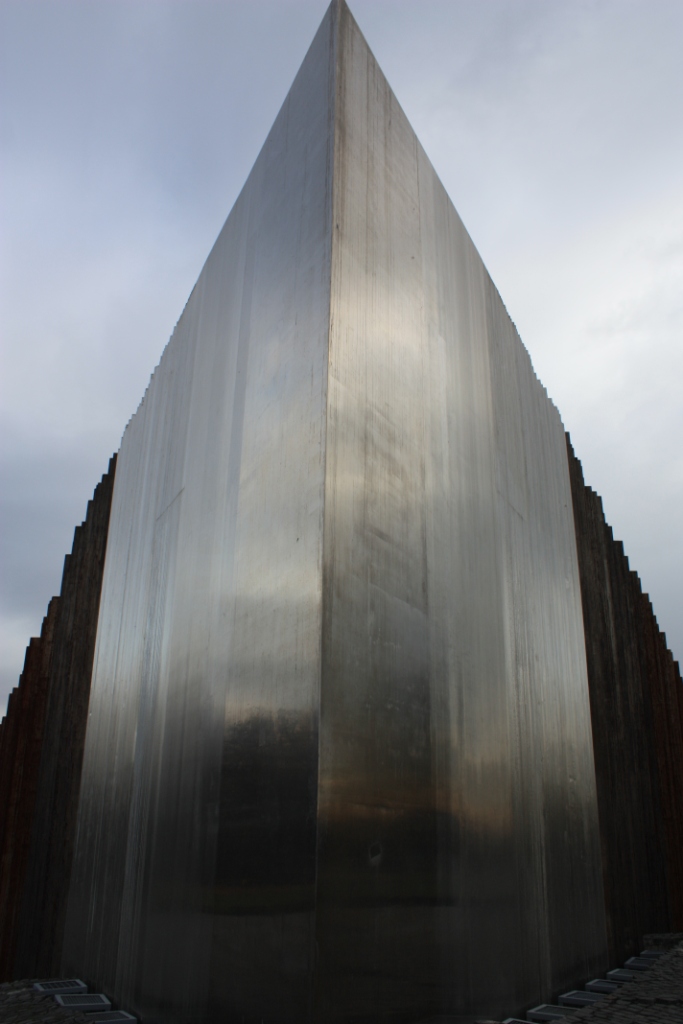
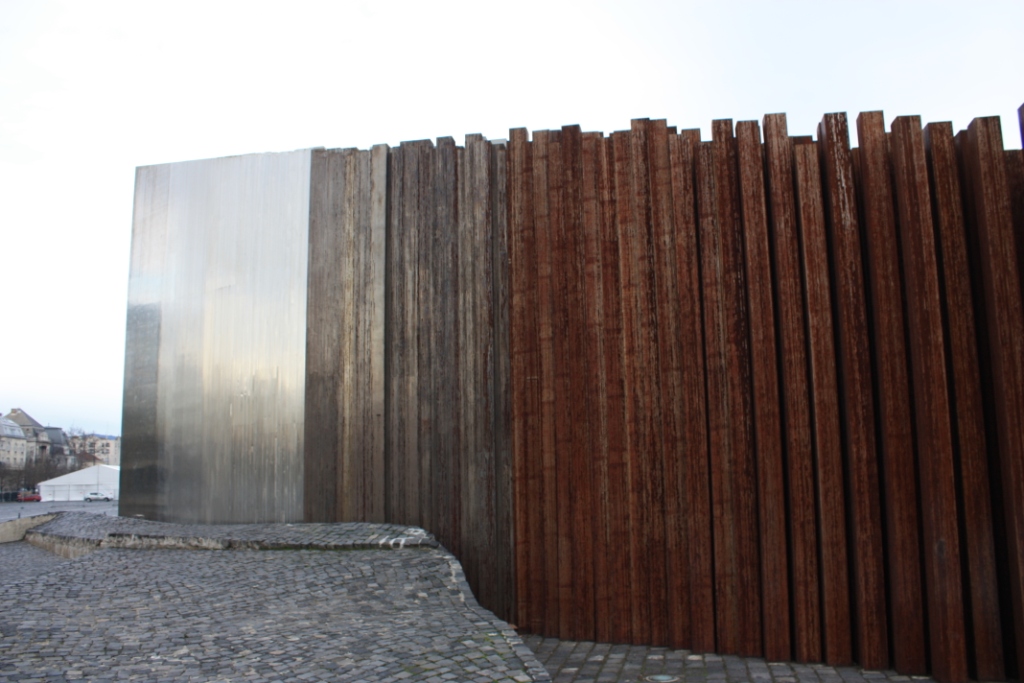
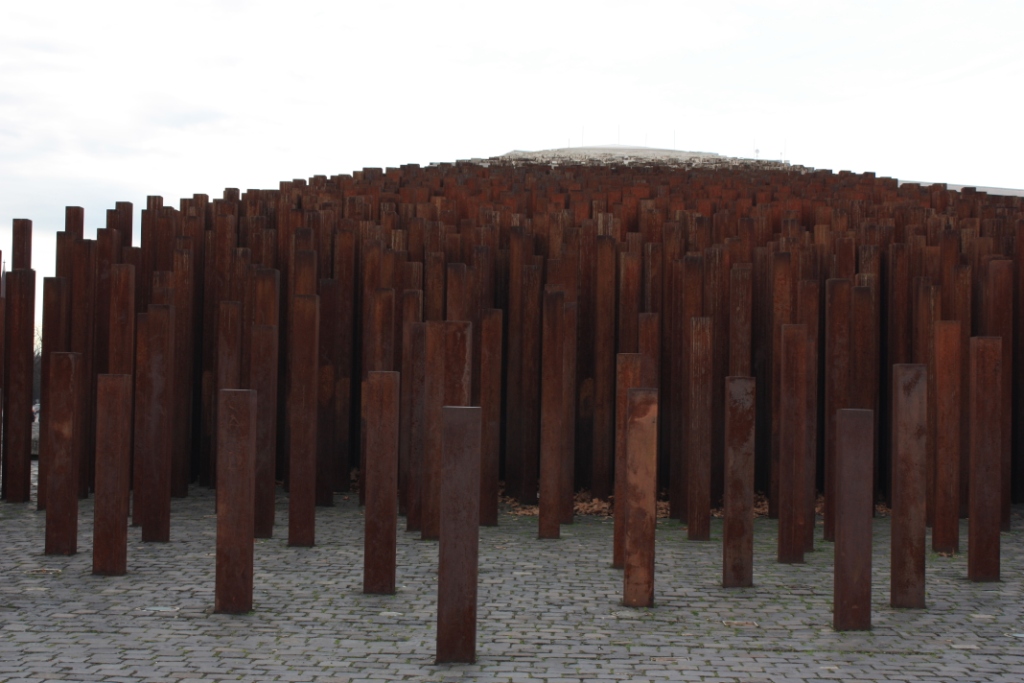
This monument was dedicated in 2006, on the 50th Anniversary of the 1956 Revolution. In the autumn of 1956 there was an armed attempt to revolt against the Soviets and the puppet government they’d established in Hungary. After several days, Soviet forces withdrew, and–to wishful thinkers–it looked like the Soviet yoke might be thrown off. However, the Soviets came back with great duplicity and brutality and crushed the uprising.

From the side.

From the side.

From the back.

From the back.


DAILY PHOTO: Mossy Rubble

Taken in October of 2012 at Angkor

Taken in October of 2012 at Angkor


DAILY PHOTO: Vörösmarty tér Lepény Vendor

Taken in December of 2014 in Budapest

Taken in December of 2014 in Budapest

This is the finished product.

This is the finished product.

Lepény is a Hungarian street-food that some might call a folded over pizza and others might call a flat-bread sandwich. It’s bread (like pizza crust) topped with cheese and various vegetative and / or meaty toppings and cooked on a grill. (I just realized it could also be considered a fancy grilled cheese that starts from a ball of dough and not from pre-made bread.)


Anyway, there aren’t nearly as many lepény vendors as there are for say Kürtöskalács (the cylindrical sweet bread that is so very, very awesome), but the vendor at the Vörösmarty tér Christmas market always had a massive line. (We did discover that part of the long lines had to do with the temperamental nature of the wood-fired grills they used and the long time it took to cook one if they let the fire die down too much.) Still, people stayed in line, and that speaks somewhat to the tastiness of this treat.