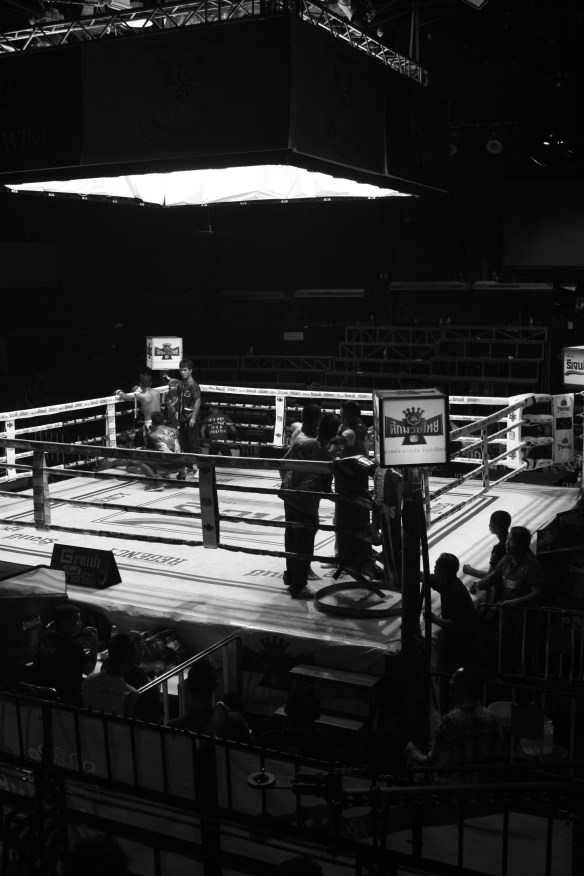
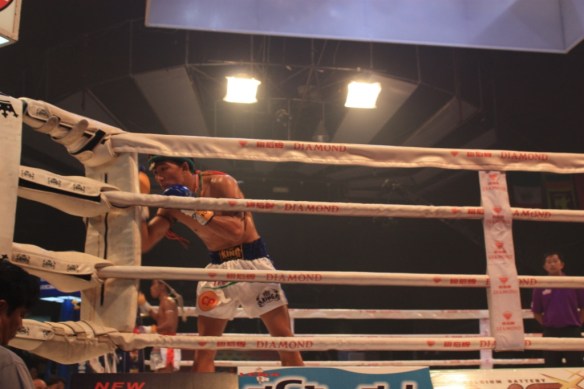
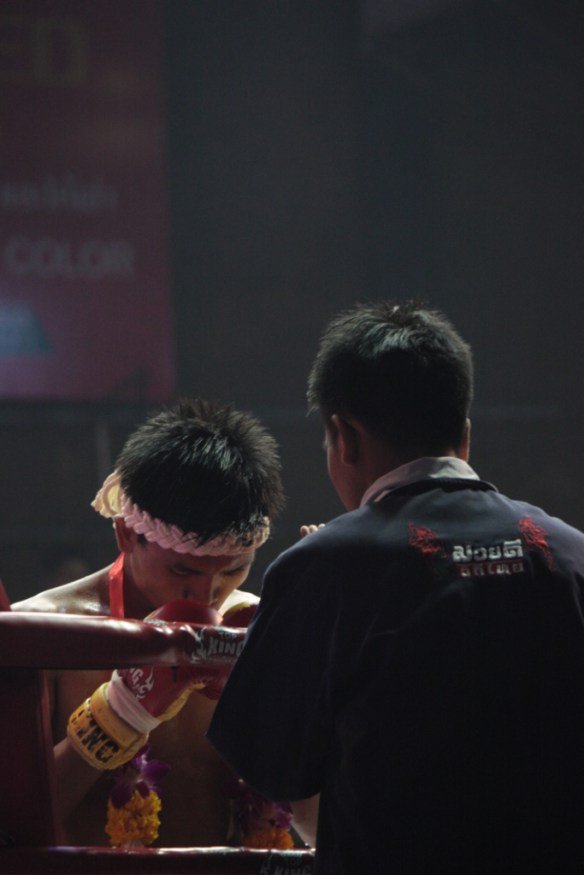
Taken in Rangsit, Thailand in 2015

New Year’s Day sunrise over Bai Tu Long Bay, Vietnam
JANUARY:
-Travel: returned from our December 2015 visit to Vietnam
-Began RYT300 (Int / Adv) yoga teacher training at Amrutha Bindu Yoga
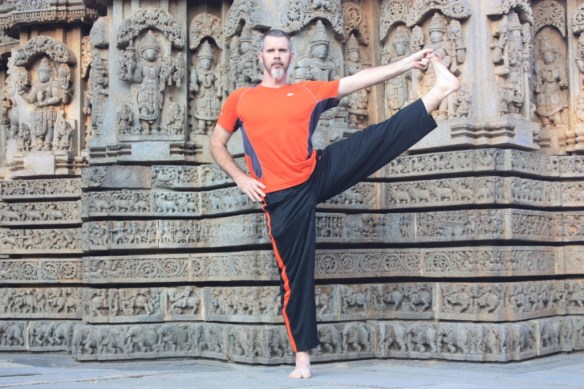
Taken at Kesava Temple in Somanathapura with the RYT300 class
FEBRUARY:
– RYT300 course continued
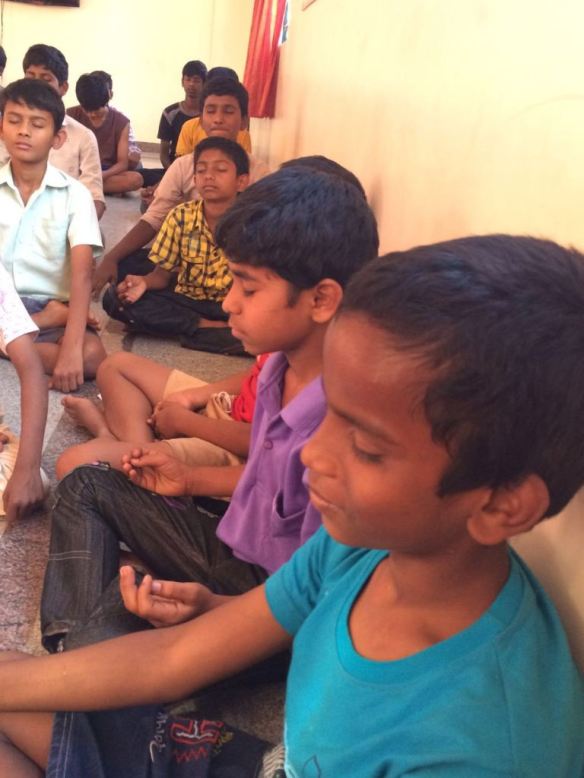
Teaching yoga at Socare
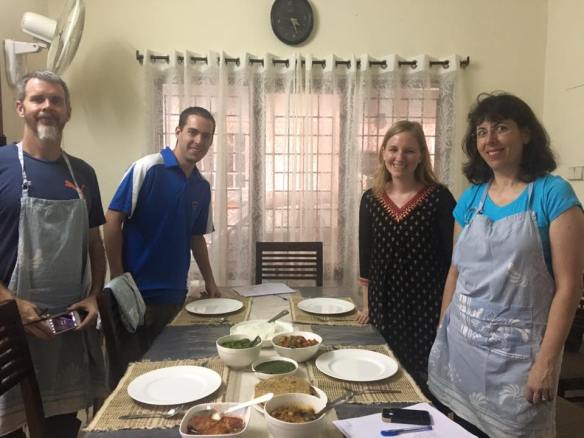
Learning to cook Indian food at Manju’s Cooking School
MARCH:
-Completed the RYT300 course to obtain my RYT500 certification
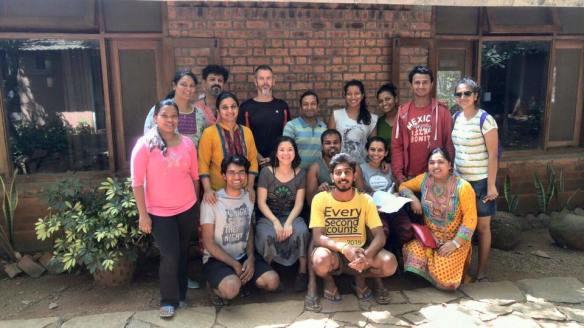
The RYT300 Class at Fireflies Ashram to learn Shatkarma
APRIL:
-Traveled to Varkala and Amritsar
-Taught a two-week Kids Camp at a1000 Yoga, Kormangala
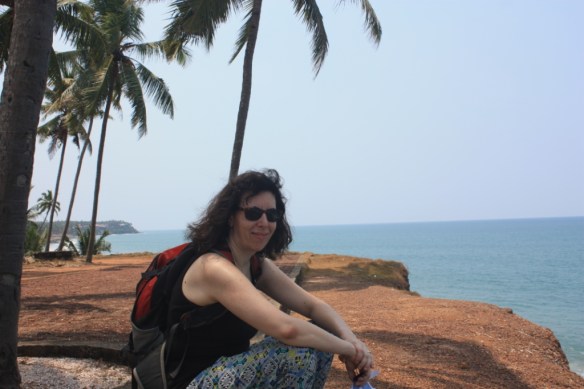
Lilla in Varkala, Kerala in early April
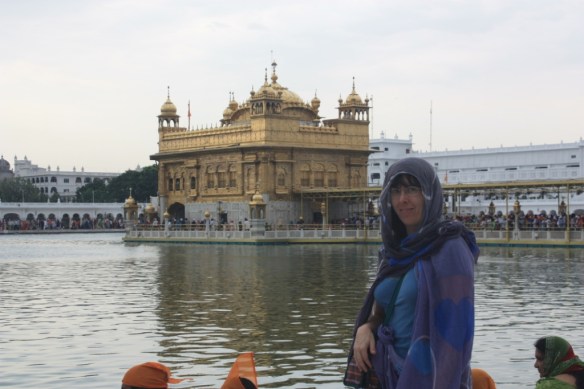
Lilla at the Golden Temple (Harmandir Sahib), Amritsar
MAY:
-Travel: Thailand, Zambia, and Dubai
-Completed the Muay Thai 2 (Int.) at The Muay Thai Institute in Rangsit, Thailand
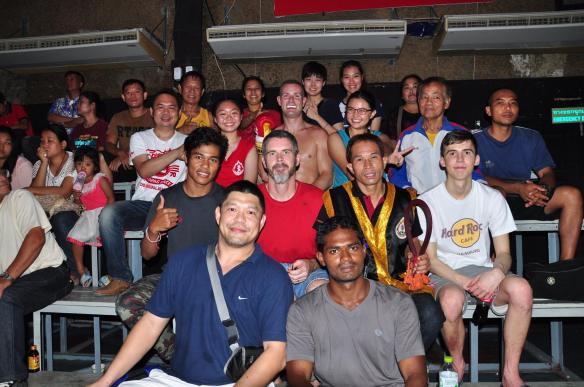
With MTI teachers and students after a successful fight by a German student (shirtless)
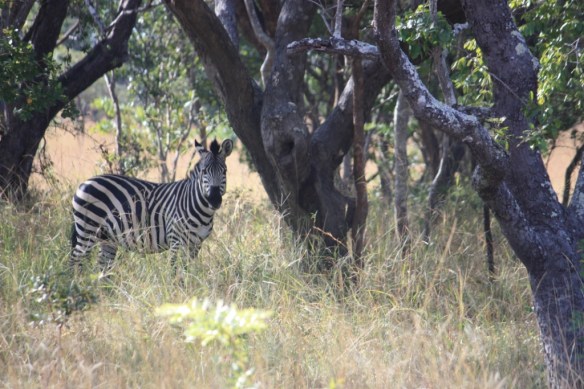
Zebra at the Chaminuka Game Reserve near Lusaka
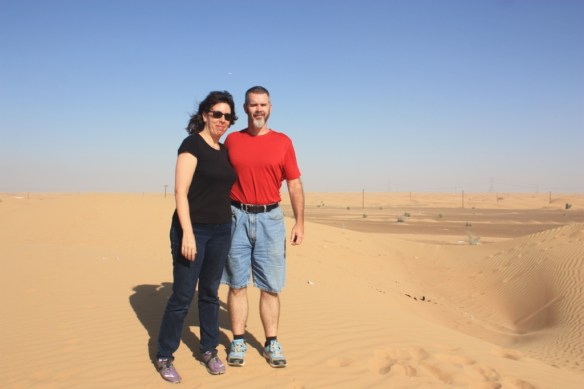
Lilla and I amid the dunes in the UAE near Dubai
JUNE:
-Between travels and trainings, a quiet month in Bangalore
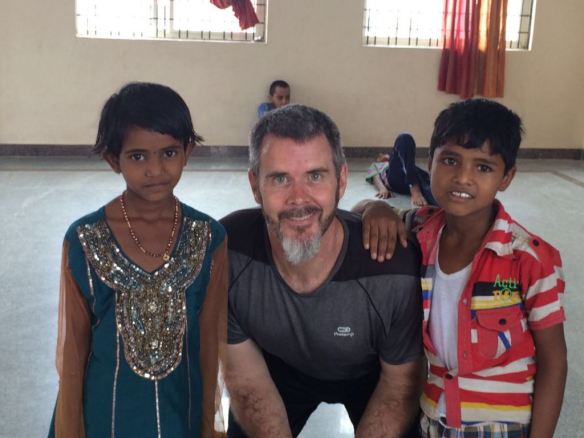
Back again with the kids at Socare
JULY:
-Travel: Kolkata and into Jammu & Kashmir for our August travels
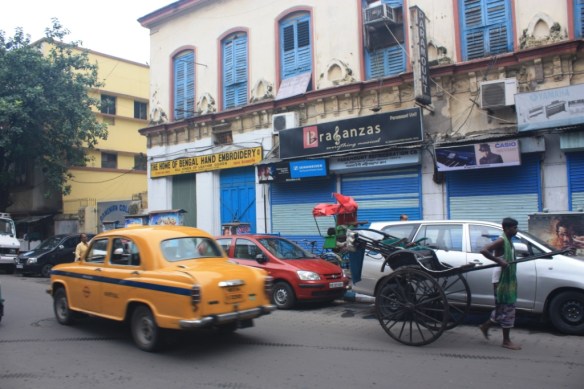
I’m afraid you can’t jam more Kolkata (Calcutta) into a photo than this
AUGUST:
-Travel: Jammu & Kashmir (Srinagar, Sonamarg, Great Lakes Trek, Leh, Nubra Valley, and Pangong Tso) and into Chennai for the beginning of my Vipassana Meditation course
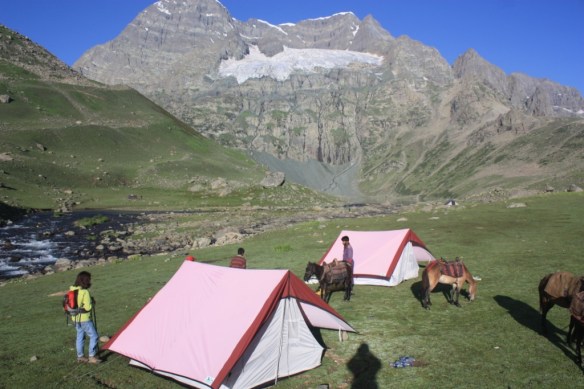
Lilla (green hoodie) on our first night camp site on the Kashmiri Great Lakes trek
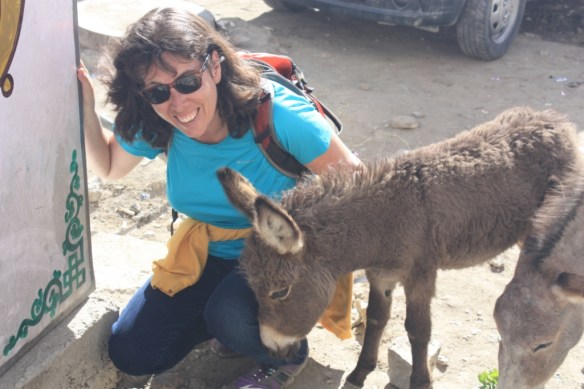
Lilla and Eeyore in Leh
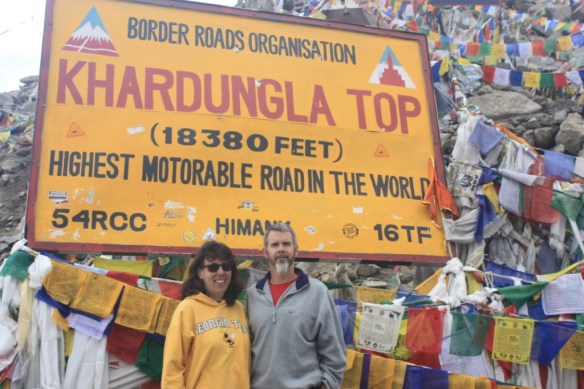
Lilla and I at the (reputed) highest motorable pass in the world
SEPTEMBER:
-Travel: 2 trips to Chennai; the first for my 10-day Vipassana Mediation Course, and the second for a wedding

Chennai (Madras)
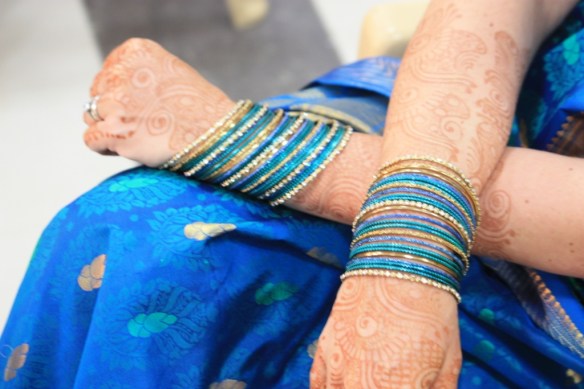
Lilla henna’d and bangled for the wedding
OCTOBER:
-Travel: rainy season in Goa
-Anniversary month (22 yrs.)
-Took the 5th level test at Kalari Academy but promptly threw my back out–an injury from which I’m still recovering (although it’s down to a mild leg tingle) [I wouldn’t mention it but I think I’m obligated to by the rules of year-end / Christmas letters to mention any health issues.]
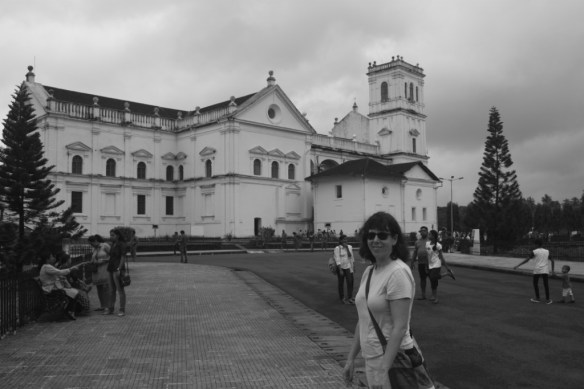
Lilla in front of the Se Cathedral in Old Goa (Velha Goa)
NOVEMBER:
-Travel: Singapore
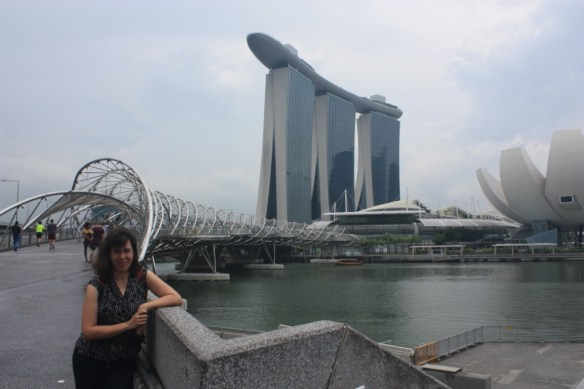
Lilla in front of the Marina Bay Sands
DECEMBER:
-Travel: We’ll be in Hungary (fingers crossed) in the latter half of the month
-Finished a draft of the novel. I don’t know what version this counts as, but it’s the only one so far even close to having an ending that I can tolerate.
-I’ll probably have read about 100 books by the end of the year.
Here’s a pic from another winter trip to Budapest:
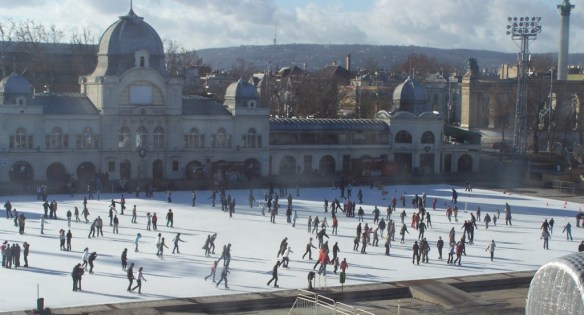
Budapest a few years back
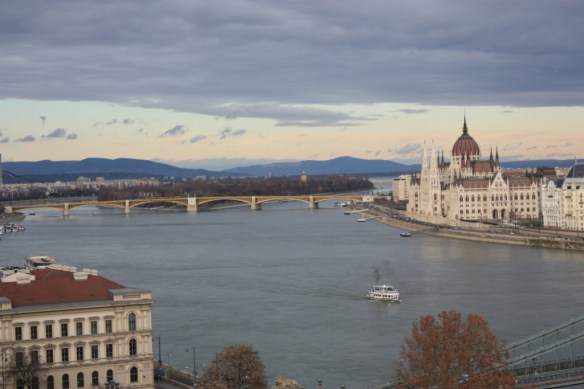
A more recent Budapest winter pic; this was our most recent winter visit-i.e. 2014

Source: Muaythai Institute of Rangsit, Thailand
Walking around the lobby of the Muaythai Institute [MTI] is an education unto itself. There are many photos, articles, and memorabilia–as well as a few educational placards. Over the office and weight room there are a series of old photos from an earlier era in the development of this martial art. Of course, Muaythai already had a long history before there were cameras around to document it. (As witnessed by the presence of boxing gloves in the photo above [and most of the other photos here.] Gloves were probably a relatively new addition from the previous rope hand-wraps at the time of many of these photographs.)
Yesterday, I noticed the following poster describing the principles of Muaythai:
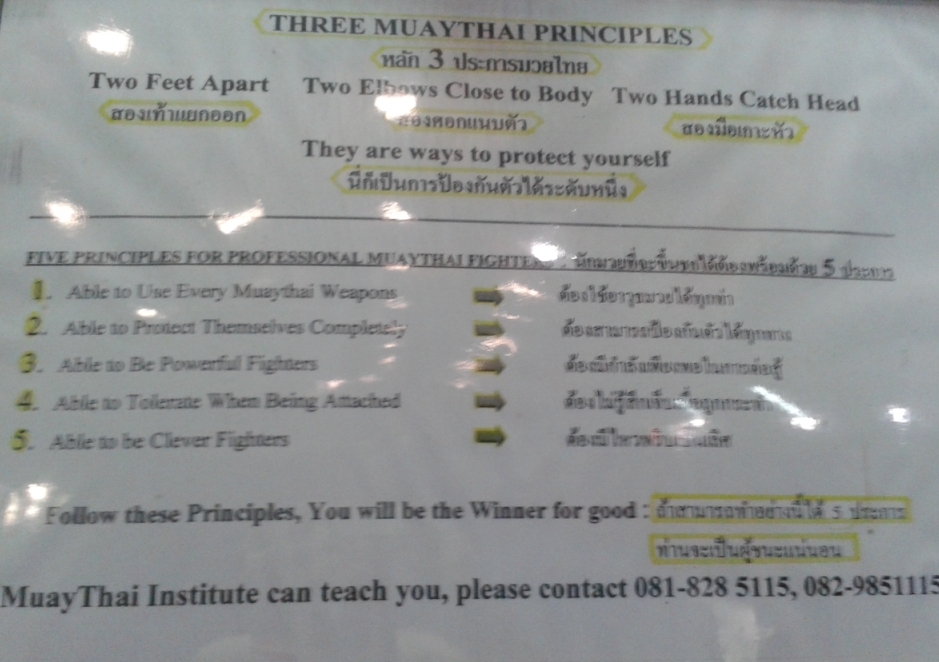
Poster in the gym at the Muaythai Institute
As it’s difficult to read, I’ll paraphrase the contents:
First, the three principles of Muaythai:
1.) Feet apart
2.) Elbows close to the body
3.) Hands guard the head
Second, there are the five principles for professional Muaythai fighters:
1.) Use all Muaythai weapons [i.e. fists, feet, elbows, and knees.]
2.) Protect oneself completely.
3.) Be powerful.
4.) Tolerate (persevere) attacks.
5.) Be clever.
I started to think of these guidelines in terms of the concept of budō-kun, which are the guiding principles of a given school of martial arts or even a specific teacher. The budō-kun concept is seen in Japanese martial arts, and at first blush it seems quite different from the muaythai principles stated above. While budō-kun typically have a philosophical / moral bent, the Muaythai principles seem quite pragmatic.
However, one can see broader meanings in these simple statements.
1.) The admonition to use all Muaythai weapons can be seen as a suggestion to be flexible and adaptable, and not to latch onto a single approach. I find the talk in judō about “favorite” or “match-winning” techniques (tokui waza) to be intriguing. Historically, martial artists seem to have avoided giving the impression that they had a favorite techniques. The logic behind this secretiveness can be described by Ralph Waldo Emerson’s quote: “If I know your sect, I anticipate your argument.” Or, expanding further, if I know your feelings on a subject I can respond to them to my advantage.
2.) “Protecting oneself completely” can be seen as valuing one’s body over one’s ego. In Thaiboxing, as in almost all combative sports, one sees instances in which a fighter drops his guard to either encourage an attack or just to showboat for the audience. Sometimes this works out as desired, but often it results in the fighter waking up on his back.
3.) Be powerful seems self-evident, but incumbent in the statement is the need to train hard. One doesn’t become powerful without working hard to develop both form and fitness.
4.) Being able to tolerate being under attack is another point that may seem less than profound, but it speaks to the realization that both fitness and capacity to “take a licking and keep on ticking” matter. Sometimes the outcome hinges on the durability and resilience of a given fighter–much as we might like to think that technique always and everywhere trumps all.
5.) Being clever speaks to the creative element. One must be able to adjust to changing circumstances, and sometimes victory hinges on actions that are unconventional.
I’m curious about the interpretations of others on this subject.


 Tiger Riding for Beginners