
Taken in October of 2012 in Ayutthaya, Thailand.

Taken in October of 2012 in Ayutthaya, Thailand.
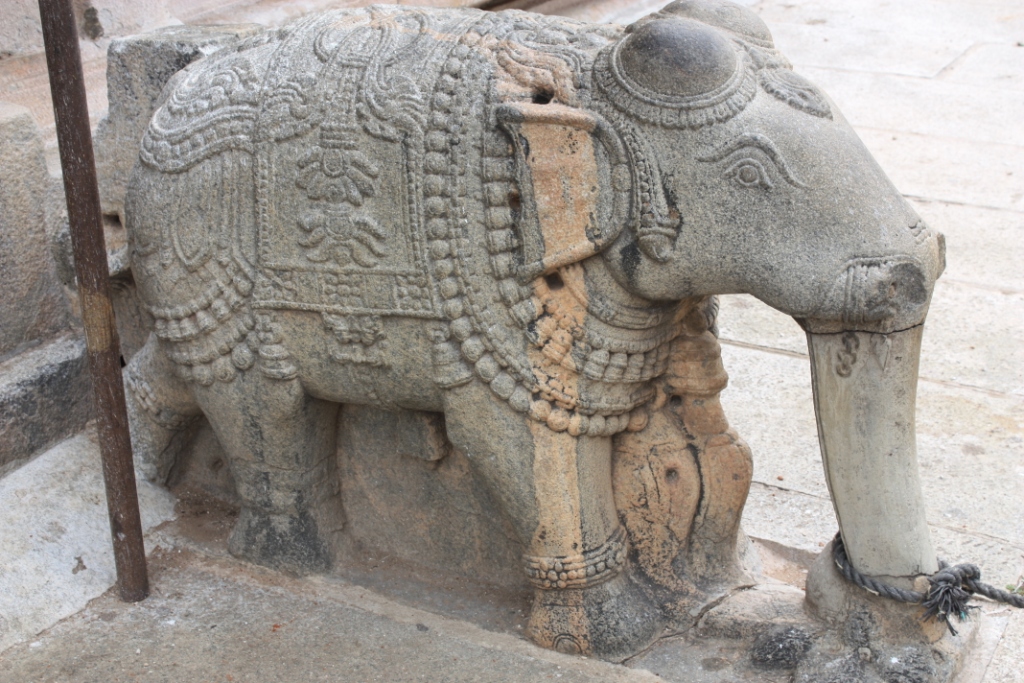
Taken in November of 2013 in Mysore
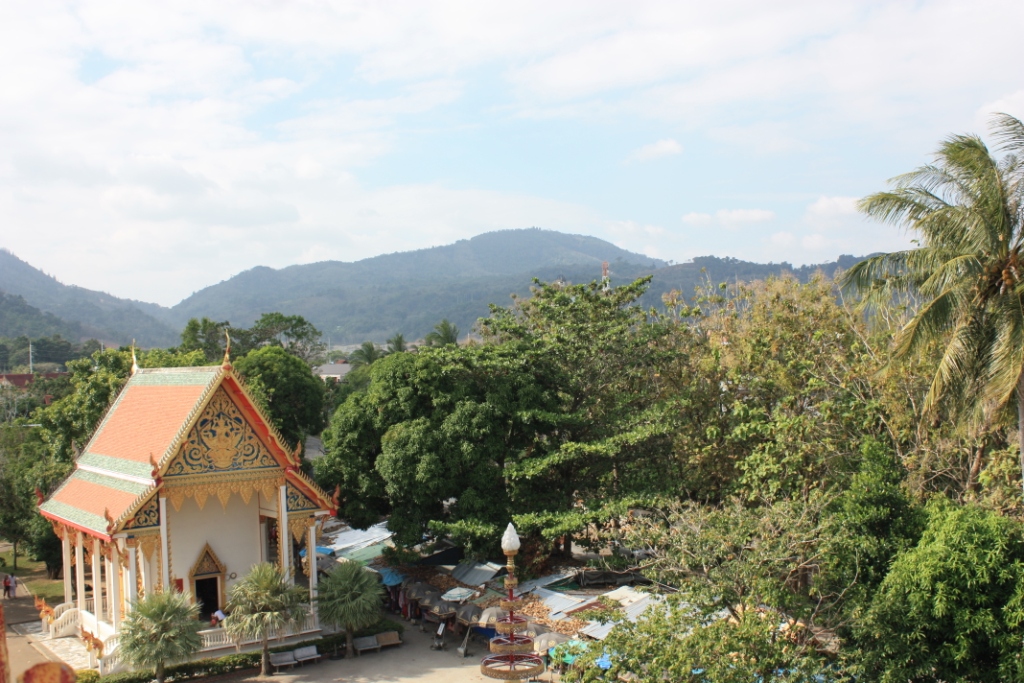
Taken in January of 2014 at Wat Chalong on Phuket.
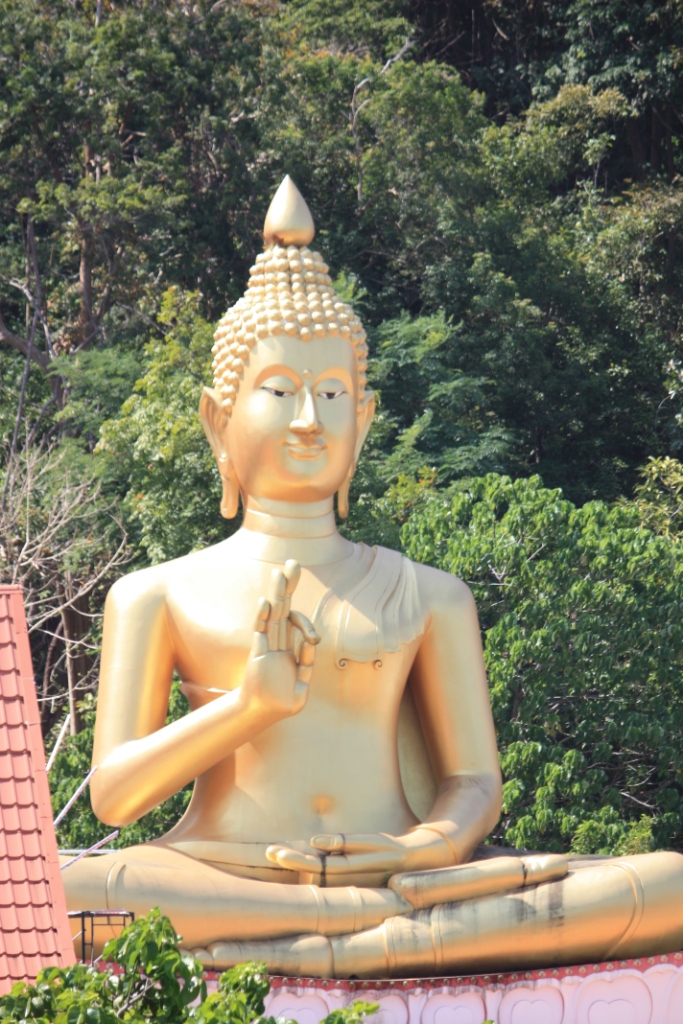
Taken in January of 2013
This Buddha is located at Wat Khao Rang on Rang Hill, overlooking Phuket Town. His right hand mudra conveys that the spice is just right–but you may want to verify that with a Buddhist.
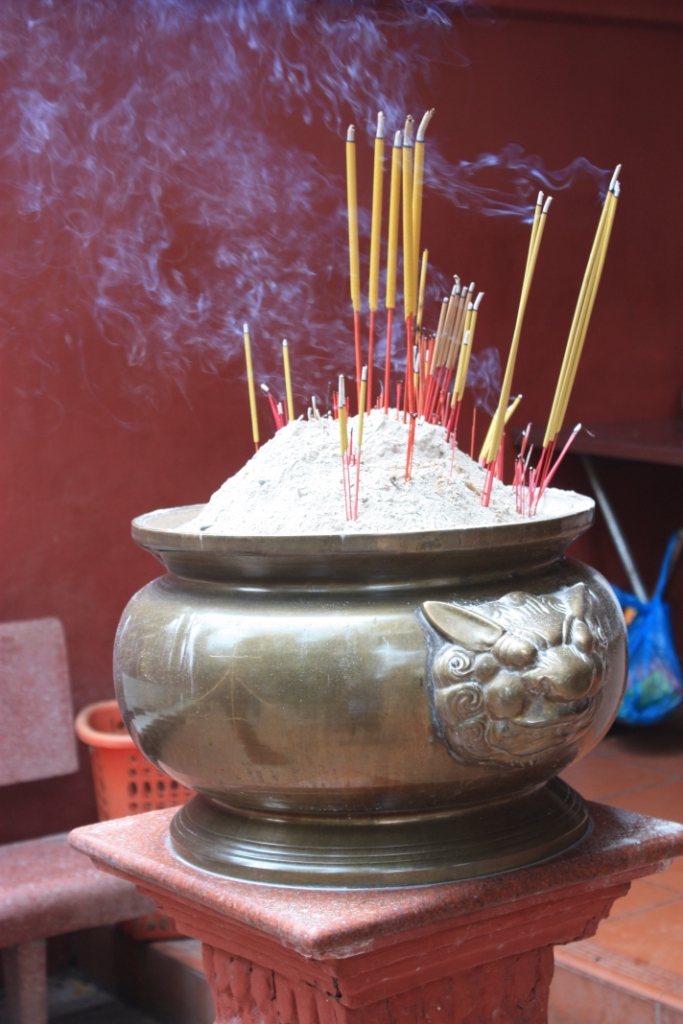
Taken October 2012 at Wat Phnom in Phnom Penh.
How come the noun “incense” means “a substance that releases a strong fragrance when burned,” but in its adjectival or verbal form it means to be, or make someone, extremely angry.
It’s not a rhetorical question, people. If you’ve got an answer, let me know.

Taken November 23 at Hoysaleshwara Temple in Halebidu
For almost 900 years poor schlubs have had to scrub their way around this temple, washing its ornate carvings.
I wonder how similar or different the workers of past generations looked? Obviously, they didn’t have molded plastic water jugs, but the pottery version might have looked similar (not the day-glo lime green one, but certainly the brick-colored one.) No dress shirts or ball caps back then, but the turbans and sarongs are probably not so out-of-place.
Of course, the scaffolding, rough-cut wood lashed together, gives it an ancient feel.
Probably, the most striking difference is the female job foreman.
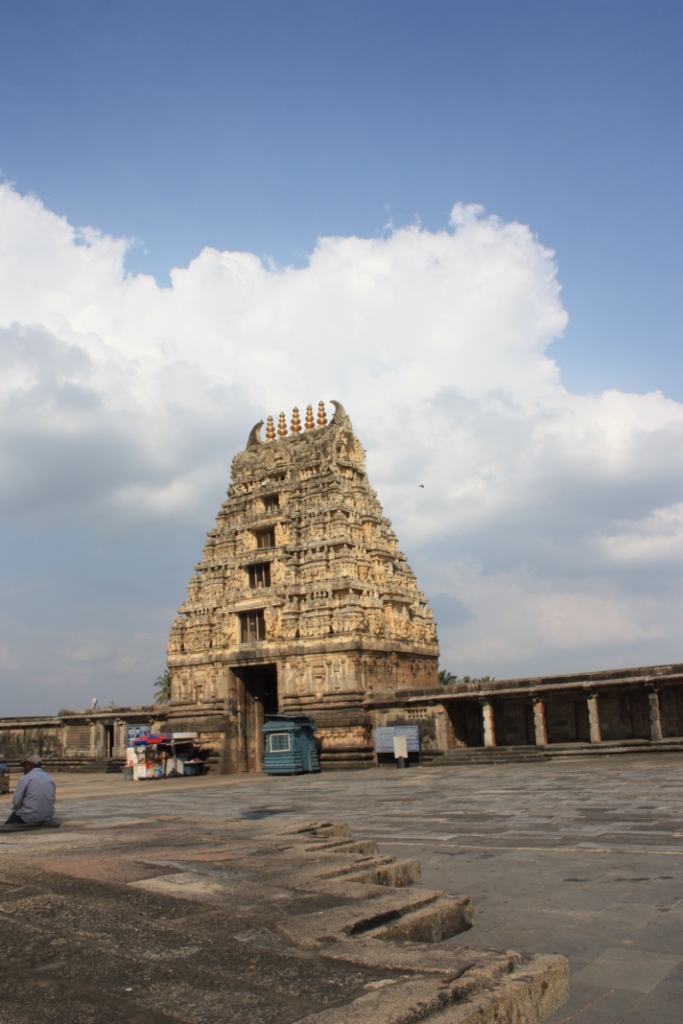
Taken November 23, 2013 at Belur.
This is the gate into the Chennakeshava temple in Belur. In the foreground is the base of a pillar that served to hold the temple lantern that let all find the temple in the darkness. (Fun fact: the pillar isn’t secured to the base. That is, it’s held in place by gravity.) The base is the same multi-sided shape as the temple mounts.
Below is a pic of the lantern pillar (it’s not as askew as it appears in the pic.) (Fun fact #2: if you type askew into Google’s browser it will twist the page askew.)

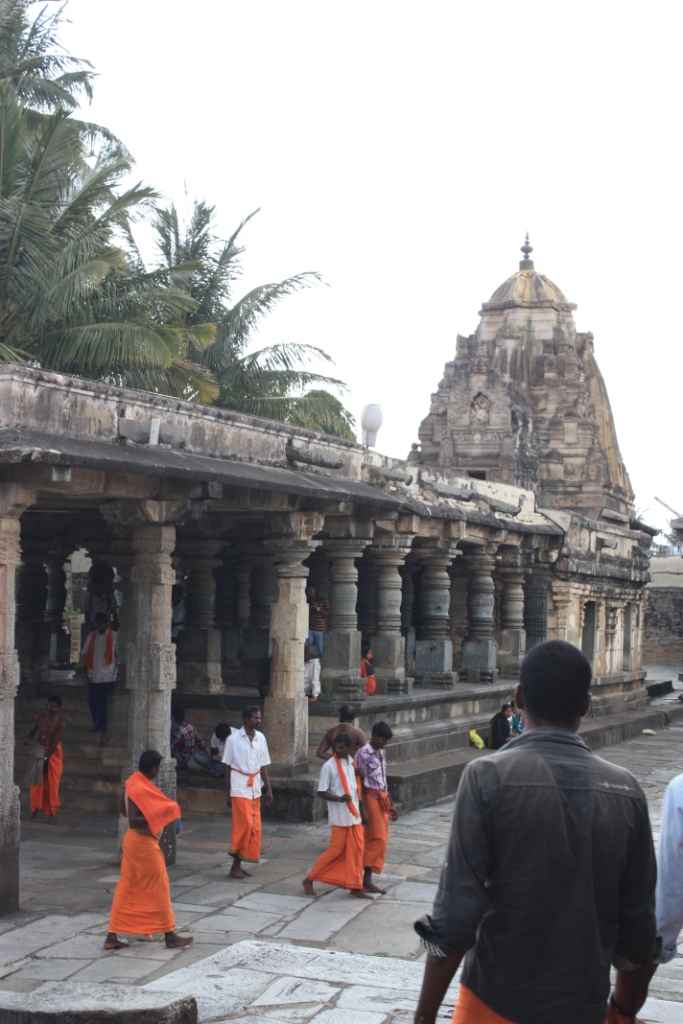
Taken November 23, 2013 at Belur
In Cambodia, one can buy these paintings that are monochromatic with the exception of the vibrant saffron of monks’ robes. These artworks are commonly found around Siem Reap and have backgrounds such as the Bayon, Ta Prohm, or Angkor Wat. While this photo was taken in Belur, India at the Chennakeshava temple, it reminds me of an impromptu version of such paintings. All dull earth-tones, except the Hindu adherents moving about in their bright colors.
Apparently, the significance of the color orange is shared by Hindus and Buddhists. Krishna is usually portrayed in orange or yellow, and in Buddhism orange is considered the color of illumination.
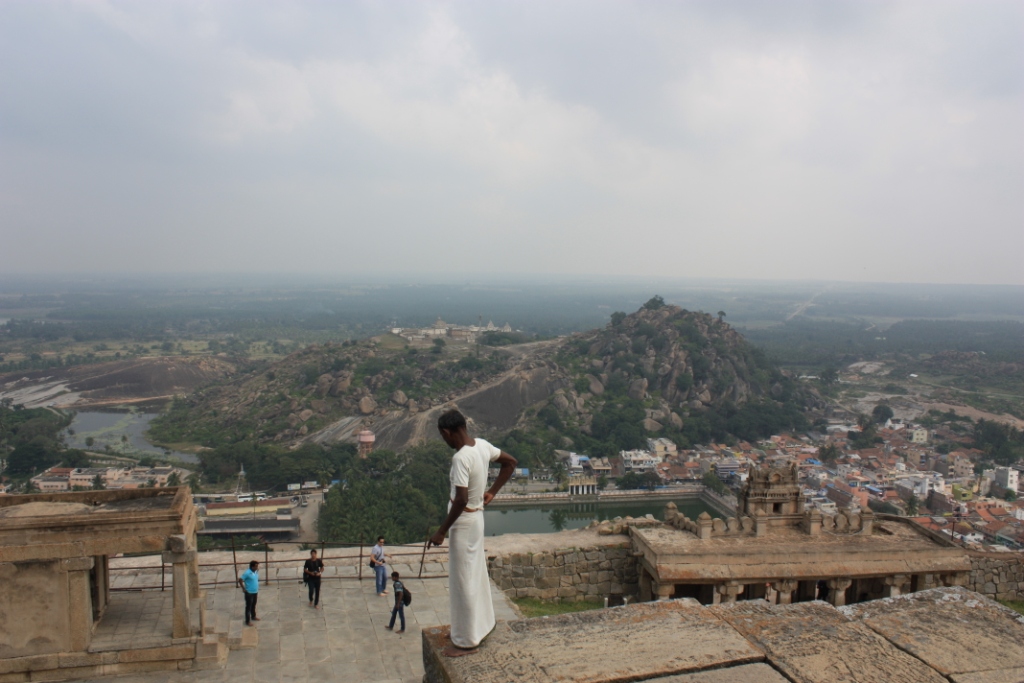
Taken November 23, 2013 from Shravanabelagola Hill
The other day I posted a pic of the gigantic statue of Bahubali that’s located on Shravanabelagoli Hill. This is the view from the hill looking down toward the village. A Jain adherent was standing on the edge of the temple base looking down at path up to the temple.
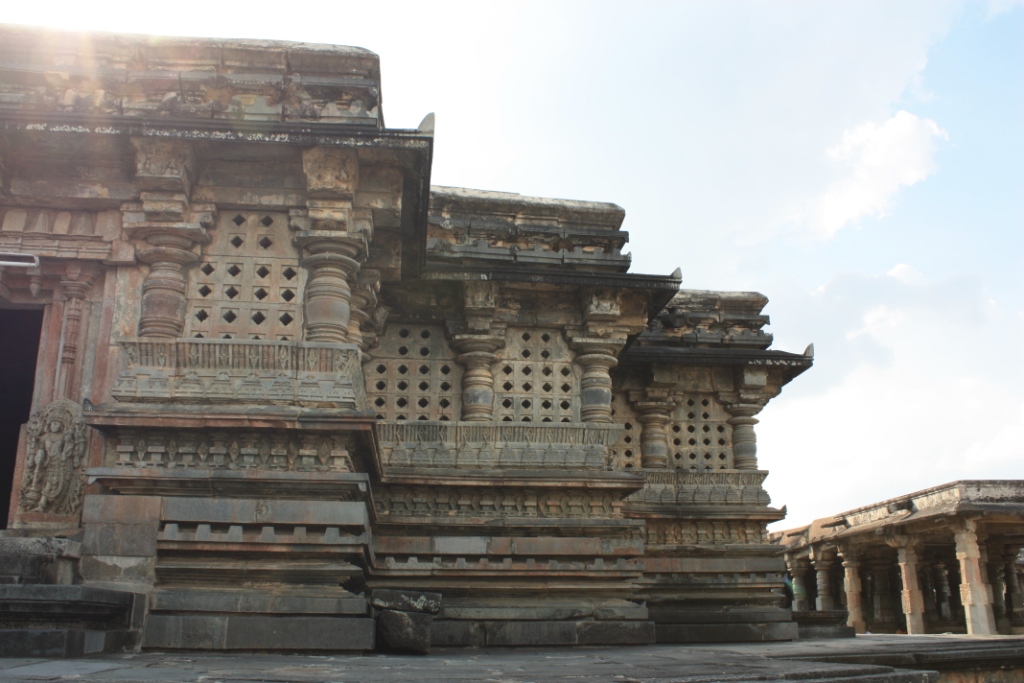
Taken November 23, 2013 at Belur.
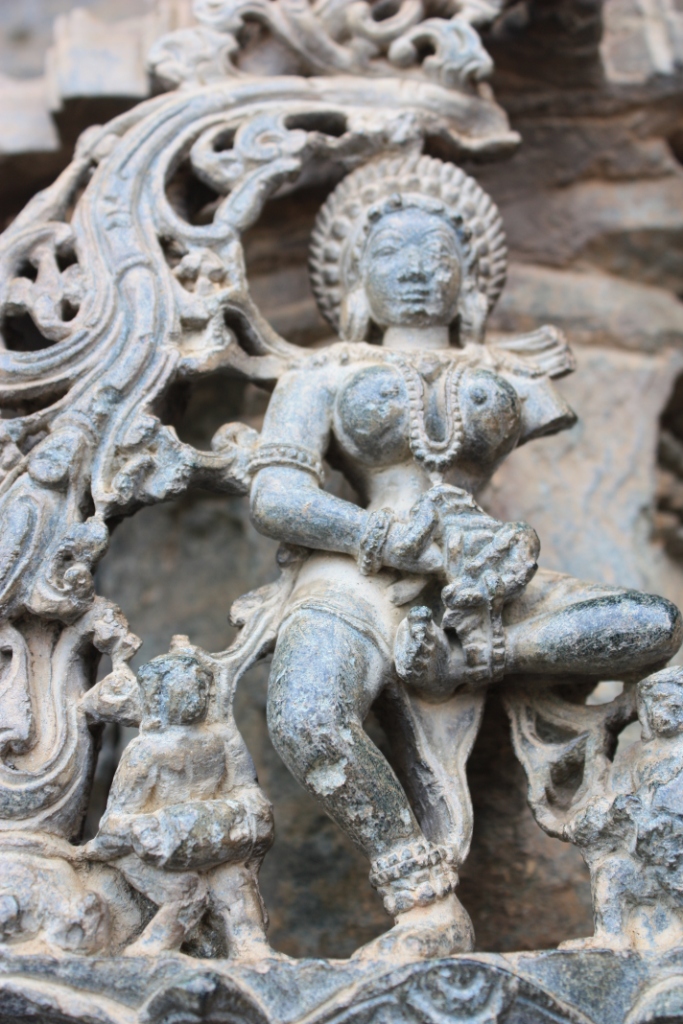
Chennakeshava temple at Belur is a Hoysala era temple to Vishnu–the deity of the Hindu trilogy responsible for processes of sustenance and evolution (as opposed to creation or destruction, which are the bailiwicks of Brahma and Shiva, respectively.)
This temple and its sister temple at Halebidu, Hoysaleshwara temple, are probably the most ornate structures I’ve seen anywhere in the world. They are covered with soapstone carvings arranged in several tiers. For example, the bottom layer is a series of elephants, each one unique. There is a layer that tells tales from the Mahabharata in pictures.
Soapstone is soft and easily worked when quarried, but it becomes hard enough to survive everything but looters as it’s exposed to the elements. You’ll note the “windows” carved in the rock to allow in light and breezes.
Close up


 Tiger Riding for Beginners