You came to my door in the dawn and sang;
it angered me to be awakened from sleep,
and you went away unheeded.
You came in the noon and asked for water;
it vexed me in my work,
and you were sent away with reproaches.
You came in the evening with your flaming torches.
You seemed to me like a terror and I shut my door.
Now in the midnight I sit alone in my lampless room
and call you back whom I turned away in insult.
Tag Archives: Tagore
“Gitanjali 7” by Rabindranath Tagore [w/ Audio]
My song has put off her adornments.
She has no pride of dress and decoration.
Ornaments would mar our union;
they would come between thee and me;
their jingling would drown thy whispers.
My poet's vanity dies in shame before thy sight.
O master poet, I have sat down at thy feet.
Only let me make my life simple and straight,
like a flute of reed for thee to fill with music.
NOTE: This poem is sometimes titled, “My song has put off her adornments,” or – simply – Song VII.
“Gitanjali 35” by Rabindranath Tagore [w/ Audio]
Where the mind is without fear and the head is held high;
Where knowledge is free;
Where the world has not been broken up into fragments by narrow domestic walls;
Where words come out from the depth of truth;
Where tireless striving stretches its arms towards perfection;
Where the clear stream of reason has not lost its way into the dreary desert sand of dead habit;
Where the mind is led forward by thee into ever-widening thought and action
Into that heave of freedom, my Father, let my country awake.
NOTE: This poem is often entitled “Let My Country Awake,” particularly when it is anthologized independently of the larger Gitanjali poem.
“The Gardener – 85” by Rabindranath Tagore [w/ Audio]
Who are you, reader, reading my poems my poems an hundred years hence?
I cannot send you one single flower from this wealth of the spring,
one single streak of gold from yonder clouds.
Open your doors and look abroad.
From your blossoming garden gather fragrant memories
of the vanished flowers of an hundred years before.
In the joy of your heart may you feel the living joy that sang one spring morning,
sending its glad voice across an hundred years.
PLAYTHINGS by Rabindranath Tagore [w/ Audio]
CHILD, how happy you are sitting in the dust, playing with a broken twig all the morning. I smile at your play with that little bit of a broken twig. I am busy with my accounts, adding up figures by the hour. Perhaps you glance at me and think, "What a stupid game to spoil your morning with!" Child, I have forgotten the art of being absorbed in sticks and mud-pies. I seek out costly playthings, and gather lumps of gold and silver. With whatever you find you create your glad games, I spend both my time and my strength over things I never can obtain. In my frail canoe I struggle to cross the sea of desire, and forget that I too am playing a game.
BOOKS: The Crescent Moon by Rabindranath Tagore
The Crescent Moon : Poems and Stories [Paperback] [Jan 01, 2017] Rabindranath Tagore by Rabindranath TagoreMy rating: 5 of 5 stars
Available free at Project Gutenberg
Amazon.in Page
This is a collection of forty poems that are all connected by the theme of childhood. Many are in the voice of a child, but others are in a parent’s voice as he contemplates the nature of youth and how life has changed — or simply as he looks upon a sleeping infant. Some are brief stories or vignettes and others are scenes or philosophical reflections. Among the more well-known inclusions are: “Playthings,” “Paper Boats,” “The Gift,” and “My Song.”
This is Tagore at his most playful, but it retains his usual clever musing.
View all my reviews
Tagore Looms [Haiku]

Tagore looms,
wind-swept & erudite,
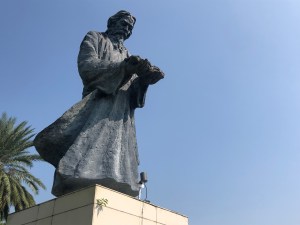
in mind & presence.
Five Wise Lines from Tagore’s Stray Birds
The stars are not afraid to appear like fireflies.
Stray birds — #48
By plucking her petals, you do not gather the beauty of the flower.
Stray birds — #154
The eyes are not proud of their sight but of their eyeglasses.
stray birds — #256
I carry in my world that flourishes the worlds that have failed.
stray birds — #121
Delusions of knowledge are like the fog of the morning.
stray birds — #14
CITATION: Tagore, Rabindranath (1916), Stray Birds, New York: McMillan, 92pp.
Available on Project Gutenberg at: https://www.gutenberg.org/ebooks/6524
BOOK REVIEW: Gitanjali by Rabindranath Tagore
Gitanjali by Rabindranath Tagore
My rating: 5 of 5 stars
Get Speechify to make any book an audiobook
Gitanjali is the most well-known work of the Bengali polymath Rabindranath Tagore. Tagore was the first non-European winner of the Nobel Prize for Literature (1913.) While Gitanjali is a work of poetry, Tagore didn’t restrict himself to this form, but also wrote stories, novels, plays, and music.
Gitanjali translates to “Song Offerings” and while the English version is a translation, it was translated by Tagore himself. Thus, there is no need to wonder whether the translator got it right or injected too much of his own worldview into the process.
This collection of 103 poems (the original Bengali has 157)displays both beautiful language and thought-provoking sentiments. This may be why the work is so beloved and stands the test of time.
I’ll share a few of my favorite passages:
“The child, who is decked out with prince’s robes and who has jeweled chains round his neck loses all pleasure in his play;…” -Poem VIII
“O fool, to try to carry thyself on thy own shoulders! O Beggar, to come to beg at thy own door!” -Poem IX
“On the day when the lotus bloomed, alas, my mind was straying, and I knew it not.” -Poem XX
“On the seashore of endless worlds children meet.” -Poem LX
“In the moonless gloom of midnight I asked her, ‘Maiden, what is your quest, holding the lamp near your heart? My house is all dark and lonesome,– lend me your light.’ She stopped for a minute and thought and gazed at my face in the dark. ‘I have brought my light,’ she said, ‘to join the carnival of lamps.’ I stood and watched her little lamp uselessly lost among lights.” -Poem LXIV
“And because I love this life, I know I shall love death as well.” -Poem XCV
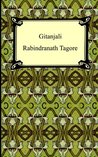
The edition I have, which is published in India by Rupa Press, contains Tagore’s Nobel Prize acceptance speech as well. (The Amazon page I’ve linked to shows the edition that I read, but the cover shown above is a different version. The poems are all the same because Tagore self-translated, it is only the supplemental matter that is different.)
I highly recommend this collection of poems.