BOOK REVIEW: Dreaming: A Very Short Introduction by J. Allan Hobson

Dreaming: A Very Short IntroductionDreaming: A Very Short Introduction by J. Allan Hobson
My rating: 4 of 5 stars

Amazon page

Dreaming is one of the most interesting and ill-understood activities of human existence. Many of us don’t remember most of our dreams—to the extent that a number of people don’t think they even have dreams (while not completely conclusive, the scientific evidence suggests that all of us dream every night—except people who live on RedBull and 2 hours / night until they tragically die young.) However, when we do remember a dream, it’s often a vivid and profound experience. Some people dream lucidly (are aware they are inside a dream as it occurs), and a few people have lucid dreams on a regular basis. This has led people to draw all sorts of conclusions about dreams existing in a realm beyond the physical, and what not.

While there remains a lot that we still don’t know about dreams, a great deal of science has been advanced in recent decades—enough to take dreamland out of the realm of spiritual mumbo-jumbo and even away from the weak (and largely wrong) science of Freud, and into the realm of legitimate science. This book summarizes much of that science in a concise package. The “A Very Short Introduction” (VSI) series from Oxford University Press offers this type of guide for many subjects. They’re usually about 100 pages long, and give a quick and gritty rundown of the subject at hand.

This book is organized into eleven chapters covering: What is dreaming? Why the Freudian approach (and earlier dream interpretation schemes) failed? How the brain is activated during sleep? What is happening at the level of neurochemistry? Why we dream? What can go wrong with dreams? (i.e. sleepwalking, night-terrors, etc.), How dreaming relates to delirium and mental illness? (i.e. it is, after all, a state of hallucination in which we take often bizarre imagery for granted.) There’s a discussion of the new psychology of dreaming which is based in neuroscience and not on an Austrian with a pipe suggesting that it all comes down to penises and vaginas. (Hobson isn’t anti-Freud, though he does want to make clear that the psychology pioneer was quite wrong on this subject.) There’s a discussion of how learning and memory can (and can’t) be advanced through sleep. Hobson discusses the interaction of consciousness and dreams, e.g. lucid dreaming. And there’s a discussion of interpretation of dreams that is rooted in more modern thought.

An interesting feature of this guide is that the author uses his own dream diary entries as case studies to make points clear. That helps make this VSI guide a little less dry than they tend to be by their nature.

I do enjoy the VSI series. I’ve read quite a few of them, and find they are a good way to study up on a subject with a minimal of effort or pain. I also enjoyed this volume specifically. It’s certainly one of the most fascinating topics on which I’ve read a VSI, and the author doesn’t disappoint in bringing interesting facts and anecdotes to the table.

I’d recommend this book if you want to get up to speed on dreaming in a little over a hundred pages.

View all my reviews

BOOK REVIEW: Night School by Richard Wiseman

Night School: Wake up to the power of sleepNight School: Wake up to the power of sleep by Richard Wiseman
My rating: 4 of 5 stars

Amazon page

This book is a two-in-one. It’s a pop sci book covering the science of sleep. However, it’s arranged as a self-help guide to teach one how to get the most from one’s sleep life. It covers a wide range of sleep related issues from how to minimize jet lag to how to master lucid dreaming. It also describes the sometimes dire effects of not getting enough quality sleep. Along the way one also learns about interesting anecdotes and research that may not change your quality of sleep, but could prove interesting or useful nonetheless—such as the research that shows a strong correlation between the position in which one usually sleeps and one’s personality.

The meat of the book is divided up into eight sections (called “Lessons” in accord with the theme of “Night School.”) The first few lessons begin with general background on sleep and sleep deprivation, and cover how much sleep one needs and how one can achieve the best possible sleep life. Then the book delves into more specialized topics such as night terrors, sleepwalking, “power napping,” and the question of whether one can really learn in one’s sleep. The last couple chapters deal with dreaming (normal and lucid.)

Along with the eight lessons, there are also eight assignments. Most of these assignments are surveys that help the reader understand what will work for them best specifically—as not all sleep advice is one-size-fits-all. However, there are other assignments like a mid-course recap exam, a call to attempt interpreting one’s own dreams (as opposed to relying on the generic dream interpretation guides which the science suggests are bunk,) and a suggestion to start a dream diary—with instructions for how to go about it.

Another nice feature of the book are its boxed discussions of relevant research on such topics as segmented sleep (instead of sleeping through the night), narcolepsy, snoring, children’s sleep issues, etc. There’s also a Conclusion that reviews key information from the book in the form of a refutation of the common myths that abound on the subject of sleep, as well as a “manifesto” that repeats key elements of advice on good sleep. It’s a scholarly work, and so it include source citations.

I learned a lot from this book. Granted a lot of the advice is commonsense (e.g. sleep in a dark, cool, and quiet place), but there are plenty of not so obvious tidbits as well (e.g. red light is okay, but blue light will keep one from sleeping.) There are also a lot of fascinating stories in the book to keep one interested.

I’d recommend the book for anyone who wants to learn to improve their sleep lives.

View all my reviews

READING REVIEW: April 24, 2015

I completed three books this week. The first was Richard Wiseman’s Night School. I wrote a lot about this book in my last Reading Report. Night School examines what happens when we sleep, what happens when we don’t, and a host of events that happen in and around our sleeping life (i.e. nightmares, night terrors, sleep walking, etc.)  The notion that dreams and nightmares are our subconscious working out waking life problems is well established, but there was some interesting discussion of how to change one’s dreamscape (i.e. lucid dreaming) that was fascinating.

NightSchool


The second book I finished was Sam Harris’s Free Will. I had high hopes for this book, but they didn’t pan out.   It’s a very short book (less than 100 pages) on the subject of free will–or the lack thereof. There’s a well-established scientific literature supporting the notion that free will is an illusion. This conclusion was reached by observing that subconscious parts of the brain involved with decision-making light up well in advance of the conscious parts of the brain. The most illuminating example offered is an experiment in which participants were asked to press a button to select a letter or number of their choosing from among a string of rotating letters / numbers. Some subjects became convinced that the scientists had mastered precognition (a class III impossibility according to physicists–i.e. impossible according to the laws of physics as we know them.)  What was really happening was an exploitation of the lag between when the individual’s subconscious decided and when they became aware of their decision.

While I’m normally a big fan of brevity, Harris could have put some more pages to good use. First, he barely mentions a couple of the neuroscience experiments, and expects that the reader will treat this all as law. That is, we are to accept that always and everywhere people’s subconscious minds decide some measure before their conscious minds. Harris also scoffs at the suggestion that perhaps the conscious can overrule the subconscious. He seems to deem this as not worthy of study because it would just be the subconscious making a second decision. So we learn about a couple of studies in which a.) the decision-maker has no stake in the decision (is it possible the mind treats decisions about picking a spouse or a house differently than picking a letter or number in which there is no more costly outcome?) b.) those studied are a random sample of individuals who have no particular expertise with their minds. (If I drew a random sample of people and asked each to lift 300 lbs over his or her head. If no one could do it, would I be safe in concluding that lifting 300 lbs was something forever beyond the capacity of every member of the human race? In other words, what if exercising conscious control over decision-making requires training and expertise with the mind.) Maybe all of this has been studied (e.g. high stakes cases and cases with monks and meditators), and we can safely conclude that free will is always and everywhere an illusion–but Harris didn’t make this point. He concludes we will take it as a given just as he has. (Much like he suggests that anyone who truly studied their mind would understand this point already. Would it surprise Mr. Harris to learn that there are people who have spent far longer alone with their minds than he, who have concluded quite the opposite?)

Second, if the conscious mind is just a Matrix Revolutions-style (and Rube Goldberg-style) machine for tricking us into thinking we have choice and control over the direction of our lives (what happened to evolution not over-engineering?), what guides all of these “decisions?” Given that they produce, I might point out, a fairly orderly world. Harris doesn’t answer this. One might guess that he would point to Dawkinesque suggestion that it’s all about genes advancing their own agenda. (A proposition that seems to me has trouble explaining a corporeal who throws himself on a grenade to save his comrades.) I shouldn’t put words in the author’s mouth. Quite frankly, I have no idea whether he believes there are rules or some guide to these subconscious decisions, because he doesn’t tell us. (Maybe he thinks they are random neuronal firings, but I doubt it.) From what I’ve heard of his other books, he doesn’t think it’s a god making these decisions–a sentiment I share. However, there must be something underlying these decisions, and an author writing about this topic should at least make some effort to address it. Black boxes aren’t persuasive.

FreeWill


The final book I finished this week is entitled The Sensual Body. This is a book that discusses a number of systems of movement and bodily activity as means to increase bodily awareness. Among the systems included are Tai chi, Eutony, Kum Nye, running, Aikido, and massage. It’s an interesting overview, but without sufficient detail of anything in particular to be of practical value. It’s the kind of book one might read to see what kind of classes one should take or what more focused books would be of benefit.


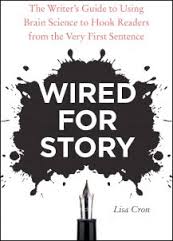
Besides the aforementioned books, I spent most of my reading time on two books that look at two very different subjects from the viewpoint of neuroscience. The first is Wired for Story, and it’s a how-to book for writers that sets itself apart by explaining how humans are hardwired by evolution to love stories. Just as a few notes produce an infinite variety of music. There is an inherent limiting / shaping structure to stories that is ignored at the writer’s peril. Much of the advice offered isn’t that different from other books on writing or storytelling, but one gets insight into which advice one should really treat as inviolable because it touches upon something fundamental to our human nature.


Wired for Story


The other book is the only book I purchased this week. It’s entitled Brainwashing: The Science of Thought Control and is by Kathleen Taylor. So far the book is intriguing. The chapters I’ve read so far provide an overview of brainwashing and cults. The middle section of the book delves into the neuroscience behind brainwashing, and the final section gets into practical matters such as how one can make oneself resistant to thought control techniques.


Brainwashing_Taylor


BOOK REVIEW: Sleep: A Very Short Introduction by Lockley & Forester

Sleep: A Very Short IntroductionSleep: A Very Short Introduction by Steven W. Lockley

My rating: 4 of 5 stars

Amazon page

This is one book in a large series of books put out by the Oxford University Press. All of these “Very Short Introduction” books are brief summaries of the state of research on a given topic in the arts, sciences, or humanities. Based on this book, I’d say the series is geared toward a readership of educated non-specialists. I say “educated” because the book did get into some technical areas, and while it doesn’t presume any particular knowledge of the science of sleep, it does use a scientific vocabulary with occasional academic sentences (i.e. packed with precise detail and lacking concern about readability.) That said, I’d say the readability is higher than the journal articles from which the information for the book was drawn. I suspect I’ll read more from this series. They are cheap on Kindle, provide a concise injection of the basics for a wide range of topics, and are pleasantly readable if you’re used to reading academic literature.

This particular book is about sleep. While, on average, sleep takes up one-third of a person’s life, it’s a subject that is often taken for granted. Like water, one doesn’t really think about it until one isn’t getting enough. However, as the book discusses in detail, all sorts of problems are associated with sleep deprivation, insomnia, and parasomnias (i.e. sleep events like sleepwalking, night terrors, nightmares, bedwetting, sleep-eating, and groaning.)

The book is written in nine chapters covering: the history of sleep, sleep generation and regulation, a brain on sleep, reasons we sleep, variation in sleep throughout one’s life-cycle, the nature of poor sleep, the connection between sleep and health, and the effect of our shift to a round-the-clock society.

There are a number of fascinating questions addressed by this book including:
1.)What does sleep do for us?
2.)Have people always tended to sleep eight hours per night?
3.)Why are some people morning people and others night owls?
4.)Why does one feel drowsy after lunch, but not necessarily when it’s time to hit the sack?
5.)How long can one go without sleep?
6.)Do all animals sleep?
7.)How do sleep and hibernation differ?
8.)Why do teenagers and the elderly have such odd (but different) sleep habits?
9.)Why do people sleepwalk, sleep-eat, groan in their sleep, or have night terrors?
10.)What is the effect of long-term insomnia on health?
11.) What happens to sleep if one has no rising and setting sun cues?
12.)What is jetlag and how can one fight it?

I learned some interesting facts, such as:
1.) On average, women report more insomnia, but, paradoxically, tend to sleep better than men.
2.) Pre-industrial people slept for about 10 hours a night on average, it’s believed.
3.) Many parasomnias occur mostly during REM (Rapid Eye Movement) sleep.
4.)The government can deprive prisoners of sleep for 7.5 days without it being considered torture (then they have to allow a full 8 hours sleep before another 7.5 day period started.)
5.) Long-term insomnia has been linked to heart-disease.
6.)Shift workers have a 50% greater incidence of breast and prostate cancer than day-workers.
7.)Visiting teams win 46% of the time if they are in their home time zone, 44% if they are traveling ‘with their body clock,’ and only 37% if they are traveling against their body clock.

I found this book interesting and informative. However, there are many books on the subjects of sleep and dreams that are more catered to a popular audience. Such books delve into intriguing cases and don’t dig as deeply into the minutiae of the science of the subject. I’d recommend this book, but not for readers who get bogged down or bored with scientific and technical discussions. If you’re looking for a book that’s loaded with pithy facts and fascinating stories, you can find a book closer to the mark by journalists who focus on science writing and who’ve got more flare for creative writing.

View all my reviews

POEM: The Street Sleeps

Litter skitters down the street,
stopping beseechingly at my feet.
No one likes the morning chill.
So this raucous street is now still.
Still but for the will to wake.
Shhh! Let it sleep for goodness sake.