“Strong” [Poetry Style #8] by Sikong Tu [w/ Audio]

Walk with a mind that's clear and unburdened, 
With life force that flares -n- flows like rainbows,
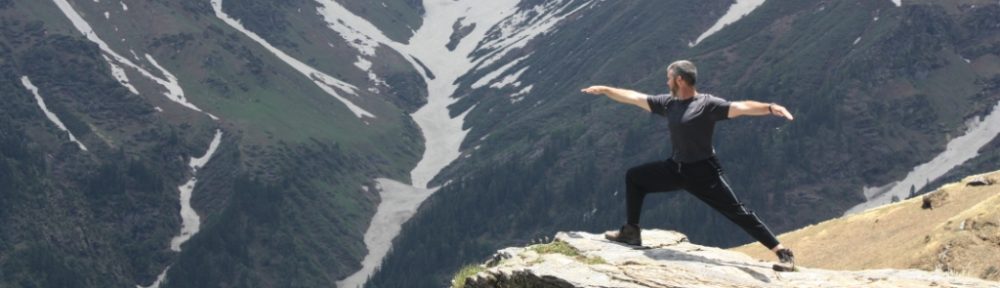
Traversing the witch's gorge through the mountains --
Among the floating clouds and blowing winds.
Drink up the spiritual; dine on the real;
Let them ever build up in your body.
Emulate the health and might of the gods,
Preserve your energy through harmony.
Be one with Heaven, be one with the Earth.
See in yourself divine transformations.
Know all this to the utmost -- be all this,
And hold on to it 'til the bitter end.

NOTE: The late Tang Dynasty poet, Sikong Tu (a.k.a. Ssŭ-k‘ung T‘u,) wrote an ars poetica entitled Twenty-Four Styles of Poetry. It presents twenty-four poems that are each in a different tone, reflecting varied concepts from Taoist philosophy and aesthetics. Above is a translation of the eighth of the twenty-four poems.

“Refined” [Poetry Style #6] by Sikong Tu [w/ Audio]

Buying fine jade in the springtime,
Enjoying rain song from within a cabin,
A taciturn scholar sits betwixt
Copses of tall, arching bamboo.
Sparse white clouds in a newly clear sky;
Swallows weave 'round trees in pursuit.
Light through leaf casts a green hue on all;
Sound of falling water, thin but near;
Flower petals fall without a sound.
But the man sits unyielding as a mum;
He writes what the scene dictates
To make a pithy book.

NOTE: The late Tang Dynasty poet, Sikong Tu (a.k.a. Ssŭ-k‘ung T‘u,) wrote an ars poetica entitled Twenty-Four Styles of Poetry. It presents twenty-four poems that are each in a different tone, reflecting varied concepts from Taoist philosophy and aesthetics. Above is a translation of the sixth of the twenty-four poems.

“Concentrated” [Poetry Style #4] by Sikong Tu [w/ Audio]

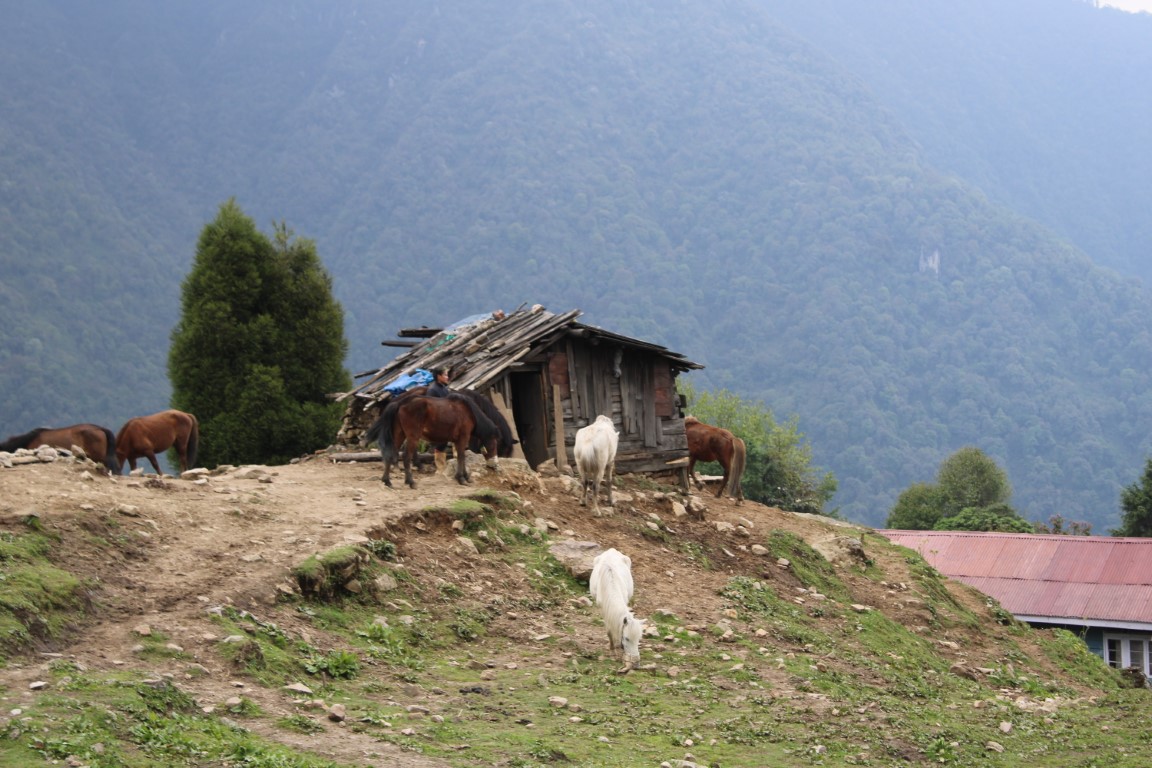
Evergreen woods and a rough-hewn shack.
The sun sets through clear sky.
I shed my hat as I walk alone,
Listening for songbirds.
No wild geese are flying
From whence my beloved lives.
But in my mind, we are close --
Close enough to touch.
Dark clouds stand over the sea,
But in moonlight river isles gleam.
My eyes and my words stop at
That great river that sprawls ahead.

NOTE: The late Tang Dynasty poet, Sikong Tu (a.k.a. Ssŭ-k‘ung T‘u,) wrote an ars poetica entitled Twenty-Four Styles of Poetry. It presents twenty-four poems that are each in a different tone, reflecting varied concepts from Taoist philosophy and aesthetics. Above is a translation of the fourth of the twenty-four poems.

“Placid” [Poetry Style #2] by Sikong Tu [w/ Audio]

It thrives in silence and with calm --
ephemeral and gossamer.
It's ever-flowing harmony,
gliding with a solitary crane,
wisping like the gentle breezes
that rustle and billow one's robe,
trilling softly like a bamboo flute.
How does one become one with it?
A chance meeting, lucked into, but
don't lunge forward, or it'll vanish.
When you think it's attainable,
it twists in your hand and is gone.

NOTE: The late Tang Dynasty poet, Sikong Tu (a.k.a. Ssŭ-k‘ung T‘u,) wrote an ars poetica entitled Twenty-Four Styles of Poetry. It presents twenty-four poems that are each in a different tone, reflecting varied concepts from Taoist philosophy and aesthetics. Above is a translation of the second of the twenty-four poems.

BOOK REVIEW: Poetry and Prose of the Tang and Song [Trans. by Yang Xianyi & Gladys Yang]

Poetry and prose of the Tang and SongPoetry and prose of the Tang and Song by Yang Xianyi
My rating: 5 of 5 stars

Amazon.in Page

This collection includes works from eighteen prominent poets and writers from the Tang (618-907 AD) and Song (960 – 1279 AD) Dynasties of China. Among the most famous of the included authors are: Wang Wei, Li Bai, Du Fu, Bai Juyi, Wang Yucheng, and Su Shi. The included works (mostly poems but including some brief prose writings) explore subjects such as nature, social justice, patriotism, travel, and drinking. If some of those topics surprise you, you’re not alone. I may be letting my biases show, but I was surprised by how much social outrage and humor was contained in these works from the China of 750 to 1,400 years ago. That said, most of the works do present the kind of sparse imagist depictions of natural scenes one would likely expect from Chines poets in days of yore. (Think haiku, but longer — though no less devoid of analysis or judgement.)

As someone who isn’t an expert on Chinese literature or even a speaker of any of the Chinese languages, I can’t comment intelligently on how precise the translations are. However, the English language versions contained in this volume are evocative, clever, and, occasionally, funny.

To give one an idea of the kind of humor, I’ll offer this quote from a poem by Xin Qiji:

Last night by the pine I staggered tipsily
And asked the pine, “How drunk am I?”
When I imagined the pine sidling over to support me,
I pushed it off saying, “Away!”


I enjoyed this collection, and would highly recommend it.


View all my reviews