POEM: Strange Rivers

Lest you think you know rivers —

just water meandering mountain to sea;

there are strange rivers in this world.

There’s a river in Cambodia, the Tonlé Sap, that yearly switches its direction.

The Okavango can’t be bothered to get to a sea, an ocean, or even a lake. Instead, it becomes a desert swamp — obstinately creating a thing one might be forgiven for thinking impossible.

There are blood red rivers and licorice black rivers.

There are rivers that take a holiday, and rivers that only show up for the 100 year flood.

There are rivers that look like they’re barely moving that can sweep a man to his death.

Rivers with dolphins. Rivers with fish too fat to swim. Rivers with creatures, Mesozoic-ugly.

A river in India, the Sarasvati, up and disappeared.

There are rivers that aren’t even rivers, but metaphors for that which we think eternal but which vanishes each instant to be replaced by a look-alike.

There are strange rivers.

Christmas Haiku

lights blinking
colors bold and bright
inner child wakes


shops shuttered
hunched against frigid wind
lone soul stands


inner sanctum
a fire sparks and glows
skin flushes


a tinseled tree:
tropical dissonance
in Kuala Lumpur


pine, wood smoke,
& a vinyl bike seat
holiday scents

Forest Haiku

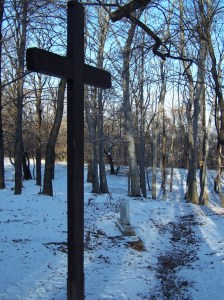
winter forest
light of the rising sun
passes straight through


needle litter
carpeting the forest floor
copper clean


straight trunks
standing tall and tidy
lack character


spring brings blossoms
but how can the trees trust
spring sometimes lies


the gnarled tree
stunted and deformed
stands post-storm

POEM: Confessions of Mindfulness Pimp

It’s disconcerting, discovering one is a pimp.

Don’t get me wrong;

-I’ve never slapped a ho’

-I’ve never even called anyone a ho’

-To the best of my recollection,

I’ve not even thought anyone a ho’

I’m empathetic to honest work reviled.


But I’ve known the hard-handed hustle of a product that’s felt about in much different terms than it’s talked about — felt an act of masochism but called “working late.”

-a product the customer wishes — with every fiber of his being — he didn’t need.

-a product around which distractions grow like weeds through the cracks of a post-apocalyptic sidewalk.

-a product the customer wishes he could fast-forward to the end-bliss, escaping the awkward preliminaries.

-a skill that the customer tells himself he’s good at, knowing if he had skills, monetary transactions wouldn’t be necessary.

I’ve dealt virtue like it was a vice.

“Psst, Buddy, want some clarity?

“I won’t tell a soul you’re out here looking.”

I’ve pimped mindfulness and wellness — unrepentantly.

BOOK REVIEW: A Portrait in Poems by Evie Robillard

A Portrait in Poems: The Storied Life of Gertrude Stein and Alice B ToklasA Portrait in Poems: The Storied Life of Gertrude Stein and Alice B Toklas by Evie Robillard
My rating: 4 of 5 stars

Available March 3, 2020

Amazon page

This work provides a biographical sketch of Gertrude Stein, her partner Alice Toklas, and their life together in Paris. The vehicle is free verse poetry, although it reads more like a children’s book than poetry. That may sound as though I intended it as a burn, but that’s not the case. The marketing materials for this book present it as a child-friendly picture book, if not entirely marketed in the children’s literature market. What I mean to say is that the writing is simple, literal, and isn’t filled with complex metaphor or cryptic description that one might expect in adult works of poetry.

The book is illustrated in a child-centric manner as well, with whimsical, unintimidating, and colorful art.

I didn’t know much about Stein, and had only heard the title of the book, “The Autobiography of Alice B. Toklas” in which much of this book’s source material presumably resides, and so this was a nice background, without getting too deep in the weeds.

If you’re a Stein fan and are interested in introducing a kid to her biography, or if you have your own limited but adult interest in her life, this is quick read to get you up to speed.

View all my reviews

BOOK REVIEW: Poems to See By ed. by Julian Peters

Poems to See by: A Comic Artist Interprets Great PoetryPoems to See by: A Comic Artist Interprets Great Poetry by Julian Peters
My rating: 5 of 5 stars

Available March 31, 2020

Amazon page

This anthology of twenty-four classic poems is set apart by the artwork used to convey the illustrator / anthologist’s view of each poem. The poets are all virtuosos, including: Dickinson, Angelou, Cummings, Langston Hughes, Auden, Seamus Heaney, Wordsworth, Shelley, Yeats, Poe, and Eliot. The poems are sometimes, but not always, among the most anthologized of the respective poet’s work. I would say that most poetry readers will probably find something that they haven’t read, but – even if not – it’s worth re-reading them as you enjoy the artwork.

The illustrator, Julian Peters, makes a bold decision to use the widest variety of artistic styles in an attempt to more aptly capture the tone of each poem. I recently reviewed a similar book, Chris Riddell’s “Poems to Live Your Life By,” and that book used a consistent style through out (which isn’t to say that tone and reality / surrealism didn’t change.) I’m not an artist, and don’t really have a vocabulary to describe the various artistic styles employed, but will attempt to give one some insight. There is the obvious shift between monochrome and color strips, but even within each of those categories there is great variation. Some monochrome strips were mostly gray, while others were exclusively black-and-white. Color works ranged from shocking dayglo to subdued pastels to dominant single color (e.g. blue) pics. Various poems were represented by a modern comic book style art, an old fashion comic strip approach, those which looked like paintings, those that were highly realistic, those that were surreal, those that were retro-chic, and even one [for Maya Angelou’s “Caged Bird”] that was in a quilt-like style.

I enjoyed this work tremendously. Most of the poems were short works, single pagers, and the fact that I’d read possibly all of them before wasn’t a problem because these are the kind of poems that should be revisited. Only the postscript poem, Eliot’s “The Love Song of J. Alfred Prufrock” was of substantial length.

I’d highly recommend this book for poetry readers, particularly those interested in are of imagery and how it’s conveyed and perceived.

View all my reviews

BOOK REVIEW: Poems to Live Your Life By selected & illustrated by Chris Riddell

Poems to Live Your Life ByPoems to Live Your Life By by Chris Riddell
My rating: 5 of 5 stars

Amazon page


This is an anthology of forty-eight poems arranged into eight life-related topical areas. The connective theme is poems that the editor, Chris Riddell, found to contain valuable life lessons. The span runs from Rumi to poets of the present day. It’s a nice selection in that it includes not only old and new (thus varied styles of verse,) but also greater and lesser known poems and poets. [That’s not to say that any of the poets are unknowns, but some of the oldies are remembered through the ages more than others, and some of the newer individuals are better known for other activities – e.g. Neil Gaiman (novelist / storyteller,) Leonard Cohen (recording artist,) and Riddell, himself (graphic artist.)] There are several much anthologized inclusions that almost any poetry reader will have read, including: Frost’s “The Road Not Taken,” Shakespeare’s “Sonnet 18” and the “To be, or not to be” soliloquy from Hamlet, Carroll’s “Jabberwocky,” and Dylan Thomas’s “Do Not Go Gentle into that Good Night.” However, there are many lesser known gems as well, many by masters of poetry such as Seamus Heaney, Christina Rossetti, and Philip Larkin.

The eight topical areas are: Musings, Youth, Family, Love, Imaginings, Nature, War, and Endings. Most of the sections contain five or six poems, though — tellingly — Love contains the most at twelve and War the least at three.

While Riddell not only selected the poems and include a couple of his own, he also illustrates the book. There are beautiful line drawings throughout that offer insight into Riddell’s interpretation of each poem.

I enjoyed this anthology. As I said, it’s a beautiful selection of poems, and the artwork is skillfully done as well. I’d highly recommend this book for poetry readers.

View all my reviews

POEM: Wet Market

Water snakes writhe in a plastic pan of clear water.

Massively muscled fish lie eye-up, tail jutting over air, as torsos rest on a bed of shaved ice.

The stout fish lie next to a more flexible species that are nestled into each other, which — in turn — are next to eels that are tangled in each other.

A cat alternately stalks and sprints, testing the air with an upturned nose and the safety of approach with timid feet.

Eyes up, the cat considers a plot to leap-snatch a tiger prawn.

When, like manna from heaven, a small fish — so fresh that it’s capable of “plotting” its escape in muscle spasms more than with its ill-oxygenated fish brain — flips itself off the shallow tin tray onto the ground.

The cat, an instinct-guided missile, snatches the fish in its jaws and runs through a narrow gap in the wall to a favorable dining haunt.

POEM: Winter Dusk

Stalk-stubbled field dusted white.
Four in the afternoon,
yet drifting into night.
How’s dark descend so soon?
 
Visible breath eddies
from lips dry and cracked.
Shoulders shrugged up ready —
cold collar cataract.
 
Light of low sun passes
through the barren hardwoods.
Moving like molasses,
people wear all their soft goods.

POEM: The Jnani Knows

The jnani knows:

  • what rests on the far side of “I’m just” is a lie.
  • one must be as conscientious in destruction as in construction.
  •  the portals of sensation are also doors to heaven and hell.
  •  a person dies once in this world, but many times in his mental world.
  • there’s a profane rot in every unquestioned idea held sacred.