BOOK REVIEW: Raoul Wallenberg by Ingrid Carlberg

Raoul Wallenberg: The BiographyRaoul Wallenberg: The Biography by Ingrid Carlberg
My rating: 5 of 5 stars

Amazon page


This is the most recent of the many biographies of Raoul Wallenberg. Wallenberg was a Swedish diplomat during the Second World War who is credited with saving thousands of lives. He was posted to Budapest with an assignment of issuing protective passports to Hungarian Jews. Hungary was a last bastion of Judaism among Nazi controlled / allied countries, but in the summer of 1944 they began mass deportation to the death camps in Poland. Protective passports from the neutral country of Sweden staved off deportation for many.

As dangerous as Wallenberg’s life was during his assignment to Budapest when he was constantly at odds with the Arrow Cross Militia (the Hungarian fascist party) and the Nazis who put them in power, the most intriguing part of Wallenberg’s life story may be his disappearance. In January of 1945, as he was seeking contact with the commander of the Red Army in Hungary to facilitate a post-War reconstruction of Budapest, he was arrested by the Soviets and surreptitiously moved to Lubyanka Prison in Moscow. The Soviets denied having Wallenberg, but facing overwhelming evidence from released prisoners who came into contact with Wallenberg in Lubyanka and Lefortovo prisons eventually made the Soviets recant. In the 1950’s they admitted they’d had him while making the suspect claim that he’d died of natural causes in 1947. There remains a great deal of mystery surrounding the case. Why they arrested Wallenberg in the first place? Why didn’t they release or exchange him like other foreign diplomats they had in custody. If they executed him – why’d they do it and why’d they do it when they did it. [There were claims by prisoners stating that they’d met Wallenberg in Gulag camps in the 1960’s and even into the 70’s (though the latter claims are more suspect.)]

In a bold move, this book is written in the old school style, which is to say chronologically. This may not seem odd for those who’ve been reading biographies and autobiographies for a long time. It’s how historians always used to write their books, and it certainly seems like a logical arrangement for the telling of historical events. However, the mode today is to start in media res, or in the middle of the exciting bits, and to sprinkle in only what is absolutely necessary of backstory as one goes along. Because of a combination of intense competition for one’s reading time and what seems like the diminished attention span of today’s average reader, it’s really quite brave for Carlberg to start with 150+ pages discussing: Wallenberg’s parents and grandparents, his days in America as an architecture student studying a form of building design that would be considered virtually useless when he returned to Sweden, and his attempts to get started in business in the years between his return to Sweden and his entry into the diplomatic corps. That said, this first of the three parts that make up the book is well done and more interesting than one might expect. It doesn’t suffer from the painful dryness that is so common when one discusses ancestors and the subject’s childhood. It’s not just that Carlberg keeps an eye on what data might be useful for the reader later in the book. In fact, I’d say that what makes the first part interesting isn’t that it shows us how Wallenberg’s youth forged him into an inevitable hero. Rather, it’s that we come away with a picture of a somewhat shiftless kid from the least wealthy limb of a family tree of a rich family. It’s not that he was born to be a hero that makes his background fascinating; it’s that he was in many ways an ordinary fellow whose decisions at critical moments made him a hero.

As mentioned, the book’s 23 chapters are divided into three parts. The first part, as described, is Wallenberg’s background. The second part explores his actions while posted to Budapest. This is when he had to deal with the likes of Adolf Eichmann and – at the very end – rogue elements of the Arrow Cross Militia who were engaged in killing sprees. The third part covers the period of Wallenberg’s arrest and disappearance at the hands of the Soviet Union. Many of the popular biographies of Wallenberg were written in the 1980’s, during a period of reawakened interest in his fate but when the Soviets were just beginning to loosen up, and so this version does contain a little bit of new information that came out during the Glasnost years and subsequently.

The book has a substantial group of black and white pictures of relevant people and documents. There are also modern-day descriptions of the author’s visits to various key places in Wallenberg’s story including various offices and residences, as well as Lefortovo prison. These are short (a few pages at most) and are interspersed with the chapters around which that locale was relevant. Some of them involved talking with people who had insight into Wallenberg’s life and other places are occupied by individuals with little to no knowledge of Wallenberg. There is a detailed accounting of sources, including both a bibliography and lists of interviewed individuals and unpublished sources.

I found this book fascinating. I will admit that I didn’t get hooked right away. While there was enough in part one to keep me interested, the book doesn’t become truly gripping until the second and third parts. In part three, it becomes genuinely hard to put down.

That said, if one is hoping for a work that resolves all questions, that work doesn’t yet exist, and it’s less and less likely that it ever will given the way the Soviets purged Wallenberg from documentation (very few references were found during the Glasnost era investigation) and apparently cremated his body. Few people remain alive who were involved and their memories are adversely effected by time. Still, Carlberg offers excellent insight into what went wrong on the Swedish side that may have contributed to Wallenberg’s demise. The Swedish diplomat jumped to conclusions that probably hurt Wallenberg’s survival odds. There are a few brief scenes in the book that are visceral, and one of these involves the degree to which that one diplomat was haunted by his missteps in the case. (Another involves a cudgel-wielding former KGB-interrogator who threatened Wallenberg’s step-brother when the relative tried to visit to find out more. If the sparse documentation is to be believed, the retired KGB man may have been the last person to speak with Wallenberg. But the man clearly wanted to put that behind him.)

There were just a couple of questions that I wish had been addressed by the book that weren’t. Carlberg is keen to point out that it appeared that the Soviets were hinting that a teen-aged Baltic refugee, Lydia Makarova, could be a possible exchange for Wallenberg. (The Swedish diplomats were too dense to get this at first because one had concluded Wallenberg died in Hungary and another – higher up — didn’t believe in quid pro quo life trades.) I can see how this Lydia Makarova wasn’t really relevant to Wallenberg’s story. She was just an extremely high value subject, but I couldn’t help but wonder why they would want a teen-aged girl so badly that they’d have been willing to take the public relations nightmare of admitting they abducted a diplomat regarded as an international hero. With the book weighing in at over 600 pages, I can see why there was reticent to investigate this further just to scratch an itch of curiosity, but still the itch remains.

I’d highly recommend this book. I’ve read other books on Wallenberg, and believe that this book offered substantial value added – particularly regarding the investigation of Wallenberg’s disappearance.

View all my reviews

BOOK REVIEW: Descartes’ Error by Antonio Damasio

Descartes' Error: Emotion, Reason and the Human BrainDescartes’ Error: Emotion, Reason and the Human Brain by António R. Damásio
My rating: 5 of 5 stars

Amazon page


I’ve joked that there must be a law requiring any author writing a book on neuroscience for a popular audience to tell the story of Phineas Gage. This book is no exception. Its first couple chapters explore the case of Gage in detail. For those who don’t read much on this subject, Phineas Gage was a foreman for a construction company. By all accounts he was a reliable and solid individual, respected by his employees, trusted by his employer, and beloved by his family. Then one day a four-foot tamping rod was blown through his skull – literally, in one side and out the other. One might think that having a chunk of brain skewered out by a steel rod on a gunpowder-fueled ride through the skull would leave one – at best — a glassy-eyed, drooling, catatonic lump. Surely, a steel rod would wreak more havoc than the narrow needle used in lobotomies? However, what makes Gage’s story fascinating is that the injury resulted in no readily apparent disruption in cognitive function. Gage could still speak fluidly. He retained his memories. He could do math at the same level as before. However, this isn’t to say that the hole through his brain left him unchanged. The even temperament that made him an ideal employee and that endeared him to friends and family was gone. Gage became angry and unreliable.

So what is the relevance of the Gage story to Damasio’s book? Quite a lot, actually. Damasio’s book is about emotion, its influence on decision-making, and how bodily states create emotion. In parts two and three of this three-part book, after introducing the reader to the role of the brain in emotion via the cases of those with selective brain damage, Damasio lays out an argument for what he calls the “Somatic Marker Hypothesis” which says that bodily states are what create the sensations that we associate with emotion. The title-referenced error made by Descartes will be apparent to those familiar with Cartesian dualism. Descartes believed there was a dualism between mind and body – i.e. that there was this physical stuff that got us about from place to place, but there were these intangible thoughts and feelings that were matter-independent that were the makings of mind and which were really you (i.e. you think, therefore you are.) Damasio believes that you cannot separate what it feels like to be you from the body and all its hormones, neurotransmitters, vital statistics, neuronal firing, etc.

The book consists of eleven chapters divided into three parts. In the first part, the author lays out not only the case of Gage, but other examples of individuals who had injury or illness in the brain that disrupted emotion and its influence on decision-making. We learn that an unemotional being isn’t like Spock, but instead is paralyzed by indecision. It turns out that it’s emotion that give us a kick, particularly when he have no sound basis on which to make a rational judgement. The second part draws the connection between body and our emotional self, culminating in a description of the Somatic Marker Hypothesis. The final part describes how the Somatic Marker Hypothesis could be tested and where this line of study seems to be going. The book is annotated and has a bibliography as one would expect of a scholarly work – even one written for a popular audience. The book has a few graphics – graphs, charts, and diagrams, but not very many and of a clear and simple nature.

I’d highly recommend this book for anyone interested in the working of the mind. It’s a thought-provoking look at what it means to be an emotional being and challenges our preconceptions about feelings.

View all my reviews

5 Works of Nonfiction That May Be [at least in part] Fiction

NOTE: There are many famous examples of books presented as nonfiction that turned out to be partially or completely fabricated (e.g. Go Ask Alice, A Million Little Pieces, Three Cups of Tea, The Teachings of Don Juan, and Papillon are examples that spring to mind.) That’s not what I was going for when I started this list. Instead, I was thinking of examples of books that may well be true to the best of the author’s knowledge, but which may also be examples of false memory syndrome. I became interested in this while reading Julia Shaw’s The Memory Illusion, which discusses how faulty memory can be — to the point that people can be led into false memories of something as traumatic as committing crimes that never occurred. Meredith Maran wrote a book entitled My Lie: A True Story of False Memory about what she discovered were false memories of childhood sexual abuse. So, I’m not saying these books are fabrications, and — for all I know — some may be completely true. After all, some of the featured individuals think they were exploited by the MK Ultra mind-control shenanigans, and some of them may have been, but it’s also possible some weren’t.


5.) Secret Weapons by Cheryl and Lynn Hersha: The Hersha sisters say they were in a program that turned them into femme fatales.


4.) Psychic Warrior by David Morehouse: I read about Morehouse in Jon Ronson’s The Men Who Stare at Goats. Sadly, it’s not in question that the military maintained a program of psychics, nor that Morehouse was involved in said program. What is in question is the degree to which the program had successes.


3.) Communion by Whitley Strieber: This is the most famous alien abduction story. I don’t know what really happened, but I seriously doubt it’s what the author proposed.


2.) The Control of Candy Jones by Donald Bain: This is a more well-known case similar to that of the Hersha sisters in which a woman was said to be reprogrammed by a nefarious psychiatrist in a mind control program. Candy Jones was famous as a pin up girl. After she got married, her behavior changed radically, and her husband asked her to participate in sessions of hypnosis which are said to have turned up a buried second personality.


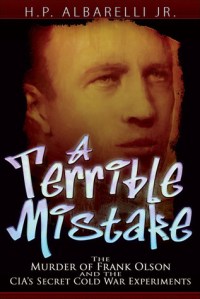
1.) A Terrible Mistake by H.P. Albarelli Jr: This is another example of a case in which there are certain remarkable facts that aren’t in dispute, but the degree to which the fine details are accurate is hard to judge. The fact is that Frank Olson was a biologist in the employ of the government, he was dosed with hallucinogenic substances, and thereafter he took a fatal plunge out of a hotel window. Whether he was murdered as a cover up or just had a bad trip has always been an open question.

BOOK REVIEW: Bring Me the Rhinoceros by John Tarrant

Bring Me the Rhinoceros: And Other Zen Koans That Will Save Your LifeBring Me the Rhinoceros: And Other Zen Koans That Will Save Your Life by John Tarrant
My rating: 5 of 5 stars

Amazon page


This book is an examination of fifteen classic Zen koans selected by John Tarrant, founder of the Pacific Zen Institute (PZI.) Koans are statements or stories that are designed to help students of Zen Buddhism escape their usual ways of thinking because the absurdity of koans cannot be meaningfully answered with the usual approach based in logic and reason. Even if the concept isn’t familiar, readers are sure to have heard the famous koan: “What is the sound of one hand clapping?” [Though one may have missed the value as a tool of the mind, and dismissed the koan as a sage’s attempt to be abstruse and esoteric.]

Each chapter addresses one koan in great detail. First, the koan is presented in a simple fashion. It should be pointed out that some of these koans are a single line and others are as long as several paragraphs. Next, there is a sort of introduction to the concept or point being addressed in the koan. Tarrant knows the value of story, and this frequently involves a narrative approach. Next, there is a section describing the koan in more detail than in which it was first introduced. Here the author elaborates and provides background. The final section of each chapter is about “working with the koan” and offers a bit of insight into how to start considering the lesson of each koan.

I enjoyed this book. It’s a good selection of koans that cover a wide range of styles and approaches. As I mentioned the author uses stories and anecdotes – both historical and contemporary – to help get his point across. The titular use of a particularly absurd koan “punchline,” gives one a taste of the author’s willingness to engage in the whimsical.

I’d highly recommend this book for those who are seeking to better understand koans, either as students of Zen or as individuals interested in the workings of the mind more generally.

View all my reviews

BOOK REVIEW: How to Hypnotise Anyone by The Rogue Hypnotist

How to Hypnotise Anyone - Confessions of a Rogue HypnotistHow to Hypnotise Anyone – Confessions of a Rogue Hypnotist by The Rogue Hypnotist
My rating: 4 of 5 stars

Amazon page


This is the first book in a popular eBook series on hypnosis. The series is written by an anonymous hypnotist and neuro-linguistic programming (NLP) practitioner from London. As the first book, it addresses the basics of hypnotic induction, including background about what a hypnotic trance is and how it’s achieved, as well as fundamentals of voice and word choice that can influence the hypnotist’s effectiveness. The book also introduces “convincers” and “deepeners,” practices that help get the subject in the right state of mind for hypnosis and which take them deeper into trance, respectively. [Though, the author argues that the former aren’t really necessary.]

This short book consists of 29 chapters and 5 appendices. The “chapters” are as short as a single paragraph and lay out the concepts, and the appendices are scripts for hypnotic induction or trance deepening. This is a short book, and some have complained that it reads more like a detailed outline than a book. While it’s true that it’s a “just the facts” kind of format, many will find that preferable, depending upon how one likes to take in information. As long as you’re not expecting a lot of narrative examples, you may find it’s just what you are seeking. It’s written in a conversational style as if the author were telling one the information in person.

Given the controversial title, a reasonable question to ask is whether the book is practical or a lot of pie-in-the-sky ramblings by someone who doesn’t know what they are talking about. What’s the controversy? While there are many hypnotists and would-be hypnotists who claim that they can induce a hypnotic trance in anyone, regardless of the individual or the situation, the science suggests that there is continuum of degrees of hypnotizability. The distribution along this continuum follows a bell curve. What’s this mean? Almost everyone can be hypnotized to some degree, but at one tail there are people who are extremely suggestible – however, at the other end there are people who just can’t be induced. Because there are so many Hollywood misconceptions (see: “Now You See Me”) and hypnosis related fantasy and fiction, it’s not surprising that there are a lot of wrong ideas out there. [I should point out that everyone probably achieves a trance state at some point organically, but some people seem unable to be induced into that state because of anxiety, resistance, or otherwise.] Having said all that, it seemed that the author knew of what he wrote and was quite open about the myths, misconceptions, and limitations.

Later titles in this series address such topics as the details of language for hypnosis, escaping cultural hypnosis, applications for anxiety reduction, uses for combating addiction, as well as the more bizarre and arcane side of the subject.

I’d recommend this book for anyone looking for a primer on hypnosis. I was not bothered by the sparse approach. It’s quick and readable, and seemed to offer well reasoned approach to hypnotism.

View all my reviews

BOOK REVIEW: A Brief History of Vice by Robert Evans

A Brief History of Vice: How Bad Behavior Built CivilizationA Brief History of Vice: How Bad Behavior Built Civilization by Robert Evans
My rating: 5 of 5 stars

Amazon page


This book’s title and subtitle suggest its central theme, but it doesn’t tell the whole story. As the title suggests, drugs, sex, and sundry bad behavior aren’t just the abhorrent actions of a marginalized few who society seeks to reign in. In some cases, culture and civilization are built on said behaviors. Evans devotes a fair amount of space to discussing research on vices’s role in the growth of civilization. These hypotheses and theories run a gamut from the non-controversial and well-established to more sweeping claims such as that the agricultural revolution was largely driven by the dictates of beer production (i.e. both the need to produce a lot of grain and to be homebodies through the fermentation process) and that the dawn of religion may be linked to the ingestion of mushrooms of the magic variety. Despite the book’s light and humorous tone, it should be noted that the author treats the latter type of claims with the requisite skepticism.

But this isn’t just a book of history, anthropology, and evolutionary biology as pertains to the origins of vice and its linkage to civilization and culture; it also offers humorous anecdotes of the author’s experiments into how to replicate some of the vices of the ancients – as well as offering step-by-step directions for readers to conduct their own such investigations. As might be expected, there’s a lot of humor in the book. Just the idea of debauchery building civilization offers plenty of opportunity for the subversion of expectations that makes comedy, but then one adds in stories of people (and occasionally other species) making decisions under the influence of mind and mood altering substances (or even under the influence of horniness) and one enters territory ripe for hilarity.

The book consists of 15 chapters that cover both expected and unexpected topics. Not surprisingly, discussion of drugs – legal and illicit — takes up a large portion of the book. [I should make clear that the discussion of illegal substances is purely historical, and the “how-to” sections describe “experiments” that were legal in the author’s jurisdiction and that will be for most readers.] Ten chapters are about various consciousness and mood altering substances including: alcohol (ch. 1 & 4), psychedelic substances (ch. 7, 8, and 10), tobacco and marijuana (ch. 9; treated together because historically they had more in common than in their modern use / legal status), the ephedra shrub and derived products ranging from Mormon tea to Methamphetamine (ch. 11), coffee and caffeine (ch. 12), designer drugs ranging from ayahuasca [made from two different plants that don’t live together and which only work when used together] through pain killers and on to the dangerous scourge of synthesized substances created in labs to get around drug laws for a few days until they will be added to the schedule of illegal substances.) The final chapter (ch. 15) is devoted to the search for the mythical salamander brandy of Slovenia (claimed to have hallucinogenic qualities owing to a toxin emitted by the submerged reptile.) I should point out that I have oversimplified with this division of chapters for simplicity’s sake. Some of the chapters dealt with more than one type of substance. For example, Chapter 10 is really about drug cultures and how they kept people safe in, for example, shamanic tribal societies, and how the loss of such culture is part of the reason we have a more severe problem with substances in modern society.

No investigation into the role of vice on civilization would be complete without discussing sex, though there are only two chapters about it. The first, chapter 6, discusses prostitution / sex work. There’s a widespread tongue-in-cheek reference to “the world’s oldest profession” that hints that sex work is both ancient and that past civilizations sometimes viewed these activities in a much different light than do we in modern, Western society. The second chapter on sex, chapter 13, addresses a different question altogether, but one which has captured the attention of many a scholar (as well as being fruitful territory for humorists), and that’s why there’s such a vast range of sexually titillating activities. It’s not difficult to figure out the evolutionary advantage of extreme pleasure being linked to sexual intercourse. However, it’s much less clear why there are such a huge range of fetish behaviors that are intensely arousing for some while ranging from being boring to disgusting for others. [It’s not cleared up by thinking that there is just a tiny fraction of the population that is into everything. A person who gets excited by wearing a head-to-toe rubber suit while being failed with a halibut might find a foot fetish utterly disgusting.]

For those who are counting, that leaves three chapters on miscellaneous forms of vice. Chapter 2 discusses music, particularly as a lubricant of social activities, and it presents an intriguing theory that Stonehenge may have been built for its acoustic qualities – i.e. to facilitate ancient raves. Chapter 3 explores celebrity worship, an activity which we tend to think of as both recent and as harbinger of doom for humanity, but which actually has a long history – so long that it may date back further than humanity, itself, does. That leaves chapter five, which delves into a grab-bag of bad habits that would today be collectively labeled “douchiness.” This includes narcissism, inexplicable overconfidence, and a tendency toward lying, bragging, and delusions about self or others.

The book has a range of graphics from photographs to diagrams. Some are for educational purposes (e.g. to help the reader conduct their own experiments) and some are mostly for comedic effect. The “side-bar” discussions of how to reproduced the results of the ancients (and the author, himself) are presented in text-boxes for the sake of clarity. There are one or two of these text-boxes in most chapters. As mentioned, the subjects for these “hands-on” activities are chosen to avoid running afoul of the law.

I enjoyed this book. It’s at once amusing and thought-provoking. I think the author hits a nice medium between doling out humor and educating the reader. I’d recommend reading it (though not necessarily conducting every one of the experiments) for anyone who finds the subject intriguing.

View all my reviews

BOOK REVIEW: Sure Ways to Self-Realization by Swami Saraswati

Sure Ways to Self RealizationSure Ways to Self Realization by Satyananda Saraswati
My rating: 5 of 5 stars

Amazon page


This book is one-stop shopping for the yogic meditator. The first half of the book explores many of the most common yogic practices of dharana (concentration) and dhyana (meditation) in step-by-step detail. The second half of the book situates yogic meditation in a global context of meditation by introducing various techniques of meditation and mind science seen around the world. This allows the reader to compare and contrast the yogic approach to that of other systems — be they closely related systems such as Buddhism or Jainism or more remote ones such as hypnosis or moving meditations like dance or the martial arts.

I found this book to be incredibly useful. While there are mountains of books on yoga, there are relatively few that shine a light on the practices of the mind, and among those that do only very few are nonsectarian. Many books look at meditation solely as a spiritual practice and a few others present it exclusively as a secular scientifically grounded practice. This book skillfully bridges between, and does its level best to get the accounts of different systems right. That doesn’t mean that there aren’t a few oversimplifications or minor misunderstandings here and there, but the good overshadows them by far. It should be noted that even within the domain of yoga, many authors warp concepts such as jnana yoga and tantric yoga to fit their worldview or sect instead of reporting on how practitioners of those systems would see them. This book seemed to me to be much fairer than many in this regard.

The book consists of an Introduction and seven chapters. Chapters 1 and 2 discuss tools and aids used in meditation. The primary difference between the two chapters is that the first looks at traditional aids such as mantra, mandalas, and symbology, and the second discusses more modern scientific aids such as biofeedback, drugs, and sensory deprivation tanks.

Chapter 3 is one of the largest (more than a quarter of the book) and it explores the many yogic meditation techniques, including: antar mouna, japa, ajapa japa, chidakasha dharana, yoga nidra, prana vidya, trataka, nada meditation, jnana yogi meditations, kriya yoga techniques, and tantric techniques. While the later discussion of non-yogic approaches generally includes instructions for basic exercises, the descriptions in this section are much more detailed, and some include variations on the primary practice.

Chapter 4 is about the same length as chapter 3, and it investigates many of the other systems of meditation from around the world. These include religious systems such as those in: Hinduism, Jainism, Taoism, various sects of Buddhism, Zoroastrianism, the mystical branches of Christianity and Islam (Sufi,) and Native American animist traditions. It also includes secular systems such as hypnosis and autogenic therapy.

Chapter 5 delves into how movement of the body is used as an anchor point in meditation in yoga, on pilgrimage, in Tibetan Buddhism, in Zen Buddhism, in the martial arts, in dance, and in sports. This is where I saw those few of the aforementioned minor oversimplifications and misunderstandings (e.g. referring to all martial arts under the rubric “karate.”) However, I greatly appreciated that the authors included discussion of this important topic, and so I can’t say that there was anything that detracted from my enjoyment of coverage of the topic.

The penultimate chapter is a catch-all for miscellany not covered earlier in the book. It includes meditations for kids (who require a very special approach, I can attest.) It also has a section on meditation on death, which I believe to be an immensely important topic for helping people shed their fear so they can get the most out of their lives. The other two sections are on nature and sensory meditations, respectively. The last chapter is short and discusses samadhi as the goal of meditative practice.

There are only a few graphics in the book, mostly symbology, but there is a glossary and a bibliography.

I would highly recommend this book for yoga practitioners and those who have a broad interest in meditative and mind science practices.

View all my reviews

BOOK REVIEW: The Rape of the Mind by Joost A. M. Meerloo

The Rape of the Mind: The Psychology of Thought Control, Menticide, and BrainwashingThe Rape of the Mind: The Psychology of Thought Control, Menticide, and Brainwashing by Joost A.M. Meerloo
My rating: 4 of 5 stars

Amazon page


This book, first published in 1956, describes the various tactics used by Totalitarian states, and explores why some people stand up to them better than others. It discusses brainwashing, menticide (a term coined by the author), attaining false confessions, and the gamut of tactics of mental submission — be they active or passive in nature and whether they target individuals or the whole of society. The author, Joost Meerloo, was a Dutch psychiatrist who fled the Nazis, served as a Colonel and psychiatric expert in the Dutch military-in-exile during the Second World War, and then immigrated to the United States where he taught at Columbia University and continued his research on this subject.

The first question a reader might have is whether the book is worth reading, given that it was written so long ago and so many books have come since. In other words, does it hold up? It’s true that it’s a little bit of a mixed bag. On one hand, there’s occasional referencing of psychoanalytic notions that have fallen out of favor (e.g. Freudian ideas.) On the other hand, I found the section on technology as a means of indoctrination and mass manipulation to be even truer now than it was at the time. Meerloo was only thinking about radio and television, and couldn’t have imagined how technologies are being infused with lessons from neuroscience to make them, quite literally, addictive — or how even mass media is being tailored to appeal to various groups (granted this seems to be more demand driven, but its nefarious potential is apparent.)

I believe this book is a worthwhile read even more than sixty years later. The author had a lot of personal interaction with individuals affected by these tactics, and there is a great deal of insight. The value of the personal insight far outweighs the influence of any outmoded thinking. Further, I would say that the book is an interesting and informative read even if one isn’t interested in North Korea or any of the few other blatantly authoritarian nations still around today. If one is interested in questions such as why so many people can believe incorrect notions in the face of overwhelming evidence, this book provides food-for-thought on the topic. Even if one’s government is not authoritarian, in-groups may use some of these same tactics to influence members’s thinking.

While the book is famous for discussing the cases of the American soldiers brainwashed during the Korean War (i.e. the basis of the “Manchurian Candidate” novel and original movie [1962,]) Joost uses many examples from the Nazis — including a little of his personal experience — as well as Cold War stories (generally focusing on the Soviets, but touching upon the Totalitarian-style tactics of McCarthyism.) There are famous cases like Cardinal Mindszenty, but many lesser known cases with which the reader is unlikely to be familiar.

The book’s eighteen chapters are divided into four parts. Part I (chapters 1 through 4) expounds upon the tactics used to cause individuals to submit. Meerloo discusses how false confessions are elicited using techniques from Pavlov’s classical conditioning to drugs to manipulation by doctors to playing on the subject’s guilt. It should be pointed out that a central idea in this book is that it’s just a matter of time. It’s an idea that’s revisited later in the book when considering the ethics of sentencing for treason and when evaluating how to best train soldiers to hold out as prisoners of war. It’s true that some individuals are much more resistant to these techniques but no one holds out forever. One can become more robust to interrogation, but the idea is to do so in the hope that one can outlast the enemy.

Part II (ch. 5 to 9) discusses techniques for mass submission. This dives into how totalitarian leaders affect thinking by controlling semantics, the information available to the public, and by using fear through various methods including the surveillance state and show trials. One key concept is how having spies everywhere isn’t necessarily about gaining information so much as keeping the populace in fear so as to influence their behavior. It creates a steady state prisoner’s dilemma in which one never knows whether someone is going to roll over on one for his or her own benefit.

Part III (ch. 10 to 14) continues on the theme of mass compliance but with a focus on “unobtrusive coercion.” Running a totalitarian state isn’t all about torture, truth serum, and having spies everywhere. There is a soft power component to totalitarianism. This section explores this side of the coin with special attention to the roles of technology and bureaucracy. These chapters also consider how education and child development can be a tool of the dictator or authoritarian regime, and how indoctrination about concepts of treason and loyalty can be exploited by totalitarian governments.

Part IV (ch. 15 through 18) considers how individuals and societies can make themselves more robust against authoritarian tactics. This section delves into how members of democratic societies might best think about concepts of loyalty and treason in light of the fact that even the most stoic soldiers and spies can be weakened given enough time. There is one chapter that mirrors material in part III, except that instead of discussing how totalitarian systems use education to weaken and manipulate, this one suggests how education might be used to make a society of individuals less vulnerable to authoritarian arguments and tactics. This is also where Meerloo offers analysis of what traits tend to make one more robust to brainwashing and other totalitarian tactics and why.

There is no ancillary matter (i.e. graphics, appendices, notes, or bibliography) in the edition that I read. However, I can’t say that it was missed. The author uses many cases and anecdotes to make the book interesting to read, and much of it comes from the author’s personal knowledge.

I found this book intriguing, and would recommend it. As I mentioned earlier, one needn’t be exclusively interested in Nazi Germany, Stalinist Soviet Union, or countries like the DPRK (N. Korea) to find this book interesting. Sadly, the book has a lot to say of relevance to individuals in modern-day democracies.

View all my reviews

BOOK REVIEW: The Unthinkable by Amanda Ripley

The Unthinkable: Who Survives When Disaster Strikes - and WhyThe Unthinkable: Who Survives When Disaster Strikes – and Why by Amanda Ripley
My rating: 5 of 5 stars

Amazon page


Ripley investigates a range of disasters and tragedies – natural and man-made – with an eye toward her sub-titular question of who survives and why. Of course, in the process she answers the [often more interesting] converse question of who dies and why? By that I’m specifically referring to those who die while facing the same situations as survivors. i.e. Who dies having had the capacity to survive? Obviously, some people fail to survive because they face a fundamentally unsurvivable event (e.g. a plane explodes in mid-air with said person in it), but a surprising number die who could have walked to safety if they’d have managed to get moving – and some die because they play out a mental script that makes no sense contextually, e.g. trying to get a carry-on out of the overhead compartment as though one is at the gate at Heathrow Airport when in fact one is sinking into the ocean while the crashed airliner one is in is being buffeted by ocean waves.

Over the course of eight chapters, an introduction, a conclusion, and ancillary material, the author presents cases involving airplane crashes, tsunami, hurricanes, police shootings, hostage situations, fires, stampedes (of humans by humans), and even touches on the psychology of tragedies of a personal [rather than mass] nature (e.g. sexual assault.) A particular emphasis is given to events that the reader will likely be familiar such as 9/11 and Hurricane Katrina, but the book also opens up the reader to events they may have scarcely heard of from the many crushing deaths in Mecca during recent Hajj pilgrimages to the Halifax harbor incident of 1917. Along the way, the reader hears from survivors, heroes, and a wide-range of experts on subjects such as gunfights, risk perception, evacuation dynamics, the physics of crowds, evolutionary psychology, and emotional resilience.

After an introduction that sets the context for the book, the first chapter discusses one of the most salient features of whether ones lives or dies, delay. The case of the evacuation of the World Trade Center (WTC) on September 11, 2001 is used to examine why some people loiter about while others are johnny on the spot to hit the road. The WTC on 9/11 makes an interesting case because there were certainly people who died who could have survived if they’d had better knowledge or training. However, at the same time, it could have also been vastly worse if some of the people didn’t have the training they did (famously, a huge WTC tenant, Morgan Stanley, had a man in charge of emergency procedures, Rick Rescorla, whose persistent drills no doubt saved many lives [though he did not survive, himself.])

Chapter two discusses risk, and the weird way in which human beings perceive and respond to uncertainty. For example, the author describes Kahneman and Tversky’s Prospect Theory, which showed that a person responds to risk much differently if there’s a possibility of losing something rather than only of making gains. (Prior to work of these two social scientists, the prevailing view was that humans were rational actors, i.e. a $100 is a $100.) Prospect theory confirmed that anxiety mattered, and people didn’t just use their clockwork frontal cortex to calculate and compare expected values. (This may seem self-evident, but it began the process of up-ending the precise and predictable rational actor model from classical economics.)

Chapter three is entitled “fear” and it discusses that emotion and the various behaviors (and lack of behavior) that goes hand-in-hand with it, including: distortion of the experience of time, tunnel vision, and self-talk. (Panic and paralysis behaviors are each given their own chapter later in the book.) This chapter presented a fascinating discussion with a man who may have been involved in more shoot outs than any other police officer (the officer, no doubt, having a valuable perspective on how to respond in fearful situations.)

Chapter four is about the personality traits that link to resilience and the survivor personality. There is a fascinating discussion with an undercover agent in Israel, a man who faced a number of situations in which he had to coolly make a life-or-death decision in the way that most of us only experience in Hollywood movies. It should be pointed out that while we all admire such people when they save the day, the personality traits they display aren’t necessarily ones that we find desirable in daily life. Chapter five is entitled “groupthink” and it discusses the role that social dynamics play in survival, which is often considerable. Some survivors are people who would’ve perished if left to their own devices – i.e. if a more resilient stranger hadn’t taken them by the hand or shouted in their face.

The last three chapters discuss three relatively common behaviors that occur in the decisive moment of a tragedy. Chapter six discusses panic behavior. As it happens, there are some types of tragedies in which panic is almost unheard of and others in which it is nearly ubiquitous. Personality does play a role. Just as some people have personality traits that make them more resilient, others have traits that make them more likely to panic. However, researchers also found that there are characteristics – e.g. people feeling trapped but as if there’s a glimmer of hope of escape. [People who know they are unequivocally doomed are often surprisingly calm.] The chapter also offers some useful insights into how crowds kill people that may be useful for those who find themselves in massive crowds like those seen during pilgrimages or at any number of festivals in India (where human stampede deaths are disturbingly common.)

Chapter seven is about “paralysis” behavior. Readers may be familiar that there’s been a tendency of experts to add either one or two new “F’s” to the phrase “fight or flight” – such as “freeze” or “fright” – to describe other extremely common responses to severe sympathetic nervous system engagement. It’s common to dismiss such behavior as that of cowardly or milquetoast people, but the reality is more complex. On the evolutionary timescale, there was one tragedy that counted for an overwhelming percentage of such dire events — being in the jaws of an apex predator. It turns out that if a grizzly bear or lioness is atop you, freezing isn’t a bad strategy. You aren’t going to pop up and out run a tiger or defeat it in unarmed combat, your only hope may be to make it think you are a diseased carcass – i.e. shit yourself and lie limply. One has to train alternative behaviors; otherwise, the body does what is evolutionarily programmed into its genetic code.

The last chapter is on heroic acts and why some people engage in them when most people don’t. (Consider the people in the Titanic lifeboats who listened to people struggle and drown for fear that their [almost empty] boat would be swamped with clawing victims. Or, the case of Catherine Genovese who was screaming bloody murder for half-an-hour while being raped and stabbed to death while none of the 40-ish witnesses so much as called the cops.) As with the question of what makes a survivor, the answer to what makes a hero is a mixed bag. While we tend to idolize people who engage in heroic actions, the evidence suggests that the image of pure beneficence – lacking all self-interest – may be mythical. Many a hero is as much responding with a combination of subconscious mind and genetic programming as is the individual who burns to death 100 feet from an unlocked exit – just to vastly greater adoration.

I found this book to be fascinating. There are many books on this topic, but I think the author did an excellent job of choosing cases and experts to produce an interesting and informative read — even for a reader for whom this literature is not new.

View all my reviews

BOOK REVIEW: Running Flow Mihaly Csikszentmihalyi, et. al.

Running FlowRunning Flow by Mihaly Csikszentmihalyi
My rating: 5 of 5 stars

Amazon page


This book examines how Flow can be achieved by runners. Flow, in this usage, means a specific state of mind in which the activity at hand becomes effortless, self-criticism quiets, and one becomes pleasantly fixated on a task. It’s a term coined by the book’s lead author, Mihaly Csikszentmihalyi, based on his research into how some people were able to slip into a mental state in which even mundane activities could become an almost blissful obsession. This was part of a broader inquiry into how people can achieve a higher quality of life at work or at home.

The book is divided into two parts. The first four chapters lay out the concept of Flow in detail, and provide the necessary background for readers who may not be familiar with the concept. These chapters describe the role Flow can play in running, examine the components of Flow (i.e. necessary conditions and outcomes), and explain what personality traits are most conducive to achieving Flow.

The second part consists of five chapters, and it delves into how a runner can achieve Flow. Chapter five explores in detail three of the nine components that were introduced in chapter two, and tailors the explanation for runners. These three are the antecedents of Flow: clear goals, a match of challenge level and skill level, and immediate feedback. Chapters six and seven suggest the ways in which Flow can be facilitated in non-competitive and competitive runs, respectively. Chapter eight discusses the limits of flow. Because Flow is associated with feelings of effortless performance, some think of it as a sort of panacea for all that plagues their running. Furthermore, it’s not a state that easily happens and consistently returns; it’s often fickle and elusive. This chapter not only disabuses one of such notions, but also explains how failing to achieve Flow need not be the end of the world (or of one’s race.) The final chapter takes Flow beyond the concept of running and suggests what it’s pursuit can do for an individual more broadly.

The chapters use mini-case studies in which the authors describe the experience of professional runners in races and the effects of Flow on their performance and their experiences of races. There are numerous graphics. Many of these are color photos of the athletes who the authors spoke to, but there are also diagrams used to clarify key concepts. There is a glossary and references section as well.

I enjoyed this book. I’ve always thought of running as a task for which Flow would be hard to achieve because the matching of skill level to the amount of challenge is so crucial to achieving Flow and the movement pattern of running is so repetitive and monotonous. (The reason this matching is important is that if one’s skill level is far beyond the challenge, then one is bored, and if it’s the other way around, one is frustrated and overwhelmed – and neither boredom nor frustration facilitates Flow.) The book is a quick read that offers runners everything they need to make their mental experience of running more enjoyable and productive.

View all my reviews