BOOKS: “Attack on Titan, Vol. 1” by Hajime Isayama

Attack on Titan, Vol. 1Attack on Titan, Vol. 1 by Hajime Isayama
My rating: 5 of 5 stars

Publisher Site – Kodansha

A bit like Starship Troopers in that it features a group of youths drawn into military service to defend humanity from an existential threat, this series revolves around humanity besieged by giants. This introductory volume opens many questions that it leaves to be answered, such as: what are the Titans? Where do they come from? Can humanity survive them?

What this opening volume does a good job of is building a cast of characters one can connect with, as well as showing how humanity has been losing ground to its mammoth enemies. The reader enters this conflict in the middle, humanity living in walled cities that periodically come under attack, and that not only sets a tone but builds engagement with the story.

I found this volume intriguing and would highly recommend it for comic book readers. Note: the book is formatted in manga style and thus reads backwards from the perspective of an English language book reader.

View all my reviews

BOOKS: “Face Meat” by Bonten Taro

Face MeatFace Meat by Bonten Taro
My rating: 5 of 5 stars

Publisher Site – Living the Line

Release: May 20, 2025

This is a creative collection of fourteen dark and creepy tales. It’s full of monsters, curses, killers, folkloric themes, and death. Many, but not all, of the stories are placed in Japanese settings — e.g. the wild west and 19th century Europe are also featured. (And some of the stories seem to be of ambiguous setting — presumably on purpose.) Most, but not all, of the stories feature supernatural elements.

It’s a translation of a manga, and isn’t reformatted, such that one will need to get comfortable with the “backwards” reading that such books entail. The art is mostly line drawn and lightly shaded black and white, with a few color pages (mostly story covers) in sepia-reminiscent tones.

I found the tales to be taut and disturbing and would recommend the book for readers of horror and dark speculative fiction. It is sexually as well as violently graphic –so, if you’re one of those weirdos who is ok with a severed head but scandalized by an unclad breast, this book isn’t for you.

View all my reviews

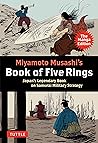
BOOKS: “Miyamoto Musashi’s Book of Five Rings: The Manga Edition” art by Koji Kondo; trans. by Makiko Itoh

Miyamoto Musashi's Book of Five Rings: The Manga Edition: Japan's Legendary Book on Samurai Military StrategyMiyamoto Musashi’s Book of Five Rings: The Manga Edition: Japan’s Legendary Book on Samurai Military Strategy by Miyamoto Musashi
My rating: 5 of 5 stars

Amazon.in Page

Release Date: April 30, 2024

As readers may suspect, this isn’t simply a graphically illustrated edition of The Book of Five Rings. That book, being written as an instructional manual, doesn’t lend itself to a literal manga adaptation. Rather, this work is a graphic novelization that puts Musashi’s strategic masterwork into a narrative context. While it does share many strategic and philosophical ideas from The Book of Five Rings, it’s more a telling of the story of how the manual came to be and how it was transmitted out into the world. It tells this story primarily by exploring how Musashi came to have three apprentices, and how he went about teaching them the lessons encapsulated in the manual. It also delves into Musashi’s most famous duel, the Ganryū-jima battle against Sasaki Kojirō, an event that formed a turning point in Musashi’s life.

I found this manga to be engrossing and highly readable. It is well worth reading, even if one has read one or more translations of The Book of Five Rings. The translation of ideas seemed clear and consistent with my understanding of Musashi’s worldview. I’d highly recommend this manga for readers interested in the history of martial arts, biographies of intriguing individuals, as well as strategic and philosophical ideas.

View all my reviews

BOOK REVIEW: The Breaker Omnibus, Vol. 1 by Jeon Geuk-Jin

The Breaker Omnibus Vol 1The Breaker Omnibus Vol 1 by Jeon Geuk-Jin
My rating: 4 of 5 stars

Amazon.in Page

Out: July 13, 2021

This manga combines the motifs of traditional martial arts stories with a modern-day setting. A bullied high school student, Shiwoon Yi, discovers that his colorful (if abrasive) substitute teacher, Chunwoo Han, is a martial arts master, and employs numerous tactics to get the teacher to instruct him in the martial arts. However, Chunwoo Han is not interested, his priorities as a womanizing playboy caught up in a martial arts clan war are far removed from helping a student one iota more than he needs to in order to maintain his cover and employment.

Shiwoon Yi grows over the course of the book, learning to be more tenacious and to not give in to fear so readily. However, this growth does not come about from the teachings of Chunwoo Han, he remains unwilling to teach, even when he is begrudgingly coerced into agreeing to it. However, Chunwoo Han does assign the boy a task as a precursor to lessons, a task that – despite nearly killing the boy – forces him to be more disciplined. However, the most effective lesson results from Shiwoon Yi’s shame at almost betraying the only person who is nice to him, a girl in his class whom he is too beleaguered by bullies and low self-esteem to acknowledge.

Chunwoo Han doesn’t really grow throughout the course of the story (action heroes rarely do,) but he does soften his view towards Shiwoon Yi – presumably as a result of a new found respect. While Shiwoon Yi is quite a wimp, he does show a willingness to make the ultimate sacrifice in pursuit of learning martial arts, and that earns him some begrudging regard.

Generally, I found the story to be entertaining. It uses a lot of the familiar martial arts story motifs (e.g. superpowered chi, elaborately named techniques, and the “you kill my master” motive.) These motifs ground it in a genre, even if it results in some trite elements. I wish Shiwoon Yi would have played a greater role in the story’s climax and conclusion. Shiwoon Yi is ostensibly the protagonist, though Chunwoo Han makes a more appealing action star. The ending felt a little gratuitous because it basically jettisoned Shiwoon Yi in favor of making a straightforward concluding battle scene.

The book is presented in manga style, including right-to-left read panels and monochrome art. The art is well drawn, though (oddly) everyone looks like a supermodel – except Chunwoo Han when he is having a meltdown of one kind or another.

It’s a straightforward story, rooted in familiar themes and plot mechanisms. If you enjoy martial arts manga and aren’t expecting complex twists and subversion of expectations, you’ll find it to be an entertaining action-centric story with a good sense of humor.


View all my reviews

BOOK REVIEW: Manga Classics Frankenstein Adapted by M Chandler

Manga Classics FrankensteinManga Classics Frankenstein by Mary Shelly
My rating: 5 of 5 stars

Amazon.in page

Out: November 10, 2020


This is Mary Shelly’s story adapted into a manga-style graphic novel. It’s the story of an ambitious young scientist, Victor Frankenstein, who races to create a human-like living being, but faced with the horror of seeing the creature alive and in the flesh, Victor flees, abandoning his “monster” to its own resources. Shelly’s story is considered one of the first (if not The first) science fiction novel and is also one of the great works of horror. But it’s not just a piece of cross-genre pop fiction. Because it artfully deals with a number of issues central to the human experience, such as the potential for monstrosity in ambition and question of whether evil is made or birthed, the book is frequently studied as literary fiction and is one of the preeminent works of the Romantic movement.

The manga adaptation follows the beats of Shelly’s story. The story opens in media res with a Captain Walton seeing Victor out on the ice. Victor is giving chase to his creature. Walton brings the haggard scientist aboard. Thus, the tale is told through this device of a story within a story. The manga adaptation even begins with an epistolary (told through letters) entry and revisits that form briefly at the end. However, the story is largely conveyed as a shipboard Victor introduces flashbacks by directly speaking to the Captain. Shelly wrote the novel in epistolary form, which was popular in those days, but it isn’t the most conducive to a graphic vehicle. The epistolary dialogue bubbles are given their own distinct font, and so it’s not hard to distinguish them.

The major points of the story will be familiar to many, even if one hasn’t read the book. [While the most famous of the movies are quite different and less philosophical, elements of the story appear throughout various pop culture media.] In a nutshell, Victor Frankenstein goes off to university, learns to animate a pile of stitched up animal and human parts, and goes deadbeat dad when his creature comes to life. A while later, Victor returns to his home to find that his young brother William has been murdered, and that a beloved family servant, Justine, is to be tried for the killing. Nobody in the family believes Justine is responsible, and Victor (in particular) has reason to believe his sins have come back to haunt him. (However, Victor’s ongoing lack of capacity to truly see what his sins are and to address them is the source of virtually all the suffering in the book – not only his own. While the creature does the killing, Victor often comes off more monstrously. Conversely, the creature explains himself in a way that invites empathy in the reader.)

The monster appears to Victor and tells him the whole story of what happened after Victor fled. The creature wandered off and prodigiously learned how to be human [including how to speak and read classic literature,] largely by watching the De Lacey family from a distance. In his loneliness, the creature introduces himself to the blind old man De Lacey, and the meeting is going swimmingly until De Lacey’s [sighted] children come home and freak out upon seeing the monstrous (if articulate) being before them. This is when, twice spurned, the monster goes to Victor’s home, kills William, and frames Justine.

The monster offers Victor a deal, if Victor will build the creature a companion, it will stop its deadly rampage. Victor travels to England and Scotland, mostly with a friend Clerval, but leaves solo to a remote island to construct and animate the creature’s companion. The creature follows him. With Frankenstein’s bride stitched together, Victor has a change of heart and destroys it as the creature watches. Instead of killing Victor as the self-obsessed scientist expects it to, the creature retreats after delivering an ominous threat. A pair of dire tragedies follow. It is the second of these that results in Victor’s chase of the monster toward the Arctic pole.

Soon, we are back to the point that Victor is on the ship. The crew are petitioning Captain Walton to return toward home even though Victor has already begged the Captain to assume the scientist’s obligation to kill the creature [if the beaten-down scientist is unable to.] Ultimately, Walton agrees to turn back because he is at risk of getting his crew killed. Victor is in poor shape. We see the creature once more, when he comes to ask forgiveness of his creator. The creature explains to Walton that it isn’t the only monster, nor is it the one whose actions really created the tragedy.

I thought the art, which was drawn and shaded in monochrome, was well-done. The artist took efforts to capture the descriptions conveyed in the book. They chose to stick with the convention of reading as one would a Japanese manga (right to left, not left to right,) but there is a handy explainer page up front to make this clear from the start. Also, there are visual cues to help remind one as one reads, e.g. how the bubbles are positioned and angled, etc., and so I can’t say I had any problem reading it that way. It just seemed a bit odd, but I don’t know whether there is a Japanese edition. If there isn’t, it seems like it would have been just as easy to put it together in the manner of an English language comic book, but – like I say – it was no great reading challenge.

I thought this adaptation was well done. I think one gets a very good sense of the story through the combination of selected text and graphics, as well as the varied styles of text and thought bubbles used to suggest who is speaking or thinking.

I’d highly recommend this book for those wishing to revisit the story in a compact and / or visual form, or even for those who have trouble following the writing style of early 19th century epistolary novels, which can be a bit formal.

View all my reviews