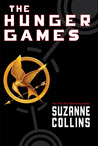
BOOK REVIEW: The Hunger Games by Suzanne Collins

The Hunger Games (The Hunger Games, #1)The Hunger Games by Suzanne Collins
My rating: 5 of 5 stars

Amazon page

At the risk of mortally offending fans of Lois Lowry’s “The Giver,” I’m going to introduce “The Hunger Games” as the book that launched a thousand young adult (YA) dystopias. Yes, I’m aware that Lowry’s book came out much earlier and was both a commercial and literary success. However, it came out so much earlier (i.e. 15 years earlier), and without noteworthy copycats. “Hunger Games” was immediately followed by a dystopian YA book and movie blitzkrieg. This might be a trick of timing, but I don’t think one can dismiss the Collin’s story and characters as features that spawned copies meh, bad, and ugly. (Which is to say, those who started their dystopian YA projects after reading “Hunger Games” were probably too late, but similar projects in the pipeline probably benefited enormously.)

I’m not holding all the horrible works of copycats against Collins. I think she made a tight and engaging story of a love triangle meets “The Running Man.” That’s my best summation, but to elaborate: A girl in a burgeoning relationship with a young man from her district is forced into a kill-or-be-killed futuristic version of gladiatorial games, during which she becomes attached to her fellow district tribute under the crucible of combat.

The main characters are suitably likable and flawed. Each of the main characters is in some regards a font of virtue with a tragic weakness. The lead, Katniss Everdeen, sacrifices by volunteering take her little sister’s place in the games, but she also strings along the two love interests and isn’t above the cold calculation that survival requires. Her boyfriend from back home, Gale, turns out to be even more willing to do whatever it takes. The most virtuous of the leading characters, Peeta, may lack a dark side, but he’s also comparatively milquetoast–surviving only through charisma and the kindness of others.

If the leading characters feel true in their complexity, Collins takes a calculated risk by making a host of Capitol characters that are caricatures of humanity. They are over-the-top in their shallowness and narcissism. There are exceptions, but many of these characters seem like the worst of pre-teens trapped in the lives of adults. They are obsessed with meaningless things and are numb to consequences felt by others. I’m not sure why that would appeal to readers of YA fiction, but maybe kids who read look around at the kids that don’t and see people who look a lot like these Capitol caricatures. Mere speculation.

I held off reading this series for a while, but I must admit that I enjoyed all three of the books in the series (to varying degrees.) I’d recommend “The Hunger Games” for anyone who doesn’t get too bummed out by reading dystopian fiction. It’s fast-paced and highly readable.

View all my reviews

BOOK REVIEW: Good Omens by Terry Pratchett & Neil Gaiman

Good Omens: The Nice and Accurate Prophecies of Agnes Nutter, WitchGood Omens: The Nice and Accurate Prophecies of Agnes Nutter, Witch by Terry Pratchett
My rating: 5 of 5 stars

Amazon page

Nature or nurture? That’s the question at the core of this funny take on the coming of the apocalypse, written by two masters of humorous speculative fiction—the late Terry Pratchett and Neil Gaiman. The end of days is coming. What if the Antichrist responsible for seeing it through had been switched at the hospital and was raised as a normal kid? Would he be evil enough? If not, how would the apocalypse play out? After a chapter that shows the reader the mix up at the hospital, the bulk of the book takes place over a few days that are supposed to be the last few days of humanity.

There’s an extensive cast of characters including the “gang” of Adam the anti-Christ, the four horse-persons of the apocalypse, angels and demons, witches and witch-hunters, and other sundry characters. However, the characters that most carry the tone and message of the book are Crowley (a demon) and Aziraphale (an angel.) With these two, the authors inject some Taoism into an otherwise Biblical world. That is to say, pure evil and pure good are rarities; there’s always a bit of good amid the bad, and vice versa. Aziraphale can be grumpy, and Crowley’s proclivity to be mischievous has its limits. Being in similar positions, the two bond as low-level managers working for Coke and Pepsi might get on because they face similar demands and have similar complaints about management.

Running through the book are mentions of a book called, “The Nice and Accurate Prophecies of Agnes Nutter, Witch.” This witch’s prophecies are quite unusual in that they are invariably correct, and yet are specific. That is, the prophecies aren’t “right” in the sense that astrologers are often “right” by making vague statements that offer no disprovable propositions. This might lead one to believe that the book would be a marvelous guide for making predictions. However, there is still the issue of having been written centuries ago. Items like automobiles and cellphones, that play a major role in life today, were unfathomable. Furthermore, it’s usually not clear who, exactly, a given prophecy applies to. In short, the medieval writing style results in the fact that the prophecies usually only make sense after the fact.

I’d recommend this book for readers of humorous speculative fiction.

View all my reviews

BOOK REVIEW: The Yoga of Max’s Discontent by Karan Bajaj

The Yoga of Max's DiscontentThe Yoga of Max’s Discontent by Karan Bajaj
My rating: 4 of 5 stars

Amazon page

Max is a making a good living in New York City, but feels an inexplicable void that leads him to give it all up to travel to India in search of wisdom. This novel is a hero’s journey in which the quest isn’t for adventure (not in the usual sense) but for insight into his mind and a path to bliss. Along the way he finds a teacher and is assisted by others, but must ultimately find his own path. As is appropriate to such a quest, he faces hurdles within and without and it’s not always clear whether he will find what he’s searching for—or even whether it exists.

This book kept me reading. It had humor (particularly in the first part) and maintained awareness that it was a novel throughout. What I mean by the latter statement is that there is temptation for books that deal in spirituality to devolve into a muddle between story and self-help book. However, I think the author avoids that error and keeps advancing the story in a readable fashion. The descriptions of yogic practices don’t bog down the story. Those experienced with yoga will breeze right through said descriptions and know what’s happening, and those without such knowledge won’t lose much by grazing over such segments.

The book consists of 38 chapters divided into three parts. The first part covers the period during which Max moves from the US to India and seeks out a teacher. The second part describes his time studying yoga in a south Indian ashram. The final part is the period after which he’s achieved enlightenment, which he spends in the Himalayas.

I found the first two parts to the most interesting and enjoyable. The first part has all the humor and emotional turmoil one would expect from a well-developed and relatable human character. The descriptions of an austere life amid the harsh landscape of a south Indian ashram that comprise the second part make for a visceral read. Where the third part falls flat for me is that supernatural abilities are introduced, and that makes it more difficult to care about Max anymore. It’s a problem inherent in writing this type of story. While Max becomes wiser in the second section, that part doesn’t fall so flat because the life he’s living is so challenging. It’s certainly not that Max’s life is easy when he moves to the Himalayas, but by then he can speak languages he never learned and create sparks with his mind and as far as the reader knows he may be able to leap tall buildings in a single bound and other superman type magic. I suspect the author was aware of the risk of this because he backs away from having Max start a fire with his mind early in the third part and the last part unfolds much more quickly.

I’d recommend this book for anyone who’s interested in a story about personal transformation. Those who’ve spent time in India will find much that resonates and those who are considering (or curious about) such a quest will glean many insights from this book.

View all my reviews

BOOK REVIEWS: The Things They Carried by Tim O’Brien

The Things They CarriedThe Things They Carried by Tim O’Brien
My rating: 5 of 5 stars

Amazon page

It’s called a novel, but it reads like a collection of war stories and essays about being an American soldier in the Vietnam War. That’s not a criticism. In fact, it’s part of the brilliance of this book. If it were thoroughly plotted, it might not feel so authentic. As war is disjointed, so is O’Brien’s book. Some of the chapters are tiny and some are lengthy. Some read more like essays than fiction, and others are clearly fictitious.

When I say that “some are clearly fictitious,” there’s always a doubt that it might just be a true story–because war is just that absurd. An example that springs to mind is one of the most engaging pieces in the work. It’s called “Sweetheart of Song Tra Bong,” and it’s about a wholesome, young girlfriend to one of the soldiers who [improbably] comes to live in the camp. The girl acclimates to the war, and soon she is going out on patrol–not with the ordinary infantry soldiers, but during the night with the Green Berets. Perhaps the moral is that some people are made for war, and it’s never who you’d suspect. As I describe it, the premise may sound ridiculous, but the way O’Brien presents it as a story told by a Rat Kiley–a fellow infantryman known to exaggerate—it feels as though there is something true, no matter how fictitious the story might be. Before one reads “Sweetheart of Song Tra Bong” one has been primed by a chapter entitled “How to Tell a True War Story,” which tells one that truth and falsehood aren’t so clear in the bizarre world of war.

There are a couple of chapters outside the period during which O’Brien (the character, who may or may not be the same as the author) is actively in an infantry unit. One early chapter describes his near attempt at draft dodging, and another talks of his time stationed at the rear after being injured. Both of these chapters offer an interesting twist in the scheme of the book overall. We find O’Brien to be a fairly typical infantry soldier, and it seems hard to reconcile this with his floating in a canoe and narrowly deciding not to make a swim for the Canadian shoreline. However, what is odder still is realizing how distraught he is to be pulled out of his unit, particularly when he realizes that he has become an outsider and the [then rookie] medic who botched his treatment is now in the in-group. This is one of the many unusual aspects of combatant psychology that comes into play in the book, along with O’Brien’s description of how devastating it was to kill.

There are 21 chapters to the book. As I said, they run a gamut, but at all times keep one reading. It’s the shortest of the Vietnam novels I’ve read—I think. When I think of works like “Matterhorn” and “The 13th Valley,” there seems to be something hard to convey concisely about the Vietnam War, but O’Brien nails it with his unconventional novel. O’Brien also uses repetition masterfully. This can be seen in the title chapter “The Things They Carried,” which describes the many things carried by an infantry soldier—both the physical items they carried on patrol and the psychological and emotional things they carried after the war. It’s a risky approach that pays off well.

I’d recommend this book for anyone—at least anyone who can stomach war stories.

View all my reviews

BOOK REVIEW: Burmese Days by George Orwell

Burmese DaysBurmese Days by George Orwell
My rating: 5 of 5 stars

Amazon page

Orwell’s novel is about the ugly face of empire. It takes place in a Burma that was administered by the British as part of their Indian colony—but it’s in the waning days of the Empire, much to the chagrin of the entitled and chauvinistic European characters of the book. Most of the characters are shockingly racist and life abroad hasn’t broadened their thinking in any discernible way. The notable exception is the lead character, John Flory, whose best friend is Dr. Veraswami (an Indian medical doctor and government official) and who is unique among the British for being able to see the native ways as anything other than primitive and preposterous.

However, the hero is deeply flawed. Flory is a coward, and in the early pages of the novel is unwilling to support the nomination of his good friend Dr. Veraswami for membership to the expat’s club because many of its more vociferous members will be damned before they admit a brown person. Flory is also a bit morally loose for the taste of his early post-Victorian comrades. He has a birthmark that he’s constantly trying to conceal, and whose presence we are led to believe is crucial to his lack of confidence. While the main intrigue is provided by a plot by an unsavory Burmese official named U Po Kyin to undermine Dr. Veraswami and bolster his own stock among the whites, it’s Flory’s story that we are following. The reader hopes that Flory will develop the confidence needed to rise to the occasion—he being the only likable person in the cast (except perhaps Dr. Veraswami, depending upon how put off one is by the Indian doctor’s borderline Uncle Tom-ish obsequiousness.) Flory’s relationship with a young woman plays an important role in his story and sometimes it seems she may spur him to heights while at other times she looks to be his downfall. Flory’s conundrum is that the more virtuously he behaves, the more a target is painted on his back.

While the book is set almost a century ago, I found that it has something to say today. While the times have changed and the Empire is long dead, there are times that the long shadow of this period can still be seen in the current era.

I’d recommend this book for readers of historical fiction and particularly those interested in the past and present of areas under colonial rule. Orwell builds interesting (if often despicable) characters and the book has a well-developed and interesting narrative arc.

View all my reviews

BOOK REVIEW: And Another Thing by Eoin Colfer

And Another Thing... (Hitchhiker's Guide to the Galaxy, #6)And Another Thing… by Eoin Colfer
My rating: 3 of 5 stars

Amazon page

The Earth is about to be destroyed, again. To save it, Zaphod Beeblebrox and friends need weave together a web of improbable conditions including getting Bow Wowbagger–the immortal alien whose pastime is insulting every person in the universe—to take him to Asgard so that he can get Thor to “dissuade” the tirelessly bureaucratic Vogons. Fortunately, the possibility that a genuine god might prove up to the task of smiting the immortal insult-slinger once-and-for-all is enough to gain his compliance. Thor, on the other hand, will take some convincing after Zaphod’s high jinx resulted in the mighty god’s abject humiliation.

Facing precarious business conditions, the publishing industry is reluctant to let anything as trivial as the death of a popular author derail the gravy train of a successful series. James Patterson, having proven that an author’s involvement can be an inconsequential factor in the selling of books, paved the way for wave of books written by authors who who’ve passed on (e.g. Eric Van Lustbader has already written three times as many “Bourne” novels as Robert Ludlum, and a new author is taking on the “Girl With the Dragon Tattoo” series that was immensely popular a few years back.) The problem is that not all novels are James Patterson’s formulaic “Alex Cross” crime novels; some writers have a unique voice—if not a genius. Some authors do matter.

It’s hard to imagine a better example of an author who mattered to the success of his books than Douglas Adams. It’s not that no one could be as funny as Adams, but rather that his brand of funny isn’t so easily to emulate. This is the nature of humor. Consider stand-up comedians. Among them there are some who could be fed material written by anyone about anything and they would be funny in the same degree (for good or bad.) However, there are others whose funniness is tied to their voice and the material that they either developed or molded to their peculiar nature. Adams had a peculiar nature.

It seems to me that there are two possible outcomes for someone trying to emulate Douglas Adams. The first is that they try to be original, but copy the style of Adams. That book seems like it would be impossible to make worthy of more than one star. The other possibility is for the author to use Adam’s own tropes and ideas to provide the humor and then to stick heavily to Adam’s original material with respect to story. Such a book would be derivative in the highest degree, but might not suck entirely. The best I could rate such a work would be mediocre, which is where I think “And Another Thing” is. It’s not that Colfer isn’t a good writer or a sharp guy; it’s that he took on a task that was doomed. Perhaps, I should say kudos to him for challenging himself to such a daunting task.

Personally, I think H2G2 should have been allowed to be laid to rest. (Frankly, having read all five of the original series books, I thought the stories began to drag as the series progressed relative to its original greatness. In other words, I’m not sure whether Adams, himself, could have added anything worthy to franchise.) However, having said all this, I must admit that I would’ve found this book an enjoyable read if I didn’t know that the best of it was just the result of standing on the shoulders of a giant.

Read it or don’t. It’s readable, enjoyable, derivative, and utterly unnecessary in equal proportions.

View all my reviews

BOOK REVIEW: Captain America: Civil War by Ed Brubaker

Civil War: Captain AmericaCivil War: Captain America by Ed Brubaker
My rating: 3 of 5 stars

Amazon Page

Captain America has gone rogue. In the wake of the passing of a law that requires heroes to be registered and regulated, Steve Rogers (a.k.a. Captain America) leads a resistance movement. The arc conveyed in this four-book collection tells a story of the resistance at once battling S.H.E.I.L.D. Cape-Killers on the one hand and a HYDRA plot on the other. It should be noted that it’s at least as much a Winter Soldier collection as a Captain America one. In fact, the third book in the collection is the only one in which Steve Rogers / Captain America can be said to be the lead.

The books included are: “Captain America #22 [Civil War / The Drums of War, pt. 1],” “Captain America #23 [Civil War / The Drums of War, pt. 2],” “Captain America #24 [Civil War / The Drums of War, pt. 3],” and “Winter Soldier #1: Winter Kills.”

The first issue features Sharon Carter meeting with a S.H.E.I.L.D. psychiatrist, or so she thinks. Carter is the agency’s liaison with Captain America, and has developed a close relationship with him. While S.H.E.I.L.D. is trying to get her to exploit the relationship to bring in the Captain, others are manipulating Carter for their own nefarious purposes.

In the next issue, Bucky Barnes (i.e. the Winter Soldier) breaks into a secret facility at the behest of a disembodied Nick Fury in order tap into a fake robotic Nick Fury. Next, Winter Soldier takes on a group of “Cape Killers” (i.e. agents of the government working to bring down Captain America’s resistance forces using Tony Stark technology) in order to capture some of their technology.

In the third issue, Captain America breaks into a HYDRA facility on a mission that goes bad. When he’s discovered by Cape Killers, he’s “rescued” by Sharon Carter. During his infiltration, he learns something that will help him in his mission to defeat the Red Skull, if only he can succeed before the Red Skull destroys him.

In the final issue, the Winter Soldier is sent by a disembodied Nick Fury to interrupt a group of Young Avengers who think they are about to attack one of Tony Stark’s facilities when, in fact, it’s a HYDRA base. After a brief skirmish, the Winter Soldier succeeds in talking these young heroes out of their mission, only to be discovered. As a result, Bucky and his new group of young comrades are forced to take down the facility. The setting of the story on Christmas Eve, with flash backs to Christmas Eve 1944, are used to make the story more poignant.

As a collection, I didn’t care for this book. It didn’t provide a satisfying narrative arc. Though I’d say the individual issues were worth reading, and if the collection went a little further, it’d have something. But nothing is resolved at the end, and the jumping between Captain America and the Winter Soldier stories doesn’t provide the makings of character development. It’s a series of missions with varying objectives. The collection does offer quite a bit of action, much more than the “Iron Man: Civil War” collection that I recently reviewed. However, it doesn’t provide nearly as much of a story as that book, and is not as artfully grouped as the Iron Man collection. In summary, the tone setting and action are good, but it’s a collection of action that doesn’t go anywhere.

View all my reviews

BOOK REVIEW: Iron Man: Civil War by Brian Michael Bendis et. al.

Civil War: Iron ManCivil War: Iron Man by Brian Michael Bendis
My rating: 4 of 5 stars

Amazon page

With the “Captain America: Civil War” movie set to come out this year, one would have to be living under a rock to be unfamiliar with the basic premise of the Civil War story line. (Not that the movie will—or even can—follow the comic books exactly. But the gist is the same.” The government passes a Registration Act that would require superheroes to be registered, regulated, and trained. This splits the Marvel universe of heroes into two battling factions. (In the movies, it’s just the Avengers, but the comics include members of the Fantastic Four, X-men, etc.) One side, led by Tony Stark—a.k.a. Iron Man, supports the Registration Act. The other side, led by Steve Rogers—a.k.a. Captain America, staunchly opposes the new law. The four issues collected here offer insight into the mind of Tony Stark.

The four issues in this collection are: “Civil War: The Confession #1,” “Iron Man #13,” “Iron Man #14,” and “Iron Man / Captain America: Casualties of War #1.” Putting the issues in this order contributes to the somber tone of the storyline, as the chronological end of the events is put up front in the form of Stark’s confession. The start is a little like the very beginning of “Saving Private Ryan” (before the battle scene begins.) As with “Saving Private Ryan,” this opening does little to detract from the story and in fact builds immediate intrigue.

This isn’t the most action packed collection, but it is an emotional story line. Tony Stark is serious, somber, and sober (in both senses of the word.) This isn’t the cocky, witty playboy philanthropist one associates with Iron Man. It’s a man whose convictions are forcing him to fight his friends and comrades in arms. The irony of the situation is that Stark is certain the Registration Act is necessary because of people like him. In other words, if everybody was like his friend-turned-enemy Steve Rogers (i.e. a pinnacle of virtue) then the Act would be unnecessary.

There is some awkward expositional dialogue / monologuing in this book—a common problem among serial comic books. However, overall the story is engaging. If you want battle scenes, you may be disappointed, but this book makes one sympathize with Stark—even if you’ve previously thought him an arrogant douche.

View all my reviews

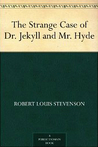
BOOK REVIEW: The Strange Case of Doctor Jekyll and Mister Hyde by Robert Louis Stevenson

The Strange Case of Dr. Jekyll and Mr. HydeThe Strange Case of Dr. Jekyll and Mr. Hyde by Robert Louis Stevenson
My rating: 4 of 5 stars

Amazon page

This novella has become more than just another Victorian sci-fi story. The central idea is a kernel that has been revisited in so many popular characters, perhaps most notably Marvel’s “Incredible Hulk.” The titular characters often feature in books, movies, and stories that use the Victorian literary world as their stomping grounds (e.g. “The League of Extraordinary Gentlemen” and “Van Helsing.”)

It’s hard to imagine that anyone doesn’t know the gist of this story. [Spoiler, if you’ve lived under a rock your entire life.] Dr. Jekyll succeeds in splitting off his dark side, and soon comes to regret it. Whereas Mr. Hyde is usually portrayed as gargantuan on film, in the book he’s dwarfish—representing only a part of the whole. It’s telling that it’s impossible to get to reading this book without knowing the twist from a million references to it in pop culture—e.g. the Looney Tunes cartoons.

Still it’s worth reading the original. It starts with a lawyer telling one of his friends a ghastly tale in which a vile, little man—Mr. Hyde–runs into a girl, and then stomps over her body as he makes his exit. The lawyer becomes concerned when he learns that his good friend and client, Doctor Jekyll, is leaving all his worldly possessions to the dastardly Hyde for reasons the lawyer cannot fathom. The book may not be action packed by today’s standards, but it does have good pacing and revelation of information. The descriptions of grotesquery are also gripping. The story is also told in a manner that is very different from how it would likely be told today, and that also makes for interesting reading. Furthermore, it’s short–less than 100 pages over 10 chapters.

I’d recommend this book for anyone who is interested in the classics of science fiction and speculative fiction.

View all my reviews

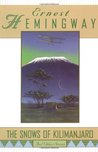
BOOK REVIEW: The Snows of Kilimanjaro and Other Stories by Ernest Hemingway

The Snows of Kilimanjaro and Other StoriesThe Snows of Kilimanjaro and Other Stories by Ernest Hemingway
My rating: 5 of 5 stars

Amazon page

This book collects ten pieces of short fiction penned by Hemingway. Each of them is a stand-alone short story; though there’s indication that they all take place in the same universe. Notably, the character Nick Adams recurs in four of the stories (“Fathers and Sons,” “In Another Country,” “The Killers,” and “A Way You’ll Never Be.”)

The first and last stories present intriguing similarities that make them interesting bookends to the collection. The first, and eponymous, story—“The Snows of Kilimanjaro”—follows the last hours of a man who is dying of gangrene from an infected wound he sustained on Mount Kilimanjaro. The dialogue pits a wife in denial against the man who seems resigned to the inevitability of his death. The last story, “The Short Happy Life of Francis Macomber” is also set in Africa and features a man and wife whose adventure goes awry. In this case the story begins with the man having been emasculated when he bolted in the face of a charging lion, and all in front of his harpy-esque wife. Francis Macomber manages to redeem himself only in the last seconds of his life.

Besides the aforementioned book-ending stories, among the most substantial and well-developed stories in the book include: “The Gambler, the Nun, and the Radio,” “The Killers,” and “Fifty Grand.” The first of these is about a gambler put in the hospital by a disgruntled competitor and the happenings in the hospital while he is on the ward. “The Killers” is about two hitmen who venture into a small town diner looking for a boxer who apparently owes someone money or decided not to take a dive. “Fifty Grand” is about an aging boxer who bets against himself (and will probably soon be in the same boat as the boxer in “The Killers.”)

There are a couple of stories that feel fragmentary, including: “A Clean, Well-Lighted Place” and “A Day’s Wait.”

This collection features the usual elements of Hemingway fiction, e.g. punchy and spare prose, artfully constructed dialogue, tales of manliness and inadequacy. It’s a short readable book of only about 150 pages.

The stories included are:

1.) The Snows of Kilimanjaro
2.) A Clean, Well-lighted Place
3.) A Day’s Weight
4.) The Gambler, the Nun, and the Radio
5.) Fathers and Sons
6.) In Another Country
7.) The Killers
8.) A Way You’ll Never Be
9.) Fifty Grand
10.) The Short Happy Life of Francis Macomber

I’d recommend this for readers of short fiction who haven’t gotten around to it yet.

View all my reviews