BOOK REVIEW: The Tempest by William Shakespeare

The TempestThe Tempest by William Shakespeare
My rating: 5 of 5 stars

Amazon page


The storm (i.e. tempest) in question takes place off a remote, desolate, and magical island upon which lives the usurped and exiled Duke of Milan, Prospero, and his daughter, Miranda. The reader realizes that the storm’s timing is too great a coincidence when it’s revealed that among those on a ship caught in the tempest is Antonio, the usurping Duke of Milan. The learned Prospero has developed some magic abilities and gained control over some of the island’s airy spirits — most notably Ariel — as well as the deformed monster / slave named Caliban. Caliban was the son of a witch who was previously in charge of the island, Sycorax. Under Sycorax’s rule, Ariel and the other spirits were imprisoned, so Ariel and the others are now in indentured servitude to Prospero.

The brilliant mind of Prospero has hatched a plot that isn’t all vengeance, but also intends to get his daughter a worthy husband in the form of Ferdinand, the son of the King of Naples. Both father (Alonso) and son (Ferdinand) are washed ashore after the apparent capsize of the ship, but Prospero sees to it that they are separated. The separation not only allows Ferdinand and Miranda to get acquainted, but also allows Alonso to be put through some trials to hasten his willingness to agree to the intended marriage. As Prospero is using Ariel to carry out his plot, under promise that he will free her, Caliban has joined with some drunken sailors and is plotting to kill Prospero so that he can be free of his bookish master. Needless to say, the crude scheme by the trio of Caliban, Stephano, and Trinculo is easily thwarted by Prospero and his spirit minions.

In the song, “Won’t Get Fooled Again” by The Who, there’re lines that say: “meet the old boss / same as the new boss.” This play focuses heavily on ideas of hostile take over, the inevitable mixed effects, and how tensions are created that will play out. Ariel has at least the promise of being better off — when she works off her debt to Prospero, that is. Caliban is worse off because he is no longer in the power lineage. Caliban’s partners in plotting see a chance to go from being minions aboard a ship to kings of a tiny dynasty on the island. There is also the theme of relinquishing power, and the difficulty of doing so.

Some fun facts about “The Tempest.” First, it’s believed to be Shakespeare’s last play (although evidence is insufficient for certainty.) Second, while Shakespeare’s plays are typically readily divided into three categories: tragedies, comedies, and histories, scholars are a bit divided about which category this play belongs. It’s sometimes categorized as a “tragicomedy” because of its mixed features.

With the storm-washed, rocky island as setting, and the supernatural happenings on the island, this is one of Shakespeare’s eeriest and most mind-bending works.

View all my reviews

BOOK REVIEW: Mr Penumbra’s 24-Hour Bookstore by Robin Sloan

Mr. Penumbra's 24-Hour Bookstore (Mr. Penumbra's 24-Hour Bookstore, #1)Mr. Penumbra’s 24-Hour Bookstore by Robin Sloan
My rating: 5 of 5 stars

Amazon page


The book’s lead, Clay Jannon, takes a job as night clerk at a 24-hour bookstore, having found himself jobless in the wake of a recession that sealed the fate of the tech startup for which he’d been working. The job is easy enough, but the workplace is an enigma. It attracts few paying customers, and mostly exists to serve a regular clientele who come in to borrow very old books that aren’t for sale. Working the night-shift, and with little real work to do, Jannon starts trying to make sense of the riddle of the bookstore, and ends up neck-deep in a world of secret societies and medieval encrypted codices.

The book is an entertaining read. There are certainly things about the story that are a little too easy, such as Jannon having a circle of friends that have the perfect set of resources and capabilities to carry out the story’s arc. This allows Clay to be presented as a scrappy underdog character, but he never has to be constrained by that status because he has a wealthy friend who will buy him anything he needs and a girlfriend from Google with the chops to gain him access to unlimited computing power. All that said, the book is more fantasy than strict realism, and so this isn’t really a problem for the reader who wants to lose him- or herself in an intriguing story. It’s also true that Clay is gregarious and likable and so one can imagine him easily building friendships – though, with a notable exception, he already has these friends before the story starts. But the characters are all distinct, and generate the desired state of liking or loathing.

[When I say “fantasy,” I should clarify that while there are hints about the possibility of the supernatural, readers don’t see real evidence of it. So, it’s realism in the sense that it’s a world limited by the same constraints as ours. However, it’s a world that features a secret society, The Unbroken Spine,” that stretches back almost to the Middle Ages, and which has been striving to decode a book produced by one of the earliest printers because they believe it may hold secrets of a supernatural nature. So, it feels like an urban fantasy / down the rabbit hole kind of story though, strictly speaking, it’s not.]

I enjoyed this book. The story is gripping even if it does feature some deus ex machina Hail Marys. The characters are likable and interesting. I’d recommend it for readers who like mystery and intrigue in the stories they read.

View all my reviews

BOOK REVIEW: Story of the Eye by Georges Bataille

Story of the EyeStory of the Eye by Georges Bataille
My rating: 4 of 5 stars

Amazon.com


This story follows a couple through a destructive series of events as they chase sexual hedonism. They aren’t a couple in the romantic sense so much as friends who share in common both intense sex drives and also a particular psychology. It’s a psychology commonly associated with rebellion against a repressive upbringing. This rebellion manifests both in a longing for perverse and taboo activities, and also in an urge to debauch the virtuous. This love of depravement is first seen in the pair’s actions with a conflicted girl of their own age, Marcelle, and in the climax and conclusion with a young priest in Seville. In yet a darker turn, the two also conflate violence and sexual arousal.

Character development is not particularly strong in this book, and without the requisite background, the actions of the unnamed male narrator and his companion, Simone, can seem hard to believe at times. (To be fair, the book is more surrealism than realism.) While lack of character development and character complexity are a common problem in erotic literature, this book is also smothered in Freudian belief about how strange sexual drives always and everywhere exist in the subconscious in a struggle to break free. In other words, Bataille may not have felt he needed to set up the reader for the bizarre behavior of the narrator and Simone because he saw the pair as not as unusual, but merely as how most people would behave if they were a bit braver and less inhibited.

Marcelle is the most multi-dimensional character. We see her on a teeter-totter that balances primal urges and constraining morality, or shame and abandon. But we don’t get much depth of her either because she is treated largely as a puppet or plaything for the lead characters.

The novel shares some tendencies in common with the works of Marquis de Sade, but it also displays some differences. The eroticizing of degrading virtuous characters is a theme that holds over. It might also seem that the involvement of a Catholic priest is a continuation of Sade’s philosophy as well. However, there’s a difference. In Sade’s work (and similar works of erotic political philosophy) the priests are lecherous and are villains in league with the aristocracy. Bataille’s priest is a man minding his own business, who would like to be virtuous, but the young priest just doesn’t have the inner strength in the face of a strong-willed debaucher.

From the discussion above and the comparison with the works of the Maquis de Sade, it should be clear that there is a great deal of graphic sexual activity and even a little bit of graphic violence in this book. For readers who aren’t disturbed by that, and who are amenable to a bit of bizarre and surreal activity, the book is intriguing both as a story and for its psychological insight. If you read horror, and aren’t disturbed by fetish sexual activity, you’ll probably enjoy this book.

View all my reviews

BOOK REVIEW: Milkman by Anna Burns

MilkmanMilkman by Anna Burns
My rating: 5 of 5 stars

Amazon page


This quirky novel is about a girl struggling to stay out of the limelight in a place where a socio-cultural schism leads to the most mundane happenings becoming a source of intrigue and speculation. The reader is never told that the aforementioned location is Belfast, Northern Ireland. However, between reading the author’s bio-blurb and having been around for the news stories from that city a few decades ago, it’s easy enough to draw that conclusion.

There’s a lot readers aren’t told in this novel. For example, we don’t learn anyone’s proper name. The characters are defined by their relationship to the protagonist (e.g. “ma,” “may-be boyfriend,” or “wee sisters”), his or her profession (e.g. “real milkman” the qualifier distinguishing said individual from the titular character [who is not nor never was – to anyone’s knowledge – an actual milkman],) or a peculiarity of said character (e.g. “tablets girl” or “nuclear boy.”) There is actually a character named “Somebody McSomebody.” One can only speculate about the author’s choice to not name the characters. My guess is that it reflects an attempt to emphasize a craving for anonymity and an avoidance of being free with detail.

The titular Milkman is a mysterious militant who takes an interest in the lead character. While the narrating lead tells us that she is definitely not interested in the Milkman, the community soon concludes that she is in a covert relationship with him. While the lead wants to keep her business to herself, there are a couple of factors working against her. First, one of her idiosyncratic behaviors – which one gets the impression she engages in to get a break from people – is walking home while reading, rather than taking the bus. This draws unwanted attention, perhaps ironically as one presumes she does this thinking that she’s slipping out of the public awareness. A second factor is that, while we are never told as much, one gets the impression that the lead is a beautiful young woman. Of course, the biggest factor is that everybody is watching everybody else like a hawk, attempting to find faults in what I call tribe signaling behavior (those actions – e.g. FaceBook posts – that serve to tell people who one is part of some group A and definitely not part of that vile group B.) For example, may-be boyfriend wins a Bentley turbo-charger and there is furor over the fact that said product usually has a little British flag on them, putting may-be boyfriend in a traitorous camp.

In one sense, this is a book about life in a place that has a specific socio-cultural fault line, specifically Northern Ireland. However, there is a lot in the story that is relevant to readers today, as we see sharp politico-cultural divides forming in many places in the world – certainly, for example, in the US. The book will make one sympathetic to the woes of those trying to opt out of tribe-signaling in a community in which to be unaffiliated is to be relegated to the lowest status imaginable.

I would highly recommend this book for all readers. Its humorous, albeit with the dark undertone of conflict ever-present. It’s readable and the reader will find themselves carrying about the plight of the lead.

View all my reviews

5 Literary Classics That Could Have Used an Editor

I’ve got nothing against long novels. Some of my best friends are long novels. Sometimes a book either needs to be long, or — at least — manages to be a joy to read despite being long. However, I’m arguing here that there are some novels that could afford to have a little taken off the top.


5.) Don Quixote by Miguel de Cervantes: This is a funny and clever novel, but the gag goes on a bit too far. We don’t need to see every man, woman, and child in Spain kick the man of La Mancha’s butt because he hallucinates that each is a brigand or neer-do-well while he imagines himself a knight.


4.) Tale of the Genji by Lady Murasaki: To be fair, some consider this to be the first novel, and so it’s a little unreasonable to expect perfection of style and readability. (Not to mention that its target audience of 11th century Japanese courtiers are all long dead.)


3.) Atlas Shrugged by Ayn Rand: Irrespective of how one feels about Rand’s work as a political statement, we should all be able to agree that it doesn’t take 1,100+ pages to show us a world where entrepreneurs and capitalists go on strike.


2.) Moby Dick by Herman Melville: I realize that many consider this to be the great American novel, but I knew far too much about ambergris and whale bile ducts when I finished reading it… just sayin’.


1.) Ulysses by James Joyce: I’m aware of the stunningly beautiful language, but almost 800 pages to cover a single day in the life of one guy?

5 Readable Philosophical Novels

There are many philosophical novels in existence. However, many of them are difficult reads either because they are complex in language or concepts (e.g. “Thus Spoke Zarathustra” or “Faust“) or because — while readily understandable — they were badly in need of an editor (e.g. “Atlas Shrugged.”) Here are a few novels with interesting philosophical lessons that aren’t killers to read.


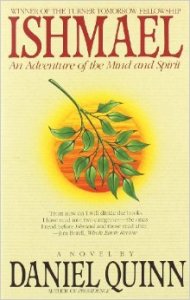
5.) Ishmael by Daniel Quinn: A man answers an ad that begins: “Teacher seeks pupil.” The teacher he discovers and the lessons he is taught aren’t what he bargained for. The book considers the impact of modern man versus aboriginal people, and the two groups’ respective place in the world.


4.) Brave New World by Aldous Huxley: In a futuristic world, people are controlled and manipulated by genetic engineering, classical conditioning, sleep-teaching, not to mention heaping helpings of drugs and promiscuity. The book considers the role of technology in humanity’s trajectory, and it contrasts Orwell’s bleak vision of dystopian governance with one that is every bit as manipulatory — if a great deal more pleasant in appearance.


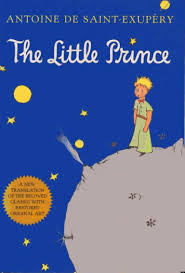
3.) The Little Prince by Antoine de Saint-Exupéry: A young prince from a far-away land comes to Earth, and shows how wise the young can be and how absurd adults often are.


2.) Steppenwolf by Hermann Hesse: A man who feels out of step with humanity faces events that force him to reconsider what it means to be a man in the world of men.


1.) The Journeys of Socrates by Dan Millman: The prequel to Millman’s acclaimed book “The Way of the Peaceful Warrior.” It blends Eastern and Western philosophy in the training of a warrior.

BOOK REVIEW: The Unlimited Dream Company by J.G. Ballard

The Unlimited Dream CompanyThe Unlimited Dream Company by J.G. Ballard
My rating: 5 of 5 stars

Amazon page


The protagonist, Blake, crashes a stolen small aircraft into the Thames River beside the sleepy English town of Shepperton. In short order, Blake discovers that he cannot escape Shepperton and gradually he comes to realize that he can do anything else that he can imagine. This gradual discovery is like a dream becoming lucid. At first the world seems right even though there is plenty that is odd about it, as is the case when one is dreaming and oddities and anomalies don’t trigger a response as they do when one is conscious. Despite the fact that Ballard captures the surrealism of the dream state well, and even uses the word “dream” in the title, the reader is never sure what is going on exactly until the book’s conclusion. Is Blake dreaming everything? (including the plane theft?) Or, was he knocked unconscious in the crash? Or, is something supernatural going on that is dreamlike, but not a dream. There are a cast of townsfolk who sometimes behave oddly, but who seem like they have enough depth to be more than projections of Blake’s subconscious. The unfolding of the story involves the surreal nature of Shepperton becoming more obvious as the reader — little-by-little — gets a better idea of what is going on there.

Readers with a prudish streak should be aware that references to sex are ubiquitous. It’s not that there are a lot of graphic sex scenes, but – as in a dream state, the subconscious mind is at the fore and primal urges take center-stage. Blake imagines having sexual relations with everyone in the sleepy town. He doesn’t, but he speculates about it. There is also symbolic sexual reference – e.g. flowers growing from his seed. Frequent references are made to Blake being naked, but the townsfolk not realizing it. There’s generally not graphic description, this recurring device primarily serves as a means to show how the other people in the story aren’t lucid, because Blake’s nudity doesn’t set off their weird-o-meters as it would in waking consciousness.

I enjoyed this book, and, if you like surreal and trippy stories, you should give it a read.

View all my reviews

5 of My Favorite Trippy, Mind-bending Books

I love books that send one down the rabbit hole. Here are a few of my favorites. [Note: as I was putting this post together, I realized that I’d left out Philip K. Dick entirely. That is a glaring oversight as almost any of his books could make this list, but I’m too lazy to make a bigger list right now, so you’ll have to wait for Part II.]


5.) The Unlimited Dream Company by J.G. Ballard: A man crashes a small aircraft into the Thames, and after struggling up from the wreckage he discovers he can’t leave the town of Shepperton — though he can do just about anything else he likes.


4.) The Lathe of Heaven by Ursala K. Le Guin: George Orr believes his dreams shape reality. At first, he’s taken for a crazy man, but then his therapist begins to wonder.


3.) Hard-Boiled Wonderland and the End of the World by Haruki Murakami: A man hired for his skill at using his mind as an unbreakable encryption device, finds out that the job that seemed too good to be true, was.


2.) The Master and Margarita by Mikhail Bulgakov: The devil comes to Moscow with his  rogue’s gallery, throws the city into disarray, and it’s all tied to a novel based on the life of Pontius Pilate.


1.) Alice in Wonderland  & Through the Looking Glass by Lewis Carroll: Tumbling down a rabbit hole or walking through a mirror, Alice is transported to a whimsical land where everything is strange and exhilarating.

Let me know of any oversights [besides the aforementioned PKD.]

BOOK REVIEW: The Velderet by Cecilia Tan

The VelderetThe Velderet by Cecilia Tan
My rating: 4 of 5 stars

Amazon page


The dual protagonists of this novel, Merin and Kobi, live in a society in which equality is the supreme value, and in which sexual freedom is nearly complete (except where it bumps up against the aforementioned value.) For many, this would be a utopia, but the problem for Merin and Kobi is that they crave subjugation. That might seem an unusual desire, but one need not look far to see how urges develop for little apparent reason other than a person being told that such activities are prohibited or taboo. Merin is a straight female serving as legislative worker bee. Kobi is a bisexual male who bartends at a leisure club that not only serves drinks but facilitates virtual reality cyber-sex. The two are roommates (part of equality is a pairing of unattached without consideration of gender or sexual orientation), and one evening in a buzz-fed stupor Kobi admits that he would like to know what it’s like to be enslaved.

This story in which these two try to figure out how to develop an underground community of those who revel in power dynamics as part of sexual activities, plays out in a larger geo-political and historical context. It turns out that the reason that this society (i.e. the Belledonians) is so keen on equality in all activities is that they were once a slave-owning empire, and they basically killed off another race of people who they’d enslaved (i.e. the Gehrish.) So, it’s a guilt-driven policy. As the individual level actions play out, this society is in trade and security negotiations with the Kylarans, a more technologically advanced society that still practices slavery. There is a fear that the Kylarans might decide not to trade as equals but to colonize the Belldonians.

The resolution of the story brings this sadomasochism fight club story line into contact with the larger geo-political story, and that raises the stakes and presents one with varying philosophical stances on the dominant – submissive relationship. While the Belledonians had brutally oppressed the race they subjugated (i.e. the Gehrish,) the Kylarans have a much more traditional, protocol-driven, and complex approach to these power dynamic driven relations. For example, leaders must spend time as slaves before they can progress upward in the chain of command.

As I hope has been made clear, this book combines erotica with sci-fi and sex scenes are ubiquitous and kinky. Readers who are squeamish about such matter will probably want to steer clear. However, if one isn’t disturbed by sex, and sexual power play, this story is readable and intriguing. I would recommend it for those who are intrigued by stories at the nexus of science fiction and erotica.

View all my reviews

BOOK REVIEW: Stories of Your Life and Others by Ted Chiang

Stories of Your Life and OthersStories of Your Life and Others by Ted Chiang
My rating: 5 of 5 stars

Amazon page


This collection of eight smart short stories is most well-known for the eponymous story that served as the basis for the movie “Arrival.” The stories are sci-fi, but in the broadest sense of that word. “Speculative fiction” is probably a more apt descriptor. At any rate, the pieces all have nerd appeal and offer philosophical food-for-thought as well as entertaining stories.

1.) “Tower of Babylon:” The Biblical myth re-imagined. What if god didn’t sabotage construction by introducing varying languages and spreading humanity to the four winds? What if, instead, the tower did eventually reach to the heavens?

2.) “Understand:” A man who suffered severe brain damage due to a fall through thin ice, is put on an experimental medicine that begins to stimulate neurogenesis on a massive scale. The protagonist becomes preternaturally intelligent, realizes that such super-intelligence is considered a threat, but is able to keep one step ahead of the ordinary minds who pursue him. That is until he runs into another patient who had a similar accident and treatment. A thinking man’s “Lucy” (referring to the Scarlett Johansson movie), this piece considers the question of how different people would use such a gift, and whether differences could be reconciled.

3.) “Division by Zero:” If a scholar’s life was invested in an idea or way of thinking about the world, but then the scholar proved that that way was in error, might it cause a descent into madness and even a crumbling of one’s world?

4.) “Story of Your Life:” This is the story that the Amy Adams’ movie “Arrival” is based upon. The protagonist is a linguist charged with helping to communicate with a newly arrived alien species that has a very different approach to language. In the process of learning their language and interacting with them, she begins to see the world as they do – time being an illusion. Stories from her daughter’s life, which the lead character has seen in full before conception, are interspersed with the description of her work with the alien language.

5.) “Seventy-Two Letters:” This is a golem story. In this world, names have the power to animate matter and golems can be created. (A Golem is a living being created from inanimate matter; the idea comes from Jewish folklore.) The story ads a layer to the question of what would be created if humans could make a simulacrum of themselves – e.g. Frankenstein’s Monster style – and asks the reader to consider what would be the reaction to the dawn of an era in which the golems might be able to make themselves.

6.) “The Evolution of Human Science:” This is one of the shorter pieces and is also the least story-centric entry. It considers philosophical questions around the development of meta-humans.

7.) “Hell is the Absence of God:” This story is also not as story oriented as most of the others, but it is thought-provoking. It revolves around a support group for people who’ve lost significant others in tragedy and asks one to consider the various approaches to belief in the wake of tragedy.

8.) “Liking What You See: A Documentary:” This clever piece imagines a technology that prevents wearers from being able to recognized beauty (and ugliness as well.) As the subtitle suggests, it’s presented as if it were a documentary that is following a college’s debate over whether to require the student body to use said technology.

I enjoyed this collection of stories. “Understand,” “Stories of Your Life,” and “Seventy-two Letters” are gripping stories, and all eight are thought-provoking and well-written. I’d highly recommend this book for readers of short fiction, particularly speculative fiction.

View all my reviews