BOOK REVIEW: Dogs of War by Adrian Tchaikovsky

Dogs of WarDogs of War by Adrian Tchaikovsky
My rating: 5 of 5 stars

Amazon page


What will it mean when there are other entities that (who) are intelligent on a human scale (e.g. master of technology, complex planning, and long-term planning?) This is a question that science fiction has addressed many times and in many ways. Tchaikovsky’s approach is interesting because it doesn’t just ask what if one produced a computer intelligence or if another biological species became (human-style) intelligent, but – instead – it imagines an entity that combines human and animal intelligence with computer capabilities and protocols?

The protagonist, Rex, is a supersized dog-man optimized and super-powered for warfighting. Rex’s general intelligence is about at an elementary school level, but his instincts, programming, and capacity to process and analyze complex and abundant information make him much more competent than that level of intelligence would suggest. The dog-part of Rex has the simple animal instincts that make dogs both loving pets and devastating predators, with both capacities rolled into one (even if one side often remains latent.) His human capacities include a limited ability to reason and – crucially – the ability to communicate via language. The computer part of Rex, besides giving him the ability to process and respond to multiple information streams at once effectively, keeps him in check by creating a hierarchy of command and by giving feedback by way of a crude proto-emotional system (i.e. feelings of being a “good dog” or “bad dog.”)

Rex is the leader of a squad of creatures of various speciation. There is a giant bear named Honey, who serves as the team’s heavy weapons platform. She’s easy to see but packs a wallop in weapons and strength. There is a reptilian member called “Dragon” that genetically shares certain lizard characteristics. Dragon is a sniper. He is stealthy, and exists to take out particularly designated targets. Staying hidden is essential because Dragon doesn’t have the fantastic durability of Rex or Honey. The final team member is Bees, a swarm intelligence of bees. Bees can go anywhere by flight, can disperse or gather as needed, and can sting with various styles of poison. The individual bees of Bees are fragile. However, losing a few here and there has little effect on Bees capacity, but its intelligence does degrade with continued loses, and the ability to act and think as a unit disappears altogether at some level of loss.

The antagonist throughout most of the book is a man named Murray, who is an overzealous military contractor carrying out a brutal war in Central America using teams like Rex’s, but also laying waste to the Geneva and Chemical Weapons Conventions as he sees fit. (The book imagines a world in which the United Nations and global corporations are strong, but national governments are weak – at least relatively.) To cover up his war crimes, Murray kills a technician named Hartnell who is beloved by Rex (though below Murray – his “Master” – in Rex’s hierarchy,) but not before Hartnell can jettison Rex’s command hierarchy. This puts Rex in a rudderless position of having to make his own decisions. While the hierarchy is gone, Rex still has canine instincts and gets signals from his feedback chip. He doesn’t have to follow orders, though it’s still his inclination to do so. Two classes of individuals sit easy with Rex. Friends are individuals that one protects at any cost. Enemies are individuals that one destroys at any cost. Rex has sufficient intelligence to recognize that not everyone fits smoothly into one of these classes, but he doesn’t know how to respond to such individuals.

After Rex and team go “off-leash,” he is adrift in a world he doesn’t quite understand and there are events going on behind the scenes that he can’t fathom. Left entirely to his own devices, Rex might yield to his instinct to try to return to his Master (Murray) and try to get back to life as usual. However, while in command, Rex has gotten used to taking the advice of Honey because he realizes that she is more intelligent than he. (What he doesn’t recognize is that Honey was accidentally over-engineered and is super-intelligent – i.e. smarter than the smartest humans. She is quietly using that intelligence in the background, including finding allies.) While Rex is an autonomous decision maker, he isn’t at ease with this autonomy, and finds himself processing conflicting arguments to make challenging moral decisions throughout the book. Using the combination of his canine instinct to protect friends and fight enemies and his (albeit limited) human capacity to draw conclusions based on information, Rex tends to make satisfying decisions. Though the author does show Rex making cringe-worthy decisions as well. This way the reader feels the stakes, and recognizes that Rex’s mish-mash of instinct, thought, and programming could lead to a poor moral choice at any moment. (If this internal conflict seems complicated, it’s not so much different from the potential wars between the reptilian, mammalian, and human [prefrontal cortex] brains that we see in human beings.)

I enjoyed this book tremendously. I found it hard to put down. It does have intense scenes of violence, but that raises the stakes. Because, the book also asks an interesting question about what “someone” like Rex would be considered and what the legal and moral response to it would be. Is Rex a person, with all the the rights and responsibilities of that condition? Is he an animal that faces the same logic we apply to dogs (i.e. no animal cruelty allowed, but dogs that bite must be put down?) Or is he something else, and what does that mean? Can Rex be decommissioned like a bomb or a tank? What is the legal and moral obligation to an intelligent creature that can be [but isn’t necessarily] a killing machine? Is it right to create an intelligent entity and then install a command hierarchy such that it is a slave to the wishes of others?

If you enjoy science fiction, I believe you’ll find this book intense and entertaining.

View all my reviews

BOOK REVIEW: Dream Machine by Su-Yee Lin

Dream Machine (A Short Story) (Kindle Single)Dream Machine (A Short Story) by Su-Yee Lin
My rating: 5 of 5 stars

Amazon page


This surreal short story is a reprint from “Day One” magazine that is available as a Kindle Single. The story is about a factory in an industrial part of Shanghai that seems to make metal objects / shapes, the purpose of which no one seems to understand. The protagonist is – at the start of the the story – the newest of the half-dozen employees who work at the plant. The story has a sparse feeling that ranges from the fact that the characters are designated only with a single letter to the fact that we really don’t get much indication of the broad and bustling city of Shanghai in which the story is supposedly set.

It isn’t easy to convey a world that isn’t quite right – seemingly like the world we are familiar with, but just a little off. I thought the author did a good job of this.

I enjoyed this story immensely. I thought the author used strategic ambiguity nicely. There are a few ways I believe one could reasonably interpret this story. If you are the kind that needs to have iron-clad clarity, that might be a bit aggravating. [If you’ve seen the Christopher Nolan movie “Inception,” and you liked that it left an open ending, this story is for you. If you insist that there is no ambiguity to the ending and that the top definitely toppled or didn’t, you might not enjoy it as much.]

View all my reviews

BOOK REVIEW: The Satanic Verses by Salman Rushdie

The Satanic VersesThe Satanic Verses by Salman Rushdie
My rating: 4 of 5 stars

Amazon page


Anyone who’s ever written for public consumption knows that having one’s writing despised is not the worst of fates. While it might be preferable to have a work loved than loathed, it’s far better for it to be loathed than to be greeted with a “meh.” Like many, I read “The Satanic Verses” because any work of fiction that generates an emotional response of murderous intensity must have something going for it. For those who don’t know what I’m talking about, the release of this novel in 1988 triggered a fatwa (an Islamic decree) ordering the author’s murder. While the Iranian government retracted support for the killing in the late 1990’s, Rushdie lived in hiding for decades.

So, that is my full-disclosure confession, I probably would never have gotten around to reading this novel if not for the response it incurred. It’s not the first work I’ve read by Rushdie, and I’d hazard to say it’s not considered his best (though I wouldn’t be surprised if it was his best-selling book, though it may not be because it’s banned in India – a huge book market.) If I were more well-acquainted with Islamic mythology, the book probably would have been much more readable, but as things stand it was a bit of a slog. There is a huge cast of characters (a couple names, e.g. Ayesha, are used for multiple characters over different time periods – on purpose, but still….) And the story – far from a clear and readable narrative arc — is a thicket of plot, subplots, and happenings that may have some symbolic purpose but don’t seem germane to the story. Also, some scenes are meant to reflect a dreamlike or surreal quality, and the switching between states requires a high degree of attentiveness in reading. Some of the story is work-a-day realism and some is dreams and transformations. Most of it is present day, but some of it is during the dawn of Islam.

The main plot revolves around two characters who survive falling out of a plane blown up by terrorists over the English Channel. The two characters, Gibreel Farishta and Saladin Chamcha, play the role of archangel and demon, though there isn’t a clear imprimatur of good and evil to distinguish the two. Of course, rejection of the notion that good and evil are clearly distinguishable opposites is the theme of this novel. (After all, the title refers to a controversial belief that a few of the revelations presented to the prophet Mohammad [renamed “Mahound” in the novel] were the whisperings of the devil.) While one might think angels and demons above the mundane concerns like relationships, we spend a great deal of time learning about Gibreel’s relationship with his mountain-climbing girlfriend and Saladin’s troubles with his adulterous wife.

While I’ve presented the book like it’s a complete morass, I should point out that it has moments of lucidity, and — in those moments — it makes for both evocative and though-provoking reading. I would say the best example of this is the subplot that plays out through the penultimate chapter. This arc involves a woman in India with cancer who is marching to the sea because she strongly believes that when she gets to the coast the waters of the Arabian Sea will part, and she’ll be able to march on to Mecca. Along with this woman are 140 pilgrims led by one of the book’s three Ayeshas. This woman’s husband is a merchant and a secular Muslim. He is more than willing to take his wife to Mecca, but would like to do so by plane. He thinks that she’s a bit off her rocker, owing to the disease, but his love leads him to follow her to the sea (riding along in an automobile.) I got caught up in this story line as it has this tension between believers and non-believers (more accurately secular religious types who belong to religion but don’t buy into the supernatural), and an intrigue about whether the seas will – in deed — part.

If you’re up for a challenging read, I’d recommend this book. It deals with some fascinating questions. It has a mix of humor and drama, and presents interesting characters and conundrums. That said, it isn’t the type of story one get’s lost in. It’s the kind of reading that requires a high degree of attention, and which can be a bit mentally exhausting. As for whether it’s worth reading because some people don’t want you to, my guess would be that the people who wanted to murder Rushdie (and some who still do) never got past the title, probably don’t understand the theological debate that the title references, and definitely didn’t get to the subplot of the book in Chapter 3 that deals in historic events. In other words, the violent response didn’t result from reading the book, but rather from hearing about the title. [In general, I suspect the Venn intersect of “reads books” and “wants to murder people about ideas” is – if not an empty set – pretty slim pickings.]

View all my reviews

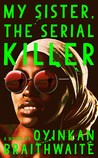
BOOK REVIEW: My Sister, the Serial Killer by Oyinkan Braithwaite

My Sister, the Serial KillerMy Sister, the Serial Killer by Oyinkan Braithwaite
My rating: 5 of 5 stars

Amazon page


This clever novel revolves around two sisters who seemingly couldn’t be more different, but who are never-the-less bound by blood and fate. The protagonist, Korede, is a diligent nurse who is respected for her rock steady and no-nonsense nature. She’s precise, meticulous, hardworking, but plain looking. The relevance of that latter bit is that her sister, Ayoola, is stupid beautiful (i.e. the kind of pretty that turns people into blithering idiots in her presence), is a little flighty, and is a serial killer.

While Korede is too smart to fall for Ayoola’s self-defense explanations for deceased boyfriends completely, Korede never-the-less assists Ayoola with disposing of bodies while trying to let Ayoola’s explanations soothe her conscience. But while Korede is morally-conflicted and guilt-ridden, the blood bond is such that her stance is never in question. That is until a handsome young doctor that Korede has a crush on and a friendship with becomes infatuated with Ayoola. This development sets up the ultimate test of the sisters’ bond.

Braithwaite does a great job of peeling away the layers of the characters. The beautiful sister / serial killer is only the most obvious example of the risk of taking people at skin depth. We learn that other characters aren’t as they appear when we can see them more fully. And as the morality tale is playing out, we are offered a lesson in how beauty (as with any other envied trait) can be as much of a curse as it is a blessing.

I found this book to be gripping and highly readable. The story is strong and the character development is well done. If you’re looking for an entertaining read in a strong story, I’d highly recommend it.

View all my reviews

BOOK REVIEW: Venus in Furs by Leopold von Sacher-Masoch

Venus in FursVenus in Furs by Leopold von Sacher-Masoch
My rating: 4 of 5 stars

Amazon page


This novella revolves around the relationship of Severin and Wanda. Severin is obsessed with Wanda (the titular “Venus in Furs”) to the extent that he seeks to deify her and to submit to her as a slave. The problem arises that Severin can only take this proposition to a middle ground. He isn’t contented with a traditional spousal arrangement, but yet he is unable to submit to the fullest extent of what it means to be enslaved. He, as have many others, believes that if he submits himself fully, he will become the center of Wanda’s world and she will have no need of other relationships. And, as it has for many others, this “domination through submission” scheme frays and fails in time.

Wanda, for her part, recognizes this disparity and is conflicted about the idea of having a slave. Her rational mind thinks it’s a bad idea, her own cravings are for a man with a more commanding personality, but her hedonistic pleasure centers find it a not altogether objectionable state of affairs. After an extended period of spurning the proposition, she goes all in and agrees to test the proposition. If she is reliable, she does this in order to teach Severin a lesson – though one can never tell about the reliability of claims on motive, particularly when made by a character who is conflicted. What is clear is that Severin’s desire to be both her man and her slave is untenable because what she wants in the former is not seen in the latter. As the story unfolds, Severin is exposed to greater and greater challenges to his ability to maintain the façade of slave.

This novella, first published in 1870, is a bit slow-moving, particularly in the early part of the arc. However, it is an interesting study in psychology and how mismatched motives kill relationships. If it seems intriguing, read it, but it’s not a premise everyone will find intriguing. Some will find it disturbingly kinky, though — it should be noted — others will find it far too tame and lacking in explicit sexuality for a book about an intimate relationship.

View all my reviews

BOOK REVIEW: All Systems Red by Martha Wells

All Systems Red (The Murderbot Diaries, #1)All Systems Red by Martha Wells
My rating: 5 of 5 stars

Amazon page


This novella’s protagonist is a security cyborg that is corporately-assigned to protect a survey team of human scientists. What makes the story intriguing, not to mention humorous, are the features that we consider human frailties that are witnessed in the thoughts and behaviors of this cyborg. There is his discomfort in interacting with humans. He refers to himself as a “murderbot” and displays some of the awkward mannerisms that are familiar to me as an introvert, though — in this case — they aren’t so much about being easily overstimulated as being uncomfortable with the fact that humans see him as giant robot with great capacity for violence. (Hey, it dawns on me that maybe it is the same with me.) The Murderbot also displays the human traits of laziness and desire to be entertained, and is often watching serial shows when an ordinary robot would either be doing work-a-day tasks like downloading protocols or would be off-line.

The most salient human trait is that he bonds – if awkwardly — with part of his team, and – even though he’s lazy by nature – he goes to great lengths to make sure they survive. Because the Murderbot is notably lazy, the reader must consider whether his willingness to put his life on the line comes from something beyond his protocols. The reader doesn’t know to what degree the cyborg is free, though we do know it has hacked the governor unit that overrides autonomous functions, and so one knows it’s freer than most units in its line of work. [Of course, “putting it’s life on the line” isn’t necessarily as solemn a matter as with humans because murderbots are notoriously difficult to kill, and can suffer severe damage and be quickly repaired / healed – provided they have access to the requisite facilities.]

I won’t get into specifics of story except to say that it takes place on a remote planet that is newly being charted, and the Murderbot’s team is one of a couple teams independently surveying different parts of the planet. Things go wrong and the Murderbot’s team of humans must find out who is the culprit, why said culprit has done what they did, and get out alive.

I enjoyed this novella. The subversion of expectations that comes from the cyborg being perhaps the most neurotic of the characters provides plenty of opportunity for humor, not to mention light philosophizing about the nature of being human and how trust forms. Readers of sci-fi will certainly enjoy this story, non-genre readers should give it a try as well.

View all my reviews

BOOK REVIEW: Intimate Ties by Robert Musil

Intimate Ties: Two NovellasIntimate Ties: Two Novellas by Robert Musil
My rating: 4 of 5 stars

Amazon page


This volume collects two recently-translated novellas written by the Austrian author, Robert Musil. Originally published in Musil’s native tongue in 1911, the novellas in question are: “The Culmination of Love” and “The Temptation of Silent Veronica.” Both novellas revolve around a woman tormented by love relationships and indiscretion. In the first, the woman is haunted by marital infidelity, and in the second, the titular character is entangled in an unconsummated love triangle gone awry.

While I can’t speak to how true the translations are to the original, I will say that the language is beautiful and is the highlight of book. However, these works shun story, and so readers of popular fiction will find them unengaging, and may come away thinking that the book’s greatest feature is its brevity. I will say, that “The Temptation of Silent Veronica” was more pleasurable to read as it built up some tension. Readers of prose poetry may enjoy the play of words and emotional content of these novellas.

For readers of literary fiction and prose poetry, I would recommend “Intimate Ties.” However, I suspect readers of popular fiction will find the book tedious. Particularly, likely to think so are those who pick up the book thinking it is romance or – even more so — erotica. While the themes revolve around love and relationships, the “action” is more in the character’s mind than in the bedroom.

View all my reviews

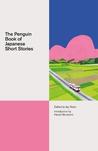
BOOK REVIEW: The Penguin Book of Japanese Short Stories ed. by Jay Rubin

The Penguin Book of Japanese Short StoriesThe Penguin Book of Japanese Short Stories by Jay Rubin
My rating: 5 of 5 stars

Amazon page


This book contains 35 short stories by many of the most prominent Japanese writers (at least among authors whose works are translated into English,) including: Jun’ichiro Tanizaki, Natsume Soseki, Yukio Mishima, Banana Yoshimoto, Yoko Ogawa, Akutagawa Ryunosuke, and Haruki Murakami (who contributes the book’s Introduction as well as two stories.)

The stories are arranged into seven sections that are apropos for modern Japanese literature: “Japan and the West” (3 stories,) “Loyal Warriors” (2 stories,) “Men and Women” (6 stories,) “Nature and Memory” (5 stories), “Modern Life and Other Nonsense” (5 stories,) “Dread” (3 stories,) and “Disasters, Natural and Man-made” (11 stories.) This organization scheme, which might seem random applied to most literature, offers some insight into the Japanese mind and experience.

“Japan and the West” reflects a Japan in the vanguard among non-Western nations entering into developed nation status. For a time, Japan sat in the unique situation of being the only rich nation that wasn’t majority Caucasian, and the uneasy balancing act that many Japanese felt is reflected in these three stories. “Loyal Warriors” reflects the long shadow of the feudal samurai era, and – in particular – the custom of ritual suicide. It’s true that “Men and Women” has a certain universality to it, though the individual stories speak to the Japanese experience and history. The section entitled “Nature and Memory” is really more about the latter than the former, and the stories all reflect a concern about remembering, forgetting, and the imperfection of memory. “Modern Life and Other Nonsense” explores the modern corporate existence. “Dread” are the horror stories, a genre that has a lengthy history in Japan. “Disasters, Natural and Man-Made” reflects Japan’s experience with many devastating earthquakes and two atomic bombs.

In the interest of brevity, I’ll not describe or comment upon all the stories. Instead, I’ll pick out a few that I found particularly moving. This doesn’t mean that there aren’t many gems among the others. But my intention is merely to give the reader a taste of what is in this volume.

– “The Story of Tomode and Matsunaga” by Tanizaki Jun’ichiro: A writer receives a letter from a woman whose husband has a history of pulling extended disappearing acts. She asks for the writer’s help because she believes he may know her husband. The writer makes a connection to an acquaintance he has frequently socialized with in bars. The writer notices the man’s appearance in town seems to line up with the dates the woman gave for her husband’s disappearances. It might seem like a mystery solved, but the two men look nothing alike.

– “Patriotism” by Yukio Mishima: A junior military officer comes home and tells his wife that he has been put in the untenable position of having to arrest his comrades. Deciding that there is no honorable path, he decides to commit seppuku (ritual suicide,) and – given societal norms – this means his wife, too, will be expected to end her own life.

– “Smile of the Mountain Witch” by Ohba Minako: A mythical mountain witch is transposed into a modern urban setting.

– “Peaches” by Abe Akira: A man revisits a memory from his youth involving his mother and a cart of peaches, realizing that events couldn’t have happened as he remembers, he reconstructs events as he re-imagines his story.

– “Mr. English” by Keita Genji: We meet an office worker who seems like a bit of a jerk, but as we get to know his story, he is humanized.

– “Hell Screen” by Akutagawa Ryunosuke: A prima donna artist painting a hellish artwork for his Lord insists that he must have seen scenes to accurately depict them, and thus he is drawn into the hellishness of his work.

– “Filling Up with Sugar” by Suwanishi Yuten: A woman’s mother has a rare and incurable disease in which the body slowly turns into sugar.

– “Hiroshima, City of Doom” by Ota Yoko: As the title suggests, this is a story of the devastation of Hiroshima by atomic bomb at the end of the Second World War.

– “Weather-Watching Hill” Saeki Kazumi: This description of the 2011 earthquake and tsunami reads a bit like a journalistic account.

– “Same as Always” by Sato Yuya: This is a chilling tale of a mother who uses the release of radiation as a result of the Fukushima Dai-Ichi nuclear plant melt-down as a pretext for murdering her baby in a way that won’t look like murder. It’s so wrong in so many ways, but extremely evocative.

I enjoyed this collection immensely. The stories are great, and I would highly recommend it for readers of short fiction – particularly if one enjoys the cultural insight that comes from reading translated literature.

View all my reviews

BOOK REVIEW: Thus Spoke Zarathustra by Friedrich Nietzsche

Thus Spoke Zarathustra: A Book for Everyone and for No OneThus Spoke Zarathustra: A Book for Everyone and for No One by Friedrich Nietzsche
My rating: 4 of 5 stars

Amazon page


The gist of this philosophical novel’s story is that the Persian sage, Zarathustra, comes down from his cave to inform people of his breakthrough, only to find the townspeople are utterly uninterested. This leads Zarathustra to take his show on the road, where he does better in discovering individuals who rise above the common man, but still they miss the mark of Übermensch – the Superman.

This book somehow simultaneously manages to be abstruse and readable. It can be tough reading when it uses symbolism and leitmotifs that are tough to crack, and when the story arc consists of long sequences of Zarathustra talking at people one after another. [It’s worth noting that I read that this was a particularly challenging book to translate, and so some of the difficulty may result from the edition I read being too literal or not literal enough.] On the other hand, it’s packed with pithy, quotable lines. The most famous of these is, “God is dead.” Others include: “Die at the right time!” “Better know nothing than half-know many things!” and “Man is something that hath to be surpassed.” Also, as I stated the plot in a tiny paragraph, it should be clear that the general flow of events isn’t hard to keep up with.

The quotes I presented above offer substantial insight into the philosophy being presented. First, with “God is dead” Nietzsche is advancing the existentialist fundamental that one needs to look not at religion for life’s meaning or for the means of proper behavior, but one must create one’s own meaning and morality. While some believe that Nietzsche is arguing for amorality, it seems that he’s more arguing to move beyond accepting pre-labeled boxes of “good” and “bad” handed down from on high, and rather insisting that one must make one’s own decisions about such matters. It must be remembered that society’s dictates also include collective prejudices and other negative biases. Second, the whole of the book is dedicated to the recognition that mankind must move beyond its current state of being constrained by the shackles of church, state, and society, and rise to a super-state (i.e. “Man is something that hath to be surpassed.”)

For me, this book picked up in the fourth and final part. This section brings together the more intriguing people Zarathustra interacted with along the road. In general, the book started as a slow read, but became much clearer and more readable as I went. The arguments are not hard, nor is the chain of events, but the way things are stated can be a bit incomprehensible. This may be one of those books for which one would be served by opting for a more heavily annotated edition rather than just the raw text.

I’d recommend this book. Whether one accepts its arguments or not, they are worth understanding.

View all my reviews

BOOK REVIEW: Blue ed. by Ameena Hussein

Blue: The Tranquebar book of Erotic Fiction for Sri LankaBlue: The Tranquebar book of Erotic Fiction for Sri Lanka by Ameena Hussein
My rating: 4 of 5 stars

Amazon page


This is an anthology or erotically-themed short fiction and poetry of Sri Lanka.

Readers who are interested in cultural idiosyncrasies, particularly related to sexuality, will find the works included offer fascinating insights. That said, readers whose primary experience with erotic fiction is, for example, French erotica will probably find the stories tentative and occasionally creepy in a desperation-derived way (e.g. the hotel employee who sneaks into an admired guest’s room and – among other things — sniffs clothing.) For readers outside South Asia, one must read these works with a recognition that it is a culture that is less open about sexuality, in which the sexes don’t co-mingle as freely in youth, and where people have to take love when and where they can get it to a greater extent than readers from elsewhere may be used to. That said, the characters in these stories tend to be from a more open and progressive segment of society, but they are still operating within the constraints of the society. Some readers will find the tentativeness endearing and nostalgic, others may find it slow or tame.

Before describing each work in brief, the reader may wish to be made aware that – unlike many works of erotica – this book does not target a particular sex or sexual orientation. By that I mean, it bounces around between straight, lesbian, and gay male relationships in its stories.

– The Proposal: The first-person narrator has a friend who is on the outs with his girlfriend, and said narrator has an opportunity to bed said girlfriend. There isn’t much deliberation about whether a “bro” should be put first here

– Sex in the Hood: A poem about art and life in challenging environs.

– Undercover: A middle-aged woman whose marriage has gone lukewarm, gets groped at a movie theater, and returns the next day.

– Me and Ms. J: An ex-pat in Brussels looks back on a youthful lesbian dalliance with an older woman.

– The Lava Lamp: When girlfriends end up staying together overnight, the lava lamp becomes a representation of the couple’s flow with each other. A short piece.

– Bus Stop: A young man works up the courage to advance a relationship with a pretty girl he’s been seeing (wordlessly) at the bus stop for months. This is one of the longer and more developed pieces.

– A Courtyard: An imagery-intensive poem not only about a courtyard, but what is glimpsed across it. Probably my favorite of the poetry.

– Veysee: If you thought my mention of a hotel employee who sneaks into a guest’s room and sniffs her clothes was creepy, this story about a porn-addicted thirty-something carrying out a covert relationship with an under-aged girl takes creepiness to a new level. (Though there are hints of recognition on the part of the character of the error of his ways.)

– No: This is less erotic than a commentary on things that go unsaid in sexual relationships because the individuals involved don’t know how to broach the subject, or because they are operating on fundamentally different wave-lengths. I should say that it’s not that it lacks the sensuality of erotica, but it deals heavily with consent being mowed down.

– I’d Like to Hold Your Hand: A poem describing how the author would like to proceed from holding hands to ecstasy.

– Bi-Cycle: This is a very brief dreamy piece about the author’s personal dilemma.

– Bookworm: A bookish young man gets ushered into sexuality by the shopkeeper of his favorite bookstore.

– What Reminds Me of You: A sensual poem of nostalgia for a past love.

– Room 1716: A lobby manager at a hotel in Colombo develops a secret crush on Alicia, a tourist from an undesignated Western country. When Alicia makes a short overnight trip, the manager arranges for her to keep her room without charge. Said manager then sneaks into the room to investigate clues about her girl-crush.

– 76, Park Avenue: A Russian (or other undesignated Slavic) man has a relationship with a Sri Lankan woman.

– Flower Offering: A sensual poem about flowers – literal and symbolic.

– Hot Date: A guy ends up in drama through pursuit of the most sexually willing girl.

I found this book to be interesting. As I said, to relate to many of its characters and their motivations one has to be aware of setting and cultural norms. It has a mix of more and less developed stories and characters. (Though there are no isolated sex scenes, as sometimes occur in erotic works.) There’s a lot of power-dynamics playing out, but not at all in the explicitly sadomasochistic dominant / submissive way. There are many characters and actions that a reader might find unsavory (e.g. the grown man who acts like he’s fresh out of puberty and has no self control is a recurring theme) but loathsome characters can be as readable as likable ones. (Only indifferent characters are unreadable.)

I’d recommend this book for those who are interested in taking a world tour of erotica.

View all my reviews