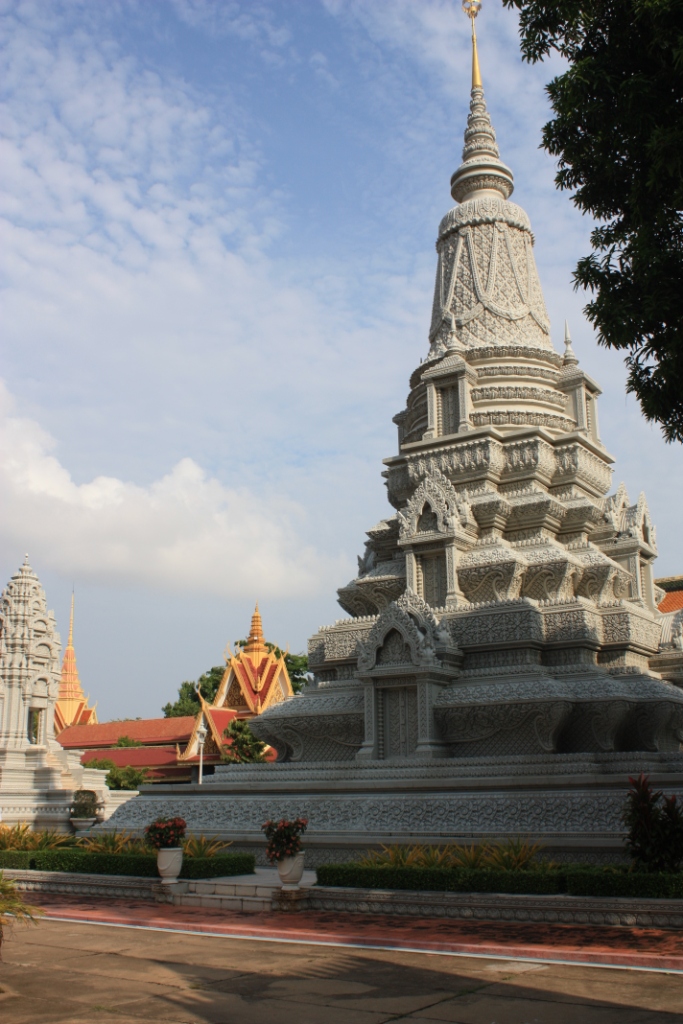
Taken in October of 2012 in Phnom Penh

Taken in October of 2012 in Phnom Penh
 Travels In Siam, Cambodia, Laos, And Annam by Henri Mouhot
My rating: 3 of 5 stars
If you can stomach the blatant racism and false notions of the virtue of Imperialism, reading the journals of 19th century naturalists and explorers can be fascinating for modern-day travelers. I will say that Mouhot’s work is less offensive than many of his contemporaries in this regard (e.g. the eugenicist polymath Francis Galton.) That is to say, he tries to be objective, and—when he fails–his condescension is as likely to be vaguely complimentary as not (e.g. noting certain “savages” are surprisingly intelligent.) However, one should remember that this is the journal of a journey that took place in years corresponding to the lead up to the American Civil War. (I should note that these snooty inclinations toward superiority aren’t uniquely Western, the Chinese diplomat Zhou Daguan also viewed the Southeast Asian people with condescension.)
Alexander Henri Mouhot left London on April 27th of 1858, traveled to and throughout Southeast Asia, and died in the jungle on November 10, 1861. The journal was received by the explorer’s brother, Charles Mouhot, who is responsible for seeing it published, and for adding some front matter as well as tying up the end of the journal because Henri Mouhot died fairly abruptly of a feverish ailment that he contracted in the jungle.
In many ways, Mouhot’s work is similar to Daguan’s 14th century Record of Cambodia. Mouhot covers a lot more ground, but they both chronicle the natural, cultural, and commercial environment of these lands. Mouhot prides himself in being a naturalist, and he writes quite a bit about the diverse flora and fauna of these lands as well as of the geography. Mouhot collected many specimens of plants and animals that were unknown in his native France. About mid journey, he lost his collection to a maritime accident. However, he was able to reacquire some of these specimens in the latter portion of his journey.
Mouhot writes extensively about the locals and their customs. As I already suggested, these descriptions are often highly biased. For example, he tends to refer to the indigenous spiritual beliefs of the locals as “superstitions” while he bemoans the fact that these people are “living and dying in utter ignorance of the only true God!” However, for the most part he tries to maintain a scholarly detachment, and often he is complimentary of the local people (e.g. his apparent surprise that some of hill people would be offended by being referred to as savages is an example of his benign condescension.)
Also like Daguan, he discusses the possibilities for trade. It’s clear that one of his intended audiences are those interested in the commercial potential of the region. He writes both about what natural resources these nations contain, and what products they might be sold. He is ambiguous about the local market for European goods, first skeptical and then sanguine. He says that the locals don’t have much need for the goods produced in Europe, but then he suggests that the wealthier individuals do like to emulate European style and fashions. Perhaps, he is saying there are potential consumers among the small slice of wealthy individuals, but that is a limited market. Of course, the desire for commodities from Asia in conjunction with the wish to avoid drawing down precious metals reserves (i.e. forcing Asians to buy Western products) was no small cause of Imperialist shenanigans during that time period.
Among the most interesting chapters are those on Angkor Wat and Angkor Thom. In these chapters, one receives an account of the state of Angkor between Daguan’s era (when the Angkor civilization was still active) and a modern-day Angkor that exists in the wake of successive waves of pillaging by the French (and other treasure hunters), the Khmer Rouge, and Vietnamese soldiers.
Mouhot was also interested in whether Jews had settled and integrated in the area. His theory was that there likely were. He says he sees a “Hebrew character” in some faces, but he acknowledges there is no hard evidence to support his belief and that the locals deny such a presence.
I guess the intrigue in Mouhot’s journal is a picture of this region during an era in which the world was not yet homogenized. Now when one travels to “remote villages,” one often sees people wearing the same mass-produced Western clothing that one sees at home, and they sit around with their smart-phones ignoring each other as at home. Mouhot’s era was one in which one traveled by elephant, boat, or by foot and often advanced no more than ten miles in a day in the jungle. It was an era of discovery. This may account for some of the xenophobic biases of that time; the ways of other people were new.
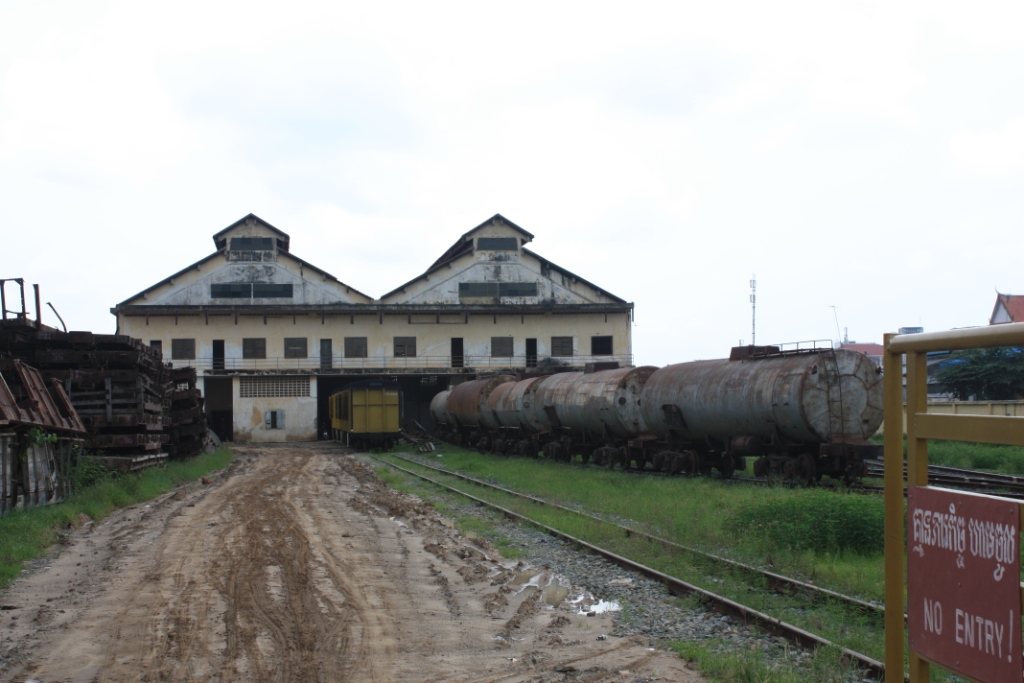
Taken in October of 2011 in Phnom Penh.
I like to throw a little dystopian vision into the mix now and again.
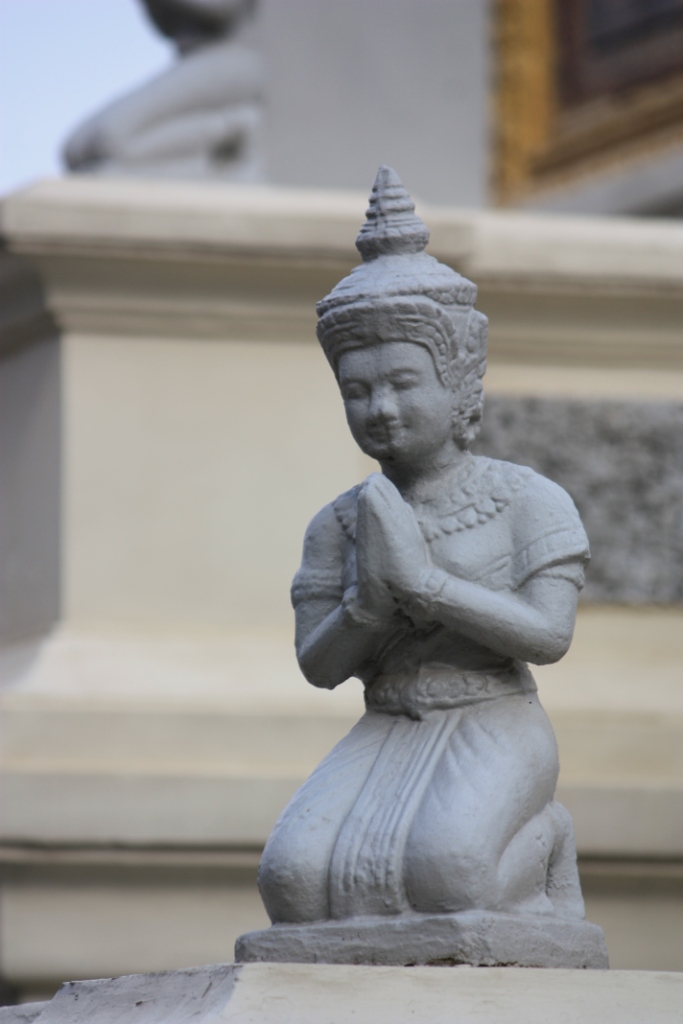
Taken in October of 2012 in Phnom Penh.
This was taken on the grounds of the Royal Palace in Phnom Penh.

Taken in October of 2012 in Phnom Penh.
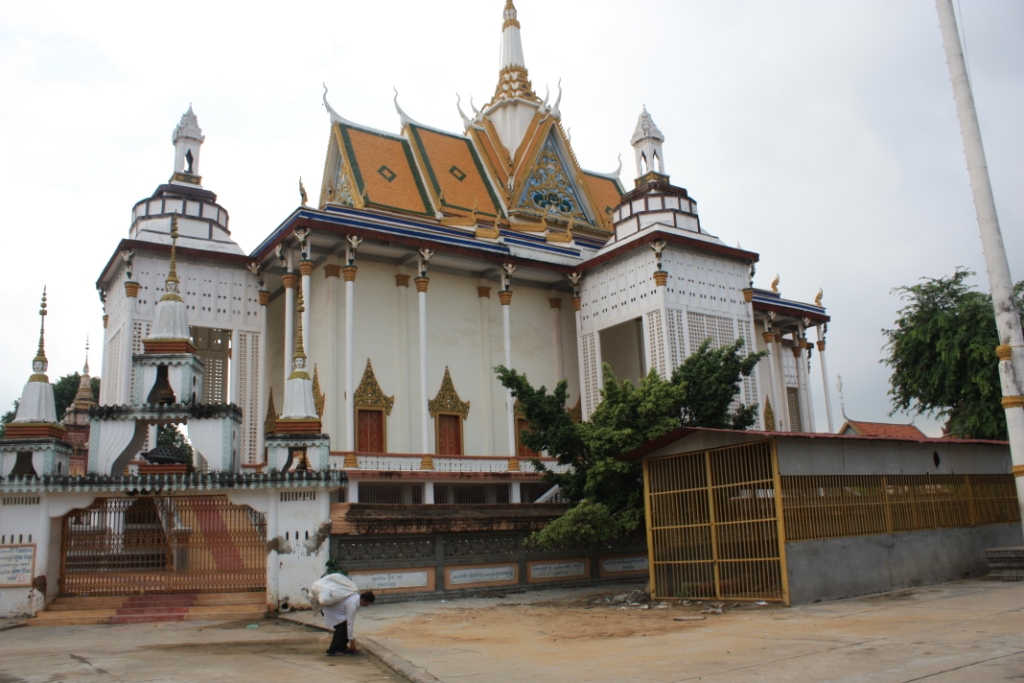
Taken in October of 2012 in Phnom Penh.
This Wat is located between the Russian Market (Toul Tom Poung Market) and the Tuol Sleng Genocide Museum in south Phnom Penh. The three sites can easily be visited together. I recommend the Genocide Museum last as it can drain one’s enthusiasm.

Taken in October of 2012 in Phnom Penh.
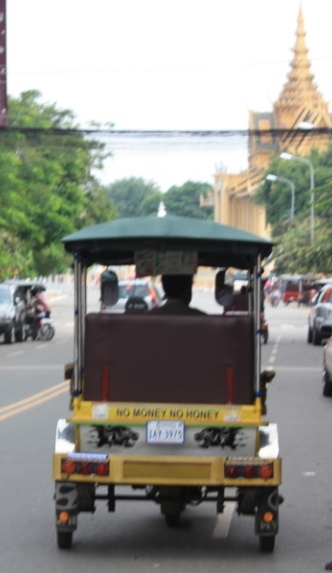 “No Money, No Honey” are words ubiquitous in the Cambodian capital. I’m not sure why this phrase, which likely has origins in illicit trades, has such resonance with tuk-tuk drivers. You’d think if anybody were using this motto it would be the beekeepers.

Taken in October of 2012 in Phnom Penh.
Phnom Penh contains an interesting mashup of architecture from traditional Khmeri to French colonial era, to the glass high-rises that are currently popping up. This looks to me like the middle one, but I know almost nothing about architecture.
Taken in October of 2012 in Phnom Penh.
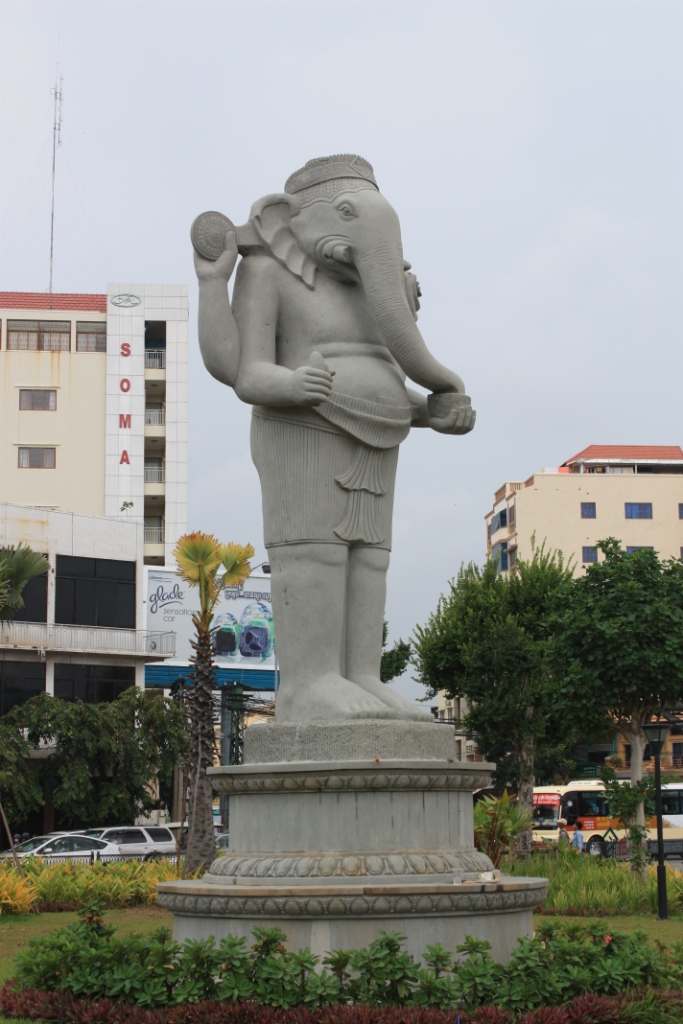
An estimated 95% of Cambodians are Buddhist, and Buddhism has been the dominant religion since the time of Jayavarman VII (i.e. the late 12th century.) This begs the question, why might one see a statue of a Hindu deity in a public space in Cambodia’s capital city?
If you’ve visited Angkor, you know that Hindu imagery abounds. This is because before Jayavarman, the Khmeris were Hindu. In a great early act of recycling, Vishnu sculptures became Buddha sculptures by decree. (In what is–as far as I know–a coincidence, many Hindus believe that Buddha [Siddhartha Gautama Buddha] was an avatar, or incarnation, of Vishnu.)
This still doesn’t explain why a relatively new sculpture of Ganesha would reside in present-day Phnom Penh (Phnom Penh is not as old as Angkor, and by the time it was founded Buddhism was dominant.) Just as contemporary taxi and auto-rickshaw (tuk-tuk) drivers in India display Ganesha in appeal to this “remover of obstacles,” 10th century maritime traders did the same. This desire to court the favor of the remover of obstacles has continued on into the modern-day.
It’s an interesting commentary on how cultures never interact without getting some of their chocolate into the other culture’s peanut butter and vice versa (for those who have no idea what I’m talking about, that’s a reference to an old Reese’s commercial and not some dark coded message.)
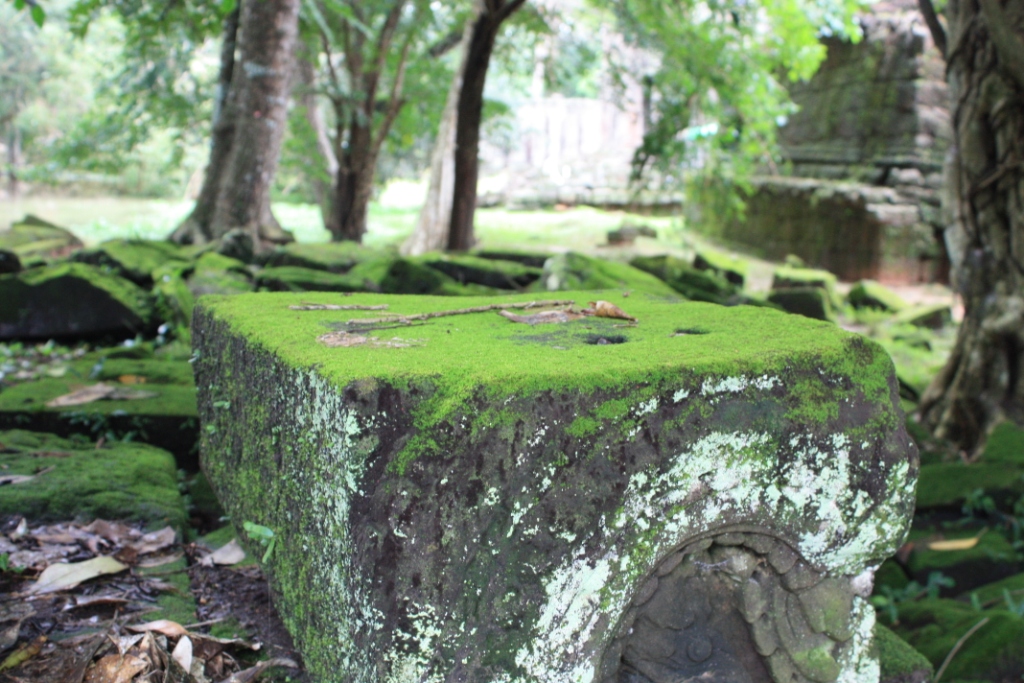
Taken in October of 2012 at Angkor.


 Tiger Riding for Beginners