BOOK REVIEW: Zen in the Art of Archery by Eugen Herrigel

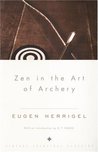
Zen in the Art of ArcheryZen in the Art of Archery by Eugen Herrigel
My rating: 4 of 5 stars

Amazon page

Herrigel’s book is part autobiography of his experience learning Japanese archery (kyudo) from the distinguished master archer Kenzo Awa (and through archery, Zen,) and it’s part philosophical treatise on how archery can help one achieve a Zen state of mind.

The book is less than one hundred pages and has a Zen feel itself. Exemplary of this, the book’s divisions aren’t labeled or numbered into chapters—i.e. there’s a general trimming away of the extraneous features of a book. That said, there’s a clear organization to the book, and most of it follows the chronology by which the author (and others) progress in developing deep insight into the mind through the practice of archery.

There are nine sections:
The first section helps the reader understand why one might consider Zen and archery in the same thought–something that will by no means be obvious (even to many Zen Buddhists.)

The second section explains why Herrigel took up Zen and decided to use archery as his vehicle to understand it.

Section three describes the early learning process, and focuses heavily on the importance of breath.

Section four takes place after Herrigel has been practicing about a year, and the theme of purposeless action is at the fore. This idea is one of the recurring central ideas in the book.

Section five is Herrigel’s introduction to withdrawing from attachments, and—in particular—letting go of the ego. It’s not the point at which Herrigel masters this difficult practice, but he’s made aware of it.

The next section is one of the longer chapters and in it Master Awa tries to teach Herrigel the importance of letting “it shoot” rather than making the shot. This is clearly a challenging idea.

In the seventh section, Herrigel has been practicing for five years and Master Awa recommends that he take a test to help him move on to the next stage in his practice.

Section eight is a brief elucidation as to why kyudo is still relevant and how its relevance has long been tied to what it teaches about the mind.

The final section shifts gears into the relation between Zen and swordsmanship. There have been many works written on this subject, and Herrigel’s purpose may have been to convince the reader that kyudo isn’t uniquely a vehicle for Zen. One can engage in many activities (arguably any activity) with the mind of Zen, be it flower arranging, tea ceremony, calligraphy, or spearmanship.

I’d recommend this book for those interested in the mind / body connection. It’s short, readable, filled with food for thought, and is a classic on the subject.

View all my reviews

DAILY PHOTO: Caves at Ajanta

Taken in November of 2014 at Ajanta

Taken in November of 2014 at Ajanta

IMG_0686

BOOK REVIEW: An Introduction to Zen Training by Omori Sogen

An Introduction to Zen TrainingAn Introduction to Zen Training by Omori Sogen
My rating: 4 of 5 stars

Amazon page

This is a guidebook that explains how to sit for meditation—particularly in the Rinzai style. It describes all the fundamentals one needs to begin Zen sitting including: posture, breathing, where to look, what to do with one’s hands, and even how to get up after a long session. It also provides background information about what to look for in a teacher, what differentiates Rinzai from Soto Zen, and what the objective of practice is (and why it is sought after.) This makes it sound like a dry, technical manual, and to some degree it’s unavoidably so. However, the author does include stories here and there to make the book more engaging and palatable. Overall, though, it’s written as a manual for students.

The book is arranged into 7 chapters, but it’s only the first five of these that are the author’s introduction to Zen meditation. These five chapters are logically arranged to cover the ground from why one should practice to what effects it will have with consideration of the aims, technique, and pitfalls covered in between. The last two chapters are commentaries on (including text from) a couple of the key documents of Zen Buddhism: “A Song of Zen” (Zazen Wazen) and “The Ten Oxherding Pictures.”

There are black and white graphics. First, there are line drawings used to convey information about posture and the physical body in meditation. Second, there are a few photographs of the author, including his dōjō and in the practice of swordsmanship. The author was a skilled swordsman; hence my tagging of this book in “martial arts,” as there may be some interest among martial artists in the author’s take as one who straddled the two worlds of Zen and budō. Finally, there are also copies of the ten ox herding pictures that go with the verse.

I think this book is well-organized and provides a beginner an excellent introduction to the practice of Zen. I didn’t really note any major deficiencies, and will thus recommend it as a good resource for anyone considering taking up a Zen practice or wanting to learn more about doing so. I should point out that the book does also get into the philosophical aspects of Zen, but if one isn’t looking for information about how to practice then there may be books more oriented toward one’s needs. Despite the fact that the book is a translation, it’s clear and readable. As I said, it includes stories—including those about Japanese warriors as well as Zen masters—and that helps to break up the dryness of what is at its core an instructional manual.

View all my reviews

DAILY PHOTO: Namdroling Façade

Taken in March of 2014 at Namdroling Monastery

Taken in March of 2014 at Namdroling Monastery

DAILY PHOTO: Scenes from the Dalai Lama’s Temple

Taken in July of 2015 in McLeod Ganj

Taken in July of 2015 in McLeod Ganj

IMG_2524 IMG_2529

DAILY PHOTO: Thiên Mụ Pagoda

Taken on December 25, 2015 at Hue

Taken on December 25, 2015 at Hue

BOOK REVIEW: When Buddhists Attack by Jeffery K. Mann

When Buddhists Attack: The Curious Relationship Between Zen and the Martial ArtsWhen Buddhists Attack: The Curious Relationship Between Zen and the Martial Arts by Jeffrey K. Mann
My rating: 4 of 5 stars

Amazon page

Mann’s book considers one of Asian history’s intriguing little questions: How is it that one of the most pacifistic of world religions, i.e. Buddhism, came to be integrally connected to some of the world’s most fearsome and devastatingly effective warriors? Specifically, the author looks at the connection of Zen Buddhism to warrior traditions like the samurai of Japan and—to a lesser extent—the Shaolin monks of China. It should be noted that while Zen was one of the most firmly established intersects of Buddhism and martial arts; it’s not the only one. Branches of Vajrayana (esoteric) Buddhism had their own warrior-monk traditions—which he mentions as well as Shugendō’s (combines Buddhist, Shinto, and Taoist elements) warrior connection. The book is heavily weighted toward the Japanese martial arts. This may be in part owing to the author’s particular background, but also because many of the works that establish this firm connection between Zen and martial arts are Japanese (e.g. works by Takuan Sōhō, Yagyū Munenori, and even Miyamoto Musashi.)

It’s worth noting that both Buddhists and modern martial artists have tried to downplay or outright deny the connection between these traditions. However, Mann suggests the connection is undeniable in the face of historical evidence, and that it even has a logic that belies the apparent contradiction. (Note: Presumably many Buddhists deny this connection because they want to distance themselves from the taint of violence, and many modern martial artists deny it so their religious students won’t ditch the art because it isn’t 100% secular [or based entirely in the student’s religious belief structure.])

The book consists of eight chapters as well as front matter and an Epilogue that explores the question of whether the Zen of samurai lore is truly Zen Buddhism. The first couple chapters give the reader an introduction to Buddhism and, specifically Zen. There are then chapters that show the linkage between Zen and the martial arts of East Asia. The book then considers the nature of the advantages offered by Zen to martial artists that made it so appealing to warriors like the samurai. It also considers the interpretation of violence that allows for the dichotomy under discussion, and explores the degree to which the connection between Zen Buddhism and martial arts is relevant in the modern era. The book is a mix of history, religious studies, philosophy, and the art and science of fighting systems. So if one’s interests are eclectic, there’s a lot to take away from this book. If you have narrow interests, you’ll want to make sure they include the aforementioned central question (i.e. Why pacifistic Buddhism has helped produce some of the world’s greatest fighting systems.)

The book is well-researched and documented. There are many interesting and informative stories throughout the book. For example, I’d never read about the 19th century jujutsu murders until this book. This is a fascinating case in which several experienced students of one particular school of jujutsu were found dead with the exact same wound. While the murderer wasn’t captured, investigators quickly discerned his (or her) method. That is, the killer knew the trained responses of this school and made a feint to draw a certain defense and then exploited a vulnerability the response presented. How is this story relevant? It speaks to the perceived advantages of Zen, which emphasizes avoiding habituation and residing in the moment.

I’d recommend this book for martial artists who are interested in the history and cultural context of their arts [and of the martial arts in general.] There’s a class of martial arts student who may want to avoid the book. If you’re a devout adherent of a Western religion who practices a traditional style of East Asian martial art and think that there isn’t an imprint of the local religion on that art, your delusions may be shattered by this book. Buddhists may find the discussion of the less absolutist interpretation of ahimsa (non-violence) to be illuminating (or—for all I know—infuriating.) It’s a short book, coming in at around 200 pages, but is end-noted and referenced in the manner of a scholarly work. It has a glossary and bibliography, but no graphics.

View all my reviews

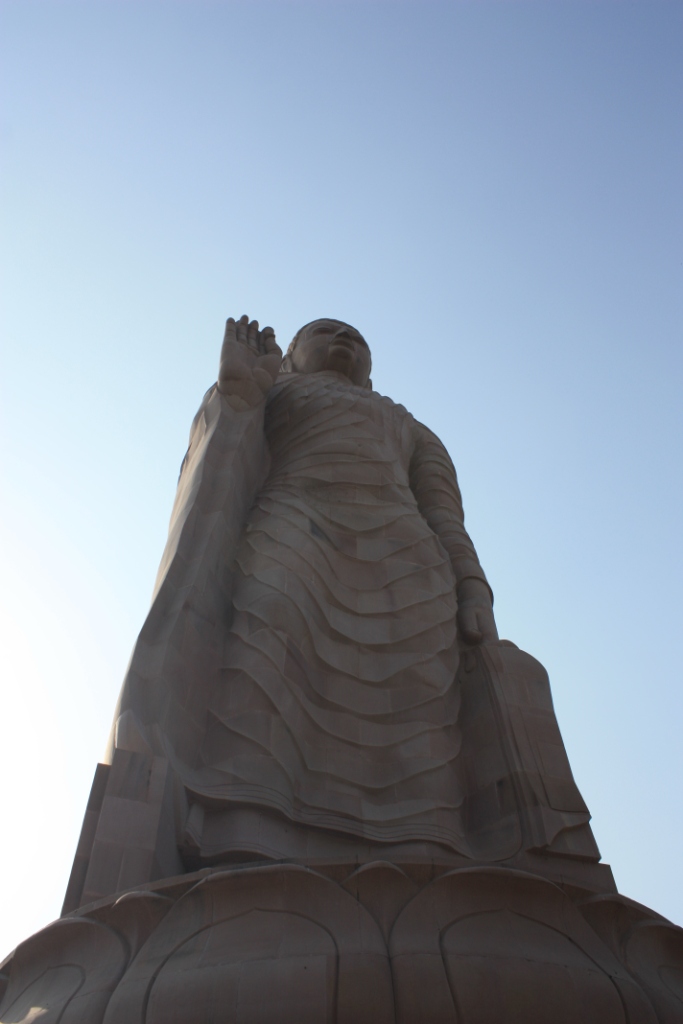
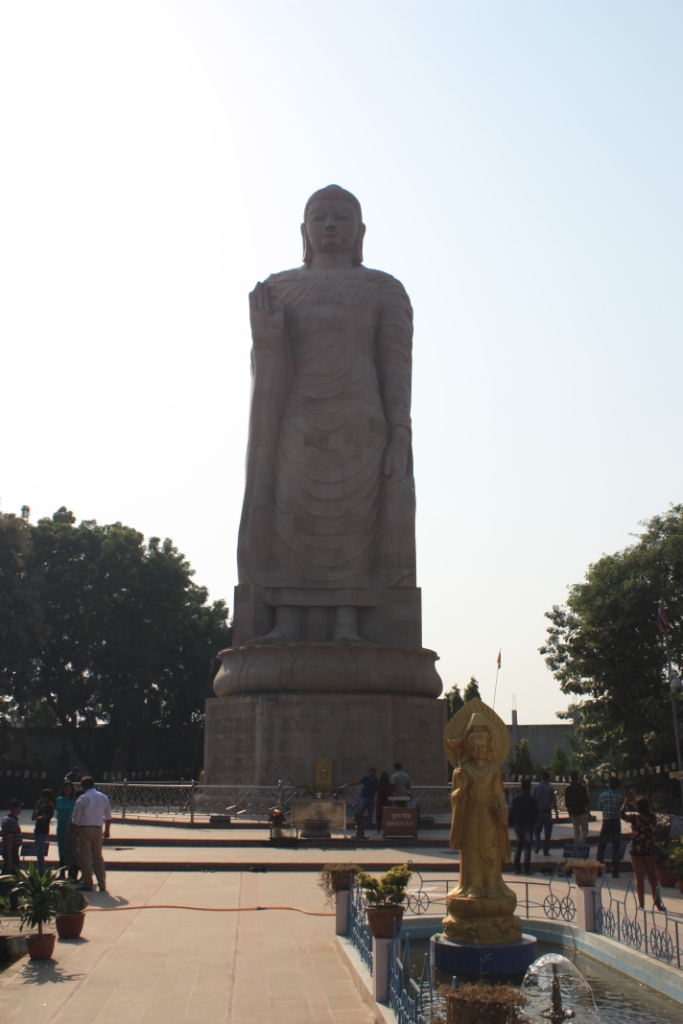
DAILY PHOTO: The Giant Buddha of Wat Thai, Sarnath

Taken on October 25, 2015 at Wat Thai in Sarnath

Taken on October 25, 2015 at Wat Thai in Sarnath


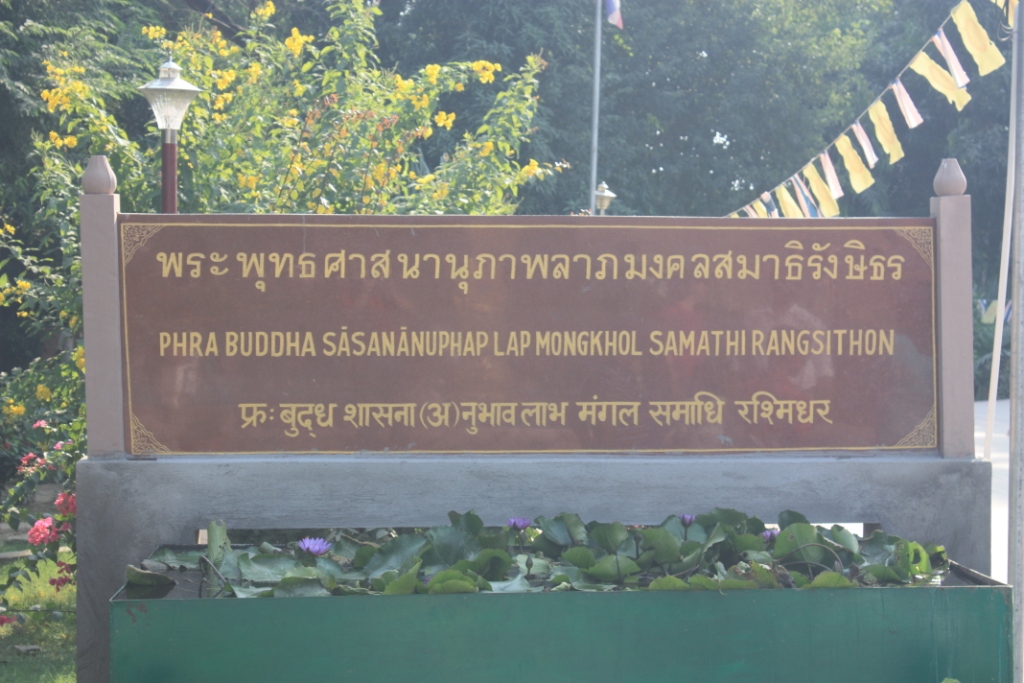
Being one of the four most major pilgrimage sites of Buddhism, Sarnath has a number of temples built by members of countries with large Buddhist populations. Among these countries is Thailand. (FYI: There is also a Chinese Temple, a Japanese Temple, and a Tibetan Temple.) While the guidebook advice is that these modern temples are skippable, an exception might be made for Wat Thai, which is both nearby to the [unskippable] Archaeology Museum and has a giant Buddha statue.

IMG_4077

Here is the sign for the giant Buddha.

IMG_4075

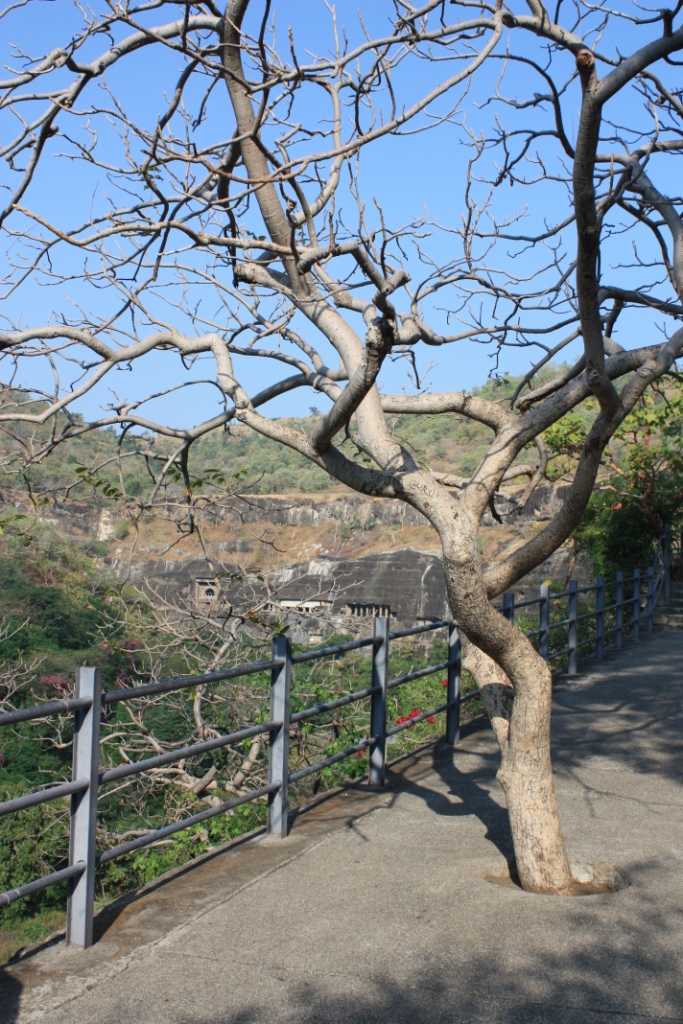
DAILY PHOTO: Twisted Tree on the Ajanta Path

Taken in November of 2014 at Ajanta.

Taken in November of 2014 at Ajanta.

DAILY PHOTO: Wat Mahathat Ruins

Taken in August of 2014 in Ayutthaya.

Taken in August of 2014 in Ayutthaya.